Nothing matches these filters —
clear the search or widen the filters.
Summaries Lizzie gave as host
· 1460 summaries
Recaps of other experts' statements, not Lizzie's own clinical position.
Summaries Lizzie gave as host · Abdominal Compartment Syndrome
5 summaries
Open the Abdominal Compartment Syndrome collection →
Quick Literature Updates Episode 20
 ▶
Ep 8 · 1:03
▶
Ep 8 · 1:03
host summary
Lizzie Lee summarizes what Dr. Alex Halpern said: Meta-analysis by Shibuya et al. included 709 patients from 15 research studies across multiple international centers comparing thoracoscopic versus open repair for congenital diaphragmatic hernia.
↗
▶
Ep 8 · 1:11
host summary
Lizzie Lee summarizes what Dr. Alex Halpern said: They wanted to know whether thoracoscopic repair has a higher recurrence rate and longer operating room time compared to open repair.
↗
▶
Ep 8 · 1:18
host summary
Lizzie Lee summarizes what Dr. Alex Halpern said: Thoracoscopic repair for congenital diaphragmatic hernia has higher recurrence rates compared to open repair.
↗
▶
Ep 8 · 1:18
host summary
Lizzie Lee summarizes what Dr. Alex Halpern said: Thoracoscopic repair for congenital diaphragmatic hernia has longer operative times compared to open repair.
↗
▶
Ep 8 · 1:25
host summary
Lizzie Lee summarizes what Dr. Alex Halpern said: Thoracoscopic repair for congenital diaphragmatic hernia has a lower incidence of postoperative bowel obstruction compared to open repair.
↗
Summaries Lizzie gave as host · Abdominal Wall Defects
44 summaries
Open the Abdominal Wall Defects collection →
Educational Outcomes in School-Aged Children With a History of Simple and Complex Gastroschisis are Poor Compared to Controls
 ▶
Ep 42 · 0:00
▶
Ep 42 · 0:00
host summary
Lizzie Lee summarizing a resource: Do children born with gastroschisis perform worse in school compared to age-matched peers without the condition?
↗
▶
Ep 42 · 0:11
host summary
Lizzie Lee summarizing a resource: This is a retrospective study using educational data from children born between 1991 and 2022.
↗
▶
Ep 42 · 0:18
host summary
Lizzie Lee summarizing a resource: Researchers used odds ratio and subgroup analysis to compare school performance using the Early Development Instrument or EDI and grade level assessments between 208 children with gastroschisis and over 2000 age-matched controls.
↗
▶
Ep 42 · 0:33
host summary
Lizzie Lee summarizing a resource: They found that children with gastroschisis, even those with the simpler form, were significantly more likely to fail middle school assessments.
↗
▶
Ep 42 · 0:33
host summary
Lizzie Lee summarizing a resource: Children with gastroschisis, even those with the simpler form, were significantly more likely to fail middle school assessments.
↗
▶
Ep 42 · 0:41
host summary
Lizzie Lee summarizing a resource: This suggests that children with gastroschisis may face long-term learning challenges and could benefit from early educational support.
↗
▶
Ep 42 · 0:41
host summary
Lizzie Lee summarizing a resource: Children with gastroschisis may face long-term learning challenges and could benefit from early educational support.
↗
Quick Literature Updates Episode 20
▶
Ep 42 · 1:03
host summary
Lizzie Lee summarizes what Dr. Alex Halpern said: Meta-analysis by Shibuya et al. included 709 patients from 15 research studies across multiple international centers comparing thoracoscopic versus open repair for congenital diaphragmatic hernia.
↗
▶
Ep 42 · 1:11
host summary
Lizzie Lee summarizes what Dr. Alex Halpern said: They wanted to know whether thoracoscopic repair has a higher recurrence rate and longer operating room time compared to open repair.
↗
▶
Ep 42 · 1:18
host summary
Lizzie Lee summarizes what Dr. Alex Halpern said: Thoracoscopic repair for congenital diaphragmatic hernia has higher recurrence rates compared to open repair.
↗
▶
Ep 42 · 1:18
host summary
Lizzie Lee summarizes what Dr. Alex Halpern said: Thoracoscopic repair for congenital diaphragmatic hernia has longer operative times compared to open repair.
↗
▶
Ep 42 · 1:25
host summary
Lizzie Lee summarizes what Dr. Alex Halpern said: Thoracoscopic repair for congenital diaphragmatic hernia has a lower incidence of postoperative bowel obstruction compared to open repair.
↗
Quick Literature Updates Ep 22
 ▶
Ep 43 · 1:03
▶
Ep 43 · 1:03
host summary
Lizzie Lee summarizing a resource: The Beotti et al. prospective study on postoperative calibrations in Hirschsprung disease took place 2021 to 2023 and included 33 patients under six months old who underwent endorectal pull-through surgeries.
↗
▶
Ep 43 · 1:14
host summary
Lizzie Lee summarizing a resource: In the Beotti study, patients were assigned to a new non-dilation protocol group or a traditional dilation group.
↗
▶
Ep 43 · 1:20
host summary
Lizzie Lee summarizing a resource: The Beotti study primary outcomes were anastomotic complications, enterocolitis, and constipation.
↗
▶
Ep 43 · 1:26
host summary
Lizzie Lee summarizing a resource: What did they find?
↗
▶
Ep 43 · 1:27
host summary
Lizzie Lee summarizing a resource: In the Beotti study, there was no significant difference in anastomotic complications between the two groups, but the non-dilation group had less enterocolitis and less constipation.
↗
▶
Ep 43 · 1:36
host summary
Lizzie Lee summarizing a resource: Choosing not to do postoperative anal dilations after Hirschsprung pull-through may be a good alternative with benefits like lower constipation and enterocolitis.
↗
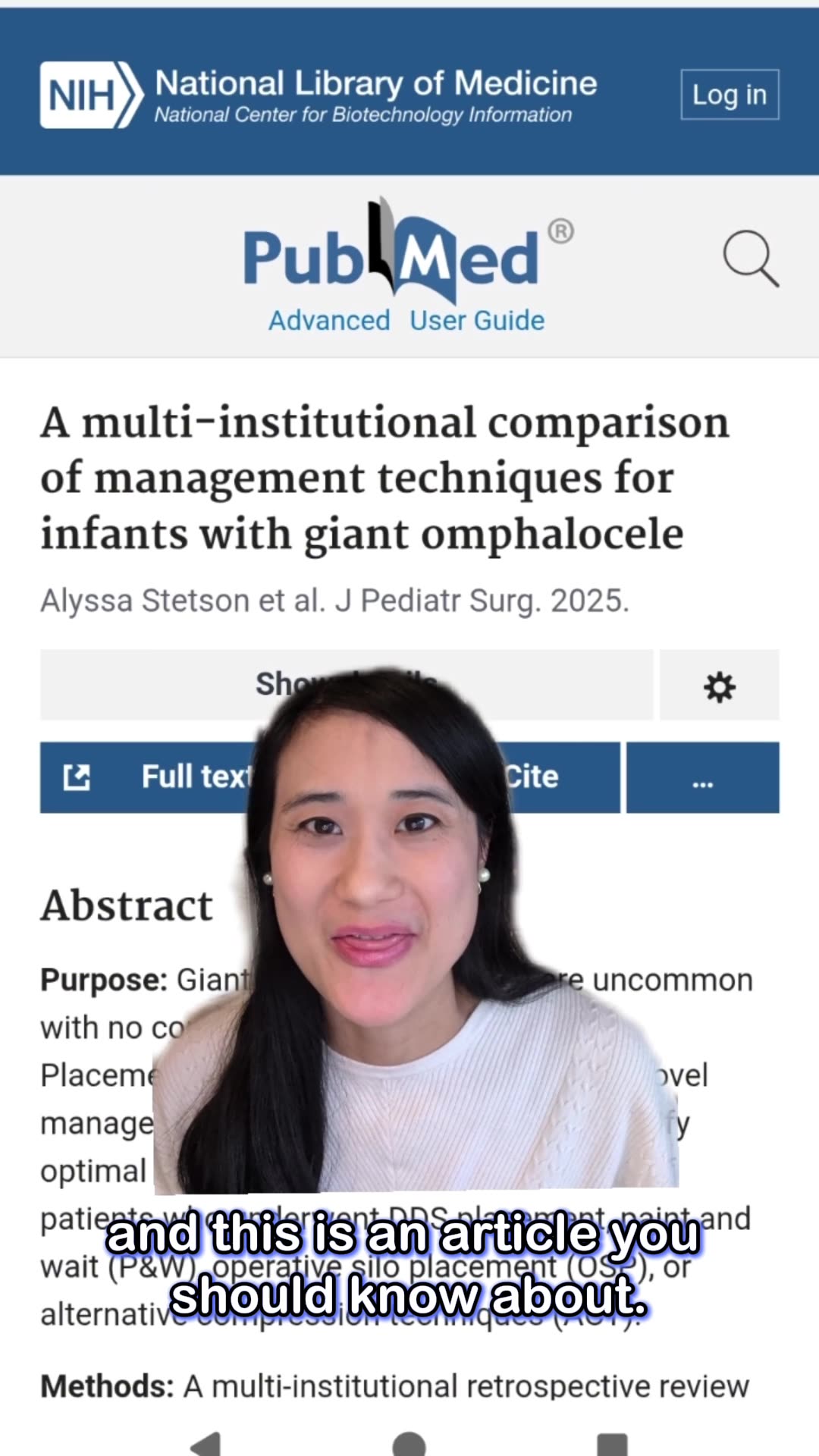
A multi-institutional comparison of management techniques for infants with giant omphalocele
 ▶
Ep 45 · 0:00
▶
Ep 45 · 0:00
host summary
Lizzie Lee summarizing a resource: What's the best way to manage a giantombalocele?
↗
▶
Ep 45 · 0:07
host summary
Lizzie Lee summarizing a resource: Four treatment approaches were compared: paint-and-wait, operative silos, compression techniques, and Duoderm silo.
↗
▶
Ep 45 · 0:07
host summary
Lizzie Lee summarizing a resource: The study examined 117 infants with giant omphalocele.
↗
▶
Ep 45 · 0:19
host summary
Lizzie Lee summarizing a resource: Babies treated with the duoderm silo were most likely to have their abdomen closed in one surgery.
↗
▶
Ep 45 · 0:19
host summary
Lizzie Lee summarizing a resource: Babies treated with Duoderm silo were most likely to have their abdomen closed in one surgery.
↗
▶
Ep 45 · 0:24
host summary
Lizzie Lee summarizing a resource: Approximately 80% of infants treated with Duoderm silo achieved single-stage abdominal closure.
↗
▶
Ep 45 · 0:24
host summary
Lizzie Lee summarizing a resource: About 8 out of 10 did.
↗
▶
Ep 45 · 0:25
host summary
Lizzie Lee summarizing a resource: Some babies treated with operative silos achieved closure sooner than other methods.
↗
▶
Ep 45 · 0:25
host summary
Lizzie Lee summarizing a resource: The overall chance of complications was similar across all four treatment methods.
↗
▶
Ep 45 · 0:32
host summary
Lizzie Lee summarizing a resource: Almost half of the babies needed 6 months or more before the abdomen could be fully closed.
↗
▶
Ep 45 · 0:32
host summary
Lizzie Lee summarizing a resource: Almost half of the infants required six months or more before complete abdominal closure could be achieved.
↗
▶
Ep 45 · 0:38
host summary
Lizzie Lee summarizing a resource: There is no one-size-fits-all treatment for giant omphalocele.
↗
▶
Ep 45 · 0:38
host summary
Lizzie Lee summarizing a resource: Duoderm silos may be a particularly good option when the goal is single-stage abdominal closure.
↗
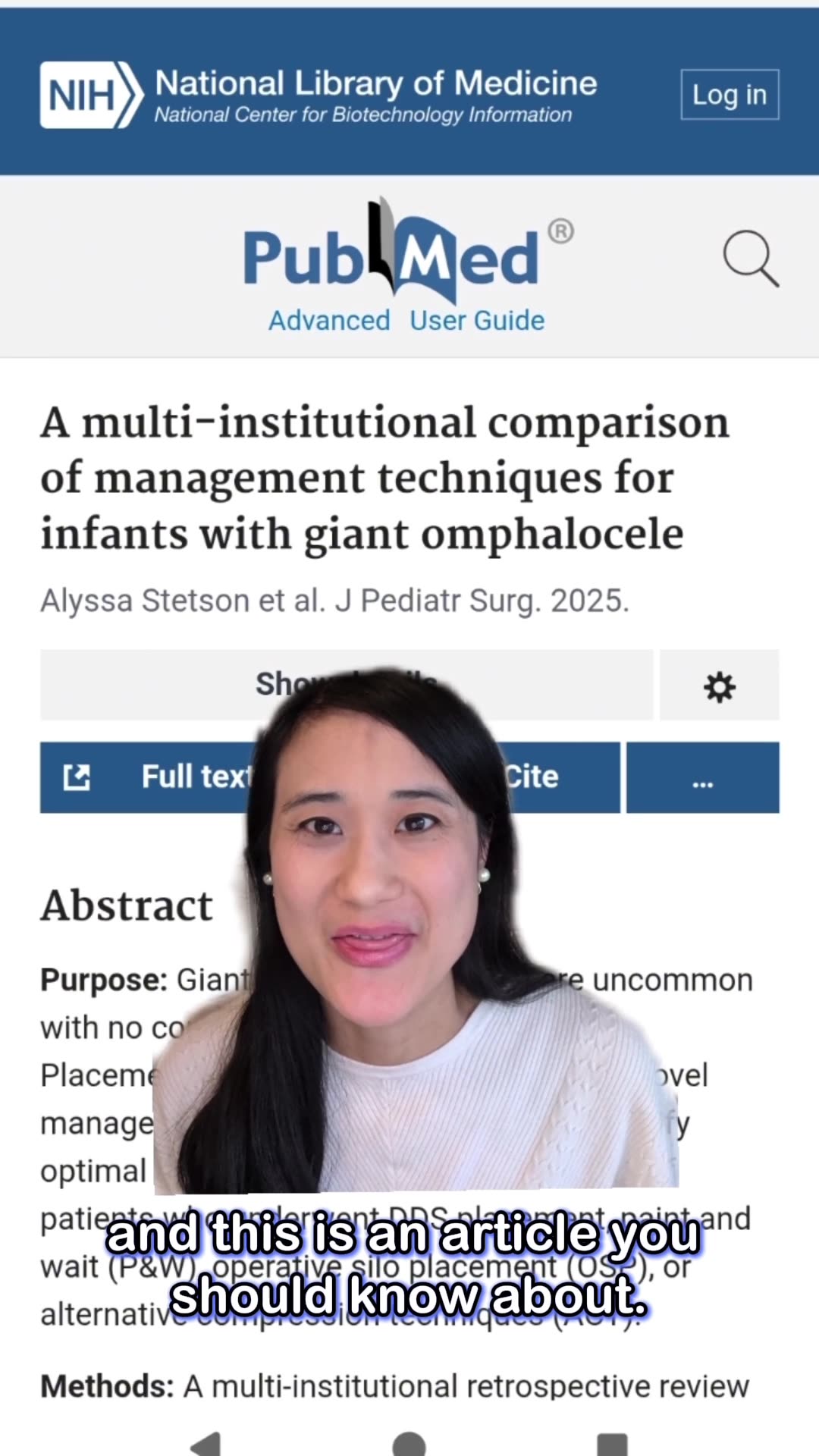
A multi-institutional comparison of management techniques for infants with giant omphalocele
 ▶
Ep 46 · 0:00
▶
Ep 46 · 0:00
host summary
Lizzie Lee summarizing a resource: What's the best way to manage a giantombalocele?
↗
▶
Ep 46 · 0:07
host summary
Lizzie Lee summarizing a resource: Four treatment approaches were compared: paint-and-wait, operative silos, compression techniques, and Duoderm silo
↗
▶
Ep 46 · 0:07
host summary
Lizzie Lee summarizing a resource: The study examined 117 infants with giant omphalocele
↗
▶
Ep 46 · 0:19
host summary
Lizzie Lee summarizing a resource: Babies treated with Duoderm silo were most likely to have their abdomen closed in one surgery
↗
▶
Ep 46 · 0:19
host summary
Lizzie Lee summarizing a resource: Babies treated with the duoderm silo were most likely to have their abdomen closed in one surgery.
↗
▶
Ep 46 · 0:24
host summary
Lizzie Lee summarizing a resource: Approximately 80% of infants treated with Duoderm silo achieved single-surgery abdominal closure
↗
▶
Ep 46 · 0:24
host summary
Lizzie Lee summarizing a resource: About 8 out of 10 did.
↗
▶
Ep 46 · 0:25
host summary
Lizzie Lee summarizing a resource: Complication rates were similar across all four management methods
↗
▶
Ep 46 · 0:25
host summary
Lizzie Lee summarizing a resource: Some babies treated with operative silos achieved closure sooner than other methods
↗
▶
Ep 46 · 0:32
host summary
Lizzie Lee summarizing a resource: Almost half of infants required 6 months or more before complete abdominal closure could be achieved
↗
▶
Ep 46 · 0:38
host summary
Lizzie Lee summarizing a resource: There is no universal best treatment approach for giant omphalocele
↗
▶
Ep 46 · 0:38
host summary
Lizzie Lee summarizing a resource: Duoderm silos may be particularly beneficial when the goal is single-stage abdominal closure
↗
▶
Ep 46 · 0:38
host summary
Lizzie Lee summarizing a resource: There's no one size fits all treatment, but Duoderm silos may be a really good option for certain babies, especially when the goal is closing the abdomen in one step.
↗
Summaries Lizzie gave as host · Acute Recurrent Pancreatitis
10 summaries
Open the Acute Recurrent Pancreatitis collection →
Pancreatitis in pediatric patients with pancreatic solid pseudopapillary neoplasms- a single center experience
 ▶
Ep 4 · 0:00
▶
Ep 4 · 0:00
host summary
Lizzie Lee summarizing a resource: What if curing a rare pancreatic tumor sets the stage for chronic pancreatitis?
↗
▶
Ep 4 · 0:09
host summary
Lizzie Lee summarizing a resource: Solid pseudopapillary neoplasms are one of the most frequent pancreatic tumors in pediatric patients
↗
▶
Ep 4 · 0:15
host summary
Lizzie Lee summarizing a resource: Surgery for solid pseudopapillary neoplasms is usually curative and outcomes are excellent
↗
▶
Ep 4 · 0:22
host summary
Lizzie Lee summarizing a resource: In a single center study, 10 adolescent girls underwent surgical resection for solid pseudopapillary neoplasms
↗
▶
Ep 4 · 0:25
host summary
Lizzie Lee summarizing a resource: 3 out of 10 patients developed acute recurrent or chronic pancreatitis after resection
↗
▶
Ep 4 · 0:32
host summary
Lizzie Lee summarizing a resource: Every patient who developed ongoing pancreatitis had genetic risk factors like the CFTR gene variant, or they had pancreas divisum.
↗
▶
Ep 4 · 0:32
host summary
Lizzie Lee summarizing a resource: Every patient who developed ongoing pancreatitis had genetic risk factors like CFTR gene variants or pancreas divisum
↗
▶
Ep 4 · 0:40
host summary
Lizzie Lee summarizing a resource: Some patients with post-resection pancreatitis ultimately required completion pancreatectomy
↗
▶
Ep 4 · 0:45
host summary
Lizzie Lee summarizing a resource: Even low grade tumors can carry high stakes consequences.
↗
▶
Ep 4 · 0:48
host summary
Lizzie Lee summarizing a resource: Identifying genetic and anatomic risk factors before surgery may change management of patients with solid pseudopapillary neoplasms
↗
Summaries Lizzie gave as host · Advances in Pediatric Surgery
12 summaries
Open the Advances in Pediatric Surgery collection →
The fetal frontier: A review of current and emerging fetal therapies for genetic diseases
 ▶
Ep 3 · 0:00
▶
Ep 3 · 0:00
host summary
Lizzie Lee summarizing a resource: What if we could treat genetic diseases before a baby is even born?
↗
▶
Ep 3 · 0:14
host summary
Lizzie Lee summarizing a resource: Faster prenatal diagnosis enables detection of many genetic conditions early
↗
▶
Ep 3 · 0:18
host summary
Lizzie Lee summarizing a resource: Medications can be given to the mother that cross the placenta
↗
▶
Ep 3 · 0:18
host summary
Lizzie Lee summarizing a resource: Enzyme replacement therapy can be delivered directly to the fetus
↗
▶
Ep 3 · 0:24
host summary
Lizzie Lee summarizing a resource: Protein therapy can be delivered to the fetus
↗
▶
Ep 3 · 0:24
host summary
Lizzie Lee summarizing a resource: Stem cells can be delivered to the fetus
↗
▶
Ep 3 · 0:27
host summary
Lizzie Lee summarizing a resource: The fetus has a more tolerant immune system compared to postnatal life
↗
▶
Ep 3 · 0:27
host summary
Lizzie Lee summarizing a resource: The fetus actually has some advantages for treatment, a more tolerant immune system and a more permissive blood-brain barrier.
↗
▶
Ep 3 · 0:27
host summary
Lizzie Lee summarizing a resource: The fetus has a more permissive blood-brain barrier compared to postnatal life
↗
▶
Ep 3 · 0:34
host summary
Lizzie Lee summarizing a resource: Most fetal therapies for genetic diseases are still experimental
↗
▶
Ep 3 · 0:38
host summary
Lizzie Lee summarizing a resource: Fetal intervention aims to prevent lifelong disease by treating during fetal development
↗
▶
Ep 3 · 0:38
host summary
Lizzie Lee summarizing a resource: Intervene during fetal development to prevent lifelong disease.
↗
Summaries Lizzie gave as host · Aerodigestive / ENT
28 summaries
Open the Aerodigestive / ENT collection →
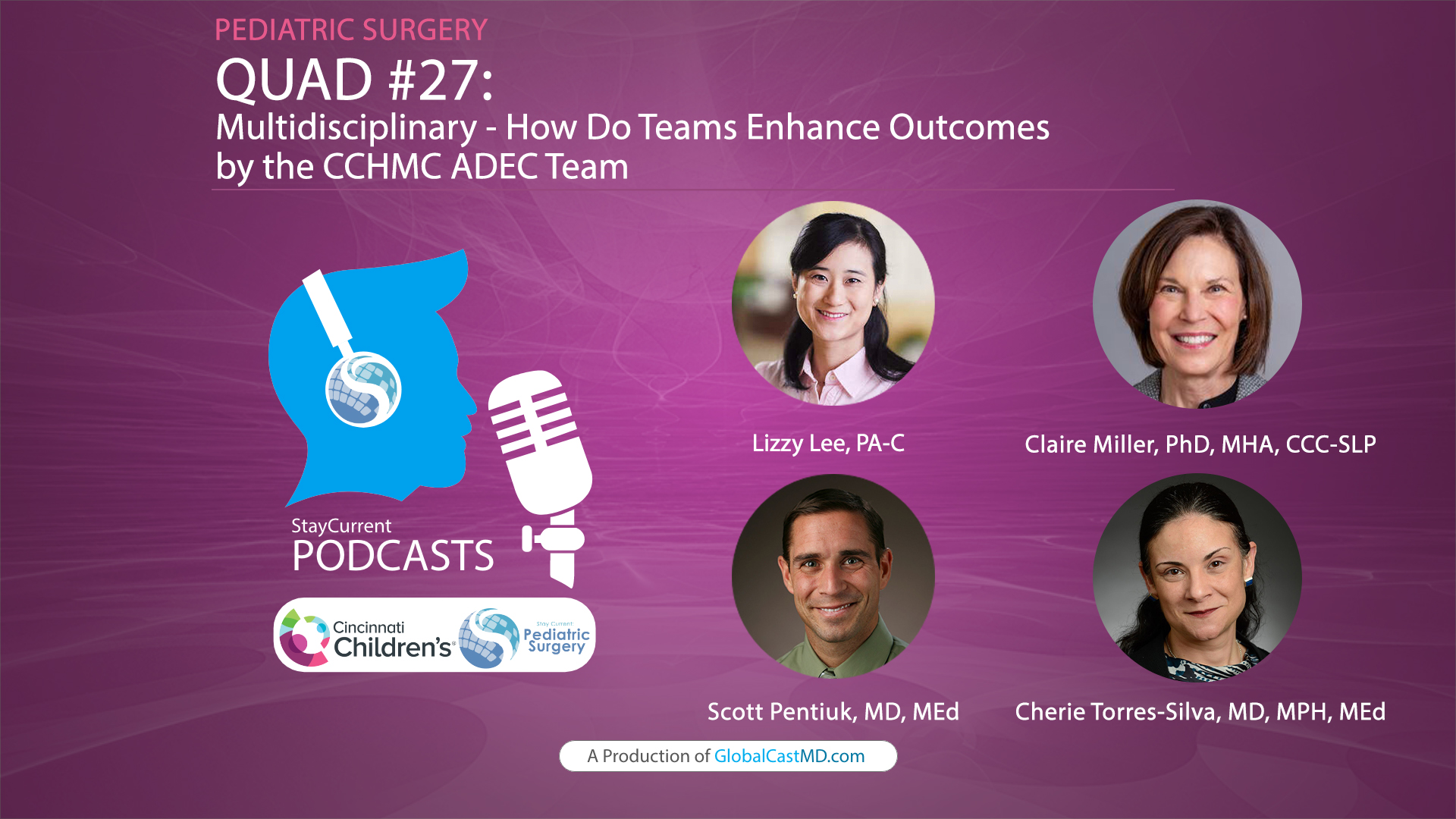
QUAD #27 - Multidisciplinary - How Do Teams Enhance Outcomes by the CCHMC ADEC Team
 ▶
Ep 25 · 0:15
▶
Ep 25 · 0:15
host summary
Lizzie Lee summarizing the discussion: Cincinnati Children's Hospital hosted the Quad Conference in October 2022, combining four conferences: International Organization for Esophageal Atresia, Aerodigestive Society Conference, Cincinnati Children's Airway Course, and Cincinnati Children's Pediatric Dysphagia Series.
↗
▶
Ep 25 · 0:47
host summary
Lizzie Lee summarizing the discussion: Cincinnati Children's has one of the largest aerodigestive centers in the world.
↗
▶
Ep 25 · 0:55
host summary
Lizzie Lee summarizing the discussion: The expert multidisciplinary team includes speech pathology, otolaryngology, gastroenterology, pulmonology, and pediatric general surgery.
↗
▶
Ep 25 · 1:37
host summary
Lizzie Lee summarizing the discussion: The center provides coordinated multidisciplinary care to children with congenital or acquired complex digestive and airway disorders.
↗
▶
Ep 25 · 2:52
host summary
Lizzie Lee summarizing the discussion: Video fluoroscopic swallowing study analyzes different phases of swallowing.
↗
▶
Ep 25 · 2:59
host summary
Lizzie Lee summarizing the discussion: FEES (fiber optic endoscopic evaluation of swallowing study) allows visualization of pharyngeal and laryngeal structures and assessment of function, aspiration, and residual after each swallow.
↗
▶
Ep 25 · 3:48
host summary
Lizzie Lee summarizing the discussion: ENT looks at swallowing study results and helps stratify the risk of proceeding with airway reconstruction and decannulation.
↗
▶
Ep 25 · 3:54
host summary
Lizzie Lee summarizing the discussion: In aerodigestive patients, ENT performs esophageal and airway reconstruction, cleft repair, drool procedures, and manages vocal folds and mobility.
↗
▶
Ep 25 · 4:19
host summary
Lizzie Lee summarizing the discussion: GERD pathophysiology includes an incompetent lower esophageal sphincter.
↗
▶
Ep 25 · 4:42
host summary
Lizzie Lee summarizing the discussion: General signs and symptoms of GERD include regurgitation, vomiting, and heartburn.
↗
▶
Ep 25 · 5:28
host summary
Lizzie Lee summarizing the discussion: Data shows an increase in airway surgery complications in patients who were later found to have eosinophilic esophagitis.
↗
▶
Ep 25 · 5:40
host summary
Lizzie Lee summarizing the discussion: Anatomic issues in aerodigestive patients include strictures that need balloon dilations or stenting.
↗
▶
Ep 25 · 6:13
host summary
Lizzie Lee summarizing the discussion: When 25 patients in the aerodigestive program were assessed, 76% of them had a feeding disorder.
↗
▶
Ep 25 · 6:54
host summary
Lizzie Lee summarizing the discussion: Patients at risk for pulmonary insufficiency include preemies with chronic lung disease, patients with restrictive lung disease, congenital or acquired abnormalities, and heart disease like pulmonary hypertension.
↗
▶
Ep 25 · 7:20
host summary
Lizzie Lee summarizing the discussion: Underlying pulmonary insufficiency should be suspected if patients have had complicated respiratory infections requiring positive pressure ventilation.
↗
▶
Ep 25 · 7:48
host summary
Lizzie Lee summarizing the discussion: Risk factors for upper airway obstruction include airway abnormalities like mid-face hypoplasia, skeletal dysplasia, decreased muscle tone, and syndromes associated with airway obstruction.
↗
▶
Ep 25 · 8:13
host summary
Lizzie Lee summarizing the discussion: Risk factors for lower airway obstruction include acquired or congenital thoracic deformities and those who had thoracotomies done in the past.
↗
▶
Ep 25 · 9:15
host summary
Lizzie Lee summarizing the discussion: For patients with ventilatory insufficiency, the pulmonologist determines if the child still needs ventilatory support and whether they are ready for decannulation.
↗
▶
Ep 25 · 9:26
host summary
Lizzie Lee summarizing the discussion: The pulmonologist assesses how ready the patient is for weaning from the vent and whether they can start or advance feeding.
↗
▶
Ep 25 · 9:41
host summary
Lizzie Lee summarizing the discussion: In the NICU, general surgeons obtain feeding access, manage anorectal malformations, and perform surgical procedures such as tracheopexies and lung resections.
↗
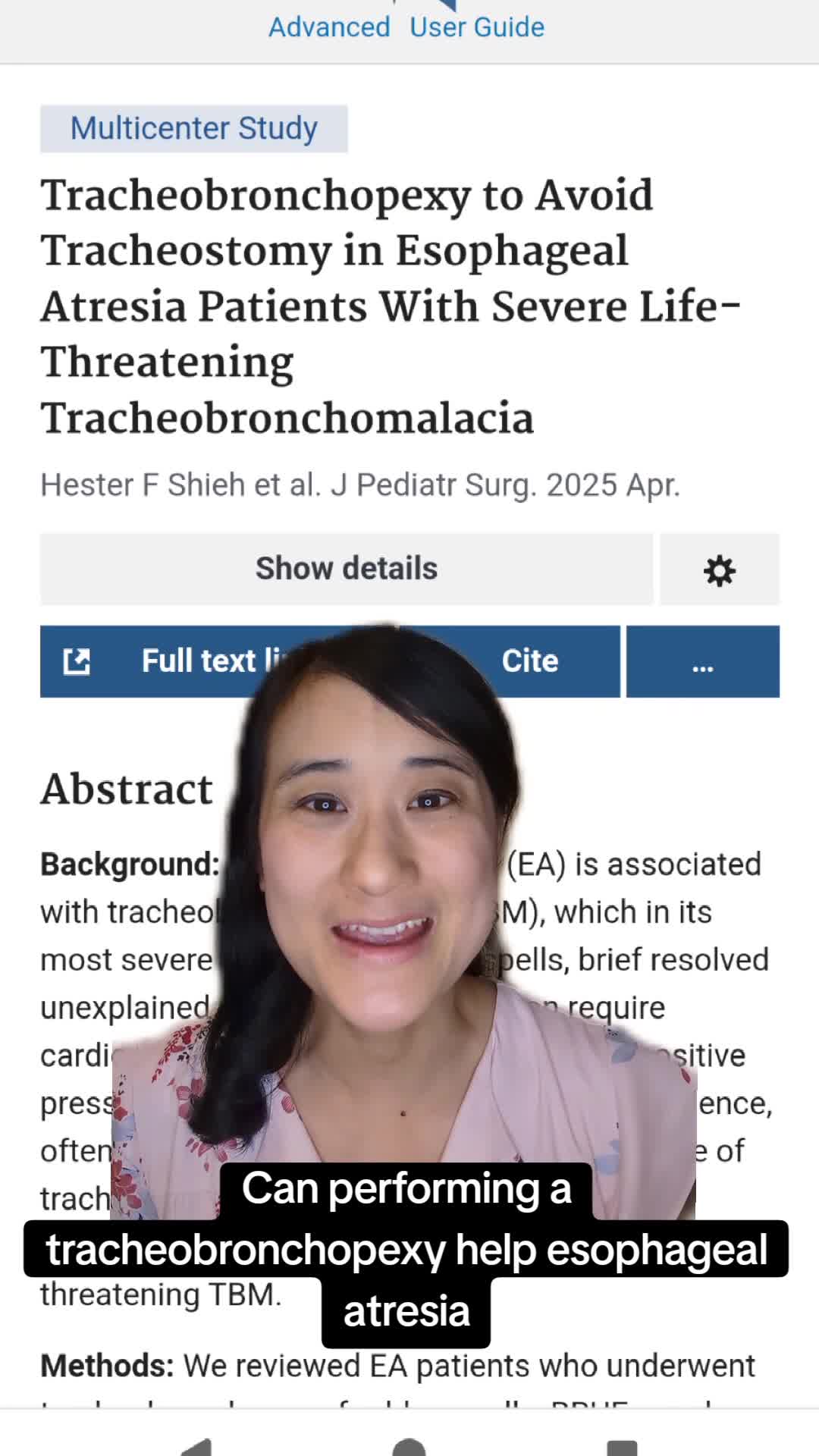
Tracheobronchopexy to Avoid Tracheostomy in Esophageal Atresia Patients With Severe Life-Threatening Tracheobronchomalacia
 ▶
Ep 26 · 0:00
▶
Ep 26 · 0:00
host summary
Lizzie Lee summarizing a resource: Can performing a tracheobronchopexy help oesophageal atresia patients with severe tracheobronchoalacia avoid getting a tracheostomy?
↗
▶
Ep 26 · 0:13
host summary
Lizzie Lee summarizing a resource: Esophageal atresia patients often have tracheobronchomalacia
↗
▶
Ep 26 · 0:13
host summary
Lizzie Lee summarizing a resource: Tracheobronchomalacia can cause serious breathing problems like blue spells in esophageal atresia patients
↗
▶
Ep 26 · 0:23
host summary
Lizzie Lee summarizing a resource: A retrospective observational study reviewed 80 esophageal atresia patients who underwent tracheobronchopexy at two hospitals between 2013 and 2021
↗
▶
Ep 26 · 0:33
host summary
Lizzie Lee summarizing a resource: 94% of esophageal atresia patients who underwent tracheobronchopexy were able to avoid a tracheostomy
↗
▶
Ep 26 · 0:38
host summary
Lizzie Lee summarizing a resource: Tracheobronchopexy significantly reduced life-threatening breathing events in esophageal atresia patients
↗
▶
Ep 26 · 0:38
host summary
Lizzie Lee summarizing a resource: Tracheobronchopexy significantly reduced the need for positive pressure ventilation in esophageal atresia patients
↗
▶
Ep 26 · 0:38
host summary
Lizzie Lee summarizing a resource: Tracheobronchopexy significantly reduced ventilator dependence in esophageal atresia patients
↗
Summaries Lizzie gave as host · Anorectal Malformation
36 summaries
Open the Anorectal Malformation collection →
Finnish Pediatric Surgery Hub - From Centralization to Collective Learning and Sharing of Expertise
 ▶
Ep 60 · 0:00
▶
Ep 60 · 0:00
host summary
Lizzie Lee summarizing a resource: Does creating a collaborative initiative help with providing high quality pediatric surgical care?
↗
▶
Ep 60 · 0:10
host summary
Lizzie Lee summarizing a resource: The Finnish Pediatric Surgery Hub was established in 2021 by pediatric surgeons from Finland's five neonatal surgery centers.
↗
▶
Ep 60 · 0:18
host summary
Lizzie Lee summarizing a resource: The most frequent diagnoses included anorectal malformations, esophageal atresia, and Hirschsprung disease.
↗
▶
Ep 60 · 0:18
host summary
Lizzie Lee summarizing a resource: The hub performed 34 elective and 6 urgent cases total.
↗
▶
Ep 60 · 0:28
host summary
Lizzie Lee summarizing a resource: The hub held regular monthly virtual meetings to present new patients, discuss complex cases, and follow up on patients after surgery.
↗
▶
Ep 60 · 0:36
host summary
Lizzie Lee summarizing a resource: Their findings suggest that the Finnish Pediatric Surgery hub fosters an effective and safe place for sharing surgical expertise and learning.
↗
▶
Ep 60 · 0:36
host summary
Lizzie Lee summarizing a resource: Findings suggest that the Finnish Pediatric Surgery hub fosters an effective and safe place for sharing surgical expertise and learning.
↗
Quick Literature Updates Episode 18
 ▶
Ep 61 · 1:10
▶
Ep 61 · 1:10
host summary
Lizzie Lee summarizes what Dr. Alex Halpern said: The ERAS, or the Enhanced Recovery after Surgery Society, used a modified Delphi technique, which is a fancy way of saying that a multidisciplinary group of experts gathered together to reach more than a 70% consensus.
↗
▶
Ep 61 · 1:10
host summary
Lizzie Lee summarizes what Dr. Alex Halpern said: The ERAS Society used a modified Delphi technique to develop recommendations for neonatal perioperative care, requiring more than 70% consensus from a multidisciplinary group of experts.
↗
▶
Ep 61 · 1:34
host summary
Lizzie Lee summarizes what Dr. Alex Halpern said: The ERAS Society agreed on 16 recommendations covering 11 topics including team communication, pre-surgery fasting, temperature control, and antibiotic use for neonatal surgical patients.
↗
▶
Ep 61 · 1:43
host summary
Lizzie Lee summarizes what Dr. Alex Halpern said: The ERAS Society did not have enough data to make recommendations about nasogastric tubes and central lines in neonatal surgical care.
↗
Comparing Loop and Divided Colostomy for Anorectal Malformation: A Systematic Review and Meta-Analysis
 ▶
Ep 63 · 0:01
▶
Ep 63 · 0:01
host summary
Lizzie Lee summarizing a resource: Which colostomy is best in pediatric patients with anorectal malformation?
↗
▶
Ep 63 · 0:10
host summary
Lizzie Lee summarizing a resource: The systematic review and meta-analysis compared clinical outcomes of loop colostomies versus divided colostomies in neonates with anorectal malformations
↗
▶
Ep 63 · 0:19
host summary
Lizzie Lee summarizing a resource: The review included 11 retrospective cohort studies
↗
▶
Ep 63 · 0:23
host summary
Lizzie Lee summarizing a resource: There were no significant differences between the two colostomy types in terms of complications such as stoma prolapse, urinary tract infections, and wound infections.
↗
▶
Ep 63 · 0:23
host summary
Lizzie Lee summarizing a resource: There were no significant differences between the two colostomy types in terms of complications such as stoma prolapse, urinary tract infections, and wound infections
↗
▶
Ep 63 · 0:31
host summary
Lizzie Lee summarizing a resource: Both colostomies are good options for fecal diversion, with the choice depending on individual patient factors and surgical expertise
↗
Morbidity of Rectal Prolapse Repair After Surgery for Anorectal Malformation
 ▶
Ep 67 · 0:00
▶
Ep 67 · 0:00
host summary
Lizzie Lee summarizing a resource: What if the safest move for rectal prolapse after anorectal malformation surgery is not to repair it?
↗
▶
Ep 67 · 0:11
host summary
Lizzie Lee summarizing a resource: A study examined 85 children treated for rectal prolapse after anorectal malformation surgery
↗
▶
Ep 67 · 0:16
host summary
Lizzie Lee summarizing a resource: Approximately 30% of children had recurrence of prolapse requiring another repair
↗
▶
Ep 67 · 0:20
host summary
Lizzie Lee summarizing a resource: Children without symptoms from prolapse at initial presentation were more likely to develop stricture later
↗
▶
Ep 67 · 0:26
host summary
Lizzie Lee summarizing a resource: Surgical repair of asymptomatic rectal prolapse may not be indicated because the treatment itself carries risks
↗
▶
Ep 67 · 0:26
host summary
Lizzie Lee summarizing a resource: surgeons need to think twice before rushing into repair if the prolapse isn't causing big symptoms, because the treatment itself can carry risks
↗
Post Operative Anal Dilatations for the Prevention of Anal Strictures in Children With Anorectal Malformation: A Systematic Review
 ▶
Ep 68 · 0:00
▶
Ep 68 · 0:00
host summary
Lizzie Lee summarizing a resource: After reconstructive surgery for anorectal malformations, dilatations are routine, but are they actually necessary?
↗
▶
Ep 68 · 0:11
host summary
Lizzie Lee summarizing a resource: Routine anal dilatations after surgery for anorectal malformations have been standard since the 1980s
↗
▶
Ep 68 · 0:18
host summary
Lizzie Lee summarizing a resource: Stricture rates after anorectal malformation surgery range from 0 to almost 40%, even with the classic Pena protocol
↗
▶
Ep 68 · 0:25
host summary
Lizzie Lee summarizing a resource: Alternative methods like weekly dilatations or skipping dilatations altogether showed similar outcomes to standard protocols
↗
▶
Ep 68 · 0:32
host summary
Lizzie Lee summarizing a resource: There is insufficient high quality evidence proving that dilatations after anorectal malformation surgery are actually necessary
↗
▶
Ep 68 · 0:37
host summary
Lizzie Lee summarizing a resource: More randomized trials are needed to determine whether post-operative anal dilatations are necessary
↗
▶
Ep 68 · 0:37
host summary
Lizzie Lee summarizing a resource: Bottom line, we might have been doing this for decades without really needing to, and we need more randomized trials to settle the debate.
↗
Quick Literature Updates Ep 23
 ▶
Ep 70 · 1:02
▶
Ep 70 · 1:02
host summary
Lizzie Lee summarizes what Dr. Alex Halpern said: The American P Paediatric Surgical Association, APSA published best practices for locum tendon surgeons, hospitals and agencies in this review article.
↗
▶
Ep 70 · 1:02
host summary
Lizzie Lee summarizes what Dr. Alex Halpern said: APSA published best practices for locum tenens surgeons, hospitals and agencies stressing the importance of patient safety and support for surgeons.
↗
▶
Ep 70 · 1:17
host summary
Lizzie Lee summarizes what Dr. Alex Halpern said: Locum tenens can help prevent burnout by offering flexible work options for a better work-life balance.
↗
▶
Ep 70 · 1:23
host summary
Lizzie Lee summarizes what Dr. Alex Halpern said: However, hospitals should avoid relying solely on locum tenants pediatric surgeons without any full-time surgeons, because this may cause patients to slip through handoffs.
↗
▶
Ep 70 · 1:23
host summary
Lizzie Lee summarizes what Dr. Alex Halpern said: Hospitals should avoid relying solely on locum tenens pediatric surgeons without any full-time surgeons, because this may cause patients to slip through handoffs.
↗
▶
Ep 70 · 1:32
host summary
Lizzie Lee summarizes what Dr. Alex Halpern said: Locum tenens agencies should sponsor CME and conduct formal exit interviews.
↗
Summaries Lizzie gave as host · Appendicitis
8 summaries
Open the Appendicitis collection →
Quick Literature Updates Ep 24
 ▶
Ep 27 · 1:03
▶
Ep 27 · 1:03
host summary
Lizzie Lee summarizes what Dr. Carlos Colunga said: The Donnati et al. study was an observational prospective study in Italy from 2013 to 2022 on 468 patients around 15 years old.
↗
▶
Ep 27 · 1:13
host summary
Lizzie Lee summarizes what Dr. Carlos Colunga said: Surgeons placed 733 pectus bars total across the 468 patients in the Donnati study.
↗
▶
Ep 27 · 1:21
host summary
Lizzie Lee summarizes what Dr. Carlos Colunga said: Bar dislocation is defined as when a pectus bar rotates more than 30 degrees out of place.
↗
▶
Ep 27 · 1:28
host summary
Lizzie Lee summarizes what Dr. Carlos Colunga said: Bridge fixation was significantly more stable than single bar fixation.
↗
▶
Ep 27 · 1:28
host summary
Lizzie Lee summarizes what Dr. Carlos Colunga said: Bridge fixation was significantly more stable than single bar fixation for pectus repair.
↗
▶
Ep 27 · 1:33
host summary
Lizzie Lee summarizes what Dr. Carlos Colunga said: None of the patients with bridge fixation had dislocated bars compared to those who underwent the single bar technique.
↗
▶
Ep 27 · 1:33
host summary
Lizzie Lee summarizes what Dr. Carlos Colunga said: None of the patients with bridge fixation had dislocated bars compared to those who underwent the single bar technique.
↗
▶
Ep 27 · 1:39
host summary
Lizzie Lee summarizes what Dr. Carlos Colunga said: Bridge fixation is the best technique for preventing bar dislocation in pectus excavatum patients.
↗
Summaries Lizzie gave as host · Appendicitis
8 summaries
Open the Appendicitis collection →
Quick Literature Updates Ep 24
▶
Ep 12 · 1:03
host summary
Lizzie Lee summarizes what Dr. Carlos Colunga said: The Donnati et al. study was an observational prospective study in Italy from 2013 to 2022 on 468 patients around 15 years old.
↗
▶
Ep 12 · 1:13
host summary
Lizzie Lee summarizes what Dr. Carlos Colunga said: Surgeons placed 733 pectus bars total across the 468 patients in the Donnati study.
↗
▶
Ep 12 · 1:21
host summary
Lizzie Lee summarizes what Dr. Carlos Colunga said: Bar dislocation is defined as when a pectus bar rotates more than 30 degrees out of place.
↗
▶
Ep 12 · 1:28
host summary
Lizzie Lee summarizes what Dr. Carlos Colunga said: Bridge fixation was significantly more stable than single bar fixation for pectus repair.
↗
▶
Ep 12 · 1:28
host summary
Lizzie Lee summarizes what Dr. Carlos Colunga said: Bridge fixation was significantly more stable than single bar fixation.
↗
▶
Ep 12 · 1:33
host summary
Lizzie Lee summarizes what Dr. Carlos Colunga said: None of the patients with bridge fixation had dislocated bars compared to those who underwent the single bar technique.
↗
▶
Ep 12 · 1:33
host summary
Lizzie Lee summarizes what Dr. Carlos Colunga said: None of the patients with bridge fixation had dislocated bars compared to those who underwent the single bar technique.
↗
▶
Ep 12 · 1:39
host summary
Lizzie Lee summarizes what Dr. Carlos Colunga said: Bridge fixation is the best technique for preventing bar dislocation in pectus excavatum patients.
↗
Summaries Lizzie gave as host · CHARGE Syndrome
20 summaries
Open the CHARGE Syndrome collection →
QUAD #27 - Multidisciplinary - How Do Teams Enhance Outcomes by the CCHMC ADEC Team
▶
Ep 4 · 0:15
host summary
Lizzie Lee summarizing the discussion: Cincinnati Children's Hospital hosted the Quad Conference in October 2022, combining four conferences: International Organization for Esophageal Atresia, Aerodigestive Society Conference, Cincinnati Children's Airway Course, and Cincinnati Children's Pediatric Dysphagia Series.
↗
▶
Ep 4 · 0:47
host summary
Lizzie Lee summarizing the discussion: Cincinnati Children's has one of the largest aerodigestive centers in the world.
↗
▶
Ep 4 · 0:55
host summary
Lizzie Lee summarizing the discussion: The expert multidisciplinary team includes speech pathology, otolaryngology, gastroenterology, pulmonology, and pediatric general surgery.
↗
▶
Ep 4 · 1:37
host summary
Lizzie Lee summarizing the discussion: The center provides coordinated multidisciplinary care to children with congenital or acquired complex digestive and airway disorders.
↗
▶
Ep 4 · 2:52
host summary
Lizzie Lee summarizing the discussion: Video fluoroscopic swallowing study analyzes different phases of swallowing.
↗
▶
Ep 4 · 2:59
host summary
Lizzie Lee summarizing the discussion: FEES (fiber optic endoscopic evaluation of swallowing study) allows visualization of pharyngeal and laryngeal structures and assessment of function, aspiration, and residual after each swallow.
↗
▶
Ep 4 · 3:48
host summary
Lizzie Lee summarizing the discussion: ENT looks at swallowing study results and helps stratify the risk of proceeding with airway reconstruction and decannulation.
↗
▶
Ep 4 · 3:54
host summary
Lizzie Lee summarizing the discussion: In aerodigestive patients, ENT performs esophageal and airway reconstruction, cleft repair, drool procedures, and manages vocal folds and mobility.
↗
▶
Ep 4 · 4:19
host summary
Lizzie Lee summarizing the discussion: GERD pathophysiology includes an incompetent lower esophageal sphincter.
↗
▶
Ep 4 · 4:42
host summary
Lizzie Lee summarizing the discussion: General signs and symptoms of GERD include regurgitation, vomiting, and heartburn.
↗
▶
Ep 4 · 5:28
host summary
Lizzie Lee summarizing the discussion: Data shows an increase in airway surgery complications in patients who were later found to have eosinophilic esophagitis.
↗
▶
Ep 4 · 5:40
host summary
Lizzie Lee summarizing the discussion: Anatomic issues in aerodigestive patients include strictures that need balloon dilations or stenting.
↗
▶
Ep 4 · 6:13
host summary
Lizzie Lee summarizing the discussion: When 25 patients in the aerodigestive program were assessed, 76% of them had a feeding disorder.
↗
▶
Ep 4 · 6:54
host summary
Lizzie Lee summarizing the discussion: Patients at risk for pulmonary insufficiency include preemies with chronic lung disease, patients with restrictive lung disease, congenital or acquired abnormalities, and heart disease like pulmonary hypertension.
↗
▶
Ep 4 · 7:20
host summary
Lizzie Lee summarizing the discussion: Underlying pulmonary insufficiency should be suspected if patients have had complicated respiratory infections requiring positive pressure ventilation.
↗
▶
Ep 4 · 7:48
host summary
Lizzie Lee summarizing the discussion: Risk factors for upper airway obstruction include airway abnormalities like mid-face hypoplasia, skeletal dysplasia, decreased muscle tone, and syndromes associated with airway obstruction.
↗
▶
Ep 4 · 8:13
host summary
Lizzie Lee summarizing the discussion: Risk factors for lower airway obstruction include acquired or congenital thoracic deformities and those who had thoracotomies done in the past.
↗
▶
Ep 4 · 9:15
host summary
Lizzie Lee summarizing the discussion: For patients with ventilatory insufficiency, the pulmonologist determines if the child still needs ventilatory support and whether they are ready for decannulation.
↗
▶
Ep 4 · 9:26
host summary
Lizzie Lee summarizing the discussion: The pulmonologist assesses how ready the patient is for weaning from the vent and whether they can start or advance feeding.
↗
▶
Ep 4 · 9:41
host summary
Lizzie Lee summarizing the discussion: In the NICU, general surgeons obtain feeding access, manage anorectal malformations, and perform surgical procedures such as tracheopexies and lung resections.
↗
Summaries Lizzie gave as host · Chronic Pancreatitis
10 summaries
Open the Chronic Pancreatitis collection →
Pancreatitis in pediatric patients with pancreatic solid pseudopapillary neoplasms- a single center experience
▶
Ep 10 · 0:00
host summary
Lizzie Lee summarizing a resource: What if curing a rare pancreatic tumor sets the stage for chronic pancreatitis?
↗
▶
Ep 10 · 0:09
host summary
Lizzie Lee summarizing a resource: Solid pseudopapillary neoplasms are one of the most frequent pancreatic tumors in pediatric patients
↗
▶
Ep 10 · 0:15
host summary
Lizzie Lee summarizing a resource: Surgery for solid pseudopapillary neoplasms is usually curative and outcomes are excellent
↗
▶
Ep 10 · 0:22
host summary
Lizzie Lee summarizing a resource: In a single center study, 10 adolescent girls underwent surgical resection for solid pseudopapillary neoplasms
↗
▶
Ep 10 · 0:25
host summary
Lizzie Lee summarizing a resource: 3 out of 10 patients developed acute recurrent or chronic pancreatitis after resection
↗
▶
Ep 10 · 0:32
host summary
Lizzie Lee summarizing a resource: Every patient who developed ongoing pancreatitis had genetic risk factors like the CFTR gene variant, or they had pancreas divisum.
↗
▶
Ep 10 · 0:32
host summary
Lizzie Lee summarizing a resource: Every patient who developed ongoing pancreatitis had genetic risk factors like CFTR gene variants or pancreas divisum
↗
▶
Ep 10 · 0:40
host summary
Lizzie Lee summarizing a resource: Some patients with post-resection pancreatitis ultimately required completion pancreatectomy
↗
▶
Ep 10 · 0:45
host summary
Lizzie Lee summarizing a resource: Even low grade tumors can carry high stakes consequences.
↗
▶
Ep 10 · 0:48
host summary
Lizzie Lee summarizing a resource: Identifying genetic and anatomic risk factors before surgery may change management of patients with solid pseudopapillary neoplasms
↗
Summaries Lizzie gave as host · CICU / Post-op CHD Care
58 summaries
Open the CICU / Post-op CHD Care collection →
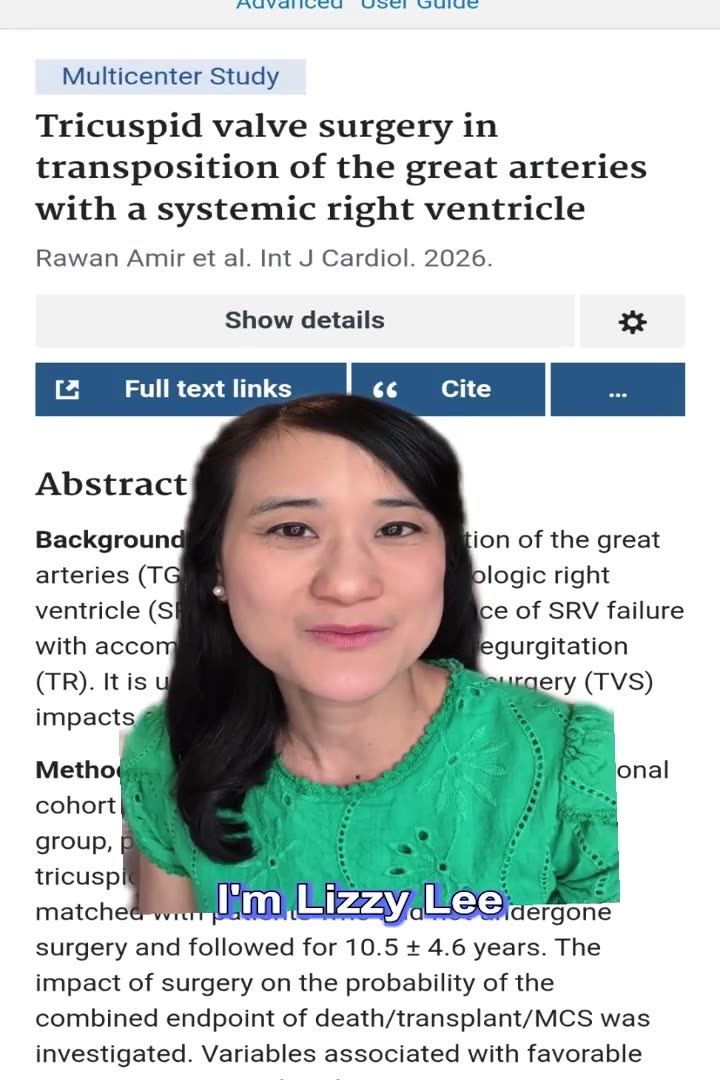
Early Tricuspid Valve Surgery for Heart Failure in Congenital Heart Disease
 ▶
Ep 3 · 0:00
▶
Ep 3 · 0:00
host summary
Lizzie Lee summarizing a resource: What if fixing a heart valve earlier could prevent heart failure and congenital heart disease?
↗
▶
Ep 3 · 0:08
host summary
Lizzie Lee summarizing a resource: The right ventricle was not built to pump blood to the whole body.
↗
▶
Ep 3 · 0:08
host summary
Lizzie Lee summarizing a resource: In adults with transposition of the great arteries, the right ventricle sometimes has to pump blood to the whole body.
↗
▶
Ep 3 · 0:16
host summary
Lizzie Lee summarizing a resource: Over time, many patients with transposition of the great arteries develop severe tricuspid regurgitation and worsening heart function.
↗
▶
Ep 3 · 0:25
host summary
Lizzie Lee summarizing a resource: Patients with moderate to severe tricuspid valve leakage but only mild to moderate ventricular dysfunction had better outcomes after surgery.
↗
▶
Ep 3 · 0:33
host summary
Lizzie Lee summarizing a resource: If the right ventricle was already severely weak, tricuspid valve surgery did not make a difference in outcomes.
↗
▶
Ep 3 · 0:37
host summary
Lizzie Lee summarizing a resource: Bottom line, in patients with transposition of the great arteries, earlier valve surgery can improve their outcomes.
↗
▶
Ep 3 · 0:37
host summary
Lizzie Lee summarizing a resource: In patients with transposition of the great arteries, earlier tricuspid valve surgery can improve outcomes.
↗
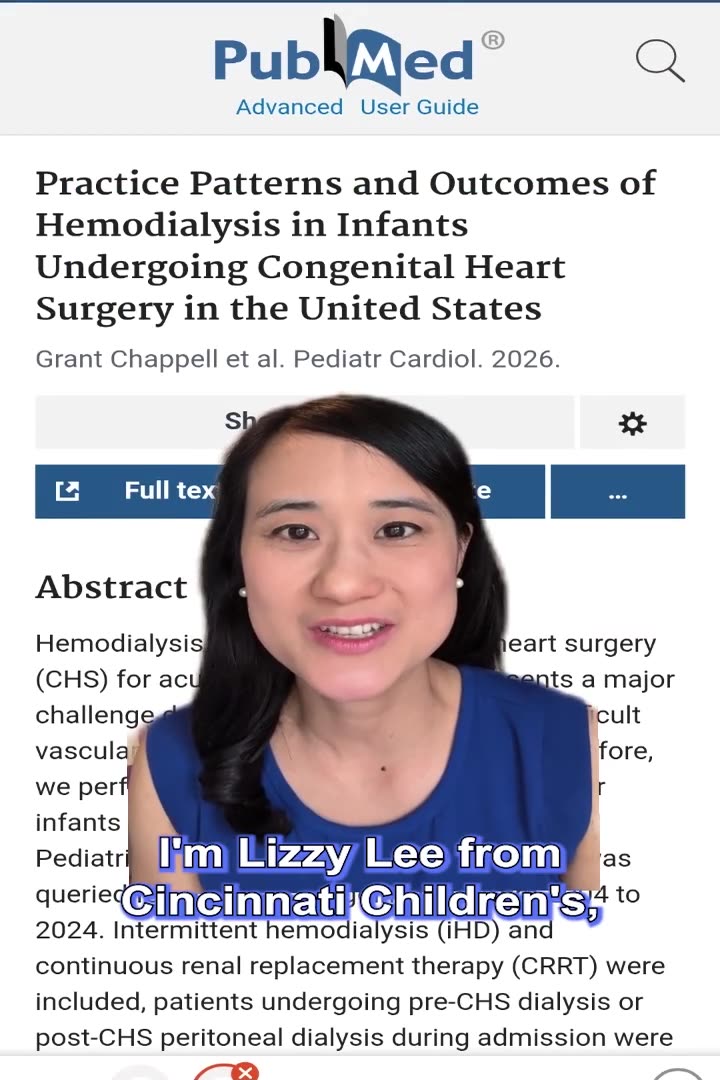
Practice Patterns and Outcomes of Hemodialysis in Infants Undergoing Congenital Heart Surgery in the
 ▶
Ep 4 · 0:00
▶
Ep 4 · 0:00
host summary
Lizzie Lee summarizing a resource: Does it matter where a baby receives care after heart surgery?
↗
▶
Ep 4 · 0:07
host summary
Lizzie Lee summarizing a resource: 1% of infants can develop severe acute kidney injury and require dialysis after congenital heart surgery
↗
▶
Ep 4 · 0:14
host summary
Lizzie Lee summarizing a resource: For infants that needed hemodialysis after congenital heart surgery, one-year survival was 46%
↗
▶
Ep 4 · 0:14
host summary
Lizzie Lee summarizing a resource: For infants that did not need hemodialysis after congenital heart surgery, one-year survival was 94%
↗
▶
Ep 4 · 0:23
host summary
Lizzie Lee summarizing a resource: Most infants requiring dialysis after congenital heart surgery received continuous renal replacement therapy rather than intermittent dialysis
↗
▶
Ep 4 · 0:30
host summary
Lizzie Lee summarizing a resource: Where the baby was treated mattered a lot.
↗
▶
Ep 4 · 0:33
host summary
Lizzie Lee summarizing a resource: Hospitals that use dialysis more frequently had 3 times higher hospital survival for infants after congenital heart surgery
↗
▶
Ep 4 · 0:33
host summary
Lizzie Lee summarizing a resource: Hospitals that use dialysis more frequently had double the 1-year survival rate for infants after congenital heart surgery
↗
▶
Ep 4 · 0:39
host summary
Lizzie Lee summarizing a resource: Dialysis after infant heart surgery is rare
↗
▶
Ep 4 · 0:44
host summary
Lizzie Lee summarizing a resource: Outcomes may improve when infants requiring dialysis after heart surgery are treated at a center with more experience in using dialysis
↗
Practice Patterns and Outcomes of Hemodialysis in Infants Undergoing Congenital Heart Surgery in the
 ▶
Ep 5 · 0:00
▶
Ep 5 · 0:00
host summary
Lizzie Lee summarizing a resource: Does it matter where a baby receives care after heart surgery?
↗
▶
Ep 5 · 0:07
host summary
Lizzie Lee summarizing a resource: 1% of infants can develop severe acute kidney injury and require dialysis after congenital heart surgery
↗
▶
Ep 5 · 0:14
host summary
Lizzie Lee summarizing a resource: For infants not needing hemodialysis after congenital heart surgery, one-year survival was 94%
↗
▶
Ep 5 · 0:14
host summary
Lizzie Lee summarizing a resource: For infants needing hemodialysis after congenital heart surgery, one-year survival was 46%
↗
▶
Ep 5 · 0:23
host summary
Lizzie Lee summarizing a resource: Most infants requiring dialysis after congenital heart surgery received continuous renal replacement therapy rather than intermittent dialysis
↗
▶
Ep 5 · 0:30
host summary
Lizzie Lee summarizing a resource: Where the baby was treated mattered a lot.
↗
▶
Ep 5 · 0:33
host summary
Lizzie Lee summarizing a resource: Hospitals that use dialysis more frequently had 3 times higher hospital survival for infants after congenital heart surgery
↗
▶
Ep 5 · 0:33
host summary
Lizzie Lee summarizing a resource: Hospitals that use dialysis more frequently had double the 1-year survival rate for infants after congenital heart surgery
↗
▶
Ep 5 · 0:39
host summary
Lizzie Lee summarizing a resource: Dialysis after infant heart surgery is rare
↗
▶
Ep 5 · 0:44
host summary
Lizzie Lee summarizing a resource: Outcomes may improve when infants requiring dialysis after heart surgery are treated at a center with more experience in using dialysis
↗
Practice Patterns and Outcomes of Hemodialysis in Infants Undergoing Congenital Heart Surgery in the
 ▶
Ep 6 · 0:00
▶
Ep 6 · 0:00
host summary
Lizzie Lee summarizing a resource: Does it matter where a baby receives care after heart surgery?
↗
▶
Ep 6 · 0:07
host summary
Lizzie Lee summarizing a resource: 1% of infants can develop severe acute kidney injury and require dialysis after congenital heart surgery
↗
▶
Ep 6 · 0:14
host summary
Lizzie Lee summarizing a resource: For infants needing hemodialysis after congenital heart surgery, one-year survival was 46%
↗
▶
Ep 6 · 0:14
host summary
Lizzie Lee summarizing a resource: For infants not needing hemodialysis after congenital heart surgery, one-year survival was 94%
↗
▶
Ep 6 · 0:23
host summary
Lizzie Lee summarizing a resource: Most infants requiring dialysis after congenital heart surgery received continuous renal replacement therapy rather than intermittent dialysis
↗
▶
Ep 6 · 0:30
host summary
Lizzie Lee summarizing a resource: Where the baby was treated mattered a lot.
↗
▶
Ep 6 · 0:33
host summary
Lizzie Lee summarizing a resource: Hospitals that use dialysis more frequently had 3 times higher hospital survival for infants after congenital heart surgery
↗
▶
Ep 6 · 0:33
host summary
Lizzie Lee summarizing a resource: Hospitals that use dialysis more frequently had double the 1-year survival rate for infants after congenital heart surgery
↗
▶
Ep 6 · 0:39
host summary
Lizzie Lee summarizing a resource: Dialysis after infant heart surgery is rare
↗
▶
Ep 6 · 0:44
host summary
Lizzie Lee summarizing a resource: Outcomes may improve when infants requiring dialysis after heart surgery are treated at a center with more experience in using dialysis
↗
Practice Patterns and Outcomes of Hemodialysis in Infants Undergoing Congenital Heart Surgery...
 ▶
Ep 7 · 0:00
▶
Ep 7 · 0:00
host summary
Lizzie Lee summarizing a resource: Does it matter where a baby receives care after heart surgery?
↗
▶
Ep 7 · 0:07
host summary
Lizzie Lee summarizing a resource: 1% of infants develop severe acute kidney injury requiring dialysis after congenital heart surgery
↗
▶
Ep 7 · 0:14
host summary
Lizzie Lee summarizing a resource: One-year survival for infants requiring hemodialysis after congenital heart surgery is 46%
↗
▶
Ep 7 · 0:14
host summary
Lizzie Lee summarizing a resource: One-year survival for infants not requiring hemodialysis after congenital heart surgery is 94%
↗
▶
Ep 7 · 0:23
host summary
Lizzie Lee summarizing a resource: Most infants requiring dialysis after congenital heart surgery received continuous renal replacement therapy rather than intermittent dialysis
↗
▶
Ep 7 · 0:30
host summary
Lizzie Lee summarizing a resource: Where the baby was treated mattered a lot.
↗
▶
Ep 7 · 0:33
host summary
Lizzie Lee summarizing a resource: Hospitals that use dialysis more frequently had 3 times higher hospital survival for infants after congenital heart surgery
↗
▶
Ep 7 · 0:33
host summary
Lizzie Lee summarizing a resource: Hospitals that use dialysis more frequently had double the 1-year survival rate for infants after congenital heart surgery
↗
▶
Ep 7 · 0:39
host summary
Lizzie Lee summarizing a resource: Dialysis after infant heart surgery is rare
↗
▶
Ep 7 · 0:44
host summary
Lizzie Lee summarizing a resource: Outcomes for infants requiring dialysis after heart surgery may improve when treated at centers with more experience in using dialysis
↗
Surgical and Catheter-Based Intervention in Pediatric Pulmonary Vein Stenosis
 ▶
Ep 8 · 0:00
▶
Ep 8 · 0:00
host summary
Lizzie Lee summarizing a resource: Can you ever truly fix pulmonary vein stenosis?
↗
▶
Ep 8 · 0:06
host summary
Lizzie Lee summarizing a resource: Pulmonary vein stenosis is a rare but serious condition where the veins from the lungs to the heart become narrowed
↗
▶
Ep 8 · 0:12
host summary
Lizzie Lee summarizing a resource: A study from Cincinnati Children's examined 56 children comparing surgery versus catheter-based interventions for pulmonary vein stenosis
↗
▶
Ep 8 · 0:23
host summary
Lizzie Lee summarizing a resource: Over time, catheter-based treatments became the preferred first option for pulmonary vein stenosis
↗
▶
Ep 8 · 0:28
host summary
Lizzie Lee summarizing a resource: Surgery was reserved for complex cases involving multiple severely affected veins or other heart defects
↗
▶
Ep 8 · 0:34
host summary
Lizzie Lee summarizing a resource: Recurrence of pulmonary vein stenosis remained common regardless of the initial intervention type
↗
▶
Ep 8 · 0:34
host summary
Lizzie Lee summarizing a resource: Most reinterventions for pulmonary vein stenosis occurred within the first year after initial treatment
↗
▶
Ep 8 · 0:34
host summary
Lizzie Lee summarizing a resource: 92% of children with pulmonary vein stenosis needed another intervention after initial treatment
↗
▶
Ep 8 · 0:45
host summary
Lizzie Lee summarizing a resource: So pulmonary vein stenosis isn't a one-time fix.
↗
▶
Ep 8 · 0:48
host summary
Lizzie Lee summarizing a resource: Pulmonary vein stenosis requires ongoing surveillance, repeated interventions, and a long-term multidisciplinary approach
↗
Summaries Lizzie gave as host · Cleft Lip and Palate
11 summaries
Open the Cleft Lip and Palate collection →
Optimal Outcome Reporting 5 and 8 Years Following Cleft Palate Repair
 ▶
Ep 1 · 0:00
▶
Ep 1 · 0:00
host summary
Lizzie Lee summarizing a resource: How do we actually define a successful outcome after cleft palate surgical repair?
↗
▶
Ep 1 · 0:09
host summary
Lizzie Lee summarizing a resource: There has not been a standardized way to measure outcomes after cleft palate repair
↗
▶
Ep 1 · 0:14
host summary
Lizzie Lee summarizing a resource: Optimal outcome reporting (OOR) is a new metric for measuring cleft palate repair outcomes
↗
▶
Ep 1 · 0:20
host summary
Lizzie Lee summarizing a resource: Best case surgical outcome for cleft palate repair is defined as one operation, no unintended fistula, and normal speech function
↗
▶
Ep 1 · 0:20
host summary
Lizzie Lee summarizing a resource: Basically, the best case surgical outcome means one operation, no unintended fistula, and normal speech function.
↗
▶
Ep 1 · 0:28
host summary
Lizzie Lee summarizing a resource: About 70% of patients achieve optimal outcome 5 years after cleft palate repair
↗
▶
Ep 1 · 0:28
host summary
Lizzie Lee summarizing a resource: Nearly 75% of patients achieve optimal outcome 8 years after cleft palate repair
↗
▶
Ep 1 · 0:39
host summary
Lizzie Lee summarizing a resource: Absence of underlying syndromes is associated with better long-term outcomes after cleft palate repair
↗
▶
Ep 1 · 0:39
host summary
Lizzie Lee summarizing a resource: Specific cleft types are associated with better long-term outcomes after cleft palate repair
↗
▶
Ep 1 · 0:39
host summary
Lizzie Lee summarizing a resource: Younger age at surgery is associated with better long-term outcomes after cleft palate repair
↗
▶
Ep 1 · 0:47
host summary
Lizzie Lee summarizing a resource: Optimal outcome reporting provides surgeons a clear, measurable way to track success
↗
Summaries Lizzie gave as host · Colorectal / ARM & Hirschsprung
76 summaries
Open the Colorectal / ARM & Hirschsprung collection →
The use of postoperative calibrations in Hirschsprung disease
 ▶
Ep 168 · 0:00
▶
Ep 168 · 0:00
host summary
Lizzie Lee summarizing a resource: For patients with Hirschsprung disease who undergo endorectal pull-through surgeries, are daily postoperative anal dilations necessary and effective?
↗
▶
Ep 168 · 0:13
host summary
Lizzie Lee summarizing a resource: The study included 33 patients under six months old who underwent endorectal pull-through surgeries
↗
▶
Ep 168 · 0:13
host summary
Lizzie Lee summarizing a resource: The study was prospective and took place from 2021 to 2023
↗
▶
Ep 168 · 0:24
host summary
Lizzie Lee summarizing a resource: Patients were assigned to either a new non-dilation protocol group or a traditional dilation group
↗
▶
Ep 168 · 0:30
host summary
Lizzie Lee summarizing a resource: The primary outcomes measured were anastomotic complications, enterocolitis, and constipation
↗
▶
Ep 168 · 0:37
host summary
Lizzie Lee summarizing a resource: There was no significant difference in anastomotic complications between the two groups
↗
▶
Ep 168 · 0:37
host summary
Lizzie Lee summarizing a resource: The non-dilation group had less enterocolitis compared to the traditional dilation group
↗
▶
Ep 168 · 0:37
host summary
Lizzie Lee summarizing a resource: The non-dilation group had less constipation compared to the traditional dilation group
↗
▶
Ep 168 · 0:46
host summary
Lizzie Lee summarizing a resource: Choosing not to do postoperative anal dilations may be a good alternative with benefits like lower constipation and enterocolitis
↗
▶
Ep 168 · 0:46
host summary
Lizzie Lee summarizing a resource: This means that choosing not to do postoperative anal dilations may be a good alternative with benefits like lower constipation and enterocolitis.
↗
Quick Literature Updates Episode 17
 ▶
Ep 172 · 3:25
▶
Ep 172 · 3:25
host summary
Lizzie Lee summarizes what Dr. Alex Halpern said: The Children's Hospital in Pakistan conducted a randomized control trial including 124 patients in 2021 to 2022 who needed stoma reversal.
↗
▶
Ep 172 · 3:35
host summary
Lizzie Lee summarizes what Dr. Alex Halpern said: The Pakistani stoma reversal trial aimed to compare surgical site infections and cosmetic outcomes of scars in patients receiving purse-string or linear skin closure techniques.
↗
▶
Ep 172 · 3:44
host summary
Lizzie Lee summarizes what Dr. Alex Halpern said: The purse-string closure group had much better scar quality compared to the linear closure group for stoma reversal.
↗
▶
Ep 172 · 3:44
host summary
Lizzie Lee summarizes what Dr. Alex Halpern said: The purse-string closure group had way fewer surgical site infections compared to the linear closure group for stoma reversal.
↗
▶
Ep 172 · 3:52
host summary
Lizzie Lee summarizes what Dr. Alex Halpern said: So when reversing a stoma, purse string closure technique is the best way to do it.
↗
▶
Ep 172 · 3:52
host summary
Lizzie Lee summarizes what Dr. Alex Halpern said: When reversing a stoma, purse-string closure technique is the best way to do it.
↗
Finnish Pediatric Surgery Hub - From Centralization to Collective Learning and Sharing of Expertise
▶
Ep 173 · 0:00
host summary
Lizzie Lee summarizing a resource: Does creating a collaborative initiative help with providing high quality pediatric surgical care?
↗
▶
Ep 173 · 0:10
host summary
Lizzie Lee summarizing a resource: The Finnish Pediatric Surgery Hub was established in 2021 by pediatric surgeons from Finland's five neonatal surgery centers.
↗
▶
Ep 173 · 0:18
host summary
Lizzie Lee summarizing a resource: The most frequent diagnoses included anorectal malformations, esophageal atresia, and Hirschsprung disease.
↗
▶
Ep 173 · 0:18
host summary
Lizzie Lee summarizing a resource: The hub performed 34 elective and 6 urgent cases total.
↗
▶
Ep 173 · 0:28
host summary
Lizzie Lee summarizing a resource: The hub held regular monthly virtual meetings to present new patients, discuss complex cases, and follow up on patients after surgery.
↗
▶
Ep 173 · 0:36
host summary
Lizzie Lee summarizing a resource: Findings suggest that the Finnish Pediatric Surgery hub fosters an effective and safe place for sharing surgical expertise and learning.
↗
▶
Ep 173 · 0:36
host summary
Lizzie Lee summarizing a resource: Their findings suggest that the Finnish Pediatric Surgery hub fosters an effective and safe place for sharing surgical expertise and learning.
↗
Quick Literature Updates Episode 18
▶
Ep 174 · 1:10
host summary
Lizzie Lee summarizes what Dr. Alex Halpern said: The ERAS Society used a modified Delphi technique to develop recommendations for neonatal perioperative care, requiring more than 70% consensus from a multidisciplinary group of experts.
↗
▶
Ep 174 · 1:10
host summary
Lizzie Lee summarizes what Dr. Alex Halpern said: The ERAS, or the Enhanced Recovery after Surgery Society, used a modified Delphi technique, which is a fancy way of saying that a multidisciplinary group of experts gathered together to reach more than a 70% consensus.
↗
▶
Ep 174 · 1:34
host summary
Lizzie Lee summarizes what Dr. Alex Halpern said: The ERAS Society agreed on 16 recommendations covering 11 topics including team communication, pre-surgery fasting, temperature control, and antibiotic use for neonatal surgical patients.
↗
▶
Ep 174 · 1:43
host summary
Lizzie Lee summarizes what Dr. Alex Halpern said: The ERAS Society did not have enough data to make recommendations about nasogastric tubes and central lines in neonatal surgical care.
↗
Comparing Loop and Divided Colostomy for Anorectal Malformation: A Systematic Review and Meta-Analysis
▶
Ep 176 · 0:01
host summary
Lizzie Lee summarizing a resource: Which colostomy is best in pediatric patients with anorectal malformation?
↗
▶
Ep 176 · 0:10
host summary
Lizzie Lee summarizing a resource: The systematic review and meta-analysis compared clinical outcomes of loop colostomies versus divided colostomies in neonates with anorectal malformations
↗
▶
Ep 176 · 0:19
host summary
Lizzie Lee summarizing a resource: The review included 11 retrospective cohort studies
↗
▶
Ep 176 · 0:23
host summary
Lizzie Lee summarizing a resource: There were no significant differences between the two colostomy types in terms of complications such as stoma prolapse, urinary tract infections, and wound infections
↗
▶
Ep 176 · 0:23
host summary
Lizzie Lee summarizing a resource: There were no significant differences between the two colostomy types in terms of complications such as stoma prolapse, urinary tract infections, and wound infections.
↗
▶
Ep 176 · 0:31
host summary
Lizzie Lee summarizing a resource: Both colostomies are good options for fecal diversion, with the choice depending on individual patient factors and surgical expertise
↗
Morbidity of Rectal Prolapse Repair After Surgery for Anorectal Malformation
▶
Ep 181 · 0:00
host summary
Lizzie Lee summarizing a resource: What if the safest move for rectal prolapse after anorectal malformation surgery is not to repair it?
↗
▶
Ep 181 · 0:11
host summary
Lizzie Lee summarizing a resource: A study examined 85 children treated for rectal prolapse after anorectal malformation surgery
↗
▶
Ep 181 · 0:16
host summary
Lizzie Lee summarizing a resource: Approximately 30% of children had recurrence of prolapse requiring another repair
↗
▶
Ep 181 · 0:20
host summary
Lizzie Lee summarizing a resource: Children without symptoms from prolapse at initial presentation were more likely to develop stricture later
↗
▶
Ep 181 · 0:26
host summary
Lizzie Lee summarizing a resource: Surgical repair of asymptomatic rectal prolapse may not be indicated because the treatment itself carries risks
↗
▶
Ep 181 · 0:26
host summary
Lizzie Lee summarizing a resource: surgeons need to think twice before rushing into repair if the prolapse isn't causing big symptoms, because the treatment itself can carry risks
↗
Post Operative Anal Dilatations for the Prevention of Anal Strictures in Children With Anorectal Malformation: A Systematic Review
▶
Ep 182 · 0:00
host summary
Lizzie Lee summarizing a resource: After reconstructive surgery for anorectal malformations, dilatations are routine, but are they actually necessary?
↗
▶
Ep 182 · 0:11
host summary
Lizzie Lee summarizing a resource: Routine anal dilatations after surgery for anorectal malformations have been standard since the 1980s
↗
▶
Ep 182 · 0:18
host summary
Lizzie Lee summarizing a resource: Stricture rates after anorectal malformation surgery range from 0 to almost 40%, even with the classic Pena protocol
↗
▶
Ep 182 · 0:25
host summary
Lizzie Lee summarizing a resource: Alternative methods like weekly dilatations or skipping dilatations altogether showed similar outcomes to standard protocols
↗
▶
Ep 182 · 0:32
host summary
Lizzie Lee summarizing a resource: There is insufficient high quality evidence proving that dilatations after anorectal malformation surgery are actually necessary
↗
▶
Ep 182 · 0:37
host summary
Lizzie Lee summarizing a resource: More randomized trials are needed to determine whether post-operative anal dilatations are necessary
↗
▶
Ep 182 · 0:37
host summary
Lizzie Lee summarizing a resource: Bottom line, we might have been doing this for decades without really needing to, and we need more randomized trials to settle the debate.
↗
Quick Literature Updates Ep 22
▶
Ep 184 · 1:03
host summary
Lizzie Lee summarizing a resource: The Beotti et al. prospective study on postoperative calibrations in Hirschsprung disease took place 2021 to 2023 and included 33 patients under six months old who underwent endorectal pull-through surgeries.
↗
▶
Ep 184 · 1:14
host summary
Lizzie Lee summarizing a resource: In the Beotti study, patients were assigned to a new non-dilation protocol group or a traditional dilation group.
↗
▶
Ep 184 · 1:20
host summary
Lizzie Lee summarizing a resource: The Beotti study primary outcomes were anastomotic complications, enterocolitis, and constipation.
↗
▶
Ep 184 · 1:26
host summary
Lizzie Lee summarizing a resource: What did they find?
↗
▶
Ep 184 · 1:27
host summary
Lizzie Lee summarizing a resource: In the Beotti study, there was no significant difference in anastomotic complications between the two groups, but the non-dilation group had less enterocolitis and less constipation.
↗
▶
Ep 184 · 1:36
host summary
Lizzie Lee summarizing a resource: Choosing not to do postoperative anal dilations after Hirschsprung pull-through may be a good alternative with benefits like lower constipation and enterocolitis.
↗
Quick Literature Updates Ep 23
▶
Ep 185 · 1:02
host summary
Lizzie Lee summarizes what Dr. Alex Halpern said: APSA published best practices for locum tenens surgeons, hospitals and agencies stressing the importance of patient safety and support for surgeons.
↗
▶
Ep 185 · 1:02
host summary
Lizzie Lee summarizes what Dr. Alex Halpern said: The American P Paediatric Surgical Association, APSA published best practices for locum tendon surgeons, hospitals and agencies in this review article.
↗
▶
Ep 185 · 1:17
host summary
Lizzie Lee summarizes what Dr. Alex Halpern said: Locum tenens can help prevent burnout by offering flexible work options for a better work-life balance.
↗
▶
Ep 185 · 1:23
host summary
Lizzie Lee summarizes what Dr. Alex Halpern said: Hospitals should avoid relying solely on locum tenens pediatric surgeons without any full-time surgeons, because this may cause patients to slip through handoffs.
↗
▶
Ep 185 · 1:23
host summary
Lizzie Lee summarizes what Dr. Alex Halpern said: However, hospitals should avoid relying solely on locum tenants pediatric surgeons without any full-time surgeons, because this may cause patients to slip through handoffs.
↗
▶
Ep 185 · 1:32
host summary
Lizzie Lee summarizes what Dr. Alex Halpern said: Locum tenens agencies should sponsor CME and conduct formal exit interviews.
↗
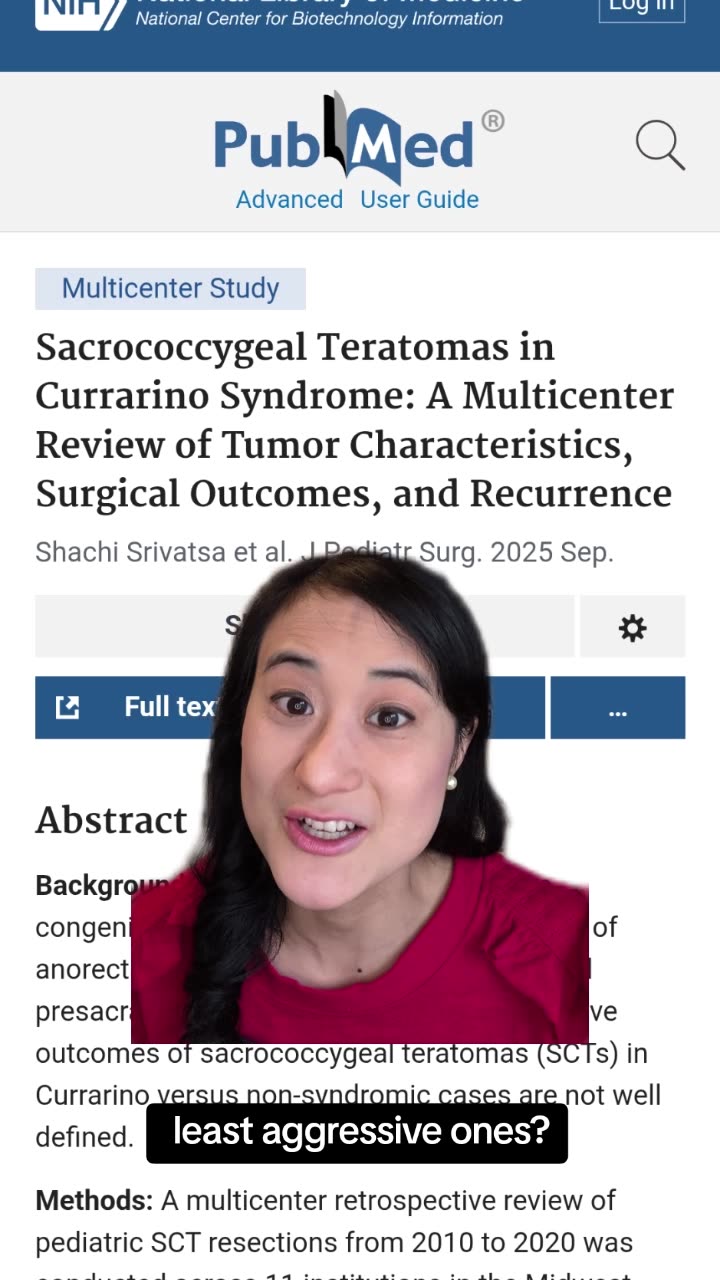
Sacrococcygeal Teratomas in Currarino Syndrome: A Multicenter Review of Tumor Characteristics, Surgical Outcomes, and Recurrence
 ▶
Ep 186 · 0:00
▶
Ep 186 · 0:00
host summary
Lizzie Lee summarizing a resource: What if the sacrococcygeal teratomas that we worry most about are actually the least aggressive ones?
↗
▶
Ep 186 · 0:10
host summary
Lizzie Lee summarizing a resource: A multicenter review examined over 200 sacrococcygeal teratoma cases comparing children with Currarino syndrome to those without it.
↗
▶
Ep 186 · 0:19
host summary
Lizzie Lee summarizing a resource: Tumors in Currarino patients are almost exclusively Altman type 4, buried deep in the pelvis.
↗
▶
Ep 186 · 0:19
host summary
Lizzie Lee summarizing a resource: Currarino patients were almost always diagnosed after birth.
↗
▶
Ep 186 · 0:27
host summary
Lizzie Lee summarizing a resource: Every tumor in the Currarino group was a mature one with no immature or malignant components at all.
↗
▶
Ep 186 · 0:27
host summary
Lizzie Lee summarizing a resource: Every tumor in the curorinal group was a mature one. There were no immature or malignant components at all.
↗
▶
Ep 186 · 0:33
host summary
Lizzie Lee summarizing a resource: Currarino-associated tumors were much smaller, around 3 centimeters instead of 8 centimeters.
↗
▶
Ep 186 · 0:36
host summary
Lizzie Lee summarizing a resource: Recurrence was almost nonexistent in Currarino cases and not significantly different from non-Currarino cases.
↗
▶
Ep 186 · 0:41
host summary
Lizzie Lee summarizing a resource: So the message here is that curorino associated sacrococcygeal teratomas behave incredibly well oncologically, which means we may be able to rethink how aggressively we follow these kids long term.
↗
▶
Ep 186 · 0:41
host summary
Lizzie Lee summarizing a resource: Currarino-associated sacrococcygeal teratomas behave incredibly well oncologically, suggesting potential for less aggressive long-term follow-up.
↗
Quick Literature Updates Ep 26
 ▶
Ep 188 · 1:07
▶
Ep 188 · 1:07
host summary
Lizzie Lee summarizes what Dr. Alex Halpern said: Recent literature has been supporting treating appendicitis with antibiotics rather than surgery
↗
▶
Ep 188 · 1:07
host summary
Lizzie Lee summarizes what Dr. Alex Halpern said: Recent literature has been supporting treating appendicitis with antibiotics rather than surgery.
↗
▶
Ep 188 · 1:12
host summary
Lizzie Lee summarizes what Dr. Alex Halpern said: The Saint Peter et al. study was a multi-center randomized trial in Canada, the US, Finland, Sweden, and Singapore investigating whether antibiotic treatment is inferior to appendicectomy
↗
▶
Ep 188 · 1:24
host summary
Lizzie Lee summarizes what Dr. Alex Halpern said: 34% of children treated with antibiotics for appendicitis eventually required surgery within a year compared to only 7% in the surgery group
↗
▶
Ep 188 · 1:32
host summary
Lizzie Lee summarizes what Dr. Alex Halpern said: Children in the antibiotic group had a higher risk of mild to moderate adverse events compared to the surgery group
↗
▶
Ep 188 · 1:32
host summary
Lizzie Lee summarizes what Dr. Alex Halpern said: There were no deaths in either the antibiotic or surgery group for appendicitis treatment
↗
▶
Ep 188 · 1:39
host summary
Lizzie Lee summarizes what Dr. Alex Halpern said: Antibiotics were not as effective as surgery for treating non-perforated appendicitis in children, as it did not meet the threshold for non-inferiority
↗
▶
Ep 188 · 1:39
host summary
Lizzie Lee summarizes what Dr. Alex Halpern said: The key takeaway is that antibiotics were not as effective as surgery for treating non-perforated appendicitis in children, as it did not meet the threshold for non-inferiority.
↗
Summaries Lizzie gave as host · Congenital Diaphragmatic Hernia
5 summaries
Open the Congenital Diaphragmatic Hernia collection →
Quick Literature Updates Episode 20
▶
Ep 15 · 1:03
host summary
Lizzie Lee summarizes what Dr. Alex Halpern said: Meta-analysis by Shibuya et al. included 709 patients from 15 research studies across multiple international centers comparing thoracoscopic versus open repair for congenital diaphragmatic hernia.
↗
▶
Ep 15 · 1:11
host summary
Lizzie Lee summarizes what Dr. Alex Halpern said: They wanted to know whether thoracoscopic repair has a higher recurrence rate and longer operating room time compared to open repair.
↗
▶
Ep 15 · 1:18
host summary
Lizzie Lee summarizes what Dr. Alex Halpern said: Thoracoscopic repair for congenital diaphragmatic hernia has higher recurrence rates compared to open repair.
↗
▶
Ep 15 · 1:18
host summary
Lizzie Lee summarizes what Dr. Alex Halpern said: Thoracoscopic repair for congenital diaphragmatic hernia has longer operative times compared to open repair.
↗
▶
Ep 15 · 1:25
host summary
Lizzie Lee summarizes what Dr. Alex Halpern said: Thoracoscopic repair for congenital diaphragmatic hernia has a lower incidence of postoperative bowel obstruction compared to open repair.
↗
Summaries Lizzie gave as host · Congenital Diaphragmatic Hernia
5 summaries
Open the Congenital Diaphragmatic Hernia collection →
Quick Literature Updates Episode 20
▶
Ep 35 · 1:03
host summary
Lizzie Lee summarizes what Dr. Alex Halpern said: Meta-analysis by Shibuya et al. included 709 patients from 15 research studies across multiple international centers comparing thoracoscopic versus open repair for congenital diaphragmatic hernia.
↗
▶
Ep 35 · 1:11
host summary
Lizzie Lee summarizes what Dr. Alex Halpern said: They wanted to know whether thoracoscopic repair has a higher recurrence rate and longer operating room time compared to open repair.
↗
▶
Ep 35 · 1:18
host summary
Lizzie Lee summarizes what Dr. Alex Halpern said: Thoracoscopic repair for congenital diaphragmatic hernia has higher recurrence rates compared to open repair.
↗
▶
Ep 35 · 1:18
host summary
Lizzie Lee summarizes what Dr. Alex Halpern said: Thoracoscopic repair for congenital diaphragmatic hernia has longer operative times compared to open repair.
↗
▶
Ep 35 · 1:25
host summary
Lizzie Lee summarizes what Dr. Alex Halpern said: Thoracoscopic repair for congenital diaphragmatic hernia has a lower incidence of postoperative bowel obstruction compared to open repair.
↗
Summaries Lizzie gave as host · Congenital Diaphragmatic Hernia
5 summaries
Open the Congenital Diaphragmatic Hernia collection →
Quick Literature Updates Episode 20
▶
Ep 10 · 1:03
host summary
Lizzie Lee summarizes what Dr. Alex Halpern said: Meta-analysis by Shibuya et al. included 709 patients from 15 research studies across multiple international centers comparing thoracoscopic versus open repair for congenital diaphragmatic hernia.
↗
▶
Ep 10 · 1:11
host summary
Lizzie Lee summarizes what Dr. Alex Halpern said: They wanted to know whether thoracoscopic repair has a higher recurrence rate and longer operating room time compared to open repair.
↗
▶
Ep 10 · 1:18
host summary
Lizzie Lee summarizes what Dr. Alex Halpern said: Thoracoscopic repair for congenital diaphragmatic hernia has longer operative times compared to open repair.
↗
▶
Ep 10 · 1:18
host summary
Lizzie Lee summarizes what Dr. Alex Halpern said: Thoracoscopic repair for congenital diaphragmatic hernia has higher recurrence rates compared to open repair.
↗
▶
Ep 10 · 1:25
host summary
Lizzie Lee summarizes what Dr. Alex Halpern said: Thoracoscopic repair for congenital diaphragmatic hernia has a lower incidence of postoperative bowel obstruction compared to open repair.
↗
Summaries Lizzie gave as host · Congenital Heart Disease
48 summaries
Open the Congenital Heart Disease collection →
Early Tricuspid Valve Surgery for Heart Failure in Congenital Heart Disease
▶
Ep 1 · 0:00
host summary
Lizzie Lee summarizing a resource: What if fixing a heart valve earlier could prevent heart failure and congenital heart disease?
↗
▶
Ep 1 · 0:08
host summary
Lizzie Lee summarizing a resource: In adults with transposition of the great arteries, the right ventricle sometimes has to pump blood to the whole body.
↗
▶
Ep 1 · 0:08
host summary
Lizzie Lee summarizing a resource: The right ventricle was not built to pump blood to the whole body.
↗
▶
Ep 1 · 0:16
host summary
Lizzie Lee summarizing a resource: Over time, many patients with transposition of the great arteries develop severe tricuspid regurgitation and worsening heart function.
↗
▶
Ep 1 · 0:25
host summary
Lizzie Lee summarizing a resource: Patients with moderate to severe tricuspid valve leakage but only mild to moderate ventricular dysfunction had better outcomes after surgery.
↗
▶
Ep 1 · 0:33
host summary
Lizzie Lee summarizing a resource: If the right ventricle was already severely weak, tricuspid valve surgery did not make a difference in outcomes.
↗
▶
Ep 1 · 0:37
host summary
Lizzie Lee summarizing a resource: In patients with transposition of the great arteries, earlier tricuspid valve surgery can improve outcomes.
↗
▶
Ep 1 · 0:37
host summary
Lizzie Lee summarizing a resource: Bottom line, in patients with transposition of the great arteries, earlier valve surgery can improve their outcomes.
↗
Practice Patterns and Outcomes of Hemodialysis in Infants Undergoing Congenital Heart Surgery in the
▶
Ep 2 · 0:00
host summary
Lizzie Lee summarizing a resource: Does it matter where a baby receives care after heart surgery?
↗
▶
Ep 2 · 0:07
host summary
Lizzie Lee summarizing a resource: 1% of infants can develop severe acute kidney injury and require dialysis after congenital heart surgery
↗
▶
Ep 2 · 0:14
host summary
Lizzie Lee summarizing a resource: For infants that did not need hemodialysis after congenital heart surgery, one-year survival was 94%
↗
▶
Ep 2 · 0:14
host summary
Lizzie Lee summarizing a resource: For infants that needed hemodialysis after congenital heart surgery, one-year survival was 46%
↗
▶
Ep 2 · 0:23
host summary
Lizzie Lee summarizing a resource: Most infants requiring dialysis after congenital heart surgery received continuous renal replacement therapy rather than intermittent dialysis
↗
▶
Ep 2 · 0:30
host summary
Lizzie Lee summarizing a resource: Where the baby was treated mattered a lot.
↗
▶
Ep 2 · 0:33
host summary
Lizzie Lee summarizing a resource: Hospitals that use dialysis more frequently had 3 times higher hospital survival for infants after congenital heart surgery
↗
▶
Ep 2 · 0:33
host summary
Lizzie Lee summarizing a resource: Hospitals that use dialysis more frequently had double the 1-year survival rate for infants after congenital heart surgery
↗
▶
Ep 2 · 0:39
host summary
Lizzie Lee summarizing a resource: Dialysis after infant heart surgery is rare
↗
▶
Ep 2 · 0:44
host summary
Lizzie Lee summarizing a resource: Outcomes may improve when infants requiring dialysis after heart surgery are treated at a center with more experience in using dialysis
↗
Practice Patterns and Outcomes of Hemodialysis in Infants Undergoing Congenital Heart Surgery in the
▶
Ep 3 · 0:00
host summary
Lizzie Lee summarizing a resource: Does it matter where a baby receives care after heart surgery?
↗
▶
Ep 3 · 0:07
host summary
Lizzie Lee summarizing a resource: 1% of infants can develop severe acute kidney injury and require dialysis after congenital heart surgery
↗
▶
Ep 3 · 0:14
host summary
Lizzie Lee summarizing a resource: For infants not needing hemodialysis after congenital heart surgery, one-year survival was 94%
↗
▶
Ep 3 · 0:14
host summary
Lizzie Lee summarizing a resource: For infants needing hemodialysis after congenital heart surgery, one-year survival was 46%
↗
▶
Ep 3 · 0:23
host summary
Lizzie Lee summarizing a resource: Most infants requiring dialysis after congenital heart surgery received continuous renal replacement therapy rather than intermittent dialysis
↗
▶
Ep 3 · 0:30
host summary
Lizzie Lee summarizing a resource: Where the baby was treated mattered a lot.
↗
▶
Ep 3 · 0:33
host summary
Lizzie Lee summarizing a resource: Hospitals that use dialysis more frequently had double the 1-year survival rate for infants after congenital heart surgery
↗
▶
Ep 3 · 0:33
host summary
Lizzie Lee summarizing a resource: Hospitals that use dialysis more frequently had 3 times higher hospital survival for infants after congenital heart surgery
↗
▶
Ep 3 · 0:39
host summary
Lizzie Lee summarizing a resource: Dialysis after infant heart surgery is rare
↗
▶
Ep 3 · 0:44
host summary
Lizzie Lee summarizing a resource: Outcomes may improve when infants requiring dialysis after heart surgery are treated at a center with more experience in using dialysis
↗
Practice Patterns and Outcomes of Hemodialysis in Infants Undergoing Congenital Heart Surgery in the
▶
Ep 4 · 0:00
host summary
Lizzie Lee summarizing a resource: Does it matter where a baby receives care after heart surgery?
↗
▶
Ep 4 · 0:07
host summary
Lizzie Lee summarizing a resource: 1% of infants can develop severe acute kidney injury and require dialysis after congenital heart surgery
↗
▶
Ep 4 · 0:14
host summary
Lizzie Lee summarizing a resource: For infants not needing hemodialysis after congenital heart surgery, one-year survival was 94%
↗
▶
Ep 4 · 0:14
host summary
Lizzie Lee summarizing a resource: For infants needing hemodialysis after congenital heart surgery, one-year survival was 46%
↗
▶
Ep 4 · 0:23
host summary
Lizzie Lee summarizing a resource: Most infants requiring dialysis after congenital heart surgery received continuous renal replacement therapy rather than intermittent dialysis
↗
▶
Ep 4 · 0:30
host summary
Lizzie Lee summarizing a resource: Where the baby was treated mattered a lot.
↗
▶
Ep 4 · 0:33
host summary
Lizzie Lee summarizing a resource: Hospitals that use dialysis more frequently had 3 times higher hospital survival for infants after congenital heart surgery
↗
▶
Ep 4 · 0:33
host summary
Lizzie Lee summarizing a resource: Hospitals that use dialysis more frequently had double the 1-year survival rate for infants after congenital heart surgery
↗
▶
Ep 4 · 0:39
host summary
Lizzie Lee summarizing a resource: Dialysis after infant heart surgery is rare
↗
▶
Ep 4 · 0:44
host summary
Lizzie Lee summarizing a resource: Outcomes may improve when infants requiring dialysis after heart surgery are treated at a center with more experience in using dialysis
↗
Practice Patterns and Outcomes of Hemodialysis in Infants Undergoing Congenital Heart Surgery...
▶
Ep 3 · 0:00
host summary
Lizzie Lee summarizing a resource: Does it matter where a baby receives care after heart surgery?
↗
▶
Ep 3 · 0:07
host summary
Lizzie Lee summarizing a resource: 1% of infants develop severe acute kidney injury requiring dialysis after congenital heart surgery
↗
▶
Ep 3 · 0:14
host summary
Lizzie Lee summarizing a resource: One-year survival for infants not requiring hemodialysis after congenital heart surgery is 94%
↗
▶
Ep 3 · 0:14
host summary
Lizzie Lee summarizing a resource: One-year survival for infants requiring hemodialysis after congenital heart surgery is 46%
↗
▶
Ep 3 · 0:23
host summary
Lizzie Lee summarizing a resource: Most infants requiring dialysis after congenital heart surgery received continuous renal replacement therapy rather than intermittent dialysis
↗
▶
Ep 3 · 0:30
host summary
Lizzie Lee summarizing a resource: Where the baby was treated mattered a lot.
↗
▶
Ep 3 · 0:33
host summary
Lizzie Lee summarizing a resource: Hospitals that use dialysis more frequently had 3 times higher hospital survival for infants after congenital heart surgery
↗
▶
Ep 3 · 0:33
host summary
Lizzie Lee summarizing a resource: Hospitals that use dialysis more frequently had double the 1-year survival rate for infants after congenital heart surgery
↗
▶
Ep 3 · 0:39
host summary
Lizzie Lee summarizing a resource: Dialysis after infant heart surgery is rare
↗
▶
Ep 3 · 0:44
host summary
Lizzie Lee summarizing a resource: Outcomes for infants requiring dialysis after heart surgery may improve when treated at centers with more experience in using dialysis
↗
Summaries Lizzie gave as host · Congenital Lung Lesions (CPAM)
4 summaries
Open the Congenital Lung Lesions (CPAM) collection →
Quick Literature Updates Episode 18
▶
Ep 32 · 1:10
host summary
Lizzie Lee summarizes what Dr. Alex Halpern said: The ERAS Society used a modified Delphi technique to develop recommendations for neonatal perioperative care, requiring more than 70% consensus from a multidisciplinary group of experts.
↗
▶
Ep 32 · 1:10
host summary
Lizzie Lee summarizes what Dr. Alex Halpern said: The ERAS, or the Enhanced Recovery after Surgery Society, used a modified Delphi technique, which is a fancy way of saying that a multidisciplinary group of experts gathered together to reach more than a 70% consensus.
↗
▶
Ep 32 · 1:34
host summary
Lizzie Lee summarizes what Dr. Alex Halpern said: The ERAS Society agreed on 16 recommendations covering 11 topics including team communication, pre-surgery fasting, temperature control, and antibiotic use for neonatal surgical patients.
↗
▶
Ep 32 · 1:43
host summary
Lizzie Lee summarizes what Dr. Alex Halpern said: The ERAS Society did not have enough data to make recommendations about nasogastric tubes and central lines in neonatal surgical care.
↗
Summaries Lizzie gave as host · Congenital Pulmonary Airway Malformation
4 summaries
Open the Congenital Pulmonary Airway Malformation collection →
Quick Literature Updates Episode 18
▶
Ep 9 · 1:10
host summary
Lizzie Lee summarizes what Dr. Alex Halpern said: The ERAS, or the Enhanced Recovery after Surgery Society, used a modified Delphi technique, which is a fancy way of saying that a multidisciplinary group of experts gathered together to reach more than a 70% consensus.
↗
▶
Ep 9 · 1:10
host summary
Lizzie Lee summarizes what Dr. Alex Halpern said: The ERAS Society used a modified Delphi technique with a multidisciplinary group of experts to reach more than 70% consensus
↗
▶
Ep 9 · 1:34
host summary
Lizzie Lee summarizes what Dr. Alex Halpern said: The ERAS Society agreed on 16 recommendations covering 11 topics including team communication, pre-surgery fasting, temperature control, and antibiotic use
↗
▶
Ep 9 · 1:43
host summary
Lizzie Lee summarizes what Dr. Alex Halpern said: The ERAS Society did not have enough data to make recommendations about nasogastric tubes and central lines
↗
Summaries Lizzie gave as host · Crohn's Disease
13 summaries
Open the Crohn's Disease collection →
Advancements in Pediatric Intestinal Failure: Innovative Therapies and Improved Outcomes
 ▶
Ep 8 · 1:24
▶
Ep 8 · 1:24
host summary
Lizzie Lee summarizing the discussion: Chronic intestinal inflammation resembling Crohn's disease is now being observed in intestinal failure patients, requiring management with inflammatory bowel disease therapies like biologics.
↗
▶
Ep 8 · 3:19
host summary
Lizzie Lee summarizing the discussion: A 2012 Pediatric Intestinal Failure Consortium study showed 50% of intestinal failure patients achieved enteral autonomy, while 25% either died or had intestinal transplant.
↗
▶
Ep 8 · 3:51
host summary
Lizzie Lee summarizing the discussion: Studies from Canada, Michigan, and Spain show that multidisciplinary intestinal rehabilitation teams improve survival.
↗
▶
Ep 8 · 9:26
host summary
Lizzie Lee summarizing the discussion: Second-generation lipid emulsions attempt to reduce omega-6 exposure by diluting the soybean component.
↗
▶
Ep 8 · 9:43
host summary
Lizzie Lee summarizing the discussion: Omega-6 fatty acids promote inflammation while omega-3 fatty acids lead to a more anti-inflammatory response.
↗
▶
Ep 8 · 11:12
host summary
Lizzie Lee summarizing the discussion: In utero, babies receive significant amounts of DHA and arachidonic acid through the placenta, but standard lipid emulsions in TPN fall short of providing these.
↗
▶
Ep 8 · 13:09
host summary
Lizzie Lee summarizing the discussion: Kitelock addresses three issues of central line complications: organisms, clot/thrombosis, and biofilm.
↗
▶
Ep 8 · 14:19
host summary
Lizzie Lee summarizing the discussion: Patients with Type 3 short bowel syndrome have the best prognosis because they still have residual ileum.
↗
▶
Ep 8 · 14:36
host summary
Lizzie Lee summarizing the discussion: The ileum is where GLP-2 is naturally produced.
↗
▶
Ep 8 · 14:39
host summary
Lizzie Lee summarizing the discussion: Without an ileum, infants cannot generate the necessary GLP-2 hormone surge to drive their own intestinal adaptation.
↗
▶
Ep 8 · 16:54
host summary
Lizzie Lee summarizing the discussion: Children have much greater adaptive potential than adults because of their inherent gut growth capacity.
↗
▶
Ep 8 · 17:00
host summary
Lizzie Lee summarizing the discussion: The proportion of children reaching enteral autonomy has improved over the past 20 years.
↗
▶
Ep 8 · 17:06
host summary
Lizzie Lee summarizing the discussion: Controlling liver disease buys time for intestinal adaptation.
↗
Summaries Lizzie gave as host · DVT
2 summaries
Open the DVT collection →
Update Course Rewind: DVT Prophylaxis 2024
 ▶
Ep 6 · 5:15
▶
Ep 6 · 5:15
host summary
Lizzie Lee summarizing the discussion: Cincinnati Children's has started discharging pediatric trauma patients on aspirin, recognizing the adult data is not perfect but aspirin is effective and better than enoxaparin or nothing
↗
▶
Ep 6 · 5:15
host summary
Lizzie Lee summarizing the discussion: We have started discharging kids on aspirin, realizing that taking some adult data that is not perfect, but it's effective and it's a lot better than Lovenox and a lot better than nothing.
↗
Summaries Lizzie gave as host · Eating Disorders
30 summaries
Open the Eating Disorders collection →
Identifying & Managing Eating Disorders in Pediatric Obesity Treatment: Current Practices in Weight
 ▶
Ep 2 · 0:00
▶
Ep 2 · 0:00
host summary
Lizzie Lee summarizing a resource: Are we actually missing diagnosing eating disorders in kids being treated for obesity?
↗
▶
Ep 2 · 0:08
host summary
Lizzie Lee summarizing a resource: A national survey examined pediatric weight management programs across the US regarding eating disorder screening practices
↗
▶
Ep 2 · 0:14
host summary
Lizzie Lee summarizing a resource: Most programs are screening for eating disorders, but not in a very standardized way.
↗
▶
Ep 2 · 0:14
host summary
Lizzie Lee summarizing a resource: Most programs are screening for eating disorders but not in a standardized way
↗
▶
Ep 2 · 0:19
host summary
Lizzie Lee summarizing a resource: About 3/5% are doing some form of screening, but a lot of it is informal, Homegrown questionnaires or just clinical judgment rather than validated tools.
↗
▶
Ep 2 · 0:19
host summary
Lizzie Lee summarizing a resource: Much of the screening is informal, using homegrown questionnaires or clinical judgment rather than validated tools
↗
▶
Ep 2 · 0:19
host summary
Lizzie Lee summarizing a resource: About 60% of programs perform some form of eating disorder screening
↗
▶
Ep 2 · 0:29
host summary
Lizzie Lee summarizing a resource: Providers are generally comfortable with screening for eating disorders
↗
▶
Ep 2 · 0:29
host summary
Lizzie Lee summarizing a resource: Providers are generally comfortable screening, but when it comes to actually diagnosing things like binge eating disorder, medical providers lag behind behavioral health specialists by a wide margin.
↗
▶
Ep 2 · 0:29
host summary
Lizzie Lee summarizing a resource: Medical providers lag behind behavioral health specialists by a wide margin when diagnosing conditions like binge eating disorder
↗
▶
Ep 2 · 0:39
host summary
Lizzie Lee summarizing a resource: The biggest barriers, clinicians report not being trained enough, not knowing how to manage what they find, and lacking clear treatment pathways.
↗
▶
Ep 2 · 0:39
host summary
Lizzie Lee summarizing a resource: Clinicians report not knowing how to manage eating disorders they identify as a barrier
↗
▶
Ep 2 · 0:39
host summary
Lizzie Lee summarizing a resource: Clinicians report lacking clear treatment pathways for eating disorders as a barrier
↗
▶
Ep 2 · 0:39
host summary
Lizzie Lee summarizing a resource: Clinicians report not being trained enough as a barrier to eating disorder management
↗
▶
Ep 2 · 0:47
host summary
Lizzie Lee summarizing a resource: Medical providers may need more training for diagnosis and treatment of eating disorders in pediatric obesity settings
↗
Identifying & Managing Eating Disorders in Pediatric Obesity Treatment: Current Practices in Weight
 ▶
Ep 3 · 0:00
▶
Ep 3 · 0:00
host summary
Lizzie Lee summarizing a resource: Are we actually missing diagnosing eating disorders in kids being treated for obesity?
↗
▶
Ep 3 · 0:08
host summary
Lizzie Lee summarizing a resource: A national survey of pediatric weight management programs across the US was conducted
↗
▶
Ep 3 · 0:14
host summary
Lizzie Lee summarizing a resource: Most programs are screening for eating disorders, but not in a very standardized way
↗
▶
Ep 3 · 0:14
host summary
Lizzie Lee summarizing a resource: Most programs are screening for eating disorders, but not in a very standardized way.
↗
▶
Ep 3 · 0:19
host summary
Lizzie Lee summarizing a resource: About 60% of programs are doing some form of screening
↗
▶
Ep 3 · 0:19
host summary
Lizzie Lee summarizing a resource: A lot of screening uses informal, homegrown questionnaires or just clinical judgment rather than validated tools
↗
▶
Ep 3 · 0:19
host summary
Lizzie Lee summarizing a resource: About 3/5% are doing some form of screening, but a lot of it is informal, Homegrown questionnaires or just clinical judgment rather than validated tools.
↗
▶
Ep 3 · 0:29
host summary
Lizzie Lee summarizing a resource: Providers are generally comfortable screening, but when it comes to actually diagnosing things like binge eating disorder, medical providers lag behind behavioral health specialists by a wide margin.
↗
▶
Ep 3 · 0:29
host summary
Lizzie Lee summarizing a resource: When it comes to diagnosing binge eating disorder, medical providers lag behind behavioral health specialists by a wide margin
↗
▶
Ep 3 · 0:29
host summary
Lizzie Lee summarizing a resource: Providers are generally comfortable screening for eating disorders
↗
▶
Ep 3 · 0:39
host summary
Lizzie Lee summarizing a resource: Clinicians report lacking clear treatment pathways for eating disorders as a barrier
↗
▶
Ep 3 · 0:39
host summary
Lizzie Lee summarizing a resource: The biggest barriers, clinicians report not being trained enough, not knowing how to manage what they find, and lacking clear treatment pathways.
↗
▶
Ep 3 · 0:39
host summary
Lizzie Lee summarizing a resource: Clinicians report not knowing how to manage eating disorders they find as a barrier
↗
▶
Ep 3 · 0:39
host summary
Lizzie Lee summarizing a resource: Clinicians report not being trained enough as a barrier to eating disorder diagnosis and management
↗
▶
Ep 3 · 0:47
host summary
Lizzie Lee summarizing a resource: Medical providers may need more training for diagnosis and treatment of eating disorders
↗
Summaries Lizzie gave as host · Enterocolitis
10 summaries
Open the Enterocolitis collection →
The use of postoperative calibrations in Hirschsprung disease
▶
Ep 21 · 0:00
host summary
Lizzie Lee summarizing a resource: For patients with Hirschsprung disease who undergo endorectal pull-through surgeries, are daily postoperative anal dilations necessary and effective?
↗
▶
Ep 21 · 0:13
host summary
Lizzie Lee summarizing a resource: The study was prospective and took place from 2021 to 2023
↗
▶
Ep 21 · 0:13
host summary
Lizzie Lee summarizing a resource: The study included 33 patients under six months old who underwent endorectal pull-through surgeries
↗
▶
Ep 21 · 0:24
host summary
Lizzie Lee summarizing a resource: Patients were assigned to either a new non-dilation protocol group or a traditional dilation group
↗
▶
Ep 21 · 0:30
host summary
Lizzie Lee summarizing a resource: The primary outcomes measured were anastomotic complications, enterocolitis, and constipation
↗
▶
Ep 21 · 0:37
host summary
Lizzie Lee summarizing a resource: There was no significant difference in anastomotic complications between the two groups
↗
▶
Ep 21 · 0:37
host summary
Lizzie Lee summarizing a resource: The non-dilation group had less enterocolitis compared to the traditional dilation group
↗
▶
Ep 21 · 0:37
host summary
Lizzie Lee summarizing a resource: The non-dilation group had less constipation compared to the traditional dilation group
↗
▶
Ep 21 · 0:46
host summary
Lizzie Lee summarizing a resource: This means that choosing not to do postoperative anal dilations may be a good alternative with benefits like lower constipation and enterocolitis.
↗
▶
Ep 21 · 0:46
host summary
Lizzie Lee summarizing a resource: Choosing not to do postoperative anal dilations may be a good alternative with benefits like lower constipation and enterocolitis
↗
Summaries Lizzie gave as host · Enterocolitis
10 summaries
Open the Enterocolitis collection →
The use of postoperative calibrations in Hirschsprung disease
▶
Ep 21 · 0:00
host summary
Lizzie Lee summarizing a resource: For patients with Hirschsprung disease who undergo endorectal pull-through surgeries, are daily postoperative anal dilations necessary and effective?
↗
▶
Ep 21 · 0:13
host summary
Lizzie Lee summarizing a resource: The study included 33 patients under six months old who underwent endorectal pull-through surgeries
↗
▶
Ep 21 · 0:13
host summary
Lizzie Lee summarizing a resource: The study was prospective and took place from 2021 to 2023
↗
▶
Ep 21 · 0:24
host summary
Lizzie Lee summarizing a resource: Patients were assigned to either a new non-dilation protocol group or a traditional dilation group
↗
▶
Ep 21 · 0:30
host summary
Lizzie Lee summarizing a resource: The primary outcomes measured were anastomotic complications, enterocolitis, and constipation
↗
▶
Ep 21 · 0:37
host summary
Lizzie Lee summarizing a resource: The non-dilation group had less constipation compared to the traditional dilation group
↗
▶
Ep 21 · 0:37
host summary
Lizzie Lee summarizing a resource: There was no significant difference in anastomotic complications between the two groups
↗
▶
Ep 21 · 0:37
host summary
Lizzie Lee summarizing a resource: The non-dilation group had less enterocolitis compared to the traditional dilation group
↗
▶
Ep 21 · 0:46
host summary
Lizzie Lee summarizing a resource: Choosing not to do postoperative anal dilations may be a good alternative with benefits like lower constipation and enterocolitis
↗
▶
Ep 21 · 0:46
host summary
Lizzie Lee summarizing a resource: This means that choosing not to do postoperative anal dilations may be a good alternative with benefits like lower constipation and enterocolitis.
↗
Summaries Lizzie gave as host · Esophageal Atresia
45 summaries
Open the Esophageal Atresia collection →
Quick Literature Updates Episode 17
▶
Ep 32 · 3:25
host summary
Lizzie Lee summarizes what Dr. Alex Halpern said: The Children's Hospital in Pakistan conducted a randomized control trial including 124 patients in 2021 to 2022 who needed stoma reversal.
↗
▶
Ep 32 · 3:35
host summary
Lizzie Lee summarizes what Dr. Alex Halpern said: The Pakistani stoma reversal trial aimed to compare surgical site infections and cosmetic outcomes of scars in patients receiving purse-string or linear skin closure techniques.
↗
▶
Ep 32 · 3:44
host summary
Lizzie Lee summarizes what Dr. Alex Halpern said: The purse-string closure group had way fewer surgical site infections compared to the linear closure group for stoma reversal.
↗
▶
Ep 32 · 3:44
host summary
Lizzie Lee summarizes what Dr. Alex Halpern said: The purse-string closure group had much better scar quality compared to the linear closure group for stoma reversal.
↗
▶
Ep 32 · 3:52
host summary
Lizzie Lee summarizes what Dr. Alex Halpern said: When reversing a stoma, purse-string closure technique is the best way to do it.
↗
▶
Ep 32 · 3:52
host summary
Lizzie Lee summarizes what Dr. Alex Halpern said: So when reversing a stoma, purse string closure technique is the best way to do it.
↗
Finnish Pediatric Surgery Hub - From Centralization to Collective Learning and Sharing of Expertise
▶
Ep 33 · 0:00
host summary
Lizzie Lee summarizing a resource: Does creating a collaborative initiative help with providing high quality pediatric surgical care?
↗
▶
Ep 33 · 0:10
host summary
Lizzie Lee summarizing a resource: The Finnish Pediatric Surgery Hub was established in 2021 by pediatric surgeons from Finland's five neonatal surgery centers.
↗
▶
Ep 33 · 0:18
host summary
Lizzie Lee summarizing a resource: The most frequent diagnoses included anorectal malformations, esophageal atresia, and Hirschsprung disease.
↗
▶
Ep 33 · 0:18
host summary
Lizzie Lee summarizing a resource: The hub performed 34 elective and 6 urgent cases total.
↗
▶
Ep 33 · 0:28
host summary
Lizzie Lee summarizing a resource: The hub held regular monthly virtual meetings to present new patients, discuss complex cases, and follow up on patients after surgery.
↗
▶
Ep 33 · 0:36
host summary
Lizzie Lee summarizing a resource: Findings suggest that the Finnish Pediatric Surgery hub fosters an effective and safe place for sharing surgical expertise and learning.
↗
▶
Ep 33 · 0:36
host summary
Lizzie Lee summarizing a resource: Their findings suggest that the Finnish Pediatric Surgery hub fosters an effective and safe place for sharing surgical expertise and learning.
↗
QUAD #27 - Multidisciplinary - How Do Teams Enhance Outcomes by the CCHMC ADEC Team
▶
Ep 34 · 0:15
host summary
Lizzie Lee summarizing the discussion: Cincinnati Children's Hospital hosted the Quad Conference in October 2022, combining four conferences: International Organization for Esophageal Atresia, Aerodigestive Society Conference, Cincinnati Children's Airway Course, and Cincinnati Children's Pediatric Dysphagia Series.
↗
▶
Ep 34 · 0:47
host summary
Lizzie Lee summarizing the discussion: Cincinnati Children's has one of the largest aerodigestive centers in the world.
↗
▶
Ep 34 · 0:55
host summary
Lizzie Lee summarizing the discussion: The expert multidisciplinary team includes speech pathology, otolaryngology, gastroenterology, pulmonology, and pediatric general surgery.
↗
▶
Ep 34 · 1:37
host summary
Lizzie Lee summarizing the discussion: The center provides coordinated multidisciplinary care to children with congenital or acquired complex digestive and airway disorders.
↗
▶
Ep 34 · 2:52
host summary
Lizzie Lee summarizing the discussion: Video fluoroscopic swallowing study analyzes different phases of swallowing.
↗
▶
Ep 34 · 2:59
host summary
Lizzie Lee summarizing the discussion: FEES (fiber optic endoscopic evaluation of swallowing study) allows visualization of pharyngeal and laryngeal structures and assessment of function, aspiration, and residual after each swallow.
↗
▶
Ep 34 · 3:48
host summary
Lizzie Lee summarizing the discussion: ENT looks at swallowing study results and helps stratify the risk of proceeding with airway reconstruction and decannulation.
↗
▶
Ep 34 · 3:54
host summary
Lizzie Lee summarizing the discussion: In aerodigestive patients, ENT performs esophageal and airway reconstruction, cleft repair, drool procedures, and manages vocal folds and mobility.
↗
▶
Ep 34 · 4:19
host summary
Lizzie Lee summarizing the discussion: GERD pathophysiology includes an incompetent lower esophageal sphincter.
↗
▶
Ep 34 · 4:42
host summary
Lizzie Lee summarizing the discussion: General signs and symptoms of GERD include regurgitation, vomiting, and heartburn.
↗
▶
Ep 34 · 5:28
host summary
Lizzie Lee summarizing the discussion: Data shows an increase in airway surgery complications in patients who were later found to have eosinophilic esophagitis.
↗
▶
Ep 34 · 5:40
host summary
Lizzie Lee summarizing the discussion: Anatomic issues in aerodigestive patients include strictures that need balloon dilations or stenting.
↗
▶
Ep 34 · 6:13
host summary
Lizzie Lee summarizing the discussion: When 25 patients in the aerodigestive program were assessed, 76% of them had a feeding disorder.
↗
▶
Ep 34 · 6:54
host summary
Lizzie Lee summarizing the discussion: Patients at risk for pulmonary insufficiency include preemies with chronic lung disease, patients with restrictive lung disease, congenital or acquired abnormalities, and heart disease like pulmonary hypertension.
↗
▶
Ep 34 · 7:20
host summary
Lizzie Lee summarizing the discussion: Underlying pulmonary insufficiency should be suspected if patients have had complicated respiratory infections requiring positive pressure ventilation.
↗
▶
Ep 34 · 7:48
host summary
Lizzie Lee summarizing the discussion: Risk factors for upper airway obstruction include airway abnormalities like mid-face hypoplasia, skeletal dysplasia, decreased muscle tone, and syndromes associated with airway obstruction.
↗
▶
Ep 34 · 8:13
host summary
Lizzie Lee summarizing the discussion: Risk factors for lower airway obstruction include acquired or congenital thoracic deformities and those who had thoracotomies done in the past.
↗
▶
Ep 34 · 9:15
host summary
Lizzie Lee summarizing the discussion: For patients with ventilatory insufficiency, the pulmonologist determines if the child still needs ventilatory support and whether they are ready for decannulation.
↗
▶
Ep 34 · 9:26
host summary
Lizzie Lee summarizing the discussion: The pulmonologist assesses how ready the patient is for weaning from the vent and whether they can start or advance feeding.
↗
▶
Ep 34 · 9:41
host summary
Lizzie Lee summarizing the discussion: In the NICU, general surgeons obtain feeding access, manage anorectal malformations, and perform surgical procedures such as tracheopexies and lung resections.
↗
Tracheobronchopexy to Avoid Tracheostomy in Esophageal Atresia Patients With Severe Life-Threatening Tracheobronchomalacia
▶
Ep 35 · 0:00
host summary
Lizzie Lee summarizing a resource: Can performing a tracheobronchopexy help oesophageal atresia patients with severe tracheobronchoalacia avoid getting a tracheostomy?
↗
▶
Ep 35 · 0:13
host summary
Lizzie Lee summarizing a resource: Esophageal atresia patients often have tracheobronchomalacia
↗
▶
Ep 35 · 0:13
host summary
Lizzie Lee summarizing a resource: Tracheobronchomalacia can cause serious breathing problems like blue spells in esophageal atresia patients
↗
▶
Ep 35 · 0:23
host summary
Lizzie Lee summarizing a resource: A retrospective observational study reviewed 80 esophageal atresia patients who underwent tracheobronchopexy at two hospitals between 2013 and 2021
↗
▶
Ep 35 · 0:33
host summary
Lizzie Lee summarizing a resource: 94% of esophageal atresia patients who underwent tracheobronchopexy were able to avoid a tracheostomy
↗
▶
Ep 35 · 0:38
host summary
Lizzie Lee summarizing a resource: Tracheobronchopexy significantly reduced life-threatening breathing events in esophageal atresia patients
↗
▶
Ep 35 · 0:38
host summary
Lizzie Lee summarizing a resource: Tracheobronchopexy significantly reduced the need for positive pressure ventilation in esophageal atresia patients
↗
▶
Ep 35 · 0:38
host summary
Lizzie Lee summarizing a resource: Tracheobronchopexy significantly reduced ventilator dependence in esophageal atresia patients
↗
Quick Literature Updates Ep 27
 ▶
Ep 39 · 1:04
▶
Ep 39 · 1:04
host summary
Lizzie Lee summarizes what Dr. Alex Halpern said: Van Haal et al. conducted a retrospective cohort study in the Netherlands that included 79 patients who had rigid tracheobronchoscopy done before and after esophageal atresia surgery.
↗
▶
Ep 39 · 1:24
host summary
Lizzie Lee summarizes what Dr. Alex Halpern said: Preoperative tracheobronchoscopy for the presence of post-operative tracheomalacia had a sensitivity of 50% and a specificity of 67%.
↗
▶
Ep 39 · 1:34
host summary
Lizzie Lee summarizes what Dr. Alex Halpern said: This shows that pre-op TBS, though routine, has limited predictive value for post-op tracheomalacia.
↗
▶
Ep 39 · 1:34
host summary
Lizzie Lee summarizes what Dr. Alex Halpern said: Preoperative tracheobronchoscopy, though routine, has limited predictive value for post-operative tracheomalacia in esophageal atresia patients.
↗
Summaries Lizzie gave as host · Esophageal Atresia
45 summaries
Open the Esophageal Atresia collection →
Quick Literature Updates Episode 17
▶
Ep 60 · 3:25
host summary
Lizzie Lee summarizes what Dr. Alex Halpern said: The Children's Hospital in Pakistan conducted a randomized control trial including 124 patients in 2021 to 2022 who needed stoma reversal.
↗
▶
Ep 60 · 3:35
host summary
Lizzie Lee summarizes what Dr. Alex Halpern said: The Pakistani stoma reversal trial aimed to compare surgical site infections and cosmetic outcomes of scars in patients receiving purse-string or linear skin closure techniques.
↗
▶
Ep 60 · 3:44
host summary
Lizzie Lee summarizes what Dr. Alex Halpern said: The purse-string closure group had much better scar quality compared to the linear closure group for stoma reversal.
↗
▶
Ep 60 · 3:44
host summary
Lizzie Lee summarizes what Dr. Alex Halpern said: The purse-string closure group had way fewer surgical site infections compared to the linear closure group for stoma reversal.
↗
▶
Ep 60 · 3:52
host summary
Lizzie Lee summarizes what Dr. Alex Halpern said: When reversing a stoma, purse-string closure technique is the best way to do it.
↗
▶
Ep 60 · 3:52
host summary
Lizzie Lee summarizes what Dr. Alex Halpern said: So when reversing a stoma, purse string closure technique is the best way to do it.
↗
Finnish Pediatric Surgery Hub - From Centralization to Collective Learning and Sharing of Expertise
▶
Ep 61 · 0:00
host summary
Lizzie Lee summarizing a resource: Does creating a collaborative initiative help with providing high quality pediatric surgical care?
↗
▶
Ep 61 · 0:10
host summary
Lizzie Lee summarizing a resource: The Finnish Pediatric Surgery Hub was established in 2021 by pediatric surgeons from Finland's five neonatal surgery centers.
↗
▶
Ep 61 · 0:18
host summary
Lizzie Lee summarizing a resource: The most frequent diagnoses included anorectal malformations, esophageal atresia, and Hirschsprung disease.
↗
▶
Ep 61 · 0:18
host summary
Lizzie Lee summarizing a resource: The hub performed 34 elective and 6 urgent cases total.
↗
▶
Ep 61 · 0:28
host summary
Lizzie Lee summarizing a resource: The hub held regular monthly virtual meetings to present new patients, discuss complex cases, and follow up on patients after surgery.
↗
▶
Ep 61 · 0:36
host summary
Lizzie Lee summarizing a resource: Findings suggest that the Finnish Pediatric Surgery hub fosters an effective and safe place for sharing surgical expertise and learning.
↗
▶
Ep 61 · 0:36
host summary
Lizzie Lee summarizing a resource: Their findings suggest that the Finnish Pediatric Surgery hub fosters an effective and safe place for sharing surgical expertise and learning.
↗
QUAD #27 - Multidisciplinary - How Do Teams Enhance Outcomes by the CCHMC ADEC Team
▶
Ep 63 · 0:15
host summary
Lizzie Lee summarizing the discussion: Cincinnati Children's Hospital hosted the Quad Conference in October 2022, combining four conferences: International Organization for Esophageal Atresia, Aerodigestive Society Conference, Cincinnati Children's Airway Course, and Cincinnati Children's Pediatric Dysphagia Series.
↗
▶
Ep 63 · 0:47
host summary
Lizzie Lee summarizing the discussion: Cincinnati Children's has one of the largest aerodigestive centers in the world.
↗
▶
Ep 63 · 0:55
host summary
Lizzie Lee summarizing the discussion: The expert multidisciplinary team includes speech pathology, otolaryngology, gastroenterology, pulmonology, and pediatric general surgery.
↗
▶
Ep 63 · 1:37
host summary
Lizzie Lee summarizing the discussion: The center provides coordinated multidisciplinary care to children with congenital or acquired complex digestive and airway disorders.
↗
▶
Ep 63 · 2:52
host summary
Lizzie Lee summarizing the discussion: Video fluoroscopic swallowing study analyzes different phases of swallowing.
↗
▶
Ep 63 · 2:59
host summary
Lizzie Lee summarizing the discussion: FEES (fiber optic endoscopic evaluation of swallowing study) allows visualization of pharyngeal and laryngeal structures and assessment of function, aspiration, and residual after each swallow.
↗
▶
Ep 63 · 3:48
host summary
Lizzie Lee summarizing the discussion: ENT looks at swallowing study results and helps stratify the risk of proceeding with airway reconstruction and decannulation.
↗
▶
Ep 63 · 3:54
host summary
Lizzie Lee summarizing the discussion: In aerodigestive patients, ENT performs esophageal and airway reconstruction, cleft repair, drool procedures, and manages vocal folds and mobility.
↗
▶
Ep 63 · 4:19
host summary
Lizzie Lee summarizing the discussion: GERD pathophysiology includes an incompetent lower esophageal sphincter.
↗
▶
Ep 63 · 4:42
host summary
Lizzie Lee summarizing the discussion: General signs and symptoms of GERD include regurgitation, vomiting, and heartburn.
↗
▶
Ep 63 · 5:28
host summary
Lizzie Lee summarizing the discussion: Data shows an increase in airway surgery complications in patients who were later found to have eosinophilic esophagitis.
↗
▶
Ep 63 · 5:40
host summary
Lizzie Lee summarizing the discussion: Anatomic issues in aerodigestive patients include strictures that need balloon dilations or stenting.
↗
▶
Ep 63 · 6:13
host summary
Lizzie Lee summarizing the discussion: When 25 patients in the aerodigestive program were assessed, 76% of them had a feeding disorder.
↗
▶
Ep 63 · 6:54
host summary
Lizzie Lee summarizing the discussion: Patients at risk for pulmonary insufficiency include preemies with chronic lung disease, patients with restrictive lung disease, congenital or acquired abnormalities, and heart disease like pulmonary hypertension.
↗
▶
Ep 63 · 7:20
host summary
Lizzie Lee summarizing the discussion: Underlying pulmonary insufficiency should be suspected if patients have had complicated respiratory infections requiring positive pressure ventilation.
↗
▶
Ep 63 · 7:48
host summary
Lizzie Lee summarizing the discussion: Risk factors for upper airway obstruction include airway abnormalities like mid-face hypoplasia, skeletal dysplasia, decreased muscle tone, and syndromes associated with airway obstruction.
↗
▶
Ep 63 · 8:13
host summary
Lizzie Lee summarizing the discussion: Risk factors for lower airway obstruction include acquired or congenital thoracic deformities and those who had thoracotomies done in the past.
↗
▶
Ep 63 · 9:15
host summary
Lizzie Lee summarizing the discussion: For patients with ventilatory insufficiency, the pulmonologist determines if the child still needs ventilatory support and whether they are ready for decannulation.
↗
▶
Ep 63 · 9:26
host summary
Lizzie Lee summarizing the discussion: The pulmonologist assesses how ready the patient is for weaning from the vent and whether they can start or advance feeding.
↗
▶
Ep 63 · 9:41
host summary
Lizzie Lee summarizing the discussion: In the NICU, general surgeons obtain feeding access, manage anorectal malformations, and perform surgical procedures such as tracheopexies and lung resections.
↗
Tracheobronchopexy to Avoid Tracheostomy in Esophageal Atresia Patients With Severe Life-Threatening Tracheobronchomalacia
▶
Ep 64 · 0:00
host summary
Lizzie Lee summarizing a resource: Can performing a tracheobronchopexy help oesophageal atresia patients with severe tracheobronchoalacia avoid getting a tracheostomy?
↗
▶
Ep 64 · 0:13
host summary
Lizzie Lee summarizing a resource: Esophageal atresia patients often have tracheobronchomalacia
↗
▶
Ep 64 · 0:13
host summary
Lizzie Lee summarizing a resource: Tracheobronchomalacia can cause serious breathing problems like blue spells in esophageal atresia patients
↗
▶
Ep 64 · 0:23
host summary
Lizzie Lee summarizing a resource: A retrospective observational study reviewed 80 esophageal atresia patients who underwent tracheobronchopexy at two hospitals between 2013 and 2021
↗
▶
Ep 64 · 0:33
host summary
Lizzie Lee summarizing a resource: 94% of esophageal atresia patients who underwent tracheobronchopexy were able to avoid a tracheostomy
↗
▶
Ep 64 · 0:38
host summary
Lizzie Lee summarizing a resource: Tracheobronchopexy significantly reduced life-threatening breathing events in esophageal atresia patients
↗
▶
Ep 64 · 0:38
host summary
Lizzie Lee summarizing a resource: Tracheobronchopexy significantly reduced the need for positive pressure ventilation in esophageal atresia patients
↗
▶
Ep 64 · 0:38
host summary
Lizzie Lee summarizing a resource: Tracheobronchopexy significantly reduced ventilator dependence in esophageal atresia patients
↗
Quick Literature Updates Ep 27
▶
Ep 70 · 1:04
host summary
Lizzie Lee summarizes what Dr. Alex Halpern said: Van Haal et al. conducted a retrospective cohort study in the Netherlands that included 79 patients who had rigid tracheobronchoscopy done before and after esophageal atresia surgery.
↗
▶
Ep 70 · 1:24
host summary
Lizzie Lee summarizes what Dr. Alex Halpern said: Preoperative tracheobronchoscopy for the presence of post-operative tracheomalacia had a sensitivity of 50% and a specificity of 67%.
↗
▶
Ep 70 · 1:34
host summary
Lizzie Lee summarizes what Dr. Alex Halpern said: This shows that pre-op TBS, though routine, has limited predictive value for post-op tracheomalacia.
↗
▶
Ep 70 · 1:34
host summary
Lizzie Lee summarizes what Dr. Alex Halpern said: Preoperative tracheobronchoscopy, though routine, has limited predictive value for post-operative tracheomalacia in esophageal atresia patients.
↗
Summaries Lizzie gave as host · Etiologies (Gastroschisis/NEC/Atresia/Volvulus)
41 summaries
Open the Etiologies (Gastroschisis/NEC/Atresia/Volvulus) collection →
STAT trial: stoma or intestinal anastomosis for necrotizing enterocolitis: a multicentre randomized controlled trial
 ▶
Ep 64 · 0:00
▶
Ep 64 · 0:00
host summary
Lizzie Lee summarizing a resource: What's the best surgical approach for infants needing laparotomy, for necrotizing enterocolitis, anastomosis, or stoma formation?
↗
▶
Ep 64 · 0:13
host summary
Lizzie Lee summarizing a resource: The STAT trial looked at newborns who underwent laparotomy for necrotizing enterocolitis requiring intestinal resection from 2010 to 2020.
↗
▶
Ep 64 · 0:13
host summary
Lizzie Lee summarizing a resource: The STAT trial was a randomized controlled trial in 12 centers worldwide.
↗
▶
Ep 64 · 0:26
host summary
Lizzie Lee summarizing a resource: Infants were randomized to two surgical approaches: either anastomosis or stoma formation.
↗
▶
Ep 64 · 0:31
host summary
Lizzie Lee summarizing a resource: Infants undergoing primary anastomosis had a significantly less duration of requiring parenteral nutrition compared to those with stoma formation.
↗
▶
Ep 64 · 0:31
host summary
Lizzie Lee summarizing a resource: There was no difference in unplanned surgeries between primary anastomosis and stoma formation groups.
↗
▶
Ep 64 · 0:31
host summary
Lizzie Lee summarizing a resource: There was no difference in mortality between primary anastomosis and stoma formation groups.
↗
▶
Ep 64 · 0:43
host summary
Lizzie Lee summarizing a resource: Primary anastomosis is superior for enhancing recovery from necrotizing enterocolitis in infants and does not increase adverse outcomes.
↗
Educational Outcomes in School-Aged Children With a History of Simple and Complex Gastroschisis are Poor Compared to Controls
▶
Ep 66 · 0:00
host summary
Lizzie Lee summarizing a resource: Do children born with gastroschisis perform worse in school compared to age-matched peers without the condition?
↗
▶
Ep 66 · 0:11
host summary
Lizzie Lee summarizing a resource: This is a retrospective study using educational data from children born between 1991 and 2022.
↗
▶
Ep 66 · 0:18
host summary
Lizzie Lee summarizing a resource: Researchers used odds ratio and subgroup analysis to compare school performance using the Early Development Instrument or EDI and grade level assessments between 208 children with gastroschisis and over 2000 age-matched controls.
↗
▶
Ep 66 · 0:33
host summary
Lizzie Lee summarizing a resource: Children with gastroschisis, even those with the simpler form, were significantly more likely to fail middle school assessments.
↗
▶
Ep 66 · 0:33
host summary
Lizzie Lee summarizing a resource: They found that children with gastroschisis, even those with the simpler form, were significantly more likely to fail middle school assessments.
↗
▶
Ep 66 · 0:41
host summary
Lizzie Lee summarizing a resource: Children with gastroschisis may face long-term learning challenges and could benefit from early educational support.
↗
▶
Ep 66 · 0:41
host summary
Lizzie Lee summarizing a resource: This suggests that children with gastroschisis may face long-term learning challenges and could benefit from early educational support.
↗
Quick Literature Updates Ep 22
▶
Ep 67 · 1:03
host summary
Lizzie Lee summarizing a resource: The Beotti et al. prospective study on postoperative calibrations in Hirschsprung disease took place 2021 to 2023 and included 33 patients under six months old who underwent endorectal pull-through surgeries.
↗
▶
Ep 67 · 1:14
host summary
Lizzie Lee summarizing a resource: In the Beotti study, patients were assigned to a new non-dilation protocol group or a traditional dilation group.
↗
▶
Ep 67 · 1:20
host summary
Lizzie Lee summarizing a resource: The Beotti study primary outcomes were anastomotic complications, enterocolitis, and constipation.
↗
▶
Ep 67 · 1:26
host summary
Lizzie Lee summarizing a resource: What did they find?
↗
▶
Ep 67 · 1:27
host summary
Lizzie Lee summarizing a resource: In the Beotti study, there was no significant difference in anastomotic complications between the two groups, but the non-dilation group had less enterocolitis and less constipation.
↗
▶
Ep 67 · 1:36
host summary
Lizzie Lee summarizing a resource: Choosing not to do postoperative anal dilations after Hirschsprung pull-through may be a good alternative with benefits like lower constipation and enterocolitis.
↗
Quick Literature Updates Ep 27
▶
Ep 68 · 1:04
host summary
Lizzie Lee summarizes what Dr. Alex Halpern said: Van Haal et al. conducted a retrospective cohort study in the Netherlands that included 79 patients who had rigid tracheobronchoscopy done before and after esophageal atresia surgery.
↗
▶
Ep 68 · 1:24
host summary
Lizzie Lee summarizes what Dr. Alex Halpern said: Preoperative tracheobronchoscopy for the presence of post-operative tracheomalacia had a sensitivity of 50% and a specificity of 67%.
↗
▶
Ep 68 · 1:34
host summary
Lizzie Lee summarizes what Dr. Alex Halpern said: This shows that pre-op TBS, though routine, has limited predictive value for post-op tracheomalacia.
↗
▶
Ep 68 · 1:34
host summary
Lizzie Lee summarizes what Dr. Alex Halpern said: Preoperative tracheobronchoscopy, though routine, has limited predictive value for post-operative tracheomalacia in esophageal atresia patients.
↗
Availability, utilization, and barriers to bowel ultrasound for necrotizing enterocolitis...
 ▶
Ep 73 · 0:08
▶
Ep 73 · 0:08
host summary
Lizzie Lee summarizing a resource: Bowel ultrasound is becoming an important tool for diagnosing necrotizing enterocolitis (NEC).
↗
▶
Ep 73 · 0:19
host summary
Lizzie Lee summarizing a resource: A national survey included more than 100 neonatologists, surgeons, and radiologists from 42 children's hospitals.
↗
▶
Ep 73 · 0:26
host summary
Lizzie Lee summarizing a resource: Bowel ultrasound was available in 83% of level 4 NICUs.
↗
▶
Ep 73 · 0:26
host summary
Lizzie Lee summarizing a resource: While bowel ultrasound was available in 83% of level 4 NICUs, clinicians reported using it inconsistently, most often only when X-rays.
↗
▶
Ep 73 · 0:26
host summary
Lizzie Lee summarizing a resource: Clinicians reported using bowel ultrasound inconsistently, most often only when X-rays were inconclusive.
↗
▶
Ep 73 · 0:36
host summary
Lizzie Lee summarizing a resource: The biggest barriers weren't the technology itself, they were the lack of standardized protocols, limited provider training, and uncertainty about how bowel ultrasound should guide treatment decisions.
↗
▶
Ep 73 · 0:36
host summary
Lizzie Lee summarizing a resource: The biggest barriers to bowel ultrasound use were lack of standardized protocols, limited provider training, and uncertainty about how bowel ultrasound should guide treatment decisions.
↗
▶
Ep 73 · 0:46
host summary
Lizzie Lee summarizing a resource: Wider adoption of bowel ultrasound for NEC will depend on better evidence, standardized guidelines, and improved clinician training.
↗
Update Course Rewind 2025: Updates in NEC Management
 ▶
Ep 74 · 2:06
▶
Ep 74 · 2:06
host summary
Lizzie Lee summarizing the discussion: For every 10 babies with surgical NEC, an X-ray might only catch one or two in the early stages (based on 13% sensitivity)
↗
▶
Ep 74 · 2:15
host summary
Lizzie Lee summarizing the discussion: A 2023 study in Pediatric Radiology suggests ultrasound can detect bowel wall thinning, perfusion abnormalities, and silent fluid collections that X-ray misses
↗
▶
Ep 74 · 5:00
host summary
Lizzie Lee summarizing the discussion: The benefit of primary anastomosis may not be seen in immediate survival but appears in the long run
↗
▶
Ep 74 · 5:18
host summary
Lizzie Lee summarizing the discussion: In clip-and-drop technique, surgeon removes necrotic segment, staples the ends, and returns in 24-48 hours to check gut hemodynamics before committing to stoma or anastomosis
↗
▶
Ep 74 · 6:55
host summary
Lizzie Lee summarizing the discussion: In the SAT trial, mortality was similar between primary anastomosis and stoma groups
↗
▶
Ep 74 · 6:56
host summary
Lizzie Lee summarizing the discussion: Babies who received primary anastomosis got off parenteral nutrition significantly sooner than those with stoma
↗
▶
Ep 74 · 7:06
host summary
Lizzie Lee summarizing the discussion: Babies with primary anastomosis were able to return to enteral feeds more quickly and had fewer intestinal complications than those with stoma
↗
▶
Ep 74 · 7:52
host summary
Lizzie Lee summarizing the discussion: Mucous fistula refeeding involves recycling upper stoma output into the lower bowel to keep it healthy
↗
Summaries Lizzie gave as host · Fetal Surgery
29 summaries
Open the Fetal Surgery collection →
Quick Literature Updates Ep 19
 ▶
Ep 24 · 1:00
▶
Ep 24 · 1:00
host summary
Lizzie Lee summarizes what Dr. Carlos Colunga said: APSA created a peer support program for pediatric surgeons in 2020.
↗
▶
Ep 24 · 1:00
host summary
Lizzie Lee summarizes what Dr. Carlos Colunga said: The American Pediatric Surgical Association or the APSA created a peer support program for pediatric surgeons in 2020.
↗
▶
Ep 24 · 1:12
host summary
Lizzie Lee summarizes what Dr. Carlos Colunga said: Their goal was to support surgeons after traumatic events.
↗
▶
Ep 24 · 1:12
host summary
Lizzie Lee summarizes what Dr. Carlos Colunga said: The goal of the APSA peer support program was to support surgeons after traumatic events.
↗
▶
Ep 24 · 1:16
host summary
Lizzie Lee summarizes what Dr. Carlos Colunga said: The most common referral reasons were toxic work environments and adverse events.
↗
▶
Ep 24 · 1:16
host summary
Lizzie Lee summarizes what Dr. Carlos Colunga said: The most common referral reasons for the peer support program were toxic work environments and adverse events.
↗
▶
Ep 24 · 1:20
host summary
Lizzie Lee summarizes what Dr. Carlos Colunga said: 50 surgeons total agreed to receive training on how to be a supporter in the APSA program.
↗
▶
Ep 24 · 1:25
host summary
Lizzie Lee summarizes what Dr. Carlos Colunga said: Over 80% of trained peer supporters were able to use these peer support skills informally with colleagues, partners, and trainees.
↗
▶
Ep 24 · 1:31
host summary
Lizzie Lee summarizes what Dr. Carlos Colunga said: The peer support program shows that this type of support system can work really well to help surgeons heal from traumatic experiences and toxic work environments.
↗
The fetal frontier: A review of current and emerging fetal therapies for genetic diseases
▶
Ep 27 · 0:00
host summary
Lizzie Lee summarizing a resource: What if we could treat genetic diseases before a baby is even born?
↗
▶
Ep 27 · 0:14
host summary
Lizzie Lee summarizing a resource: Faster prenatal diagnosis enables detection of many genetic conditions early
↗
▶
Ep 27 · 0:18
host summary
Lizzie Lee summarizing a resource: Enzyme replacement therapy can be delivered directly to the fetus
↗
▶
Ep 27 · 0:18
host summary
Lizzie Lee summarizing a resource: Medications can be given to the mother that cross the placenta
↗
▶
Ep 27 · 0:24
host summary
Lizzie Lee summarizing a resource: Stem cells can be delivered to the fetus
↗
▶
Ep 27 · 0:24
host summary
Lizzie Lee summarizing a resource: Protein therapy can be delivered to the fetus
↗
▶
Ep 27 · 0:27
host summary
Lizzie Lee summarizing a resource: The fetus actually has some advantages for treatment, a more tolerant immune system and a more permissive blood-brain barrier.
↗
▶
Ep 27 · 0:27
host summary
Lizzie Lee summarizing a resource: The fetus has a more permissive blood-brain barrier compared to postnatal life
↗
▶
Ep 27 · 0:27
host summary
Lizzie Lee summarizing a resource: The fetus has a more tolerant immune system compared to postnatal life
↗
▶
Ep 27 · 0:34
host summary
Lizzie Lee summarizing a resource: Most fetal therapies for genetic diseases are still experimental
↗
▶
Ep 27 · 0:38
host summary
Lizzie Lee summarizing a resource: Intervene during fetal development to prevent lifelong disease.
↗
▶
Ep 27 · 0:38
host summary
Lizzie Lee summarizing a resource: Fetal intervention aims to prevent lifelong disease by treating during fetal development
↗
Utility of Fluorescence In Situ Hybridization as a Fetal Surgery Eligibility Criterion for....
 ▶
Ep 27 · 0:00
▶
Ep 27 · 0:00
host summary
Lizzie Lee summarizing a resource: What if invasive genetic testing before fetal surgery might not actually change your decision?
↗
▶
Ep 27 · 0:09
host summary
Lizzie Lee summarizing a resource: Many centers require genetic testing to rule out chromosome abnormalities before fetal surgery, even when ultrasounds and blood tests already look reassuring
↗
▶
Ep 27 · 0:20
host summary
Lizzie Lee summarizing a resource: Are we adding risk without adding information?
↗
▶
Ep 27 · 0:23
host summary
Lizzie Lee summarizing a resource: A study reviewed nearly 1000 pregnancies evaluated for fetal surgery
↗
▶
Ep 27 · 0:23
host summary
Lizzie Lee summarizing a resource: When imaging and cell-free DNA screening showed low risk for aneuploidy, the FISH test matched those results 100% of the time
↗
▶
Ep 27 · 0:36
host summary
Lizzie Lee summarizing a resource: For low-risk pregnancies, FISH did not provide any new information that changed surgery candidacy
↗
▶
Ep 27 · 0:36
host summary
Lizzie Lee summarizing a resource: In other words, for low-risk pregnancies, fish didn't provide any new information that changed surgery candidacy.
↗
▶
Ep 27 · 0:42
host summary
Lizzie Lee summarizing a resource: In carefully selected low-risk cases, non-invasive screening may be enough, potentially avoiding the FISH procedure
↗
Summaries Lizzie gave as host · Gastroschisis
13 summaries
Open the Gastroschisis collection →
Educational Outcomes in School-Aged Children With a History of Simple and Complex Gastroschisis are Poor Compared to Controls
▶
Ep 26 · 0:00
host summary
Lizzie Lee summarizing a resource: Do children born with gastroschisis perform worse in school compared to age-matched peers without the condition?
↗
▶
Ep 26 · 0:11
host summary
Lizzie Lee summarizing a resource: This is a retrospective study using educational data from children born between 1991 and 2022.
↗
▶
Ep 26 · 0:18
host summary
Lizzie Lee summarizing a resource: Researchers used odds ratio and subgroup analysis to compare school performance using the Early Development Instrument or EDI and grade level assessments between 208 children with gastroschisis and over 2000 age-matched controls.
↗
▶
Ep 26 · 0:33
host summary
Lizzie Lee summarizing a resource: They found that children with gastroschisis, even those with the simpler form, were significantly more likely to fail middle school assessments.
↗
▶
Ep 26 · 0:33
host summary
Lizzie Lee summarizing a resource: Children with gastroschisis, even those with the simpler form, were significantly more likely to fail middle school assessments.
↗
▶
Ep 26 · 0:41
host summary
Lizzie Lee summarizing a resource: This suggests that children with gastroschisis may face long-term learning challenges and could benefit from early educational support.
↗
▶
Ep 26 · 0:41
host summary
Lizzie Lee summarizing a resource: Children with gastroschisis may face long-term learning challenges and could benefit from early educational support.
↗
Quick Literature Updates Ep 22
▶
Ep 27 · 1:03
host summary
Lizzie Lee summarizing a resource: The Beotti et al. prospective study on postoperative calibrations in Hirschsprung disease took place 2021 to 2023 and included 33 patients under six months old who underwent endorectal pull-through surgeries.
↗
▶
Ep 27 · 1:14
host summary
Lizzie Lee summarizing a resource: In the Beotti study, patients were assigned to a new non-dilation protocol group or a traditional dilation group.
↗
▶
Ep 27 · 1:20
host summary
Lizzie Lee summarizing a resource: The Beotti study primary outcomes were anastomotic complications, enterocolitis, and constipation.
↗
▶
Ep 27 · 1:26
host summary
Lizzie Lee summarizing a resource: What did they find?
↗
▶
Ep 27 · 1:27
host summary
Lizzie Lee summarizing a resource: In the Beotti study, there was no significant difference in anastomotic complications between the two groups, but the non-dilation group had less enterocolitis and less constipation.
↗
▶
Ep 27 · 1:36
host summary
Lizzie Lee summarizing a resource: Choosing not to do postoperative anal dilations after Hirschsprung pull-through may be a good alternative with benefits like lower constipation and enterocolitis.
↗
Summaries Lizzie gave as host · Gastroschisis
13 summaries
Open the Gastroschisis collection →
Educational Outcomes in School-Aged Children With a History of Simple and Complex Gastroschisis are Poor Compared to Controls
▶
Ep 25 · 0:00
host summary
Lizzie Lee summarizing a resource: Do children born with gastroschisis perform worse in school compared to age-matched peers without the condition?
↗
▶
Ep 25 · 0:11
host summary
Lizzie Lee summarizing a resource: This is a retrospective study using educational data from children born between 1991 and 2022.
↗
▶
Ep 25 · 0:18
host summary
Lizzie Lee summarizing a resource: Researchers used odds ratio and subgroup analysis to compare school performance using the Early Development Instrument or EDI and grade level assessments between 208 children with gastroschisis and over 2000 age-matched controls.
↗
▶
Ep 25 · 0:33
host summary
Lizzie Lee summarizing a resource: Children with gastroschisis, even those with the simpler form, were significantly more likely to fail middle school assessments.
↗
▶
Ep 25 · 0:33
host summary
Lizzie Lee summarizing a resource: They found that children with gastroschisis, even those with the simpler form, were significantly more likely to fail middle school assessments.
↗
▶
Ep 25 · 0:41
host summary
Lizzie Lee summarizing a resource: Children with gastroschisis may face long-term learning challenges and could benefit from early educational support.
↗
▶
Ep 25 · 0:41
host summary
Lizzie Lee summarizing a resource: This suggests that children with gastroschisis may face long-term learning challenges and could benefit from early educational support.
↗
Quick Literature Updates Ep 22
▶
Ep 26 · 1:03
host summary
Lizzie Lee summarizing a resource: The Beotti et al. prospective study on postoperative calibrations in Hirschsprung disease took place 2021 to 2023 and included 33 patients under six months old who underwent endorectal pull-through surgeries.
↗
▶
Ep 26 · 1:14
host summary
Lizzie Lee summarizing a resource: In the Beotti study, patients were assigned to a new non-dilation protocol group or a traditional dilation group.
↗
▶
Ep 26 · 1:20
host summary
Lizzie Lee summarizing a resource: The Beotti study primary outcomes were anastomotic complications, enterocolitis, and constipation.
↗
▶
Ep 26 · 1:26
host summary
Lizzie Lee summarizing a resource: What did they find?
↗
▶
Ep 26 · 1:27
host summary
Lizzie Lee summarizing a resource: In the Beotti study, there was no significant difference in anastomotic complications between the two groups, but the non-dilation group had less enterocolitis and less constipation.
↗
▶
Ep 26 · 1:36
host summary
Lizzie Lee summarizing a resource: Choosing not to do postoperative anal dilations after Hirschsprung pull-through may be a good alternative with benefits like lower constipation and enterocolitis.
↗
Summaries Lizzie gave as host · Giant Omphalocele
31 summaries
Open the Giant Omphalocele collection →
Quick Literature Updates Episode 20
▶
Ep 6 · 1:03
host summary
Lizzie Lee summarizes what Dr. Alex Halpern said: Meta-analysis by Shibuya et al. included 709 patients from 15 research studies across multiple international centers comparing thoracoscopic versus open repair for congenital diaphragmatic hernia.
↗
▶
Ep 6 · 1:11
host summary
Lizzie Lee summarizes what Dr. Alex Halpern said: They wanted to know whether thoracoscopic repair has a higher recurrence rate and longer operating room time compared to open repair.
↗
▶
Ep 6 · 1:18
host summary
Lizzie Lee summarizes what Dr. Alex Halpern said: Thoracoscopic repair for congenital diaphragmatic hernia has longer operative times compared to open repair.
↗
▶
Ep 6 · 1:18
host summary
Lizzie Lee summarizes what Dr. Alex Halpern said: Thoracoscopic repair for congenital diaphragmatic hernia has higher recurrence rates compared to open repair.
↗
▶
Ep 6 · 1:25
host summary
Lizzie Lee summarizes what Dr. Alex Halpern said: Thoracoscopic repair for congenital diaphragmatic hernia has a lower incidence of postoperative bowel obstruction compared to open repair.
↗
A multi-institutional comparison of management techniques for infants with giant omphalocele
▶
Ep 6 · 0:00
host summary
Lizzie Lee summarizing a resource: What's the best way to manage a giantombalocele?
↗
▶
Ep 6 · 0:07
host summary
Lizzie Lee summarizing a resource: Four treatment approaches were compared: paint-and-wait, operative silos, compression techniques, and Duoderm silo.
↗
▶
Ep 6 · 0:07
host summary
Lizzie Lee summarizing a resource: The study examined 117 infants with giant omphalocele.
↗
▶
Ep 6 · 0:19
host summary
Lizzie Lee summarizing a resource: Babies treated with Duoderm silo were most likely to have their abdomen closed in one surgery.
↗
▶
Ep 6 · 0:19
host summary
Lizzie Lee summarizing a resource: Babies treated with the duoderm silo were most likely to have their abdomen closed in one surgery.
↗
▶
Ep 6 · 0:24
host summary
Lizzie Lee summarizing a resource: Approximately 80% of infants treated with Duoderm silo achieved single-stage abdominal closure.
↗
▶
Ep 6 · 0:24
host summary
Lizzie Lee summarizing a resource: About 8 out of 10 did.
↗
▶
Ep 6 · 0:25
host summary
Lizzie Lee summarizing a resource: The overall chance of complications was similar across all four treatment methods.
↗
▶
Ep 6 · 0:25
host summary
Lizzie Lee summarizing a resource: Some babies treated with operative silos achieved closure sooner than other methods.
↗
▶
Ep 6 · 0:32
host summary
Lizzie Lee summarizing a resource: Almost half of the babies needed 6 months or more before the abdomen could be fully closed.
↗
▶
Ep 6 · 0:32
host summary
Lizzie Lee summarizing a resource: Almost half of the infants required six months or more before complete abdominal closure could be achieved.
↗
▶
Ep 6 · 0:38
host summary
Lizzie Lee summarizing a resource: There is no one-size-fits-all treatment for giant omphalocele.
↗
▶
Ep 6 · 0:38
host summary
Lizzie Lee summarizing a resource: Duoderm silos may be a particularly good option when the goal is single-stage abdominal closure.
↗
A multi-institutional comparison of management techniques for infants with giant omphalocele
▶
Ep 7 · 0:00
host summary
Lizzie Lee summarizing a resource: What's the best way to manage a giantombalocele?
↗
▶
Ep 7 · 0:07
host summary
Lizzie Lee summarizing a resource: The study examined 117 infants with giant omphalocele
↗
▶
Ep 7 · 0:07
host summary
Lizzie Lee summarizing a resource: Four treatment approaches were compared: paint-and-wait, operative silos, compression techniques, and Duoderm silo
↗
▶
Ep 7 · 0:19
host summary
Lizzie Lee summarizing a resource: Babies treated with the duoderm silo were most likely to have their abdomen closed in one surgery.
↗
▶
Ep 7 · 0:19
host summary
Lizzie Lee summarizing a resource: Babies treated with Duoderm silo were most likely to have their abdomen closed in one surgery
↗
▶
Ep 7 · 0:24
host summary
Lizzie Lee summarizing a resource: Approximately 80% of infants treated with Duoderm silo achieved single-surgery abdominal closure
↗
▶
Ep 7 · 0:24
host summary
Lizzie Lee summarizing a resource: About 8 out of 10 did.
↗
▶
Ep 7 · 0:25
host summary
Lizzie Lee summarizing a resource: Some babies treated with operative silos achieved closure sooner than other methods
↗
▶
Ep 7 · 0:25
host summary
Lizzie Lee summarizing a resource: Complication rates were similar across all four management methods
↗
▶
Ep 7 · 0:32
host summary
Lizzie Lee summarizing a resource: Almost half of infants required 6 months or more before complete abdominal closure could be achieved
↗
▶
Ep 7 · 0:38
host summary
Lizzie Lee summarizing a resource: There's no one size fits all treatment, but Duoderm silos may be a really good option for certain babies, especially when the goal is closing the abdomen in one step.
↗
▶
Ep 7 · 0:38
host summary
Lizzie Lee summarizing a resource: There is no universal best treatment approach for giant omphalocele
↗
▶
Ep 7 · 0:38
host summary
Lizzie Lee summarizing a resource: Duoderm silos may be particularly beneficial when the goal is single-stage abdominal closure
↗
Summaries Lizzie gave as host · Giant Omphalocele
26 summaries
Open the Giant Omphalocele collection →
A multi-institutional comparison of management techniques for infants with giant omphalocele
▶
Ep 6 · 0:00
host summary
Lizzie Lee summarizing a resource: What's the best way to manage a giantombalocele?
↗
▶
Ep 6 · 0:07
host summary
Lizzie Lee summarizing a resource: Four treatment approaches were compared: paint-and-wait, operative silos, compression techniques, and Duoderm silo.
↗
▶
Ep 6 · 0:07
host summary
Lizzie Lee summarizing a resource: The study examined 117 infants with giant omphalocele.
↗
▶
Ep 6 · 0:19
host summary
Lizzie Lee summarizing a resource: Babies treated with the duoderm silo were most likely to have their abdomen closed in one surgery.
↗
▶
Ep 6 · 0:19
host summary
Lizzie Lee summarizing a resource: Babies treated with Duoderm silo were most likely to have their abdomen closed in one surgery.
↗
▶
Ep 6 · 0:24
host summary
Lizzie Lee summarizing a resource: Approximately 80% of infants treated with Duoderm silo achieved single-stage abdominal closure.
↗
▶
Ep 6 · 0:24
host summary
Lizzie Lee summarizing a resource: About 8 out of 10 did.
↗
▶
Ep 6 · 0:25
host summary
Lizzie Lee summarizing a resource: The overall chance of complications was similar across all four treatment methods.
↗
▶
Ep 6 · 0:25
host summary
Lizzie Lee summarizing a resource: Some babies treated with operative silos achieved closure sooner than other methods.
↗
▶
Ep 6 · 0:32
host summary
Lizzie Lee summarizing a resource: Almost half of the infants required six months or more before complete abdominal closure could be achieved.
↗
▶
Ep 6 · 0:32
host summary
Lizzie Lee summarizing a resource: Almost half of the babies needed 6 months or more before the abdomen could be fully closed.
↗
▶
Ep 6 · 0:38
host summary
Lizzie Lee summarizing a resource: Duoderm silos may be a particularly good option when the goal is single-stage abdominal closure.
↗
▶
Ep 6 · 0:38
host summary
Lizzie Lee summarizing a resource: There is no one-size-fits-all treatment for giant omphalocele.
↗
A multi-institutional comparison of management techniques for infants with giant omphalocele
▶
Ep 7 · 0:00
host summary
Lizzie Lee summarizing a resource: What's the best way to manage a giantombalocele?
↗
▶
Ep 7 · 0:07
host summary
Lizzie Lee summarizing a resource: Four treatment approaches were compared: paint-and-wait, operative silos, compression techniques, and Duoderm silo
↗
▶
Ep 7 · 0:07
host summary
Lizzie Lee summarizing a resource: The study examined 117 infants with giant omphalocele
↗
▶
Ep 7 · 0:19
host summary
Lizzie Lee summarizing a resource: Babies treated with Duoderm silo were most likely to have their abdomen closed in one surgery
↗
▶
Ep 7 · 0:19
host summary
Lizzie Lee summarizing a resource: Babies treated with the duoderm silo were most likely to have their abdomen closed in one surgery.
↗
▶
Ep 7 · 0:24
host summary
Lizzie Lee summarizing a resource: About 8 out of 10 did.
↗
▶
Ep 7 · 0:24
host summary
Lizzie Lee summarizing a resource: Approximately 80% of infants treated with Duoderm silo achieved single-surgery abdominal closure
↗
▶
Ep 7 · 0:25
host summary
Lizzie Lee summarizing a resource: Complication rates were similar across all four management methods
↗
▶
Ep 7 · 0:25
host summary
Lizzie Lee summarizing a resource: Some babies treated with operative silos achieved closure sooner than other methods
↗
▶
Ep 7 · 0:32
host summary
Lizzie Lee summarizing a resource: Almost half of infants required 6 months or more before complete abdominal closure could be achieved
↗
▶
Ep 7 · 0:38
host summary
Lizzie Lee summarizing a resource: Duoderm silos may be particularly beneficial when the goal is single-stage abdominal closure
↗
▶
Ep 7 · 0:38
host summary
Lizzie Lee summarizing a resource: There's no one size fits all treatment, but Duoderm silos may be a really good option for certain babies, especially when the goal is closing the abdomen in one step.
↗
▶
Ep 7 · 0:38
host summary
Lizzie Lee summarizing a resource: There is no universal best treatment approach for giant omphalocele
↗
Summaries Lizzie gave as host · Hernia Recurrence
21 summaries
Open the Hernia Recurrence collection →
A Retrospective Nationwide Comparison of Laparoscopic vs Open Inguinal Hernia Repair in Children
 ▶
Ep 3 · 0:00
▶
Ep 3 · 0:00
host summary
Lizzie Lee summarizing a resource: Open or laparoscopic hernia repair, which is better for kids?
↗
▶
Ep 3 · 0:06
host summary
Lizzie Lee summarizing a resource: A nationwide study examined over 53,000 children who had inguinal hernia repair across the United States.
↗
▶
Ep 3 · 0:13
host summary
Lizzie Lee summarizing a resource: Approximately 16% of pediatric inguinal hernia repairs in the study were performed laparoscopically.
↗
▶
Ep 3 · 0:15
host summary
Lizzie Lee summarizing a resource: The majority of pediatric inguinal hernia repairs in the study were open repairs.
↗
▶
Ep 3 · 0:23
host summary
Lizzie Lee summarizing a resource: Laparoscopic inguinal hernia repair had more than 3 times the risk of same-side recurrence compared to open surgery.
↗
▶
Ep 3 · 0:30
host summary
Lizzie Lee summarizing a resource: Laparoscopic inguinal hernia repair was linked to fewer future surgeries on the opposite side (metachronous hernias).
↗
▶
Ep 3 · 0:36
host summary
Lizzie Lee summarizing a resource: The findings comparing laparoscopic and open inguinal hernia repair held up after adjusting for hospital differences and patient factors.
↗
▶
Ep 3 · 0:40
host summary
Lizzie Lee summarizing a resource: Bottom line, open repair has a lower risk of recurrence, while laparoscopic repair may reduce the chance of needing surgery on the other side.
↗
▶
Ep 3 · 0:40
host summary
Lizzie Lee summarizing a resource: Laparoscopic inguinal hernia repair may reduce the chance of needing surgery on the contralateral side.
↗
▶
Ep 3 · 0:40
host summary
Lizzie Lee summarizing a resource: Open inguinal hernia repair has a lower risk of same-side recurrence compared to laparoscopic repair.
↗
A Retrospective Nationwide Comparison of Laparoscopic vs Open Inguinal Hernia Repair in Children
 ▶
Ep 4 · 0:00
▶
Ep 4 · 0:00
host summary
Lizzie Lee summarizing a resource: Open or laparoscopic hernia repair, which is better for kids?
↗
▶
Ep 4 · 0:06
host summary
Lizzie Lee summarizing a resource: A nationwide study examined over 53,000 children who had inguinal hernia repair across the United States.
↗
▶
Ep 4 · 0:13
host summary
Lizzie Lee summarizing a resource: Approximately 16% of the pediatric inguinal hernia repairs in the study were performed laparoscopically.
↗
▶
Ep 4 · 0:15
host summary
Lizzie Lee summarizing a resource: The majority of pediatric inguinal hernia repairs in the study were open repairs.
↗
▶
Ep 4 · 0:17
host summary
Lizzie Lee summarizing a resource: The study compared two key outcomes: hernia recurrence on the same side and the need for a second hernia operation later on.
↗
▶
Ep 4 · 0:23
host summary
Lizzie Lee summarizing a resource: Laparoscopic inguinal hernia repair had more than 3 times the risk of same-side recurrence compared to open surgery.
↗
▶
Ep 4 · 0:30
host summary
Lizzie Lee summarizing a resource: Laparoscopic inguinal hernia repair was linked to fewer future surgeries on the opposite side (metachronous hernias).
↗
▶
Ep 4 · 0:36
host summary
Lizzie Lee summarizing a resource: The findings comparing laparoscopic and open inguinal hernia repair held up even after adjusting for hospital differences and patient factors.
↗
▶
Ep 4 · 0:40
host summary
Lizzie Lee summarizing a resource: Laparoscopic inguinal hernia repair may reduce the chance of needing surgery on the contralateral side.
↗
▶
Ep 4 · 0:40
host summary
Lizzie Lee summarizing a resource: Bottom line, open repair has a lower risk of recurrence, while laparoscopic repair may reduce the chance of needing surgery on the other side.
↗
▶
Ep 4 · 0:40
host summary
Lizzie Lee summarizing a resource: Open inguinal hernia repair has a lower risk of same-side recurrence compared to laparoscopic repair.
↗
Summaries Lizzie gave as host · Hirschsprung disease
35 summaries
Open the Hirschsprung disease collection →
The use of postoperative calibrations in Hirschsprung disease
▶
Ep 74 · 0:00
host summary
Lizzie Lee summarizing a resource: For patients with Hirschsprung disease who undergo endorectal pull-through surgeries, are daily postoperative anal dilations necessary and effective?
↗
▶
Ep 74 · 0:13
host summary
Lizzie Lee summarizing a resource: The study was prospective and took place from 2021 to 2023
↗
▶
Ep 74 · 0:13
host summary
Lizzie Lee summarizing a resource: The study included 33 patients under six months old who underwent endorectal pull-through surgeries
↗
▶
Ep 74 · 0:24
host summary
Lizzie Lee summarizing a resource: Patients were assigned to either a new non-dilation protocol group or a traditional dilation group
↗
▶
Ep 74 · 0:30
host summary
Lizzie Lee summarizing a resource: The primary outcomes measured were anastomotic complications, enterocolitis, and constipation
↗
▶
Ep 74 · 0:37
host summary
Lizzie Lee summarizing a resource: The non-dilation group had less constipation compared to the traditional dilation group
↗
▶
Ep 74 · 0:37
host summary
Lizzie Lee summarizing a resource: The non-dilation group had less enterocolitis compared to the traditional dilation group
↗
▶
Ep 74 · 0:37
host summary
Lizzie Lee summarizing a resource: There was no significant difference in anastomotic complications between the two groups
↗
▶
Ep 74 · 0:46
host summary
Lizzie Lee summarizing a resource: This means that choosing not to do postoperative anal dilations may be a good alternative with benefits like lower constipation and enterocolitis.
↗
▶
Ep 74 · 0:46
host summary
Lizzie Lee summarizing a resource: Choosing not to do postoperative anal dilations may be a good alternative with benefits like lower constipation and enterocolitis
↗
Quick Literature Updates Episode 17
▶
Ep 75 · 3:25
host summary
Lizzie Lee summarizes what Dr. Alex Halpern said: The Children's Hospital in Pakistan conducted a randomized control trial including 124 patients in 2021 to 2022 who needed stoma reversal.
↗
▶
Ep 75 · 3:35
host summary
Lizzie Lee summarizes what Dr. Alex Halpern said: The Pakistani stoma reversal trial aimed to compare surgical site infections and cosmetic outcomes of scars in patients receiving purse-string or linear skin closure techniques.
↗
▶
Ep 75 · 3:44
host summary
Lizzie Lee summarizes what Dr. Alex Halpern said: The purse-string closure group had much better scar quality compared to the linear closure group for stoma reversal.
↗
▶
Ep 75 · 3:44
host summary
Lizzie Lee summarizes what Dr. Alex Halpern said: The purse-string closure group had way fewer surgical site infections compared to the linear closure group for stoma reversal.
↗
▶
Ep 75 · 3:52
host summary
Lizzie Lee summarizes what Dr. Alex Halpern said: So when reversing a stoma, purse string closure technique is the best way to do it.
↗
▶
Ep 75 · 3:52
host summary
Lizzie Lee summarizes what Dr. Alex Halpern said: When reversing a stoma, purse-string closure technique is the best way to do it.
↗
Finnish Pediatric Surgery Hub - From Centralization to Collective Learning and Sharing of Expertise
▶
Ep 76 · 0:00
host summary
Lizzie Lee summarizing a resource: Does creating a collaborative initiative help with providing high quality pediatric surgical care?
↗
▶
Ep 76 · 0:10
host summary
Lizzie Lee summarizing a resource: The Finnish Pediatric Surgery Hub was established in 2021 by pediatric surgeons from Finland's five neonatal surgery centers.
↗
▶
Ep 76 · 0:18
host summary
Lizzie Lee summarizing a resource: The most frequent diagnoses included anorectal malformations, esophageal atresia, and Hirschsprung disease.
↗
▶
Ep 76 · 0:18
host summary
Lizzie Lee summarizing a resource: The hub performed 34 elective and 6 urgent cases total.
↗
▶
Ep 76 · 0:28
host summary
Lizzie Lee summarizing a resource: The hub held regular monthly virtual meetings to present new patients, discuss complex cases, and follow up on patients after surgery.
↗
▶
Ep 76 · 0:36
host summary
Lizzie Lee summarizing a resource: Findings suggest that the Finnish Pediatric Surgery hub fosters an effective and safe place for sharing surgical expertise and learning.
↗
▶
Ep 76 · 0:36
host summary
Lizzie Lee summarizing a resource: Their findings suggest that the Finnish Pediatric Surgery hub fosters an effective and safe place for sharing surgical expertise and learning.
↗
Quick Literature Updates Ep 22
▶
Ep 79 · 1:03
host summary
Lizzie Lee summarizing a resource: The Beotti et al. prospective study on postoperative calibrations in Hirschsprung disease took place 2021 to 2023 and included 33 patients under six months old who underwent endorectal pull-through surgeries.
↗
▶
Ep 79 · 1:14
host summary
Lizzie Lee summarizing a resource: In the Beotti study, patients were assigned to a new non-dilation protocol group or a traditional dilation group.
↗
▶
Ep 79 · 1:20
host summary
Lizzie Lee summarizing a resource: The Beotti study primary outcomes were anastomotic complications, enterocolitis, and constipation.
↗
▶
Ep 79 · 1:26
host summary
Lizzie Lee summarizing a resource: What did they find?
↗
▶
Ep 79 · 1:27
host summary
Lizzie Lee summarizing a resource: In the Beotti study, there was no significant difference in anastomotic complications between the two groups, but the non-dilation group had less enterocolitis and less constipation.
↗
▶
Ep 79 · 1:36
host summary
Lizzie Lee summarizing a resource: Choosing not to do postoperative anal dilations after Hirschsprung pull-through may be a good alternative with benefits like lower constipation and enterocolitis.
↗
Quick Literature Updates Ep 23
▶
Ep 80 · 1:02
host summary
Lizzie Lee summarizes what Dr. Alex Halpern said: The American P Paediatric Surgical Association, APSA published best practices for locum tendon surgeons, hospitals and agencies in this review article.
↗
▶
Ep 80 · 1:02
host summary
Lizzie Lee summarizes what Dr. Alex Halpern said: APSA published best practices for locum tenens surgeons, hospitals and agencies stressing the importance of patient safety and support for surgeons.
↗
▶
Ep 80 · 1:17
host summary
Lizzie Lee summarizes what Dr. Alex Halpern said: Locum tenens can help prevent burnout by offering flexible work options for a better work-life balance.
↗
▶
Ep 80 · 1:23
host summary
Lizzie Lee summarizes what Dr. Alex Halpern said: However, hospitals should avoid relying solely on locum tenants pediatric surgeons without any full-time surgeons, because this may cause patients to slip through handoffs.
↗
▶
Ep 80 · 1:23
host summary
Lizzie Lee summarizes what Dr. Alex Halpern said: Hospitals should avoid relying solely on locum tenens pediatric surgeons without any full-time surgeons, because this may cause patients to slip through handoffs.
↗
▶
Ep 80 · 1:32
host summary
Lizzie Lee summarizes what Dr. Alex Halpern said: Locum tenens agencies should sponsor CME and conduct formal exit interviews.
↗
Summaries Lizzie gave as host · Hypoplastic Left Heart Syndrome
12 summaries
Open the Hypoplastic Left Heart Syndrome collection →
Outcomes of Fontan Patients Undergoing Combined Heart - Liver Transplantation in Pediatric Hospitals Across the U.S.
 ▶
Ep 3 · 0:00
▶
Ep 3 · 0:00
host summary
Lizzie Lee summarizing a resource: What happens when kids who underwent Fontan procedure don't just need a new heart, but a new liver as well.
↗
▶
Ep 3 · 0:11
host summary
Lizzie Lee summarizing a resource: Combined heart-liver transplantation is happening more often in Fontan patients
↗
▶
Ep 3 · 0:11
host summary
Lizzie Lee summarizing a resource: Liver disease is becoming a rising issue in Fontan patients
↗
▶
Ep 3 · 0:11
host summary
Lizzie Lee summarizing a resource: More Fontan patients are surviving into adolescence and adulthood
↗
▶
Ep 3 · 0:21
host summary
Lizzie Lee summarizing a resource: The study examined children and young adults undergoing combined heart-liver transplant at hospitals across the US in the last few years
↗
▶
Ep 3 · 0:28
host summary
Lizzie Lee summarizing a resource: Many of the patients in the study had hypoplastic left heart syndrome
↗
▶
Ep 3 · 0:36
host summary
Lizzie Lee summarizing a resource: Long-term outcomes after combined heart-liver transplant were excellent
↗
▶
Ep 3 · 0:36
host summary
Lizzie Lee summarizing a resource: About 85% of patients survived at 1 year after combined heart-liver transplant
↗
▶
Ep 3 · 0:41
host summary
Lizzie Lee summarizing a resource: Three-year survival after combined heart-liver transplant was basically identical to patients who received heart transplant alone
↗
▶
Ep 3 · 0:48
host summary
Lizzie Lee summarizing a resource: The big takeaway, combined heart liver transplant is effective and increasingly common for Fontan patients with advanced liver disease.
↗
▶
Ep 3 · 0:48
host summary
Lizzie Lee summarizing a resource: Combined heart-liver transplant is increasingly common for Fontan patients with advanced liver disease
↗
▶
Ep 3 · 0:48
host summary
Lizzie Lee summarizing a resource: Combined heart-liver transplant is effective for Fontan patients with advanced liver disease
↗
Summaries Lizzie gave as host · Inguinal Hernia
37 summaries
Open the Inguinal Hernia collection →
The Use of Laryngeal Mask Airway Versus Endotracheal Intubation in Pediatric Laparoscopic Inguinal Hernia Repair: A Randomized Controlled Trial
 ▶
Ep 18 · 0:01
▶
Ep 18 · 0:01
host summary
Lizzie Lee summarizing a resource: When kids need laparoscopic surgery, do they really need a breathing tube, or could a less invasive airway work just as well?
↗
▶
Ep 18 · 0:11
host summary
Lizzie Lee summarizing a resource: In laparoscopic surgery, the traditional airway approach is using endotracheal intubation.
↗
▶
Ep 18 · 0:21
host summary
Lizzie Lee summarizing a resource: A randomized trial studied 50 kids having laparoscopic hernia repair comparing LMA to endotracheal intubation.
↗
▶
Ep 18 · 0:26
host summary
Lizzie Lee summarizing a resource: There was no difference in tidal carbon dioxide levels between LMA and endotracheal intubation groups in pediatric laparoscopic hernia repair.
↗
▶
Ep 18 · 0:26
host summary
Lizzie Lee summarizing a resource: There was no difference in oxygen saturation between LMA and endotracheal intubation groups in pediatric laparoscopic hernia repair.
↗
▶
Ep 18 · 0:33
host summary
Lizzie Lee summarizing a resource: There was only one desaturation event in the LMA group and one in the endotracheal intubation group.
↗
▶
Ep 18 · 0:37
host summary
Lizzie Lee summarizing a resource: For certain laparoscopic surgeries in children, an LMA might be just as safe as a traditional endotracheal tube.
↗
▶
Ep 18 · 0:37
host summary
Lizzie Lee summarizing a resource: The takeaway is that for certain laparoscopic surgeries in children, an LMA might be just as safe as a traditional endotracheal tube.
↗
Effect of a Pediatric Surgeon's Primarily Performed Technique on Inguinal Hernia Recurrence Rates: A Multicenter Retrospective Cohort Study
 ▶
Ep 19 · 0:00
▶
Ep 19 · 0:00
host summary
Lizzie Lee summarizing a resource: Does a surgeon's preferred technique actually affect hernia outcome? This study suggests that yes, it can.
↗
▶
Ep 19 · 0:09
host summary
Lizzie Lee summarizing a resource: The study examined pediatric inguinal hernia repairs across 21 children's hospitals.
↗
▶
Ep 19 · 0:15
host summary
Lizzie Lee summarizing a resource: When laparoscopic repair was done by surgeons who primarily use that approach, the hernia recurrence rate was 1.7%.
↗
▶
Ep 19 · 0:15
host summary
Lizzie Lee summarizing a resource: When surgeons who mostly do open repairs performed a laparoscopic repair, the hernia recurrence rate was 3.6%.
↗
▶
Ep 19 · 0:27
host summary
Lizzie Lee summarizing a resource: Surgeons who primarily do laparoscopic repairs had similar low recurrence rates whether they operated laparoscopically or open.
↗
▶
Ep 19 · 0:35
host summary
Lizzie Lee summarizing a resource: Surgeons tend to get the best results with the technique they use most often.
↗
▶
Ep 19 · 0:35
host summary
Lizzie Lee summarizing a resource: This means that surgeons tend to get the best results with the technique they use most often.
↗
▶
Ep 19 · 0:39
host summary
Lizzie Lee summarizing a resource: If surgeons split their practice between open and laparoscopic hernia repairs, it is important to maintain strong skills in both so that outcomes can stay consistent.
↗
A Retrospective Nationwide Comparison of Laparoscopic vs Open Inguinal Hernia Repair in Children
▶
Ep 20 · 0:00
host summary
Lizzie Lee summarizing a resource: Open or laparoscopic hernia repair, which is better for kids?
↗
▶
Ep 20 · 0:06
host summary
Lizzie Lee summarizing a resource: A nationwide study examined over 53,000 children who had inguinal hernia repair across the United States.
↗
▶
Ep 20 · 0:13
host summary
Lizzie Lee summarizing a resource: Approximately 16% of pediatric inguinal hernia repairs in the study were performed laparoscopically.
↗
▶
Ep 20 · 0:15
host summary
Lizzie Lee summarizing a resource: The majority of pediatric inguinal hernia repairs in the study were open repairs.
↗
▶
Ep 20 · 0:23
host summary
Lizzie Lee summarizing a resource: Laparoscopic inguinal hernia repair had more than 3 times the risk of same-side recurrence compared to open surgery.
↗
▶
Ep 20 · 0:30
host summary
Lizzie Lee summarizing a resource: Laparoscopic inguinal hernia repair was linked to fewer future surgeries on the opposite side (metachronous hernias).
↗
▶
Ep 20 · 0:36
host summary
Lizzie Lee summarizing a resource: The findings comparing laparoscopic and open inguinal hernia repair held up after adjusting for hospital differences and patient factors.
↗
▶
Ep 20 · 0:40
host summary
Lizzie Lee summarizing a resource: Bottom line, open repair has a lower risk of recurrence, while laparoscopic repair may reduce the chance of needing surgery on the other side.
↗
▶
Ep 20 · 0:40
host summary
Lizzie Lee summarizing a resource: Laparoscopic inguinal hernia repair may reduce the chance of needing surgery on the contralateral side.
↗
▶
Ep 20 · 0:40
host summary
Lizzie Lee summarizing a resource: Open inguinal hernia repair has a lower risk of same-side recurrence compared to laparoscopic repair.
↗
A Retrospective Nationwide Comparison of Laparoscopic vs Open Inguinal Hernia Repair in Children
▶
Ep 21 · 0:00
host summary
Lizzie Lee summarizing a resource: Open or laparoscopic hernia repair, which is better for kids?
↗
▶
Ep 21 · 0:06
host summary
Lizzie Lee summarizing a resource: A nationwide study examined over 53,000 children who had inguinal hernia repair across the United States.
↗
▶
Ep 21 · 0:13
host summary
Lizzie Lee summarizing a resource: Approximately 16% of the pediatric inguinal hernia repairs in the study were performed laparoscopically.
↗
▶
Ep 21 · 0:15
host summary
Lizzie Lee summarizing a resource: The majority of pediatric inguinal hernia repairs in the study were open repairs.
↗
▶
Ep 21 · 0:17
host summary
Lizzie Lee summarizing a resource: The study compared two key outcomes: hernia recurrence on the same side and the need for a second hernia operation later on.
↗
▶
Ep 21 · 0:23
host summary
Lizzie Lee summarizing a resource: Laparoscopic inguinal hernia repair had more than 3 times the risk of same-side recurrence compared to open surgery.
↗
▶
Ep 21 · 0:30
host summary
Lizzie Lee summarizing a resource: Laparoscopic inguinal hernia repair was linked to fewer future surgeries on the opposite side (metachronous hernias).
↗
▶
Ep 21 · 0:36
host summary
Lizzie Lee summarizing a resource: The findings comparing laparoscopic and open inguinal hernia repair held up even after adjusting for hospital differences and patient factors.
↗
▶
Ep 21 · 0:40
host summary
Lizzie Lee summarizing a resource: Bottom line, open repair has a lower risk of recurrence, while laparoscopic repair may reduce the chance of needing surgery on the other side.
↗
▶
Ep 21 · 0:40
host summary
Lizzie Lee summarizing a resource: Laparoscopic inguinal hernia repair may reduce the chance of needing surgery on the contralateral side.
↗
▶
Ep 21 · 0:40
host summary
Lizzie Lee summarizing a resource: Open inguinal hernia repair has a lower risk of same-side recurrence compared to laparoscopic repair.
↗
Summaries Lizzie gave as host · Intestinal Failure
27 summaries
Open the Intestinal Failure collection →
Outcomes of Children With Short Bowel Syndrome: Experiences in a Multidisciplinary Intestinal Rehabilitation Unit Over Two Decades
 ▶
Ep 26 · 0:10
▶
Ep 26 · 0:10
host summary
Lizzie Lee summarizing a resource: This retrospective study examined 64 pediatric patients with short bowel syndrome managed by a multidisciplinary intestinal rehab program between 2001 and 2022.
↗
▶
Ep 26 · 0:22
host summary
Lizzie Lee summarizing a resource: 89% of patients with short bowel syndrome in the study survived.
↗
▶
Ep 26 · 0:22
host summary
Lizzie Lee summarizing a resource: Survival rates of children with short bowel syndrome improved over time in the study period.
↗
▶
Ep 26 · 0:22
host summary
Lizzie Lee summarizing a resource: 78% of patients with short bowel syndrome were able to wean off parenteral nutrition.
↗
▶
Ep 26 · 0:31
host summary
Lizzie Lee summarizing a resource: Introduction of fish oil-based parenteral nutrition in 2007 improved survival in pediatric short bowel syndrome patients.
↗
▶
Ep 26 · 0:31
host summary
Lizzie Lee summarizing a resource: Presence of intestinal failure associated liver disease affected survival in pediatric short bowel syndrome patients.
↗
Advancements in Pediatric Intestinal Failure: Innovative Therapies and Improved Outcomes
▶
Ep 28 · 1:24
host summary
Lizzie Lee summarizing the discussion: Chronic intestinal inflammation resembling Crohn's disease is now being observed in intestinal failure patients, requiring management with inflammatory bowel disease therapies like biologics.
↗
▶
Ep 28 · 3:19
host summary
Lizzie Lee summarizing the discussion: A 2012 Pediatric Intestinal Failure Consortium study showed 50% of intestinal failure patients achieved enteral autonomy, while 25% either died or had intestinal transplant.
↗
▶
Ep 28 · 3:51
host summary
Lizzie Lee summarizing the discussion: Studies from Canada, Michigan, and Spain show that multidisciplinary intestinal rehabilitation teams improve survival.
↗
▶
Ep 28 · 9:26
host summary
Lizzie Lee summarizing the discussion: Second-generation lipid emulsions attempt to reduce omega-6 exposure by diluting the soybean component.
↗
▶
Ep 28 · 9:43
host summary
Lizzie Lee summarizing the discussion: Omega-6 fatty acids promote inflammation while omega-3 fatty acids lead to a more anti-inflammatory response.
↗
▶
Ep 28 · 11:12
host summary
Lizzie Lee summarizing the discussion: In utero, babies receive significant amounts of DHA and arachidonic acid through the placenta, but standard lipid emulsions in TPN fall short of providing these.
↗
▶
Ep 28 · 13:09
host summary
Lizzie Lee summarizing the discussion: Kitelock addresses three issues of central line complications: organisms, clot/thrombosis, and biofilm.
↗
▶
Ep 28 · 14:19
host summary
Lizzie Lee summarizing the discussion: Patients with Type 3 short bowel syndrome have the best prognosis because they still have residual ileum.
↗
▶
Ep 28 · 14:36
host summary
Lizzie Lee summarizing the discussion: The ileum is where GLP-2 is naturally produced.
↗
▶
Ep 28 · 14:39
host summary
Lizzie Lee summarizing the discussion: Without an ileum, infants cannot generate the necessary GLP-2 hormone surge to drive their own intestinal adaptation.
↗
▶
Ep 28 · 16:54
host summary
Lizzie Lee summarizing the discussion: Children have much greater adaptive potential than adults because of their inherent gut growth capacity.
↗
▶
Ep 28 · 17:00
host summary
Lizzie Lee summarizing the discussion: The proportion of children reaching enteral autonomy has improved over the past 20 years.
↗
▶
Ep 28 · 17:06
host summary
Lizzie Lee summarizing the discussion: Controlling liver disease buys time for intestinal adaptation.
↗
Impact of social determinants of health on outcomes in pediatric short bowel syndrome...
 ▶
Ep 29 · 0:00
▶
Ep 29 · 0:00
host summary
Lizzie Lee summarizing a resource: Can a child's zip code actually change their short bowel syndrome outcomes?
↗
▶
Ep 29 · 0:07
host summary
Lizzie Lee summarizing a resource: This was a retrospective cohort study of children with short bowel syndrome in an intestinal rehabilitation program, followed from 2006 to 2019.
↗
▶
Ep 29 · 0:16
host summary
Lizzie Lee summarizing a resource: The study asked whether social determinants of health predict outcomes like bloodstream infections, liver disease, and achieving enteral autonomy.
↗
▶
Ep 29 · 0:24
host summary
Lizzie Lee summarizing a resource: Social determinants of health do predict outcomes in pediatric short bowel syndrome in real ways.
↗
▶
Ep 29 · 0:24
host summary
Lizzie Lee summarizing a resource: And the answer was yes, in very real ways.
↗
▶
Ep 29 · 0:27
host summary
Lizzie Lee summarizing a resource: Distance from the hospital was associated with higher risks of serious complications in children with short bowel syndrome.
↗
▶
Ep 29 · 0:33
host summary
Lizzie Lee summarizing a resource: Parental education was linked with fewer central line infections in children with short bowel syndrome.
↗
▶
Ep 29 · 0:37
host summary
Lizzie Lee summarizing a resource: Social determinants need to be considered to support families of children with short bowel syndrome better.
↗
Summaries Lizzie gave as host · Intestinal Rehab
68 summaries
Open the Intestinal Rehab collection →
Outcomes of Children With Short Bowel Syndrome: Experiences in a Multidisciplinary Intestinal Rehabilitation Unit Over Two Decades
▶
Ep 93 · 0:10
host summary
Lizzie Lee summarizing a resource: This retrospective study examined 64 pediatric patients with short bowel syndrome managed by a multidisciplinary intestinal rehab program between 2001 and 2022.
↗
▶
Ep 93 · 0:22
host summary
Lizzie Lee summarizing a resource: 89% of patients with short bowel syndrome in the study survived.
↗
▶
Ep 93 · 0:22
host summary
Lizzie Lee summarizing a resource: 78% of patients with short bowel syndrome were able to wean off parenteral nutrition.
↗
▶
Ep 93 · 0:22
host summary
Lizzie Lee summarizing a resource: Survival rates of children with short bowel syndrome improved over time in the study period.
↗
▶
Ep 93 · 0:31
host summary
Lizzie Lee summarizing a resource: Introduction of fish oil-based parenteral nutrition in 2007 improved survival in pediatric short bowel syndrome patients.
↗
▶
Ep 93 · 0:31
host summary
Lizzie Lee summarizing a resource: Presence of intestinal failure associated liver disease affected survival in pediatric short bowel syndrome patients.
↗
STAT trial: stoma or intestinal anastomosis for necrotizing enterocolitis: a multicentre randomized controlled trial
▶
Ep 95 · 0:00
host summary
Lizzie Lee summarizing a resource: What's the best surgical approach for infants needing laparotomy, for necrotizing enterocolitis, anastomosis, or stoma formation?
↗
▶
Ep 95 · 0:13
host summary
Lizzie Lee summarizing a resource: The STAT trial looked at newborns who underwent laparotomy for necrotizing enterocolitis requiring intestinal resection from 2010 to 2020.
↗
▶
Ep 95 · 0:13
host summary
Lizzie Lee summarizing a resource: The STAT trial was a randomized controlled trial in 12 centers worldwide.
↗
▶
Ep 95 · 0:26
host summary
Lizzie Lee summarizing a resource: Infants were randomized to two surgical approaches: either anastomosis or stoma formation.
↗
▶
Ep 95 · 0:31
host summary
Lizzie Lee summarizing a resource: There was no difference in mortality between primary anastomosis and stoma formation groups.
↗
▶
Ep 95 · 0:31
host summary
Lizzie Lee summarizing a resource: Infants undergoing primary anastomosis had a significantly less duration of requiring parenteral nutrition compared to those with stoma formation.
↗
▶
Ep 95 · 0:31
host summary
Lizzie Lee summarizing a resource: There was no difference in unplanned surgeries between primary anastomosis and stoma formation groups.
↗
▶
Ep 95 · 0:43
host summary
Lizzie Lee summarizing a resource: Primary anastomosis is superior for enhancing recovery from necrotizing enterocolitis in infants and does not increase adverse outcomes.
↗
Educational Outcomes in School-Aged Children With a History of Simple and Complex Gastroschisis are Poor Compared to Controls
▶
Ep 97 · 0:00
host summary
Lizzie Lee summarizing a resource: Do children born with gastroschisis perform worse in school compared to age-matched peers without the condition?
↗
▶
Ep 97 · 0:11
host summary
Lizzie Lee summarizing a resource: This is a retrospective study using educational data from children born between 1991 and 2022.
↗
▶
Ep 97 · 0:18
host summary
Lizzie Lee summarizing a resource: Researchers used odds ratio and subgroup analysis to compare school performance using the Early Development Instrument or EDI and grade level assessments between 208 children with gastroschisis and over 2000 age-matched controls.
↗
▶
Ep 97 · 0:33
host summary
Lizzie Lee summarizing a resource: Children with gastroschisis, even those with the simpler form, were significantly more likely to fail middle school assessments.
↗
▶
Ep 97 · 0:33
host summary
Lizzie Lee summarizing a resource: They found that children with gastroschisis, even those with the simpler form, were significantly more likely to fail middle school assessments.
↗
▶
Ep 97 · 0:41
host summary
Lizzie Lee summarizing a resource: This suggests that children with gastroschisis may face long-term learning challenges and could benefit from early educational support.
↗
▶
Ep 97 · 0:41
host summary
Lizzie Lee summarizing a resource: Children with gastroschisis may face long-term learning challenges and could benefit from early educational support.
↗
Quick Literature Updates Ep 22
▶
Ep 98 · 1:03
host summary
Lizzie Lee summarizing a resource: The Beotti et al. prospective study on postoperative calibrations in Hirschsprung disease took place 2021 to 2023 and included 33 patients under six months old who underwent endorectal pull-through surgeries.
↗
▶
Ep 98 · 1:14
host summary
Lizzie Lee summarizing a resource: In the Beotti study, patients were assigned to a new non-dilation protocol group or a traditional dilation group.
↗
▶
Ep 98 · 1:20
host summary
Lizzie Lee summarizing a resource: The Beotti study primary outcomes were anastomotic complications, enterocolitis, and constipation.
↗
▶
Ep 98 · 1:26
host summary
Lizzie Lee summarizing a resource: What did they find?
↗
▶
Ep 98 · 1:27
host summary
Lizzie Lee summarizing a resource: In the Beotti study, there was no significant difference in anastomotic complications between the two groups, but the non-dilation group had less enterocolitis and less constipation.
↗
▶
Ep 98 · 1:36
host summary
Lizzie Lee summarizing a resource: Choosing not to do postoperative anal dilations after Hirschsprung pull-through may be a good alternative with benefits like lower constipation and enterocolitis.
↗
Quick Literature Updates Ep 27
▶
Ep 99 · 1:04
host summary
Lizzie Lee summarizes what Dr. Alex Halpern said: Van Haal et al. conducted a retrospective cohort study in the Netherlands that included 79 patients who had rigid tracheobronchoscopy done before and after esophageal atresia surgery.
↗
▶
Ep 99 · 1:24
host summary
Lizzie Lee summarizes what Dr. Alex Halpern said: Preoperative tracheobronchoscopy for the presence of post-operative tracheomalacia had a sensitivity of 50% and a specificity of 67%.
↗
▶
Ep 99 · 1:34
host summary
Lizzie Lee summarizes what Dr. Alex Halpern said: This shows that pre-op TBS, though routine, has limited predictive value for post-op tracheomalacia.
↗
▶
Ep 99 · 1:34
host summary
Lizzie Lee summarizes what Dr. Alex Halpern said: Preoperative tracheobronchoscopy, though routine, has limited predictive value for post-operative tracheomalacia in esophageal atresia patients.
↗
Availability, utilization, and barriers to bowel ultrasound for necrotizing enterocolitis...
▶
Ep 105 · 0:08
host summary
Lizzie Lee summarizing a resource: Bowel ultrasound is becoming an important tool for diagnosing necrotizing enterocolitis (NEC).
↗
▶
Ep 105 · 0:19
host summary
Lizzie Lee summarizing a resource: A national survey included more than 100 neonatologists, surgeons, and radiologists from 42 children's hospitals.
↗
▶
Ep 105 · 0:26
host summary
Lizzie Lee summarizing a resource: While bowel ultrasound was available in 83% of level 4 NICUs, clinicians reported using it inconsistently, most often only when X-rays.
↗
▶
Ep 105 · 0:26
host summary
Lizzie Lee summarizing a resource: Clinicians reported using bowel ultrasound inconsistently, most often only when X-rays were inconclusive.
↗
▶
Ep 105 · 0:26
host summary
Lizzie Lee summarizing a resource: Bowel ultrasound was available in 83% of level 4 NICUs.
↗
▶
Ep 105 · 0:36
host summary
Lizzie Lee summarizing a resource: The biggest barriers to bowel ultrasound use were lack of standardized protocols, limited provider training, and uncertainty about how bowel ultrasound should guide treatment decisions.
↗
▶
Ep 105 · 0:36
host summary
Lizzie Lee summarizing a resource: The biggest barriers weren't the technology itself, they were the lack of standardized protocols, limited provider training, and uncertainty about how bowel ultrasound should guide treatment decisions.
↗
▶
Ep 105 · 0:46
host summary
Lizzie Lee summarizing a resource: Wider adoption of bowel ultrasound for NEC will depend on better evidence, standardized guidelines, and improved clinician training.
↗
Update Course Rewind 2025: Updates in NEC Management
▶
Ep 106 · 2:06
host summary
Lizzie Lee summarizing the discussion: For every 10 babies with surgical NEC, an X-ray might only catch one or two in the early stages (based on 13% sensitivity)
↗
▶
Ep 106 · 2:15
host summary
Lizzie Lee summarizing the discussion: A 2023 study in Pediatric Radiology suggests ultrasound can detect bowel wall thinning, perfusion abnormalities, and silent fluid collections that X-ray misses
↗
▶
Ep 106 · 5:00
host summary
Lizzie Lee summarizing the discussion: The benefit of primary anastomosis may not be seen in immediate survival but appears in the long run
↗
▶
Ep 106 · 5:18
host summary
Lizzie Lee summarizing the discussion: In clip-and-drop technique, surgeon removes necrotic segment, staples the ends, and returns in 24-48 hours to check gut hemodynamics before committing to stoma or anastomosis
↗
▶
Ep 106 · 6:55
host summary
Lizzie Lee summarizing the discussion: In the SAT trial, mortality was similar between primary anastomosis and stoma groups
↗
▶
Ep 106 · 6:56
host summary
Lizzie Lee summarizing the discussion: Babies who received primary anastomosis got off parenteral nutrition significantly sooner than those with stoma
↗
▶
Ep 106 · 7:06
host summary
Lizzie Lee summarizing the discussion: Babies with primary anastomosis were able to return to enteral feeds more quickly and had fewer intestinal complications than those with stoma
↗
▶
Ep 106 · 7:52
host summary
Lizzie Lee summarizing the discussion: Mucous fistula refeeding involves recycling upper stoma output into the lower bowel to keep it healthy
↗
Advancements in Pediatric Intestinal Failure: Innovative Therapies and Improved Outcomes
▶
Ep 107 · 1:24
host summary
Lizzie Lee summarizing the discussion: Chronic intestinal inflammation resembling Crohn's disease is now being observed in intestinal failure patients, requiring management with inflammatory bowel disease therapies like biologics.
↗
▶
Ep 107 · 3:19
host summary
Lizzie Lee summarizing the discussion: A 2012 Pediatric Intestinal Failure Consortium study showed 50% of intestinal failure patients achieved enteral autonomy, while 25% either died or had intestinal transplant.
↗
▶
Ep 107 · 3:51
host summary
Lizzie Lee summarizing the discussion: Studies from Canada, Michigan, and Spain show that multidisciplinary intestinal rehabilitation teams improve survival.
↗
▶
Ep 107 · 9:26
host summary
Lizzie Lee summarizing the discussion: Second-generation lipid emulsions attempt to reduce omega-6 exposure by diluting the soybean component.
↗
▶
Ep 107 · 9:43
host summary
Lizzie Lee summarizing the discussion: Omega-6 fatty acids promote inflammation while omega-3 fatty acids lead to a more anti-inflammatory response.
↗
▶
Ep 107 · 11:12
host summary
Lizzie Lee summarizing the discussion: In utero, babies receive significant amounts of DHA and arachidonic acid through the placenta, but standard lipid emulsions in TPN fall short of providing these.
↗
▶
Ep 107 · 13:09
host summary
Lizzie Lee summarizing the discussion: Kitelock addresses three issues of central line complications: organisms, clot/thrombosis, and biofilm.
↗
▶
Ep 107 · 14:19
host summary
Lizzie Lee summarizing the discussion: Patients with Type 3 short bowel syndrome have the best prognosis because they still have residual ileum.
↗
▶
Ep 107 · 14:36
host summary
Lizzie Lee summarizing the discussion: The ileum is where GLP-2 is naturally produced.
↗
▶
Ep 107 · 14:39
host summary
Lizzie Lee summarizing the discussion: Without an ileum, infants cannot generate the necessary GLP-2 hormone surge to drive their own intestinal adaptation.
↗
▶
Ep 107 · 16:54
host summary
Lizzie Lee summarizing the discussion: Children have much greater adaptive potential than adults because of their inherent gut growth capacity.
↗
▶
Ep 107 · 17:00
host summary
Lizzie Lee summarizing the discussion: The proportion of children reaching enteral autonomy has improved over the past 20 years.
↗
▶
Ep 107 · 17:06
host summary
Lizzie Lee summarizing the discussion: Controlling liver disease buys time for intestinal adaptation.
↗
Impact of social determinants of health on outcomes in pediatric short bowel syndrome...
▶
Ep 108 · 0:00
host summary
Lizzie Lee summarizing a resource: Can a child's zip code actually change their short bowel syndrome outcomes?
↗
▶
Ep 108 · 0:07
host summary
Lizzie Lee summarizing a resource: This was a retrospective cohort study of children with short bowel syndrome in an intestinal rehabilitation program, followed from 2006 to 2019.
↗
▶
Ep 108 · 0:16
host summary
Lizzie Lee summarizing a resource: The study asked whether social determinants of health predict outcomes like bloodstream infections, liver disease, and achieving enteral autonomy.
↗
▶
Ep 108 · 0:24
host summary
Lizzie Lee summarizing a resource: Social determinants of health do predict outcomes in pediatric short bowel syndrome in real ways.
↗
▶
Ep 108 · 0:24
host summary
Lizzie Lee summarizing a resource: And the answer was yes, in very real ways.
↗
▶
Ep 108 · 0:27
host summary
Lizzie Lee summarizing a resource: Distance from the hospital was associated with higher risks of serious complications in children with short bowel syndrome.
↗
▶
Ep 108 · 0:33
host summary
Lizzie Lee summarizing a resource: Parental education was linked with fewer central line infections in children with short bowel syndrome.
↗
▶
Ep 108 · 0:37
host summary
Lizzie Lee summarizing a resource: Social determinants need to be considered to support families of children with short bowel syndrome better.
↗
Summaries Lizzie gave as host · Islet Cell / TPIAT
10 summaries
Open the Islet Cell / TPIAT collection →
Pancreatitis in pediatric patients with pancreatic solid pseudopapillary neoplasms- a single center experience
▶
Ep 4 · 0:00
host summary
Lizzie Lee summarizing a resource: What if curing a rare pancreatic tumor sets the stage for chronic pancreatitis?
↗
▶
Ep 4 · 0:09
host summary
Lizzie Lee summarizing a resource: Solid pseudopapillary neoplasms are one of the most frequent pancreatic tumors in pediatric patients
↗
▶
Ep 4 · 0:15
host summary
Lizzie Lee summarizing a resource: Surgery for solid pseudopapillary neoplasms is usually curative and outcomes are excellent
↗
▶
Ep 4 · 0:22
host summary
Lizzie Lee summarizing a resource: In a single center study, 10 adolescent girls underwent surgical resection for solid pseudopapillary neoplasms
↗
▶
Ep 4 · 0:25
host summary
Lizzie Lee summarizing a resource: 3 out of 10 patients developed acute recurrent or chronic pancreatitis after resection
↗
▶
Ep 4 · 0:32
host summary
Lizzie Lee summarizing a resource: Every patient who developed ongoing pancreatitis had genetic risk factors like CFTR gene variants or pancreas divisum
↗
▶
Ep 4 · 0:32
host summary
Lizzie Lee summarizing a resource: Every patient who developed ongoing pancreatitis had genetic risk factors like the CFTR gene variant, or they had pancreas divisum.
↗
▶
Ep 4 · 0:40
host summary
Lizzie Lee summarizing a resource: Some patients with post-resection pancreatitis ultimately required completion pancreatectomy
↗
▶
Ep 4 · 0:45
host summary
Lizzie Lee summarizing a resource: Even low grade tumors can carry high stakes consequences.
↗
▶
Ep 4 · 0:48
host summary
Lizzie Lee summarizing a resource: Identifying genetic and anatomic risk factors before surgery may change management of patients with solid pseudopapillary neoplasms
↗
Summaries Lizzie gave as host · Necrotizing Enterocolitis
24 summaries
Open the Necrotizing Enterocolitis collection →
STAT trial: stoma or intestinal anastomosis for necrotizing enterocolitis: a multicentre randomized controlled trial
▶
Ep 21 · 0:00
host summary
Lizzie Lee summarizing a resource: What's the best surgical approach for infants needing laparotomy, for necrotizing enterocolitis, anastomosis, or stoma formation?
↗
▶
Ep 21 · 0:13
host summary
Lizzie Lee summarizing a resource: The STAT trial looked at newborns who underwent laparotomy for necrotizing enterocolitis requiring intestinal resection from 2010 to 2020.
↗
▶
Ep 21 · 0:13
host summary
Lizzie Lee summarizing a resource: The STAT trial was a randomized controlled trial in 12 centers worldwide.
↗
▶
Ep 21 · 0:26
host summary
Lizzie Lee summarizing a resource: Infants were randomized to two surgical approaches: either anastomosis or stoma formation.
↗
▶
Ep 21 · 0:31
host summary
Lizzie Lee summarizing a resource: There was no difference in mortality between primary anastomosis and stoma formation groups.
↗
▶
Ep 21 · 0:31
host summary
Lizzie Lee summarizing a resource: There was no difference in unplanned surgeries between primary anastomosis and stoma formation groups.
↗
▶
Ep 21 · 0:31
host summary
Lizzie Lee summarizing a resource: Infants undergoing primary anastomosis had a significantly less duration of requiring parenteral nutrition compared to those with stoma formation.
↗
▶
Ep 21 · 0:43
host summary
Lizzie Lee summarizing a resource: Primary anastomosis is superior for enhancing recovery from necrotizing enterocolitis in infants and does not increase adverse outcomes.
↗
Availability, utilization, and barriers to bowel ultrasound for necrotizing enterocolitis...
▶
Ep 22 · 0:08
host summary
Lizzie Lee summarizing a resource: Bowel ultrasound is becoming an important tool for diagnosing necrotizing enterocolitis (NEC).
↗
▶
Ep 22 · 0:19
host summary
Lizzie Lee summarizing a resource: A national survey included more than 100 neonatologists, surgeons, and radiologists from 42 children's hospitals.
↗
▶
Ep 22 · 0:26
host summary
Lizzie Lee summarizing a resource: Bowel ultrasound was available in 83% of level 4 NICUs.
↗
▶
Ep 22 · 0:26
host summary
Lizzie Lee summarizing a resource: While bowel ultrasound was available in 83% of level 4 NICUs, clinicians reported using it inconsistently, most often only when X-rays.
↗
▶
Ep 22 · 0:26
host summary
Lizzie Lee summarizing a resource: Clinicians reported using bowel ultrasound inconsistently, most often only when X-rays were inconclusive.
↗
▶
Ep 22 · 0:36
host summary
Lizzie Lee summarizing a resource: The biggest barriers weren't the technology itself, they were the lack of standardized protocols, limited provider training, and uncertainty about how bowel ultrasound should guide treatment decisions.
↗
▶
Ep 22 · 0:36
host summary
Lizzie Lee summarizing a resource: The biggest barriers to bowel ultrasound use were lack of standardized protocols, limited provider training, and uncertainty about how bowel ultrasound should guide treatment decisions.
↗
▶
Ep 22 · 0:46
host summary
Lizzie Lee summarizing a resource: Wider adoption of bowel ultrasound for NEC will depend on better evidence, standardized guidelines, and improved clinician training.
↗
Update Course Rewind 2025: Updates in NEC Management
▶
Ep 23 · 2:06
host summary
Lizzie Lee summarizing the discussion: For every 10 babies with surgical NEC, an X-ray might only catch one or two in the early stages (based on 13% sensitivity)
↗
▶
Ep 23 · 2:15
host summary
Lizzie Lee summarizing the discussion: A 2023 study in Pediatric Radiology suggests ultrasound can detect bowel wall thinning, perfusion abnormalities, and silent fluid collections that X-ray misses
↗
▶
Ep 23 · 5:00
host summary
Lizzie Lee summarizing the discussion: The benefit of primary anastomosis may not be seen in immediate survival but appears in the long run
↗
▶
Ep 23 · 5:18
host summary
Lizzie Lee summarizing the discussion: In clip-and-drop technique, surgeon removes necrotic segment, staples the ends, and returns in 24-48 hours to check gut hemodynamics before committing to stoma or anastomosis
↗
▶
Ep 23 · 6:55
host summary
Lizzie Lee summarizing the discussion: In the SAT trial, mortality was similar between primary anastomosis and stoma groups
↗
▶
Ep 23 · 6:56
host summary
Lizzie Lee summarizing the discussion: Babies who received primary anastomosis got off parenteral nutrition significantly sooner than those with stoma
↗
▶
Ep 23 · 7:06
host summary
Lizzie Lee summarizing the discussion: Babies with primary anastomosis were able to return to enteral feeds more quickly and had fewer intestinal complications than those with stoma
↗
▶
Ep 23 · 7:52
host summary
Lizzie Lee summarizing the discussion: Mucous fistula refeeding involves recycling upper stoma output into the lower bowel to keep it healthy
↗
Summaries Lizzie gave as host · Necrotizing Enterocolitis
24 summaries
Open the Necrotizing Enterocolitis collection →
STAT trial: stoma or intestinal anastomosis for necrotizing enterocolitis: a multicentre randomized controlled trial
▶
Ep 26 · 0:00
host summary
Lizzie Lee summarizing a resource: What's the best surgical approach for infants needing laparotomy, for necrotizing enterocolitis, anastomosis, or stoma formation?
↗
▶
Ep 26 · 0:13
host summary
Lizzie Lee summarizing a resource: The STAT trial looked at newborns who underwent laparotomy for necrotizing enterocolitis requiring intestinal resection from 2010 to 2020.
↗
▶
Ep 26 · 0:13
host summary
Lizzie Lee summarizing a resource: The STAT trial was a randomized controlled trial in 12 centers worldwide.
↗
▶
Ep 26 · 0:26
host summary
Lizzie Lee summarizing a resource: Infants were randomized to two surgical approaches: either anastomosis or stoma formation.
↗
▶
Ep 26 · 0:31
host summary
Lizzie Lee summarizing a resource: There was no difference in mortality between primary anastomosis and stoma formation groups.
↗
▶
Ep 26 · 0:31
host summary
Lizzie Lee summarizing a resource: There was no difference in unplanned surgeries between primary anastomosis and stoma formation groups.
↗
▶
Ep 26 · 0:31
host summary
Lizzie Lee summarizing a resource: Infants undergoing primary anastomosis had a significantly less duration of requiring parenteral nutrition compared to those with stoma formation.
↗
▶
Ep 26 · 0:43
host summary
Lizzie Lee summarizing a resource: Primary anastomosis is superior for enhancing recovery from necrotizing enterocolitis in infants and does not increase adverse outcomes.
↗
Availability, utilization, and barriers to bowel ultrasound for necrotizing enterocolitis...
▶
Ep 31 · 0:08
host summary
Lizzie Lee summarizing a resource: Bowel ultrasound is becoming an important tool for diagnosing necrotizing enterocolitis (NEC).
↗
▶
Ep 31 · 0:19
host summary
Lizzie Lee summarizing a resource: A national survey included more than 100 neonatologists, surgeons, and radiologists from 42 children's hospitals.
↗
▶
Ep 31 · 0:26
host summary
Lizzie Lee summarizing a resource: Bowel ultrasound was available in 83% of level 4 NICUs.
↗
▶
Ep 31 · 0:26
host summary
Lizzie Lee summarizing a resource: While bowel ultrasound was available in 83% of level 4 NICUs, clinicians reported using it inconsistently, most often only when X-rays.
↗
▶
Ep 31 · 0:26
host summary
Lizzie Lee summarizing a resource: Clinicians reported using bowel ultrasound inconsistently, most often only when X-rays were inconclusive.
↗
▶
Ep 31 · 0:36
host summary
Lizzie Lee summarizing a resource: The biggest barriers to bowel ultrasound use were lack of standardized protocols, limited provider training, and uncertainty about how bowel ultrasound should guide treatment decisions.
↗
▶
Ep 31 · 0:36
host summary
Lizzie Lee summarizing a resource: The biggest barriers weren't the technology itself, they were the lack of standardized protocols, limited provider training, and uncertainty about how bowel ultrasound should guide treatment decisions.
↗
▶
Ep 31 · 0:46
host summary
Lizzie Lee summarizing a resource: Wider adoption of bowel ultrasound for NEC will depend on better evidence, standardized guidelines, and improved clinician training.
↗
Update Course Rewind 2025: Updates in NEC Management
▶
Ep 32 · 2:06
host summary
Lizzie Lee summarizing the discussion: For every 10 babies with surgical NEC, an X-ray might only catch one or two in the early stages (based on 13% sensitivity)
↗
▶
Ep 32 · 2:15
host summary
Lizzie Lee summarizing the discussion: A 2023 study in Pediatric Radiology suggests ultrasound can detect bowel wall thinning, perfusion abnormalities, and silent fluid collections that X-ray misses
↗
▶
Ep 32 · 5:00
host summary
Lizzie Lee summarizing the discussion: The benefit of primary anastomosis may not be seen in immediate survival but appears in the long run
↗
▶
Ep 32 · 5:18
host summary
Lizzie Lee summarizing the discussion: In clip-and-drop technique, surgeon removes necrotic segment, staples the ends, and returns in 24-48 hours to check gut hemodynamics before committing to stoma or anastomosis
↗
▶
Ep 32 · 6:55
host summary
Lizzie Lee summarizing the discussion: In the SAT trial, mortality was similar between primary anastomosis and stoma groups
↗
▶
Ep 32 · 6:56
host summary
Lizzie Lee summarizing the discussion: Babies who received primary anastomosis got off parenteral nutrition significantly sooner than those with stoma
↗
▶
Ep 32 · 7:06
host summary
Lizzie Lee summarizing the discussion: Babies with primary anastomosis were able to return to enteral feeds more quickly and had fewer intestinal complications than those with stoma
↗
▶
Ep 32 · 7:52
host summary
Lizzie Lee summarizing the discussion: Mucous fistula refeeding involves recycling upper stoma output into the lower bowel to keep it healthy
↗
Summaries Lizzie gave as host · Necrotizing Enterocolitis
24 summaries
Open the Necrotizing Enterocolitis collection →
STAT trial: stoma or intestinal anastomosis for necrotizing enterocolitis: a multicentre randomized controlled trial
▶
Ep 10 · 0:00
host summary
Lizzie Lee summarizing a resource: What's the best surgical approach for infants needing laparotomy, for necrotizing enterocolitis, anastomosis, or stoma formation?
↗
▶
Ep 10 · 0:13
host summary
Lizzie Lee summarizing a resource: The STAT trial looked at newborns who underwent laparotomy for necrotizing enterocolitis requiring intestinal resection from 2010 to 2020.
↗
▶
Ep 10 · 0:13
host summary
Lizzie Lee summarizing a resource: The STAT trial was a randomized controlled trial in 12 centers worldwide.
↗
▶
Ep 10 · 0:26
host summary
Lizzie Lee summarizing a resource: Infants were randomized to two surgical approaches: either anastomosis or stoma formation.
↗
▶
Ep 10 · 0:31
host summary
Lizzie Lee summarizing a resource: There was no difference in unplanned surgeries between primary anastomosis and stoma formation groups.
↗
▶
Ep 10 · 0:31
host summary
Lizzie Lee summarizing a resource: Infants undergoing primary anastomosis had a significantly less duration of requiring parenteral nutrition compared to those with stoma formation.
↗
▶
Ep 10 · 0:31
host summary
Lizzie Lee summarizing a resource: There was no difference in mortality between primary anastomosis and stoma formation groups.
↗
▶
Ep 10 · 0:43
host summary
Lizzie Lee summarizing a resource: Primary anastomosis is superior for enhancing recovery from necrotizing enterocolitis in infants and does not increase adverse outcomes.
↗
Availability, utilization, and barriers to bowel ultrasound for necrotizing enterocolitis...
▶
Ep 11 · 0:08
host summary
Lizzie Lee summarizing a resource: Bowel ultrasound is becoming an important tool for diagnosing necrotizing enterocolitis (NEC).
↗
▶
Ep 11 · 0:19
host summary
Lizzie Lee summarizing a resource: A national survey included more than 100 neonatologists, surgeons, and radiologists from 42 children's hospitals.
↗
▶
Ep 11 · 0:26
host summary
Lizzie Lee summarizing a resource: Clinicians reported using bowel ultrasound inconsistently, most often only when X-rays were inconclusive.
↗
▶
Ep 11 · 0:26
host summary
Lizzie Lee summarizing a resource: Bowel ultrasound was available in 83% of level 4 NICUs.
↗
▶
Ep 11 · 0:26
host summary
Lizzie Lee summarizing a resource: While bowel ultrasound was available in 83% of level 4 NICUs, clinicians reported using it inconsistently, most often only when X-rays.
↗
▶
Ep 11 · 0:36
host summary
Lizzie Lee summarizing a resource: The biggest barriers weren't the technology itself, they were the lack of standardized protocols, limited provider training, and uncertainty about how bowel ultrasound should guide treatment decisions.
↗
▶
Ep 11 · 0:36
host summary
Lizzie Lee summarizing a resource: The biggest barriers to bowel ultrasound use were lack of standardized protocols, limited provider training, and uncertainty about how bowel ultrasound should guide treatment decisions.
↗
▶
Ep 11 · 0:46
host summary
Lizzie Lee summarizing a resource: Wider adoption of bowel ultrasound for NEC will depend on better evidence, standardized guidelines, and improved clinician training.
↗
Update Course Rewind 2025: Updates in NEC Management
▶
Ep 12 · 2:06
host summary
Lizzie Lee summarizing the discussion: For every 10 babies with surgical NEC, an X-ray might only catch one or two in the early stages (based on 13% sensitivity)
↗
▶
Ep 12 · 2:15
host summary
Lizzie Lee summarizing the discussion: A 2023 study in Pediatric Radiology suggests ultrasound can detect bowel wall thinning, perfusion abnormalities, and silent fluid collections that X-ray misses
↗
▶
Ep 12 · 5:00
host summary
Lizzie Lee summarizing the discussion: The benefit of primary anastomosis may not be seen in immediate survival but appears in the long run
↗
▶
Ep 12 · 5:18
host summary
Lizzie Lee summarizing the discussion: In clip-and-drop technique, surgeon removes necrotic segment, staples the ends, and returns in 24-48 hours to check gut hemodynamics before committing to stoma or anastomosis
↗
▶
Ep 12 · 6:55
host summary
Lizzie Lee summarizing the discussion: In the SAT trial, mortality was similar between primary anastomosis and stoma groups
↗
▶
Ep 12 · 6:56
host summary
Lizzie Lee summarizing the discussion: Babies who received primary anastomosis got off parenteral nutrition significantly sooner than those with stoma
↗
▶
Ep 12 · 7:06
host summary
Lizzie Lee summarizing the discussion: Babies with primary anastomosis were able to return to enteral feeds more quickly and had fewer intestinal complications than those with stoma
↗
▶
Ep 12 · 7:52
host summary
Lizzie Lee summarizing the discussion: Mucous fistula refeeding involves recycling upper stoma output into the lower bowel to keep it healthy
↗
Summaries Lizzie gave as host · Neuroblastoma
9 summaries
Open the Neuroblastoma collection →
Quick Literature Updates Ep 19
▶
Ep 21 · 1:00
host summary
Lizzie Lee summarizes what Dr. Carlos Colunga said: APSA created a peer support program for pediatric surgeons in 2020.
↗
▶
Ep 21 · 1:00
host summary
Lizzie Lee summarizes what Dr. Carlos Colunga said: The American Pediatric Surgical Association or the APSA created a peer support program for pediatric surgeons in 2020.
↗
▶
Ep 21 · 1:12
host summary
Lizzie Lee summarizes what Dr. Carlos Colunga said: Their goal was to support surgeons after traumatic events.
↗
▶
Ep 21 · 1:12
host summary
Lizzie Lee summarizes what Dr. Carlos Colunga said: The goal of the APSA peer support program was to support surgeons after traumatic events.
↗
▶
Ep 21 · 1:16
host summary
Lizzie Lee summarizes what Dr. Carlos Colunga said: The most common referral reasons were toxic work environments and adverse events.
↗
▶
Ep 21 · 1:16
host summary
Lizzie Lee summarizes what Dr. Carlos Colunga said: The most common referral reasons for the peer support program were toxic work environments and adverse events.
↗
▶
Ep 21 · 1:20
host summary
Lizzie Lee summarizes what Dr. Carlos Colunga said: 50 surgeons total agreed to receive training on how to be a supporter in the APSA program.
↗
▶
Ep 21 · 1:25
host summary
Lizzie Lee summarizes what Dr. Carlos Colunga said: Over 80% of trained peer supporters were able to use these peer support skills informally with colleagues, partners, and trainees.
↗
▶
Ep 21 · 1:31
host summary
Lizzie Lee summarizes what Dr. Carlos Colunga said: The peer support program shows that this type of support system can work really well to help surgeons heal from traumatic experiences and toxic work environments.
↗
Summaries Lizzie gave as host · Non-perforated Appendicitis
8 summaries
Open the Non-perforated Appendicitis collection →
Quick Literature Updates Ep 26
▶
Ep 4 · 1:07
host summary
Lizzie Lee summarizes what Dr. Alex Halpern said: Recent literature has been supporting treating appendicitis with antibiotics rather than surgery
↗
▶
Ep 4 · 1:07
host summary
Lizzie Lee summarizes what Dr. Alex Halpern said: Recent literature has been supporting treating appendicitis with antibiotics rather than surgery.
↗
▶
Ep 4 · 1:12
host summary
Lizzie Lee summarizes what Dr. Alex Halpern said: The Saint Peter et al. study was a multi-center randomized trial in Canada, the US, Finland, Sweden, and Singapore investigating whether antibiotic treatment is inferior to appendicectomy
↗
▶
Ep 4 · 1:24
host summary
Lizzie Lee summarizes what Dr. Alex Halpern said: 34% of children treated with antibiotics for appendicitis eventually required surgery within a year compared to only 7% in the surgery group
↗
▶
Ep 4 · 1:32
host summary
Lizzie Lee summarizes what Dr. Alex Halpern said: Children in the antibiotic group had a higher risk of mild to moderate adverse events compared to the surgery group
↗
▶
Ep 4 · 1:32
host summary
Lizzie Lee summarizes what Dr. Alex Halpern said: There were no deaths in either the antibiotic or surgery group for appendicitis treatment
↗
▶
Ep 4 · 1:39
host summary
Lizzie Lee summarizes what Dr. Alex Halpern said: The key takeaway is that antibiotics were not as effective as surgery for treating non-perforated appendicitis in children, as it did not meet the threshold for non-inferiority.
↗
▶
Ep 4 · 1:39
host summary
Lizzie Lee summarizes what Dr. Alex Halpern said: Antibiotics were not as effective as surgery for treating non-perforated appendicitis in children, as it did not meet the threshold for non-inferiority
↗
Summaries Lizzie gave as host · Obesity
37 summaries
Open the Obesity collection →
Clinical Research Facilitators, Barriers, and Preferences of Parents of Children With Overweight...
 ▶
Ep 14 · 0:00
▶
Ep 14 · 0:00
host summary
Lizzie Lee summarizing a resource: Why is it so hard to enroll families in childhood obesity research?
↗
▶
Ep 14 · 0:07
host summary
Lizzie Lee summarizing a resource: Researchers surveyed more than 100 parents of children with overweight or obesity to understand what influences their decision to participate in research
↗
▶
Ep 14 · 0:15
host summary
Lizzie Lee summarizing a resource: Mistrust, time demands, and social pressure are barriers that make it harder for parents to participate in childhood obesity research
↗
▶
Ep 14 · 0:15
host summary
Lizzie Lee summarizing a resource: Parents reported more reasons to participate in childhood obesity research than reasons not to participate
↗
▶
Ep 14 · 0:26
host summary
Lizzie Lee summarizing a resource: Research perceptions varied by family characteristics
↗
▶
Ep 14 · 0:30
host summary
Lizzie Lee summarizing a resource: To improve childhood obesity research, studies need to be easier to join, reduce participation burden, and build trust with families from the beginning
↗
▶
Ep 14 · 0:30
host summary
Lizzie Lee summarizing a resource: The takeaway, if we want better childhood obesity research, we need to make studies easier to join, reduce participation burden, and build trust with families from the very beginning.
↗
Identifying & Managing Eating Disorders in Pediatric Obesity Treatment: Current Practices in Weight
▶
Ep 15 · 0:00
host summary
Lizzie Lee summarizing a resource: Are we actually missing diagnosing eating disorders in kids being treated for obesity?
↗
▶
Ep 15 · 0:08
host summary
Lizzie Lee summarizing a resource: A national survey examined pediatric weight management programs across the US regarding eating disorder screening practices
↗
▶
Ep 15 · 0:14
host summary
Lizzie Lee summarizing a resource: Most programs are screening for eating disorders but not in a standardized way
↗
▶
Ep 15 · 0:14
host summary
Lizzie Lee summarizing a resource: Most programs are screening for eating disorders, but not in a very standardized way.
↗
▶
Ep 15 · 0:19
host summary
Lizzie Lee summarizing a resource: About 3/5% are doing some form of screening, but a lot of it is informal, Homegrown questionnaires or just clinical judgment rather than validated tools.
↗
▶
Ep 15 · 0:19
host summary
Lizzie Lee summarizing a resource: About 60% of programs perform some form of eating disorder screening
↗
▶
Ep 15 · 0:19
host summary
Lizzie Lee summarizing a resource: Much of the screening is informal, using homegrown questionnaires or clinical judgment rather than validated tools
↗
▶
Ep 15 · 0:29
host summary
Lizzie Lee summarizing a resource: Medical providers lag behind behavioral health specialists by a wide margin when diagnosing conditions like binge eating disorder
↗
▶
Ep 15 · 0:29
host summary
Lizzie Lee summarizing a resource: Providers are generally comfortable with screening for eating disorders
↗
▶
Ep 15 · 0:29
host summary
Lizzie Lee summarizing a resource: Providers are generally comfortable screening, but when it comes to actually diagnosing things like binge eating disorder, medical providers lag behind behavioral health specialists by a wide margin.
↗
▶
Ep 15 · 0:39
host summary
Lizzie Lee summarizing a resource: The biggest barriers, clinicians report not being trained enough, not knowing how to manage what they find, and lacking clear treatment pathways.
↗
▶
Ep 15 · 0:39
host summary
Lizzie Lee summarizing a resource: Clinicians report lacking clear treatment pathways for eating disorders as a barrier
↗
▶
Ep 15 · 0:39
host summary
Lizzie Lee summarizing a resource: Clinicians report not knowing how to manage eating disorders they identify as a barrier
↗
▶
Ep 15 · 0:39
host summary
Lizzie Lee summarizing a resource: Clinicians report not being trained enough as a barrier to eating disorder management
↗
▶
Ep 15 · 0:47
host summary
Lizzie Lee summarizing a resource: Medical providers may need more training for diagnosis and treatment of eating disorders in pediatric obesity settings
↗
Identifying & Managing Eating Disorders in Pediatric Obesity Treatment: Current Practices in Weight
▶
Ep 16 · 0:00
host summary
Lizzie Lee summarizing a resource: Are we actually missing diagnosing eating disorders in kids being treated for obesity?
↗
▶
Ep 16 · 0:08
host summary
Lizzie Lee summarizing a resource: A national survey of pediatric weight management programs across the US was conducted
↗
▶
Ep 16 · 0:14
host summary
Lizzie Lee summarizing a resource: Most programs are screening for eating disorders, but not in a very standardized way.
↗
▶
Ep 16 · 0:14
host summary
Lizzie Lee summarizing a resource: Most programs are screening for eating disorders, but not in a very standardized way
↗
▶
Ep 16 · 0:19
host summary
Lizzie Lee summarizing a resource: A lot of screening uses informal, homegrown questionnaires or just clinical judgment rather than validated tools
↗
▶
Ep 16 · 0:19
host summary
Lizzie Lee summarizing a resource: About 60% of programs are doing some form of screening
↗
▶
Ep 16 · 0:19
host summary
Lizzie Lee summarizing a resource: About 3/5% are doing some form of screening, but a lot of it is informal, Homegrown questionnaires or just clinical judgment rather than validated tools.
↗
▶
Ep 16 · 0:29
host summary
Lizzie Lee summarizing a resource: Providers are generally comfortable screening, but when it comes to actually diagnosing things like binge eating disorder, medical providers lag behind behavioral health specialists by a wide margin.
↗
▶
Ep 16 · 0:29
host summary
Lizzie Lee summarizing a resource: Providers are generally comfortable screening for eating disorders
↗
▶
Ep 16 · 0:29
host summary
Lizzie Lee summarizing a resource: When it comes to diagnosing binge eating disorder, medical providers lag behind behavioral health specialists by a wide margin
↗
▶
Ep 16 · 0:39
host summary
Lizzie Lee summarizing a resource: Clinicians report not knowing how to manage eating disorders they find as a barrier
↗
▶
Ep 16 · 0:39
host summary
Lizzie Lee summarizing a resource: Clinicians report lacking clear treatment pathways for eating disorders as a barrier
↗
▶
Ep 16 · 0:39
host summary
Lizzie Lee summarizing a resource: Clinicians report not being trained enough as a barrier to eating disorder diagnosis and management
↗
▶
Ep 16 · 0:39
host summary
Lizzie Lee summarizing a resource: The biggest barriers, clinicians report not being trained enough, not knowing how to manage what they find, and lacking clear treatment pathways.
↗
▶
Ep 16 · 0:47
host summary
Lizzie Lee summarizing a resource: Medical providers may need more training for diagnosis and treatment of eating disorders
↗
Summaries Lizzie gave as host · Obesity
37 summaries
Open the Obesity collection →
Clinical Research Facilitators, Barriers, and Preferences of Parents of Children With Overweight...
▶
Ep 29 · 0:00
host summary
Lizzie Lee summarizing a resource: Why is it so hard to enroll families in childhood obesity research?
↗
▶
Ep 29 · 0:07
host summary
Lizzie Lee summarizing a resource: Researchers surveyed more than 100 parents of children with overweight or obesity to understand what influences their decision to participate in research
↗
▶
Ep 29 · 0:15
host summary
Lizzie Lee summarizing a resource: Parents reported more reasons to participate in childhood obesity research than reasons not to participate
↗
▶
Ep 29 · 0:15
host summary
Lizzie Lee summarizing a resource: Mistrust, time demands, and social pressure are barriers that make it harder for parents to participate in childhood obesity research
↗
▶
Ep 29 · 0:26
host summary
Lizzie Lee summarizing a resource: Research perceptions varied by family characteristics
↗
▶
Ep 29 · 0:30
host summary
Lizzie Lee summarizing a resource: The takeaway, if we want better childhood obesity research, we need to make studies easier to join, reduce participation burden, and build trust with families from the very beginning.
↗
▶
Ep 29 · 0:30
host summary
Lizzie Lee summarizing a resource: To improve childhood obesity research, studies need to be easier to join, reduce participation burden, and build trust with families from the beginning
↗
Identifying & Managing Eating Disorders in Pediatric Obesity Treatment: Current Practices in Weight
▶
Ep 30 · 0:00
host summary
Lizzie Lee summarizing a resource: Are we actually missing diagnosing eating disorders in kids being treated for obesity?
↗
▶
Ep 30 · 0:08
host summary
Lizzie Lee summarizing a resource: A national survey examined pediatric weight management programs across the US regarding eating disorder screening practices
↗
▶
Ep 30 · 0:14
host summary
Lizzie Lee summarizing a resource: Most programs are screening for eating disorders, but not in a very standardized way.
↗
▶
Ep 30 · 0:14
host summary
Lizzie Lee summarizing a resource: Most programs are screening for eating disorders but not in a standardized way
↗
▶
Ep 30 · 0:19
host summary
Lizzie Lee summarizing a resource: Much of the screening is informal, using homegrown questionnaires or clinical judgment rather than validated tools
↗
▶
Ep 30 · 0:19
host summary
Lizzie Lee summarizing a resource: About 60% of programs perform some form of eating disorder screening
↗
▶
Ep 30 · 0:19
host summary
Lizzie Lee summarizing a resource: About 3/5% are doing some form of screening, but a lot of it is informal, Homegrown questionnaires or just clinical judgment rather than validated tools.
↗
▶
Ep 30 · 0:29
host summary
Lizzie Lee summarizing a resource: Providers are generally comfortable screening, but when it comes to actually diagnosing things like binge eating disorder, medical providers lag behind behavioral health specialists by a wide margin.
↗
▶
Ep 30 · 0:29
host summary
Lizzie Lee summarizing a resource: Providers are generally comfortable with screening for eating disorders
↗
▶
Ep 30 · 0:29
host summary
Lizzie Lee summarizing a resource: Medical providers lag behind behavioral health specialists by a wide margin when diagnosing conditions like binge eating disorder
↗
▶
Ep 30 · 0:39
host summary
Lizzie Lee summarizing a resource: The biggest barriers, clinicians report not being trained enough, not knowing how to manage what they find, and lacking clear treatment pathways.
↗
▶
Ep 30 · 0:39
host summary
Lizzie Lee summarizing a resource: Clinicians report not knowing how to manage eating disorders they identify as a barrier
↗
▶
Ep 30 · 0:39
host summary
Lizzie Lee summarizing a resource: Clinicians report lacking clear treatment pathways for eating disorders as a barrier
↗
▶
Ep 30 · 0:39
host summary
Lizzie Lee summarizing a resource: Clinicians report not being trained enough as a barrier to eating disorder management
↗
▶
Ep 30 · 0:47
host summary
Lizzie Lee summarizing a resource: Medical providers may need more training for diagnosis and treatment of eating disorders in pediatric obesity settings
↗
Identifying & Managing Eating Disorders in Pediatric Obesity Treatment: Current Practices in Weight
▶
Ep 31 · 0:00
host summary
Lizzie Lee summarizing a resource: Are we actually missing diagnosing eating disorders in kids being treated for obesity?
↗
▶
Ep 31 · 0:08
host summary
Lizzie Lee summarizing a resource: A national survey of pediatric weight management programs across the US was conducted
↗
▶
Ep 31 · 0:14
host summary
Lizzie Lee summarizing a resource: Most programs are screening for eating disorders, but not in a very standardized way
↗
▶
Ep 31 · 0:14
host summary
Lizzie Lee summarizing a resource: Most programs are screening for eating disorders, but not in a very standardized way.
↗
▶
Ep 31 · 0:19
host summary
Lizzie Lee summarizing a resource: About 3/5% are doing some form of screening, but a lot of it is informal, Homegrown questionnaires or just clinical judgment rather than validated tools.
↗
▶
Ep 31 · 0:19
host summary
Lizzie Lee summarizing a resource: A lot of screening uses informal, homegrown questionnaires or just clinical judgment rather than validated tools
↗
▶
Ep 31 · 0:19
host summary
Lizzie Lee summarizing a resource: About 60% of programs are doing some form of screening
↗
▶
Ep 31 · 0:29
host summary
Lizzie Lee summarizing a resource: Providers are generally comfortable screening for eating disorders
↗
▶
Ep 31 · 0:29
host summary
Lizzie Lee summarizing a resource: When it comes to diagnosing binge eating disorder, medical providers lag behind behavioral health specialists by a wide margin
↗
▶
Ep 31 · 0:29
host summary
Lizzie Lee summarizing a resource: Providers are generally comfortable screening, but when it comes to actually diagnosing things like binge eating disorder, medical providers lag behind behavioral health specialists by a wide margin.
↗
▶
Ep 31 · 0:39
host summary
Lizzie Lee summarizing a resource: The biggest barriers, clinicians report not being trained enough, not knowing how to manage what they find, and lacking clear treatment pathways.
↗
▶
Ep 31 · 0:39
host summary
Lizzie Lee summarizing a resource: Clinicians report not knowing how to manage eating disorders they find as a barrier
↗
▶
Ep 31 · 0:39
host summary
Lizzie Lee summarizing a resource: Clinicians report lacking clear treatment pathways for eating disorders as a barrier
↗
▶
Ep 31 · 0:39
host summary
Lizzie Lee summarizing a resource: Clinicians report not being trained enough as a barrier to eating disorder diagnosis and management
↗
▶
Ep 31 · 0:47
host summary
Lizzie Lee summarizing a resource: Medical providers may need more training for diagnosis and treatment of eating disorders
↗
Summaries Lizzie gave as host · Osteosarcoma
8 summaries
Open the Osteosarcoma collection →
Update Course Rewind: Chest Wall Reconstruction 2024
 ▶
Ep 5 · 0:00
▶
Ep 5 · 0:00
host summary
Lizzie Lee summarizes what Dr. Margaret Mutch said: Would you know how to reconstruct a chest wall if you needed to?
↗
▶
Ep 5 · 0:51
host summary
Lizzie Lee summarizes what Dr. Margaret Mutch said: The histopathology report confirmed an aggressive osteosarcoma.
↗
▶
Ep 5 · 1:45
host summary
Lizzie Lee summarizes what Dr. Margaret Mutch said: There is a lack of clear evidence-based guidelines for reconstructive materials, but the priority is long-term durability, aesthetics, function, and accommodating future growth.
↗
▶
Ep 5 · 3:05
host summary
Lizzie Lee summarizes what Dr. Margaret Mutch said: Instead of using screws that came packaged with the plates, they used a K-wire drill to drill through the remaining ribs and then used Prolene sutures to secure the implant.
↗
▶
Ep 5 · 3:29
host summary
Lizzie Lee summarizes what Dr. Margaret Mutch said: Permacol is a surgical implant made of a porcine dermal collagen matrix that allows device placement.
↗
▶
Ep 5 · 4:12
host summary
Lizzie Lee summarizes what Dr. Margaret Mutch said: Doctor Mutch performed a further chest wall reconstruction where they excised the entire sternum, costochondral cartilages, and anterior ribs and replaced it with a cement mesh.
↗
▶
Ep 5 · 4:45
host summary
Lizzie Lee summarizes what Dr. Margaret Mutch said: There was one case of minor scoliosis on follow-up, which is being followed by the spinal team and so far has not needed intervention.
↗
▶
Ep 5 · 5:17
host summary
Lizzie Lee summarizes what Dr. Margaret Mutch said: Bioengineering of tissue replacement and 3D printing may be the way of the future in chest wall reconstructions.
↗
Summaries Lizzie gave as host · Overweight
7 summaries
Open the Overweight collection →
Clinical Research Facilitators, Barriers, and Preferences of Parents of Children With Overweight...
▶
Ep 4 · 0:00
host summary
Lizzie Lee summarizing a resource: Why is it so hard to enroll families in childhood obesity research?
↗
▶
Ep 4 · 0:07
host summary
Lizzie Lee summarizing a resource: Researchers surveyed more than 100 parents of children with overweight or obesity to understand what influences their decision to participate in research
↗
▶
Ep 4 · 0:15
host summary
Lizzie Lee summarizing a resource: Parents reported more reasons to participate in childhood obesity research than reasons not to participate
↗
▶
Ep 4 · 0:15
host summary
Lizzie Lee summarizing a resource: Mistrust, time demands, and social pressure are barriers that make it harder for parents to participate in childhood obesity research
↗
▶
Ep 4 · 0:26
host summary
Lizzie Lee summarizing a resource: Research perceptions varied by family characteristics
↗
▶
Ep 4 · 0:30
host summary
Lizzie Lee summarizing a resource: To improve childhood obesity research, studies need to be easier to join, reduce participation burden, and build trust with families from the beginning
↗
▶
Ep 4 · 0:30
host summary
Lizzie Lee summarizing a resource: The takeaway, if we want better childhood obesity research, we need to make studies easier to join, reduce participation burden, and build trust with families from the very beginning.
↗
Summaries Lizzie gave as host · Pancreatitis
10 summaries
Open the Pancreatitis collection →
Pancreatitis in pediatric patients with pancreatic solid pseudopapillary neoplasms- a single center experience
▶
Ep 25 · 0:00
host summary
Lizzie Lee summarizing a resource: What if curing a rare pancreatic tumor sets the stage for chronic pancreatitis?
↗
▶
Ep 25 · 0:09
host summary
Lizzie Lee summarizing a resource: Solid pseudopapillary neoplasms are one of the most frequent pancreatic tumors in pediatric patients
↗
▶
Ep 25 · 0:15
host summary
Lizzie Lee summarizing a resource: Surgery for solid pseudopapillary neoplasms is usually curative and outcomes are excellent
↗
▶
Ep 25 · 0:22
host summary
Lizzie Lee summarizing a resource: In a single center study, 10 adolescent girls underwent surgical resection for solid pseudopapillary neoplasms
↗
▶
Ep 25 · 0:25
host summary
Lizzie Lee summarizing a resource: 3 out of 10 patients developed acute recurrent or chronic pancreatitis after resection
↗
▶
Ep 25 · 0:32
host summary
Lizzie Lee summarizing a resource: Every patient who developed ongoing pancreatitis had genetic risk factors like the CFTR gene variant, or they had pancreas divisum.
↗
▶
Ep 25 · 0:32
host summary
Lizzie Lee summarizing a resource: Every patient who developed ongoing pancreatitis had genetic risk factors like CFTR gene variants or pancreas divisum
↗
▶
Ep 25 · 0:40
host summary
Lizzie Lee summarizing a resource: Some patients with post-resection pancreatitis ultimately required completion pancreatectomy
↗
▶
Ep 25 · 0:45
host summary
Lizzie Lee summarizing a resource: Even low grade tumors can carry high stakes consequences.
↗
▶
Ep 25 · 0:48
host summary
Lizzie Lee summarizing a resource: Identifying genetic and anatomic risk factors before surgery may change management of patients with solid pseudopapillary neoplasms
↗
Summaries Lizzie gave as host · Pectus Excavatum
72 summaries
Open the Pectus Excavatum collection →
Pectus Bar Dislocation: Comparison Between Three Different Stabilization Techniques Adopted in a Single Centre
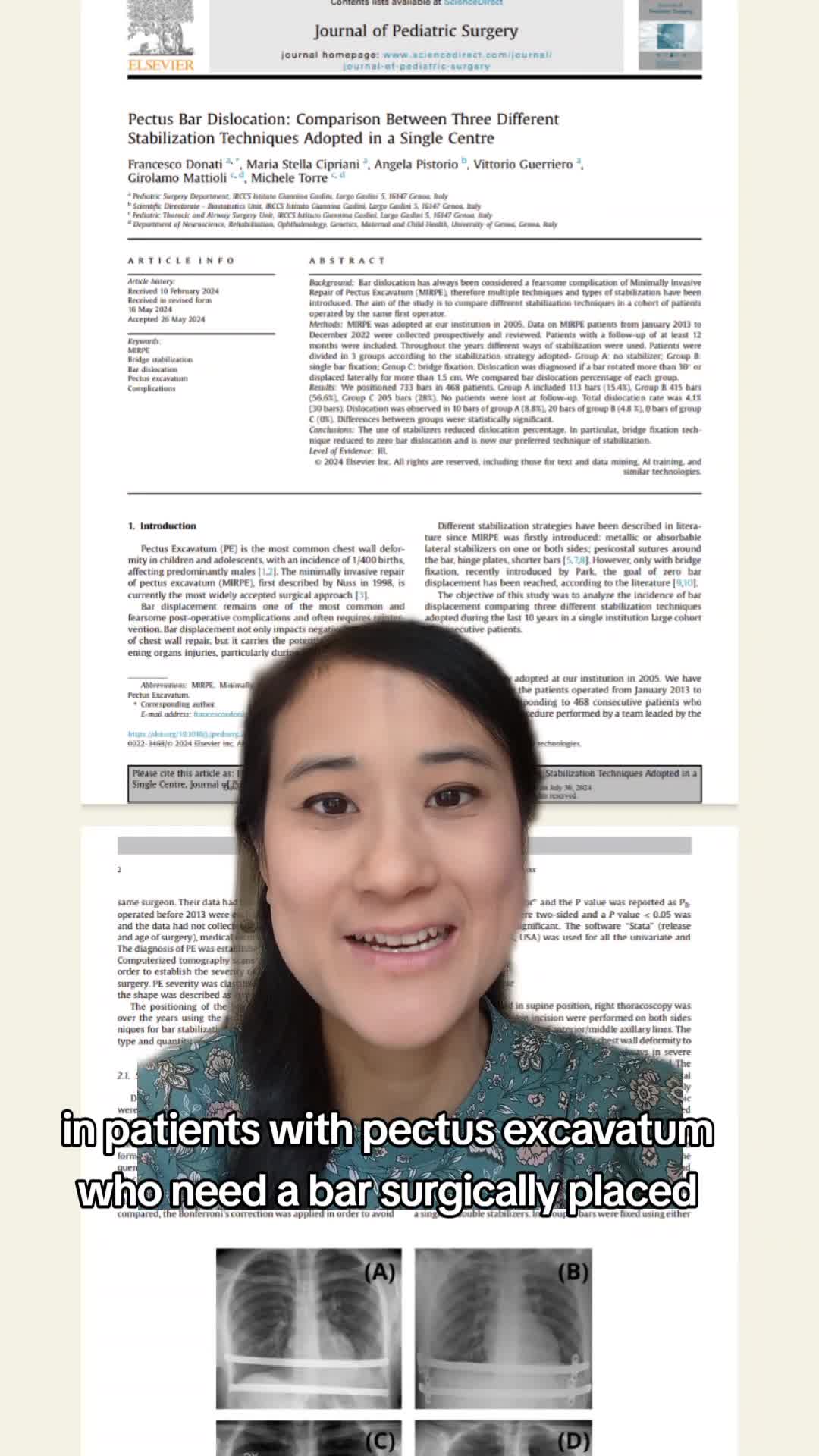 ▶
Ep 45 · 0:13
▶
Ep 45 · 0:13
host summary
Lizzie Lee summarizing a resource: The study was an observational perspective study conducted in Italy from 2013 to 2022.
↗
▶
Ep 45 · 0:13
host summary
Lizzie Lee summarizing a resource: The study included 468 patients around 15 years old.
↗
▶
Ep 45 · 0:23
host summary
Lizzie Lee summarizing a resource: Surgeons placed 733 bars total across the patient cohort.
↗
▶
Ep 45 · 0:31
host summary
Lizzie Lee summarizing a resource: Dislocation is when a bar rotates more than 30 degrees out of place.
↗
▶
Ep 45 · 0:31
host summary
Lizzie Lee summarizing a resource: Bar dislocation is defined as when a bar rotates more than 30 degrees out of place.
↗
▶
Ep 45 · 0:43
host summary
Lizzie Lee summarizing a resource: None of the patients with bridge fixation had dislocated bars compared to those who underwent the single bar technique.
↗
▶
Ep 45 · 0:43
host summary
Lizzie Lee summarizing a resource: None of the patients with bridge fixation had dislocated bars.
↗
Update Course Rewind: Cryoanalgesia in Pectus Cases 2024
 ▶
Ep 46 · 0:57
▶
Ep 46 · 0:57
host summary
Lizzie Lee summarizes what Dr. John DiFiore said: Cryoanalgesia is a minimally invasive procedure to repair pectus excavatum or alleviate pain during surgery on the chest wall that temporarily blocks nerve conduction along peripheral nerve pathways and relieves pain by freezing the affected nerve.
↗
▶
Ep 46 · 1:30
host summary
Lizzie Lee summarizes what Dr. John DiFiore said: The freeze point is in the posterior axillary line, 4 centimeters from the vertebral column.
↗
▶
Ep 46 · 1:36
host summary
Lizzie Lee summarizes what Dr. John DiFiore said: With the original cryoprobe, it's a 2-minute freeze cycle.
↗
▶
Ep 46 · 2:02
host summary
Lizzie Lee summarizes what Dr. John DiFiore said: Subpleural injection with 0.25% marcaine with epinephrine works immediately, as opposed to the 8 to 10 hour delay with the cryo nerve block.
↗
▶
Ep 46 · 2:13
host summary
Lizzie Lee summarizes what Dr. John DiFiore said: Subpleural injection takes only 15 seconds per interspace.
↗
▶
Ep 46 · 2:26
host summary
Lizzie Lee summarizes what Dr. John DiFiore said: 50% of the update course audience has never used cryoanalgesia.
↗
▶
Ep 46 · 2:33
host summary
Lizzie Lee summarizes what Dr. John DiFiore said: About 40% of the update course responders answered that cost is the main reason they don't use cryoanalgesia.
↗
▶
Ep 46 · 2:55
host summary
Lizzie Lee summarizes what Dr. John DiFiore said: Doing T3 to T8 bilaterally with the new probe saves almost 30 minutes.
↗
▶
Ep 46 · 3:10
host summary
Lizzie Lee summarizes what Dr. John DiFiore said: The new probe has improved shaft insulation so that it can actually touch the lung, since it only reaches room temperature.
↗
▶
Ep 46 · 3:48
host summary
Lizzie Lee summarizes what Dr. John DiFiore said: The Chicago study was limited because they did not measure pain scores or compare the 1 minute freeze cycle directly to 2-minute freeze cycles.
↗
▶
Ep 46 · 4:13
host summary
Lizzie Lee summarizes what Dr. John DiFiore said: There is a risk of pneumothorax from the lung tearing after inadvertent adhesion to the cryoprobe.
↗
▶
Ep 46 · 4:19
host summary
Lizzie Lee summarizes what Dr. John DiFiore said: The double lumen endotracheal tube helps minimize pneumothorax risk by deflating the lung and maximizing working space so that the cryoprobe does not touch the lung.
↗
▶
Ep 46 · 4:39
host summary
Lizzie Lee summarizes what Dr. John DiFiore said: A major advantage of the double lumen tube over the single lumen tube is that it helps prevent the nerve block from being done too far anteriorly, which will make the nerve block ineffective.
↗
▶
Ep 46 · 5:13
host summary
Lizzie Lee summarizes what Dr. John DiFiore said: Doctor Sung Kim did a cadaver study at UCSF showing that 18% of the lateral cutaneous branch nerves are posterior to the mid axillary line.
↗
▶
Ep 46 · 5:31
host summary
Lizzie Lee summarizes what Dr. John DiFiore said: Some surgeons have success with using a single lumen tube doing a mediastinal dissection, going across from the right to the left side.
↗
▶
Ep 46 · 5:58
host summary
Lizzie Lee summarizes what Dr. John DiFiore said: In a small group of patients, Doctor Kim cryoablated the main intercostal nerve at the bottom of the rib and the collateral branch at the top of the rib below it.
↗
▶
Ep 46 · 6:12
host summary
Lizzie Lee summarizes what Dr. John DiFiore said: As you move down toward T7 and T8, the interspace will widen enough to freeze both the main nerve and collateral branch.
↗
▶
Ep 46 · 6:32
host summary
Lizzie Lee summarizes what Dr. John DiFiore said: In the UCSF study, when they did 2 freeze points per interspace on 22 patients, the length of stay decreased from 2 days to 1 day.
↗
▶
Ep 46 · 6:42
host summary
Lizzie Lee summarizes what Dr. John DiFiore said: In the UCSF study, 9 out of the 22 patients reported pain scores of 0.
↗
▶
Ep 46 · 7:00
host summary
Lizzie Lee summarizes what Dr. John DiFiore said: Cryoanalgesia controls pain and decreases hospital length of stay with few short-term complications.
↗
Six Years of Quality Improvement in Pectus Excavatum Repair: Implementation of Intercostal Nerve Cryoablation and ERAS Protocols for Patients Undergoing Nuss Procedure
 ▶
Ep 47 · 0:00
▶
Ep 47 · 0:00
host summary
Lizzie Lee summarizing a resource: How do intercostal nerve cryoablation and enhanced recovery after surgery, also known as ARIS protocols, affect pain management, opioid use, length of stay, and recovery in pectus excavatum patients undergoing the NES procedure?
↗
▶
Ep 47 · 0:19
host summary
Lizzie Lee summarizing a resource: The study was a retrospective cohort study that looked at 62 patients from 2017 to 2023
↗
▶
Ep 47 · 0:25
host summary
Lizzie Lee summarizing a resource: Intercostal nerve cryoablation slightly increased surgery time in pectus excavatum patients undergoing the Nuss procedure
↗
▶
Ep 47 · 0:25
host summary
Lizzie Lee summarizing a resource: Intercostal nerve cryoablation slightly increased early postoperative pain in pectus excavatum patients undergoing the Nuss procedure
↗
▶
Ep 47 · 0:25
host summary
Lizzie Lee summarizing a resource: Intercostal nerve cryoablation significantly reduced opioid use in pectus excavatum patients undergoing the Nuss procedure
↗
▶
Ep 47 · 0:25
host summary
Lizzie Lee summarizing a resource: Intercostal nerve cryoablation significantly reduced hospital stays in pectus excavatum patients undergoing the Nuss procedure
↗
▶
Ep 47 · 0:36
host summary
Lizzie Lee summarizing a resource: Adding ERAS protocols to cryoablation further reduced opioid needs in pectus excavatum patients undergoing the Nuss procedure
↗
▶
Ep 47 · 0:36
host summary
Lizzie Lee summarizing a resource: Adding ERAS protocols to cryoablation further reduced early pain scores in pectus excavatum patients undergoing the Nuss procedure
↗
▶
Ep 47 · 0:40
host summary
Lizzie Lee summarizing a resource: These findings suggest that combining cryoablation and ARR protocols leads to better outcomes and pain management.
↗
▶
Ep 47 · 0:40
host summary
Lizzie Lee summarizing a resource: Combining cryoablation and ERAS protocols leads to better outcomes and pain management in pectus excavatum patients undergoing the Nuss procedure
↗
Cardiopulmonary Impact of the Minimally Invasive Repair of Pectus Excavatum in Pediatric Patients: A Prospective Pilot Study
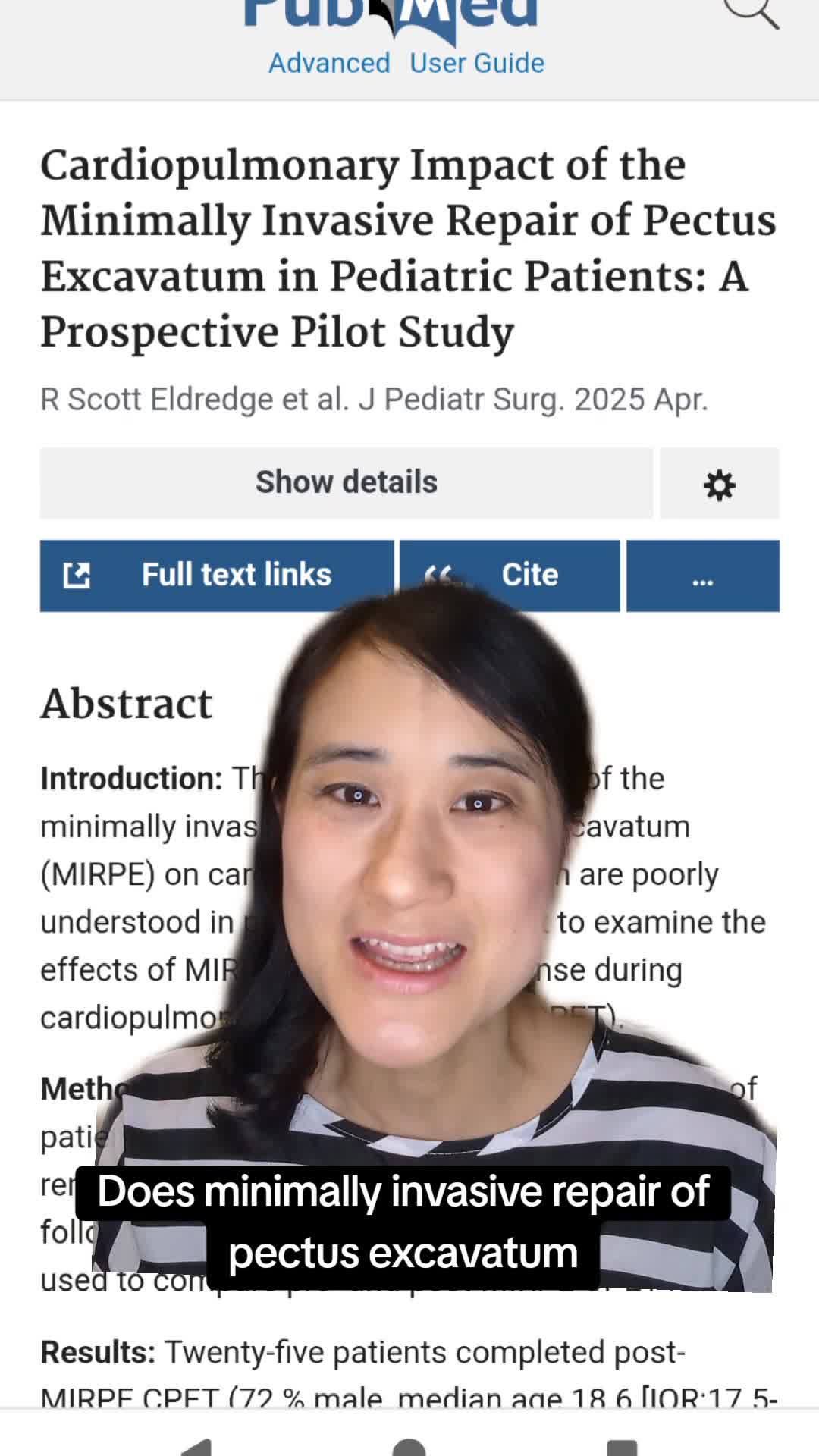 ▶
Ep 49 · 0:00
▶
Ep 49 · 0:00
host summary
Lizzie Lee summarizing a resource: Does minimally invasive repair of pectus excavatum improve heart and lung function during exercise in pediatric patients?
↗
▶
Ep 49 · 0:12
host summary
Lizzie Lee summarizing a resource: This was a prospective pilot study
↗
▶
Ep 49 · 0:12
host summary
Lizzie Lee summarizing a resource: Study included patients under 18 who had cardiopulmonary exercise testing before minimally invasive repair of pectus excavatum and then after removal of their pectus bar
↗
▶
Ep 49 · 0:24
host summary
Lizzie Lee summarizing a resource: Results showed a significant improvement in O2 pulse after the repair
↗
▶
Ep 49 · 0:24
host summary
Lizzie Lee summarizing a resource: Improved O2 pulse suggests better heart function after the repair
↗
▶
Ep 49 · 0:24
host summary
Lizzie Lee summarizing a resource: 25 patients total completed both tests
↗
▶
Ep 49 · 0:24
host summary
Lizzie Lee summarizing a resource: O2 pulse is a measure of how much oxygen the heart pumps per beat
↗
▶
Ep 49 · 0:37
host summary
Lizzie Lee summarizing a resource: The improvement may reflect relief of cardiac compression that was present preoperatively due to pectus excavatum
↗
▶
Ep 49 · 0:43
host summary
Lizzie Lee summarizing a resource: The main takeaway is that minimally invasive repair of pectus excavatum does appear to improve heart performance during exercise.
↗
▶
Ep 49 · 0:43
host summary
Lizzie Lee summarizing a resource: Minimally invasive repair of pectus excavatum does appear to improve heart performance during exercise
↗
Update Course Rewind: Part 1 Non-Pectus Uses of Cryoanalgesia 2024
 ▶
Ep 52 · 1:02
▶
Ep 52 · 1:02
host summary
Lizzie Lee summarizes what Dr. Timothy Lautz said: Cryoanalgesia temporarily blocks nerve conduction along peripheral nerve pathways by freezing the affected nerve
↗
▶
Ep 52 · 1:25
host summary
Lizzie Lee summarizes what Dr. Timothy Lautz said: When fibrous outer neural structures remain intact, axons can regenerate in 4 to 6 weeks
↗
▶
Ep 52 · 1:57
host summary
Lizzie Lee summarizes what Dr. Timothy Lautz said: Cryoanalgesia can help with pain control all through the recovery period
↗
▶
Ep 52 · 1:57
host summary
Lizzie Lee summarizes what Dr. Timothy Lautz said: Epidurals usually only give pain relief for a few days
↗
▶
Ep 52 · 2:23
host summary
Lizzie Lee summarizes what Dr. Timothy Lautz said: At T10 level or lower, cryoanalgesia can cause pseudohernias on the abdominal wall from affecting motor branches
↗
▶
Ep 52 · 2:44
host summary
Lizzie Lee summarizes what Dr. Timothy Lautz said: A cardiac probe used for ablations can be used in smaller children
↗
▶
Ep 52 · 2:58
host summary
Lizzie Lee summarizes what Dr. Timothy Lautz said: The newest probe has shaft insulation that only reaches room temperature, eliminating skin freeze risk as only the probe tip gets cold
↗
▶
Ep 52 · 3:21
host summary
Lizzie Lee summarizes what Dr. Timothy Lautz said: Patients were able to be discharged home without any narcotic prescriptions
↗
▶
Ep 52 · 3:24
host summary
Lizzie Lee summarizes what Dr. Timothy Lautz said: With cryoanalgesia, surgeons do not have to wait for a regional anesthesia team
↗
▶
Ep 52 · 3:40
host summary
Lizzie Lee summarizes what Dr. Timothy Lautz said: The intercostal nerve cryoablation group used 137 oral morphine equivalents during hospital stay compared to 533 in the regional nerve block group
↗
Update Course Rewind: Part 2 Non-Pectus Uses of Cryoanalgesia 2024
 ▶
Ep 53 · 0:56
▶
Ep 53 · 0:56
host summary
Lizzie Lee summarizing the discussion: Cryoablation is not limited to thoracotomy or thoracoscopy; there are novel ways to use cryotherapy in a percutaneous approach.
↗
▶
Ep 53 · 1:21
host summary
Lizzie Lee summarizing the discussion: Slipping rib syndrome is a condition with cartilaginous union at the end of the ribs, particularly for floating ribs but also for false ribs.
↗
▶
Ep 53 · 1:58
host summary
Lizzie Lee summarizing the discussion: Slipping rib syndrome is more common in teenage girls than boys.
↗
▶
Ep 53 · 2:01
host summary
Lizzie Lee summarizing the discussion: Patients with slipping rib syndrome often present with somatic tenderness of the abdominal wall that can be elicited by asking them to flex or crunch their abdominal muscles, but they really won't have a visceral type tenderness.
↗
▶
Ep 53 · 2:25
host summary
Lizzie Lee summarizing the discussion: If patients get pain relief from the intercostal block with ropivacaine and dexamethasone, the next step is to refer them to interventional radiology for ultrasound-guided cryotherapy.
↗
▶
Ep 53 · 3:13
host summary
Lizzie Lee summarizing the discussion: Outcomes from using cryoablation for slipping rib syndrome included reduced pain scores, reduced narcotic use, and shorter length of stay in the hospital.
↗
▶
Ep 53 · 3:19
host summary
Lizzie Lee summarizing the discussion: Patients treated with cryoablation for slipping rib syndrome were able to resume normal activities much earlier.
↗
Quick Literature Updates Ep 24
▶
Ep 54 · 1:03
host summary
Lizzie Lee summarizes what Dr. Carlos Colunga said: The Donnati et al. study was an observational prospective study in Italy from 2013 to 2022 on 468 patients around 15 years old.
↗
▶
Ep 54 · 1:13
host summary
Lizzie Lee summarizes what Dr. Carlos Colunga said: Surgeons placed 733 pectus bars total across the 468 patients in the Donnati study.
↗
▶
Ep 54 · 1:21
host summary
Lizzie Lee summarizes what Dr. Carlos Colunga said: Bar dislocation is defined as when a pectus bar rotates more than 30 degrees out of place.
↗
▶
Ep 54 · 1:28
host summary
Lizzie Lee summarizes what Dr. Carlos Colunga said: Bridge fixation was significantly more stable than single bar fixation for pectus repair.
↗
▶
Ep 54 · 1:28
host summary
Lizzie Lee summarizes what Dr. Carlos Colunga said: Bridge fixation was significantly more stable than single bar fixation.
↗
▶
Ep 54 · 1:33
host summary
Lizzie Lee summarizes what Dr. Carlos Colunga said: None of the patients with bridge fixation had dislocated bars compared to those who underwent the single bar technique.
↗
▶
Ep 54 · 1:33
host summary
Lizzie Lee summarizes what Dr. Carlos Colunga said: None of the patients with bridge fixation had dislocated bars compared to those who underwent the single bar technique.
↗
▶
Ep 54 · 1:39
host summary
Lizzie Lee summarizes what Dr. Carlos Colunga said: Bridge fixation is the best technique for preventing bar dislocation in pectus excavatum patients.
↗
Summaries Lizzie gave as host · Pediatric Oncology
58 summaries
Open the Pediatric Oncology collection →
Quick Literature Updates Ep 19
▶
Ep 565 · 1:00
host summary
Lizzie Lee summarizes what Dr. Carlos Colunga said: APSA created a peer support program for pediatric surgeons in 2020.
↗
▶
Ep 565 · 1:00
host summary
Lizzie Lee summarizes what Dr. Carlos Colunga said: The American Pediatric Surgical Association or the APSA created a peer support program for pediatric surgeons in 2020.
↗
▶
Ep 565 · 1:12
host summary
Lizzie Lee summarizes what Dr. Carlos Colunga said: The goal of the APSA peer support program was to support surgeons after traumatic events.
↗
▶
Ep 565 · 1:12
host summary
Lizzie Lee summarizes what Dr. Carlos Colunga said: Their goal was to support surgeons after traumatic events.
↗
▶
Ep 565 · 1:16
host summary
Lizzie Lee summarizes what Dr. Carlos Colunga said: The most common referral reasons were toxic work environments and adverse events.
↗
▶
Ep 565 · 1:16
host summary
Lizzie Lee summarizes what Dr. Carlos Colunga said: The most common referral reasons for the peer support program were toxic work environments and adverse events.
↗
▶
Ep 565 · 1:20
host summary
Lizzie Lee summarizes what Dr. Carlos Colunga said: 50 surgeons total agreed to receive training on how to be a supporter in the APSA program.
↗
▶
Ep 565 · 1:25
host summary
Lizzie Lee summarizes what Dr. Carlos Colunga said: Over 80% of trained peer supporters were able to use these peer support skills informally with colleagues, partners, and trainees.
↗
▶
Ep 565 · 1:31
host summary
Lizzie Lee summarizes what Dr. Carlos Colunga said: The peer support program shows that this type of support system can work really well to help surgeons heal from traumatic experiences and toxic work environments.
↗
Update Course Rewind: Chest Wall Reconstruction 2024
▶
Ep 588 · 0:00
host summary
Lizzie Lee summarizes what Dr. Margaret Mutch said: Would you know how to reconstruct a chest wall if you needed to?
↗
▶
Ep 588 · 0:51
host summary
Lizzie Lee summarizes what Dr. Margaret Mutch said: The histopathology report confirmed an aggressive osteosarcoma.
↗
▶
Ep 588 · 1:45
host summary
Lizzie Lee summarizes what Dr. Margaret Mutch said: There is a lack of clear evidence-based guidelines for reconstructive materials, but the priority is long-term durability, aesthetics, function, and accommodating future growth.
↗
▶
Ep 588 · 3:05
host summary
Lizzie Lee summarizes what Dr. Margaret Mutch said: Instead of using screws that came packaged with the plates, they used a K-wire drill to drill through the remaining ribs and then used Prolene sutures to secure the implant.
↗
▶
Ep 588 · 3:29
host summary
Lizzie Lee summarizes what Dr. Margaret Mutch said: Permacol is a surgical implant made of a porcine dermal collagen matrix that allows device placement.
↗
▶
Ep 588 · 4:12
host summary
Lizzie Lee summarizes what Dr. Margaret Mutch said: Doctor Mutch performed a further chest wall reconstruction where they excised the entire sternum, costochondral cartilages, and anterior ribs and replaced it with a cement mesh.
↗
▶
Ep 588 · 4:45
host summary
Lizzie Lee summarizes what Dr. Margaret Mutch said: There was one case of minor scoliosis on follow-up, which is being followed by the spinal team and so far has not needed intervention.
↗
▶
Ep 588 · 5:17
host summary
Lizzie Lee summarizes what Dr. Margaret Mutch said: Bioengineering of tissue replacement and 3D printing may be the way of the future in chest wall reconstructions.
↗
Update Course Rewind: Updates in Wilms Management 2024
 ▶
Ep 595 · 0:09
▶
Ep 595 · 0:09
host summary
Lizzie Lee summarizing the discussion: Hello pediatric surgery family. I'm Lizzie Lee from Cincinnati Children's Hospital Medical Center.
↗
▶
Ep 595 · 1:54
host summary
Lizzie Lee summarizing the discussion: Loss of heterozygosity is the loss of genetic diversity in tumor cells and can indicate more aggressive disease in Wilms tumor.
↗
▶
Ep 595 · 2:02
host summary
Lizzie Lee summarizing the discussion: Gain of 1Q refers to an extra copy of a section of chromosome 1, which is linked to worse outcomes in some cancers.
↗
▶
Ep 595 · 3:15
host summary
Lizzie Lee summarizing the discussion: According to Children's Oncology Group updates, adverse biologic factors are associated with worse prognosis in stage 2 patients, but not in stage 1 favorable histology Wilms tumor patients.
↗
▶
Ep 595 · 3:30
host summary
Lizzie Lee summarizing the discussion: The North American COG approach often involves immediate surgery, while the European SIOP approach typically starts with chemotherapy before surgery.
↗
▶
Ep 595 · 3:49
host summary
Lizzie Lee summarizing the discussion: Genetic markers like loss of heterozygosity at specific chromosomes can indicate a higher risk of cancer recurrence and guide decisions about adding chemotherapy treatments.
↗
Appendectomy vs Right Hemicolectomy for Pediatric Neuroendocrine Tumor of the Appendix
 ▶
Ep 596 · 0:00
▶
Ep 596 · 0:00
host summary
Lizzie Lee summarizing a resource: What if I told you kids with appendix tumors might not need the big surgery that doctors have been doing for decades?
↗
▶
Ep 596 · 0:06
host summary
Lizzie Lee summarizing a resource: The speaker is affiliated with Cincinnati Children's Hospital
↗
▶
Ep 596 · 0:10
host summary
Lizzie Lee summarizing a resource: Traditionally, children with neuroendocrine appendix tumors have been treated the same way as adults with right hemicolectomy
↗
▶
Ep 596 · 0:10
host summary
Lizzie Lee summarizing a resource: Traditionally, kids with neuroendocrine appendix tumors have been treated the same way as adults with a right hemicolectomy.
↗
▶
Ep 596 · 0:19
host summary
Lizzie Lee summarizing a resource: A new national study examined over 1,300 children with neuroendocrine appendix tumors
↗
▶
Ep 596 · 0:24
host summary
Lizzie Lee summarizing a resource: Even when the tumors were larger or had positive margins, survival rates were almost perfect, like 99%, whether they just had an appendectomy or the bigger colectomy surgery.
↗
▶
Ep 596 · 0:24
host summary
Lizzie Lee summarizing a resource: Survival rates were approximately 99% whether patients had appendectomy or right hemicolectomy, even with larger tumors or positive margins
↗
▶
Ep 596 · 0:35
host summary
Lizzie Lee summarizing a resource: So the big takeaway, for kids, appendectomy alone is not only enough, it's safe, effective, and avoids putting them through a much bigger operation for no added benefit.
↗
▶
Ep 596 · 0:35
host summary
Lizzie Lee summarizing a resource: Appendectomy avoids putting pediatric patients through a much bigger operation with no added survival benefit compared to right hemicolectomy
↗
▶
Ep 596 · 0:35
host summary
Lizzie Lee summarizing a resource: For pediatric patients, appendectomy alone is safe and effective for neuroendocrine tumors of the appendix
↗
Quick Literature Updates Ep 21
 ▶
Ep 601 · 1:02
▶
Ep 601 · 1:02
host summary
Lizzie Lee summarizes what Dr. Alex Halpern said: Pediatric trauma patients are at high risk for developing venous thromboembolism (VTE).
↗
▶
Ep 601 · 1:09
host summary
Lizzie Lee summarizes what Dr. Alex Halpern said: The Wita et al. cohort study was conducted from 2019 to 2022 in eight pediatric trauma centers and included patients younger than 18 years old.
↗
▶
Ep 601 · 1:18
host summary
Lizzie Lee summarizes what Dr. Alex Halpern said: Among 460 high-risk pediatric trauma patients, more than half received chemical VTE prophylaxis.
↗
▶
Ep 601 · 1:25
host summary
Lizzie Lee summarizes what Dr. Alex Halpern said: Delaying blood thinners beyond 24 hours of hospital arrival increases the risk of blood clots in pediatric trauma patients.
↗
▶
Ep 601 · 1:32
host summary
Lizzie Lee summarizes what Dr. Alex Halpern said: VTE prophylaxis is safe and effective for pediatric trauma patients and needs to be started within 24 hours of admission.
↗
Sacrococcygeal Teratomas in Currarino Syndrome: A Multicenter Review of Tumor Characteristics, Surgical Outcomes, and Recurrence
▶
Ep 615 · 0:00
host summary
Lizzie Lee summarizing a resource: What if the sacrococcygeal teratomas that we worry most about are actually the least aggressive ones?
↗
▶
Ep 615 · 0:10
host summary
Lizzie Lee summarizing a resource: A multicenter review examined over 200 sacrococcygeal teratoma cases comparing children with Currarino syndrome to those without it.
↗
▶
Ep 615 · 0:19
host summary
Lizzie Lee summarizing a resource: Currarino patients were almost always diagnosed after birth.
↗
▶
Ep 615 · 0:19
host summary
Lizzie Lee summarizing a resource: Tumors in Currarino patients are almost exclusively Altman type 4, buried deep in the pelvis.
↗
▶
Ep 615 · 0:27
host summary
Lizzie Lee summarizing a resource: Every tumor in the Currarino group was a mature one with no immature or malignant components at all.
↗
▶
Ep 615 · 0:27
host summary
Lizzie Lee summarizing a resource: Every tumor in the curorinal group was a mature one. There were no immature or malignant components at all.
↗
▶
Ep 615 · 0:33
host summary
Lizzie Lee summarizing a resource: Currarino-associated tumors were much smaller, around 3 centimeters instead of 8 centimeters.
↗
▶
Ep 615 · 0:36
host summary
Lizzie Lee summarizing a resource: Recurrence was almost nonexistent in Currarino cases and not significantly different from non-Currarino cases.
↗
▶
Ep 615 · 0:41
host summary
Lizzie Lee summarizing a resource: Currarino-associated sacrococcygeal teratomas behave incredibly well oncologically, suggesting potential for less aggressive long-term follow-up.
↗
▶
Ep 615 · 0:41
host summary
Lizzie Lee summarizing a resource: So the message here is that curorino associated sacrococcygeal teratomas behave incredibly well oncologically, which means we may be able to rethink how aggressively we follow these kids long term.
↗
Pancreatitis in pediatric patients with pancreatic solid pseudopapillary neoplasms- a single center experience
▶
Ep 665 · 0:00
host summary
Lizzie Lee summarizing a resource: What if curing a rare pancreatic tumor sets the stage for chronic pancreatitis?
↗
▶
Ep 665 · 0:09
host summary
Lizzie Lee summarizing a resource: Solid pseudopapillary neoplasms are one of the most frequent pancreatic tumors in pediatric patients
↗
▶
Ep 665 · 0:15
host summary
Lizzie Lee summarizing a resource: Surgery for solid pseudopapillary neoplasms is usually curative and outcomes are excellent
↗
▶
Ep 665 · 0:22
host summary
Lizzie Lee summarizing a resource: In a single center study, 10 adolescent girls underwent surgical resection for solid pseudopapillary neoplasms
↗
▶
Ep 665 · 0:25
host summary
Lizzie Lee summarizing a resource: 3 out of 10 patients developed acute recurrent or chronic pancreatitis after resection
↗
▶
Ep 665 · 0:32
host summary
Lizzie Lee summarizing a resource: Every patient who developed ongoing pancreatitis had genetic risk factors like the CFTR gene variant, or they had pancreas divisum.
↗
▶
Ep 665 · 0:32
host summary
Lizzie Lee summarizing a resource: Every patient who developed ongoing pancreatitis had genetic risk factors like CFTR gene variants or pancreas divisum
↗
▶
Ep 665 · 0:40
host summary
Lizzie Lee summarizing a resource: Some patients with post-resection pancreatitis ultimately required completion pancreatectomy
↗
▶
Ep 665 · 0:45
host summary
Lizzie Lee summarizing a resource: Even low grade tumors can carry high stakes consequences.
↗
▶
Ep 665 · 0:48
host summary
Lizzie Lee summarizing a resource: Identifying genetic and anatomic risk factors before surgery may change management of patients with solid pseudopapillary neoplasms
↗
Summaries Lizzie gave as host · Peritoneal Dialysis Access
40 summaries
Open the Peritoneal Dialysis Access collection →
Practice Patterns and Outcomes of Hemodialysis in Infants Undergoing Congenital Heart Surgery in the
▶
Ep 9 · 0:00
host summary
Lizzie Lee summarizing a resource: Does it matter where a baby receives care after heart surgery?
↗
▶
Ep 9 · 0:07
host summary
Lizzie Lee summarizing a resource: 1% of infants can develop severe acute kidney injury and require dialysis after congenital heart surgery
↗
▶
Ep 9 · 0:14
host summary
Lizzie Lee summarizing a resource: For infants that did not need hemodialysis after congenital heart surgery, one-year survival was 94%
↗
▶
Ep 9 · 0:14
host summary
Lizzie Lee summarizing a resource: For infants that needed hemodialysis after congenital heart surgery, one-year survival was 46%
↗
▶
Ep 9 · 0:23
host summary
Lizzie Lee summarizing a resource: Most infants requiring dialysis after congenital heart surgery received continuous renal replacement therapy rather than intermittent dialysis
↗
▶
Ep 9 · 0:30
host summary
Lizzie Lee summarizing a resource: Where the baby was treated mattered a lot.
↗
▶
Ep 9 · 0:33
host summary
Lizzie Lee summarizing a resource: Hospitals that use dialysis more frequently had 3 times higher hospital survival for infants after congenital heart surgery
↗
▶
Ep 9 · 0:33
host summary
Lizzie Lee summarizing a resource: Hospitals that use dialysis more frequently had double the 1-year survival rate for infants after congenital heart surgery
↗
▶
Ep 9 · 0:39
host summary
Lizzie Lee summarizing a resource: Dialysis after infant heart surgery is rare
↗
▶
Ep 9 · 0:44
host summary
Lizzie Lee summarizing a resource: Outcomes may improve when infants requiring dialysis after heart surgery are treated at a center with more experience in using dialysis
↗
Practice Patterns and Outcomes of Hemodialysis in Infants Undergoing Congenital Heart Surgery in the
▶
Ep 10 · 0:00
host summary
Lizzie Lee summarizing a resource: Does it matter where a baby receives care after heart surgery?
↗
▶
Ep 10 · 0:07
host summary
Lizzie Lee summarizing a resource: 1% of infants can develop severe acute kidney injury and require dialysis after congenital heart surgery
↗
▶
Ep 10 · 0:14
host summary
Lizzie Lee summarizing a resource: For infants not needing hemodialysis after congenital heart surgery, one-year survival was 94%
↗
▶
Ep 10 · 0:14
host summary
Lizzie Lee summarizing a resource: For infants needing hemodialysis after congenital heart surgery, one-year survival was 46%
↗
▶
Ep 10 · 0:23
host summary
Lizzie Lee summarizing a resource: Most infants requiring dialysis after congenital heart surgery received continuous renal replacement therapy rather than intermittent dialysis
↗
▶
Ep 10 · 0:30
host summary
Lizzie Lee summarizing a resource: Where the baby was treated mattered a lot.
↗
▶
Ep 10 · 0:33
host summary
Lizzie Lee summarizing a resource: Hospitals that use dialysis more frequently had 3 times higher hospital survival for infants after congenital heart surgery
↗
▶
Ep 10 · 0:33
host summary
Lizzie Lee summarizing a resource: Hospitals that use dialysis more frequently had double the 1-year survival rate for infants after congenital heart surgery
↗
▶
Ep 10 · 0:39
host summary
Lizzie Lee summarizing a resource: Dialysis after infant heart surgery is rare
↗
▶
Ep 10 · 0:44
host summary
Lizzie Lee summarizing a resource: Outcomes may improve when infants requiring dialysis after heart surgery are treated at a center with more experience in using dialysis
↗
Practice Patterns and Outcomes of Hemodialysis in Infants Undergoing Congenital Heart Surgery in the
▶
Ep 11 · 0:00
host summary
Lizzie Lee summarizing a resource: Does it matter where a baby receives care after heart surgery?
↗
▶
Ep 11 · 0:07
host summary
Lizzie Lee summarizing a resource: 1% of infants can develop severe acute kidney injury and require dialysis after congenital heart surgery
↗
▶
Ep 11 · 0:14
host summary
Lizzie Lee summarizing a resource: For infants not needing hemodialysis after congenital heart surgery, one-year survival was 94%
↗
▶
Ep 11 · 0:14
host summary
Lizzie Lee summarizing a resource: For infants needing hemodialysis after congenital heart surgery, one-year survival was 46%
↗
▶
Ep 11 · 0:23
host summary
Lizzie Lee summarizing a resource: Most infants requiring dialysis after congenital heart surgery received continuous renal replacement therapy rather than intermittent dialysis
↗
▶
Ep 11 · 0:30
host summary
Lizzie Lee summarizing a resource: Where the baby was treated mattered a lot.
↗
▶
Ep 11 · 0:33
host summary
Lizzie Lee summarizing a resource: Hospitals that use dialysis more frequently had double the 1-year survival rate for infants after congenital heart surgery
↗
▶
Ep 11 · 0:33
host summary
Lizzie Lee summarizing a resource: Hospitals that use dialysis more frequently had 3 times higher hospital survival for infants after congenital heart surgery
↗
▶
Ep 11 · 0:39
host summary
Lizzie Lee summarizing a resource: Dialysis after infant heart surgery is rare
↗
▶
Ep 11 · 0:44
host summary
Lizzie Lee summarizing a resource: Outcomes may improve when infants requiring dialysis after heart surgery are treated at a center with more experience in using dialysis
↗
Practice Patterns and Outcomes of Hemodialysis in Infants Undergoing Congenital Heart Surgery...
▶
Ep 12 · 0:00
host summary
Lizzie Lee summarizing a resource: Does it matter where a baby receives care after heart surgery?
↗
▶
Ep 12 · 0:07
host summary
Lizzie Lee summarizing a resource: 1% of infants develop severe acute kidney injury requiring dialysis after congenital heart surgery
↗
▶
Ep 12 · 0:14
host summary
Lizzie Lee summarizing a resource: One-year survival for infants not requiring hemodialysis after congenital heart surgery is 94%
↗
▶
Ep 12 · 0:14
host summary
Lizzie Lee summarizing a resource: One-year survival for infants requiring hemodialysis after congenital heart surgery is 46%
↗
▶
Ep 12 · 0:23
host summary
Lizzie Lee summarizing a resource: Most infants requiring dialysis after congenital heart surgery received continuous renal replacement therapy rather than intermittent dialysis
↗
▶
Ep 12 · 0:30
host summary
Lizzie Lee summarizing a resource: Where the baby was treated mattered a lot.
↗
▶
Ep 12 · 0:33
host summary
Lizzie Lee summarizing a resource: Hospitals that use dialysis more frequently had 3 times higher hospital survival for infants after congenital heart surgery
↗
▶
Ep 12 · 0:33
host summary
Lizzie Lee summarizing a resource: Hospitals that use dialysis more frequently had double the 1-year survival rate for infants after congenital heart surgery
↗
▶
Ep 12 · 0:39
host summary
Lizzie Lee summarizing a resource: Dialysis after infant heart surgery is rare
↗
▶
Ep 12 · 0:44
host summary
Lizzie Lee summarizing a resource: Outcomes for infants requiring dialysis after heart surgery may improve when treated at centers with more experience in using dialysis
↗
Summaries Lizzie gave as host · Publications
20 summaries
Open the Publications collection →
Practice Patterns and Outcomes of Hemodialysis in Infants Undergoing Congenital Heart Surgery in the
▶
Ep 1 · 0:00
host summary
Lizzie Lee summarizing a resource: Does it matter where a baby receives care after heart surgery?
↗
▶
Ep 1 · 0:07
host summary
Lizzie Lee summarizing a resource: 1% of infants can develop severe acute kidney injury and require dialysis after congenital heart surgery
↗
▶
Ep 1 · 0:14
host summary
Lizzie Lee summarizing a resource: For infants needing hemodialysis after congenital heart surgery, one-year survival was 46%
↗
▶
Ep 1 · 0:14
host summary
Lizzie Lee summarizing a resource: For infants not needing hemodialysis after congenital heart surgery, one-year survival was 94%
↗
▶
Ep 1 · 0:23
host summary
Lizzie Lee summarizing a resource: Most infants requiring dialysis after congenital heart surgery received continuous renal replacement therapy rather than intermittent dialysis
↗
▶
Ep 1 · 0:30
host summary
Lizzie Lee summarizing a resource: Where the baby was treated mattered a lot.
↗
▶
Ep 1 · 0:33
host summary
Lizzie Lee summarizing a resource: Hospitals that use dialysis more frequently had 3 times higher hospital survival for infants after congenital heart surgery
↗
▶
Ep 1 · 0:33
host summary
Lizzie Lee summarizing a resource: Hospitals that use dialysis more frequently had double the 1-year survival rate for infants after congenital heart surgery
↗
▶
Ep 1 · 0:39
host summary
Lizzie Lee summarizing a resource: Dialysis after infant heart surgery is rare
↗
▶
Ep 1 · 0:44
host summary
Lizzie Lee summarizing a resource: Outcomes may improve when infants requiring dialysis after heart surgery are treated at a center with more experience in using dialysis
↗
Practice Patterns and Outcomes of Hemodialysis in Infants Undergoing Congenital Heart Surgery in the
▶
Ep 2 · 0:00
host summary
Lizzie Lee summarizing a resource: Does it matter where a baby receives care after heart surgery?
↗
▶
Ep 2 · 0:07
host summary
Lizzie Lee summarizing a resource: 1% of infants can develop severe acute kidney injury and require dialysis after congenital heart surgery
↗
▶
Ep 2 · 0:14
host summary
Lizzie Lee summarizing a resource: For infants needing hemodialysis after congenital heart surgery, one-year survival was 46%
↗
▶
Ep 2 · 0:14
host summary
Lizzie Lee summarizing a resource: For infants not needing hemodialysis after congenital heart surgery, one-year survival was 94%
↗
▶
Ep 2 · 0:23
host summary
Lizzie Lee summarizing a resource: Most infants requiring dialysis after congenital heart surgery received continuous renal replacement therapy rather than intermittent dialysis
↗
▶
Ep 2 · 0:30
host summary
Lizzie Lee summarizing a resource: Where the baby was treated mattered a lot.
↗
▶
Ep 2 · 0:33
host summary
Lizzie Lee summarizing a resource: Hospitals that use dialysis more frequently had double the 1-year survival rate for infants after congenital heart surgery
↗
▶
Ep 2 · 0:33
host summary
Lizzie Lee summarizing a resource: Hospitals that use dialysis more frequently had 3 times higher hospital survival for infants after congenital heart surgery
↗
▶
Ep 2 · 0:39
host summary
Lizzie Lee summarizing a resource: Dialysis after infant heart surgery is rare
↗
▶
Ep 2 · 0:44
host summary
Lizzie Lee summarizing a resource: Outcomes may improve when infants requiring dialysis after heart surgery are treated at a center with more experience in using dialysis
↗
Summaries Lizzie gave as host · Rectal Prolapse
6 summaries
Open the Rectal Prolapse collection →
Morbidity of Rectal Prolapse Repair After Surgery for Anorectal Malformation
▶
Ep 5 · 0:00
host summary
Lizzie Lee summarizing a resource: What if the safest move for rectal prolapse after anorectal malformation surgery is not to repair it?
↗
▶
Ep 5 · 0:11
host summary
Lizzie Lee summarizing a resource: A study examined 85 children treated for rectal prolapse after anorectal malformation surgery
↗
▶
Ep 5 · 0:16
host summary
Lizzie Lee summarizing a resource: Approximately 30% of children had recurrence of prolapse requiring another repair
↗
▶
Ep 5 · 0:20
host summary
Lizzie Lee summarizing a resource: Children without symptoms from prolapse at initial presentation were more likely to develop stricture later
↗
▶
Ep 5 · 0:26
host summary
Lizzie Lee summarizing a resource: surgeons need to think twice before rushing into repair if the prolapse isn't causing big symptoms, because the treatment itself can carry risks
↗
▶
Ep 5 · 0:26
host summary
Lizzie Lee summarizing a resource: Surgical repair of asymptomatic rectal prolapse may not be indicated because the treatment itself carries risks
↗
Summaries Lizzie gave as host · Sarcoma (Ewing/Rhabdo)
16 summaries
Open the Sarcoma (Ewing/Rhabdo) collection →
Update Course Rewind: Chest Wall Reconstruction 2024
▶
Ep 30 · 0:00
host summary
Lizzie Lee summarizes what Dr. Margaret Mutch said: Would you know how to reconstruct a chest wall if you needed to?
↗
▶
Ep 30 · 0:00
host summary
Lizzie Lee summarizes what Dr. Margaret Mutch said: Would you know how to reconstruct a chest wall if you needed to?
↗
▶
Ep 30 · 0:51
host summary
Lizzie Lee summarizes what Dr. Margaret Mutch said: The histopathology report confirmed an aggressive osteosarcoma.
↗
▶
Ep 30 · 0:51
host summary
Lizzie Lee summarizes what Dr. Margaret Mutch said: The histopathology report confirmed an aggressive osteosarcoma.
↗
▶
Ep 30 · 1:45
host summary
Lizzie Lee summarizes what Dr. Margaret Mutch said: There is a lack of clear evidence-based guidelines for reconstructive materials, but the priority is long-term durability, aesthetics, function, and accommodating future growth.
↗
▶
Ep 30 · 1:45
host summary
Lizzie Lee summarizes what Dr. Margaret Mutch said: There is a lack of clear evidence-based guidelines for reconstructive materials, but the priority is long-term durability, aesthetics, function, and accommodating future growth.
↗
▶
Ep 30 · 3:05
host summary
Lizzie Lee summarizes what Dr. Margaret Mutch said: Instead of using screws that came packaged with the plates, they used a K-wire drill to drill through the remaining ribs and then used Prolene sutures to secure the implant.
↗
▶
Ep 30 · 3:05
host summary
Lizzie Lee summarizes what Dr. Margaret Mutch said: Instead of using screws that came packaged with the plates, they used a K-wire drill to drill through the remaining ribs and then used Prolene sutures to secure the implant.
↗
▶
Ep 30 · 3:29
host summary
Lizzie Lee summarizes what Dr. Margaret Mutch said: Permacol is a surgical implant made of a porcine dermal collagen matrix that allows device placement.
↗
▶
Ep 30 · 3:29
host summary
Lizzie Lee summarizes what Dr. Margaret Mutch said: Permacol is a surgical implant made of a porcine dermal collagen matrix that allows device placement.
↗
▶
Ep 30 · 4:12
host summary
Lizzie Lee summarizes what Dr. Margaret Mutch said: Doctor Mutch performed a further chest wall reconstruction where they excised the entire sternum, costochondral cartilages, and anterior ribs and replaced it with a cement mesh.
↗
▶
Ep 30 · 4:12
host summary
Lizzie Lee summarizes what Dr. Margaret Mutch said: Doctor Mutch performed a further chest wall reconstruction where they excised the entire sternum, costochondral cartilages, and anterior ribs and replaced it with a cement mesh.
↗
▶
Ep 30 · 4:45
host summary
Lizzie Lee summarizes what Dr. Margaret Mutch said: There was one case of minor scoliosis on follow-up, which is being followed by the spinal team and so far has not needed intervention.
↗
▶
Ep 30 · 4:45
host summary
Lizzie Lee summarizes what Dr. Margaret Mutch said: There was one case of minor scoliosis on follow-up, which is being followed by the spinal team and so far has not needed intervention.
↗
▶
Ep 30 · 5:17
host summary
Lizzie Lee summarizes what Dr. Margaret Mutch said: Bioengineering of tissue replacement and 3D printing may be the way of the future in chest wall reconstructions.
↗
▶
Ep 30 · 5:17
host summary
Lizzie Lee summarizes what Dr. Margaret Mutch said: Bioengineering of tissue replacement and 3D printing may be the way of the future in chest wall reconstructions.
↗
Summaries Lizzie gave as host · Short Bowel Syndrome
14 summaries
Open the Short Bowel Syndrome collection →
Outcomes of Children With Short Bowel Syndrome: Experiences in a Multidisciplinary Intestinal Rehabilitation Unit Over Two Decades
▶
Ep 8 · 0:10
host summary
Lizzie Lee summarizing a resource: This retrospective study examined 64 pediatric patients with short bowel syndrome managed by a multidisciplinary intestinal rehab program between 2001 and 2022.
↗
▶
Ep 8 · 0:22
host summary
Lizzie Lee summarizing a resource: 89% of patients with short bowel syndrome in the study survived.
↗
▶
Ep 8 · 0:22
host summary
Lizzie Lee summarizing a resource: 78% of patients with short bowel syndrome were able to wean off parenteral nutrition.
↗
▶
Ep 8 · 0:22
host summary
Lizzie Lee summarizing a resource: Survival rates of children with short bowel syndrome improved over time in the study period.
↗
▶
Ep 8 · 0:31
host summary
Lizzie Lee summarizing a resource: Presence of intestinal failure associated liver disease affected survival in pediatric short bowel syndrome patients.
↗
▶
Ep 8 · 0:31
host summary
Lizzie Lee summarizing a resource: Introduction of fish oil-based parenteral nutrition in 2007 improved survival in pediatric short bowel syndrome patients.
↗
Impact of social determinants of health on outcomes in pediatric short bowel syndrome...
▶
Ep 10 · 0:00
host summary
Lizzie Lee summarizing a resource: Can a child's zip code actually change their short bowel syndrome outcomes?
↗
▶
Ep 10 · 0:07
host summary
Lizzie Lee summarizing a resource: This was a retrospective cohort study of children with short bowel syndrome in an intestinal rehabilitation program, followed from 2006 to 2019.
↗
▶
Ep 10 · 0:16
host summary
Lizzie Lee summarizing a resource: The study asked whether social determinants of health predict outcomes like bloodstream infections, liver disease, and achieving enteral autonomy.
↗
▶
Ep 10 · 0:24
host summary
Lizzie Lee summarizing a resource: And the answer was yes, in very real ways.
↗
▶
Ep 10 · 0:24
host summary
Lizzie Lee summarizing a resource: Social determinants of health do predict outcomes in pediatric short bowel syndrome in real ways.
↗
▶
Ep 10 · 0:27
host summary
Lizzie Lee summarizing a resource: Distance from the hospital was associated with higher risks of serious complications in children with short bowel syndrome.
↗
▶
Ep 10 · 0:33
host summary
Lizzie Lee summarizing a resource: Parental education was linked with fewer central line infections in children with short bowel syndrome.
↗
▶
Ep 10 · 0:37
host summary
Lizzie Lee summarizing a resource: Social determinants need to be considered to support families of children with short bowel syndrome better.
↗
Summaries Lizzie gave as host · Single Ventricle / HLHS
22 summaries
Open the Single Ventricle / HLHS collection →
Outcomes of Fontan Patients Undergoing Combined Heart - Liver Transplantation in Pediatric Hospitals Across the U.S.
▶
Ep 35 · 0:00
host summary
Lizzie Lee summarizing a resource: What happens when kids who underwent Fontan procedure don't just need a new heart, but a new liver as well.
↗
▶
Ep 35 · 0:11
host summary
Lizzie Lee summarizing a resource: More Fontan patients are surviving into adolescence and adulthood
↗
▶
Ep 35 · 0:11
host summary
Lizzie Lee summarizing a resource: Combined heart-liver transplantation is happening more often in Fontan patients
↗
▶
Ep 35 · 0:11
host summary
Lizzie Lee summarizing a resource: Liver disease is becoming a rising issue in Fontan patients
↗
▶
Ep 35 · 0:21
host summary
Lizzie Lee summarizing a resource: The study examined children and young adults undergoing combined heart-liver transplant at hospitals across the US in the last few years
↗
▶
Ep 35 · 0:28
host summary
Lizzie Lee summarizing a resource: Many of the patients in the study had hypoplastic left heart syndrome
↗
▶
Ep 35 · 0:36
host summary
Lizzie Lee summarizing a resource: Long-term outcomes after combined heart-liver transplant were excellent
↗
▶
Ep 35 · 0:36
host summary
Lizzie Lee summarizing a resource: About 85% of patients survived at 1 year after combined heart-liver transplant
↗
▶
Ep 35 · 0:41
host summary
Lizzie Lee summarizing a resource: Three-year survival after combined heart-liver transplant was basically identical to patients who received heart transplant alone
↗
▶
Ep 35 · 0:48
host summary
Lizzie Lee summarizing a resource: Combined heart-liver transplant is effective for Fontan patients with advanced liver disease
↗
▶
Ep 35 · 0:48
host summary
Lizzie Lee summarizing a resource: The big takeaway, combined heart liver transplant is effective and increasingly common for Fontan patients with advanced liver disease.
↗
▶
Ep 35 · 0:48
host summary
Lizzie Lee summarizing a resource: Combined heart-liver transplant is increasingly common for Fontan patients with advanced liver disease
↗
Surgical and Catheter-Based Intervention in Pediatric Pulmonary Vein Stenosis
▶
Ep 14 · 0:00
host summary
Lizzie Lee summarizing a resource: Can you ever truly fix pulmonary vein stenosis?
↗
▶
Ep 14 · 0:06
host summary
Lizzie Lee summarizing a resource: Pulmonary vein stenosis is a rare but serious condition where the veins from the lungs to the heart become narrowed
↗
▶
Ep 14 · 0:12
host summary
Lizzie Lee summarizing a resource: A study from Cincinnati Children's examined 56 children comparing surgery versus catheter-based interventions for pulmonary vein stenosis
↗
▶
Ep 14 · 0:23
host summary
Lizzie Lee summarizing a resource: Over time, catheter-based treatments became the preferred first option for pulmonary vein stenosis
↗
▶
Ep 14 · 0:28
host summary
Lizzie Lee summarizing a resource: Surgery was reserved for complex cases involving multiple severely affected veins or other heart defects
↗
▶
Ep 14 · 0:34
host summary
Lizzie Lee summarizing a resource: 92% of children with pulmonary vein stenosis needed another intervention after initial treatment
↗
▶
Ep 14 · 0:34
host summary
Lizzie Lee summarizing a resource: Recurrence of pulmonary vein stenosis remained common regardless of the initial intervention type
↗
▶
Ep 14 · 0:34
host summary
Lizzie Lee summarizing a resource: Most reinterventions for pulmonary vein stenosis occurred within the first year after initial treatment
↗
▶
Ep 14 · 0:45
host summary
Lizzie Lee summarizing a resource: So pulmonary vein stenosis isn't a one-time fix.
↗
▶
Ep 14 · 0:48
host summary
Lizzie Lee summarizing a resource: Pulmonary vein stenosis requires ongoing surveillance, repeated interventions, and a long-term multidisciplinary approach
↗
Summaries Lizzie gave as host · Slipping Rib Syndrome
7 summaries
Open the Slipping Rib Syndrome collection →
Update Course Rewind: Part 2 Non-Pectus Uses of Cryoanalgesia 2024
▶
Ep 3 · 0:56
host summary
Lizzie Lee summarizing the discussion: Cryoablation is not limited to thoracotomy or thoracoscopy; there are novel ways to use cryotherapy in a percutaneous approach.
↗
▶
Ep 3 · 1:21
host summary
Lizzie Lee summarizing the discussion: Slipping rib syndrome is a condition with cartilaginous union at the end of the ribs, particularly for floating ribs but also for false ribs.
↗
▶
Ep 3 · 1:58
host summary
Lizzie Lee summarizing the discussion: Slipping rib syndrome is more common in teenage girls than boys.
↗
▶
Ep 3 · 2:01
host summary
Lizzie Lee summarizing the discussion: Patients with slipping rib syndrome often present with somatic tenderness of the abdominal wall that can be elicited by asking them to flex or crunch their abdominal muscles, but they really won't have a visceral type tenderness.
↗
▶
Ep 3 · 2:25
host summary
Lizzie Lee summarizing the discussion: If patients get pain relief from the intercostal block with ropivacaine and dexamethasone, the next step is to refer them to interventional radiology for ultrasound-guided cryotherapy.
↗
▶
Ep 3 · 3:13
host summary
Lizzie Lee summarizing the discussion: Outcomes from using cryoablation for slipping rib syndrome included reduced pain scores, reduced narcotic use, and shorter length of stay in the hospital.
↗
▶
Ep 3 · 3:19
host summary
Lizzie Lee summarizing the discussion: Patients treated with cryoablation for slipping rib syndrome were able to resume normal activities much earlier.
↗
Summaries Lizzie gave as host · Soft Tissue Sarcoma (lymph nodes)
18 summaries
Open the Soft Tissue Sarcoma (lymph nodes) collection →
Update Course Rewind: Chest Wall Reconstruction 2024
▶
Ep 13 · 0:00
host summary
Lizzie Lee summarizes what Dr. Margaret Mutch said: Would you know how to reconstruct a chest wall if you needed to?
↗
▶
Ep 13 · 0:51
host summary
Lizzie Lee summarizes what Dr. Margaret Mutch said: The histopathology report confirmed an aggressive osteosarcoma.
↗
▶
Ep 13 · 1:45
host summary
Lizzie Lee summarizes what Dr. Margaret Mutch said: There is a lack of clear evidence-based guidelines for reconstructive materials, but the priority is long-term durability, aesthetics, function, and accommodating future growth.
↗
▶
Ep 13 · 3:05
host summary
Lizzie Lee summarizes what Dr. Margaret Mutch said: Instead of using screws that came packaged with the plates, they used a K-wire drill to drill through the remaining ribs and then used Prolene sutures to secure the implant.
↗
▶
Ep 13 · 3:29
host summary
Lizzie Lee summarizes what Dr. Margaret Mutch said: Permacol is a surgical implant made of a porcine dermal collagen matrix that allows device placement.
↗
▶
Ep 13 · 4:12
host summary
Lizzie Lee summarizes what Dr. Margaret Mutch said: Doctor Mutch performed a further chest wall reconstruction where they excised the entire sternum, costochondral cartilages, and anterior ribs and replaced it with a cement mesh.
↗
▶
Ep 13 · 4:45
host summary
Lizzie Lee summarizes what Dr. Margaret Mutch said: There was one case of minor scoliosis on follow-up, which is being followed by the spinal team and so far has not needed intervention.
↗
▶
Ep 13 · 5:17
host summary
Lizzie Lee summarizes what Dr. Margaret Mutch said: Bioengineering of tissue replacement and 3D printing may be the way of the future in chest wall reconstructions.
↗
Appendectomy vs Right Hemicolectomy for Pediatric Neuroendocrine Tumor of the Appendix
▶
Ep 14 · 0:00
host summary
Lizzie Lee summarizing a resource: What if I told you kids with appendix tumors might not need the big surgery that doctors have been doing for decades?
↗
▶
Ep 14 · 0:06
host summary
Lizzie Lee summarizing a resource: The speaker is affiliated with Cincinnati Children's Hospital
↗
▶
Ep 14 · 0:10
host summary
Lizzie Lee summarizing a resource: Traditionally, kids with neuroendocrine appendix tumors have been treated the same way as adults with a right hemicolectomy.
↗
▶
Ep 14 · 0:10
host summary
Lizzie Lee summarizing a resource: Traditionally, children with neuroendocrine appendix tumors have been treated the same way as adults with right hemicolectomy
↗
▶
Ep 14 · 0:19
host summary
Lizzie Lee summarizing a resource: A new national study examined over 1,300 children with neuroendocrine appendix tumors
↗
▶
Ep 14 · 0:24
host summary
Lizzie Lee summarizing a resource: Survival rates were approximately 99% whether patients had appendectomy or right hemicolectomy, even with larger tumors or positive margins
↗
▶
Ep 14 · 0:24
host summary
Lizzie Lee summarizing a resource: Even when the tumors were larger or had positive margins, survival rates were almost perfect, like 99%, whether they just had an appendectomy or the bigger colectomy surgery.
↗
▶
Ep 14 · 0:35
host summary
Lizzie Lee summarizing a resource: So the big takeaway, for kids, appendectomy alone is not only enough, it's safe, effective, and avoids putting them through a much bigger operation for no added benefit.
↗
▶
Ep 14 · 0:35
host summary
Lizzie Lee summarizing a resource: For pediatric patients, appendectomy alone is safe and effective for neuroendocrine tumors of the appendix
↗
▶
Ep 14 · 0:35
host summary
Lizzie Lee summarizing a resource: Appendectomy avoids putting pediatric patients through a much bigger operation with no added survival benefit compared to right hemicolectomy
↗
Summaries Lizzie gave as host · Surgical Site Infections
9 summaries
Open the Surgical Site Infections collection →
Surgical Site Infections and Perioperative Antibiotic Use in Children with Medical Complexity
 ▶
Ep 10 · 0:07
▶
Ep 10 · 0:07
host summary
Lizzie Lee summarizing a resource: Children with medical complexity face a much higher risk of surgical site infections than other patients.
↗
▶
Ep 10 · 0:07
host summary
Lizzie Lee summarizing a resource: Children with medical complexity face a much higher risk of surgical site infections than other patients.
↗
▶
Ep 10 · 0:13
host summary
Lizzie Lee summarizing a resource: The answer to preventing SSI in medically complex children is not simply giving them more antibiotics.
↗
▶
Ep 10 · 0:17
host summary
Lizzie Lee summarizing a resource: Standardized infection prevention practices include preoperative bathing, proper skin cleaning, screening certain patients for MRSA, and careful wound care.
↗
▶
Ep 10 · 0:26
host summary
Lizzie Lee summarizing a resource: The standard antibiotics we already use before surgery are usually enough, like ebazolin, even for medically complex children.
↗
▶
Ep 10 · 0:26
host summary
Lizzie Lee summarizing a resource: The standard antibiotics used before surgery (like cefazolin) are usually enough, even for medically complex children.
↗
▶
Ep 10 · 0:35
host summary
Lizzie Lee summarizing a resource: One opportunity to improve care is making sure children who are not truly allergic to beta-lactam antibiotics can still receive the most effective medication.
↗
▶
Ep 10 · 0:44
host summary
Lizzie Lee summarizing a resource: Preventing surgical site infections takes a team of nurses, surgeons, and specialists.
↗
▶
Ep 10 · 0:44
host summary
Lizzie Lee summarizing a resource: The biggest takeaway is that preventing surgical site infections takes a team of nurses, surgeons, and specialists.
↗
Summaries Lizzie gave as host · Tracheoesophageal Fistula
20 summaries
Open the Tracheoesophageal Fistula collection →
QUAD #27 - Multidisciplinary - How Do Teams Enhance Outcomes by the CCHMC ADEC Team
▶
Ep 26 · 0:15
host summary
Lizzie Lee summarizing the discussion: Cincinnati Children's Hospital hosted the Quad Conference in October 2022, combining four conferences: International Organization for Esophageal Atresia, Aerodigestive Society Conference, Cincinnati Children's Airway Course, and Cincinnati Children's Pediatric Dysphagia Series.
↗
▶
Ep 26 · 0:47
host summary
Lizzie Lee summarizing the discussion: Cincinnati Children's has one of the largest aerodigestive centers in the world.
↗
▶
Ep 26 · 0:55
host summary
Lizzie Lee summarizing the discussion: The expert multidisciplinary team includes speech pathology, otolaryngology, gastroenterology, pulmonology, and pediatric general surgery.
↗
▶
Ep 26 · 1:37
host summary
Lizzie Lee summarizing the discussion: The center provides coordinated multidisciplinary care to children with congenital or acquired complex digestive and airway disorders.
↗
▶
Ep 26 · 2:52
host summary
Lizzie Lee summarizing the discussion: Video fluoroscopic swallowing study analyzes different phases of swallowing.
↗
▶
Ep 26 · 2:59
host summary
Lizzie Lee summarizing the discussion: FEES (fiber optic endoscopic evaluation of swallowing study) allows visualization of pharyngeal and laryngeal structures and assessment of function, aspiration, and residual after each swallow.
↗
▶
Ep 26 · 3:48
host summary
Lizzie Lee summarizing the discussion: ENT looks at swallowing study results and helps stratify the risk of proceeding with airway reconstruction and decannulation.
↗
▶
Ep 26 · 3:54
host summary
Lizzie Lee summarizing the discussion: In aerodigestive patients, ENT performs esophageal and airway reconstruction, cleft repair, drool procedures, and manages vocal folds and mobility.
↗
▶
Ep 26 · 4:19
host summary
Lizzie Lee summarizing the discussion: GERD pathophysiology includes an incompetent lower esophageal sphincter.
↗
▶
Ep 26 · 4:42
host summary
Lizzie Lee summarizing the discussion: General signs and symptoms of GERD include regurgitation, vomiting, and heartburn.
↗
▶
Ep 26 · 5:28
host summary
Lizzie Lee summarizing the discussion: Data shows an increase in airway surgery complications in patients who were later found to have eosinophilic esophagitis.
↗
▶
Ep 26 · 5:40
host summary
Lizzie Lee summarizing the discussion: Anatomic issues in aerodigestive patients include strictures that need balloon dilations or stenting.
↗
▶
Ep 26 · 6:13
host summary
Lizzie Lee summarizing the discussion: When 25 patients in the aerodigestive program were assessed, 76% of them had a feeding disorder.
↗
▶
Ep 26 · 6:54
host summary
Lizzie Lee summarizing the discussion: Patients at risk for pulmonary insufficiency include preemies with chronic lung disease, patients with restrictive lung disease, congenital or acquired abnormalities, and heart disease like pulmonary hypertension.
↗
▶
Ep 26 · 7:20
host summary
Lizzie Lee summarizing the discussion: Underlying pulmonary insufficiency should be suspected if patients have had complicated respiratory infections requiring positive pressure ventilation.
↗
▶
Ep 26 · 7:48
host summary
Lizzie Lee summarizing the discussion: Risk factors for upper airway obstruction include airway abnormalities like mid-face hypoplasia, skeletal dysplasia, decreased muscle tone, and syndromes associated with airway obstruction.
↗
▶
Ep 26 · 8:13
host summary
Lizzie Lee summarizing the discussion: Risk factors for lower airway obstruction include acquired or congenital thoracic deformities and those who had thoracotomies done in the past.
↗
▶
Ep 26 · 9:15
host summary
Lizzie Lee summarizing the discussion: For patients with ventilatory insufficiency, the pulmonologist determines if the child still needs ventilatory support and whether they are ready for decannulation.
↗
▶
Ep 26 · 9:26
host summary
Lizzie Lee summarizing the discussion: The pulmonologist assesses how ready the patient is for weaning from the vent and whether they can start or advance feeding.
↗
▶
Ep 26 · 9:41
host summary
Lizzie Lee summarizing the discussion: In the NICU, general surgeons obtain feeding access, manage anorectal malformations, and perform surgical procedures such as tracheopexies and lung resections.
↗
Summaries Lizzie gave as host · Tracheoesophageal Fistula
20 summaries
Open the Tracheoesophageal Fistula collection →
QUAD #27 - Multidisciplinary - How Do Teams Enhance Outcomes by the CCHMC ADEC Team
▶
Ep 21 · 0:15
host summary
Lizzie Lee summarizing the discussion: Cincinnati Children's Hospital hosted the Quad Conference in October 2022, combining four conferences: International Organization for Esophageal Atresia, Aerodigestive Society Conference, Cincinnati Children's Airway Course, and Cincinnati Children's Pediatric Dysphagia Series.
↗
▶
Ep 21 · 0:47
host summary
Lizzie Lee summarizing the discussion: Cincinnati Children's has one of the largest aerodigestive centers in the world.
↗
▶
Ep 21 · 0:55
host summary
Lizzie Lee summarizing the discussion: The expert multidisciplinary team includes speech pathology, otolaryngology, gastroenterology, pulmonology, and pediatric general surgery.
↗
▶
Ep 21 · 1:37
host summary
Lizzie Lee summarizing the discussion: The center provides coordinated multidisciplinary care to children with congenital or acquired complex digestive and airway disorders.
↗
▶
Ep 21 · 2:52
host summary
Lizzie Lee summarizing the discussion: Video fluoroscopic swallowing study analyzes different phases of swallowing.
↗
▶
Ep 21 · 2:59
host summary
Lizzie Lee summarizing the discussion: FEES (fiber optic endoscopic evaluation of swallowing study) allows visualization of pharyngeal and laryngeal structures and assessment of function, aspiration, and residual after each swallow.
↗
▶
Ep 21 · 3:48
host summary
Lizzie Lee summarizing the discussion: ENT looks at swallowing study results and helps stratify the risk of proceeding with airway reconstruction and decannulation.
↗
▶
Ep 21 · 3:54
host summary
Lizzie Lee summarizing the discussion: In aerodigestive patients, ENT performs esophageal and airway reconstruction, cleft repair, drool procedures, and manages vocal folds and mobility.
↗
▶
Ep 21 · 4:19
host summary
Lizzie Lee summarizing the discussion: GERD pathophysiology includes an incompetent lower esophageal sphincter.
↗
▶
Ep 21 · 4:42
host summary
Lizzie Lee summarizing the discussion: General signs and symptoms of GERD include regurgitation, vomiting, and heartburn.
↗
▶
Ep 21 · 5:28
host summary
Lizzie Lee summarizing the discussion: Data shows an increase in airway surgery complications in patients who were later found to have eosinophilic esophagitis.
↗
▶
Ep 21 · 5:40
host summary
Lizzie Lee summarizing the discussion: Anatomic issues in aerodigestive patients include strictures that need balloon dilations or stenting.
↗
▶
Ep 21 · 6:13
host summary
Lizzie Lee summarizing the discussion: When 25 patients in the aerodigestive program were assessed, 76% of them had a feeding disorder.
↗
▶
Ep 21 · 6:54
host summary
Lizzie Lee summarizing the discussion: Patients at risk for pulmonary insufficiency include preemies with chronic lung disease, patients with restrictive lung disease, congenital or acquired abnormalities, and heart disease like pulmonary hypertension.
↗
▶
Ep 21 · 7:20
host summary
Lizzie Lee summarizing the discussion: Underlying pulmonary insufficiency should be suspected if patients have had complicated respiratory infections requiring positive pressure ventilation.
↗
▶
Ep 21 · 7:48
host summary
Lizzie Lee summarizing the discussion: Risk factors for upper airway obstruction include airway abnormalities like mid-face hypoplasia, skeletal dysplasia, decreased muscle tone, and syndromes associated with airway obstruction.
↗
▶
Ep 21 · 8:13
host summary
Lizzie Lee summarizing the discussion: Risk factors for lower airway obstruction include acquired or congenital thoracic deformities and those who had thoracotomies done in the past.
↗
▶
Ep 21 · 9:15
host summary
Lizzie Lee summarizing the discussion: For patients with ventilatory insufficiency, the pulmonologist determines if the child still needs ventilatory support and whether they are ready for decannulation.
↗
▶
Ep 21 · 9:26
host summary
Lizzie Lee summarizing the discussion: The pulmonologist assesses how ready the patient is for weaning from the vent and whether they can start or advance feeding.
↗
▶
Ep 21 · 9:41
host summary
Lizzie Lee summarizing the discussion: In the NICU, general surgeons obtain feeding access, manage anorectal malformations, and perform surgical procedures such as tracheopexies and lung resections.
↗
Summaries Lizzie gave as host · Tracheomalacia
13 summaries
Open the Tracheomalacia collection →
Quick Literature Updates Ep 19
▶
Ep 10 · 1:00
host summary
Lizzie Lee summarizes what Dr. Carlos Colunga said: APSA created a peer support program for pediatric surgeons in 2020.
↗
▶
Ep 10 · 1:00
host summary
Lizzie Lee summarizes what Dr. Carlos Colunga said: The American Pediatric Surgical Association or the APSA created a peer support program for pediatric surgeons in 2020.
↗
▶
Ep 10 · 1:12
host summary
Lizzie Lee summarizes what Dr. Carlos Colunga said: Their goal was to support surgeons after traumatic events.
↗
▶
Ep 10 · 1:12
host summary
Lizzie Lee summarizes what Dr. Carlos Colunga said: The goal of the APSA peer support program was to support surgeons after traumatic events.
↗
▶
Ep 10 · 1:16
host summary
Lizzie Lee summarizes what Dr. Carlos Colunga said: The most common referral reasons for the peer support program were toxic work environments and adverse events.
↗
▶
Ep 10 · 1:16
host summary
Lizzie Lee summarizes what Dr. Carlos Colunga said: The most common referral reasons were toxic work environments and adverse events.
↗
▶
Ep 10 · 1:20
host summary
Lizzie Lee summarizes what Dr. Carlos Colunga said: 50 surgeons total agreed to receive training on how to be a supporter in the APSA program.
↗
▶
Ep 10 · 1:25
host summary
Lizzie Lee summarizes what Dr. Carlos Colunga said: Over 80% of trained peer supporters were able to use these peer support skills informally with colleagues, partners, and trainees.
↗
▶
Ep 10 · 1:31
host summary
Lizzie Lee summarizes what Dr. Carlos Colunga said: The peer support program shows that this type of support system can work really well to help surgeons heal from traumatic experiences and toxic work environments.
↗
Quick Literature Updates Ep 27
▶
Ep 12 · 1:04
host summary
Lizzie Lee summarizes what Dr. Alex Halpern said: Van Haal et al. conducted a retrospective cohort study in the Netherlands that included 79 patients who had rigid tracheobronchoscopy done before and after esophageal atresia surgery.
↗
▶
Ep 12 · 1:24
host summary
Lizzie Lee summarizes what Dr. Alex Halpern said: Preoperative tracheobronchoscopy for the presence of post-operative tracheomalacia had a sensitivity of 50% and a specificity of 67%.
↗
▶
Ep 12 · 1:34
host summary
Lizzie Lee summarizes what Dr. Alex Halpern said: This shows that pre-op TBS, though routine, has limited predictive value for post-op tracheomalacia.
↗
▶
Ep 12 · 1:34
host summary
Lizzie Lee summarizes what Dr. Alex Halpern said: Preoperative tracheobronchoscopy, though routine, has limited predictive value for post-operative tracheomalacia in esophageal atresia patients.
↗
Summaries Lizzie gave as host · Venous Thromboembolism
5 summaries
Open the Venous Thromboembolism collection →
Quick Literature Updates Ep 21
▶
Ep 3 · 1:02
host summary
Lizzie Lee summarizes what Dr. Alex Halpern said: Pediatric trauma patients are at high risk for developing venous thromboembolism (VTE).
↗
▶
Ep 3 · 1:09
host summary
Lizzie Lee summarizes what Dr. Alex Halpern said: The Wita et al. cohort study was conducted from 2019 to 2022 in eight pediatric trauma centers and included patients younger than 18 years old.
↗
▶
Ep 3 · 1:18
host summary
Lizzie Lee summarizes what Dr. Alex Halpern said: Among 460 high-risk pediatric trauma patients, more than half received chemical VTE prophylaxis.
↗
▶
Ep 3 · 1:25
host summary
Lizzie Lee summarizes what Dr. Alex Halpern said: Delaying blood thinners beyond 24 hours of hospital arrival increases the risk of blood clots in pediatric trauma patients.
↗
▶
Ep 3 · 1:32
host summary
Lizzie Lee summarizes what Dr. Alex Halpern said: VTE prophylaxis is safe and effective for pediatric trauma patients and needs to be started within 24 hours of admission.
↗
Summaries Lizzie gave as host · Wilms Tumor
17 summaries
Open the Wilms Tumor collection →
Update Course Rewind: Updates in Wilms Management 2024
▶
Ep 15 · 0:09
host summary
Lizzie Lee summarizing the discussion: Hello pediatric surgery family. I'm Lizzie Lee from Cincinnati Children's Hospital Medical Center.
↗
▶
Ep 15 · 0:09
host summary
Lizzie Lee summarizing the discussion: Hello pediatric surgery family. I'm Lizzie Lee from Cincinnati Children's Hospital Medical Center.
↗
▶
Ep 15 · 1:54
host summary
Lizzie Lee summarizing the discussion: Loss of heterozygosity is the loss of genetic diversity in tumor cells and can indicate more aggressive disease in Wilms tumor.
↗
▶
Ep 15 · 1:54
host summary
Lizzie Lee summarizing the discussion: Loss of heterozygosity is the loss of genetic diversity in tumor cells and can indicate more aggressive disease in Wilms tumor.
↗
▶
Ep 15 · 2:02
host summary
Lizzie Lee summarizing the discussion: Gain of 1Q refers to an extra copy of a section of chromosome 1, which is linked to worse outcomes in some cancers.
↗
▶
Ep 15 · 2:02
host summary
Lizzie Lee summarizing the discussion: Gain of 1Q refers to an extra copy of a section of chromosome 1, which is linked to worse outcomes in some cancers.
↗
▶
Ep 15 · 3:15
host summary
Lizzie Lee summarizing the discussion: According to Children's Oncology Group updates, adverse biologic factors are associated with worse prognosis in stage 2 patients, but not in stage 1 favorable histology Wilms tumor patients.
↗
▶
Ep 15 · 3:15
host summary
Lizzie Lee summarizing the discussion: According to Children's Oncology Group updates, adverse biologic factors are associated with worse prognosis in stage 2 patients, but not in stage 1 favorable histology Wilms tumor patients.
↗
▶
Ep 15 · 3:30
host summary
Lizzie Lee summarizing the discussion: The North American COG approach often involves immediate surgery, while the European SIOP approach typically starts with chemotherapy before surgery.
↗
▶
Ep 15 · 3:30
host summary
Lizzie Lee summarizing the discussion: The North American COG approach often involves immediate surgery, while the European SIOP approach typically starts with chemotherapy before surgery.
↗
▶
Ep 15 · 3:49
host summary
Lizzie Lee summarizing the discussion: Genetic markers like loss of heterozygosity at specific chromosomes can indicate a higher risk of cancer recurrence and guide decisions about adding chemotherapy treatments.
↗
▶
Ep 15 · 3:49
host summary
Lizzie Lee summarizing the discussion: Genetic markers like loss of heterozygosity at specific chromosomes can indicate a higher risk of cancer recurrence and guide decisions about adding chemotherapy treatments.
↗
Quick Literature Updates Ep 21
▶
Ep 16 · 1:02
host summary
Lizzie Lee summarizes what Dr. Alex Halpern said: Pediatric trauma patients are at high risk for developing venous thromboembolism (VTE).
↗
▶
Ep 16 · 1:09
host summary
Lizzie Lee summarizes what Dr. Alex Halpern said: The Wita et al. cohort study was conducted from 2019 to 2022 in eight pediatric trauma centers and included patients younger than 18 years old.
↗
▶
Ep 16 · 1:18
host summary
Lizzie Lee summarizes what Dr. Alex Halpern said: Among 460 high-risk pediatric trauma patients, more than half received chemical VTE prophylaxis.
↗
▶
Ep 16 · 1:25
host summary
Lizzie Lee summarizes what Dr. Alex Halpern said: Delaying blood thinners beyond 24 hours of hospital arrival increases the risk of blood clots in pediatric trauma patients.
↗
▶
Ep 16 · 1:32
host summary
Lizzie Lee summarizes what Dr. Alex Halpern said: VTE prophylaxis is safe and effective for pediatric trauma patients and needs to be started within 24 hours of admission.
↗

