


Chapter 2 of 6 · Surgical Management
Open surgery risks
Open Fetal Surgery Technique and Limitations
Cued at 2:13 · stops at 2:25 · press play
Expert statements on this page
No expert statements were drawn from this page.
Host summaries · secondary, not cited in answers
Educational content from recorded physician discussions — not medical advice. Talk to your (or your child's) care team about your situation.
Video
Open Fetal Surgery Overview: Fetal Surgery 2012
37 min · Published Jul 2015
Video
Prenatal Management of CPAMs: Lung Lesions
18 min · Published Aug 2012
Video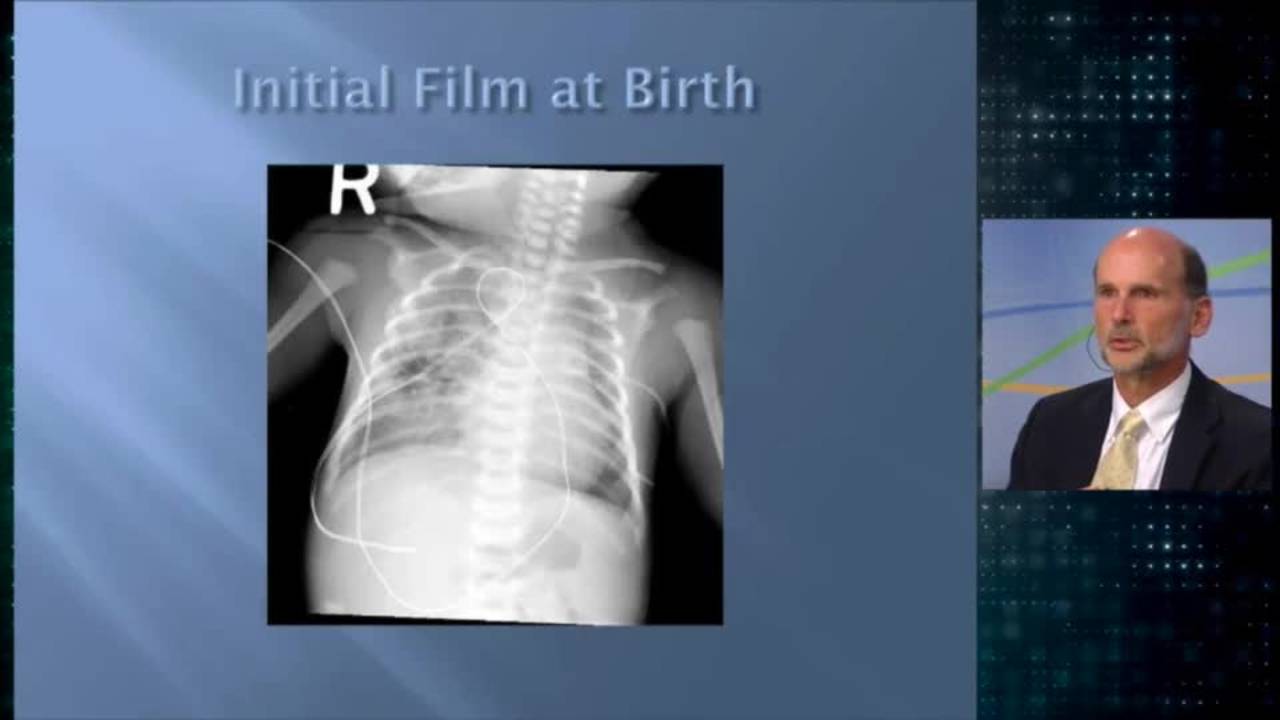
Congenital Cystic Lung Lesions: Update Course 2014
Dr. Steve Rothenberg · 24 min · Published Nov 2018
Video
Thoracoscopic Left Lower Lobectomy Technique by Dr. Steven Rothenberg: How I...
Dr. Steve Rothenberg · 18 min · Published Aug 2016
Video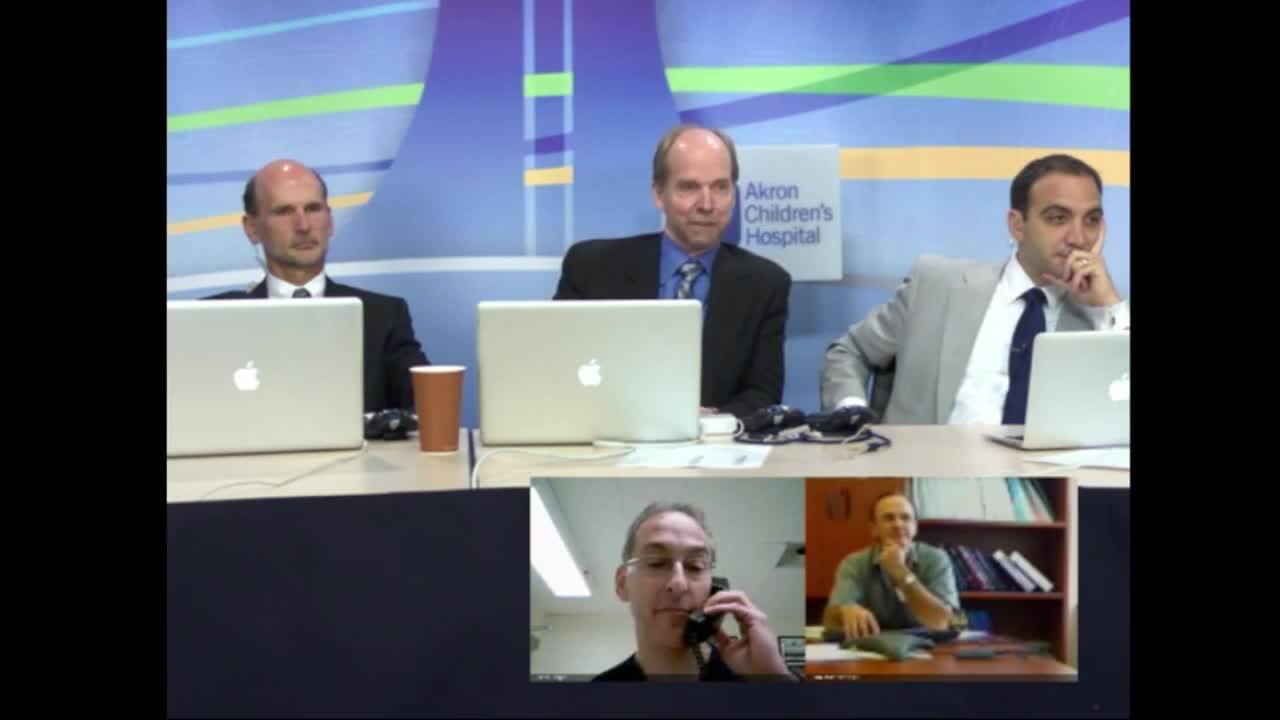
Management of Asymptomatic Lung Lesions: Pediatric Thoracic Surgery Part...
Dr. Todd Ponsky · 20 min · Published Jul 2017
Video
Fetal Interventions Part II: Lung Lesions
16 min · Published Jul 2017
Video
Rare Ovarian Tumor in Infants: Small Cell Carcinoma of Ovary, Hypercalcemic Type & SMARCA4 Mutation
21 s · Published Oct 2026
Video
Can Normal X-Rays Miss Metastatic Neuroblastoma? A Pediatric Radiology Case Study
26 s · Published Oct 2026
Video
Can Fractures Be a Sign of Hepatoblastoma in Children? Understanding Pediatric Liver Cancer Symptoms
37 s · Published Oct 2026
Video
Pancreas, Muscle, and Subcutaneous Fat Atrophy in Patients Undergoing Radiation for Neuroblastoma
47 s · Published Oct 2026
Podcast
Hepatoblastoma
Todd Ponsky · 54 min · Published Oct 2026
Podcast
Wilms Tumor
Todd Ponsky · 64 min · Published Oct 2026
Podcast
Diaphragm pacing as alternative to mechanical ventilation in pediatric respiratory failure
1 min · Published Nov 2026
Podcast
Fetoscopic endoluminal tracheal occlusion for congenital diaphragmatic hernia
4 min · Published Nov 2026
Podcast
FETO procedure for late-diagnosed severe CDH with liver herniation
4 min · Published Nov 2026
Podcast
Severe CDH case with FETO: unexpected anatomic findings and clinical outcome
3 min · Published Nov 2026
Podcast
Pediatric pancreatitis: diagnosis, causes, and genetic insights with Dr. Juan Gurria
3 min · Published Nov 2026
Podcast
Understanding craniosynostosis: skull sutures, growth patterns, and diagnosis in infants
10 min · Published Nov 2026
What the experts said
Prenatal ultrasound at mid-gestation around 20 weeks is the best tool for detecting fetal malformations, with high detection rates in developed countries.
Doppler ultrasound can assess fetal hemodynamic status by measuring flows in the umbilical artery, ductus venosus, and middle cerebral artery.
Fetal MRI contributes to diagnosis definition after ultrasound, especially for findings in the brain, chest, and abdomen.
In gastroschisis, earlier delivery can reduce bowel injury, resulting in less serositis and better recovery.
Open fetal surgery is still used for large solid chest masses, sacrococcygeal teratomas, and spina bifida.
Solid CPAM lesions grow rapidly and can cause mediastinal shift, compression of the contralateral lung and heart, leading to hydrops fetalis.
Hydrops fetalis (ascites, pleural effusion, scalp edema, anasarca) is very close to fetal demise and is the usual outcome if untreated.
CVR less than 1.6 indicates very low risk of hydrops; CVR greater than 1.6 indicates high risk of hydrops and complications.
Steroids rescue more than half of CPAM cases; the remaining 40% do not respond well.
Before 30 weeks, cystic CPAM can be treated with a shunt; solid CPAM requires open fetal surgery and lobectomy.
Solid sacrococcygeal teratomas are more dangerous than cystic ones due to rapid growth and vascularization visible on Doppler.
The Altman classification used postnatally can also be applied to prenatal MRI to determine teratoma type and need for intervention.
Open fetal surgery is the gold standard for spina bifida, though other innovations are in development.
Spina bifida originates at approximately 4 weeks of embryonic time when the neural tube fails to close.
In spina bifida, the exposed spinal cord is damaged by contact with amniotic fluid rich in meconium and enzymes (the 'second hit'), progressively destroying neural tissue and nerves.
Hydrocephalus in spina bifida requires ventriculoperitoneal shunting and causes migration disorders and heterotopia.
The rationale for fetal spina bifida repair is to prevent amniotic fluid from touching the nerves and to stop CSF leak.
In fetoscopic spina bifida repair, a collagen patch is introduced through the cannula for duroplasty, maintained with one stitch, followed by primary skin closure or patch.
The EXIT procedure is performed at delivery for conditions that can cause neonatal asphyxia or difficult intubation, such as neck masses compressing the trachea, congenital airway obstruction, or severe micrognathia.
During EXIT, placental oxygenation can be maintained for 1 to 3 hours, providing a controlled situation without need to rush airway securement.
During EXIT for neck teratomas, if intubation is not possible with rigid instruments or laryngoscopy, partial resection of the teratoma can be performed to identify the trachea and then intubate.
Once intubation is achieved during EXIT, the cord is clamped and complete teratoma resection is performed in an adjacent operating room.
Opening the uterus for fetal surgery produces a scar and can activate uterine contractions; preterm delivery can occur days after surgery despite tocolysis.
CVR (CPAM volume ratio) is calculated as (width × height × length × 0.523) divided by head circumference, with a cutoff of 1.6.
First-line therapy for high-risk CPAM is maternal intramuscular betamethasone, which can be given in 1, 2, or 3 weekly rounds to decrease CVR.
Postnatal spina bifida repair is required on the first day of life to avoid infections and protect the spinal cord.
Neonatal spina bifida surgery results in sequelae including fecal incontinence, urinary incontinence, sexual dysfunction, orthopedic abnormalities, motor impairments (potentially requiring wheelchair), and hydrocephalus from brainstem compression.
At 24 weeks gestation, half of fetuses with spina bifida already have hydrocephalus; 95% will develop it later in pregnancy.
The MOMS trial compared prenatal versus postnatal spina bifida surgery using the same closure technique (dura, layers, skin, sometimes patches).
MOMS trial results showed prenatal spina bifida surgery reduced shunting need by at least half, improved mental and motor scores, and completely reversed hindbrain herniation in most cases.
Dr. Peiro's fetoscopic approach creates less maternal morbidity and allows vaginal delivery.
EXIT procedure requires fetal paralysis and anesthesia, maternal monitoring and stability, and inhalational anesthetics for uterine relaxation.