Nothing matches these filters —
clear the search or widen the filters.
Summaries Em gave as host
· 1500 summaries
Recaps of other experts' statements, not Em's own clinical position.
Summaries Em gave as host · Abdominal Wall Defects
120 summaries
Open the Abdominal Wall Defects collection →
Update Course Rewind: 2022 Top Ten Key Takeaways
 ▶
Ep 31 · 1:00
▶
Ep 31 · 1:00
host summary
Em Gootee summarizing a resource: Infants with gastroschisis often require prolonged hospitalization for surgical repair and initiation and advancement of feeds.
↗
▶
Ep 31 · 2:00
host summary
Em Gootee summarizing a resource: Based on recently updated protocols from Cincinnati Children's Hospital and Children's Mercy Kansas City, feeds can be started immediately after sutureless abdominal closure for uncomplicated gastroschisis, beginning with 10-20 mL/kg/day and advancing by 20 mL/kg/day if tolerated.
↗
▶
Ep 31 · 2:30
host summary
Em Gootee summarizing a resource: Immediate feeding after gastroschisis closure has been shown to be associated with shorter length of stay and faster attainment of goal feeds.
↗
▶
Ep 31 · 2:45
host summary
Em Gootee summarizing a resource: it's safe to say that for babies with uncomplicated gastrochesis, it's safe to start feeding immediately after closure. And if they're tolerating for a few days and have even one bout of emesis, it's okay to continue with the feeding protocol.
↗
▶
Ep 31 · 2:45
host summary
Em Gootee summarizing a resource: For babies with uncomplicated gastroschisis tolerating feeds for a few days, it is okay to continue the feeding protocol even after one bout of emesis.
↗
▶
Ep 31 · 4:00
host summary
Em Gootee summarizing a resource: High resolution esophageal manometry, esophagography, and endoscopy can help determine the diagnosis of congenital esophageal stenosis.
↗
▶
Ep 31 · 4:15
host summary
Em Gootee summarizing a resource: Serial dilations may be used to manage congenital esophageal stenosis if there is no cartilage component suspected in the stenotic area.
↗
▶
Ep 31 · 4:30
host summary
Em Gootee summarizing a resource: Surgical resection for congenital esophageal stenosis can be reserved for patients where serial dilation is unsuccessful or there is concern for a cartilaginous component.
↗
▶
Ep 31 · 4:45
host summary
Em Gootee summarizing a resource: Initial conservative management should be considered for patients with congenital esophageal stenosis, especially if a cartilaginous component is not suspected.
↗
▶
Ep 31 · 4:45
host summary
Em Gootee summarizing a resource: initial conservative management should be considered for patients with congenital esophageal stenosis, especially if a cartilagenous component is not suspected.
↗
▶
Ep 31 · 5:45
host summary
Em Gootee summarizing a resource: Management of intussusception after enema reduction varies in practice, with historically recommended inpatient observation lacking evidence-based guidelines.
↗
▶
Ep 31 · 6:00
host summary
Em Gootee summarizing a resource: A systematic review and meta-analysis found that overall recurrence rates and recurrences within 24 and 48 hours were similar between inpatient and outpatient management groups after intussusception enema reduction.
↗
▶
Ep 31 · 6:30
host summary
Em Gootee summarizing a resource: There was no significant difference in the rate of return to the emergency department between inpatient and outpatient management after intussusception reduction, and both groups had similar rates of requiring operative intervention.
↗
▶
Ep 31 · 6:45
host summary
Em Gootee summarizing a resource: Outpatient management of intussusception after air enema reduction results in shorter hospital stay with no difference in rate of ED returns, recurrence, need for operation, or mortality.
↗
▶
Ep 31 · 6:45
host summary
Em Gootee summarizing a resource: it's safe to say that outpatient management of intersusception after air enema reduction results in a shorter hospital stay with no difference in the rate of returns to the emergency department, recurrence, need for an operation, or mortality.
↗
▶
Ep 31 · 7:30
host summary
Em Gootee summarizing a resource: There is no compelling evidence in pediatric or adult literature to support mechanical bowel preparation reducing surgical site infections in colorectal surgery.
↗
▶
Ep 31 · 7:45
host summary
Em Gootee summarizing a resource: Recent adult studies have shown no benefit from mechanical bowel preparation in reducing surgical site infections, with some studies showing an increase in wound infections.
↗
▶
Ep 31 · 8:00
host summary
Em Gootee summarizing a resource: Adult studies suggest a possible benefit of oral and IV antibiotics to reduce surgical site infections in colorectal surgery.
↗
▶
Ep 31 · 8:15
host summary
Em Gootee summarizing a resource: Recent retrospective studies have not shown the importance of oral antibiotics for pediatric colorectal operations.
↗
▶
Ep 31 · 8:45
host summary
Em Gootee summarizing a resource: we have seen no benefit of mechanical bowel preparations for reducing SSIs. However, case appropriate pre-operative IV antibiotics may reduce SSI incidents.
↗
▶
Ep 31 · 8:45
host summary
Em Gootee summarizing a resource: Case-appropriate preoperative IV antibiotics may reduce surgical site infection incidence in colorectal surgery.
↗
▶
Ep 31 · 9:45
host summary
Em Gootee summarizing a resource: Firearms are now the leading cause of death in all children and adolescents in the United States, overtaking motor vehicle crashes in 2019.
↗
▶
Ep 31 · 10:00
host summary
Em Gootee summarizing a resource: There are controversies about whether pediatric surgeons should be involved in firearm violence prevention efforts and advocacy across the country.
↗
▶
Ep 31 · 10:15
host summary
Em Gootee summarizing a resource: As pediatric surgeons, we need to advocate for protecting children's health and well-being, no matter what the topic is.
↗
▶
Ep 31 · 10:15
host summary
Em Gootee summarizing a resource: We believe as pediatric surgeons that we need to advocate with protecting children's health and well-being, no matter what the topic is.
↗
▶
Ep 31 · 10:45
host summary
Em Gootee summarizing a resource: Pediatric surgeons can play key roles for patients affected by firearms, including direct patient care and advocacy.
↗
▶
Ep 31 · 10:45
host summary
Em Gootee summarizing a resource: as pediatric surgeons, we can play key roles for patients affected by firearms, including direct patient care and advocacy.
↗
▶
Ep 31 · 11:45
host summary
Em Gootee summarizing a resource: Unwitnessed foreign body aspiration can be challenging to manage, and many items are not radiopaque so cannot be seen on plain x-ray.
↗
▶
Ep 31 · 12:00
host summary
Em Gootee summarizing a resource: The gold standard for airway evaluation has been rigid or flexible bronchoscopy, but there are risks of negative bronchoscopy with subsequent airway compromise.
↗
▶
Ep 31 · 12:15
host summary
Em Gootee summarizing a resource: CT bronchoscopy has been proposed as an adjunct in cases of children without obvious respiratory distress.
↗
▶
Ep 31 · 12:30
host summary
Em Gootee summarizing a resource: Low-dose non-contrast CT of the chest has high sensitivity and specificity for identification of airway foreign bodies.
↗
▶
Ep 31 · 12:45
host summary
Em Gootee summarizing a resource: CT can avoid the cost and resources of taking a child to the operating room for a non-therapeutic bronchoscopy procedure.
↗
▶
Ep 31 · 13:30
host summary
Em Gootee summarizing a resource: The largest study looking at initial laparotomy versus peritoneal drainage for necrotizing enterocolitis was conducted at 20 US centers and examined combined death or neurodevelopmental impairment at corrected age 18-22 months.
↗
▶
Ep 31 · 14:00
host summary
Em Gootee summarizing a resource: Death or neurodevelopmental impairment occurred in 69% of patients with preoperative diagnosis of NEC who underwent initial laparotomy versus 85% of those who underwent initial peritoneal drainage.
↗
▶
Ep 31 · 14:15
host summary
Em Gootee summarizing a resource: The prospective randomized cohort study from the National Institute of Child Health and Human Development showed no difference in overall survival but did show improved long-term neurodevelopmental outcomes with initial laparotomy for NEC.
↗
▶
Ep 31 · 14:45
host summary
Em Gootee summarizing a resource: for infants with necrotizing enterocolitis, initial laparotomy may be associated with less neurodevelopmental impairment and improved outcomes for extremely low birth weight babies.
↗
▶
Ep 31 · 14:45
host summary
Em Gootee summarizing a resource: For infants with necrotizing enterocolitis, initial laparotomy may be associated with less neurodevelopmental impairment and improved outcomes for extremely low birth weight babies.
↗
▶
Ep 31 · 15:45
host summary
Em Gootee summarizing a resource: Racism and sexism that manifest as microaggressions are commonly experienced by members of minority groups.
↗
▶
Ep 31 · 16:00
host summary
Em Gootee summarizing a resource: Individuals from minoritized groups are often left weighing the potential benefits and risks of addressing microaggression comments.
↗
▶
Ep 31 · 16:15
host summary
Em Gootee summarizing a resource: Placing the burden to interrupt bias on marginalized colleagues is unjust, and microaggressions can harm trainees' performance and sense of belonging.
↗
▶
Ep 31 · 16:15
host summary
Em Gootee summarizing a resource: Placing the burden to interrupt bias on our marginalized colleagues is unjust and such microaggressions can harm trainees's performance and sense of belonging.
↗
▶
Ep 31 · 16:45
host summary
Em Gootee summarizing a resource: Bystanders can and should make an effort to become upstanders, which means bystanders who respond with action.
↗
▶
Ep 31 · 16:45
host summary
Em Gootee summarizing a resource: Bystanders can and should make an effort to become upstanders, which means bystanders who respond with action to interrupt microaggressions.
↗
▶
Ep 31 · 17:30
host summary
Em Gootee summarizing a resource: Blunt head trauma represents the majority of pediatric trauma admissions, but there is very little evidence on how to best manage isolated skull fractures.
↗
▶
Ep 31 · 18:15
host summary
Em Gootee summarizing a resource: A 10-year retrospective review of isolated traumatic skull fractures with normal neurologic exam findings showed that 77% of patients were admitted for observation, but none needed neurosurgical intervention or additional imaging during the index admission.
↗
▶
Ep 31 · 18:45
host summary
Em Gootee summarizing a resource: Pediatric isolated skull fractures are low risk conditions with a low likelihood of complications, and these patients can be discharged safely from the emergency department without inpatient observation.
↗
▶
Ep 31 · 18:45
host summary
Em Gootee summarizing a resource: pediatric isolated skull fractures are low risk conditions with a low likelihood of complications. Therefore, these patients can be discharged safely from the emergency department without inpatient observation.
↗
▶
Ep 31 · 19:30
host summary
Em Gootee summarizing a resource: The IMPACT trial was a multi-institutional prospective randomized trial comparing piperacillin-tazobactam monotherapy versus ceftriaxone-metronidazole combination therapy for perforated appendicitis in children, with 30-day post-operative intra-abdominal abscess rate as the primary outcome.
↗
▶
Ep 31 · 20:00
host summary
Em Gootee summarizing a resource: Patients taking piperacillin-tazobactam had lower incidence of intra-abdominal abscesses, lower usage of CT scans, and fewer ED revisits compared to combination therapy.
↗
▶
Ep 31 · 20:15
host summary
Em Gootee summarizing a resource: Piperacillin-tazobactam monotherapy did not have an increase in antibiotic usage or increase in antibiotic-related complications compared to combination therapy.
↗
▶
Ep 31 · 20:30
host summary
Em Gootee summarizing a resource: monotherapy with piperacilin and tazobactam has been shown to be associated with decreased incidence of intra-abdominal abscesses after surgery for patients with perforated appendicitis.
↗
▶
Ep 31 · 20:30
host summary
Em Gootee summarizing a resource: Monotherapy with piperacillin-tazobactam has been shown to be associated with decreased incidence of intra-abdominal abscesses after surgery for patients with perforated appendicitis.
↗
Journal of Pediatric Surgery Article Review: 2nd Quarter (Apr-Jun) 2024
 ▶
Ep 35 · 0:06
▶
Ep 35 · 0:06
host summary
Em Gootee summarizing the discussion: Hi everyone, I'm M. Goddy from Cincinnati Children's, and we are back with another episode of our Journal of Pediatric Surgery article review podcast.
↗
▶
Ep 35 · 1:05
host summary
Em Gootee summarizing the discussion: I'm a pediatric surgeon at Alberta Children's Hospital. I've also been the publication chair for the uh Pacific Association of Pediatric Surgeons.
↗
▶
Ep 35 · 1:25
host summary
Em Gootee summarizing the discussion: MMP-7 (matrix metalloproteinase 7) are proteolytic peptidases that break down peptide bonds for amino acids and are part of tissue remodeling processes, playing roles in tissue repair, arthritis, metastasis, and cirrhosis
↗
▶
Ep 35 · 1:43
host summary
Em Gootee summarizing the discussion: Higher levels of MMP-7 are associated with the diagnosis of biliary atresia
↗
▶
Ep 35 · 1:56
host summary
Em Gootee summarizing the discussion: In a cohort of 329 biliary atresia cases from July 2020 to December 2022, 40 were classified as low MMP-7
↗
▶
Ep 35 · 2:11
host summary
Em Gootee summarizing the discussion: This is a group that has an ability to access a very large number of patients in a very short period of time, which really puts them in a position where they can dive deeply into. To things that others couldn't even start thinking about
↗
▶
Ep 35 · 2:36
host summary
Em Gootee summarizing the discussion: Low levels of MMP-7 in biliary atresia patients are associated with low levels of preoperative GGT (gamma glutamyl transpeptidase) and direct bilirubin
↗
▶
Ep 35 · 3:02
host summary
Em Gootee summarizing the discussion: GGT (gamma glutamyl transpeptidase) is an enzyme found in high levels in liver, kidney, pancreas, heart, and brain, and blood GGT levels are used to detect diseases of the liver and bile ducts
↗
▶
Ep 35 · 3:19
host summary
Em Gootee summarizing the discussion: Biliary atresia has variable outcomes even within one center, with patients who anatomically look similar having dramatically different outcomes
↗
▶
Ep 35 · 4:09
host summary
Em Gootee summarizing the discussion: Having lower MMP-7 levels within the cohort of biliary atresia patients is associated with worse prognosis
↗
▶
Ep 35 · 4:26
host summary
Em Gootee summarizing the discussion: And one of the things I love about this paper is that it just brings us down to some of those really basic questions about when we deal with these conditions, what actually underlies it? What are these processes? How do we target them?
↗
▶
Ep 35 · 4:41
host summary
Em Gootee summarizing the discussion: The mechanism of why low MMP-7 levels in biliary atresia patients leads to worse prognosis is unknown
↗
▶
Ep 35 · 7:02
host summary
Em Gootee summarizing the discussion: In a Canadian cohort of 411 infants with gastroschisis treated at CAPSNET centers from 2014 to 2022, 144 were excluded due to gestational age, birth weight, other congenital anomalies, or complicated gastroschisis, leaving 267 participants
↗
▶
Ep 35 · 7:43
host summary
Em Gootee summarizing the discussion: Of 267 uncomplicated gastroschisis patients, 78% received exclusive breast milk in the first 28 days of life and 22% received supplemental or exclusive formula
↗
▶
Ep 35 · 8:27
host summary
Em Gootee summarizing the discussion: There were no significant differences between exclusive breast milk and formula groups in time to reach full enteral feeds, duration of parenteral nutrition, or length of stay in uncomplicated gastroschisis
↗
▶
Ep 35 · 8:53
host summary
Em Gootee summarizing the discussion: Patients with uncomplicated gastroschisis who received exclusive breast milk in the first 28 days were far more likely to transition to exclusive breastfeeding: 73% compared to 11% in those with formula exposure
↗
▶
Ep 35 · 12:46
host summary
Em Gootee summarizing the discussion: A systematic review on transition from pediatric to adult care for colorectal conditions included 8 studies with patient, parent, and clinician perspectives, focusing on patients aged 10-30 years with anorectal malformation or Hirschsprung disease
↗
▶
Ep 35 · 13:16
host summary
Em Gootee summarizing the discussion: There is a group of colorectal patients discharged from care in late childhood around age 10 years, and another group that remains in pediatric care way beyond the normal age of transfer to adult care (around 25 years)
↗
▶
Ep 35 · 13:30
host summary
Em Gootee summarizing the discussion: The life course progression of anorectal malformation and Hirschsprung disease is not well understood
↗
Journal of Pediatric Surgery Article Review: 3rd Quarter (Jul-Sep) 2024
 ▶
Ep 36 · 0:06
▶
Ep 36 · 0:06
host summary
Em Gootee summarizing the discussion: Hi everyone, I'm M. Goddy from Cincinnati Children's, and we are back with another episode of our Journal of Pediatric Surgery article review podcast.
↗
▶
Ep 36 · 1:38
host summary
Em Gootee summarizing the discussion: My name's Jason F Fisher. I'm a pediatric surgeon and director of the Colorectal Center at Cincinnati Children's, and I also happen to be. The lead of the subcommittee for Hirschprung's disease for the PCPLC or Pediatric Colorectal and Pelvic Learning Consortium.
↗
▶
Ep 36 · 1:56
host summary
Em Gootee summarizing the discussion: The PCPLC multi-institutional registry includes a number of institutions throughout the United States.
↗
▶
Ep 36 · 3:20
host summary
Em Gootee summarizing the discussion: 85% of Hirschsprung patients were diagnosed at less than 1 year of age.
↗
▶
Ep 36 · 3:45
host summary
Em Gootee summarizing the discussion: Kids with shorter segment disease (rectosigmoid or very small portion of aganglionic bowel) were more likely to be diagnosed at a later age.
↗
▶
Ep 36 · 3:57
host summary
Em Gootee summarizing the discussion: Children with long segment Hirschsprung disease typically present at birth with classic symptoms such as failure to pass meconium.
↗
▶
Ep 36 · 4:26
host summary
Em Gootee summarizing the discussion: Approximately one-third of neonates and 50% of infants, toddlers, and children had diverting ostomies performed prior to pull-through.
↗
▶
Ep 36 · 5:01
host summary
Em Gootee summarizing the discussion: There was no difference in overall rates of redo pull-throughs across age groups.
↗
▶
Ep 36 · 5:07
host summary
Em Gootee summarizing the discussion: Older children were more likely to need a redo pull-through due to an anastomotic leak.
↗
▶
Ep 36 · 5:13
host summary
Em Gootee summarizing the discussion: Higher rates of diverting ostomy post pull-through were suspected to be a treatment for post pull-through leak or anastomotic leak.
↗
▶
Ep 36 · 5:24
host summary
Em Gootee summarizing the discussion: The only outcome difference seen was nighttime soiling or incontinence in the older patient population.
↗
▶
Ep 36 · 7:44
host summary
Em Gootee summarizing the discussion: I am a pediatric surgeon. Uh, in the division of pediatric Surgery with Presbyterian Healthcare Services in Albuquerque, New Mexico
↗
▶
Ep 36 · 8:09
host summary
Em Gootee summarizing the discussion: The systematic review on gastroschisis included 28 high quality manuscripts.
↗
▶
Ep 36 · 8:15
host summary
Em Gootee summarizing the discussion: Two randomized controlled trials on gastroschisis had been started but both ended prematurely and were underpowered.
↗
▶
Ep 36 · 10:37
host summary
Em Gootee summarizing the discussion: Clinical practice suggests that skin organisms are most commonly identified in infections among infants with gastroschisis.
↗
▶
Ep 36 · 10:44
host summary
Em Gootee summarizing the discussion: Gastroschisis infants have a fairly high rate of wound infection.
↗
▶
Ep 36 · 10:50
host summary
Em Gootee summarizing the discussion: Sutureless closure has the lowest rate of infection for gastroschisis.
↗
▶
Ep 36 · 10:50
host summary
Em Gootee summarizing the discussion: Silo closures have a higher rate of infection than other closure methods for gastroschisis.
↗
▶
Ep 36 · 10:57
host summary
Em Gootee summarizing the discussion: The recommendation for gastroschisis is to provide antibiotic coverage for skin flora until the defect is closed and potentially for an additional 24 hours thereafter if the infant is clinically stable.
↗
▶
Ep 36 · 12:22
host summary
Em Gootee summarizing the discussion: Stable gastroschisis infants with sufficient abdominal capacity for sutureless closure tend to have the best outcomes.
↗
▶
Ep 36 · 12:29
host summary
Em Gootee summarizing the discussion: Minimizing fluids and paralytics in gastroschisis infants improves their results.
↗
▶
Ep 36 · 12:35
host summary
Em Gootee summarizing the discussion: Gastroschisis patients with sutureless closure have shorter length of stay and achieve feeding sooner.
↗
▶
Ep 36 · 15:11
host summary
Em Gootee summarizing the discussion: The Clavien-Madadi classification scale consists of several grades from 1 to 5 based on the type of therapy needed to correct the complication.
↗
▶
Ep 36 · 15:46
host summary
Em Gootee summarizing the discussion: The validation process circulated up to 20 case scenarios of unexpected events within the ERNICA Network (European Reference Network for inherited and congenital anomalies).
↗
▶
Ep 36 · 16:34
host summary
Em Gootee summarizing the discussion: 59 surgeons from 12 European countries completed the Clavien-Madadi validation questionnaire.
↗
▶
Ep 36 · 17:04
host summary
Em Gootee summarizing the discussion: 43% of pediatric surgeons preferred the Clavien-Madadi classification compared to 12% for the Clavien-Dindo classification.
↗
▶
Ep 36 · 17:04
host summary
Em Gootee summarizing the discussion: Nearly 82% of surgeons affirmed advantages of the Clavien-Madadi classification.
↗
Umbilical Disorders with Dr. Rebeccah Brown
 ▶
Ep 39 · 0:34
▶
Ep 39 · 0:34
host summary
Em Gootee summarizes what Dr. Rebecca Brown said: Two umbilical arteries and one umbilical vein surrounding by a gelatin-like extracellular matrix known as Worthin's jelly.
↗
▶
Ep 39 · 0:34
host summary
Em Gootee summarizes what Dr. Rebecca Brown said: The umbilical cord contains two umbilical arteries and one umbilical vein surrounded by Wharton's jelly (a gelatin-like extracellular matrix).
↗
▶
Ep 39 · 0:50
host summary
Em Gootee summarizes what Dr. Rebecca Brown said: Umbilical cords usually fall off at 2 to 3 weeks after birth.
↗
▶
Ep 39 · 0:50
host summary
Em Gootee summarizes what Dr. Rebecca Brown said: They usually fall off 2 to 3 weeks, and the delay can be a manifestation of an immune deficiency.
↗
▶
Ep 39 · 0:50
host summary
Em Gootee summarizes what Dr. Rebecca Brown said: Delayed umbilical cord separation can be a manifestation of an immune deficiency.
↗
▶
Ep 39 · 1:20
host summary
Em Gootee summarizes what Dr. Rebecca Brown said: Mild omphalitis cases (inflammation of the belly button) may be treated with alcohol drying, ampicillin, or amoxicillin with follow-up every 24 hours.
↗
▶
Ep 39 · 1:40
host summary
Em Gootee summarizes what Dr. Rebecca Brown said: 16% of the patients admitted with onalittis develop necrotizing fasciitis.
↗
▶
Ep 39 · 1:40
host summary
Em Gootee summarizes what Dr. Rebecca Brown said: 16% of patients admitted with omphalitis develop necrotizing fasciitis.
↗
▶
Ep 39 · 1:46
host summary
Em Gootee summarizes what Dr. Rebecca Brown said: Necrotizing fasciitis from omphalitis presents with rapidly progressive umbilical edema, erythema, drainage, and has a high mortality rate.
↗
▶
Ep 39 · 2:27
host summary
Em Gootee summarizes what Dr. Rebecca Brown said: Umbilical hernias can be associated with trisomy 13, 18, and 21.
↗
▶
Ep 39 · 2:47
host summary
Em Gootee summarizes what Dr. Rebecca Brown said: Dr. Brown mentioned that if the fascial opening in an umbilical hernia is larger than 1.5 centimeters, it may not close by itself.
↗
▶
Ep 39 · 2:55
host summary
Em Gootee summarizes what Dr. Rebecca Brown said: In Walker's studies, 96% of very small umbilical hernias (less than 0.5 centimeters) closed by six years, but no hernia greater than 1.5 centimeters closed by six years of age.
↗
▶
Ep 39 · 4:54
host summary
Em Gootee summarizes what Dr. Rebecca Brown said: Unplanned emergency department returns within 30 days after umbilical hernia repair occurred at 2.5%, with rates twice as high for patients younger than 4 years old.
↗
▶
Ep 39 · 5:10
host summary
Em Gootee summarizes what Dr. Rebecca Brown said: Asymptomatic umbilical hernia repair should be delayed until greater than 4 years of age.
↗
▶
Ep 39 · 5:18
host summary
Em Gootee summarizes what Dr. Rebecca Brown said: In Rangel's study of 167,000 patients at 68 pediatricians' offices, 4,486 had umbilical hernia diagnosis at a median age of 1.6 months, with spontaneous closure occurring in 89% by age 5.
↗
▶
Ep 39 · 5:53
host summary
Em Gootee summarizes what Dr. Rebecca Brown said: In Rangel's study, closure rates for smaller hernias (≤1 cm) were nearly 90%, while for larger hernias they were around 80%.
↗
▶
Ep 39 · 6:12
host summary
Em Gootee summarizes what Dr. Rebecca Brown said: Rangel's study concluded that umbilical hernia repair should be delayed until age 5 years given the high incidence of spontaneous closure.
↗
▶
Ep 39 · 6:56
host summary
Em Gootee summarizes what Dr. Rebecca Brown said: Proboscoid hernia occurs when the skin above the hernia grows and pushes through the opening in the abdominal wall.
↗
▶
Ep 39 · 7:05
host summary
Em Gootee summarizes what Dr. Rebecca Brown said: It is recommended to correct proboscoid hernias before school age to avoid psychological issues for the child.
↗
▶
Ep 39 · 8:00
host summary
Em Gootee summarizes what Dr. Rebecca Brown said: Dr. Brown prefers to perform umbilicoplasty in umbilical hernia repairs, excising excess skin and using a 4-0 monocryl purse-string suture close to the skin surface to create a cosmetically appealing umbilicus.
↗
▶
Ep 39 · 8:55
host summary
Em Gootee summarizes what Dr. Rebecca Brown said: Umbilical granulomas are usually moist but commonly dry up and fall off spontaneously over time.
↗
▶
Ep 39 · 9:00
host summary
Em Gootee summarizes what Dr. Rebecca Brown said: Umbilical granulomas often respond to silver nitrate treatment.
↗
Summaries Em gave as host · Acute Recurrent Pancreatitis
11 summaries
Open the Acute Recurrent Pancreatitis collection →
Total Pancreatectomy with Islet Autotransplantation (TPIAT)
 ▶
Ep 11 · 1:08
▶
Ep 11 · 1:08
host summary
Em Gootee summarizing the discussion: TPIAT patients usually have a genetic mutation that drives the disease
↗
▶
Ep 11 · 1:08
host summary
Em Gootee summarizing the discussion: TPIAT patients typically present with chronic debilitating pain that can lead to opioid addiction or severe impairment of their mental health
↗
▶
Ep 11 · 2:46
host summary
Em Gootee summarizing the discussion: Central venous catheter placement uses ultrasound for vein puncture and fluoroscopy for appropriate insertion
↗
▶
Ep 11 · 5:24
host summary
Em Gootee summarizing the discussion: Enzyme injection turns the pancreas from solid to liquid form by releasing islet cells and exocrine cells
↗
▶
Ep 11 · 5:59
host summary
Em Gootee summarizing the discussion: Maximum infusion volume is 5 mL per bag with 3 bags per patient for portal vein safety
↗
Total Pancreatectomy with Islet Autotransplantation (TPIAT)
 ▶
Ep 12 · 1:08
▶
Ep 12 · 1:08
host summary
Em Gootee summarizing the discussion: TPIAT patients typically present with chronic debilitating pain that can lead to opioid addiction or severe impairment of their mental health.
↗
▶
Ep 12 · 1:08
host summary
Em Gootee summarizing the discussion: TPIAT patients usually have a genetic mutation that drives the disease.
↗
▶
Ep 12 · 2:46
host summary
Em Gootee summarizing the discussion: Central venous catheter is placed using ultrasound for vein puncture and fluoroscopy for appropriate insertion.
↗
▶
Ep 12 · 3:43
host summary
Em Gootee summarizing the discussion: The pancreas is disconnected from the GI tract at two places: after the pyloric muscle in the duodenum and downstream in the duodenum.
↗
▶
Ep 12 · 5:24
host summary
Em Gootee summarizing the discussion: Injecting digestive enzymes into the pancreatic duct disintegrates the extracellular matrix, releasing islet cells and exocrine cells, turning the organ from solid to liquid form.
↗
▶
Ep 12 · 5:59
host summary
Em Gootee summarizing the discussion: The maximum infusion is 5 mL per bag and 3 bags per patient.
↗
Summaries Em gave as host · Adnexal Torsion
13 summaries
Open the Adnexal Torsion collection →
GYN #3 Management of an Adnexal Torsion with a Healthy Appearing Ovary with Dr. Lesley Breech
 ▶
Ep 2 · 2:20
▶
Ep 2 · 2:20
host summary
Em Gootee summarizes what Dr. Lesley Breech said: Dr. Breach's goal for us all is to retain reproductive structures. However, the fallopian tubes are not as durable, strong, resilient as what ovaries are.
↗
▶
Ep 2 · 2:20
host summary
Em Gootee summarizes what Dr. Lesley Breech said: Dr. Breech's goal is to retain reproductive structures, but fallopian tubes are not as durable, strong, or resilient as ovaries
↗
▶
Ep 2 · 2:54
host summary
Em Gootee summarizes what Dr. Lesley Breech said: If you're going to resect something, resecting it in its entirety is important. Wolfing duct remnants will come back.
↗
▶
Ep 2 · 2:54
host summary
Em Gootee summarizes what Dr. Lesley Breech said: When resecting structures, complete resection is important because Wolffian duct remnants will recur if not fully removed
↗
▶
Ep 2 · 3:10
host summary
Em Gootee summarizes what Dr. Lesley Breech said: I can't think of a time that I would want to recommend doing that at the time of detorsion.
↗
▶
Ep 2 · 3:10
host summary
Em Gootee summarizes what Dr. Lesley Breech said: Oophoropexy should not be performed at the time of detorsion but should be considered as an interval procedure
↗
▶
Ep 2 · 3:41
host summary
Em Gootee summarizes what Dr. Lesley Breech said: After puberty, birth control pills can be prescribed to suppress the ovary, keep ovaries small, minimize cysts, and decrease the risk of recurrent torsion
↗
▶
Ep 2 · 3:41
host summary
Em Gootee summarizes what Dr. Lesley Breech said: Before puberty (in 8-10 year olds), hormonal suppression is not an option and oophoropexy is the only intervention for recurrent torsion
↗
▶
Ep 2 · 4:26
host summary
Em Gootee summarizes what Dr. Lesley Breech said: There are no specific blood tests that should be sent prior to surgery for suspected torsion
↗
▶
Ep 2 · 4:26
host summary
Em Gootee summarizes what Dr. Lesley Breech said: Tumor markers like CA-125 are non-specific and will likely be elevated in torsion cases, causing confusion about management strategies
↗
▶
Ep 2 · 4:26
host summary
Em Gootee summarizes what Dr. Lesley Breech said: In that situation, I really don't think there's any specific blood test that we would be asking for.
↗
▶
Ep 2 · 4:35
host summary
Em Gootee summarizes what Dr. Lesley Breech said: Those are really non-specific markers and levels like a CA-125 will likely be elevated and really just be somewhat confusing about management strategies.
↗
▶
Ep 2 · 5:13
host summary
Em Gootee summarizes what Dr. Lesley Breech said: From a gynecologic standpoint, the approach should be to wait, reassess, and perform an interval ovarian cystectomy if needed to preserve fertility
↗
Summaries Em gave as host · Aerodigestive / ENT
125 summaries
Open the Aerodigestive / ENT collection →
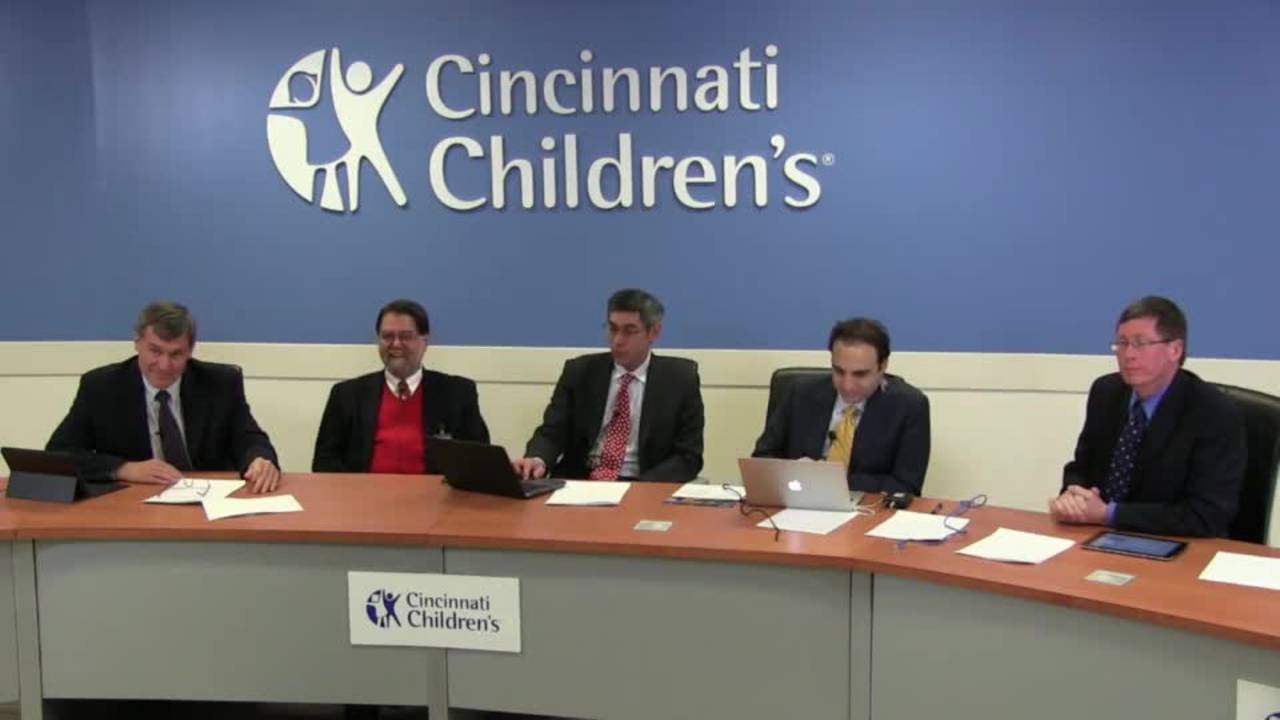
Aerodigestive & Esophageal Surgery - The Unsalvageable Esophagus & Cases
 ▶
Ep 3 · 16:30
▶
Ep 3 · 16:30
host summary
Em Gootee summarizing the discussion: Manubrial removing the manubrium is never as straightforward as it seems because your clavicles always get in the way.
↗
▶
Ep 3 · 16:30
host summary
Em Gootee summarizing the discussion: Manubrial removing the manubrium is never as straightforward as it seems because your clavicles always get in the way.
↗
▶
Ep 3 · 16:38
host summary
Em Gootee summarizing the discussion: Manubrial resection for high esophageal strictures provides less exposure than expected because the clavicles limit the width of the resection corridor.
↗
▶
Ep 3 · 16:38
host summary
Em Gootee summarizing the discussion: Manubrial resection for high esophageal strictures provides less exposure than expected because the clavicles limit the width of the resection corridor.
↗
▶
Ep 3 · 19:36
host summary
Em Gootee summarizing the discussion: Esophageal stents are very much a double-edged sword. They can often cause as many problems as they fix.
↗
▶
Ep 3 · 19:36
host summary
Em Gootee summarizing the discussion: Esophageal stents are very much a double-edged sword. They can often cause as many problems as they fix.
↗
▶
Ep 3 · 33:28
host summary
Em Gootee summarizing the discussion: Kenalog (steroid) injection after stricture dilation is preferred over mitomycin. Mitomycin at high concentrations (up to 5 mg/mL) causes tissue necrosis and has not shown superior outcomes compared to steroids.
↗
▶
Ep 3 · 33:28
host summary
Em Gootee summarizing the discussion: Kenalog (steroid) injection after stricture dilation is preferred over mitomycin. Mitomycin at high concentrations (up to 5 mg/mL) causes tissue necrosis and has not shown superior outcomes compared to steroids.
↗
▶
Ep 3 · 36:29
host summary
Em Gootee summarizing the discussion: For recalcitrant esophageal strictures, weekly dilations (3–4 cycles) prevent fibroblasts from bridging and allow the stricture to scar open rather than closed.
↗
▶
Ep 3 · 36:29
host summary
Em Gootee summarizing the discussion: For recalcitrant esophageal strictures, weekly dilations (3–4 cycles) prevent fibroblasts from bridging and allow the stricture to scar open rather than closed.
↗
▶
Ep 3 · 45:47
host summary
Em Gootee summarizing the discussion: Feeding via gastrojejunal tube with gastric drainage (GJ/G) is a temporizing measure to reduce reflux into the esophagus while managing a refractory stricture.
↗
▶
Ep 3 · 45:47
host summary
Em Gootee summarizing the discussion: Feeding via gastrojejunal tube with gastric drainage (GJ/G) is a temporizing measure to reduce reflux into the esophagus while managing a refractory stricture.
↗
▶
Ep 3 · 47:43
host summary
Em Gootee summarizing the discussion: If you've got mucosal disease, all you need to do is remove all the mucosa. You've got no disease.
↗
▶
Ep 3 · 47:43
host summary
Em Gootee summarizing the discussion: If you've got mucosal disease, all you need to do is remove all the mucosa. You've got no disease.
↗
▶
Ep 3 · 48:18
host summary
Em Gootee summarizing the discussion: Esophageal stents can compress the adjacent trachea, especially in children with tracheomalacia or when the esophagus lies directly posterior to the trachea. Always perform bronchoscopy after stent placement.
↗
▶
Ep 3 · 48:18
host summary
Em Gootee summarizing the discussion: Esophageal stents can compress the adjacent trachea, especially in children with tracheomalacia or when the esophagus lies directly posterior to the trachea. Always perform bronchoscopy after stent placement.
↗
▶
Ep 3 · 48:20
host summary
Em Gootee summarizing the discussion: If you put in an esophageal stent, have a quick look in the airway when you're done.
↗
▶
Ep 3 · 48:20
host summary
Em Gootee summarizing the discussion: If you put in an esophageal stent, have a quick look in the airway when you're done.
↗
▶
Ep 3 · 50:13
host summary
Em Gootee summarizing the discussion: We see it with um chronic oesophageal foreign bodies, um, classically the penny. And typically for a chronic one, they come in about 6 weeks later. And they come in with a diagnosis of asthma.
↗
▶
Ep 3 · 50:13
host summary
Em Gootee summarizing the discussion: We see it with um chronic oesophageal foreign bodies, um, classically the penny. And typically for a chronic one, they come in about 6 weeks later. And they come in with a diagnosis of asthma.
↗
▶
Ep 3 · 50:20
host summary
Em Gootee summarizing the discussion: Chronic esophageal foreign bodies (e.g., coins lodged for weeks) can cause posterior tracheal bulge and present as refractory asthma or bronchiolitis, often diagnosed late because chest X-rays are not routinely obtained in asthma protocols.
↗
▶
Ep 3 · 50:20
host summary
Em Gootee summarizing the discussion: Chronic esophageal foreign bodies (e.g., coins lodged for weeks) can cause posterior tracheal bulge and present as refractory asthma or bronchiolitis, often diagnosed late because chest X-rays are not routinely obtained in asthma protocols.
↗
▶
Ep 3 · 52:06
host summary
Em Gootee summarizing the discussion: The aim is to probe it but not push so hard that you create a fistula. That's always embarrassing.
↗
▶
Ep 3 · 52:06
host summary
Em Gootee summarizing the discussion: The aim is to probe it but not push so hard that you create a fistula. That's always embarrassing.
↗
▶
Ep 3 · 1:01:05
host summary
Em Gootee summarizing the discussion: A lot of kids have replaced esophaguuses and most of them don't aspirate, even if you've got a trashed cricoharyngeis.
↗
▶
Ep 3 · 1:01:05
host summary
Em Gootee summarizing the discussion: A lot of kids have replaced esophaguuses and most of them don't aspirate, even if you've got a trashed cricoharyngeis.
↗
▶
Ep 3 · 1:10:42
host summary
Em Gootee summarizing the discussion: Covered esophageal stents can temporize anastomotic leaks and allow healing while maintaining luminal patency. Stent removal is typically planned after several weeks.
↗
▶
Ep 3 · 1:10:42
host summary
Em Gootee summarizing the discussion: Covered esophageal stents can temporize anastomotic leaks and allow healing while maintaining luminal patency. Stent removal is typically planned after several weeks.
↗
▶
Ep 3 · 1:31:42
host summary
Em Gootee summarizing the discussion: Tracheal homografts (dead trachea implants) have been performed but are associated with difficult postoperative courses lasting several months.
↗
▶
Ep 3 · 1:31:42
host summary
Em Gootee summarizing the discussion: Tracheal homografts (dead trachea implants) have been performed but are associated with difficult postoperative courses lasting several months.
↗
▶
Ep 3 · 1:32:06
host summary
Em Gootee summarizing the discussion: Tissue-engineered tracheal homografts with pre-epithelialization are under development in multiple centers (London leading) but are not yet ready for routine clinical use.
↗
▶
Ep 3 · 1:32:06
host summary
Em Gootee summarizing the discussion: Tissue-engineered tracheal homografts with pre-epithelialization are under development in multiple centers (London leading) but are not yet ready for routine clinical use.
↗
▶
Ep 3 · 1:33:15
host summary
Em Gootee summarizing the discussion: Long-term surveillance of bypassed esophagus includes periodic CT scans to rule out mucocele and endoscopic evaluation via the persistent TEF if needed.
↗
▶
Ep 3 · 1:33:15
host summary
Em Gootee summarizing the discussion: Long-term surveillance of bypassed esophagus includes periodic CT scans to rule out mucocele and endoscopic evaluation via the persistent TEF if needed.
↗
▶
Ep 3 · 1:34:15
host summary
Em Gootee summarizing the discussion: Posterior tracheopexy (pexing the trachea to the anterior spine) combined with bovine pericardial patch for tracheal defects is an alternative to esophageal bypass, but pericardial patches can fail and create large tracheal defects.
↗
▶
Ep 3 · 1:34:15
host summary
Em Gootee summarizing the discussion: Posterior tracheopexy (pexing the trachea to the anterior spine) combined with bovine pericardial patch for tracheal defects is an alternative to esophageal bypass, but pericardial patches can fail and create large tracheal defects.
↗
▶
Ep 3 · 1:39:43
host summary
Em Gootee summarizing the discussion: This is a game where complications are almost inevitable. And it's not that you can eliminate them, you can minimize them, but then it's the team approach trying to work out how to manage them.
↗
▶
Ep 3 · 1:39:43
host summary
Em Gootee summarizing the discussion: Complications are nearly inevitable in complex esophageal reconstruction. The goal is not to eliminate complications but to anticipate and manage them effectively through a multidisciplinary team approach.
↗
▶
Ep 3 · 1:39:43
host summary
Em Gootee summarizing the discussion: This is a game where complications are almost inevitable. And it's not that you can eliminate them, you can minimize them, but then it's the team approach trying to work out how to manage them.
↗
▶
Ep 3 · 1:39:43
host summary
Em Gootee summarizing the discussion: Complications are nearly inevitable in complex esophageal reconstruction. The goal is not to eliminate complications but to anticipate and manage them effectively through a multidisciplinary team approach.
↗
Quick Literature Updates Episode 8
 ▶
Ep 14 · 0:00
▶
Ep 14 · 0:00
host summary
Em Gootee summarizing a resource: Hello, pediatric surgery family. I'm M Tombash, a research fellow from Cincinnati Children's Hospital Medical Center.
↗
QUAD #2 Thoracoscopic Tracheopexy with Dr. Aaron Garrison
 ▶
Ep 17 · 0:36
▶
Ep 17 · 0:36
host summary
Em Gootee summarizes what Dr. Aaron Garrison said: Several years ago, the approach was that patients with tracheomalacia would undergo aortopexy.
↗
▶
Ep 17 · 0:43
host summary
Em Gootee summarizes what Dr. Aaron Garrison said: In the last 4 to 5 years, it has become standard practice to determine which patients will respond best to tracheopexy versus aortopexy.
↗
▶
Ep 17 · 1:45
host summary
Em Gootee summarizes what Dr. Aaron Garrison said: Part of the workup is making sure that there is space to anteriorly suspend the aorta so that the trachea diameter can actually be made larger.
↗
▶
Ep 17 · 2:02
host summary
Em Gootee summarizes what Dr. Aaron Garrison said: Preoperative bronchoscopy gives the surgical team an idea of internal anatomy, which can assist in classifying the degree of tracheomalacia prior to surgical intervention.
↗
▶
Ep 17 · 3:23
host summary
Em Gootee summarizes what Dr. Aaron Garrison said: When using a thoracoscopic approach, correct positioning is the key to success.
↗
▶
Ep 17 · 3:27
host summary
Em Gootee summarizes what Dr. Aaron Garrison said: It is best to use gravity to advantage as it aids in retracting the lungs and trachea placement.
↗
▶
Ep 17 · 4:01
host summary
Em Gootee summarizes what Dr. Aaron Garrison said: Opening the pericardium and finding the area at the pericardial-adventitial junction to suspend is the key point of aortopexy.
↗
▶
Ep 17 · 4:16
host summary
Em Gootee summarizes what Dr. Aaron Garrison said: Passing suture transternally is preferred with the aortopexy approach, though it can be technically difficult.
↗
▶
Ep 17 · 4:23
host summary
Em Gootee summarizes what Dr. Aaron Garrison said: For tracheopexy, a posterior approach via semiprone position is preferred.
↗
▶
Ep 17 · 4:28
host summary
Em Gootee summarizes what Dr. Aaron Garrison said: Creating a pneumothorax by putting the Veress off the tip of the scapula helps collapse the lung for trocar placement.
↗
▶
Ep 17 · 4:38
host summary
Em Gootee summarizes what Dr. Aaron Garrison said: When operating posteriorly, triangulating your hands gives the best visualization and working space.
↗
▶
Ep 17 · 4:56
host summary
Em Gootee summarizes what Dr. Aaron Garrison said: When available, a multidisciplinary team which includes a pulmonologist can allow for internal visualization via bronchoscopy.
↗
▶
Ep 17 · 5:05
host summary
Em Gootee summarizes what Dr. Aaron Garrison said: Bronchoscopic guidance technique is primarily used in non-esophageal atresia patients.
↗
▶
Ep 17 · 5:53
host summary
Em Gootee summarizes what Dr. Aaron Garrison said: It is important to create enough tension in the suture to ensure that the pexy is secure.
↗
▶
Ep 17 · 6:07
host summary
Em Gootee summarizes what Dr. Aaron Garrison said: The approach changes for patients without esophageal atresia or with an esophagus in continuity.
↗
▶
Ep 17 · 6:14
host summary
Em Gootee summarizes what Dr. Aaron Garrison said: For patients with esophagus in continuity, the first step is to dissect around the esophagus using a vessel loop for retraction.
↗
▶
Ep 17 · 6:32
host summary
Em Gootee summarizes what Dr. Aaron Garrison said: Using pre- and post-operative bronchoscopy allows the surgeon to see the improvement prior to case completion.
↗
QUAD #4: Surgical Management of Button Battery & Caustic Ingestion with Dr. Aaron Garrison
 ▶
Ep 18 · 0:41
▶
Ep 18 · 0:41
host summary
Em Gootee summarizes what Dr. Aaron Garrison said: A 1992 study reviewed more than 2000 cases of button battery ingestion in children and found no deaths.
↗
▶
Ep 18 · 0:52
host summary
Em Gootee summarizes what Dr. Aaron Garrison said: Recent studies have found a sevenfold increase in fatalities following button battery ingestions.
↗
▶
Ep 18 · 0:59
host summary
Em Gootee summarizes what Dr. Aaron Garrison said: The increase in fatalities is because of the change to a 20-volt lithium cell which causes coagulative necrosis.
↗
▶
Ep 18 · 1:14
host summary
Em Gootee summarizes what Dr. Aaron Garrison said: When a button battery sits in one of these positions, it causes transmural injury and will make a fistula between the esophagus and adjacent structures including trachea, blood vessels, or vocal cords.
↗
▶
Ep 18 · 1:39
host summary
Em Gootee summarizes what Dr. Aaron Garrison said: A larger battery over 20 millimeters or greater is riskier.
↗
▶
Ep 18 · 1:49
host summary
Em Gootee summarizes what Dr. Aaron Garrison said: A battery behind the aortic arch is more concerning.
↗
▶
Ep 18 · 2:05
host summary
Em Gootee summarizes what Dr. Aaron Garrison said: In a Colorado study of 13 patients with high severity button battery injuries, 30% had esophageal perforation.
↗
▶
Ep 18 · 2:14
host summary
Em Gootee summarizes what Dr. Aaron Garrison said: In the Colorado study, 23% of patients developed stricture.
↗
▶
Ep 18 · 2:16
host summary
Em Gootee summarizes what Dr. Aaron Garrison said: Some patients in the Colorado study required G-tube placement and stayed in the hospital for nearly 2 weeks.
↗
▶
Ep 18 · 2:32
host summary
Em Gootee summarizes what Dr. Aaron Garrison said: Sentinel bleeds can be the first sign of aortoenteric fistulas.
↗
▶
Ep 18 · 2:50
host summary
Em Gootee summarizes what Dr. Aaron Garrison said: Some aortoesophageal fistulas showed up over 2 weeks after the batteries were removed.
↗
▶
Ep 18 · 3:39
host summary
Em Gootee summarizes what Dr. Aaron Garrison said: Imaging beforehand with a CTA to assess inflammation and proximity to the aorta is helpful.
↗
▶
Ep 18 · 3:59
host summary
Em Gootee summarizes what Dr. Aaron Garrison said: If there is any bleeding or concern for sentinel bleed, have a plan with interventional radiology, cardiology, or anyone who can help in that situation.
↗
▶
Ep 18 · 4:10
host summary
Em Gootee summarizes what Dr. Aaron Garrison said: In one case report with a pseudoaneurysm from the arch of the aorta, repair was done with a staged approach: sternotomy on bypass to fix the aorta with a graft, followed by flap repair of the esophagus.
↗
▶
Ep 18 · 6:10
host summary
Em Gootee summarizes what Dr. Aaron Garrison said: Button batteries are ingested more than 3500 times per year in the United States.
↗
▶
Ep 18 · 6:20
host summary
Em Gootee summarizes what Dr. Aaron Garrison said: Caustic ingestion is most common in young children between 1 and 3 years of age.
↗
▶
Ep 18 · 6:25
host summary
Em Gootee summarizes what Dr. Aaron Garrison said: Most caustic ingestions by children are accidental and the amounts ingested tend to be small.
↗
▶
Ep 18 · 6:43
host summary
Em Gootee summarizes what Dr. Aaron Garrison said: Acidic substances that are spit back up rather than swallowed can cause severe injury to the epiglottis.
↗
▶
Ep 18 · 7:20
host summary
Em Gootee summarizes what Dr. Aaron Garrison said: Smaller children, bigger batteries, and longer ingestion time pose greater risk.
↗
▶
Ep 18 · 7:25
host summary
Em Gootee summarizes what Dr. Aaron Garrison said: Do not be reassured by a battery in the stomach, as injuries can progress even after battery removal.
↗
▶
Ep 18 · 7:31
host summary
Em Gootee summarizes what Dr. Aaron Garrison said: Having an imaging plan to be proactive about finding transmural and worsening inflammation toward vessels is important.
↗
▶
Ep 18 · 7:39
host summary
Em Gootee summarizes what Dr. Aaron Garrison said: For caustic ingestions, be patient; small perforations can heal and be managed conservatively.
↗
▶
Ep 18 · 7:43
host summary
Em Gootee summarizes what Dr. Aaron Garrison said: If strictures develop after caustic ingestion, either dilation or surgery may be necessary.
↗
QUAD #7 Anesthesia for Thoracoscopic Techniques with Dr. Nathaniel Tighe
 ▶
Ep 20 · 1:05
▶
Ep 20 · 1:05
host summary
Em Gootee summarizes what Dr. Nathan Tighe said: The association between esophageal atresia and cardiac abnormalities is particularly relevant to anesthetic technique.
↗
▶
Ep 20 · 1:42
host summary
Em Gootee summarizes what Dr. Nathan Tighe said: The most common technique for maintaining stillness is short-acting opioid infusions, which result in relatively little hemodynamic instability.
↗
▶
Ep 20 · 1:53
host summary
Em Gootee summarizes what Dr. Nathan Tighe said: Volatile anesthetics are especially useful when preservation of spontaneous ventilation is desired.
↗
▶
Ep 20 · 2:31
host summary
Em Gootee summarizes what Dr. Nathan Tighe said: Insufflation using pneumothorax created by trocar placement can facilitate surgical exposure by overcoming peak inspiratory pressures to allow lung collapse.
↗
▶
Ep 20 · 2:48
host summary
Em Gootee summarizes what Dr. Nathan Tighe said: Insufflation is useful for small kids with good lung compliance but not effective in kids with severe bronchopulmonary dysplasia or other compliance abnormalities.
↗
▶
Ep 20 · 4:19
host summary
Em Gootee summarizes what Dr. Nathan Tighe said: Endotracheal tube placement is technically easier than placement of other lung isolation devices.
↗
▶
Ep 20 · 4:39
host summary
Em Gootee summarizes what Dr. Nathan Tighe said: In kids with a pig bronchus or similar situation, this really becomes very difficult.
↗
▶
Ep 20 · 4:48
host summary
Em Gootee summarizes what Dr. Nathan Tighe said: A tracheal bronchus (pig bronchus) is an anatomical variant where an accessory bronchus originates directly from the supracarinal trachea.
↗
▶
Ep 20 · 5:17
host summary
Em Gootee summarizes what Dr. Nathan Tighe said: In larger kids (usually 8 years or above) with recurrent fistulas, double-lumen tubes can be used and are the easiest device for lung isolation because they allow independent ventilation of the two lungs.
↗
▶
Ep 20 · 5:38
host summary
Em Gootee summarizes what Dr. Nathan Tighe said: Early conversations between anesthesiologists and surgeons about patient specifics are part of deciding the best modality for each individual patient.
↗
▶
Ep 20 · 6:07
host summary
Em Gootee summarizes what Dr. Nathan Tighe said: Single ventricle patients may be candidates for open repair or ECMO support to ensure good outcomes.
↗
QUAD #5 Pharyngeal Scar Management with Dr. Doug von Allmen
 ▶
Ep 21 · 0:42
▶
Ep 21 · 0:42
host summary
Em Gootee summarizes what Dr. Douglas von Allmen said: Etiologies of pharyngeal stenosis include caustic ingestion, iatrogenic injury, or multi-level upper airway surgery
↗
▶
Ep 21 · 1:05
host summary
Em Gootee summarizes what Dr. Douglas von Allmen said: Treatment goals for pharyngeal stenosis patients are tiered: achieving adequate voice, breathing without tracheostomy, preventing aspiration, and swallowing without G-tube
↗
▶
Ep 21 · 2:59
host summary
Em Gootee summarizes what Dr. Douglas von Allmen said: Prolonged stenting of about 4 to 6 weeks is typical for pharyngeal stenosis management
↗
▶
Ep 21 · 4:10
host summary
Em Gootee summarizes what Dr. Douglas von Allmen said: Balloon dilation typically works mostly in the post-cricoid area for smaller circumferential stenosis
↗
▶
Ep 21 · 4:24
host summary
Em Gootee summarizes what Dr. Douglas von Allmen said: Adjuvant therapies including injectable steroids, mitomycin C, and 5-fluorouracil can be used to help delay formation of recalcitrant scar
↗
▶
Ep 21 · 5:48
host summary
Em Gootee summarizes what Dr. Douglas von Allmen said: Pharyngeal stenosis patients are at high risk for ongoing aspiration
↗
▶
Ep 21 · 5:53
host summary
Em Gootee summarizes what Dr. Douglas von Allmen said: Tracheostomy can be helpful for managing aspiration risk in pharyngeal stenosis patients
↗
▶
Ep 21 · 5:55
host summary
Em Gootee summarizes what Dr. Douglas von Allmen said: Swallowing outcomes can be difficult and poor in the long term for pharyngeal stenosis patients
↗
QUAD #20: Endoscopic Repair of Minor Laryngeal Clefts with Dr. Catherine Hart
 ▶
Ep 21 · 1:41
▶
Ep 21 · 1:41
host summary
Em Gootee summarizes what Dr. Katherine Hart said: The goal of endoscopic cleft repair is to remove the interarytenoid mucosa to create two raw surfaces and then suture the edges together.
↗
▶
Ep 21 · 2:05
host summary
Em Gootee summarizes what Dr. Katherine Hart said: If suture bites are taken too deeply during cleft repair, edges will be inverted and the child will continue to have problems.
↗
▶
Ep 21 · 2:22
host summary
Em Gootee summarizes what Dr. Katherine Hart said: Interarytenoid mucosa can be resected using laser or cold steel (knife), and the choice does not matter clinically.
↗
▶
Ep 21 · 2:42
host summary
Em Gootee summarizes what Dr. Katherine Hart said: Complete demucosalization of the apex is essential; if incomplete, a hole will remain at the apex and the child will continue to aspirate.
↗
▶
Ep 21 · 3:01
host summary
Em Gootee summarizes what Dr. Katherine Hart said: Typically 2 to 3 sutures are placed depending on the extent of the cleft.
↗
▶
Ep 21 · 3:01
host summary
Em Gootee summarizes what Dr. Katherine Hart said: Epiglottic folds are released after suturing to create extra space.
↗
▶
Ep 21 · 4:31
host summary
Em Gootee summarizes what Dr. Katherine Hart said: Surgical closure of laryngeal clefts achieves improvement in symptoms in almost 80% of children and resolution in 70%.
↗
▶
Ep 21 · 4:36
host summary
Em Gootee summarizes what Dr. Katherine Hart said: Surgical closure has a slightly higher risk of complications compared to conservative management.
↗
▶
Ep 21 · 4:54
host summary
Em Gootee summarizes what Dr. Katherine Hart said: A consensus guideline exists for diagnosing and managing laryngeal clefts in children and is a good resource, especially for those newer to practice.
↗
QUAD #25: Medical Management of Minor Laryngeal Clefts with Dr. Greg Burg
 ▶
Ep 24 · 0:54
▶
Ep 24 · 0:54
host summary
Em Gootee summarizes what Dr. Greg Burg said: Flexible bronchoscopy is quite limited in evaluating a cleft unless it's a major cleft.
↗
▶
Ep 24 · 1:13
host summary
Em Gootee summarizes what Dr. Greg Burg said: A deep interarytenoid notch is considered a minor cleft by Dr. Burg's team.
↗
▶
Ep 24 · 1:44
host summary
Em Gootee summarizes what Dr. Greg Burg said: Respiratory culture showed predominantly upper airway flora and two Candida species in the mucopurulent bronchitis.
↗
▶
Ep 24 · 2:07
host summary
Em Gootee summarizes what Dr. Greg Burg said: Clinical assessment includes evaluating frequency of coughing, sick visits, emergency room visits, and hospitalizations.
↗
▶
Ep 24 · 2:15
host summary
Em Gootee summarizes what Dr. Greg Burg said: Bronchoscopic assessment looks for airway edema, visibility of tracheal rings, mucus plugging, and secretions.
↗
▶
Ep 24 · 3:18
host summary
Em Gootee summarizes what Dr. Greg Burg said: Chest CT is the most important differential imaging study, used to look for chronic changes related to aspiration.
↗
▶
Ep 24 · 4:12
host summary
Em Gootee summarizes what Dr. Greg Burg said: G-tubes and NG-tubes are used as needed for nutritional intake.
↗
▶
Ep 24 · 4:57
host summary
Em Gootee summarizes what Dr. Greg Burg said: Saline is used to thin out secretions.
↗
▶
Ep 24 · 4:57
host summary
Em Gootee summarizes what Dr. Greg Burg said: Chronic macrolide therapy can be used as an anti-neutrophilic agent, derived from cystic fibrosis literature.
↗
▶
Ep 24 · 5:14
host summary
Em Gootee summarizes what Dr. Greg Burg said: For patients with significant tracheomalacia, ipratropium may be used over albuterol.
↗
Journal of Pediatric Surgery Article Review: 2nd Quarter (Apr-Jun) 2025
 ▶
Ep 27 · 1:48
▶
Ep 27 · 1:48
host summary
Em Gootee summarizing the discussion: A subset of children after esophageal atresia repair experience severe airway collapse, leaving them ventilator dependent or suffering repeated cyanotic spells
↗
▶
Ep 27 · 6:57
host summary
Em Gootee summarizing the discussion: A significant number of outreach services are located within 50 kilometers of a children's hospital, leaving vast regions without access to pediatric surgical care
↗
▶
Ep 27 · 12:38
host summary
Em Gootee summarizing the discussion: The study examined 4,612 G-tube placements from 71 NSQIP-Pediatric hospitals in 2023
↗
▶
Ep 27 · 13:04
host summary
Em Gootee summarizing the discussion: Upper GI studies were obtained in 45% of first-time G-tube cases with substantial interhospital variability from 0 to 99%
↗
▶
Ep 27 · 13:45
host summary
Em Gootee summarizing the discussion: 14% of G-tube cases resulted in an ED visit within 0 to 30 days
↗
▶
Ep 27 · 13:45
host summary
Em Gootee summarizing the discussion: 5.2% of G-tube cases involved dislodgement within 0 to 30 days
↗
Summaries Em gave as host · ALL
11 summaries
Open the ALL collection →
Update Course Rewind: Pediatric Biliary Stones - Preventing Gallstone Pancreatitis 2024
 ▶
Ep 2 · 0:08
▶
Ep 2 · 0:08
host summary
Em Gootee summarizing the discussion: Hello pediatric surgery family.
↗
▶
Ep 2 · 0:56
host summary
Em Gootee summarizing the discussion: The patient is a 16-year-old currently undergoing treatment for acute lymphoblastic leukemia (ALL) who presents with right upper quadrant pain, neutropenia, markedly elevated liver function tests, and ultrasound findings consistent with acute cholecystitis and choledocholithiasis.
↗
▶
Ep 2 · 1:20
host summary
Em Gootee summarizing the discussion: In this neutropenic and thrombocytopenic patient, the approach taken was to start antibiotics and address the elevated liver function tests.
↗
▶
Ep 2 · 1:49
host summary
Em Gootee summarizing the discussion: Gallstone pancreatitis is inflammation of the pancreas triggered by a gallstone obstructing the bile duct, which can also impede pancreatic drainage, preventing pancreatic enzymes from reaching the small intestine and leading them to accumulate and damage the pancreas.
↗
▶
Ep 2 · 3:11
host summary
Em Gootee summarizing the discussion: In neutropenic and thrombocytopenic patients with cholecystitis and choledocholithiasis, initial conservative management with antibiotics can be effective, particularly when spontaneous stone passage occurs.
↗
▶
Ep 2 · 3:22
host summary
Em Gootee summarizing the discussion: For gallstone pancreatitis, early ERCP is typically reserved for cases with persistent biliary obstruction or cholangitis, as many patients improve without intervention.
↗
▶
Ep 2 · 3:33
host summary
Em Gootee summarizing the discussion: The timing of cholecystectomy in gallstone pancreatitis should be based on clinical improvement rather than complete biochemical normalization, with intraoperative cholangiogram and ERCP coordinated as needed.
↗
Update Course Rewind: Pediatric Biliary Stones - Preventing Gallstone Pancreatitis 2024
 ▶
Ep 3 · 0:08
▶
Ep 3 · 0:08
host summary
Em Gootee summarizing the discussion: The 12th annual update course in pediatric surgery introduced a new classification system with three categories: Green Circle for established practice, Blue Square for promising newer practice, and Black Diamond for early adopter practice only.
↗
▶
Ep 3 · 3:11
host summary
Em Gootee summarizing the discussion: In neutropenic and thrombocytopenic patients with cholecystitis and choledocholithiasis, initial conservative management with antibiotics can be effective, particularly when spontaneous stone passage occurs.
↗
▶
Ep 3 · 3:25
host summary
Em Gootee summarizing the discussion: For gallstone pancreatitis, early ERCP is typically reserved for cases with persistent biliary obstruction or cholangitis, as many patients improve without intervention.
↗
▶
Ep 3 · 3:35
host summary
Em Gootee summarizing the discussion: The timing of cholecystectomy in gallstone pancreatitis should be based on clinical improvement rather than complete biochemical normalization, with intraoperative cholangiogram and ERCP coordinated as needed.
↗
Summaries Em gave as host · Anastomotic Strictures
5 summaries
Open the Anastomotic Strictures collection →
Journal of Pediatric Surgery Article Review: October 2023
 ▶
Ep 4 · 3:14
▶
Ep 4 · 3:14
host summary
Em Gootee summarizing the discussion: There was no significant difference in secondary outcomes (gastroesophageal reflux disease, anastomotic leak, esophagitis) between infants receiving prophylactic acid suppression and those who did not
↗
▶
Ep 4 · 3:51
host summary
Em Gootee summarizing the discussion: Potential risks of long-term acid suppression therapy include dysbiosis, necrotizing enterocolitis, and increased neonatal infection rates, particularly relevant in preterm and low birth weight infants
↗
▶
Ep 4 · 9:20
host summary
Em Gootee summarizing the discussion: Factors associated with symptomatic CPAM lesions include age older than 4 years, postnatal diagnosis, and maximum cyst diameter greater than 39.9 millimeters
↗
▶
Ep 4 · 9:50
host summary
Em Gootee summarizing the discussion: The CPAM study did not enroll patients who accepted conservative treatment compared to asymptomatic patients
↗
▶
Ep 4 · 10:00
host summary
Em Gootee summarizing the discussion: The CPAM study sample size was insufficient and all patients were from a single center
↗
Summaries Em gave as host · Anorectal Malformation
30 summaries
Open the Anorectal Malformation collection →
Pediatric Colorectal Contraversies Part II: Pediatric Colorectal...
 ▶
Ep 4 · 0:34
▶
Ep 4 · 0:34
host summary
Em Gootee summarizing the discussion: For vestibular fistula, Professor Liam prefers primary repair around day 5-7 of life
↗
▶
Ep 4 · 0:34
host summary
Em Gootee summarizing the discussion: I prefer primary repair around, uh, 75 or 7 days. It means I wait until 5th or 7th day, and I perform primary repair.
↗
▶
Ep 4 · 8:38
host summary
Em Gootee summarizing the discussion: About 30-40% of anorectal stenosis or rectal atresia cases will have a presacral mass
↗
▶
Ep 4 · 8:45
host summary
Em Gootee summarizing the discussion: MRI is the best way to show a presacral mass
↗
▶
Ep 4 · 8:57
host summary
Em Gootee summarizing the discussion: For anorectal stenosis repair, open posteriorly only to preserve anterior dentate line and avoid anterior rectal dissection
↗
▶
Ep 4 · 14:37
host summary
Em Gootee summarizing the discussion: Loop colostomy is never completely diverting no matter how much surgeons believe it is
↗
▶
Ep 4 · 14:37
host summary
Em Gootee summarizing the discussion: Loop colostomy is never completely diverting no matter how much people believe their loops are diverting.
↗
▶
Ep 4 · 15:05
host summary
Em Gootee summarizing the discussion: Spillage across loop colostomy causes urinary tract infections in patients with fistulas
↗
▶
Ep 4 · 15:42
host summary
Em Gootee summarizing the discussion: Cleaning out distal colon at colostomy creation takes about 20-30 minutes and is very important
↗
▶
Ep 4 · 21:07
host summary
Em Gootee summarizing the discussion: Distal sigmoid colostomy makes laparoscopic operation more difficult and may require opening to take down mucous fistula
↗
▶
Ep 4 · 28:14
host summary
Em Gootee summarizing the discussion: Best tube for hydrocolpos drainage is curled pigtail tube because hydrocolpos recedes into pelvis over months; straight tube will fall out
↗
Prenatal Imaging and Counseling: Cloaca and Complex ARMs 2015
 ▶
Ep 18 · 5:17
▶
Ep 18 · 5:17
host summary
Em Gootee summarizing the discussion: Cloaca management has become a collaborative team effort involving pediatric surgery, urology, and gynecology, plus ancillary services (fetal medicine, neonatology, nephrology, GI, radiology, behavioral medicine, social work, nursing).
↗
▶
Ep 18 · 31:00
host summary
Em Gootee summarizing the discussion: False-positive prenatal diagnoses of ARM occur, causing parental alarm when the baby is born without any issues.
↗
Update Course Rewind: Anal Dilation Following PSARP 2023
 ▶
Ep 53 · 3:35
▶
Ep 53 · 3:35
host summary
Em Gootee summarizing the discussion: Babies generally tolerate dilations pretty well and are not as bothered by it compared to older children.
↗
▶
Ep 53 · 3:35
host summary
Em Gootee summarizing the discussion: No dilation is performed after stricturoplasty.
↗
Update Course Rewind: Perineal Body Sparing PSARP 2023
 ▶
Ep 48 · 1:17
▶
Ep 48 · 1:17
host summary
Em Gootee summarizing the discussion: One study has 6 patients and the other has 4 patients.
↗
▶
Ep 48 · 1:17
host summary
Em Gootee summarizing the discussion: One study has 6 patients and the other has 4 patients.
↗
▶
Ep 48 · 1:20
host summary
Em Gootee summarizing the discussion: The techniques are similar but slightly different.
↗
▶
Ep 48 · 1:20
host summary
Em Gootee summarizing the discussion: The techniques are similar but slightly different.
↗
▶
Ep 48 · 2:12
host summary
Em Gootee summarizing the discussion: Perineal body sparing techniques can reduce post-operative infection risks in patients undergoing dilations.
↗
▶
Ep 48 · 2:12
host summary
Em Gootee summarizing the discussion: Perineal body sparing techniques can reduce post-operative infection risks in patients undergoing dilations.
↗
Colorectal Quiz: Episode 49 – Collaborating for Kids: Colorectal & Pelvic Solutions (with a Little Help from AI)
 ▶
Ep 64 · 5:50
▶
Ep 64 · 5:50
host summary
Em Gootee summarizing the discussion: When documents are uploaded to Notebook LM, the AI creates an expert based solely on the provided content, not external sources.
↗
Colorectal Quiz: Episode 49 – Collaborating for Kids: Colorectal & Pelvic Care (with Help from AI)
 ▶
Ep 81 · 5:51
▶
Ep 81 · 5:51
host summary
Em Gootee summarizing the discussion: When you upload anything to the Notebook LM, you kind of create your own expert just from the provided document. It's not like any other chatbots or chat GPT go look around what's out there with the anorectal malformations and pulling information from that, just take that as whatever they have.
↗
▶
Ep 81 · 5:56
host summary
Em Gootee summarizing the discussion: When you upload documents to Notebook LM, you create your own expert from only the provided documents, not from external sources
↗
The Colorectal Quiz: Episode 1
 ▶
Ep 95 · 0:00
▶
Ep 95 · 0:00
host summary
Em Gootee summarizing the discussion: Pediatric colorectal surgery. It just sounds really complex, right? These patients can come with anatomic variances, really rare anomalies. Their care can be complex, dynamic, multidisciplinary, and pose a lot of clinical challenges to your everyday pediatric surgeon.
↗
▶
Ep 95 · 6:01
host summary
Em Gootee summarizing the discussion: For cross-table lateral, baby is positioned prone with buttocks at highest point where air will rise, can be done at bedside with bump under buttocks
↗
▶
Ep 95 · 12:16
host summary
Em Gootee summarizing the discussion: In patients with low rectum, inspecting anterior rectal wall by dissecting a little bit and carefully lifting it off the urinary tract will usually rule out fistula
↗
The Colorectal Quiz: Episode 1
 ▶
Ep 88 · 0:00
▶
Ep 88 · 0:00
host summary
Em Gootee summarizing the discussion: Pediatric colorectal surgery. It just sounds really complex, right? These patients can come with anatomic variances, really rare anomalies. Their care can be complex, dynamic, multidisciplinary, and pose a lot of clinical challenges to your everyday pediatric surgeon.
↗
▶
Ep 88 · 6:01
host summary
Em Gootee summarizing the discussion: For cross-table lateral imaging, the baby is positioned prone with buttocks at the highest point where air will rise to, and can be done at bedside in the neonatal unit with a bump under the buttocks
↗
▶
Ep 88 · 12:16
host summary
Em Gootee summarizing the discussion: In patients with low rectum, dissecting a bit of the anterior rectal wall and carefully lifting it off the urinary tract will usually rule out fistula
↗
Summaries Em gave as host · Anorectal Malformations & Cloacal Reconstruction
3 summaries
Open the Anorectal Malformations & Cloacal Reconstruction collection →
The Colorectal Quiz: Episode 1
▶
Ep 22 · 0:00
host summary
Em Gootee summarizing the discussion: Pediatric colorectal surgery. It just sounds really complex, right? These patients can come with anatomic variances, really rare anomalies. Their care can be complex, dynamic, multidisciplinary, and pose a lot of clinical challenges to your everyday pediatric surgeon.
↗
▶
Ep 22 · 6:01
host summary
Em Gootee summarizing the discussion: For cross-table lateral, baby is positioned prone with buttocks at highest point where air will rise, can be done at bedside with bump under buttocks
↗
▶
Ep 22 · 12:16
host summary
Em Gootee summarizing the discussion: In patients with low rectum, inspecting anterior rectal wall by dissecting a little bit and carefully lifting it off the urinary tract will usually rule out fistula
↗
Summaries Em gave as host · Appendicitis
35 summaries
Open the Appendicitis collection →
Journal of Pediatric Surgery Article Review: November 2023
 ▶
Ep 24 · 5:21
▶
Ep 24 · 5:21
host summary
Em Gootee summarizing the discussion: The most frequent initial surgeries leading to adhesive small bowel obstruction were necrotizing enterocolitis, duodenal obstruction, and primary adhesive small bowel obstruction
↗
▶
Ep 24 · 5:21
host summary
Em Gootee summarizing the discussion: Most adhesive small bowel obstructions occurred within the first 5 years of the index surgery
↗
▶
Ep 24 · 5:21
host summary
Em Gootee summarizing the discussion: 50% of adhesive small bowel obstructions had significant complications (Clavien-Dindo grade 2 or higher)
↗
▶
Ep 24 · 5:21
host summary
Em Gootee summarizing the discussion: The median cost of managing one episode of adhesive small bowel obstruction was approximately $36,000
↗
▶
Ep 24 · 5:21
host summary
Em Gootee summarizing the discussion: 137 episodes in 20 years at one center resulted in nearly $50 million in costs
↗
▶
Ep 24 · 5:21
host summary
Em Gootee summarizing the discussion: The study included 101 patients who experienced 137 episodes of adhesive small bowel obstruction between 2000 and 2020
↗
▶
Ep 24 · 5:21
host summary
Em Gootee summarizing the discussion: Around 90% of adhesive small bowel obstructions required surgery
↗
▶
Ep 24 · 8:45
host summary
Em Gootee summarizing the discussion: Surgical time is longer in the thoracoscopic group for esophageal atresia repair
↗
▶
Ep 24 · 8:45
host summary
Em Gootee summarizing the discussion: There was no significant difference in complications such as leak or strictures between thoracoscopic and open esophageal atresia repair
↗
▶
Ep 24 · 8:45
host summary
Em Gootee summarizing the discussion: The esophageal atresia study included 359 patients: 152 open operations and 217 thoracoscopic approaches, all type C (with distal fistula), between January 2010 and December 2021
↗
Top 10 AI Websites and Tools for Medical Research and Education
 ▶
Ep 30 · 1:28
▶
Ep 30 · 1:28
host summary
Em Gootee summarizing the discussion: ChatGPT can help organize literature review, analyze data within Excel sheets, and run statistical analysis
↗
▶
Ep 30 · 12:27
host summary
Em Gootee summarizing the discussion: Large language models can enhance efficiency and productivity in research by analyzing large datasets and helping with writing, especially valuable for international researchers
↗
▶
Ep 30 · 14:20
host summary
Em Gootee summarizing the discussion: ChatGPT cannot be listed as an author; most journals require AI use for writing style enhancement only, not idea creation
↗
▶
Ep 30 · 15:31
host summary
Em Gootee summarizing the discussion: MeetGeek and Fireflies synchronize with calendars, transcribe meetings, generate summaries, and assign action items per person
↗
▶
Ep 30 · 18:44
host summary
Em Gootee summarizing the discussion: Hospitals provide weekly AI guidelines on appropriate use of co-pilot for meeting summaries and information handling
↗
▶
Ep 30 · 19:27
host summary
Em Gootee summarizing the discussion: Zoom AI companion allows late attendees to ask if their name was mentioned, what they were asked to do, and recap the meeting before they joined
↗
▶
Ep 30 · 20:01
host summary
Em Gootee summarizing the discussion: Read Aloud GPT helps users listen to long emails or texts instead of reading, useful while walking or driving
↗
▶
Ep 30 · 21:13
host summary
Em Gootee summarizing the discussion: Letter of Recommendation GPT generates drafts from uploaded CVs and cover letters, requiring personalization before use
↗
Practical applications of generative AI in medical research and education
 ▶
Ep 31 · 1:28
▶
Ep 31 · 1:28
host summary
Em Gootee summarizing the discussion: ChatGPT can help organize literature review, analyze data within Excel sheets, run statistical analysis, and assist in research design
↗
▶
Ep 31 · 12:27
host summary
Em Gootee summarizing the discussion: Large language models enhance efficiency and productivity in research by analyzing large datasets and assisting with writing, particularly valuable for international researchers who find editing easier than writing from scratch
↗
▶
Ep 31 · 14:14
host summary
Em Gootee summarizing the discussion: Early papers that listed ChatGPT as an author are no longer permitted; AI cannot be listed as an author
↗
▶
Ep 31 · 15:31
host summary
Em Gootee summarizing the discussion: MeetGeek and Fireflies synchronize with calendars, join meetings automatically, transcribe content, and send summaries with action items assigned per person
↗
▶
Ep 31 · 18:04
host summary
Em Gootee summarizing the discussion: Institutional-level AI tool use requires security preventions, especially for executive meetings, though lower-level meetings may have fewer restrictions
↗
▶
Ep 31 · 18:44
host summary
Em Gootee summarizing the discussion: Cincinnati Children's sends weekly AI guidelines on appropriate use of co-pilot for meeting summaries and information sharing
↗
▶
Ep 31 · 19:27
host summary
Em Gootee summarizing the discussion: Zoom AI companion allows late arrivals to ask if their name was mentioned, what they were asked to do, and recap the meeting up to their join time
↗
▶
Ep 31 · 20:01
host summary
Em Gootee summarizing the discussion: Read Aloud GPT converts long emails and texts to audio format for listening while walking or driving, enabling conversation with ChatGPT about content like book summaries
↗
▶
Ep 31 · 21:00
host summary
Em Gootee summarizing the discussion: Custom GPT for letter of recommendation accepts CV and cover letter uploads to generate drafts, but requires personalization as initial outputs may be overly enthusiastic
↗
Update Course 2024 - AI: TOP 10 websites & tools for everyday usage
 ▶
Ep 32 · 2:33
▶
Ep 32 · 2:33
host summary
Em Gootee summarizing the discussion: ChatGPT can perform title and abstract screening as well as full-text screening in systematic reviews
↗
▶
Ep 32 · 3:14
host summary
Em Gootee summarizing the discussion: I'm conducting a systematic review of the use of AI in organ transplant plantation. I need, uh, you to act as a data analyst. Uh, please analyze the attached Excel sheet and screen, the included articles for title abstract.
↗
▶
Ep 32 · 4:31
host summary
Em Gootee summarizing the discussion: Inter-rater reliability between ChatGPT and human reviewers for systematic review screening was excellent
↗
▶
Ep 32 · 5:52
host summary
Em Gootee summarizing the discussion: Custom GPTs provide more consistent results than general ChatGPT searches when run multiple times on the same task
↗
▶
Ep 32 · 14:39
host summary
Em Gootee summarizing the discussion: Most journals allow ChatGPT use only to enhance writing style, not to create ideas
↗
▶
Ep 32 · 16:38
host summary
Em Gootee summarizing the discussion: Fireflies provides action items after meetings to keep participants informed of next steps
↗
▶
Ep 32 · 22:34
host summary
Em Gootee summarizing the discussion: ChatGPT can create interactive training sessions from clinical guidelines with problem-solving activities, scoring, and feedback
↗
▶
Ep 32 · 22:48
host summary
Em Gootee summarizing the discussion: Using guidelines as source material prevents ChatGPT hallucinations and fabrication of information in medical education applications
↗
Summaries Em gave as host · Arrhythmias
13 summaries
Open the Arrhythmias collection →
Technology : Digital Twinning
 ▶
Ep 3 · 1:05
▶
Ep 3 · 1:05
host summary
Em Gootee summarizing a resource: Digital twinning involves visual modeling software to replicate an object that looks similar to the real-life object, then feeding the system with data about that object.
↗
▶
Ep 3 · 1:40
host summary
Em Gootee summarizing a resource: Inside the computer and virtual world, digital twins are upgradable and extendable, without the physical limitations experienced in real life.
↗
▶
Ep 3 · 2:28
host summary
Em Gootee summarizing a resource: Digital twin technology can be used to generate a virtual healthcare facility or a human body.
↗
▶
Ep 3 · 2:34
host summary
Em Gootee summarizing a resource: Digital twins can be created from an individual's genetic makeup, physiological characteristics, and lifestyle habits.
↗
▶
Ep 3 · 2:40
host summary
Em Gootee summarizing a resource: AI helps in the design of digital twins to put together organs and physiological data to output a 3D image, which can then be modeled to a specific patient from their specific parameters.
↗
▶
Ep 3 · 2:53
host summary
Em Gootee summarizing a resource: Digital twins of human hearts can visualize circulation patterns.
↗
▶
Ep 3 · 2:57
host summary
Em Gootee summarizing a resource: Digital twins can model potassium overload in the heart, which induces arrhythmias, to help understand, predict and avoid cardiac arrests.
↗
▶
Ep 3 · 3:08
host summary
Em Gootee summarizing a resource: Digital twins can model a heart restarting after surgery, showing imbalances of electrical signals going through the heart before an actual heartbeat.
↗
▶
Ep 3 · 3:23
host summary
Em Gootee summarizing a resource: A digital twin of a patient's heart combined with data from similar cases can predict the best possible outcome for the patient.
↗
▶
Ep 3 · 3:25
host summary
Em Gootee summarizing a resource: Digital twins enable doctors to simulate various options for a certain procedure and select the one with the optimal computer result.
↗
▶
Ep 3 · 3:44
host summary
Em Gootee summarizing a resource: The Swedish Digital Twin Consortium aims to develop a strategy for personalized medicine based on constructing unlimited copies of network models of all molecular, phenotypical and environmental factors, treating those digital twins with thousands of drugs to identify the best performing drug, then treating the actual patient with this drug.
↗
▶
Ep 3 · 4:15
host summary
Em Gootee summarizing a resource: Healthcare planners, practitioners, and administrators already use digital twin technology to aid robotic surgery, accelerate precision medicine applications, and manage inventories or complex supply chains.
↗
▶
Ep 3 · 4:31
host summary
Em Gootee summarizing a resource: Digital twinning with artificial intelligence is already supporting practicing doctors, improving healthcare access, and lowering costs.
↗
Summaries Em gave as host · Aspiration
17 summaries
Open the Aspiration collection →
QUAD #5 Pharyngeal Scar Management with Dr. Doug von Allmen
▶
Ep 4 · 0:42
host summary
Em Gootee summarizes what Dr. Douglas von Allmen said: Etiologies of pharyngeal stenosis include caustic ingestion, iatrogenic injury, or multi-level upper airway surgery
↗
▶
Ep 4 · 1:05
host summary
Em Gootee summarizes what Dr. Douglas von Allmen said: Treatment goals for pharyngeal stenosis patients are tiered: achieving adequate voice, breathing without tracheostomy, preventing aspiration, and swallowing without G-tube
↗
▶
Ep 4 · 2:59
host summary
Em Gootee summarizes what Dr. Douglas von Allmen said: Prolonged stenting of about 4 to 6 weeks is typical for pharyngeal stenosis management
↗
▶
Ep 4 · 4:10
host summary
Em Gootee summarizes what Dr. Douglas von Allmen said: Balloon dilation typically works mostly in the post-cricoid area for smaller circumferential stenosis
↗
▶
Ep 4 · 4:24
host summary
Em Gootee summarizes what Dr. Douglas von Allmen said: Adjuvant therapies including injectable steroids, mitomycin C, and 5-fluorouracil can be used to help delay formation of recalcitrant scar
↗
▶
Ep 4 · 5:48
host summary
Em Gootee summarizes what Dr. Douglas von Allmen said: Pharyngeal stenosis patients are at high risk for ongoing aspiration
↗
▶
Ep 4 · 5:53
host summary
Em Gootee summarizes what Dr. Douglas von Allmen said: Tracheostomy can be helpful for managing aspiration risk in pharyngeal stenosis patients
↗
▶
Ep 4 · 5:55
host summary
Em Gootee summarizes what Dr. Douglas von Allmen said: Swallowing outcomes can be difficult and poor in the long term for pharyngeal stenosis patients
↗
QUAD #20: Endoscopic Repair of Minor Laryngeal Clefts with Dr. Catherine Hart
▶
Ep 5 · 1:41
host summary
Em Gootee summarizes what Dr. Katherine Hart said: The goal of endoscopic cleft repair is to remove the interarytenoid mucosa to create two raw surfaces and then suture the edges together.
↗
▶
Ep 5 · 2:05
host summary
Em Gootee summarizes what Dr. Katherine Hart said: If suture bites are taken too deeply during cleft repair, edges will be inverted and the child will continue to have problems.
↗
▶
Ep 5 · 2:22
host summary
Em Gootee summarizes what Dr. Katherine Hart said: Interarytenoid mucosa can be resected using laser or cold steel (knife), and the choice does not matter clinically.
↗
▶
Ep 5 · 2:42
host summary
Em Gootee summarizes what Dr. Katherine Hart said: Complete demucosalization of the apex is essential; if incomplete, a hole will remain at the apex and the child will continue to aspirate.
↗
▶
Ep 5 · 3:01
host summary
Em Gootee summarizes what Dr. Katherine Hart said: Typically 2 to 3 sutures are placed depending on the extent of the cleft.
↗
▶
Ep 5 · 3:01
host summary
Em Gootee summarizes what Dr. Katherine Hart said: Epiglottic folds are released after suturing to create extra space.
↗
▶
Ep 5 · 4:31
host summary
Em Gootee summarizes what Dr. Katherine Hart said: Surgical closure of laryngeal clefts achieves improvement in symptoms in almost 80% of children and resolution in 70%.
↗
▶
Ep 5 · 4:36
host summary
Em Gootee summarizes what Dr. Katherine Hart said: Surgical closure has a slightly higher risk of complications compared to conservative management.
↗
▶
Ep 5 · 4:54
host summary
Em Gootee summarizes what Dr. Katherine Hart said: A consensus guideline exists for diagnosing and managing laryngeal clefts in children and is a good resource, especially for those newer to practice.
↗
Summaries Em gave as host · Biliary Atresia
45 summaries
Open the Biliary Atresia collection →
Biliary Atresia with Dr. Greg Tiao
 ▶
Ep 12 · 0:12
▶
Ep 12 · 0:12
host summary
Em Gootee summarizes what Dr. Greg Tiao said: Biliary atresia is the number one reason for pediatric liver transplant
↗
▶
Ep 12 · 0:12
host summary
Em Gootee summarizes what Dr. Greg Tiao said: Biliary atresia is the most common cause of end-stage liver failure in the pediatric patient population
↗
▶
Ep 12 · 0:12
host summary
Em Gootee summarizes what Dr. Greg Tiao said: Biliary atresia is the most common cause of end-stage liver failure in the pediatric patient population
↗
▶
Ep 12 · 0:12
host summary
Em Gootee summarizes what Dr. Greg Tiao said: Biliary atresia is the number one reason for pediatric liver transplant
↗
Heat 1 Winner: Dariusz Patkowski, MD, PhD - Best of the Best in Pediatric Surgery 2024
 ▶
Ep 18 · 0:04
▶
Ep 18 · 0:04
host summary
Em Gootee summarizing a resource: Dr. Shilpa Sharma presented on exploring alternative pathways of stem cell perforation for hepatic regeneration by partial liver resection in extrahepatic biliary atresia
↗
▶
Ep 18 · 0:04
host summary
Em Gootee summarizing a resource: Dr. Shilpa Sharma presented on exploring alternative pathways of stem cell perforation for hepatic regeneration by partial liver resection in extrahepatic biliary atresia
↗
▶
Ep 18 · 0:20
host summary
Em Gootee summarizing a resource: Dr. Toshio Haromaz presented analysis of potential risk factors for defecation problems and their bowel management based on long-term bowel function in patients with persistent cloaca
↗
▶
Ep 18 · 0:20
host summary
Em Gootee summarizing a resource: Dr. Toshio Haromaz presented analysis of potential risk factors for defecation problems and their bowel management based on long-term bowel function in patients with persistent cloaca
↗
▶
Ep 18 · 1:25
host summary
Em Gootee summarizing a resource: Dr. Dariusz Patkowski won Heat 1 of the competition
↗
▶
Ep 18 · 1:25
host summary
Em Gootee summarizing a resource: Dr. Dariusz Patkowski won Heat 1 of the competition
↗
Journal of Pediatric Surgery Article Review: 2nd Quarter (Apr-Jun) 2024
▶
Ep 23 · 0:06
host summary
Em Gootee summarizing the discussion: Hi everyone, I'm M. Goddy from Cincinnati Children's, and we are back with another episode of our Journal of Pediatric Surgery article review podcast.
↗
▶
Ep 23 · 1:05
host summary
Em Gootee summarizing the discussion: I'm a pediatric surgeon at Alberta Children's Hospital. I've also been the publication chair for the uh Pacific Association of Pediatric Surgeons.
↗
▶
Ep 23 · 1:25
host summary
Em Gootee summarizing the discussion: MMP-7 (matrix metalloproteinase 7) are proteolytic peptidases that break down peptide bonds for amino acids and are part of tissue remodeling processes, playing roles in tissue repair, arthritis, metastasis, and cirrhosis
↗
▶
Ep 23 · 1:43
host summary
Em Gootee summarizing the discussion: Higher levels of MMP-7 are associated with the diagnosis of biliary atresia
↗
▶
Ep 23 · 1:56
host summary
Em Gootee summarizing the discussion: In a cohort of 329 biliary atresia cases from July 2020 to December 2022, 40 were classified as low MMP-7
↗
▶
Ep 23 · 2:11
host summary
Em Gootee summarizing the discussion: This is a group that has an ability to access a very large number of patients in a very short period of time, which really puts them in a position where they can dive deeply into. To things that others couldn't even start thinking about
↗
▶
Ep 23 · 2:36
host summary
Em Gootee summarizing the discussion: Low levels of MMP-7 in biliary atresia patients are associated with low levels of preoperative GGT (gamma glutamyl transpeptidase) and direct bilirubin
↗
▶
Ep 23 · 3:02
host summary
Em Gootee summarizing the discussion: GGT (gamma glutamyl transpeptidase) is an enzyme found in high levels in liver, kidney, pancreas, heart, and brain, and blood GGT levels are used to detect diseases of the liver and bile ducts
↗
▶
Ep 23 · 3:19
host summary
Em Gootee summarizing the discussion: Biliary atresia has variable outcomes even within one center, with patients who anatomically look similar having dramatically different outcomes
↗
▶
Ep 23 · 4:09
host summary
Em Gootee summarizing the discussion: Having lower MMP-7 levels within the cohort of biliary atresia patients is associated with worse prognosis
↗
▶
Ep 23 · 4:26
host summary
Em Gootee summarizing the discussion: And one of the things I love about this paper is that it just brings us down to some of those really basic questions about when we deal with these conditions, what actually underlies it? What are these processes? How do we target them?
↗
▶
Ep 23 · 4:41
host summary
Em Gootee summarizing the discussion: The mechanism of why low MMP-7 levels in biliary atresia patients leads to worse prognosis is unknown
↗
▶
Ep 23 · 7:02
host summary
Em Gootee summarizing the discussion: In a Canadian cohort of 411 infants with gastroschisis treated at CAPSNET centers from 2014 to 2022, 144 were excluded due to gestational age, birth weight, other congenital anomalies, or complicated gastroschisis, leaving 267 participants
↗
▶
Ep 23 · 7:43
host summary
Em Gootee summarizing the discussion: Of 267 uncomplicated gastroschisis patients, 78% received exclusive breast milk in the first 28 days of life and 22% received supplemental or exclusive formula
↗
▶
Ep 23 · 8:27
host summary
Em Gootee summarizing the discussion: There were no significant differences between exclusive breast milk and formula groups in time to reach full enteral feeds, duration of parenteral nutrition, or length of stay in uncomplicated gastroschisis
↗
▶
Ep 23 · 8:53
host summary
Em Gootee summarizing the discussion: Patients with uncomplicated gastroschisis who received exclusive breast milk in the first 28 days were far more likely to transition to exclusive breastfeeding: 73% compared to 11% in those with formula exposure
↗
▶
Ep 23 · 12:46
host summary
Em Gootee summarizing the discussion: A systematic review on transition from pediatric to adult care for colorectal conditions included 8 studies with patient, parent, and clinician perspectives, focusing on patients aged 10-30 years with anorectal malformation or Hirschsprung disease
↗
▶
Ep 23 · 13:16
host summary
Em Gootee summarizing the discussion: There is a group of colorectal patients discharged from care in late childhood around age 10 years, and another group that remains in pediatric care way beyond the normal age of transfer to adult care (around 25 years)
↗
▶
Ep 23 · 13:30
host summary
Em Gootee summarizing the discussion: The life course progression of anorectal malformation and Hirschsprung disease is not well understood
↗
Update Course Rewind: MMP-7 & Biliary Atresia Diagnosis 2024
 ▶
Ep 24 · 1:11
▶
Ep 24 · 1:11
host summary
Em Gootee summarizes what Dr. Greg Tiao said: The key to treating biliaryresia is making an early diagnosis.
↗
▶
Ep 24 · 1:11
host summary
Em Gootee summarizes what Dr. Greg Tiao said: The key to treating biliaryresia is making an early diagnosis.
↗
▶
Ep 24 · 1:16
host summary
Em Gootee summarizes what Dr. Greg Tiao said: MMP-7 was identified about 10 years ago by Doctor Georgia Bezarra as a diagnostic biomarker for biliary atresia
↗
▶
Ep 24 · 1:16
host summary
Em Gootee summarizes what Dr. Greg Tiao said: MMP-7 was identified about 10 years ago by Doctor Georgia Bezarra as a diagnostic biomarker for biliary atresia
↗
▶
Ep 24 · 1:37
host summary
Em Gootee summarizes what Dr. Greg Tiao said: The sooner the Kasai is performed, the more likely native liver will be saved
↗
▶
Ep 24 · 1:37
host summary
Em Gootee summarizes what Dr. Greg Tiao said: The sooner and sooner you get it done, the more likely you'll save the native liver.
↗
▶
Ep 24 · 1:37
host summary
Em Gootee summarizes what Dr. Greg Tiao said: The sooner the Kasai is performed, the more likely native liver will be saved
↗
▶
Ep 24 · 1:37
host summary
Em Gootee summarizes what Dr. Greg Tiao said: The sooner and sooner you get it done, the more likely you'll save the native liver.
↗
▶
Ep 24 · 2:55
host summary
Em Gootee summarizes what Dr. Greg Tiao said: For every 10-day delay in treatment, outcomes worsen by 20% according to a recent Midwest study
↗
▶
Ep 24 · 2:55
host summary
Em Gootee summarizes what Dr. Greg Tiao said: For every 10-day delay in treatment, outcomes worsen by 20% according to a recent Midwest study
↗
▶
Ep 24 · 3:44
host summary
Em Gootee summarizes what Dr. Greg Tiao said: The Children's Network has only 200 to 300 biliary atresia cases per year, making validation studies difficult
↗
▶
Ep 24 · 3:44
host summary
Em Gootee summarizes what Dr. Greg Tiao said: The Children's Network has only 200 to 300 biliary atresia cases per year, making validation studies difficult
↗
▶
Ep 24 · 4:01
host summary
Em Gootee summarizes what Dr. Greg Tiao said: Doctor Bezarra validated MMP-7 findings in just 2 years through a study in mainland China where biliary atresia frequency is much higher
↗
▶
Ep 24 · 4:01
host summary
Em Gootee summarizes what Dr. Greg Tiao said: Doctor Bezarra validated MMP-7 findings in just 2 years through a study in mainland China where biliary atresia frequency is much higher
↗
▶
Ep 24 · 4:52
host summary
Em Gootee summarizes what Dr. Greg Tiao said: The average age at Kasai for biliary atresia patients in North America is around 75 days according to a Children's Network study
↗
▶
Ep 24 · 4:52
host summary
Em Gootee summarizes what Dr. Greg Tiao said: The average age at Kasai for biliary atresia patients in North America is around 75 days according to a Children's Network study
↗
Summaries Em gave as host · Button Battery Ingestion
23 summaries
Open the Button Battery Ingestion collection →
QUAD #4: Surgical Management of Button Battery & Caustic Ingestion with Dr. Aaron Garrison
▶
Ep 5 · 0:41
host summary
Em Gootee summarizes what Dr. Aaron Garrison said: A 1992 study reviewed more than 2000 cases of button battery ingestion in children and found no deaths.
↗
▶
Ep 5 · 0:52
host summary
Em Gootee summarizes what Dr. Aaron Garrison said: Recent studies have found a sevenfold increase in fatalities following button battery ingestions.
↗
▶
Ep 5 · 0:59
host summary
Em Gootee summarizes what Dr. Aaron Garrison said: The increase in fatalities is because of the change to a 20-volt lithium cell which causes coagulative necrosis.
↗
▶
Ep 5 · 1:14
host summary
Em Gootee summarizes what Dr. Aaron Garrison said: When a button battery sits in one of these positions, it causes transmural injury and will make a fistula between the esophagus and adjacent structures including trachea, blood vessels, or vocal cords.
↗
▶
Ep 5 · 1:39
host summary
Em Gootee summarizes what Dr. Aaron Garrison said: A larger battery over 20 millimeters or greater is riskier.
↗
▶
Ep 5 · 1:49
host summary
Em Gootee summarizes what Dr. Aaron Garrison said: A battery behind the aortic arch is more concerning.
↗
▶
Ep 5 · 2:05
host summary
Em Gootee summarizes what Dr. Aaron Garrison said: In a Colorado study of 13 patients with high severity button battery injuries, 30% had esophageal perforation.
↗
▶
Ep 5 · 2:14
host summary
Em Gootee summarizes what Dr. Aaron Garrison said: In the Colorado study, 23% of patients developed stricture.
↗
▶
Ep 5 · 2:16
host summary
Em Gootee summarizes what Dr. Aaron Garrison said: Some patients in the Colorado study required G-tube placement and stayed in the hospital for nearly 2 weeks.
↗
▶
Ep 5 · 2:32
host summary
Em Gootee summarizes what Dr. Aaron Garrison said: Sentinel bleeds can be the first sign of aortoenteric fistulas.
↗
▶
Ep 5 · 2:50
host summary
Em Gootee summarizes what Dr. Aaron Garrison said: Some aortoesophageal fistulas showed up over 2 weeks after the batteries were removed.
↗
▶
Ep 5 · 3:39
host summary
Em Gootee summarizes what Dr. Aaron Garrison said: Imaging beforehand with a CTA to assess inflammation and proximity to the aorta is helpful.
↗
▶
Ep 5 · 3:59
host summary
Em Gootee summarizes what Dr. Aaron Garrison said: If there is any bleeding or concern for sentinel bleed, have a plan with interventional radiology, cardiology, or anyone who can help in that situation.
↗
▶
Ep 5 · 4:10
host summary
Em Gootee summarizes what Dr. Aaron Garrison said: In one case report with a pseudoaneurysm from the arch of the aorta, repair was done with a staged approach: sternotomy on bypass to fix the aorta with a graft, followed by flap repair of the esophagus.
↗
▶
Ep 5 · 6:10
host summary
Em Gootee summarizes what Dr. Aaron Garrison said: Button batteries are ingested more than 3500 times per year in the United States.
↗
▶
Ep 5 · 6:20
host summary
Em Gootee summarizes what Dr. Aaron Garrison said: Caustic ingestion is most common in young children between 1 and 3 years of age.
↗
▶
Ep 5 · 6:25
host summary
Em Gootee summarizes what Dr. Aaron Garrison said: Most caustic ingestions by children are accidental and the amounts ingested tend to be small.
↗
▶
Ep 5 · 6:43
host summary
Em Gootee summarizes what Dr. Aaron Garrison said: Acidic substances that are spit back up rather than swallowed can cause severe injury to the epiglottis.
↗
▶
Ep 5 · 7:20
host summary
Em Gootee summarizes what Dr. Aaron Garrison said: Smaller children, bigger batteries, and longer ingestion time pose greater risk.
↗
▶
Ep 5 · 7:25
host summary
Em Gootee summarizes what Dr. Aaron Garrison said: Do not be reassured by a battery in the stomach, as injuries can progress even after battery removal.
↗
▶
Ep 5 · 7:31
host summary
Em Gootee summarizes what Dr. Aaron Garrison said: Having an imaging plan to be proactive about finding transmural and worsening inflammation toward vessels is important.
↗
▶
Ep 5 · 7:39
host summary
Em Gootee summarizes what Dr. Aaron Garrison said: For caustic ingestions, be patient; small perforations can heal and be managed conservatively.
↗
▶
Ep 5 · 7:43
host summary
Em Gootee summarizes what Dr. Aaron Garrison said: If strictures develop after caustic ingestion, either dilation or surgery may be necessary.
↗
Summaries Em gave as host · Cancer
31 summaries
Open the Cancer collection →
Machine Learning Applications in Healthcare - Transforming Healthcare, Episode 8, Part 2
 ▶
Ep 6 · 1:00
▶
Ep 6 · 1:00
host summary
Em Gootee summarizing a resource: Machine learning in healthcare allows prediction of a future where data, analysis and innovation work together to help patients without them realizing it.
↗
▶
Ep 6 · 1:00
host summary
Em Gootee summarizing a resource: Machine learning in healthcare allows us to predict a future where data, analysis and innovation work together to help countless patients without them ever realizing it.
↗
▶
Ep 6 · 1:20
host summary
Em Gootee summarizing a resource: One of the biggest uses of machine learning in healthcare is the identification and diagnosis of diseases which are otherwise considered hard to diagnose.
↗
▶
Ep 6 · 1:40
host summary
Em Gootee summarizing a resource: Machine learning can identify and diagnose cancers which are tough to catch during the initial stages.
↗
▶
Ep 6 · 1:40
host summary
Em Gootee summarizing a resource: Machine learning can identify and diagnose genetic diseases.
↗
▶
Ep 6 · 2:00
host summary
Em Gootee summarizing a resource: IBM Watson Genomics integrates cognitive computing with genome-based tumor sequencing to help make fast diagnosis.
↗
▶
Ep 6 · 2:25
host summary
Em Gootee summarizing a resource: Computer Vision technology uses both machine learning and deep learning.
↗
▶
Ep 6 · 2:40
host summary
Em Gootee summarizing a resource: Microsoft's InnerEye initiative uses Computer Vision for image diagnostic tools and image analysis.
↗
▶
Ep 6 · 3:00
host summary
Em Gootee summarizing a resource: So, in the future, do you think machine learning and AI can eliminate radiologists?
↗
▶
Ep 6 · 3:15
host summary
Em Gootee summarizing a resource: A primary clinical application of machine learning lies in the early stage drug discovery process.
↗
▶
Ep 6 · 3:30
host summary
Em Gootee summarizing a resource: Microsoft's Project Hanover uses machine learning based technologies for developing AI based technology for cancer treatment.
↗
▶
Ep 6 · 3:50
host summary
Em Gootee summarizing a resource: Microsoft's Project Hanover uses machine learning for personalizing drug combinations for acute myeloid leukemia (AML).
↗
▶
Ep 6 · 4:20
host summary
Em Gootee summarizing a resource: Personalized treatments are more effective by pairing individual health with predictive analytics.
↗
▶
Ep 6 · 4:35
host summary
Em Gootee summarizing a resource: Personalized treatments are helpful for further research and better disease assessment.
↗
▶
Ep 6 · 4:45
host summary
Em Gootee summarizing a resource: IBM Watson Oncology leverages patient medical history to help generate multiple treatment options.
↗
Disruptive AI technologies transforming healthcare and medical education
 ▶
Ep 7 · 6:01
▶
Ep 7 · 6:01
host summary
Em Gootee summarizing the discussion: Healthcare produces massive amounts of data through patient records, lab results, imaging, and more, which when digitized become the foundation of AI systems
↗
▶
Ep 7 · 6:38
host summary
Em Gootee summarizing the discussion: AI systems continually enhance effectiveness by feeding them more data and refining algorithms based on prediction accuracy feedback
↗
▶
Ep 7 · 8:01
host summary
Em Gootee summarizing the discussion: In the last 60 years, the scientific community has determined the structures of over 180,000 proteins in atomic detail using advanced experimental methods
↗
▶
Ep 7 · 8:19
host summary
Em Gootee summarizing the discussion: Determining the exact structure of a protein remains an expensive and time-consuming process, meaning we only know the exact 3D structure of a tiny fraction of proteins known to science
↗
▶
Ep 7 · 10:09
host summary
Em Gootee summarizing the discussion: Machine learning algorithms can be trained on vast datasets of images to identify and diagnose diseases, detecting tumors in X-rays or MRIs often with greater accuracy than human experts
↗
▶
Ep 7 · 10:47
host summary
Em Gootee summarizing the discussion: Machine learning is instrumental in predictive analytics such as patient readmissions, potential outbreaks, patient no-shows, and adverse events
↗
▶
Ep 7 · 10:57
host summary
Em Gootee summarizing the discussion: ML algorithms, particularly deep learning models, can process and analyze vast amounts of text including doctors' notes and extract valuable information
↗
▶
Ep 7 · 11:32
host summary
Em Gootee summarizing the discussion: 23andMe employs machine learning to analyze genetic data and deliver personalized health insights
↗
▶
Ep 7 · 12:00
host summary
Em Gootee summarizing the discussion: ML-powered chatbots and applications can provide 24/7 support to individuals experiencing stress, anxiety, depression, or other mental health concerns, offering coping strategies and resources as an interim solution when human therapists are not immediately available
↗
▶
Ep 7 · 14:06
host summary
Em Gootee summarizing the discussion: Large language models can aid healthcare professionals by providing real-time evidence-based responses to clinical inquiries, scanning immense volumes of medical literature in seconds, summarizing findings, or suggesting diagnoses based on symptom descriptions
↗
▶
Ep 7 · 15:06
host summary
Em Gootee summarizing the discussion: Glass AI leverages GPT-4 combined with evidence-based guidelines, schemas, and case studies created by clinicians to generate differential diagnoses or draft clinical plans based on submitted clinical problem representations
↗
▶
Ep 7 · 19:35
host summary
Em Gootee summarizing the discussion: To use ChatGPT effectively, you must give it a role (e.g., 'you are a pediatric physician') before asking questions, a technique called prompt engineering
↗
▶
Ep 7 · 19:35
host summary
Em Gootee summarizing the discussion: The trick here is, so because a lot of people just fall into that, you have to learn how to ask Chat GBT because If you just ask the general question, it might give you an accurate result.
↗
▶
Ep 7 · 26:24
host summary
Em Gootee summarizing the discussion: Microsoft Co-Pilot can access a folder of presentations and papers to write content based solely on the user's own work without taking anything from outside sources
↗
▶
Ep 7 · 28:12
host summary
Em Gootee summarizing the discussion: Files uploaded to ChatGPT are completely secure with end-to-end encryption and do not go into the internet or cloud
↗
▶
Ep 7 · 33:23
host summary
Em Gootee summarizing the discussion: Microsoft Co-Pilot will be included in the next version of Microsoft Office within a couple of months
↗
Summaries Em gave as host · Cardiac Arrest
13 summaries
Open the Cardiac Arrest collection →
Technology : Digital Twinning
▶
Ep 4 · 1:05
host summary
Em Gootee summarizing a resource: Digital twinning involves visual modeling software to replicate an object that looks similar to the real-life object, then feeding the system with data about that object.
↗
▶
Ep 4 · 1:40
host summary
Em Gootee summarizing a resource: Inside the computer and virtual world, digital twins are upgradable and extendable, without the physical limitations experienced in real life.
↗
▶
Ep 4 · 2:28
host summary
Em Gootee summarizing a resource: Digital twin technology can be used to generate a virtual healthcare facility or a human body.
↗
▶
Ep 4 · 2:34
host summary
Em Gootee summarizing a resource: Digital twins can be created from an individual's genetic makeup, physiological characteristics, and lifestyle habits.
↗
▶
Ep 4 · 2:40
host summary
Em Gootee summarizing a resource: AI helps in the design of digital twins to put together organs and physiological data to output a 3D image, which can then be modeled to a specific patient from their specific parameters.
↗
▶
Ep 4 · 2:53
host summary
Em Gootee summarizing a resource: Digital twins of human hearts can visualize circulation patterns.
↗
▶
Ep 4 · 2:57
host summary
Em Gootee summarizing a resource: Digital twins can model potassium overload in the heart, which induces arrhythmias, to help understand, predict and avoid cardiac arrests.
↗
▶
Ep 4 · 3:08
host summary
Em Gootee summarizing a resource: Digital twins can model a heart restarting after surgery, showing imbalances of electrical signals going through the heart before an actual heartbeat.
↗
▶
Ep 4 · 3:23
host summary
Em Gootee summarizing a resource: A digital twin of a patient's heart combined with data from similar cases can predict the best possible outcome for the patient.
↗
▶
Ep 4 · 3:25
host summary
Em Gootee summarizing a resource: Digital twins enable doctors to simulate various options for a certain procedure and select the one with the optimal computer result.
↗
▶
Ep 4 · 3:44
host summary
Em Gootee summarizing a resource: The Swedish Digital Twin Consortium aims to develop a strategy for personalized medicine based on constructing unlimited copies of network models of all molecular, phenotypical and environmental factors, treating those digital twins with thousands of drugs to identify the best performing drug, then treating the actual patient with this drug.
↗
▶
Ep 4 · 4:15
host summary
Em Gootee summarizing a resource: Healthcare planners, practitioners, and administrators already use digital twin technology to aid robotic surgery, accelerate precision medicine applications, and manage inventories or complex supply chains.
↗
▶
Ep 4 · 4:31
host summary
Em Gootee summarizing a resource: Digital twinning with artificial intelligence is already supporting practicing doctors, improving healthcare access, and lowering costs.
↗
Summaries Em gave as host · CHARGE Syndrome
2 summaries
Open the CHARGE Syndrome collection →
QUAD #23: CHARGE Syndrome, Airway Considerations with Dr. Catherine Hart
 ▶
Ep 4 · 10:00
▶
Ep 4 · 10:00
host summary
Em Gootee summarizing a resource: Laryngotracheal separation renders children unable to talk, and according to Dr. Hart, is typically only offered to children who are already non-verbal or neurologically impaired and only when there is extreme impact on the lungs.
↗
▶
Ep 4 · 10:20
host summary
Em Gootee summarizing a resource: This will render children unable to talk. And according to Dr. Hart, they typically won't offer this unless these are the kids who are already non-verbal or neurologically impaired to talk.
↗
Summaries Em gave as host · Choledochal Cyst
3 summaries
Open the Choledochal Cyst collection →
Update Course Rewind: Intraoperative Radiation Safety 2022
 ▶
Ep 3 · 0:00
▶
Ep 3 · 0:00
host summary
Em Gootee summarizes what Dr. Mary Edwards said: Accumulation of radiation exposure from medical imaging in children and healthcare professionals can lead to a large lifetime dose of excess radiation.
↗
▶
Ep 3 · 6:14
host summary
Em Gootee summarizes what Dr. Mary Edwards said: This is one of those things that I do nothing about, so this was huge for me.
↗
▶
Ep 3 · 6:14
host summary
Em Gootee summarizes what Dr. Mary Edwards said: Dr. Edwards makes it a point to shield only if the patient is pregnant.
↗
Summaries Em gave as host · Choledochal Cyst / Biliary
1 summary
Open the Choledochal Cyst / Biliary collection →
Quick Literature Updates Episode 15
 ▶
Ep 5 · 0:09
▶
Ep 5 · 0:09
host summary
Em Gootee summarizing a resource: Hello pediatric surgery family, I'm E Gdy, a research fellow from Cincinnati Children's Hospital Medical Center.
↗
Summaries Em gave as host · Choledocholithiasis
25 summaries
Open the Choledocholithiasis collection →
Quick Literature Updates Episode 12
 ▶
Ep 3 · 0:00
▶
Ep 3 · 0:00
host summary
Em Gootee summarizing a resource: Hello pediatric surgery family. I'm Em Tombash, a research fellow from Cincinnati Children's Hospital Medical Center.
↗
▶
Ep 3 · 4:28
host summary
Em Gootee summarizing a resource: Patients with a transanastomotic feeding tube got fewer central venous catheters.
↗
▶
Ep 3 · 4:28
host summary
Em Gootee summarizing a resource: Patients with a transanastomotic feeding tube had two days less of TPN.
↗
▶
Ep 3 · 4:28
host summary
Em Gootee summarizing a resource: Patients with a transanastomotic feeding tube started oral feeding 1.5 days earlier.
↗
▶
Ep 3 · 4:28
host summary
Em Gootee summarizing a resource: Transanastomotic feeding tubes are beneficial in patients with congenital duodenal obstruction.
↗
Update Course Rewind: Pediatric Biliary Stones - Surgery First Mindset 2024
 ▶
Ep 4 · 0:08
▶
Ep 4 · 0:08
host summary
Em Gootee summarizing the discussion: Hello pediatric surgery family.
↗
▶
Ep 4 · 0:52
host summary
Em Gootee summarizing the discussion: Stone disease is increasing along with obesity in pediatric patients around the world, not just in the United States.
↗
▶
Ep 4 · 1:25
host summary
Em Gootee summarizing the discussion: There are two main approaches for patients with stones in the common bile duct who need gallbladder removal: ERCP first to remove ductal stones followed by laparoscopic cholecystectomy, or laparoscopic cholecystectomy with intraoperative cholangiogram to identify and potentially remove stones during the same surgery.
↗
▶
Ep 4 · 2:11
host summary
Em Gootee summarizing the discussion: A surgery-first pathway reduces resource utilization, including MRCP, according to recently published work.
↗
▶
Ep 4 · 2:25
host summary
Em Gootee summarizing the discussion: A paper from the Journal of American College of Surgeons defined a very specific and predictive score for cholelithiasis.
↗
▶
Ep 4 · 3:02
host summary
Em Gootee summarizing the discussion: ERCP adds potential morbidity to a procedure, and even with good technique, pancreatitis occurs 10% of the time.
↗
▶
Ep 4 · 3:02
host summary
Em Gootee summarizing the discussion: ERCP is a great procedure. I love to do it.
↗
▶
Ep 4 · 3:16
host summary
Em Gootee summarizing the discussion: If the surgeon cannot do a cholangiogram, then ERCP is needed if someone can do it.
↗
▶
Ep 4 · 3:44
host summary
Em Gootee summarizing the discussion: Sure, and I think if you know how to put in a central line and you understand the principles Singer technique, then you can do this.
↗
▶
Ep 4 · 3:44
host summary
Em Gootee summarizing the discussion: If you know how to put in a central line and understand the principles of Seldinger technique, then you can do intraoperative stone removal.
↗
▶
Ep 4 · 3:50
host summary
Em Gootee summarizing the discussion: In a paper published in JPS, stone clearance rate reflected by a negative intraoperative cholangiogram was 86% with a surgery-first mindset.
↗
▶
Ep 4 · 4:01
host summary
Em Gootee summarizing the discussion: With minor additional techniques like advancing the catheter into the common bile duct or reaming the sphincter, the success rate was in the 90s.
↗
▶
Ep 4 · 4:10
host summary
Em Gootee summarizing the discussion: So it doesn't take much. That's the dirty little secret is like, let's do something that, that I think is accessible to everybody.
↗
▶
Ep 4 · 4:38
host summary
Em Gootee summarizing the discussion: At Cincinnati Children's, when surgeons cannot clear the duct, they call from the OR and an ERCP can be performed quickly in most cases.
↗
▶
Ep 4 · 4:47
host summary
Em Gootee summarizing the discussion: At institutions without access to immediate ERCP, surgeons can place a clip or endo loop, close up, and perform ERCP within the next day or two.
↗
▶
Ep 4 · 5:15
host summary
Em Gootee summarizing the discussion: According to Doctor Huntington, the biggest key to success is having all the necessary equipment in one place, because no one in the OR is going to know what to get on the fly.
↗
▶
Ep 4 · 5:26
host summary
Em Gootee summarizing the discussion: A common bile duct with 3 or 4 impacted stones is typically not suitable for surgery-first approach.
↗
▶
Ep 4 · 6:03
host summary
Em Gootee summarizing the discussion: Doctor Vitale cautions that when flushing, if a stone is impacted, there is a risk of inadvertently injecting contrast into the pancreatic duct, which can increase the risk of pancreatitis.
↗
▶
Ep 4 · 6:15
host summary
Em Gootee summarizing the discussion: When the pancreatic duct lights up during flushing, that is a signal to slow down because you can cause pancreatitis by flushing contrast into the pancreatic duct with a stone present.
↗
▶
Ep 4 · 6:33
host summary
Em Gootee summarizing the discussion: A study demonstrated an 86% success rate for surgery-first, but the ERCP group had a 10% complication rate, including cholangitis, bleeding, pancreatitis, and hemophilia.
↗
Summaries Em gave as host · Cholelithiasis
24 summaries
Open the Cholelithiasis collection →
Case-Based Journal Review: Cholelithiasis 2024
 ▶
Ep 3 · 6:26
▶
Ep 3 · 6:26
host summary
Em Gootee summarizes what Dr. Jose Campos said: A Western Pediatric Surgery Research Consortium machine learning algorithm based on 1600 patients from 10 centers (2016-2019) can predict common bile duct stones using nine clinical factors, with 20% of patients having CBD stones
↗
▶
Ep 3 · 7:33
host summary
Em Gootee summarizes what Dr. Jose Campos said: The previous algorithm for predicting CBD stones was based on 300-400 patients, compared to 1600 in the new algorithm
↗
▶
Ep 3 · 13:34
host summary
Em Gootee summarizes what Dr. Jose Campos said: In a study of 173 laparoscopic cholecystectomies over 10 years (2013-2023), 83 used standard technique and 90 used ICG fluorescence
↗
▶
Ep 3 · 13:54
host summary
Em Gootee summarizes what Dr. Jose Campos said: The ICG study showed perioperative complication rate of 12% in standard technique versus 0% with ICG, with significantly shorter operative times and better biliary visualization in the ICG group
↗
Update Course Rewind: Pediatric Biliary Stones - Surgery First Mindset 2024
▶
Ep 5 · 0:08
host summary
Em Gootee summarizing the discussion: Hello pediatric surgery family.
↗
▶
Ep 5 · 0:52
host summary
Em Gootee summarizing the discussion: Stone disease is increasing along with obesity in pediatric patients around the world, not just in the United States.
↗
▶
Ep 5 · 1:25
host summary
Em Gootee summarizing the discussion: There are two main approaches for patients with stones in the common bile duct who need gallbladder removal: ERCP first to remove ductal stones followed by laparoscopic cholecystectomy, or laparoscopic cholecystectomy with intraoperative cholangiogram to identify and potentially remove stones during the same surgery.
↗
▶
Ep 5 · 2:11
host summary
Em Gootee summarizing the discussion: A surgery-first pathway reduces resource utilization, including MRCP, according to recently published work.
↗
▶
Ep 5 · 2:25
host summary
Em Gootee summarizing the discussion: A paper from the Journal of American College of Surgeons defined a very specific and predictive score for cholelithiasis.
↗
▶
Ep 5 · 3:02
host summary
Em Gootee summarizing the discussion: ERCP is a great procedure. I love to do it.
↗
▶
Ep 5 · 3:02
host summary
Em Gootee summarizing the discussion: ERCP adds potential morbidity to a procedure, and even with good technique, pancreatitis occurs 10% of the time.
↗
▶
Ep 5 · 3:16
host summary
Em Gootee summarizing the discussion: If the surgeon cannot do a cholangiogram, then ERCP is needed if someone can do it.
↗
▶
Ep 5 · 3:44
host summary
Em Gootee summarizing the discussion: If you know how to put in a central line and understand the principles of Seldinger technique, then you can do intraoperative stone removal.
↗
▶
Ep 5 · 3:44
host summary
Em Gootee summarizing the discussion: Sure, and I think if you know how to put in a central line and you understand the principles Singer technique, then you can do this.
↗
▶
Ep 5 · 3:50
host summary
Em Gootee summarizing the discussion: In a paper published in JPS, stone clearance rate reflected by a negative intraoperative cholangiogram was 86% with a surgery-first mindset.
↗
▶
Ep 5 · 4:01
host summary
Em Gootee summarizing the discussion: With minor additional techniques like advancing the catheter into the common bile duct or reaming the sphincter, the success rate was in the 90s.
↗
▶
Ep 5 · 4:10
host summary
Em Gootee summarizing the discussion: So it doesn't take much. That's the dirty little secret is like, let's do something that, that I think is accessible to everybody.
↗
▶
Ep 5 · 4:38
host summary
Em Gootee summarizing the discussion: At Cincinnati Children's, when surgeons cannot clear the duct, they call from the OR and an ERCP can be performed quickly in most cases.
↗
▶
Ep 5 · 4:47
host summary
Em Gootee summarizing the discussion: At institutions without access to immediate ERCP, surgeons can place a clip or endo loop, close up, and perform ERCP within the next day or two.
↗
▶
Ep 5 · 5:15
host summary
Em Gootee summarizing the discussion: According to Doctor Huntington, the biggest key to success is having all the necessary equipment in one place, because no one in the OR is going to know what to get on the fly.
↗
▶
Ep 5 · 5:26
host summary
Em Gootee summarizing the discussion: A common bile duct with 3 or 4 impacted stones is typically not suitable for surgery-first approach.
↗
▶
Ep 5 · 6:03
host summary
Em Gootee summarizing the discussion: Doctor Vitale cautions that when flushing, if a stone is impacted, there is a risk of inadvertently injecting contrast into the pancreatic duct, which can increase the risk of pancreatitis.
↗
▶
Ep 5 · 6:15
host summary
Em Gootee summarizing the discussion: When the pancreatic duct lights up during flushing, that is a signal to slow down because you can cause pancreatitis by flushing contrast into the pancreatic duct with a stone present.
↗
▶
Ep 5 · 6:33
host summary
Em Gootee summarizing the discussion: A study demonstrated an 86% success rate for surgery-first, but the ERCP group had a 10% complication rate, including cholangitis, bleeding, pancreatitis, and hemophilia.
↗
Summaries Em gave as host · Cholelithiasis
28 summaries
Open the Cholelithiasis collection →
Case-Based Journal Review: Cholelithiasis 2024
▶
Ep 3 · 6:26
host summary
Em Gootee summarizes what Dr. Jose Campos said: A Western Pediatric Surgery Research Consortium machine learning algorithm based on 1600 patients from 10 centers (2016-2019) can predict common bile duct stones using nine clinical factors, with 20% of patients having CBD stones
↗
▶
Ep 3 · 7:33
host summary
Em Gootee summarizes what Dr. Jose Campos said: The previous algorithm for predicting CBD stones was based on 300-400 patients, compared to 1600 in the new algorithm
↗
▶
Ep 3 · 13:34
host summary
Em Gootee summarizes what Dr. Jose Campos said: In a study of 173 laparoscopic cholecystectomies over 10 years (2013-2023), 83 used standard technique and 90 used ICG fluorescence
↗
▶
Ep 3 · 13:54
host summary
Em Gootee summarizes what Dr. Jose Campos said: The ICG study showed perioperative complication rate of 12% in standard technique versus 0% with ICG, with significantly shorter operative times and better biliary visualization in the ICG group
↗
Update Course Rewind: Pediatric Biliary Stones - Surgery First Mindset 2024
▶
Ep 5 · 0:08
host summary
Em Gootee summarizing the discussion: Hello pediatric surgery family.
↗
▶
Ep 5 · 0:52
host summary
Em Gootee summarizing the discussion: Stone disease is increasing along with obesity in pediatric patients around the world, not just in the United States.
↗
▶
Ep 5 · 1:25
host summary
Em Gootee summarizing the discussion: There are two main approaches for patients with stones in the common bile duct who need gallbladder removal: ERCP first to remove ductal stones followed by laparoscopic cholecystectomy, or laparoscopic cholecystectomy with intraoperative cholangiogram to identify and potentially remove stones during the same surgery.
↗
▶
Ep 5 · 2:11
host summary
Em Gootee summarizing the discussion: A surgery-first pathway reduces resource utilization, including MRCP, according to recently published work.
↗
▶
Ep 5 · 2:25
host summary
Em Gootee summarizing the discussion: A paper from the Journal of American College of Surgeons defined a very specific and predictive score for cholelithiasis.
↗
▶
Ep 5 · 3:02
host summary
Em Gootee summarizing the discussion: ERCP is a great procedure. I love to do it.
↗
▶
Ep 5 · 3:02
host summary
Em Gootee summarizing the discussion: ERCP adds potential morbidity to a procedure, and even with good technique, pancreatitis occurs 10% of the time.
↗
▶
Ep 5 · 3:16
host summary
Em Gootee summarizing the discussion: If the surgeon cannot do a cholangiogram, then ERCP is needed if someone can do it.
↗
▶
Ep 5 · 3:44
host summary
Em Gootee summarizing the discussion: If you know how to put in a central line and understand the principles of Seldinger technique, then you can do intraoperative stone removal.
↗
▶
Ep 5 · 3:44
host summary
Em Gootee summarizing the discussion: Sure, and I think if you know how to put in a central line and you understand the principles Singer technique, then you can do this.
↗
▶
Ep 5 · 3:50
host summary
Em Gootee summarizing the discussion: In a paper published in JPS, stone clearance rate reflected by a negative intraoperative cholangiogram was 86% with a surgery-first mindset.
↗
▶
Ep 5 · 4:01
host summary
Em Gootee summarizing the discussion: With minor additional techniques like advancing the catheter into the common bile duct or reaming the sphincter, the success rate was in the 90s.
↗
▶
Ep 5 · 4:10
host summary
Em Gootee summarizing the discussion: So it doesn't take much. That's the dirty little secret is like, let's do something that, that I think is accessible to everybody.
↗
▶
Ep 5 · 4:38
host summary
Em Gootee summarizing the discussion: At Cincinnati Children's, when surgeons cannot clear the duct, they call from the OR and an ERCP can be performed quickly in most cases.
↗
▶
Ep 5 · 4:47
host summary
Em Gootee summarizing the discussion: At institutions without access to immediate ERCP, surgeons can place a clip or endo loop, close up, and perform ERCP within the next day or two.
↗
▶
Ep 5 · 5:15
host summary
Em Gootee summarizing the discussion: According to Doctor Huntington, the biggest key to success is having all the necessary equipment in one place, because no one in the OR is going to know what to get on the fly.
↗
▶
Ep 5 · 5:26
host summary
Em Gootee summarizing the discussion: A common bile duct with 3 or 4 impacted stones is typically not suitable for surgery-first approach.
↗
▶
Ep 5 · 6:03
host summary
Em Gootee summarizing the discussion: Doctor Vitale cautions that when flushing, if a stone is impacted, there is a risk of inadvertently injecting contrast into the pancreatic duct, which can increase the risk of pancreatitis.
↗
▶
Ep 5 · 6:15
host summary
Em Gootee summarizing the discussion: When the pancreatic duct lights up during flushing, that is a signal to slow down because you can cause pancreatitis by flushing contrast into the pancreatic duct with a stone present.
↗
▶
Ep 5 · 6:33
host summary
Em Gootee summarizing the discussion: A study demonstrated an 86% success rate for surgery-first, but the ERCP group had a 10% complication rate, including cholangitis, bleeding, pancreatitis, and hemophilia.
↗
Case Based Journal Review: Cholelithiasis 2024
 ▶
Ep 7 · 6:53
▶
Ep 7 · 6:53
host summary
Em Gootee summarizes what Dr. Jose Campos said: 20% of patients in the choledocholithiasis study had common bile duct stones
↗
▶
Ep 7 · 7:33
host summary
Em Gootee summarizes what Dr. Jose Campos said: The algorithm studied 1600 patients compared to previous algorithms with 300-400 patients
↗
▶
Ep 7 · 13:54
host summary
Em Gootee summarizes what Dr. Jose Campos said: In the ICG study, perioperative complication rate was significantly higher in standard technique at 12% compared to 0% with ICG
↗
▶
Ep 7 · 14:03
host summary
Em Gootee summarizes what Dr. Jose Campos said: Overall length of surgery, length of cystic duct isolation, clipping, and time of gallbladder removal were significantly longer in the standard technique
↗
Summaries Em gave as host · Chronic Pancreatitis
24 summaries
Open the Chronic Pancreatitis collection →
Chronic Pancreatitis - Pancreatic Pathologies by Cincinnati Children's Pancreas Care Center
 ▶
Ep 8 · 0:54
▶
Ep 8 · 0:54
host summary
Em Gootee summarizing the discussion: Ongoing damage in chronic pancreatitis affects acinar cells, ductal cells, and islet cells which are responsible for producing insulin.
↗
▶
Ep 8 · 1:25
host summary
Em Gootee summarizing the discussion: When islet cells which produce insulin are damaged by chronic pancreatitis, it can lead to endocrine issues such as diabetes.
↗
▶
Ep 8 · 1:33
host summary
Em Gootee summarizing the discussion: Chronic pancreatitis is a progressive inflammatory disorder that results in irreversible loss of pancreatic function.
↗
▶
Ep 8 · 1:48
host summary
Em Gootee summarizing the discussion: Diagnosis of chronic pancreatitis involves identifying calcifications, ductal obstruction, or dilation combined with one of three criteria: pain consistent with pancreatic origin, exocrine dysfunction, or endocrine dysfunction.
↗
▶
Ep 8 · 2:33
host summary
Em Gootee summarizing the discussion: In adults, CT with IV contrast often includes multiple phases (non-contrast, arterial, and portal venous), but this is avoided in children because it markedly increases radiation dose without providing much additional diagnostic information.
↗
▶
Ep 8 · 3:02
host summary
Em Gootee summarizes what Dr. Andrew Trout said: According to Dr. Trout, arterial phase imaging is reserved for specific questions about arterial pseudoaneurysms or when characterizing potential masses.
↗
▶
Ep 8 · 3:25
host summary
Em Gootee summarizing the discussion: At initial characterization of a patient with acute recurrent or chronic pancreatitis, IV contrast can be useful to understand vascular complications or fluid collections, but in many cases MRI exams can be done without IV contrast.
↗
▶
Ep 8 · 3:56
host summary
Em Gootee summarizing the discussion: Cincinnati Children's has an in-house 10-gene pancreatitis risk panel to screen for genetic links to pancreatitis.
↗
▶
Ep 8 · 5:33
host summary
Em Gootee summarizing the discussion: For pancreatic enzyme replacement, cystic fibrosis guidelines are followed for dosing, and enzymes are reserved only for cases with documented exocrine pancreatic insufficiency.
↗
▶
Ep 8 · 5:55
host summary
Em Gootee summarizing the discussion: Endoscopic therapy for chronic pancreatitis relies on two methods: endoscopic ultrasound (EUS) and endoscopic retrograde cholangiopancreatography (ERCP).
↗
▶
Ep 8 · 6:22
host summary
Em Gootee summarizing the discussion: Pain management in chronic pancreatitis follows a stepwise ladder approach, starting with opiate-sparing medications and reserving opiates for severe pain cases.
↗
▶
Ep 8 · 6:25
host summary
Em Gootee summarizing the discussion: Opiate-sparing chronic pain medications include neuropathic medications like amitriptyline and gabapentin, usually prescribed in partnership with a pain specialist as part of multidisciplinary management.
↗
▶
Ep 8 · 7:10
host summary
Em Gootee summarizing the discussion: At Cincinnati Children's, cognitive behavioral therapy (CBT) is incorporated in multidisciplinary pain management and has been shown in other chronic conditions to be helpful in managing pain.
↗
Total Pancreatectomy with Islet Autotransplantation (TPIAT)
▶
Ep 12 · 1:08
host summary
Em Gootee summarizing the discussion: TPIAT patients typically present with chronic debilitating pain that can lead to opioid addiction or severe impairment of their mental health
↗
▶
Ep 12 · 1:08
host summary
Em Gootee summarizing the discussion: TPIAT patients usually have a genetic mutation that drives the disease
↗
▶
Ep 12 · 2:46
host summary
Em Gootee summarizing the discussion: Central venous catheter placement uses ultrasound for vein puncture and fluoroscopy for appropriate insertion
↗
▶
Ep 12 · 5:24
host summary
Em Gootee summarizing the discussion: Enzyme injection turns the pancreas from solid to liquid form by releasing islet cells and exocrine cells
↗
▶
Ep 12 · 5:59
host summary
Em Gootee summarizing the discussion: Maximum infusion volume is 5 mL per bag with 3 bags per patient for portal vein safety
↗
Total Pancreatectomy with Islet Autotransplantation (TPIAT)
▶
Ep 13 · 1:08
host summary
Em Gootee summarizing the discussion: TPIAT patients usually have a genetic mutation that drives the disease.
↗
▶
Ep 13 · 1:08
host summary
Em Gootee summarizing the discussion: TPIAT patients typically present with chronic debilitating pain that can lead to opioid addiction or severe impairment of their mental health.
↗
▶
Ep 13 · 2:46
host summary
Em Gootee summarizing the discussion: Central venous catheter is placed using ultrasound for vein puncture and fluoroscopy for appropriate insertion.
↗
▶
Ep 13 · 3:43
host summary
Em Gootee summarizing the discussion: The pancreas is disconnected from the GI tract at two places: after the pyloric muscle in the duodenum and downstream in the duodenum.
↗
▶
Ep 13 · 5:24
host summary
Em Gootee summarizing the discussion: Injecting digestive enzymes into the pancreatic duct disintegrates the extracellular matrix, releasing islet cells and exocrine cells, turning the organ from solid to liquid form.
↗
▶
Ep 13 · 5:59
host summary
Em Gootee summarizing the discussion: The maximum infusion is 5 mL per bag and 3 bags per patient.
↗
Summaries Em gave as host · Cloaca
20 summaries
Open the Cloaca collection →
Cloaca - Case Presentations
 ▶
Ep 2 · 8:57
▶
Ep 2 · 8:57
host summary
Em Gootee summarizing the discussion: I think it's important to remember that, you know, sometimes when we have had our interventional radiologists drain, um, hydrocoals for us, they potentially go through the uterus or potentially come very close to the cervix
↗
▶
Ep 2 · 8:57
host summary
Em Gootee summarizing the discussion: Interventional radiology drainage of hydrocolpos may traverse the uterus or come close to the cervix, potentially compromising future fertility
↗
▶
Ep 2 · 20:55
host summary
Em Gootee summarizing the discussion: Common channel length alone is insufficient for surgical planning; urethral length, urethral takeoff location, and rectal fistula position also determine approach
↗
▶
Ep 2 · 21:20
host summary
Em Gootee summarizing the discussion: it's not just the Common channel length anymore. I think it's the common channel plus what is the length of the urethra, where does that take off from? And then also you may have a 1 to 3 centimeter common channel, but the rectal takeoff is way up on the back of the vagina, so that would then alter your approach.
↗
▶
Ep 2 · 22:00
host summary
Em Gootee summarizing the discussion: For very short common channels (less than 1 cm), the urethra can be left in place with acceptable female hypospadias, mobilizing only vagina and rectum
↗
▶
Ep 2 · 23:00
host summary
Em Gootee summarizing the discussion: Sufficient female hypospadias must be accepted to allow catheterization if needed, with the meatus identifiable by patient or physician
↗
▶
Ep 2 · 23:00
host summary
Em Gootee summarizing the discussion: I think you have to accept enough that the patient can catheterize if needed, so the patient has to be able, or the doctor has to be able to identify the meatus. In case catheterization is needed.
↗
▶
Ep 2 · 34:30
host summary
Em Gootee summarizing the discussion: The length from the takeoff of the common channel to the urethra, so your to the, to the bladder neck is an important length, because what you don't want to do in a total urogen, the total urogenal mobilization is bring the bladder neck right down to the perineum. So I think if you, if that's done, then you're probably doomed to have that patient be incontinent of urine.
↗
▶
Ep 2 · 34:52
host summary
Em Gootee summarizing the discussion: you want, I think at least 1 to 2 centimeters
↗
▶
Ep 2 · 34:52
host summary
Em Gootee summarizing the discussion: Total urogenital mobilization requires sufficient urethral length (at least 1-2 cm) to avoid bringing the bladder neck to the perineum, which would cause urinary incontinence
↗
Case Presentations Part I: Cloaca and Complex ARMs 2015
 ▶
Ep 15 · 1:07
▶
Ep 15 · 1:07
host summary
Em Gootee summarizing the discussion: We suspect the baby probably has hydrocopos, the antenatal ultrasounds, as well as the combined finding on the abdominal film, um, demonstrating that there is some distortion of the structures in the pelvis
↗
▶
Ep 15 · 9:00
host summary
Em Gootee summarizing the discussion: Interventional radiology drainage of hydrocolpos risks going through the uterus or close to the cervix, which can compromise future fertility
↗
▶
Ep 15 · 13:44
host summary
Em Gootee summarizing the discussion: under what circumstance would you have your interventional radiologist drain the hydroculpus if you're planning to go do a colostomy anyway within the first couple of days
↗
▶
Ep 15 · 14:38
host summary
Em Gootee summarizing the discussion: sometimes we recommend to do irrigations with gentamicin solution into the giant vaginas because we have seen infections even with the catheter in place
↗
▶
Ep 15 · 14:38
host summary
Em Gootee summarizing the discussion: Hydrocolpos can reaccumulate and become infected even with a catheter in place, requiring monitoring and sometimes irrigation with gentamicin solution
↗
▶
Ep 15 · 22:00
host summary
Em Gootee summarizing the discussion: In very short common channels (less than 1 centimeter), the urethra can be left in place with some female hypospadias accepted, mobilizing only the vagina and rectum
↗
▶
Ep 15 · 34:52
host summary
Em Gootee summarizing the discussion: Total urogenital mobilization requires at least 1 to 2 centimeters of urethral length from bladder neck to common channel confluence to avoid placing the bladder neck on the perineum and causing incontinence
↗
▶
Ep 15 · 34:52
host summary
Em Gootee summarizing the discussion: I think at least 1 to 2 centimeters
↗
Prenatal Imaging and Counseling: Cloaca and Complex ARMs 2015
▶
Ep 14 · 5:17
host summary
Em Gootee summarizing the discussion: Cloaca management has become a collaborative team effort involving pediatric surgery, urology, and gynecology, plus ancillary services (fetal medicine, neonatology, nephrology, GI, radiology, behavioral medicine, social work, nursing).
↗
▶
Ep 14 · 31:00
host summary
Em Gootee summarizing the discussion: False-positive prenatal diagnoses of ARM occur, causing parental alarm when the baby is born without any issues.
↗
Summaries Em gave as host · Colorectal / ARM & Hirschsprung
147 summaries
Open the Colorectal / ARM & Hirschsprung collection →
Pediatric Colorectal Contraversies Part II: Pediatric Colorectal...
▶
Ep 6 · 0:34
host summary
Em Gootee summarizing the discussion: For vestibular fistula, Professor Liam prefers primary repair around day 5-7 of life
↗
▶
Ep 6 · 0:34
host summary
Em Gootee summarizing the discussion: For vestibular fistula, Professor Liam prefers primary repair around day 5-7 of life
↗
▶
Ep 6 · 0:34
host summary
Em Gootee summarizing the discussion: I prefer primary repair around, uh, 75 or 7 days. It means I wait until 5th or 7th day, and I perform primary repair.
↗
▶
Ep 6 · 0:34
host summary
Em Gootee summarizing the discussion: I prefer primary repair around, uh, 75 or 7 days. It means I wait until 5th or 7th day, and I perform primary repair.
↗
▶
Ep 6 · 8:38
host summary
Em Gootee summarizing the discussion: About 30-40% of anorectal stenosis or rectal atresia cases will have a presacral mass
↗
▶
Ep 6 · 8:38
host summary
Em Gootee summarizing the discussion: About 30-40% of anorectal stenosis or rectal atresia cases will have a presacral mass
↗
▶
Ep 6 · 8:45
host summary
Em Gootee summarizing the discussion: MRI is the best way to show a presacral mass
↗
▶
Ep 6 · 8:45
host summary
Em Gootee summarizing the discussion: MRI is the best way to show a presacral mass
↗
▶
Ep 6 · 8:57
host summary
Em Gootee summarizing the discussion: For anorectal stenosis repair, open posteriorly only to preserve anterior dentate line and avoid anterior rectal dissection
↗
▶
Ep 6 · 8:57
host summary
Em Gootee summarizing the discussion: For anorectal stenosis repair, open posteriorly only to preserve anterior dentate line and avoid anterior rectal dissection
↗
▶
Ep 6 · 14:37
host summary
Em Gootee summarizing the discussion: Loop colostomy is never completely diverting no matter how much surgeons believe it is
↗
▶
Ep 6 · 14:37
host summary
Em Gootee summarizing the discussion: Loop colostomy is never completely diverting no matter how much people believe their loops are diverting.
↗
▶
Ep 6 · 14:37
host summary
Em Gootee summarizing the discussion: Loop colostomy is never completely diverting no matter how much people believe their loops are diverting.
↗
▶
Ep 6 · 14:37
host summary
Em Gootee summarizing the discussion: Loop colostomy is never completely diverting no matter how much surgeons believe it is
↗
▶
Ep 6 · 15:05
host summary
Em Gootee summarizing the discussion: Spillage across loop colostomy causes urinary tract infections in patients with fistulas
↗
▶
Ep 6 · 15:05
host summary
Em Gootee summarizing the discussion: Spillage across loop colostomy causes urinary tract infections in patients with fistulas
↗
▶
Ep 6 · 15:42
host summary
Em Gootee summarizing the discussion: Cleaning out distal colon at colostomy creation takes about 20-30 minutes and is very important
↗
▶
Ep 6 · 15:42
host summary
Em Gootee summarizing the discussion: Cleaning out distal colon at colostomy creation takes about 20-30 minutes and is very important
↗
▶
Ep 6 · 21:07
host summary
Em Gootee summarizing the discussion: Distal sigmoid colostomy makes laparoscopic operation more difficult and may require opening to take down mucous fistula
↗
▶
Ep 6 · 21:07
host summary
Em Gootee summarizing the discussion: Distal sigmoid colostomy makes laparoscopic operation more difficult and may require opening to take down mucous fistula
↗
▶
Ep 6 · 28:14
host summary
Em Gootee summarizing the discussion: Best tube for hydrocolpos drainage is curled pigtail tube because hydrocolpos recedes into pelvis over months; straight tube will fall out
↗
▶
Ep 6 · 28:14
host summary
Em Gootee summarizing the discussion: Best tube for hydrocolpos drainage is curled pigtail tube because hydrocolpos recedes into pelvis over months; straight tube will fall out
↗
Prenatal Imaging and Counseling: Cloaca and Complex ARMs 2015
▶
Ep 38 · 5:17
host summary
Em Gootee summarizing the discussion: Cloaca management has become a collaborative team effort involving pediatric surgery, urology, and gynecology, plus ancillary services (fetal medicine, neonatology, nephrology, GI, radiology, behavioral medicine, social work, nursing).
↗
▶
Ep 38 · 5:17
host summary
Em Gootee summarizing the discussion: Cloaca management has become a collaborative team effort involving pediatric surgery, urology, and gynecology, plus ancillary services (fetal medicine, neonatology, nephrology, GI, radiology, behavioral medicine, social work, nursing).
↗
▶
Ep 38 · 31:00
host summary
Em Gootee summarizing the discussion: False-positive prenatal diagnoses of ARM occur, causing parental alarm when the baby is born without any issues.
↗
▶
Ep 38 · 31:00
host summary
Em Gootee summarizing the discussion: False-positive prenatal diagnoses of ARM occur, causing parental alarm when the baby is born without any issues.
↗
Update Course Rewind: 2020 Colorectal Part 2
 ▶
Ep 92 · 2:26
▶
Ep 92 · 2:26
host summary
Em Gootee summarizing the discussion: The majority of pediatric rectal prolapse cases do not need surgery.
↗
▶
Ep 92 · 2:26
host summary
Em Gootee summarizing the discussion: The majority of pediatric rectal prolapse cases do not need surgery.
↗
▶
Ep 92 · 2:33
host summary
Em Gootee summarizing the discussion: The most common reasons for rectal prolapse in children are constipation, sitting on the potty too long, or sitting on it incorrectly.
↗
▶
Ep 92 · 2:33
host summary
Em Gootee summarizing the discussion: The most common reasons for rectal prolapse in children are constipation, sitting on the potty too long, or sitting on it incorrectly.
↗
▶
Ep 92 · 2:55
host summary
Em Gootee summarizing the discussion: Physical exam is key to distinguish rectal prolapse from intussusception, polyps, and rectal hemorrhoids.
↗
▶
Ep 92 · 2:55
host summary
Em Gootee summarizing the discussion: Physical exam is key to distinguish rectal prolapse from intussusception, polyps, and rectal hemorrhoids.
↗
▶
Ep 92 · 3:39
host summary
Em Gootee summarizing the discussion: Parents should be taught how to safely reduce a prolapse to avoid incarceration.
↗
▶
Ep 92 · 3:39
host summary
Em Gootee summarizing the discussion: Parents should be taught how to safely reduce a prolapse to avoid incarceration.
↗
▶
Ep 92 · 6:31
host summary
Em Gootee summarizing the discussion: A 2019 Journal of Pediatric Surgery review of sclerotherapy publications found that alcohol is the most popular sclerosing agent and is pretty effective.
↗
▶
Ep 92 · 6:31
host summary
Em Gootee summarizing the discussion: A 2019 Journal of Pediatric Surgery review of sclerotherapy publications found that alcohol is the most popular sclerosing agent and is pretty effective.
↗
▶
Ep 92 · 7:04
host summary
Em Gootee summarizing the discussion: Alcohol as a sclerosing agent is probably really easy to obtain in the hospital setting.
↗
▶
Ep 92 · 7:04
host summary
Em Gootee summarizing the discussion: Alcohol as a sclerosing agent is probably really easy to obtain in the hospital setting.
↗
▶
Ep 92 · 8:04
host summary
Em Gootee summarizing the discussion: Sclerotherapy with ethyl alcohol is the recommended first option after failed conservative management, can be performed up to 3 times, and has an estimated cumulative success rate of a little bit over 80%.
↗
▶
Ep 92 · 8:04
host summary
Em Gootee summarizing the discussion: Sclerotherapy with ethyl alcohol is the recommended first option after failed conservative management, can be performed up to 3 times, and has an estimated cumulative success rate of a little bit over 80%.
↗
▶
Ep 92 · 8:12
host summary
Em Gootee summarizing the discussion: Laparoscopic rectopexy is the recommended operative approach for patients who fail sclerotherapy because it has the lowest complication rate and the highest success rate.
↗
▶
Ep 92 · 8:12
host summary
Em Gootee summarizing the discussion: Laparoscopic rectopexy is the recommended operative approach for patients who fail sclerotherapy because it has the lowest complication rate and the highest success rate.
↗
▶
Ep 92 · 9:20
host summary
Em Gootee summarizing the discussion: Patients with rectal prolapse may benefit from a multidisciplinary team approach including behavioral therapy and physical therapy.
↗
▶
Ep 92 · 9:20
host summary
Em Gootee summarizing the discussion: Patients with rectal prolapse may benefit from a multidisciplinary team approach including behavioral therapy and physical therapy.
↗
The Colorectal Quiz Episode 11: Total Colonic Hirschsprung's Part 2
 ▶
Ep 95 · 3:59
▶
Ep 95 · 3:59
host summary
Em Gootee summarizing the discussion: Pectin or Imodium can be used to thicken high-output ileostomy stools.
↗
▶
Ep 95 · 7:03
host summary
Em Gootee summarizing the discussion: Sodium is the most abundant electrolyte in extracellular space, acquired through dietary intake, and absorbed actively in the ileum but passively in the jejunum.
↗
▶
Ep 95 · 14:17
host summary
Em Gootee summarizing the discussion: The role of Botox in total colonic Hirschsprung disease is vital.
↗
Journal of Pediatric Surgery Article Review: May 2022, CAPS Issue
 ▶
Ep 125 · 11:32
▶
Ep 125 · 11:32
host summary
Em Gootee summarizing the discussion: In the Miami bicycle injury study of 77 cases over eight years, only one patient was wearing a helmet.
↗
▶
Ep 125 · 11:32
host summary
Em Gootee summarizing the discussion: In the Miami bicycle injury study of 77 cases over eight years, only one patient was wearing a helmet.
↗
▶
Ep 125 · 13:02
host summary
Em Gootee summarizing the discussion: The majority of bicycle injuries were happening in low income neighborhoods.
↗
▶
Ep 125 · 13:02
host summary
Em Gootee summarizing the discussion: The majority of bicycle injuries were happening in low income neighborhoods.
↗
▶
Ep 125 · 13:10
host summary
Em Gootee summarizing the discussion: Bicycle injuries were happening at high speed areas, like interstate on-ramps and off-ramps.
↗
▶
Ep 125 · 13:10
host summary
Em Gootee summarizing the discussion: Bicycle injuries were happening at high speed areas, like interstate on-ramps and off-ramps.
↗
▶
Ep 125 · 13:13
host summary
Em Gootee summarizing the discussion: About half of the bicycle injuries happened within 1 mile from home.
↗
▶
Ep 125 · 13:13
host summary
Em Gootee summarizing the discussion: About half of the bicycle injuries happened within 1 mile from home.
↗
▶
Ep 125 · 13:51
host summary
Em Gootee summarizing the discussion: Free helmet programs going through a pediatrician's office are useful but need to be sustained.
↗
▶
Ep 125 · 13:51
host summary
Em Gootee summarizing the discussion: Free helmet programs going through a pediatrician's office are useful but need to be sustained.
↗
▶
Ep 125 · 13:58
host summary
Em Gootee summarizing the discussion: Cities that have been successful with helmet programs have implemented multidisciplinary approaches including free helmet programs, changing laws, and public education, sustained over several years.
↗
▶
Ep 125 · 13:58
host summary
Em Gootee summarizing the discussion: Cities that have been successful with helmet programs have implemented multidisciplinary approaches including free helmet programs, changing laws, and public education, sustained over several years.
↗
Quick Literature Updates Episode 7
 ▶
Ep 138 · 4:17
▶
Ep 138 · 4:17
host summary
Em Gootee summarizing a resource: Wounds with tissue adhesive had poorer cosmesis at six weeks compared to other closure methods.
↗
▶
Ep 138 · 4:17
host summary
Em Gootee summarizing a resource: The cosmesis difference between tissue adhesive and other closure methods disappears by six months.
↗
▶
Ep 138 · 4:17
host summary
Em Gootee summarizing a resource: At six months, there was no difference in wound outcomes between the three closure groups for either clinicians or parents.
↗
Quick Literature Updates Episode 10
 ▶
Ep 143 · 0:00
▶
Ep 143 · 0:00
host summary
Em Gootee summarizing a resource: Hello Pediatric Surgery family. I'm M. Tumbush, a research fellow from Cincinnati Children's Hospital Medical Center.
↗
▶
Ep 143 · 1:21
host summary
Em Gootee summarizing a resource: The Leonard et al. study compared patients presenting with traumatic bleeding, operative bleeding, and medical bleeding.
↗
▶
Ep 143 · 2:16
host summary
Em Gootee summarizing a resource: Standardization of perioperative care may decrease morbidity and improve outcomes in colorectal surgery.
↗
▶
Ep 143 · 2:16
host summary
Em Gootee summarizing a resource: standardization of perioperative care may decrease morbidity and improve outcomes in colorectal surgery
↗
▶
Ep 143 · 2:16
host summary
Em Gootee summarizing a resource: Children in the high compliance group had a statistically significant decrease in rates of superficial surgical site infection when compared to children in the low compliance group.
↗
▶
Ep 143 · 3:29
host summary
Em Gootee summarizing a resource: it seems that contrast enema prior to stoma reversal is only useful if patients had neck
↗
▶
Ep 143 · 3:29
host summary
Em Gootee summarizing a resource: Contrast enema prior to stoma reversal is only useful if patients had necrotizing enterocolitis.
↗
Journal of Pediatric Surgery Article Review: May 2023, CAPS Issue
 ▶
Ep 144 · 4:32
▶
Ep 144 · 4:32
host summary
Em Gootee summarizing the discussion: The COVID-19 appendicitis study assessed patients from February 2018 to June 2019 (pre-pandemic control) and mid-February 2020 to June 2021 (COVID period).
↗
▶
Ep 144 · 4:55
host summary
Em Gootee summarizing the discussion: A larger proportion of complicated appendicitis occurred during COVID-19 compared to pre-pandemic period.
↗
▶
Ep 144 · 4:55
host summary
Em Gootee summarizing the discussion: The study included 1100 patients total: 44% in pre-pandemic control group and 56% in COVID-19 group.
↗
▶
Ep 144 · 5:28
host summary
Em Gootee summarizing the discussion: Symptom duration at presentation and length of stay were not significantly different between pre-pandemic and COVID-19 groups.
↗
Update Course Rewind: Perineal Body Sparing PSARP 2023
▶
Ep 154 · 1:17
host summary
Em Gootee summarizing the discussion: One study has 6 patients and the other has 4 patients.
↗
▶
Ep 154 · 1:17
host summary
Em Gootee summarizing the discussion: One study has 6 patients and the other has 4 patients.
↗
▶
Ep 154 · 1:20
host summary
Em Gootee summarizing the discussion: The techniques are similar but slightly different.
↗
▶
Ep 154 · 1:20
host summary
Em Gootee summarizing the discussion: The techniques are similar but slightly different.
↗
▶
Ep 154 · 2:12
host summary
Em Gootee summarizing the discussion: Perineal body sparing techniques can reduce post-operative infection risks in patients undergoing dilations.
↗
▶
Ep 154 · 2:12
host summary
Em Gootee summarizing the discussion: Perineal body sparing techniques can reduce post-operative infection risks in patients undergoing dilations.
↗
Quick Literature Updates Episode 15
▶
Ep 156 · 0:09
host summary
Em Gootee summarizing a resource: Hello pediatric surgery family, I'm E Gdy, a research fellow from Cincinnati Children's Hospital Medical Center.
↗
Update Course Rewind: Botox in Hirschsprung Disease 2023
 ▶
Ep 157 · 3:25
▶
Ep 157 · 3:25
host summary
Em Gootee summarizing the discussion: Enterocolitis can occur even when patients are doing rectal irrigations at home; sometimes it is not enough to empty the colon.
↗
▶
Ep 157 · 3:44
host summary
Em Gootee summarizing the discussion: Most studies on Botox in Hirschsprung disease are single institution retrospective studies.
↗
▶
Ep 157 · 4:00
host summary
Em Gootee summarizes what Dr. Caitlin Smith said: According to Dr. Smith, even prospective data will not be perfect because of patient variability, different surgical techniques, different disease levels, and different comorbidities and syndromes.
↗
Journal of Pediatric Surgery Article Review: September 2023
 ▶
Ep 159 · 4:24
▶
Ep 159 · 4:24
host summary
Em Gootee summarizing the discussion: The Boston CDH study reviewed 146 infants who underwent CDH repair while on ECMO support from 1995 to 2021.
↗
▶
Ep 159 · 5:17
host summary
Em Gootee summarizing the discussion: Survival was not statistically different between early and delayed CDH repair groups.
↗
▶
Ep 159 · 5:17
host summary
Em Gootee summarizing the discussion: Duration of ECMO support was shorter in the early CDH repair group.
↗
▶
Ep 159 · 5:56
host summary
Em Gootee summarizing the discussion: The Boston center historically preferred early CDH repair for patients on ECMO, so patients who had delayed repair may have had clinical differences.
↗
▶
Ep 159 · 9:16
host summary
Em Gootee summarizing the discussion: Physician suicide rates are tragically high among doctors compared to the general population.
↗
▶
Ep 159 · 10:11
host summary
Em Gootee summarizing the discussion: Factors contributing to physician suicide include high levels of stress, emotional and physical burnout, demanding work schedules, and pressure to maintain a successful career.
↗
▶
Ep 159 · 10:33
host summary
Em Gootee summarizing the discussion: Stigma associated with mental health issues within the medical profession discourages physicians from seeking help, leading to untreated depression, anxiety, and other mental health disorders.
↗
Journal of Pediatric Surgery Article Review: 2nd Quarter (Apr-Jun) 2024
▶
Ep 164 · 0:06
host summary
Em Gootee summarizing the discussion: Hi everyone, I'm M. Goddy from Cincinnati Children's, and we are back with another episode of our Journal of Pediatric Surgery article review podcast.
↗
▶
Ep 164 · 1:05
host summary
Em Gootee summarizing the discussion: I'm a pediatric surgeon at Alberta Children's Hospital. I've also been the publication chair for the uh Pacific Association of Pediatric Surgeons.
↗
▶
Ep 164 · 1:25
host summary
Em Gootee summarizing the discussion: MMP-7 (matrix metalloproteinase 7) are proteolytic peptidases that break down peptide bonds for amino acids and are part of tissue remodeling processes, playing roles in tissue repair, arthritis, metastasis, and cirrhosis
↗
▶
Ep 164 · 1:43
host summary
Em Gootee summarizing the discussion: Higher levels of MMP-7 are associated with the diagnosis of biliary atresia
↗
▶
Ep 164 · 1:56
host summary
Em Gootee summarizing the discussion: In a cohort of 329 biliary atresia cases from July 2020 to December 2022, 40 were classified as low MMP-7
↗
▶
Ep 164 · 2:11
host summary
Em Gootee summarizing the discussion: This is a group that has an ability to access a very large number of patients in a very short period of time, which really puts them in a position where they can dive deeply into. To things that others couldn't even start thinking about
↗
▶
Ep 164 · 2:36
host summary
Em Gootee summarizing the discussion: Low levels of MMP-7 in biliary atresia patients are associated with low levels of preoperative GGT (gamma glutamyl transpeptidase) and direct bilirubin
↗
▶
Ep 164 · 3:02
host summary
Em Gootee summarizing the discussion: GGT (gamma glutamyl transpeptidase) is an enzyme found in high levels in liver, kidney, pancreas, heart, and brain, and blood GGT levels are used to detect diseases of the liver and bile ducts
↗
▶
Ep 164 · 3:19
host summary
Em Gootee summarizing the discussion: Biliary atresia has variable outcomes even within one center, with patients who anatomically look similar having dramatically different outcomes
↗
▶
Ep 164 · 4:09
host summary
Em Gootee summarizing the discussion: Having lower MMP-7 levels within the cohort of biliary atresia patients is associated with worse prognosis
↗
▶
Ep 164 · 4:26
host summary
Em Gootee summarizing the discussion: And one of the things I love about this paper is that it just brings us down to some of those really basic questions about when we deal with these conditions, what actually underlies it? What are these processes? How do we target them?
↗
▶
Ep 164 · 4:41
host summary
Em Gootee summarizing the discussion: The mechanism of why low MMP-7 levels in biliary atresia patients leads to worse prognosis is unknown
↗
▶
Ep 164 · 7:02
host summary
Em Gootee summarizing the discussion: In a Canadian cohort of 411 infants with gastroschisis treated at CAPSNET centers from 2014 to 2022, 144 were excluded due to gestational age, birth weight, other congenital anomalies, or complicated gastroschisis, leaving 267 participants
↗
▶
Ep 164 · 7:43
host summary
Em Gootee summarizing the discussion: Of 267 uncomplicated gastroschisis patients, 78% received exclusive breast milk in the first 28 days of life and 22% received supplemental or exclusive formula
↗
▶
Ep 164 · 8:27
host summary
Em Gootee summarizing the discussion: There were no significant differences between exclusive breast milk and formula groups in time to reach full enteral feeds, duration of parenteral nutrition, or length of stay in uncomplicated gastroschisis
↗
▶
Ep 164 · 8:53
host summary
Em Gootee summarizing the discussion: Patients with uncomplicated gastroschisis who received exclusive breast milk in the first 28 days were far more likely to transition to exclusive breastfeeding: 73% compared to 11% in those with formula exposure
↗
▶
Ep 164 · 12:46
host summary
Em Gootee summarizing the discussion: A systematic review on transition from pediatric to adult care for colorectal conditions included 8 studies with patient, parent, and clinician perspectives, focusing on patients aged 10-30 years with anorectal malformation or Hirschsprung disease
↗
▶
Ep 164 · 13:16
host summary
Em Gootee summarizing the discussion: There is a group of colorectal patients discharged from care in late childhood around age 10 years, and another group that remains in pediatric care way beyond the normal age of transfer to adult care (around 25 years)
↗
▶
Ep 164 · 13:30
host summary
Em Gootee summarizing the discussion: The life course progression of anorectal malformation and Hirschsprung disease is not well understood
↗
Journal of Pediatric Surgery Article Review: 3rd Quarter (Jul-Sep) 2024
▶
Ep 167 · 0:06
host summary
Em Gootee summarizing the discussion: Hi everyone, I'm M. Goddy from Cincinnati Children's, and we are back with another episode of our Journal of Pediatric Surgery article review podcast.
↗
▶
Ep 167 · 1:38
host summary
Em Gootee summarizing the discussion: My name's Jason F Fisher. I'm a pediatric surgeon and director of the Colorectal Center at Cincinnati Children's, and I also happen to be. The lead of the subcommittee for Hirschprung's disease for the PCPLC or Pediatric Colorectal and Pelvic Learning Consortium.
↗
▶
Ep 167 · 1:56
host summary
Em Gootee summarizing the discussion: The PCPLC multi-institutional registry includes a number of institutions throughout the United States.
↗
▶
Ep 167 · 3:20
host summary
Em Gootee summarizing the discussion: 85% of Hirschsprung patients were diagnosed at less than 1 year of age.
↗
▶
Ep 167 · 3:45
host summary
Em Gootee summarizing the discussion: Kids with shorter segment disease (rectosigmoid or very small portion of aganglionic bowel) were more likely to be diagnosed at a later age.
↗
▶
Ep 167 · 3:57
host summary
Em Gootee summarizing the discussion: Children with long segment Hirschsprung disease typically present at birth with classic symptoms such as failure to pass meconium.
↗
▶
Ep 167 · 4:26
host summary
Em Gootee summarizing the discussion: Approximately one-third of neonates and 50% of infants, toddlers, and children had diverting ostomies performed prior to pull-through.
↗
▶
Ep 167 · 5:01
host summary
Em Gootee summarizing the discussion: There was no difference in overall rates of redo pull-throughs across age groups.
↗
▶
Ep 167 · 5:07
host summary
Em Gootee summarizing the discussion: Older children were more likely to need a redo pull-through due to an anastomotic leak.
↗
▶
Ep 167 · 5:13
host summary
Em Gootee summarizing the discussion: Higher rates of diverting ostomy post pull-through were suspected to be a treatment for post pull-through leak or anastomotic leak.
↗
▶
Ep 167 · 5:24
host summary
Em Gootee summarizing the discussion: The only outcome difference seen was nighttime soiling or incontinence in the older patient population.
↗
▶
Ep 167 · 7:44
host summary
Em Gootee summarizing the discussion: I am a pediatric surgeon. Uh, in the division of pediatric Surgery with Presbyterian Healthcare Services in Albuquerque, New Mexico
↗
▶
Ep 167 · 8:09
host summary
Em Gootee summarizing the discussion: The systematic review on gastroschisis included 28 high quality manuscripts.
↗
▶
Ep 167 · 8:15
host summary
Em Gootee summarizing the discussion: Two randomized controlled trials on gastroschisis had been started but both ended prematurely and were underpowered.
↗
▶
Ep 167 · 10:37
host summary
Em Gootee summarizing the discussion: Clinical practice suggests that skin organisms are most commonly identified in infections among infants with gastroschisis.
↗
▶
Ep 167 · 10:44
host summary
Em Gootee summarizing the discussion: Gastroschisis infants have a fairly high rate of wound infection.
↗
▶
Ep 167 · 10:50
host summary
Em Gootee summarizing the discussion: Silo closures have a higher rate of infection than other closure methods for gastroschisis.
↗
▶
Ep 167 · 10:50
host summary
Em Gootee summarizing the discussion: Sutureless closure has the lowest rate of infection for gastroschisis.
↗
▶
Ep 167 · 10:57
host summary
Em Gootee summarizing the discussion: The recommendation for gastroschisis is to provide antibiotic coverage for skin flora until the defect is closed and potentially for an additional 24 hours thereafter if the infant is clinically stable.
↗
▶
Ep 167 · 12:22
host summary
Em Gootee summarizing the discussion: Stable gastroschisis infants with sufficient abdominal capacity for sutureless closure tend to have the best outcomes.
↗
▶
Ep 167 · 12:29
host summary
Em Gootee summarizing the discussion: Minimizing fluids and paralytics in gastroschisis infants improves their results.
↗
▶
Ep 167 · 12:35
host summary
Em Gootee summarizing the discussion: Gastroschisis patients with sutureless closure have shorter length of stay and achieve feeding sooner.
↗
▶
Ep 167 · 15:11
host summary
Em Gootee summarizing the discussion: The Clavien-Madadi classification scale consists of several grades from 1 to 5 based on the type of therapy needed to correct the complication.
↗
▶
Ep 167 · 15:46
host summary
Em Gootee summarizing the discussion: The validation process circulated up to 20 case scenarios of unexpected events within the ERNICA Network (European Reference Network for inherited and congenital anomalies).
↗
▶
Ep 167 · 16:34
host summary
Em Gootee summarizing the discussion: 59 surgeons from 12 European countries completed the Clavien-Madadi validation questionnaire.
↗
▶
Ep 167 · 17:04
host summary
Em Gootee summarizing the discussion: Nearly 82% of surgeons affirmed advantages of the Clavien-Madadi classification.
↗
▶
Ep 167 · 17:04
host summary
Em Gootee summarizing the discussion: 43% of pediatric surgeons preferred the Clavien-Madadi classification compared to 12% for the Clavien-Dindo classification.
↗
Colorectal Quiz: Episode 49 – Collaborating for Kids: Colorectal & Pelvic Solutions (with a Little Help from AI)
▶
Ep 177 · 5:50
host summary
Em Gootee summarizing the discussion: When documents are uploaded to Notebook LM, the AI creates an expert based solely on the provided content, not external sources.
↗
The Colorectal Quiz Episode 4
 ▶
Ep 229 · 17:00
▶
Ep 229 · 17:00
host summary
Em Gootee summarizing the discussion: Reinforcement layer is critical to line up bowel pieces for mucosa-to-mucosa anastomosis
↗
The Colorectal Quiz: Episode 1
▶
Ep 231 · 0:00
host summary
Em Gootee summarizing the discussion: Pediatric colorectal surgery. It just sounds really complex, right? These patients can come with anatomic variances, really rare anomalies. Their care can be complex, dynamic, multidisciplinary, and pose a lot of clinical challenges to your everyday pediatric surgeon.
↗
▶
Ep 231 · 6:01
host summary
Em Gootee summarizing the discussion: For cross-table lateral, baby is positioned prone with buttocks at highest point where air will rise, can be done at bedside with bump under buttocks
↗
▶
Ep 231 · 12:16
host summary
Em Gootee summarizing the discussion: In patients with low rectum, inspecting anterior rectal wall by dissecting a little bit and carefully lifting it off the urinary tract will usually rule out fistula
↗
The Colorectal Quiz: Episode 1
▶
Ep 244 · 0:00
host summary
Em Gootee summarizing the discussion: Pediatric colorectal surgery. It just sounds really complex, right? These patients can come with anatomic variances, really rare anomalies. Their care can be complex, dynamic, multidisciplinary, and pose a lot of clinical challenges to your everyday pediatric surgeon.
↗
▶
Ep 244 · 0:00
host summary
Em Gootee summarizing the discussion: Pediatric colorectal surgery. It just sounds really complex, right? These patients can come with anatomic variances, really rare anomalies. Their care can be complex, dynamic, multidisciplinary, and pose a lot of clinical challenges to your everyday pediatric surgeon.
↗
▶
Ep 244 · 6:01
host summary
Em Gootee summarizing the discussion: For cross-table lateral imaging, the baby is positioned prone with buttocks at the highest point where air will rise to, and can be done at bedside in the neonatal unit with a bump under the buttocks
↗
▶
Ep 244 · 6:01
host summary
Em Gootee summarizing the discussion: For cross-table lateral imaging, the baby is positioned prone with buttocks at the highest point where air will rise to, and can be done at bedside in the neonatal unit with a bump under the buttocks
↗
▶
Ep 244 · 12:16
host summary
Em Gootee summarizing the discussion: In patients with low rectum, dissecting a bit of the anterior rectal wall and carefully lifting it off the urinary tract will usually rule out fistula
↗
▶
Ep 244 · 12:16
host summary
Em Gootee summarizing the discussion: In patients with low rectum, dissecting a bit of the anterior rectal wall and carefully lifting it off the urinary tract will usually rule out fistula
↗
Summaries Em gave as host · Complicated Appendicitis
8 summaries
Open the Complicated Appendicitis collection →
Journal of Pediatric Surgery Article Review: Q1 (Jan-Mar) 2024
 ▶
Ep 4 · 5:13
▶
Ep 4 · 5:13
host summary
Em Gootee summarizing the discussion: The esophageal atresia study had 215 patients, 13% had complex esophageal atresia, and of those 25 patients survived the repair.
↗
▶
Ep 4 · 5:28
host summary
Em Gootee summarizing the discussion: Of the 25 complex esophageal atresia survivors, 14 patients were type A and 11 patients were type C.
↗
▶
Ep 4 · 6:03
host summary
Em Gootee summarizing the discussion: Of the 25 complex esophageal atresia patients, 18 had delayed primary anastomosis and 7 had esophageal replacement.
↗
▶
Ep 4 · 6:13
host summary
Em Gootee summarizing the discussion: Two of the esophageal replacements were salvage procedures following a failed traction.
↗
▶
Ep 4 · 6:13
host summary
Em Gootee summarizing the discussion: Only 4 patients with esophageal atresia were potentially treatable by traction.
↗
▶
Ep 4 · 6:57
host summary
Em Gootee summarizing the discussion: In cases where traction techniques had not been attempted, the native esophagus was retained in 80% of cases.
↗
▶
Ep 4 · 7:02
host summary
Em Gootee summarizing the discussion: The median time to esophageal continuity in the Newcastle series was 77 days.
↗
▶
Ep 4 · 7:12
host summary
Em Gootee summarizing the discussion: Management of complex esophageal atresia without lengthening procedure can result in a similar rate of retention of the native esophagus but with significantly less morbidity.
↗
Summaries Em gave as host · Congenital Diaphragmatic Hernia
60 summaries
Open the Congenital Diaphragmatic Hernia collection →
CDH Live Webinar Series Part 1: Research: Lung Compression in CDH Generates Cellular Chronic Hypoxia and Energy Failure
 ▶
Ep 23 · 0:00
▶
Ep 23 · 0:00
host summary
Em Gootee summarizing a resource: According to the US Centers for Disease Control and Prevention, the incidence of CDH is 2.6 per 10,000 births.
↗
▶
Ep 23 · 2:00
host summary
Em Gootee summarizing a resource: Does hypoperfusion decrease the nutrients and oxygen delivery, changing the lung metabolism? Are the changes in the metabolism responsible for the changes that we see in lung development?
↗
▶
Ep 23 · 2:00
host summary
Em Gootee summarizing a resource: The diaphragmatic defect causes abdominal viscera to herniate to the chest, creating lung compression and lung hypoperfusion.
↗
▶
Ep 23 · 2:00
host summary
Em Gootee summarizing a resource: The pathophysiology of CDH is not well understood, and we don't know why these babies have lung hypoplasia and severe pulmonary hypertension.
↗
▶
Ep 23 · 4:00
host summary
Em Gootee summarizing a resource: Under decreased concentrations of oxygen, the degradation of HIF alpha is retarded, which can explain why protein expression of HIF is increased in the periphery of CDH lungs.
↗
▶
Ep 23 · 4:00
host summary
Em Gootee summarizing a resource: In the nitrofen model, rats were given intragastrically 100 milligrams of nitrofen dissolved in 1 milliliter of olive oil at 9.5 days, with euthanization on day 21.5 before pups were born.
↗
▶
Ep 23 · 4:00
host summary
Em Gootee summarizing a resource: When HIF-1 Alpha is exposed to oxygen in normoxia, it has a short half-life which is less than five minutes.
↗
▶
Ep 23 · 4:00
host summary
Em Gootee summarizing a resource: HIF-1 Alpha gene expression analyzed by qPCR is significantly different between the nitrofen CDH and vehicle control.
↗
▶
Ep 23 · 4:00
host summary
Em Gootee summarizing a resource: HIF mRNA and protein levels are elevated in the fetal lung with the entire HIF system activated at eight weeks of gestation in the human.
↗
▶
Ep 23 · 4:00
host summary
Em Gootee summarizing a resource: All pups' lungs were harvested in less than 50 minutes to minimize hypoxia.
↗
▶
Ep 23 · 6:00
host summary
Em Gootee summarizing a resource: Both HIF-1α and GLUT1 manifest in the airways.
↗
▶
Ep 23 · 6:00
host summary
Em Gootee summarizing a resource: In fetal rats, GLUT1 mRNA expression increases to maximum levels at gestation day 20 and falls to very low levels by postnatal day 8.
↗
▶
Ep 23 · 6:00
host summary
Em Gootee summarizing a resource: GLUT1 gene expression evaluated by qPCR is upregulated in CDH.
↗
▶
Ep 23 · 6:00
host summary
Em Gootee summarizing a resource: Glucose is the primary energy source of the lungs and is essential for energy production and surfactant synthesis.
↗
▶
Ep 23 · 6:00
host summary
Em Gootee summarizing a resource: Glucose Transporter One (GLUT1) increases in lung tissue under hypoxia.
↗
▶
Ep 23 · 6:00
host summary
Em Gootee summarizing a resource: Glucose is not decreased in the lungs with CDH when evaluated by NMR spectroscopy.
↗
▶
Ep 23 · 8:00
host summary
Em Gootee summarizing a resource: Healthy cells must maintain a high ratio of ATP to ADP in the order of 10 ATPs for each ADP, and ADP to AMP in the order of 100 ADPs for each AMP.
↗
▶
Ep 23 · 8:00
host summary
Em Gootee summarizing a resource: In CDH lungs, ADP is decreased and AMP is increased.
↗
▶
Ep 23 · 8:00
host summary
Em Gootee summarizing a resource: Normal energy charge varies between 0.7 and 0.95, and oxidations in this range are very frequent and normal.
↗
▶
Ep 23 · 8:00
host summary
Em Gootee summarizing a resource: CDH lungs are in energetic failure with an energy charge level of 0.15.
↗
▶
Ep 23 · 8:00
host summary
Em Gootee summarizing a resource: It is very clear that the CDH lungs are in an energetic failure with a level of 0.15.
↗
▶
Ep 23 · 8:00
host summary
Em Gootee summarizing a resource: CDH lungs show evident changes in energy production, redox control state, and cell proliferation, associated with lung hypoplasia caused by nitrofen and aggravated by lung compression.
↗
▶
Ep 23 · 8:00
host summary
Em Gootee summarizing a resource: Metabolomic investigation of complete fetal lungs published last year indicates the presence of a unique metabolic profile in the nitrofen-induced CDH fetal lungs.
↗
▶
Ep 23 · 10:00
host summary
Em Gootee summarizing a resource: Fetal CDH lungs are compressed and probably with chronic hypoxia, have a different metabolism with significant alteration in glycolytic energy, antioxidant, and nucleotide metabolites.
↗
▶
Ep 23 · 10:00
host summary
Em Gootee summarizing a resource: The metabolic changes found in fetal CDH are compatible with growth arrest and tissue remodeling.
↗
Update Course Rewind: When & How to Operate CDH Patients on ECMO 2024
 ▶
Ep 36 · 2:23
▶
Ep 36 · 2:23
host summary
Em Gootee summarizing the discussion: The 13 French VV cannula is too big for some neonates, leading institutions to choose VA instead.
↗
▶
Ep 36 · 2:23
host summary
Em Gootee summarizing the discussion: Better VV cannulas are coming out that may change practice patterns.
↗
▶
Ep 36 · 2:49
host summary
Em Gootee summarizes what Dr. Rebecca Stark said: Dr. Stark believes that if parents have good prenatal counseling and are all in, you should pursue ECMO for every unilateral isolated CDH.
↗
▶
Ep 36 · 2:49
host summary
Em Gootee summarizing the discussion: SPHERE protocol criteria: within two hours post-delivery, if pH did not meet 7, PCO2 wasn't less than 100, and preductal sats weren't above 80, comfort measures only were offered; if criteria were met, ECMO was offered.
↗
▶
Ep 36 · 2:49
host summary
Em Gootee summarizing the discussion: In the SPHERE protocol comparison, the two groups (comfort care vs ECMO) had equivalent survival.
↗
▶
Ep 36 · 2:49
host summary
Em Gootee summarizes what Dr. Rebecca Stark said: Dr. Stark clarified she is not referring to cases involving genetic or cardiac syndromes, which she considers an entirely different scenario.
↗
▶
Ep 36 · 2:49
host summary
Em Gootee summarizing the discussion: If you make the decision to choose ECMO versus comfort care beforehand using early criteria, you're going to be wrong 50% of the time.
↗
▶
Ep 36 · 2:49
host summary
Em Gootee summarizing the discussion: Half of the patients offered ECMO in SPHERE did not survive.
↗
▶
Ep 36 · 2:49
host summary
Em Gootee summarizing the discussion: Half of the patients offered comfort measures in SPHERE could have been survivors.
↗
▶
Ep 36 · 2:49
host summary
Em Gootee summarizing the discussion: Michigan's SPHERE protocol prenatally selected severe CDH babies and had ECMO on standby in the delivery room.
↗
▶
Ep 36 · 3:40
host summary
Em Gootee summarizing the discussion: I know it's controversial, but I do think that if you had good prenatal counseling with the parents and they are all in for this, you should pursue ECMO for every unilateral isolated CDH.
↗
▶
Ep 36 · 3:40
host summary
Em Gootee summarizing the discussion: We are really bad at choosing. And if you make this decision to choose beforehand, you're going to be wrong 50% of the time, and I really strongly believe that.
↗
▶
Ep 36 · 4:09
host summary
Em Gootee summarizing the discussion: Predicting outcomes in severe CDH remains imprecise despite protocols like SPHERE.
↗
▶
Ep 36 · 4:09
host summary
Em Gootee summarizing the discussion: Veno-arterial ECMO is still widely used in CDH, though veno-venous ECMO may increase with improved cannulas.
↗
▶
Ep 36 · 4:09
host summary
Em Gootee summarizing the discussion: Many providers advocate for universally offering ECMO in cases of isolated unilateral CDH, approaching each infant as a potential survivor until proven otherwise.
↗
▶
Ep 36 · 4:09
host summary
Em Gootee summarizing the discussion: Early ECMO intervention is often preferred in severe CDH.
↗
Update Course Rewind: When & How to Operate CDH Patients on ECMO 2024 Part 2
 ▶
Ep 37 · 1:23
▶
Ep 37 · 1:23
host summary
Em Gootee summarizing the discussion: Bivalirudin is a direct thrombin inhibitor used to prevent blood clots, especially during cardiac and vascular procedures.
↗
▶
Ep 37 · 1:23
host summary
Em Gootee summarizing the discussion: It's a very short half-life, so it's really easy to turn on and off. You see immediate effects, it's like a 20 minute half-life.
↗
▶
Ep 37 · 1:23
host summary
Em Gootee summarizing the discussion: Bivalirudin has a very short half-life of approximately 20 minutes, allowing immediate effects when turned on or off.
↗
▶
Ep 37 · 1:23
host summary
Em Gootee summarizing the discussion: Bivalirudin has much less variability between patients in terms of anticoagulation effectiveness compared to heparin.
↗
▶
Ep 37 · 1:23
host summary
Em Gootee summarizing the discussion: Dilute thrombin time for monitoring bivalirudin is five times more specific and sensitive than PTT and can be created by any lab.
↗
▶
Ep 37 · 1:23
host summary
Em Gootee summarizing the discussion: It's five times more specific and sensitive as PTT and so it's something that we can share and it's a great way to monitor the Bival levels as you go through.
↗
▶
Ep 37 · 3:25
host summary
Em Gootee summarizing the discussion: Cannula position is important for assessing left-sided heart disease, which is a major contributor to overall cardiac function in CDH patients.
↗
▶
Ep 37 · 3:25
host summary
Em Gootee summarizing the discussion: Early repair places patients in a better position to come off ECMO urgently if needed.
↗
▶
Ep 37 · 3:25
host summary
Em Gootee summarizing the discussion: Out of 90 centers contributing to the CDH Study Group, almost 80% are performing early repair on ECMO.
↗
▶
Ep 37 · 3:25
host summary
Em Gootee summarizing the discussion: Early repair on ECMO promotes good lung growth.
↗
▶
Ep 37 · 3:25
host summary
Em Gootee summarizing the discussion: Some groups perform risk stratification after initiating ECMO: high-risk babies proceed with earlier repair, while lower-risk babies are weaned off ECMO before repair.
↗
▶
Ep 37 · 3:25
host summary
Em Gootee summarizing the discussion: It is impossible to predict with 100% certainty which babies will successfully wean off ECMO, and late repair (when babies cannot come off ECMO) is the worst time to operate.
↗
▶
Ep 37 · 3:25
host summary
Em Gootee summarizing the discussion: Practice patterns for CDH repair timing have shifted dramatically over the last three years.
↗
▶
Ep 37 · 3:25
host summary
Em Gootee summarizing the discussion: It's very similar to doing a repair off ECMO.
↗
▶
Ep 37 · 3:25
host summary
Em Gootee summarizing the discussion: The problem is you can't be 100% certain which babies will end up with a late repair because they can't come off ECMO and that's really the worst time to operate.
↗
▶
Ep 37 · 4:25
host summary
Em Gootee summarizing the discussion: CDH repair can be safely performed on ECMO with minimal to no bleeding complications when meticulous operative techniques are used.
↗
▶
Ep 37 · 4:25
host summary
Em Gootee summarizing the discussion: Bivalirudin is a safe anticoagulant for CDH repair on ECMO.
↗
▶
Ep 37 · 4:25
host summary
Em Gootee summarizing the discussion: A smaller, consistent surgical team can enhance outcomes for CDH repair on ECMO.
↗
▶
Ep 37 · 4:25
host summary
Em Gootee summarizing the discussion: The optimal window for early CDH repair on ECMO is between 8 to 24 hours after cannulation.
↗
Summaries Em gave as host · Congenital Esophageal Stenosis
52 summaries
Open the Congenital Esophageal Stenosis collection →
Update Course Rewind: 2022 Top Ten Key Takeaways
▶
Ep 3 · 1:00
host summary
Em Gootee summarizing a resource: Infants with gastroschisis often require prolonged hospitalization for surgical repair and initiation and advancement of feeds.
↗
▶
Ep 3 · 2:00
host summary
Em Gootee summarizing a resource: Based on recently updated protocols from Cincinnati Children's Hospital and Children's Mercy Kansas City, feeds can be started immediately after sutureless abdominal closure for uncomplicated gastroschisis, beginning with 10-20 mL/kg/day and advancing by 20 mL/kg/day if tolerated.
↗
▶
Ep 3 · 2:30
host summary
Em Gootee summarizing a resource: Immediate feeding after gastroschisis closure has been shown to be associated with shorter length of stay and faster attainment of goal feeds.
↗
▶
Ep 3 · 2:45
host summary
Em Gootee summarizing a resource: it's safe to say that for babies with uncomplicated gastrochesis, it's safe to start feeding immediately after closure. And if they're tolerating for a few days and have even one bout of emesis, it's okay to continue with the feeding protocol.
↗
▶
Ep 3 · 2:45
host summary
Em Gootee summarizing a resource: For babies with uncomplicated gastroschisis tolerating feeds for a few days, it is okay to continue the feeding protocol even after one bout of emesis.
↗
▶
Ep 3 · 4:00
host summary
Em Gootee summarizing a resource: High resolution esophageal manometry, esophagography, and endoscopy can help determine the diagnosis of congenital esophageal stenosis.
↗
▶
Ep 3 · 4:15
host summary
Em Gootee summarizing a resource: Serial dilations may be used to manage congenital esophageal stenosis if there is no cartilage component suspected in the stenotic area.
↗
▶
Ep 3 · 4:30
host summary
Em Gootee summarizing a resource: Surgical resection for congenital esophageal stenosis can be reserved for patients where serial dilation is unsuccessful or there is concern for a cartilaginous component.
↗
▶
Ep 3 · 4:45
host summary
Em Gootee summarizing a resource: Initial conservative management should be considered for patients with congenital esophageal stenosis, especially if a cartilaginous component is not suspected.
↗
▶
Ep 3 · 4:45
host summary
Em Gootee summarizing a resource: initial conservative management should be considered for patients with congenital esophageal stenosis, especially if a cartilagenous component is not suspected.
↗
▶
Ep 3 · 5:45
host summary
Em Gootee summarizing a resource: Management of intussusception after enema reduction varies in practice, with historically recommended inpatient observation lacking evidence-based guidelines.
↗
▶
Ep 3 · 6:00
host summary
Em Gootee summarizing a resource: A systematic review and meta-analysis found that overall recurrence rates and recurrences within 24 and 48 hours were similar between inpatient and outpatient management groups after intussusception enema reduction.
↗
▶
Ep 3 · 6:30
host summary
Em Gootee summarizing a resource: There was no significant difference in the rate of return to the emergency department between inpatient and outpatient management after intussusception reduction, and both groups had similar rates of requiring operative intervention.
↗
▶
Ep 3 · 6:45
host summary
Em Gootee summarizing a resource: it's safe to say that outpatient management of intersusception after air enema reduction results in a shorter hospital stay with no difference in the rate of returns to the emergency department, recurrence, need for an operation, or mortality.
↗
▶
Ep 3 · 6:45
host summary
Em Gootee summarizing a resource: Outpatient management of intussusception after air enema reduction results in shorter hospital stay with no difference in rate of ED returns, recurrence, need for operation, or mortality.
↗
▶
Ep 3 · 7:30
host summary
Em Gootee summarizing a resource: There is no compelling evidence in pediatric or adult literature to support mechanical bowel preparation reducing surgical site infections in colorectal surgery.
↗
▶
Ep 3 · 7:45
host summary
Em Gootee summarizing a resource: Recent adult studies have shown no benefit from mechanical bowel preparation in reducing surgical site infections, with some studies showing an increase in wound infections.
↗
▶
Ep 3 · 8:00
host summary
Em Gootee summarizing a resource: Adult studies suggest a possible benefit of oral and IV antibiotics to reduce surgical site infections in colorectal surgery.
↗
▶
Ep 3 · 8:15
host summary
Em Gootee summarizing a resource: Recent retrospective studies have not shown the importance of oral antibiotics for pediatric colorectal operations.
↗
▶
Ep 3 · 8:45
host summary
Em Gootee summarizing a resource: we have seen no benefit of mechanical bowel preparations for reducing SSIs. However, case appropriate pre-operative IV antibiotics may reduce SSI incidents.
↗
▶
Ep 3 · 8:45
host summary
Em Gootee summarizing a resource: Case-appropriate preoperative IV antibiotics may reduce surgical site infection incidence in colorectal surgery.
↗
▶
Ep 3 · 9:45
host summary
Em Gootee summarizing a resource: Firearms are now the leading cause of death in all children and adolescents in the United States, overtaking motor vehicle crashes in 2019.
↗
▶
Ep 3 · 10:00
host summary
Em Gootee summarizing a resource: There are controversies about whether pediatric surgeons should be involved in firearm violence prevention efforts and advocacy across the country.
↗
▶
Ep 3 · 10:15
host summary
Em Gootee summarizing a resource: As pediatric surgeons, we need to advocate for protecting children's health and well-being, no matter what the topic is.
↗
▶
Ep 3 · 10:15
host summary
Em Gootee summarizing a resource: We believe as pediatric surgeons that we need to advocate with protecting children's health and well-being, no matter what the topic is.
↗
▶
Ep 3 · 10:45
host summary
Em Gootee summarizing a resource: as pediatric surgeons, we can play key roles for patients affected by firearms, including direct patient care and advocacy.
↗
▶
Ep 3 · 10:45
host summary
Em Gootee summarizing a resource: Pediatric surgeons can play key roles for patients affected by firearms, including direct patient care and advocacy.
↗
▶
Ep 3 · 11:45
host summary
Em Gootee summarizing a resource: Unwitnessed foreign body aspiration can be challenging to manage, and many items are not radiopaque so cannot be seen on plain x-ray.
↗
▶
Ep 3 · 12:00
host summary
Em Gootee summarizing a resource: The gold standard for airway evaluation has been rigid or flexible bronchoscopy, but there are risks of negative bronchoscopy with subsequent airway compromise.
↗
▶
Ep 3 · 12:15
host summary
Em Gootee summarizing a resource: CT bronchoscopy has been proposed as an adjunct in cases of children without obvious respiratory distress.
↗
▶
Ep 3 · 12:30
host summary
Em Gootee summarizing a resource: Low-dose non-contrast CT of the chest has high sensitivity and specificity for identification of airway foreign bodies.
↗
▶
Ep 3 · 12:45
host summary
Em Gootee summarizing a resource: CT can avoid the cost and resources of taking a child to the operating room for a non-therapeutic bronchoscopy procedure.
↗
▶
Ep 3 · 13:30
host summary
Em Gootee summarizing a resource: The largest study looking at initial laparotomy versus peritoneal drainage for necrotizing enterocolitis was conducted at 20 US centers and examined combined death or neurodevelopmental impairment at corrected age 18-22 months.
↗
▶
Ep 3 · 14:00
host summary
Em Gootee summarizing a resource: Death or neurodevelopmental impairment occurred in 69% of patients with preoperative diagnosis of NEC who underwent initial laparotomy versus 85% of those who underwent initial peritoneal drainage.
↗
▶
Ep 3 · 14:15
host summary
Em Gootee summarizing a resource: The prospective randomized cohort study from the National Institute of Child Health and Human Development showed no difference in overall survival but did show improved long-term neurodevelopmental outcomes with initial laparotomy for NEC.
↗
▶
Ep 3 · 14:45
host summary
Em Gootee summarizing a resource: For infants with necrotizing enterocolitis, initial laparotomy may be associated with less neurodevelopmental impairment and improved outcomes for extremely low birth weight babies.
↗
▶
Ep 3 · 14:45
host summary
Em Gootee summarizing a resource: for infants with necrotizing enterocolitis, initial laparotomy may be associated with less neurodevelopmental impairment and improved outcomes for extremely low birth weight babies.
↗
▶
Ep 3 · 15:45
host summary
Em Gootee summarizing a resource: Racism and sexism that manifest as microaggressions are commonly experienced by members of minority groups.
↗
▶
Ep 3 · 16:00
host summary
Em Gootee summarizing a resource: Individuals from minoritized groups are often left weighing the potential benefits and risks of addressing microaggression comments.
↗
▶
Ep 3 · 16:15
host summary
Em Gootee summarizing a resource: Placing the burden to interrupt bias on our marginalized colleagues is unjust and such microaggressions can harm trainees's performance and sense of belonging.
↗
▶
Ep 3 · 16:15
host summary
Em Gootee summarizing a resource: Placing the burden to interrupt bias on marginalized colleagues is unjust, and microaggressions can harm trainees' performance and sense of belonging.
↗
▶
Ep 3 · 16:45
host summary
Em Gootee summarizing a resource: Bystanders can and should make an effort to become upstanders, which means bystanders who respond with action to interrupt microaggressions.
↗
▶
Ep 3 · 16:45
host summary
Em Gootee summarizing a resource: Bystanders can and should make an effort to become upstanders, which means bystanders who respond with action.
↗
▶
Ep 3 · 17:30
host summary
Em Gootee summarizing a resource: Blunt head trauma represents the majority of pediatric trauma admissions, but there is very little evidence on how to best manage isolated skull fractures.
↗
▶
Ep 3 · 18:15
host summary
Em Gootee summarizing a resource: A 10-year retrospective review of isolated traumatic skull fractures with normal neurologic exam findings showed that 77% of patients were admitted for observation, but none needed neurosurgical intervention or additional imaging during the index admission.
↗
▶
Ep 3 · 18:45
host summary
Em Gootee summarizing a resource: pediatric isolated skull fractures are low risk conditions with a low likelihood of complications. Therefore, these patients can be discharged safely from the emergency department without inpatient observation.
↗
▶
Ep 3 · 18:45
host summary
Em Gootee summarizing a resource: Pediatric isolated skull fractures are low risk conditions with a low likelihood of complications, and these patients can be discharged safely from the emergency department without inpatient observation.
↗
▶
Ep 3 · 19:30
host summary
Em Gootee summarizing a resource: The IMPACT trial was a multi-institutional prospective randomized trial comparing piperacillin-tazobactam monotherapy versus ceftriaxone-metronidazole combination therapy for perforated appendicitis in children, with 30-day post-operative intra-abdominal abscess rate as the primary outcome.
↗
▶
Ep 3 · 20:00
host summary
Em Gootee summarizing a resource: Patients taking piperacillin-tazobactam had lower incidence of intra-abdominal abscesses, lower usage of CT scans, and fewer ED revisits compared to combination therapy.
↗
▶
Ep 3 · 20:15
host summary
Em Gootee summarizing a resource: Piperacillin-tazobactam monotherapy did not have an increase in antibiotic usage or increase in antibiotic-related complications compared to combination therapy.
↗
▶
Ep 3 · 20:30
host summary
Em Gootee summarizing a resource: monotherapy with piperacilin and tazobactam has been shown to be associated with decreased incidence of intra-abdominal abscesses after surgery for patients with perforated appendicitis.
↗
▶
Ep 3 · 20:30
host summary
Em Gootee summarizing a resource: Monotherapy with piperacillin-tazobactam has been shown to be associated with decreased incidence of intra-abdominal abscesses after surgery for patients with perforated appendicitis.
↗
Summaries Em gave as host · Congenital Lung Lesions (CPAM)
10 summaries
Open the Congenital Lung Lesions (CPAM) collection →
Journal of Pediatric Surgery Article Review: October 2023
▶
Ep 31 · 3:14
host summary
Em Gootee summarizing the discussion: There was no significant difference in secondary outcomes (gastroesophageal reflux disease, anastomotic leak, esophagitis) between infants receiving prophylactic acid suppression and those who did not
↗
▶
Ep 31 · 3:14
host summary
Em Gootee summarizing the discussion: There was no significant difference in secondary outcomes (gastroesophageal reflux disease, anastomotic leak, esophagitis) between infants receiving prophylactic acid suppression and those who did not
↗
▶
Ep 31 · 3:51
host summary
Em Gootee summarizing the discussion: Potential risks of long-term acid suppression therapy include dysbiosis, necrotizing enterocolitis, and increased neonatal infection rates, particularly relevant in preterm and low birth weight infants
↗
▶
Ep 31 · 3:51
host summary
Em Gootee summarizing the discussion: Potential risks of long-term acid suppression therapy include dysbiosis, necrotizing enterocolitis, and increased neonatal infection rates, particularly relevant in preterm and low birth weight infants
↗
▶
Ep 31 · 9:20
host summary
Em Gootee summarizing the discussion: Factors associated with symptomatic CPAM lesions include age older than 4 years, postnatal diagnosis, and maximum cyst diameter greater than 39.9 millimeters
↗
▶
Ep 31 · 9:20
host summary
Em Gootee summarizing the discussion: Factors associated with symptomatic CPAM lesions include age older than 4 years, postnatal diagnosis, and maximum cyst diameter greater than 39.9 millimeters
↗
▶
Ep 31 · 9:50
host summary
Em Gootee summarizing the discussion: The CPAM study did not enroll patients who accepted conservative treatment compared to asymptomatic patients
↗
▶
Ep 31 · 9:50
host summary
Em Gootee summarizing the discussion: The CPAM study did not enroll patients who accepted conservative treatment compared to asymptomatic patients
↗
▶
Ep 31 · 10:00
host summary
Em Gootee summarizing the discussion: The CPAM study sample size was insufficient and all patients were from a single center
↗
▶
Ep 31 · 10:00
host summary
Em Gootee summarizing the discussion: The CPAM study sample size was insufficient and all patients were from a single center
↗
Summaries Em gave as host · Congenital Pulmonary Airway Malformation
5 summaries
Open the Congenital Pulmonary Airway Malformation collection →
Journal of Pediatric Surgery Article Review: October 2023
▶
Ep 7 · 3:14
host summary
Em Gootee summarizing the discussion: No significant differences were found in secondary outcomes including gastroesophageal reflux disease, anastomotic leak, and esophagitis between infants receiving prophylactic acid suppression and those who did not
↗
▶
Ep 7 · 3:51
host summary
Em Gootee summarizing the discussion: Potential risks of long-term acid suppression therapy include dysbiosis, necrotizing enterocolitis, and increased neonatal infection rates, particularly relevant in preterm and low birth weight infants
↗
▶
Ep 7 · 9:20
host summary
Em Gootee summarizing the discussion: Factors associated with symptomatic CPAM lesions include age older than 4 years, postnatal diagnosis, and maximum cyst diameter bigger than 39.9 millimeters
↗
▶
Ep 7 · 9:50
host summary
Em Gootee summarizing the discussion: The CPAM study did not enroll patients who accepted conservative treatment
↗
▶
Ep 7 · 10:00
host summary
Em Gootee summarizing the discussion: The CPAM study had insufficient sample size and was from a single center
↗
Summaries Em gave as host · Cryptorchidism
1 summary
Open the Cryptorchidism collection →
Quick Literature Updates Ep 25
 ▶
Ep 3 · 0:00
▶
Ep 3 · 0:00
host summary
Em Gootee summarizing a resource: Hello pediatric surgery family. I'm M. Gody from Cincinnati Children's Hospital Medical Center. And today, our team is going to deliver the articles that you should know about. We have three papers today, but don't have much time. So let's start.
↗
Summaries Em gave as host · Epigastric Hernia
1 summary
Open the Epigastric Hernia collection →
Update Course Rewind: Spontaneous Pneumothorax 2021
 ▶
Ep 3 · 0:23
▶
Ep 3 · 0:23
host summary
Em Gootee summarizing the discussion: The treatment for spontaneous pneumothorax is a moving target lately. A lot of new literature has come out that is in support of conservative management, but what exactly is conservative management and when do you pull the trigger on a vat?
↗
Summaries Em gave as host · Esophageal Atresia
157 summaries
Open the Esophageal Atresia collection →
Aerodigestive & Esophageal Surgery - The Unsalvageable Esophagus & Cases
▶
Ep 1 · 16:30
host summary
Em Gootee summarizing the discussion: Manubrial removing the manubrium is never as straightforward as it seems because your clavicles always get in the way.
↗
▶
Ep 1 · 16:30
host summary
Em Gootee summarizing the discussion: Manubrial removing the manubrium is never as straightforward as it seems because your clavicles always get in the way.
↗
▶
Ep 1 · 16:38
host summary
Em Gootee summarizing the discussion: Manubrial resection for high esophageal strictures provides less exposure than expected because the clavicles limit the width of the resection corridor.
↗
▶
Ep 1 · 16:38
host summary
Em Gootee summarizing the discussion: Manubrial resection for high esophageal strictures provides less exposure than expected because the clavicles limit the width of the resection corridor.
↗
▶
Ep 1 · 19:36
host summary
Em Gootee summarizing the discussion: Esophageal stents are very much a double-edged sword. They can often cause as many problems as they fix.
↗
▶
Ep 1 · 19:36
host summary
Em Gootee summarizing the discussion: Esophageal stents are very much a double-edged sword. They can often cause as many problems as they fix.
↗
▶
Ep 1 · 33:28
host summary
Em Gootee summarizing the discussion: Kenalog (steroid) injection after stricture dilation is preferred over mitomycin. Mitomycin at high concentrations (up to 5 mg/mL) causes tissue necrosis and has not shown superior outcomes compared to steroids.
↗
▶
Ep 1 · 33:28
host summary
Em Gootee summarizing the discussion: Kenalog (steroid) injection after stricture dilation is preferred over mitomycin. Mitomycin at high concentrations (up to 5 mg/mL) causes tissue necrosis and has not shown superior outcomes compared to steroids.
↗
▶
Ep 1 · 36:29
host summary
Em Gootee summarizing the discussion: For recalcitrant esophageal strictures, weekly dilations (3–4 cycles) prevent fibroblasts from bridging and allow the stricture to scar open rather than closed.
↗
▶
Ep 1 · 36:29
host summary
Em Gootee summarizing the discussion: For recalcitrant esophageal strictures, weekly dilations (3–4 cycles) prevent fibroblasts from bridging and allow the stricture to scar open rather than closed.
↗
▶
Ep 1 · 45:47
host summary
Em Gootee summarizing the discussion: Feeding via gastrojejunal tube with gastric drainage (GJ/G) is a temporizing measure to reduce reflux into the esophagus while managing a refractory stricture.
↗
▶
Ep 1 · 45:47
host summary
Em Gootee summarizing the discussion: Feeding via gastrojejunal tube with gastric drainage (GJ/G) is a temporizing measure to reduce reflux into the esophagus while managing a refractory stricture.
↗
▶
Ep 1 · 47:43
host summary
Em Gootee summarizing the discussion: If you've got mucosal disease, all you need to do is remove all the mucosa. You've got no disease.
↗
▶
Ep 1 · 47:43
host summary
Em Gootee summarizing the discussion: If you've got mucosal disease, all you need to do is remove all the mucosa. You've got no disease.
↗
▶
Ep 1 · 48:18
host summary
Em Gootee summarizing the discussion: Esophageal stents can compress the adjacent trachea, especially in children with tracheomalacia or when the esophagus lies directly posterior to the trachea. Always perform bronchoscopy after stent placement.
↗
▶
Ep 1 · 48:18
host summary
Em Gootee summarizing the discussion: Esophageal stents can compress the adjacent trachea, especially in children with tracheomalacia or when the esophagus lies directly posterior to the trachea. Always perform bronchoscopy after stent placement.
↗
▶
Ep 1 · 48:20
host summary
Em Gootee summarizing the discussion: If you put in an esophageal stent, have a quick look in the airway when you're done.
↗
▶
Ep 1 · 48:20
host summary
Em Gootee summarizing the discussion: If you put in an esophageal stent, have a quick look in the airway when you're done.
↗
▶
Ep 1 · 50:13
host summary
Em Gootee summarizing the discussion: We see it with um chronic oesophageal foreign bodies, um, classically the penny. And typically for a chronic one, they come in about 6 weeks later. And they come in with a diagnosis of asthma.
↗
▶
Ep 1 · 50:13
host summary
Em Gootee summarizing the discussion: We see it with um chronic oesophageal foreign bodies, um, classically the penny. And typically for a chronic one, they come in about 6 weeks later. And they come in with a diagnosis of asthma.
↗
▶
Ep 1 · 50:20
host summary
Em Gootee summarizing the discussion: Chronic esophageal foreign bodies (e.g., coins lodged for weeks) can cause posterior tracheal bulge and present as refractory asthma or bronchiolitis, often diagnosed late because chest X-rays are not routinely obtained in asthma protocols.
↗
▶
Ep 1 · 50:20
host summary
Em Gootee summarizing the discussion: Chronic esophageal foreign bodies (e.g., coins lodged for weeks) can cause posterior tracheal bulge and present as refractory asthma or bronchiolitis, often diagnosed late because chest X-rays are not routinely obtained in asthma protocols.
↗
▶
Ep 1 · 52:06
host summary
Em Gootee summarizing the discussion: The aim is to probe it but not push so hard that you create a fistula. That's always embarrassing.
↗
▶
Ep 1 · 52:06
host summary
Em Gootee summarizing the discussion: The aim is to probe it but not push so hard that you create a fistula. That's always embarrassing.
↗
▶
Ep 1 · 1:01:05
host summary
Em Gootee summarizing the discussion: A lot of kids have replaced esophaguuses and most of them don't aspirate, even if you've got a trashed cricoharyngeis.
↗
▶
Ep 1 · 1:01:05
host summary
Em Gootee summarizing the discussion: A lot of kids have replaced esophaguuses and most of them don't aspirate, even if you've got a trashed cricoharyngeis.
↗
▶
Ep 1 · 1:10:42
host summary
Em Gootee summarizing the discussion: Covered esophageal stents can temporize anastomotic leaks and allow healing while maintaining luminal patency. Stent removal is typically planned after several weeks.
↗
▶
Ep 1 · 1:10:42
host summary
Em Gootee summarizing the discussion: Covered esophageal stents can temporize anastomotic leaks and allow healing while maintaining luminal patency. Stent removal is typically planned after several weeks.
↗
▶
Ep 1 · 1:31:42
host summary
Em Gootee summarizing the discussion: Tracheal homografts (dead trachea implants) have been performed but are associated with difficult postoperative courses lasting several months.
↗
▶
Ep 1 · 1:31:42
host summary
Em Gootee summarizing the discussion: Tracheal homografts (dead trachea implants) have been performed but are associated with difficult postoperative courses lasting several months.
↗
▶
Ep 1 · 1:32:06
host summary
Em Gootee summarizing the discussion: Tissue-engineered tracheal homografts with pre-epithelialization are under development in multiple centers (London leading) but are not yet ready for routine clinical use.
↗
▶
Ep 1 · 1:32:06
host summary
Em Gootee summarizing the discussion: Tissue-engineered tracheal homografts with pre-epithelialization are under development in multiple centers (London leading) but are not yet ready for routine clinical use.
↗
▶
Ep 1 · 1:33:15
host summary
Em Gootee summarizing the discussion: Long-term surveillance of bypassed esophagus includes periodic CT scans to rule out mucocele and endoscopic evaluation via the persistent TEF if needed.
↗
▶
Ep 1 · 1:33:15
host summary
Em Gootee summarizing the discussion: Long-term surveillance of bypassed esophagus includes periodic CT scans to rule out mucocele and endoscopic evaluation via the persistent TEF if needed.
↗
▶
Ep 1 · 1:34:15
host summary
Em Gootee summarizing the discussion: Posterior tracheopexy (pexing the trachea to the anterior spine) combined with bovine pericardial patch for tracheal defects is an alternative to esophageal bypass, but pericardial patches can fail and create large tracheal defects.
↗
▶
Ep 1 · 1:34:15
host summary
Em Gootee summarizing the discussion: Posterior tracheopexy (pexing the trachea to the anterior spine) combined with bovine pericardial patch for tracheal defects is an alternative to esophageal bypass, but pericardial patches can fail and create large tracheal defects.
↗
▶
Ep 1 · 1:39:43
host summary
Em Gootee summarizing the discussion: Complications are nearly inevitable in complex esophageal reconstruction. The goal is not to eliminate complications but to anticipate and manage them effectively through a multidisciplinary team approach.
↗
▶
Ep 1 · 1:39:43
host summary
Em Gootee summarizing the discussion: This is a game where complications are almost inevitable. And it's not that you can eliminate them, you can minimize them, but then it's the team approach trying to work out how to manage them.
↗
▶
Ep 1 · 1:39:43
host summary
Em Gootee summarizing the discussion: Complications are nearly inevitable in complex esophageal reconstruction. The goal is not to eliminate complications but to anticipate and manage them effectively through a multidisciplinary team approach.
↗
▶
Ep 1 · 1:39:43
host summary
Em Gootee summarizing the discussion: This is a game where complications are almost inevitable. And it's not that you can eliminate them, you can minimize them, but then it's the team approach trying to work out how to manage them.
↗
Tracheoesophageal Fistula with Dr. Daniel von Allmen
 ▶
Ep 11 · 0:00
▶
Ep 11 · 0:00
host summary
Em Gootee summarizing the discussion: Tracheoesophageal fistula, really a defining procedure of pediatric surgery. While this operation is very rewarding, it has a lot of challenges with it as well.
↗
▶
Ep 11 · 0:00
host summary
Em Gootee summarizing the discussion: Tracheoesophageal fistula is a defining procedure of pediatric surgery with challenges including long gap atresia, recurrent fistulas, and strictures
↗
Update Course 2013: EA & TEF
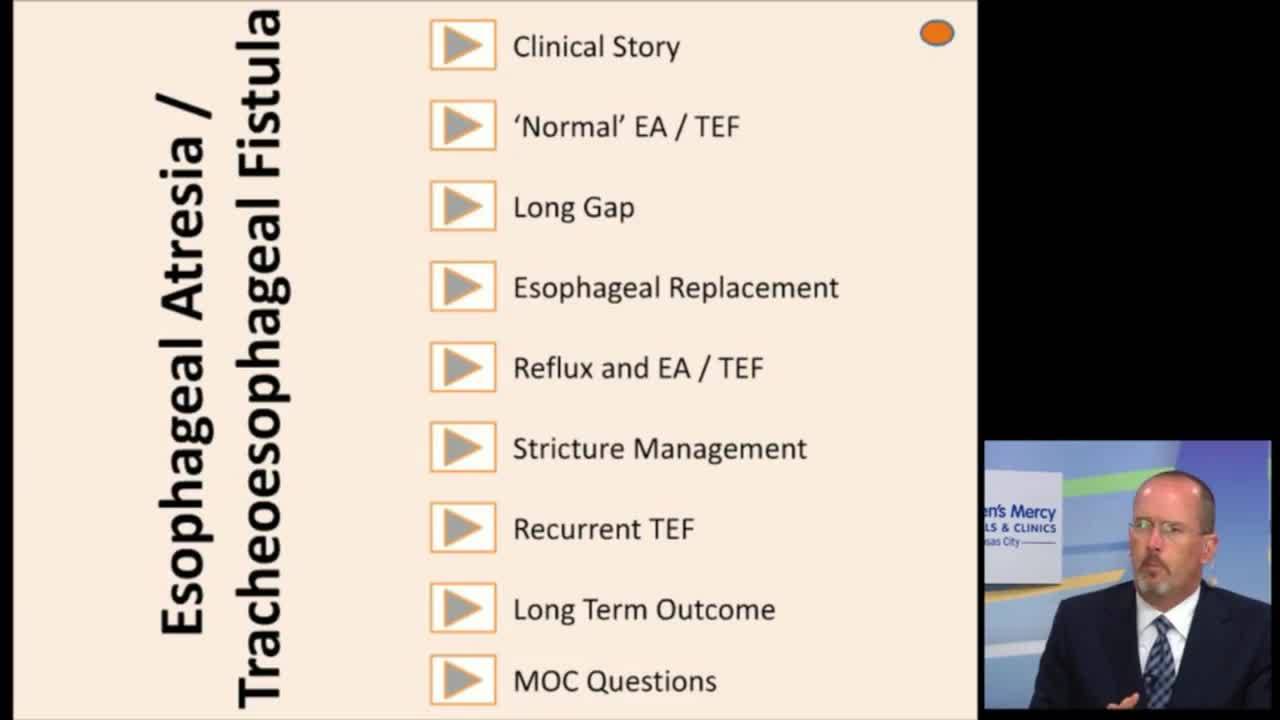 ▶
Ep 14 · 1:37
▶
Ep 14 · 1:37
host summary
Em Gootee summarizing the discussion: Antenatal detection of esophageal atresia occurs in less than half of cases, identified by small stomach and polyhydramnios
↗
▶
Ep 14 · 4:10
host summary
Em Gootee summarizing the discussion: Right-sided aortic arch can be successfully repaired through right thoracotomy without switching to left side, though technically more challenging
↗
▶
Ep 14 · 8:14
host summary
Em Gootee summarizing the discussion: I feel intronchoscopic era, bronchoscopy, bronchoscopy is very important to check the gap. For example, if the fistula orifice between the right and left bronchus, I may not do a thoracoscopic approach because the gap can be very long.
↗
▶
Ep 14 · 15:04
host summary
Em Gootee summarizing the discussion: Recent literature (European Journal of Pediatric Surgery Volume 23) shows little difference in outcomes between open and thoracoscopic repair
↗
▶
Ep 14 · 16:04
host summary
Em Gootee summarizing the discussion: Some recent studies (2008-2010) showed better stricture rates with thoracoscopic approach, though more recent data shows equivalent rates
↗
▶
Ep 14 · 21:17
host summary
Em Gootee summarizing the discussion: I use wet clips that are very fast and reliable
↗
▶
Ep 14 · 21:17
host summary
Em Gootee summarizing the discussion: Wet clips are fast and reliable method for fistula division during thoracoscopic repair
↗
▶
Ep 14 · 21:17
host summary
Em Gootee summarizing the discussion: Before I started doing thoracoscopic esophageal, I already had, like, almost 150 done open. So for me it was almost natural to start doing it thoracoscopically.
↗
▶
Ep 14 · 21:17
host summary
Em Gootee summarizing the discussion: I can't tell what is to open esophiatricia because it's more than 10 years now that I've been doing them thoracoscopically and and so I think it's the way to go
↗
▶
Ep 14 · 21:17
host summary
Em Gootee summarizing the discussion: I think that today one of the big advantages that we have is that we have all these training models that I saw just last IPEC meeting in Beijing. There was a doctor from Argentina who actually brought an amazing, very low cost training model
↗
▶
Ep 14 · 21:17
host summary
Em Gootee summarizing the discussion: Low-cost training models for thoracoscopic TEF repair have been developed, including one from Argentina presented at IPEG Beijing meeting
↗
▶
Ep 14 · 23:13
host summary
Em Gootee summarizing the discussion: We are doing them all sarcoscopically. It's where we feel so comfortable.
↗
▶
Ep 14 · 23:58
host summary
Em Gootee summarizing the discussion: Poll results show 35% of participants perform thoracoscopic repair while 60% perform open repair
↗
▶
Ep 14 · 24:35
host summary
Em Gootee summarizing the discussion: Cathy Barsson at Northwestern has really developed a, a very nice model of the TEF that's in, um, uh, does not rely on a living, um, uh, tissue, it's a bovine, uh, fetal tissue
↗
▶
Ep 14 · 24:35
host summary
Em Gootee summarizing the discussion: This training model was used to teach 30 senior fellows from US and Canada and will be deployed at APSA and IPEG meetings
↗
▶
Ep 14 · 24:35
host summary
Em Gootee summarizing the discussion: Cathy Barsson at Northwestern developed bovine fetal tissue model for TEF repair training that does not require living tissue
↗
▶
Ep 14 · 24:35
host summary
Em Gootee summarizing the discussion: We used it to train the uh 30 or something, so, uh, senior fellows from around the, around the country, and, uh, the feedback's been very good
↗
▶
Ep 14 · 25:45
host summary
Em Gootee summarizing the discussion: When we use the thoracoscopic treatment for treasure, you know, I feel that approach is very, very gentle for lungs, so postoperative management easier because of probably, uh, you know. Very gentle for lungs intraoperatively. Also less pain, so extubation is smooth
↗
▶
Ep 14 · 25:45
host summary
Em Gootee summarizing the discussion: Thoracoscopic approach is very gentle for lungs, resulting in easier postoperative management, less pain, and smoother extubation
↗
▶
Ep 14 · 26:49
host summary
Em Gootee summarizing the discussion: For thoracoscopic anastomosis, back row stitches are tied intracorporeally while front row knots are tied outside the lumen
↗
▶
Ep 14 · 26:49
host summary
Em Gootee summarizing the discussion: Because I have the trans anastomotic feeding tube, that will help me to pass the, the, the, when I pass the, the, the needle, it's easier. I can, I can use the wall of the, of the, Of the tube to help my needle to go exactly where I want
↗
▶
Ep 14 · 26:49
host summary
Em Gootee summarizing the discussion: I pass the trans anastomotic feeding tube because it will help me to give volume to the suture. And so all the, all the front row, I will tie it, the, the knots will be out of, of the lumen of the esophagus.
↗
▶
Ep 14 · 26:49
host summary
Em Gootee summarizing the discussion: I, I, I, I'll put in the back row in the middle, the, the back row stitch, the middle, exactly the middle one, the back row, and then that, that knot I will tie it inside. All the back row, I, I tie the knots inside
↗
▶
Ep 14 · 26:49
host summary
Em Gootee summarizing the discussion: Transanastomotic feeding tube passed after back row helps provide volume and guides needle passage for front row sutures
↗
▶
Ep 14 · 27:53
host summary
Em Gootee summarizing the discussion: We use PDS 50 PDS, but the needle has to be a C1, C1. Yes, I agree. Yes, that's, that's a very good needle because it has a very good curve and also will get through the 5.
↗
▶
Ep 14 · 27:53
host summary
Em Gootee summarizing the discussion: 5-0 PDS with C1 needle is preferred suture for thoracoscopic repair; C1 needle has good curve and passes through 5mm trocar without damage
↗
▶
Ep 14 · 27:53
host summary
Em Gootee summarizing the discussion: I use a 6 millimeter trucker in my right hand, so it will go through the trucker without any problem and without damaging the tip of the needle.
↗
▶
Ep 14 · 28:24
host summary
Em Gootee summarizing the discussion: TF needle is also suitable alternative to C1 needle for thoracoscopic anastomosis
↗
▶
Ep 14 · 28:55
host summary
Em Gootee summarizing the discussion: Stay sutures can be exteriorized through chest wall with hemostat to help bring gap closer before tying subsequent stitches
↗
▶
Ep 14 · 28:55
host summary
Em Gootee summarizing the discussion: One thing we did in our early experience was put the first stitch in and then exteriorize that stitch to help bring the gap closer and then put in the next stitch and tied that down.
↗
▶
Ep 14 · 28:55
host summary
Em Gootee summarizing the discussion: You had a, you had a hemostat on it that you could make it, try to bring the edges tighter if you wanted to.
↗
▶
Ep 14 · 29:39
host summary
Em Gootee summarizing the discussion: When you, when you divide the fistula, do you divide all all? Because I don't divide, you know, fishes completely when I studied anastomos. I divide 3/4.
↗
▶
Ep 14 · 29:39
host summary
Em Gootee summarizing the discussion: Dividing only 3/4 of fistula (rather than complete division) before anastomosis makes repair easier by maintaining traction
↗
▶
Ep 14 · 29:56
host summary
Em Gootee summarizing the discussion: Minimal dissection of distal esophagus preserves blood supply and reduces trauma, even in long-gap cases
↗
▶
Ep 14 · 30:30
host summary
Em Gootee summarizing the discussion: I don't, I, I, I, I don't want to dissect the distal tissue of, you know, you know, entirely because, uh, less, uh, you know, traumatic and less blood supply. I want to keep a distal, I want to keep the blood supply of the distal.
↗
▶
Ep 14 · 31:29
host summary
Em Gootee summarizing the discussion: Long gap is defined as greater than two vertebral bodies distance on contrast study through gastrostomy
↗
▶
Ep 14 · 31:29
host summary
Em Gootee summarizing the discussion: We actually do them in our, uh, we have really good interventional radiologists and we do it there with their assistance with both of us in the room, and we can pass catheter, a wire up to make sure you're up the distal esophagus
↗
▶
Ep 14 · 31:29
host summary
Em Gootee summarizing the discussion: We would assess the gap, uh, with the, with the G tube in place. You can assess the gap and typically if it's within two vertebral bodies, we would go, we would do a primary closure.
↗
▶
Ep 14 · 31:29
host summary
Em Gootee summarizing the discussion: Gastrostomy tube placement is first step in long-gap management, allowing gap assessment via contrast injection and wire passage
↗
▶
Ep 14 · 31:29
host summary
Em Gootee summarizing the discussion: Interventional radiology can pass wire up distal esophagus and inject contrast to identify GE junction location for gap measurement
↗
▶
Ep 14 · 33:14
host summary
Em Gootee summarizing the discussion: 160 endoscope can pass through slightly dilated 12 French gastrostomy tube to visualize and push lower esophagus
↗
▶
Ep 14 · 33:14
host summary
Em Gootee summarizing the discussion: I find it's, you can get most, uh, even the, even the pretty, uh, the 160 scopes off through the 12, a little slightly dilated 12 G tube, you can get right up and take yourself right up the lower esophagus and try to push that a little.
↗
▶
Ep 14 · 33:40
host summary
Em Gootee summarizing the discussion: Modern approach to long-gap atresia favors multiple attempts at primary anastomosis before proceeding to cervical esophagostomy
↗
▶
Ep 14 · 33:40
host summary
Em Gootee summarizing the discussion: I think you, uh, I think unless if you do that you're committed really to a replacement, uh, or a substitution. So I think we have a couple, I think most, most people today would try to get the two ends together within a, you know, reasonable, um, attempts and then you might go to the cervical esophagoscopy.
↗
▶
Ep 14 · 33:40
host summary
Em Gootee summarizing the discussion: Cervical esophagostomy commits patient to esophageal replacement or substitution procedure
↗
Interesting Case Presentations Part II: EA/TEF
 ▶
Ep 18 · 33:04
▶
Ep 18 · 33:04
host summary
Em Gootee summarizing the discussion: Right chest approach with right-sided arch is feasible but can cause bradycardia when retracting the lung
↗
▶
Ep 18 · 49:20
host summary
Em Gootee summarizing the discussion: The incidence of proximal fistula in patients with pure esophageal atresia is extremely high, much higher than previously thought, according to Klaus Bach's group at Utrecht
↗
▶
Ep 18 · 51:03
host summary
Em Gootee summarizing the discussion: Thoracoscopic approach allows better protection of the recurrent laryngeal nerve during H-type fistula repair because all manipulation is under direct vision
↗
▶
Ep 18 · 55:55
host summary
Em Gootee summarizing the discussion: Paralytics and sedation may be beneficial postoperatively for long-gap EA repairs with significant tension
↗
▶
Ep 18 · 57:52
host summary
Em Gootee summarizing the discussion: Esophageal lung is an extremely rare clinical entity where the main stem bronchus connects directly to the lower esophagus, with only 20 cases reported in world literature
↗
▶
Ep 18 · 58:40
host summary
Em Gootee summarizing the discussion: Management of esophageal lung involves pneumonectomy
↗
Update Course Rewind: Magnet Therapy for Esophageal Atresia
 ▶
Ep 26 · 8:50
▶
Ep 26 · 8:50
host summary
Em Gootee summarizing the discussion: If you don't feel like you can get it together through a surgical approach, and you have no experience using magnets, that should not be your next step.
↗
APSA - Effect of transanastomotic feeding tubes on anastomotic strictures in patients with esophageal atresia and tracheoesophageal fistula- the Quebec experience - Kathryn LaRusso
 ▶
Ep 30 · 0:00
▶
Ep 30 · 0:00
host summary
Em Gootee summarizing the discussion: A lot of excitement about this presentation. I'm not sure the refs are gonna have to say if uh Todd's giving you a little bit of a wink wink there is within the rules, but we'll see how it plays out.
↗
Case Based Journal Review: Esophageal Atresia in 2022
 ▶
Ep 31 · 7:54
▶
Ep 31 · 7:54
host summary
Em Gootee summarizes what Dr. Jose Campos said: Patients with transanastomotic tubes started feeding on day 2 versus day 10 for those without tubes, but early feeding did not lead to less TPN—duration was 9 days in both groups
↗
▶
Ep 31 · 12:20
host summary
Em Gootee summarizes what Dr. Jose Campos said: In a meta-analysis of about 500 newborns, there was no significant difference in leak occurrence, pneumothorax, or mortality based on whether a chest drain was placed
↗
▶
Ep 31 · 12:31
host summary
Em Gootee summarizes what Dr. Jose Campos said: The group that received a chest drain had a significantly higher chance of returning to the operating room
↗
QUAD #2 Thoracoscopic Tracheopexy with Dr. Aaron Garrison
▶
Ep 52 · 0:36
host summary
Em Gootee summarizes what Dr. Aaron Garrison said: Several years ago, the approach was that patients with tracheomalacia would undergo aortopexy.
↗
▶
Ep 52 · 0:43
host summary
Em Gootee summarizes what Dr. Aaron Garrison said: In the last 4 to 5 years, it has become standard practice to determine which patients will respond best to tracheopexy versus aortopexy.
↗
▶
Ep 52 · 1:45
host summary
Em Gootee summarizes what Dr. Aaron Garrison said: Part of the workup is making sure that there is space to anteriorly suspend the aorta so that the trachea diameter can actually be made larger.
↗
▶
Ep 52 · 2:02
host summary
Em Gootee summarizes what Dr. Aaron Garrison said: Preoperative bronchoscopy gives the surgical team an idea of internal anatomy, which can assist in classifying the degree of tracheomalacia prior to surgical intervention.
↗
▶
Ep 52 · 3:23
host summary
Em Gootee summarizes what Dr. Aaron Garrison said: When using a thoracoscopic approach, correct positioning is the key to success.
↗
▶
Ep 52 · 3:27
host summary
Em Gootee summarizes what Dr. Aaron Garrison said: It is best to use gravity to advantage as it aids in retracting the lungs and trachea placement.
↗
▶
Ep 52 · 4:01
host summary
Em Gootee summarizes what Dr. Aaron Garrison said: Opening the pericardium and finding the area at the pericardial-adventitial junction to suspend is the key point of aortopexy.
↗
▶
Ep 52 · 4:16
host summary
Em Gootee summarizes what Dr. Aaron Garrison said: Passing suture transternally is preferred with the aortopexy approach, though it can be technically difficult.
↗
▶
Ep 52 · 4:23
host summary
Em Gootee summarizes what Dr. Aaron Garrison said: For tracheopexy, a posterior approach via semiprone position is preferred.
↗
▶
Ep 52 · 4:28
host summary
Em Gootee summarizes what Dr. Aaron Garrison said: Creating a pneumothorax by putting the Veress off the tip of the scapula helps collapse the lung for trocar placement.
↗
▶
Ep 52 · 4:38
host summary
Em Gootee summarizes what Dr. Aaron Garrison said: When operating posteriorly, triangulating your hands gives the best visualization and working space.
↗
▶
Ep 52 · 4:56
host summary
Em Gootee summarizes what Dr. Aaron Garrison said: When available, a multidisciplinary team which includes a pulmonologist can allow for internal visualization via bronchoscopy.
↗
▶
Ep 52 · 5:05
host summary
Em Gootee summarizes what Dr. Aaron Garrison said: Bronchoscopic guidance technique is primarily used in non-esophageal atresia patients.
↗
▶
Ep 52 · 5:53
host summary
Em Gootee summarizes what Dr. Aaron Garrison said: It is important to create enough tension in the suture to ensure that the pexy is secure.
↗
▶
Ep 52 · 6:07
host summary
Em Gootee summarizes what Dr. Aaron Garrison said: The approach changes for patients without esophageal atresia or with an esophagus in continuity.
↗
▶
Ep 52 · 6:14
host summary
Em Gootee summarizes what Dr. Aaron Garrison said: For patients with esophagus in continuity, the first step is to dissect around the esophagus using a vessel loop for retraction.
↗
▶
Ep 52 · 6:32
host summary
Em Gootee summarizes what Dr. Aaron Garrison said: Using pre- and post-operative bronchoscopy allows the surgeon to see the improvement prior to case completion.
↗
QUAD #7 Anesthesia for Thoracoscopic Techniques with Dr. Nathaniel Tighe
▶
Ep 55 · 1:05
host summary
Em Gootee summarizes what Dr. Nathan Tighe said: The association between esophageal atresia and cardiac abnormalities is particularly relevant to anesthetic technique.
↗
▶
Ep 55 · 1:42
host summary
Em Gootee summarizes what Dr. Nathan Tighe said: The most common technique for maintaining stillness is short-acting opioid infusions, which result in relatively little hemodynamic instability.
↗
▶
Ep 55 · 1:53
host summary
Em Gootee summarizes what Dr. Nathan Tighe said: Volatile anesthetics are especially useful when preservation of spontaneous ventilation is desired.
↗
▶
Ep 55 · 2:31
host summary
Em Gootee summarizes what Dr. Nathan Tighe said: Insufflation using pneumothorax created by trocar placement can facilitate surgical exposure by overcoming peak inspiratory pressures to allow lung collapse.
↗
▶
Ep 55 · 2:48
host summary
Em Gootee summarizes what Dr. Nathan Tighe said: Insufflation is useful for small kids with good lung compliance but not effective in kids with severe bronchopulmonary dysplasia or other compliance abnormalities.
↗
▶
Ep 55 · 4:19
host summary
Em Gootee summarizes what Dr. Nathan Tighe said: Endotracheal tube placement is technically easier than placement of other lung isolation devices.
↗
▶
Ep 55 · 4:39
host summary
Em Gootee summarizes what Dr. Nathan Tighe said: In kids with a pig bronchus or similar situation, this really becomes very difficult.
↗
▶
Ep 55 · 4:48
host summary
Em Gootee summarizes what Dr. Nathan Tighe said: A tracheal bronchus (pig bronchus) is an anatomical variant where an accessory bronchus originates directly from the supracarinal trachea.
↗
▶
Ep 55 · 5:17
host summary
Em Gootee summarizes what Dr. Nathan Tighe said: In larger kids (usually 8 years or above) with recurrent fistulas, double-lumen tubes can be used and are the easiest device for lung isolation because they allow independent ventilation of the two lungs.
↗
▶
Ep 55 · 5:38
host summary
Em Gootee summarizes what Dr. Nathan Tighe said: Early conversations between anesthesiologists and surgeons about patient specifics are part of deciding the best modality for each individual patient.
↗
▶
Ep 55 · 6:07
host summary
Em Gootee summarizes what Dr. Nathan Tighe said: Single ventricle patients may be candidates for open repair or ECMO support to ensure good outcomes.
↗
Journal of Pediatric Surgery Article Review: October 2023
▶
Ep 56 · 3:14
host summary
Em Gootee summarizing the discussion: There was no significant difference in secondary outcomes (gastroesophageal reflux disease, anastomotic leak, esophagitis) between infants receiving prophylactic acid suppression and those who did not
↗
▶
Ep 56 · 3:51
host summary
Em Gootee summarizing the discussion: Potential risks of long-term acid suppression therapy include dysbiosis, necrotizing enterocolitis, and increased neonatal infection rates, particularly relevant in preterm and low birth weight infants
↗
▶
Ep 56 · 9:20
host summary
Em Gootee summarizing the discussion: Factors associated with symptomatic CPAM lesions include age older than 4 years, postnatal diagnosis, and maximum cyst diameter greater than 39.9 millimeters
↗
▶
Ep 56 · 9:50
host summary
Em Gootee summarizing the discussion: The CPAM study did not enroll patients who accepted conservative treatment compared to asymptomatic patients
↗
▶
Ep 56 · 10:00
host summary
Em Gootee summarizing the discussion: The CPAM study sample size was insufficient and all patients were from a single center
↗
Journal of Pediatric Surgery Article Review: December 2023
 ▶
Ep 57 · 11:29
▶
Ep 57 · 11:29
host summary
Em Gootee summarizing the discussion: Children discharged with non-operative feeding tube had 4 times higher odds of readmission than those without feeding tube
↗
▶
Ep 57 · 11:29
host summary
Em Gootee summarizing the discussion: Extended hospital stays at birth and presence of non-operative feeding tube at discharge are significant indicators of increased readmission rates in year following discharge for CDH children
↗
▶
Ep 57 · 11:29
host summary
Em Gootee summarizing the discussion: Hospitalization duration divided into three categories: less than 35 days, 36 to 75 days, and more than 76 days
↗
▶
Ep 57 · 11:29
host summary
Em Gootee summarizing the discussion: Children hospitalized for more than 76 days had significantly higher odds ratio of readmission
↗
▶
Ep 57 · 11:29
host summary
Em Gootee summarizing the discussion: Study examined extended birth admission length of stay and relationship with readmission within the year after discharge in CDH patients
↗
▶
Ep 57 · 11:29
host summary
Em Gootee summarizing the discussion: Single center retrospective cohort study of children with isolated CDH born and admitted between April 2008 to August 2019
↗
Journal of Pediatric Surgery Article Review: Q1 (Jan-Mar) 2024
▶
Ep 58 · 5:13
host summary
Em Gootee summarizing the discussion: The esophageal atresia study had 215 patients, 13% had complex esophageal atresia, and of those 25 patients survived the repair.
↗
▶
Ep 58 · 5:28
host summary
Em Gootee summarizing the discussion: Of the 25 complex esophageal atresia survivors, 14 patients were type A and 11 patients were type C.
↗
▶
Ep 58 · 6:03
host summary
Em Gootee summarizing the discussion: Of the 25 complex esophageal atresia patients, 18 had delayed primary anastomosis and 7 had esophageal replacement.
↗
▶
Ep 58 · 6:13
host summary
Em Gootee summarizing the discussion: Two of the esophageal replacements were salvage procedures following a failed traction.
↗
▶
Ep 58 · 6:13
host summary
Em Gootee summarizing the discussion: Only 4 patients with esophageal atresia were potentially treatable by traction.
↗
▶
Ep 58 · 6:57
host summary
Em Gootee summarizing the discussion: In cases where traction techniques had not been attempted, the native esophagus was retained in 80% of cases.
↗
▶
Ep 58 · 7:02
host summary
Em Gootee summarizing the discussion: The median time to esophageal continuity in the Newcastle series was 77 days.
↗
▶
Ep 58 · 7:12
host summary
Em Gootee summarizing the discussion: Management of complex esophageal atresia without lengthening procedure can result in a similar rate of retention of the native esophagus but with significantly less morbidity.
↗
Journal of Pediatric Surgery Article Review: 1st Quarter (Jan-Mar) 2025
 ▶
Ep 65 · 1:41
▶
Ep 65 · 1:41
host summary
Em Gootee summarizing the discussion: A subset of children after esophageal atresia repair experience severe airway collapse, leaving them ventilator dependent or suffering repeated cyanotic spells
↗
▶
Ep 65 · 6:57
host summary
Em Gootee summarizing the discussion: A significant number of outreach services are located within 50 kilometers of a children's hospital, leaving vast regions without access to pediatric surgical care
↗
▶
Ep 65 · 12:38
host summary
Em Gootee summarizing the discussion: The study examined 4,612 G-tube placements from 71 NSQIP-Pediatric hospitals in 2023
↗
▶
Ep 65 · 13:04
host summary
Em Gootee summarizing the discussion: Upper GI studies were obtained in 45% of first-time G-tube cases with substantial interhospital variability from 0 to 99%
↗
▶
Ep 65 · 13:45
host summary
Em Gootee summarizing the discussion: 14% of G-tube cases resulted in an ED visit within 0 to 30 days
↗
▶
Ep 65 · 13:45
host summary
Em Gootee summarizing the discussion: 5.2% of G-tube cases involved dislodgement within 0 to 30 days
↗
Journal of Pediatric Surgery Article Review: 2nd Quarter (Apr-Jun) 2025
▶
Ep 66 · 1:48
host summary
Em Gootee summarizing the discussion: A subset of children after esophageal atresia repair experience severe airway collapse, leaving them ventilator dependent or suffering repeated cyanotic spells
↗
▶
Ep 66 · 6:57
host summary
Em Gootee summarizing the discussion: A significant number of outreach services are located within 50 kilometers of a children's hospital, leaving vast regions without access to pediatric surgical care
↗
▶
Ep 66 · 12:38
host summary
Em Gootee summarizing the discussion: The study examined 4,612 G-tube placements from 71 NSQIP-Pediatric hospitals in 2023
↗
▶
Ep 66 · 13:04
host summary
Em Gootee summarizing the discussion: Upper GI studies were obtained in 45% of first-time G-tube cases with substantial interhospital variability from 0 to 99%
↗
▶
Ep 66 · 13:45
host summary
Em Gootee summarizing the discussion: 5.2% of G-tube cases involved dislodgement within 0 to 30 days
↗
▶
Ep 66 · 13:45
host summary
Em Gootee summarizing the discussion: 14% of G-tube cases resulted in an ED visit within 0 to 30 days
↗
Summaries Em gave as host · Esophageal Atresia
109 summaries
Open the Esophageal Atresia collection →
Tracheoesophageal Fistula with Dr. Daniel von Allmen
▶
Ep 8 · 0:00
host summary
Em Gootee summarizing the discussion: Tracheoesophageal fistula, really a defining procedure of pediatric surgery. While this operation is very rewarding, it has a lot of challenges with it as well.
↗
▶
Ep 8 · 0:00
host summary
Em Gootee summarizing the discussion: Tracheoesophageal fistula is a defining procedure of pediatric surgery with challenges including long gap atresia, recurrent fistulas, and strictures
↗
Update Course 2013: EA & TEF
▶
Ep 10 · 1:37
host summary
Em Gootee summarizing the discussion: Antenatal detection of esophageal atresia occurs in less than half of cases, identified by small stomach and polyhydramnios
↗
▶
Ep 10 · 4:10
host summary
Em Gootee summarizing the discussion: Right-sided aortic arch can be successfully repaired through right thoracotomy without switching to left side, though technically more challenging
↗
▶
Ep 10 · 8:14
host summary
Em Gootee summarizing the discussion: I feel intronchoscopic era, bronchoscopy, bronchoscopy is very important to check the gap. For example, if the fistula orifice between the right and left bronchus, I may not do a thoracoscopic approach because the gap can be very long.
↗
▶
Ep 10 · 15:04
host summary
Em Gootee summarizing the discussion: Recent literature (European Journal of Pediatric Surgery Volume 23) shows little difference in outcomes between open and thoracoscopic repair
↗
▶
Ep 10 · 16:04
host summary
Em Gootee summarizing the discussion: Some recent studies (2008-2010) showed better stricture rates with thoracoscopic approach, though more recent data shows equivalent rates
↗
▶
Ep 10 · 21:17
host summary
Em Gootee summarizing the discussion: Before I started doing thoracoscopic esophageal, I already had, like, almost 150 done open. So for me it was almost natural to start doing it thoracoscopically.
↗
▶
Ep 10 · 21:17
host summary
Em Gootee summarizing the discussion: I can't tell what is to open esophiatricia because it's more than 10 years now that I've been doing them thoracoscopically and and so I think it's the way to go
↗
▶
Ep 10 · 21:17
host summary
Em Gootee summarizing the discussion: I think that today one of the big advantages that we have is that we have all these training models that I saw just last IPEC meeting in Beijing. There was a doctor from Argentina who actually brought an amazing, very low cost training model
↗
▶
Ep 10 · 21:17
host summary
Em Gootee summarizing the discussion: Wet clips are fast and reliable method for fistula division during thoracoscopic repair
↗
▶
Ep 10 · 21:17
host summary
Em Gootee summarizing the discussion: Low-cost training models for thoracoscopic TEF repair have been developed, including one from Argentina presented at IPEG Beijing meeting
↗
▶
Ep 10 · 21:17
host summary
Em Gootee summarizing the discussion: I use wet clips that are very fast and reliable
↗
▶
Ep 10 · 23:13
host summary
Em Gootee summarizing the discussion: We are doing them all sarcoscopically. It's where we feel so comfortable.
↗
▶
Ep 10 · 23:58
host summary
Em Gootee summarizing the discussion: Poll results show 35% of participants perform thoracoscopic repair while 60% perform open repair
↗
▶
Ep 10 · 24:35
host summary
Em Gootee summarizing the discussion: This training model was used to teach 30 senior fellows from US and Canada and will be deployed at APSA and IPEG meetings
↗
▶
Ep 10 · 24:35
host summary
Em Gootee summarizing the discussion: Cathy Barsson at Northwestern developed bovine fetal tissue model for TEF repair training that does not require living tissue
↗
▶
Ep 10 · 24:35
host summary
Em Gootee summarizing the discussion: We used it to train the uh 30 or something, so, uh, senior fellows from around the, around the country, and, uh, the feedback's been very good
↗
▶
Ep 10 · 24:35
host summary
Em Gootee summarizing the discussion: Cathy Barsson at Northwestern has really developed a, a very nice model of the TEF that's in, um, uh, does not rely on a living, um, uh, tissue, it's a bovine, uh, fetal tissue
↗
▶
Ep 10 · 25:45
host summary
Em Gootee summarizing the discussion: When we use the thoracoscopic treatment for treasure, you know, I feel that approach is very, very gentle for lungs, so postoperative management easier because of probably, uh, you know. Very gentle for lungs intraoperatively. Also less pain, so extubation is smooth
↗
▶
Ep 10 · 25:45
host summary
Em Gootee summarizing the discussion: Thoracoscopic approach is very gentle for lungs, resulting in easier postoperative management, less pain, and smoother extubation
↗
▶
Ep 10 · 26:49
host summary
Em Gootee summarizing the discussion: I pass the trans anastomotic feeding tube because it will help me to give volume to the suture. And so all the, all the front row, I will tie it, the, the knots will be out of, of the lumen of the esophagus.
↗
▶
Ep 10 · 26:49
host summary
Em Gootee summarizing the discussion: Transanastomotic feeding tube passed after back row helps provide volume and guides needle passage for front row sutures
↗
▶
Ep 10 · 26:49
host summary
Em Gootee summarizing the discussion: Because I have the trans anastomotic feeding tube, that will help me to pass the, the, the, when I pass the, the, the needle, it's easier. I can, I can use the wall of the, of the, Of the tube to help my needle to go exactly where I want
↗
▶
Ep 10 · 26:49
host summary
Em Gootee summarizing the discussion: I, I, I, I'll put in the back row in the middle, the, the back row stitch, the middle, exactly the middle one, the back row, and then that, that knot I will tie it inside. All the back row, I, I tie the knots inside
↗
▶
Ep 10 · 26:49
host summary
Em Gootee summarizing the discussion: For thoracoscopic anastomosis, back row stitches are tied intracorporeally while front row knots are tied outside the lumen
↗
▶
Ep 10 · 27:53
host summary
Em Gootee summarizing the discussion: 5-0 PDS with C1 needle is preferred suture for thoracoscopic repair; C1 needle has good curve and passes through 5mm trocar without damage
↗
▶
Ep 10 · 27:53
host summary
Em Gootee summarizing the discussion: We use PDS 50 PDS, but the needle has to be a C1, C1. Yes, I agree. Yes, that's, that's a very good needle because it has a very good curve and also will get through the 5.
↗
▶
Ep 10 · 27:53
host summary
Em Gootee summarizing the discussion: I use a 6 millimeter trucker in my right hand, so it will go through the trucker without any problem and without damaging the tip of the needle.
↗
▶
Ep 10 · 28:24
host summary
Em Gootee summarizing the discussion: TF needle is also suitable alternative to C1 needle for thoracoscopic anastomosis
↗
▶
Ep 10 · 28:55
host summary
Em Gootee summarizing the discussion: One thing we did in our early experience was put the first stitch in and then exteriorize that stitch to help bring the gap closer and then put in the next stitch and tied that down.
↗
▶
Ep 10 · 28:55
host summary
Em Gootee summarizing the discussion: You had a, you had a hemostat on it that you could make it, try to bring the edges tighter if you wanted to.
↗
▶
Ep 10 · 28:55
host summary
Em Gootee summarizing the discussion: Stay sutures can be exteriorized through chest wall with hemostat to help bring gap closer before tying subsequent stitches
↗
▶
Ep 10 · 29:39
host summary
Em Gootee summarizing the discussion: Dividing only 3/4 of fistula (rather than complete division) before anastomosis makes repair easier by maintaining traction
↗
▶
Ep 10 · 29:39
host summary
Em Gootee summarizing the discussion: When you, when you divide the fistula, do you divide all all? Because I don't divide, you know, fishes completely when I studied anastomos. I divide 3/4.
↗
▶
Ep 10 · 29:56
host summary
Em Gootee summarizing the discussion: Minimal dissection of distal esophagus preserves blood supply and reduces trauma, even in long-gap cases
↗
▶
Ep 10 · 30:30
host summary
Em Gootee summarizing the discussion: I don't, I, I, I, I don't want to dissect the distal tissue of, you know, you know, entirely because, uh, less, uh, you know, traumatic and less blood supply. I want to keep a distal, I want to keep the blood supply of the distal.
↗
▶
Ep 10 · 31:29
host summary
Em Gootee summarizing the discussion: We actually do them in our, uh, we have really good interventional radiologists and we do it there with their assistance with both of us in the room, and we can pass catheter, a wire up to make sure you're up the distal esophagus
↗
▶
Ep 10 · 31:29
host summary
Em Gootee summarizing the discussion: We would assess the gap, uh, with the, with the G tube in place. You can assess the gap and typically if it's within two vertebral bodies, we would go, we would do a primary closure.
↗
▶
Ep 10 · 31:29
host summary
Em Gootee summarizing the discussion: Interventional radiology can pass wire up distal esophagus and inject contrast to identify GE junction location for gap measurement
↗
▶
Ep 10 · 31:29
host summary
Em Gootee summarizing the discussion: Gastrostomy tube placement is first step in long-gap management, allowing gap assessment via contrast injection and wire passage
↗
▶
Ep 10 · 31:29
host summary
Em Gootee summarizing the discussion: Long gap is defined as greater than two vertebral bodies distance on contrast study through gastrostomy
↗
▶
Ep 10 · 33:14
host summary
Em Gootee summarizing the discussion: 160 endoscope can pass through slightly dilated 12 French gastrostomy tube to visualize and push lower esophagus
↗
▶
Ep 10 · 33:14
host summary
Em Gootee summarizing the discussion: I find it's, you can get most, uh, even the, even the pretty, uh, the 160 scopes off through the 12, a little slightly dilated 12 G tube, you can get right up and take yourself right up the lower esophagus and try to push that a little.
↗
▶
Ep 10 · 33:40
host summary
Em Gootee summarizing the discussion: Cervical esophagostomy commits patient to esophageal replacement or substitution procedure
↗
▶
Ep 10 · 33:40
host summary
Em Gootee summarizing the discussion: Modern approach to long-gap atresia favors multiple attempts at primary anastomosis before proceeding to cervical esophagostomy
↗
▶
Ep 10 · 33:40
host summary
Em Gootee summarizing the discussion: I think you, uh, I think unless if you do that you're committed really to a replacement, uh, or a substitution. So I think we have a couple, I think most, most people today would try to get the two ends together within a, you know, reasonable, um, attempts and then you might go to the cervical esophagoscopy.
↗
Interesting Case Presentations Part II: EA/TEF
▶
Ep 14 · 33:04
host summary
Em Gootee summarizing the discussion: Right chest approach with right-sided arch is feasible but can cause bradycardia when retracting the lung
↗
▶
Ep 14 · 49:20
host summary
Em Gootee summarizing the discussion: The incidence of proximal fistula in patients with pure esophageal atresia is extremely high, much higher than previously thought, according to Klaus Bach's group at Utrecht
↗
▶
Ep 14 · 51:03
host summary
Em Gootee summarizing the discussion: Thoracoscopic approach allows better protection of the recurrent laryngeal nerve during H-type fistula repair because all manipulation is under direct vision
↗
▶
Ep 14 · 55:55
host summary
Em Gootee summarizing the discussion: Paralytics and sedation may be beneficial postoperatively for long-gap EA repairs with significant tension
↗
▶
Ep 14 · 57:52
host summary
Em Gootee summarizing the discussion: Esophageal lung is an extremely rare clinical entity where the main stem bronchus connects directly to the lower esophagus, with only 20 cases reported in world literature
↗
▶
Ep 14 · 58:40
host summary
Em Gootee summarizing the discussion: Management of esophageal lung involves pneumonectomy
↗
Case Based Journal Review: Esophageal Atresia in 2022
▶
Ep 22 · 7:54
host summary
Em Gootee summarizes what Dr. Jose Campos said: Patients with transanastomotic tubes started feeding on day 2 versus day 10 for those without tubes, but early feeding did not lead to less TPN—duration was 9 days in both groups
↗
▶
Ep 22 · 12:20
host summary
Em Gootee summarizes what Dr. Jose Campos said: In a meta-analysis of about 500 newborns, there was no significant difference in leak occurrence, pneumothorax, or mortality based on whether a chest drain was placed
↗
▶
Ep 22 · 12:31
host summary
Em Gootee summarizes what Dr. Jose Campos said: The group that received a chest drain had a significantly higher chance of returning to the operating room
↗
QUAD #2 Thoracoscopic Tracheopexy with Dr. Aaron Garrison
▶
Ep 27 · 0:36
host summary
Em Gootee summarizes what Dr. Aaron Garrison said: Several years ago, the approach was that patients with tracheomalacia would undergo aortopexy.
↗
▶
Ep 27 · 0:43
host summary
Em Gootee summarizes what Dr. Aaron Garrison said: In the last 4 to 5 years, it has become standard practice to determine which patients will respond best to tracheopexy versus aortopexy.
↗
▶
Ep 27 · 1:45
host summary
Em Gootee summarizes what Dr. Aaron Garrison said: Part of the workup is making sure that there is space to anteriorly suspend the aorta so that the trachea diameter can actually be made larger.
↗
▶
Ep 27 · 2:02
host summary
Em Gootee summarizes what Dr. Aaron Garrison said: Preoperative bronchoscopy gives the surgical team an idea of internal anatomy, which can assist in classifying the degree of tracheomalacia prior to surgical intervention.
↗
▶
Ep 27 · 3:23
host summary
Em Gootee summarizes what Dr. Aaron Garrison said: When using a thoracoscopic approach, correct positioning is the key to success.
↗
▶
Ep 27 · 3:27
host summary
Em Gootee summarizes what Dr. Aaron Garrison said: It is best to use gravity to advantage as it aids in retracting the lungs and trachea placement.
↗
▶
Ep 27 · 4:01
host summary
Em Gootee summarizes what Dr. Aaron Garrison said: Opening the pericardium and finding the area at the pericardial-adventitial junction to suspend is the key point of aortopexy.
↗
▶
Ep 27 · 4:16
host summary
Em Gootee summarizes what Dr. Aaron Garrison said: Passing suture transternally is preferred with the aortopexy approach, though it can be technically difficult.
↗
▶
Ep 27 · 4:23
host summary
Em Gootee summarizes what Dr. Aaron Garrison said: For tracheopexy, a posterior approach via semiprone position is preferred.
↗
▶
Ep 27 · 4:28
host summary
Em Gootee summarizes what Dr. Aaron Garrison said: Creating a pneumothorax by putting the Veress off the tip of the scapula helps collapse the lung for trocar placement.
↗
▶
Ep 27 · 4:38
host summary
Em Gootee summarizes what Dr. Aaron Garrison said: When operating posteriorly, triangulating your hands gives the best visualization and working space.
↗
▶
Ep 27 · 4:56
host summary
Em Gootee summarizes what Dr. Aaron Garrison said: When available, a multidisciplinary team which includes a pulmonologist can allow for internal visualization via bronchoscopy.
↗
▶
Ep 27 · 5:05
host summary
Em Gootee summarizes what Dr. Aaron Garrison said: Bronchoscopic guidance technique is primarily used in non-esophageal atresia patients.
↗
▶
Ep 27 · 5:53
host summary
Em Gootee summarizes what Dr. Aaron Garrison said: It is important to create enough tension in the suture to ensure that the pexy is secure.
↗
▶
Ep 27 · 6:07
host summary
Em Gootee summarizes what Dr. Aaron Garrison said: The approach changes for patients without esophageal atresia or with an esophagus in continuity.
↗
▶
Ep 27 · 6:14
host summary
Em Gootee summarizes what Dr. Aaron Garrison said: For patients with esophagus in continuity, the first step is to dissect around the esophagus using a vessel loop for retraction.
↗
▶
Ep 27 · 6:32
host summary
Em Gootee summarizes what Dr. Aaron Garrison said: Using pre- and post-operative bronchoscopy allows the surgeon to see the improvement prior to case completion.
↗
QUAD #7 Anesthesia for Thoracoscopic Techniques with Dr. Nathaniel Tighe
▶
Ep 29 · 1:05
host summary
Em Gootee summarizes what Dr. Nathan Tighe said: The association between esophageal atresia and cardiac abnormalities is particularly relevant to anesthetic technique.
↗
▶
Ep 29 · 1:42
host summary
Em Gootee summarizes what Dr. Nathan Tighe said: The most common technique for maintaining stillness is short-acting opioid infusions, which result in relatively little hemodynamic instability.
↗
▶
Ep 29 · 1:53
host summary
Em Gootee summarizes what Dr. Nathan Tighe said: Volatile anesthetics are especially useful when preservation of spontaneous ventilation is desired.
↗
▶
Ep 29 · 2:31
host summary
Em Gootee summarizes what Dr. Nathan Tighe said: Insufflation using pneumothorax created by trocar placement can facilitate surgical exposure by overcoming peak inspiratory pressures to allow lung collapse.
↗
▶
Ep 29 · 2:48
host summary
Em Gootee summarizes what Dr. Nathan Tighe said: Insufflation is useful for small kids with good lung compliance but not effective in kids with severe bronchopulmonary dysplasia or other compliance abnormalities.
↗
▶
Ep 29 · 4:19
host summary
Em Gootee summarizes what Dr. Nathan Tighe said: Endotracheal tube placement is technically easier than placement of other lung isolation devices.
↗
▶
Ep 29 · 4:39
host summary
Em Gootee summarizes what Dr. Nathan Tighe said: In kids with a pig bronchus or similar situation, this really becomes very difficult.
↗
▶
Ep 29 · 4:48
host summary
Em Gootee summarizes what Dr. Nathan Tighe said: A tracheal bronchus (pig bronchus) is an anatomical variant where an accessory bronchus originates directly from the supracarinal trachea.
↗
▶
Ep 29 · 5:17
host summary
Em Gootee summarizes what Dr. Nathan Tighe said: In larger kids (usually 8 years or above) with recurrent fistulas, double-lumen tubes can be used and are the easiest device for lung isolation because they allow independent ventilation of the two lungs.
↗
▶
Ep 29 · 5:38
host summary
Em Gootee summarizes what Dr. Nathan Tighe said: Early conversations between anesthesiologists and surgeons about patient specifics are part of deciding the best modality for each individual patient.
↗
▶
Ep 29 · 6:07
host summary
Em Gootee summarizes what Dr. Nathan Tighe said: Single ventricle patients may be candidates for open repair or ECMO support to ensure good outcomes.
↗
Journal of Pediatric Surgery Article Review: October 2023
▶
Ep 30 · 3:14
host summary
Em Gootee summarizing the discussion: There was no significant difference in secondary outcomes (gastroesophageal reflux disease, anastomotic leak, esophagitis) between infants receiving prophylactic acid suppression and those who did not
↗
▶
Ep 30 · 3:51
host summary
Em Gootee summarizing the discussion: Potential risks of long-term acid suppression therapy include dysbiosis, necrotizing enterocolitis, and increased neonatal infection rates, particularly relevant in preterm and low birth weight infants
↗
▶
Ep 30 · 9:20
host summary
Em Gootee summarizing the discussion: Factors associated with symptomatic CPAM lesions include age older than 4 years, postnatal diagnosis, and maximum cyst diameter greater than 39.9 millimeters
↗
▶
Ep 30 · 9:50
host summary
Em Gootee summarizing the discussion: The CPAM study did not enroll patients who accepted conservative treatment compared to asymptomatic patients
↗
▶
Ep 30 · 10:00
host summary
Em Gootee summarizing the discussion: The CPAM study sample size was insufficient and all patients were from a single center
↗
Journal of Pediatric Surgery Article Review: Q1 (Jan-Mar) 2024
▶
Ep 31 · 5:13
host summary
Em Gootee summarizing the discussion: The esophageal atresia study had 215 patients, 13% had complex esophageal atresia, and of those 25 patients survived the repair.
↗
▶
Ep 31 · 5:28
host summary
Em Gootee summarizing the discussion: Of the 25 complex esophageal atresia survivors, 14 patients were type A and 11 patients were type C.
↗
▶
Ep 31 · 6:03
host summary
Em Gootee summarizing the discussion: Of the 25 complex esophageal atresia patients, 18 had delayed primary anastomosis and 7 had esophageal replacement.
↗
▶
Ep 31 · 6:13
host summary
Em Gootee summarizing the discussion: Only 4 patients with esophageal atresia were potentially treatable by traction.
↗
▶
Ep 31 · 6:13
host summary
Em Gootee summarizing the discussion: Two of the esophageal replacements were salvage procedures following a failed traction.
↗
▶
Ep 31 · 6:57
host summary
Em Gootee summarizing the discussion: In cases where traction techniques had not been attempted, the native esophagus was retained in 80% of cases.
↗
▶
Ep 31 · 7:02
host summary
Em Gootee summarizing the discussion: The median time to esophageal continuity in the Newcastle series was 77 days.
↗
▶
Ep 31 · 7:12
host summary
Em Gootee summarizing the discussion: Management of complex esophageal atresia without lengthening procedure can result in a similar rate of retention of the native esophagus but with significantly less morbidity.
↗
Journal of Pediatric Surgery Article Review: 1st Quarter (Jan-Mar) 2025
▶
Ep 36 · 1:41
host summary
Em Gootee summarizing the discussion: A subset of children after esophageal atresia repair experience severe airway collapse, leaving them ventilator dependent or suffering repeated cyanotic spells
↗
▶
Ep 36 · 6:57
host summary
Em Gootee summarizing the discussion: A significant number of outreach services are located within 50 kilometers of a children's hospital, leaving vast regions without access to pediatric surgical care
↗
▶
Ep 36 · 12:38
host summary
Em Gootee summarizing the discussion: The study examined 4,612 G-tube placements from 71 NSQIP-Pediatric hospitals in 2023
↗
▶
Ep 36 · 13:04
host summary
Em Gootee summarizing the discussion: Upper GI studies were obtained in 45% of first-time G-tube cases with substantial interhospital variability from 0 to 99%
↗
▶
Ep 36 · 13:45
host summary
Em Gootee summarizing the discussion: 14% of G-tube cases resulted in an ED visit within 0 to 30 days
↗
▶
Ep 36 · 13:45
host summary
Em Gootee summarizing the discussion: 5.2% of G-tube cases involved dislodgement within 0 to 30 days
↗
Journal of Pediatric Surgery Article Review: 2nd Quarter (Apr-Jun) 2025
▶
Ep 37 · 1:48
host summary
Em Gootee summarizing the discussion: A subset of children after esophageal atresia repair experience severe airway collapse, leaving them ventilator dependent or suffering repeated cyanotic spells
↗
▶
Ep 37 · 6:57
host summary
Em Gootee summarizing the discussion: A significant number of outreach services are located within 50 kilometers of a children's hospital, leaving vast regions without access to pediatric surgical care
↗
▶
Ep 37 · 12:38
host summary
Em Gootee summarizing the discussion: The study examined 4,612 G-tube placements from 71 NSQIP-Pediatric hospitals in 2023
↗
▶
Ep 37 · 13:04
host summary
Em Gootee summarizing the discussion: Upper GI studies were obtained in 45% of first-time G-tube cases with substantial interhospital variability from 0 to 99%
↗
▶
Ep 37 · 13:45
host summary
Em Gootee summarizing the discussion: 5.2% of G-tube cases involved dislodgement within 0 to 30 days
↗
▶
Ep 37 · 13:45
host summary
Em Gootee summarizing the discussion: 14% of G-tube cases resulted in an ED visit within 0 to 30 days
↗
Summaries Em gave as host · Esophageal Atresia
1 summary
Open the Esophageal Atresia collection →
Update Course Rewind: Magnet Therapy for Esophageal Atresia
▶
Ep 4 · 8:50
host summary
Em Gootee summarizing the discussion: If you don't feel like you can get it together through a surgical approach, and you have no experience using magnets, that should not be your next step.
↗
Summaries Em gave as host · Etiologies (Gastroschisis/NEC/Atresia/Volvulus)
136 summaries
Open the Etiologies (Gastroschisis/NEC/Atresia/Volvulus) collection →
Intestinal Rehabilitation, Episode 2: Overwhelming intestinal damage, Part 1
 ▶
Ep 36 · 5:31
▶
Ep 36 · 5:31
host summary
Em Gootee summarizes what Dr. Michael Helmrath said: Research at Dr. Helmrath's lab and elsewhere has shown that giving fish oils and trying to improve bilirubin is not enough; the liver must be taken care of to reach the point where bowel reconstruction is possible.
↗
Malrotation with Dr. Meera Kotagal
 ▶
Ep 48 · 0:28
▶
Ep 48 · 0:28
host summary
Em Gootee summarizes what Dr. Meera Kotagal said: Malrotation occurs in about 1 in 200 to 500 live births.
↗
▶
Ep 48 · 8:33
host summary
Em Gootee summarizes what Dr. Meera Kotagal said: You can have malrotation without midgut volvulus, but you cannot have midgut volvulus without malrotation.
↗
Update Course Rewind: 2022 Top Ten Key Takeaways
▶
Ep 50 · 1:00
host summary
Em Gootee summarizing a resource: Infants with gastroschisis often require prolonged hospitalization for surgical repair and initiation and advancement of feeds.
↗
▶
Ep 50 · 2:00
host summary
Em Gootee summarizing a resource: Based on recently updated protocols from Cincinnati Children's Hospital and Children's Mercy Kansas City, feeds can be started immediately after sutureless abdominal closure for uncomplicated gastroschisis, beginning with 10-20 mL/kg/day and advancing by 20 mL/kg/day if tolerated.
↗
▶
Ep 50 · 2:30
host summary
Em Gootee summarizing a resource: Immediate feeding after gastroschisis closure has been shown to be associated with shorter length of stay and faster attainment of goal feeds.
↗
▶
Ep 50 · 2:45
host summary
Em Gootee summarizing a resource: it's safe to say that for babies with uncomplicated gastrochesis, it's safe to start feeding immediately after closure. And if they're tolerating for a few days and have even one bout of emesis, it's okay to continue with the feeding protocol.
↗
▶
Ep 50 · 2:45
host summary
Em Gootee summarizing a resource: For babies with uncomplicated gastroschisis tolerating feeds for a few days, it is okay to continue the feeding protocol even after one bout of emesis.
↗
▶
Ep 50 · 4:00
host summary
Em Gootee summarizing a resource: High resolution esophageal manometry, esophagography, and endoscopy can help determine the diagnosis of congenital esophageal stenosis.
↗
▶
Ep 50 · 4:15
host summary
Em Gootee summarizing a resource: Serial dilations may be used to manage congenital esophageal stenosis if there is no cartilage component suspected in the stenotic area.
↗
▶
Ep 50 · 4:30
host summary
Em Gootee summarizing a resource: Surgical resection for congenital esophageal stenosis can be reserved for patients where serial dilation is unsuccessful or there is concern for a cartilaginous component.
↗
▶
Ep 50 · 4:45
host summary
Em Gootee summarizing a resource: Initial conservative management should be considered for patients with congenital esophageal stenosis, especially if a cartilaginous component is not suspected.
↗
▶
Ep 50 · 4:45
host summary
Em Gootee summarizing a resource: initial conservative management should be considered for patients with congenital esophageal stenosis, especially if a cartilagenous component is not suspected.
↗
▶
Ep 50 · 5:45
host summary
Em Gootee summarizing a resource: Management of intussusception after enema reduction varies in practice, with historically recommended inpatient observation lacking evidence-based guidelines.
↗
▶
Ep 50 · 6:00
host summary
Em Gootee summarizing a resource: A systematic review and meta-analysis found that overall recurrence rates and recurrences within 24 and 48 hours were similar between inpatient and outpatient management groups after intussusception enema reduction.
↗
▶
Ep 50 · 6:30
host summary
Em Gootee summarizing a resource: There was no significant difference in the rate of return to the emergency department between inpatient and outpatient management after intussusception reduction, and both groups had similar rates of requiring operative intervention.
↗
▶
Ep 50 · 6:45
host summary
Em Gootee summarizing a resource: Outpatient management of intussusception after air enema reduction results in shorter hospital stay with no difference in rate of ED returns, recurrence, need for operation, or mortality.
↗
▶
Ep 50 · 6:45
host summary
Em Gootee summarizing a resource: it's safe to say that outpatient management of intersusception after air enema reduction results in a shorter hospital stay with no difference in the rate of returns to the emergency department, recurrence, need for an operation, or mortality.
↗
▶
Ep 50 · 7:30
host summary
Em Gootee summarizing a resource: There is no compelling evidence in pediatric or adult literature to support mechanical bowel preparation reducing surgical site infections in colorectal surgery.
↗
▶
Ep 50 · 7:45
host summary
Em Gootee summarizing a resource: Recent adult studies have shown no benefit from mechanical bowel preparation in reducing surgical site infections, with some studies showing an increase in wound infections.
↗
▶
Ep 50 · 8:00
host summary
Em Gootee summarizing a resource: Adult studies suggest a possible benefit of oral and IV antibiotics to reduce surgical site infections in colorectal surgery.
↗
▶
Ep 50 · 8:15
host summary
Em Gootee summarizing a resource: Recent retrospective studies have not shown the importance of oral antibiotics for pediatric colorectal operations.
↗
▶
Ep 50 · 8:45
host summary
Em Gootee summarizing a resource: Case-appropriate preoperative IV antibiotics may reduce surgical site infection incidence in colorectal surgery.
↗
▶
Ep 50 · 8:45
host summary
Em Gootee summarizing a resource: we have seen no benefit of mechanical bowel preparations for reducing SSIs. However, case appropriate pre-operative IV antibiotics may reduce SSI incidents.
↗
▶
Ep 50 · 9:45
host summary
Em Gootee summarizing a resource: Firearms are now the leading cause of death in all children and adolescents in the United States, overtaking motor vehicle crashes in 2019.
↗
▶
Ep 50 · 10:00
host summary
Em Gootee summarizing a resource: There are controversies about whether pediatric surgeons should be involved in firearm violence prevention efforts and advocacy across the country.
↗
▶
Ep 50 · 10:15
host summary
Em Gootee summarizing a resource: As pediatric surgeons, we need to advocate for protecting children's health and well-being, no matter what the topic is.
↗
▶
Ep 50 · 10:15
host summary
Em Gootee summarizing a resource: We believe as pediatric surgeons that we need to advocate with protecting children's health and well-being, no matter what the topic is.
↗
▶
Ep 50 · 10:45
host summary
Em Gootee summarizing a resource: Pediatric surgeons can play key roles for patients affected by firearms, including direct patient care and advocacy.
↗
▶
Ep 50 · 10:45
host summary
Em Gootee summarizing a resource: as pediatric surgeons, we can play key roles for patients affected by firearms, including direct patient care and advocacy.
↗
▶
Ep 50 · 11:45
host summary
Em Gootee summarizing a resource: Unwitnessed foreign body aspiration can be challenging to manage, and many items are not radiopaque so cannot be seen on plain x-ray.
↗
▶
Ep 50 · 12:00
host summary
Em Gootee summarizing a resource: The gold standard for airway evaluation has been rigid or flexible bronchoscopy, but there are risks of negative bronchoscopy with subsequent airway compromise.
↗
▶
Ep 50 · 12:15
host summary
Em Gootee summarizing a resource: CT bronchoscopy has been proposed as an adjunct in cases of children without obvious respiratory distress.
↗
▶
Ep 50 · 12:30
host summary
Em Gootee summarizing a resource: Low-dose non-contrast CT of the chest has high sensitivity and specificity for identification of airway foreign bodies.
↗
▶
Ep 50 · 12:45
host summary
Em Gootee summarizing a resource: CT can avoid the cost and resources of taking a child to the operating room for a non-therapeutic bronchoscopy procedure.
↗
▶
Ep 50 · 13:30
host summary
Em Gootee summarizing a resource: The largest study looking at initial laparotomy versus peritoneal drainage for necrotizing enterocolitis was conducted at 20 US centers and examined combined death or neurodevelopmental impairment at corrected age 18-22 months.
↗
▶
Ep 50 · 14:00
host summary
Em Gootee summarizing a resource: Death or neurodevelopmental impairment occurred in 69% of patients with preoperative diagnosis of NEC who underwent initial laparotomy versus 85% of those who underwent initial peritoneal drainage.
↗
▶
Ep 50 · 14:15
host summary
Em Gootee summarizing a resource: The prospective randomized cohort study from the National Institute of Child Health and Human Development showed no difference in overall survival but did show improved long-term neurodevelopmental outcomes with initial laparotomy for NEC.
↗
▶
Ep 50 · 14:45
host summary
Em Gootee summarizing a resource: For infants with necrotizing enterocolitis, initial laparotomy may be associated with less neurodevelopmental impairment and improved outcomes for extremely low birth weight babies.
↗
▶
Ep 50 · 14:45
host summary
Em Gootee summarizing a resource: for infants with necrotizing enterocolitis, initial laparotomy may be associated with less neurodevelopmental impairment and improved outcomes for extremely low birth weight babies.
↗
▶
Ep 50 · 15:45
host summary
Em Gootee summarizing a resource: Racism and sexism that manifest as microaggressions are commonly experienced by members of minority groups.
↗
▶
Ep 50 · 16:00
host summary
Em Gootee summarizing a resource: Individuals from minoritized groups are often left weighing the potential benefits and risks of addressing microaggression comments.
↗
▶
Ep 50 · 16:15
host summary
Em Gootee summarizing a resource: Placing the burden to interrupt bias on marginalized colleagues is unjust, and microaggressions can harm trainees' performance and sense of belonging.
↗
▶
Ep 50 · 16:15
host summary
Em Gootee summarizing a resource: Placing the burden to interrupt bias on our marginalized colleagues is unjust and such microaggressions can harm trainees's performance and sense of belonging.
↗
▶
Ep 50 · 16:45
host summary
Em Gootee summarizing a resource: Bystanders can and should make an effort to become upstanders, which means bystanders who respond with action.
↗
▶
Ep 50 · 16:45
host summary
Em Gootee summarizing a resource: Bystanders can and should make an effort to become upstanders, which means bystanders who respond with action to interrupt microaggressions.
↗
▶
Ep 50 · 17:30
host summary
Em Gootee summarizing a resource: Blunt head trauma represents the majority of pediatric trauma admissions, but there is very little evidence on how to best manage isolated skull fractures.
↗
▶
Ep 50 · 18:15
host summary
Em Gootee summarizing a resource: A 10-year retrospective review of isolated traumatic skull fractures with normal neurologic exam findings showed that 77% of patients were admitted for observation, but none needed neurosurgical intervention or additional imaging during the index admission.
↗
▶
Ep 50 · 18:45
host summary
Em Gootee summarizing a resource: Pediatric isolated skull fractures are low risk conditions with a low likelihood of complications, and these patients can be discharged safely from the emergency department without inpatient observation.
↗
▶
Ep 50 · 18:45
host summary
Em Gootee summarizing a resource: pediatric isolated skull fractures are low risk conditions with a low likelihood of complications. Therefore, these patients can be discharged safely from the emergency department without inpatient observation.
↗
▶
Ep 50 · 19:30
host summary
Em Gootee summarizing a resource: The IMPACT trial was a multi-institutional prospective randomized trial comparing piperacillin-tazobactam monotherapy versus ceftriaxone-metronidazole combination therapy for perforated appendicitis in children, with 30-day post-operative intra-abdominal abscess rate as the primary outcome.
↗
▶
Ep 50 · 20:00
host summary
Em Gootee summarizing a resource: Patients taking piperacillin-tazobactam had lower incidence of intra-abdominal abscesses, lower usage of CT scans, and fewer ED revisits compared to combination therapy.
↗
▶
Ep 50 · 20:15
host summary
Em Gootee summarizing a resource: Piperacillin-tazobactam monotherapy did not have an increase in antibiotic usage or increase in antibiotic-related complications compared to combination therapy.
↗
▶
Ep 50 · 20:30
host summary
Em Gootee summarizing a resource: Monotherapy with piperacillin-tazobactam has been shown to be associated with decreased incidence of intra-abdominal abscesses after surgery for patients with perforated appendicitis.
↗
▶
Ep 50 · 20:30
host summary
Em Gootee summarizing a resource: monotherapy with piperacilin and tazobactam has been shown to be associated with decreased incidence of intra-abdominal abscesses after surgery for patients with perforated appendicitis.
↗
Quick Literature Updates Episode 10
▶
Ep 51 · 0:00
host summary
Em Gootee summarizing a resource: Hello Pediatric Surgery family. I'm M. Tumbush, a research fellow from Cincinnati Children's Hospital Medical Center.
↗
▶
Ep 51 · 1:21
host summary
Em Gootee summarizing a resource: The Leonard et al. study compared patients presenting with traumatic bleeding, operative bleeding, and medical bleeding.
↗
▶
Ep 51 · 2:16
host summary
Em Gootee summarizing a resource: Standardization of perioperative care may decrease morbidity and improve outcomes in colorectal surgery.
↗
▶
Ep 51 · 2:16
host summary
Em Gootee summarizing a resource: Children in the high compliance group had a statistically significant decrease in rates of superficial surgical site infection when compared to children in the low compliance group.
↗
▶
Ep 51 · 2:16
host summary
Em Gootee summarizing a resource: standardization of perioperative care may decrease morbidity and improve outcomes in colorectal surgery
↗
▶
Ep 51 · 3:29
host summary
Em Gootee summarizing a resource: it seems that contrast enema prior to stoma reversal is only useful if patients had neck
↗
▶
Ep 51 · 3:29
host summary
Em Gootee summarizing a resource: Contrast enema prior to stoma reversal is only useful if patients had necrotizing enterocolitis.
↗
Journal of Pediatric Surgery Article Review: 2nd Quarter (Apr-Jun) 2024
▶
Ep 55 · 0:06
host summary
Em Gootee summarizing the discussion: Hi everyone, I'm M. Goddy from Cincinnati Children's, and we are back with another episode of our Journal of Pediatric Surgery article review podcast.
↗
▶
Ep 55 · 1:05
host summary
Em Gootee summarizing the discussion: I'm a pediatric surgeon at Alberta Children's Hospital. I've also been the publication chair for the uh Pacific Association of Pediatric Surgeons.
↗
▶
Ep 55 · 1:25
host summary
Em Gootee summarizing the discussion: MMP-7 (matrix metalloproteinase 7) are proteolytic peptidases that break down peptide bonds for amino acids and are part of tissue remodeling processes, playing roles in tissue repair, arthritis, metastasis, and cirrhosis
↗
▶
Ep 55 · 1:43
host summary
Em Gootee summarizing the discussion: Higher levels of MMP-7 are associated with the diagnosis of biliary atresia
↗
▶
Ep 55 · 1:56
host summary
Em Gootee summarizing the discussion: In a cohort of 329 biliary atresia cases from July 2020 to December 2022, 40 were classified as low MMP-7
↗
▶
Ep 55 · 2:11
host summary
Em Gootee summarizing the discussion: This is a group that has an ability to access a very large number of patients in a very short period of time, which really puts them in a position where they can dive deeply into. To things that others couldn't even start thinking about
↗
▶
Ep 55 · 2:36
host summary
Em Gootee summarizing the discussion: Low levels of MMP-7 in biliary atresia patients are associated with low levels of preoperative GGT (gamma glutamyl transpeptidase) and direct bilirubin
↗
▶
Ep 55 · 3:02
host summary
Em Gootee summarizing the discussion: GGT (gamma glutamyl transpeptidase) is an enzyme found in high levels in liver, kidney, pancreas, heart, and brain, and blood GGT levels are used to detect diseases of the liver and bile ducts
↗
▶
Ep 55 · 3:19
host summary
Em Gootee summarizing the discussion: Biliary atresia has variable outcomes even within one center, with patients who anatomically look similar having dramatically different outcomes
↗
▶
Ep 55 · 4:09
host summary
Em Gootee summarizing the discussion: Having lower MMP-7 levels within the cohort of biliary atresia patients is associated with worse prognosis
↗
▶
Ep 55 · 4:26
host summary
Em Gootee summarizing the discussion: And one of the things I love about this paper is that it just brings us down to some of those really basic questions about when we deal with these conditions, what actually underlies it? What are these processes? How do we target them?
↗
▶
Ep 55 · 4:41
host summary
Em Gootee summarizing the discussion: The mechanism of why low MMP-7 levels in biliary atresia patients leads to worse prognosis is unknown
↗
▶
Ep 55 · 7:02
host summary
Em Gootee summarizing the discussion: In a Canadian cohort of 411 infants with gastroschisis treated at CAPSNET centers from 2014 to 2022, 144 were excluded due to gestational age, birth weight, other congenital anomalies, or complicated gastroschisis, leaving 267 participants
↗
▶
Ep 55 · 7:43
host summary
Em Gootee summarizing the discussion: Of 267 uncomplicated gastroschisis patients, 78% received exclusive breast milk in the first 28 days of life and 22% received supplemental or exclusive formula
↗
▶
Ep 55 · 8:27
host summary
Em Gootee summarizing the discussion: There were no significant differences between exclusive breast milk and formula groups in time to reach full enteral feeds, duration of parenteral nutrition, or length of stay in uncomplicated gastroschisis
↗
▶
Ep 55 · 8:53
host summary
Em Gootee summarizing the discussion: Patients with uncomplicated gastroschisis who received exclusive breast milk in the first 28 days were far more likely to transition to exclusive breastfeeding: 73% compared to 11% in those with formula exposure
↗
▶
Ep 55 · 12:46
host summary
Em Gootee summarizing the discussion: A systematic review on transition from pediatric to adult care for colorectal conditions included 8 studies with patient, parent, and clinician perspectives, focusing on patients aged 10-30 years with anorectal malformation or Hirschsprung disease
↗
▶
Ep 55 · 13:16
host summary
Em Gootee summarizing the discussion: There is a group of colorectal patients discharged from care in late childhood around age 10 years, and another group that remains in pediatric care way beyond the normal age of transfer to adult care (around 25 years)
↗
▶
Ep 55 · 13:30
host summary
Em Gootee summarizing the discussion: The life course progression of anorectal malformation and Hirschsprung disease is not well understood
↗
Journal of Pediatric Surgery Article Review: 3rd Quarter (Jul-Sep) 2024
▶
Ep 56 · 0:06
host summary
Em Gootee summarizing the discussion: Hi everyone, I'm M. Goddy from Cincinnati Children's, and we are back with another episode of our Journal of Pediatric Surgery article review podcast.
↗
▶
Ep 56 · 1:38
host summary
Em Gootee summarizing the discussion: My name's Jason F Fisher. I'm a pediatric surgeon and director of the Colorectal Center at Cincinnati Children's, and I also happen to be. The lead of the subcommittee for Hirschprung's disease for the PCPLC or Pediatric Colorectal and Pelvic Learning Consortium.
↗
▶
Ep 56 · 1:56
host summary
Em Gootee summarizing the discussion: The PCPLC multi-institutional registry includes a number of institutions throughout the United States.
↗
▶
Ep 56 · 3:20
host summary
Em Gootee summarizing the discussion: 85% of Hirschsprung patients were diagnosed at less than 1 year of age.
↗
▶
Ep 56 · 3:45
host summary
Em Gootee summarizing the discussion: Kids with shorter segment disease (rectosigmoid or very small portion of aganglionic bowel) were more likely to be diagnosed at a later age.
↗
▶
Ep 56 · 3:57
host summary
Em Gootee summarizing the discussion: Children with long segment Hirschsprung disease typically present at birth with classic symptoms such as failure to pass meconium.
↗
▶
Ep 56 · 4:26
host summary
Em Gootee summarizing the discussion: Approximately one-third of neonates and 50% of infants, toddlers, and children had diverting ostomies performed prior to pull-through.
↗
▶
Ep 56 · 5:01
host summary
Em Gootee summarizing the discussion: There was no difference in overall rates of redo pull-throughs across age groups.
↗
▶
Ep 56 · 5:07
host summary
Em Gootee summarizing the discussion: Older children were more likely to need a redo pull-through due to an anastomotic leak.
↗
▶
Ep 56 · 5:13
host summary
Em Gootee summarizing the discussion: Higher rates of diverting ostomy post pull-through were suspected to be a treatment for post pull-through leak or anastomotic leak.
↗
▶
Ep 56 · 5:24
host summary
Em Gootee summarizing the discussion: The only outcome difference seen was nighttime soiling or incontinence in the older patient population.
↗
▶
Ep 56 · 7:44
host summary
Em Gootee summarizing the discussion: I am a pediatric surgeon. Uh, in the division of pediatric Surgery with Presbyterian Healthcare Services in Albuquerque, New Mexico
↗
▶
Ep 56 · 8:09
host summary
Em Gootee summarizing the discussion: The systematic review on gastroschisis included 28 high quality manuscripts.
↗
▶
Ep 56 · 8:15
host summary
Em Gootee summarizing the discussion: Two randomized controlled trials on gastroschisis had been started but both ended prematurely and were underpowered.
↗
▶
Ep 56 · 10:37
host summary
Em Gootee summarizing the discussion: Clinical practice suggests that skin organisms are most commonly identified in infections among infants with gastroschisis.
↗
▶
Ep 56 · 10:44
host summary
Em Gootee summarizing the discussion: Gastroschisis infants have a fairly high rate of wound infection.
↗
▶
Ep 56 · 10:50
host summary
Em Gootee summarizing the discussion: Sutureless closure has the lowest rate of infection for gastroschisis.
↗
▶
Ep 56 · 10:50
host summary
Em Gootee summarizing the discussion: Silo closures have a higher rate of infection than other closure methods for gastroschisis.
↗
▶
Ep 56 · 10:57
host summary
Em Gootee summarizing the discussion: The recommendation for gastroschisis is to provide antibiotic coverage for skin flora until the defect is closed and potentially for an additional 24 hours thereafter if the infant is clinically stable.
↗
▶
Ep 56 · 12:22
host summary
Em Gootee summarizing the discussion: Stable gastroschisis infants with sufficient abdominal capacity for sutureless closure tend to have the best outcomes.
↗
▶
Ep 56 · 12:29
host summary
Em Gootee summarizing the discussion: Minimizing fluids and paralytics in gastroschisis infants improves their results.
↗
▶
Ep 56 · 12:35
host summary
Em Gootee summarizing the discussion: Gastroschisis patients with sutureless closure have shorter length of stay and achieve feeding sooner.
↗
▶
Ep 56 · 15:11
host summary
Em Gootee summarizing the discussion: The Clavien-Madadi classification scale consists of several grades from 1 to 5 based on the type of therapy needed to correct the complication.
↗
▶
Ep 56 · 15:46
host summary
Em Gootee summarizing the discussion: The validation process circulated up to 20 case scenarios of unexpected events within the ERNICA Network (European Reference Network for inherited and congenital anomalies).
↗
▶
Ep 56 · 16:34
host summary
Em Gootee summarizing the discussion: 59 surgeons from 12 European countries completed the Clavien-Madadi validation questionnaire.
↗
▶
Ep 56 · 17:04
host summary
Em Gootee summarizing the discussion: 43% of pediatric surgeons preferred the Clavien-Madadi classification compared to 12% for the Clavien-Dindo classification.
↗
▶
Ep 56 · 17:04
host summary
Em Gootee summarizing the discussion: Nearly 82% of surgeons affirmed advantages of the Clavien-Madadi classification.
↗
Umbilical Disorders with Dr. Rebeccah Brown
▶
Ep 59 · 0:34
host summary
Em Gootee summarizes what Dr. Rebecca Brown said: Two umbilical arteries and one umbilical vein surrounding by a gelatin-like extracellular matrix known as Worthin's jelly.
↗
▶
Ep 59 · 0:34
host summary
Em Gootee summarizes what Dr. Rebecca Brown said: The umbilical cord contains two umbilical arteries and one umbilical vein surrounded by Wharton's jelly (a gelatin-like extracellular matrix).
↗
▶
Ep 59 · 0:50
host summary
Em Gootee summarizes what Dr. Rebecca Brown said: Umbilical cords usually fall off at 2 to 3 weeks after birth.
↗
▶
Ep 59 · 0:50
host summary
Em Gootee summarizes what Dr. Rebecca Brown said: They usually fall off 2 to 3 weeks, and the delay can be a manifestation of an immune deficiency.
↗
▶
Ep 59 · 0:50
host summary
Em Gootee summarizes what Dr. Rebecca Brown said: Delayed umbilical cord separation can be a manifestation of an immune deficiency.
↗
▶
Ep 59 · 1:20
host summary
Em Gootee summarizes what Dr. Rebecca Brown said: Mild omphalitis cases (inflammation of the belly button) may be treated with alcohol drying, ampicillin, or amoxicillin with follow-up every 24 hours.
↗
▶
Ep 59 · 1:40
host summary
Em Gootee summarizes what Dr. Rebecca Brown said: 16% of the patients admitted with onalittis develop necrotizing fasciitis.
↗
▶
Ep 59 · 1:40
host summary
Em Gootee summarizes what Dr. Rebecca Brown said: 16% of patients admitted with omphalitis develop necrotizing fasciitis.
↗
▶
Ep 59 · 1:46
host summary
Em Gootee summarizes what Dr. Rebecca Brown said: Necrotizing fasciitis from omphalitis presents with rapidly progressive umbilical edema, erythema, drainage, and has a high mortality rate.
↗
▶
Ep 59 · 2:27
host summary
Em Gootee summarizes what Dr. Rebecca Brown said: Umbilical hernias can be associated with trisomy 13, 18, and 21.
↗
▶
Ep 59 · 2:47
host summary
Em Gootee summarizes what Dr. Rebecca Brown said: Dr. Brown mentioned that if the fascial opening in an umbilical hernia is larger than 1.5 centimeters, it may not close by itself.
↗
▶
Ep 59 · 2:55
host summary
Em Gootee summarizes what Dr. Rebecca Brown said: In Walker's studies, 96% of very small umbilical hernias (less than 0.5 centimeters) closed by six years, but no hernia greater than 1.5 centimeters closed by six years of age.
↗
▶
Ep 59 · 4:54
host summary
Em Gootee summarizes what Dr. Rebecca Brown said: Unplanned emergency department returns within 30 days after umbilical hernia repair occurred at 2.5%, with rates twice as high for patients younger than 4 years old.
↗
▶
Ep 59 · 5:10
host summary
Em Gootee summarizes what Dr. Rebecca Brown said: Asymptomatic umbilical hernia repair should be delayed until greater than 4 years of age.
↗
▶
Ep 59 · 5:18
host summary
Em Gootee summarizes what Dr. Rebecca Brown said: In Rangel's study of 167,000 patients at 68 pediatricians' offices, 4,486 had umbilical hernia diagnosis at a median age of 1.6 months, with spontaneous closure occurring in 89% by age 5.
↗
▶
Ep 59 · 5:53
host summary
Em Gootee summarizes what Dr. Rebecca Brown said: In Rangel's study, closure rates for smaller hernias (≤1 cm) were nearly 90%, while for larger hernias they were around 80%.
↗
▶
Ep 59 · 6:12
host summary
Em Gootee summarizes what Dr. Rebecca Brown said: Rangel's study concluded that umbilical hernia repair should be delayed until age 5 years given the high incidence of spontaneous closure.
↗
▶
Ep 59 · 6:56
host summary
Em Gootee summarizes what Dr. Rebecca Brown said: Proboscoid hernia occurs when the skin above the hernia grows and pushes through the opening in the abdominal wall.
↗
▶
Ep 59 · 7:05
host summary
Em Gootee summarizes what Dr. Rebecca Brown said: It is recommended to correct proboscoid hernias before school age to avoid psychological issues for the child.
↗
▶
Ep 59 · 8:00
host summary
Em Gootee summarizes what Dr. Rebecca Brown said: Dr. Brown prefers to perform umbilicoplasty in umbilical hernia repairs, excising excess skin and using a 4-0 monocryl purse-string suture close to the skin surface to create a cosmetically appealing umbilicus.
↗
▶
Ep 59 · 8:55
host summary
Em Gootee summarizes what Dr. Rebecca Brown said: Umbilical granulomas are usually moist but commonly dry up and fall off spontaneously over time.
↗
▶
Ep 59 · 9:00
host summary
Em Gootee summarizes what Dr. Rebecca Brown said: Umbilical granulomas often respond to silver nitrate treatment.
↗
Journal of Pediatric Surgery Article Review: 1st Quarter (Jan-Mar) 2025
▶
Ep 67 · 1:41
host summary
Em Gootee summarizing the discussion: A subset of children after esophageal atresia repair experience severe airway collapse, leaving them ventilator dependent or suffering repeated cyanotic spells
↗
▶
Ep 67 · 6:57
host summary
Em Gootee summarizing the discussion: A significant number of outreach services are located within 50 kilometers of a children's hospital, leaving vast regions without access to pediatric surgical care
↗
▶
Ep 67 · 12:38
host summary
Em Gootee summarizing the discussion: The study examined 4,612 G-tube placements from 71 NSQIP-Pediatric hospitals in 2023
↗
▶
Ep 67 · 13:04
host summary
Em Gootee summarizing the discussion: Upper GI studies were obtained in 45% of first-time G-tube cases with substantial interhospital variability from 0 to 99%
↗
▶
Ep 67 · 13:45
host summary
Em Gootee summarizing the discussion: 5.2% of G-tube cases involved dislodgement within 0 to 30 days
↗
▶
Ep 67 · 13:45
host summary
Em Gootee summarizing the discussion: 14% of G-tube cases resulted in an ED visit within 0 to 30 days
↗
Summaries Em gave as host · Functional Colorectal Disorders & Bowel Management
2 summaries
Open the Functional Colorectal Disorders & Bowel Management collection →
Colorectal Quiz: Episode 49 – Collaborating for Kids: Colorectal & Pelvic Care (with Help from AI)
▶
Ep 10 · 5:51
host summary
Em Gootee summarizing the discussion: When you upload anything to the Notebook LM, you kind of create your own expert just from the provided document. It's not like any other chatbots or chat GPT go look around what's out there with the anorectal malformations and pulling information from that, just take that as whatever they have.
↗
▶
Ep 10 · 5:56
host summary
Em Gootee summarizing the discussion: When you upload documents to Notebook LM, you create your own expert from only the provided documents, not from external sources
↗
Summaries Em gave as host · Gallstone Pancreatitis
8 summaries
Open the Gallstone Pancreatitis collection →
Case-Based Journal Review: Cholelithiasis 2024
▶
Ep 3 · 6:26
host summary
Em Gootee summarizes what Dr. Jose Campos said: A Western Pediatric Surgery Research Consortium machine learning algorithm based on 1600 patients from 10 centers (2016-2019) can predict common bile duct stones using nine clinical factors, with 20% of patients having CBD stones
↗
▶
Ep 3 · 7:33
host summary
Em Gootee summarizes what Dr. Jose Campos said: The previous algorithm for predicting CBD stones was based on 300-400 patients, compared to 1600 in the new algorithm
↗
▶
Ep 3 · 13:34
host summary
Em Gootee summarizes what Dr. Jose Campos said: In a study of 173 laparoscopic cholecystectomies over 10 years (2013-2023), 83 used standard technique and 90 used ICG fluorescence
↗
▶
Ep 3 · 13:54
host summary
Em Gootee summarizes what Dr. Jose Campos said: The ICG study showed perioperative complication rate of 12% in standard technique versus 0% with ICG, with significantly shorter operative times and better biliary visualization in the ICG group
↗
Case Based Journal Review: Cholelithiasis 2024
▶
Ep 4 · 6:53
host summary
Em Gootee summarizes what Dr. Jose Campos said: 20% of patients in the choledocholithiasis study had common bile duct stones
↗
▶
Ep 4 · 7:33
host summary
Em Gootee summarizes what Dr. Jose Campos said: The algorithm studied 1600 patients compared to previous algorithms with 300-400 patients
↗
▶
Ep 4 · 13:54
host summary
Em Gootee summarizes what Dr. Jose Campos said: In the ICG study, perioperative complication rate was significantly higher in standard technique at 12% compared to 0% with ICG
↗
▶
Ep 4 · 14:03
host summary
Em Gootee summarizes what Dr. Jose Campos said: Overall length of surgery, length of cystic duct isolation, clipping, and time of gallbladder removal were significantly longer in the standard technique
↗
Summaries Em gave as host · Gastroesophageal Reflux
7 summaries
Open the Gastroesophageal Reflux collection →
Pyloric Stenosis with Dr. Alex Bondoc
 ▶
Ep 5 · 1:42
▶
Ep 5 · 1:42
host summary
Em Gootee summarizes what Dr. Alex Bondoc said: Reflux is really common in the first year of life.
↗
▶
Ep 5 · 2:19
host summary
Em Gootee summarizes what Dr. Alex Bondoc said: Don't forget the bilious vomiting should be considered as an emergency in an infant.
↗
▶
Ep 5 · 3:24
host summary
Em Gootee summarizes what Dr. Alex Bondoc said: A 2017 Journal of Pediatric Surgery study of 584 patients found African American infants with pyloric stenosis presented with higher bicarbonate and lower chloride levels.
↗
▶
Ep 5 · 4:25
host summary
Em Gootee summarizes what Dr. Alex Bondoc said: Researchers have identified a molecular diagnostic marker and can trace specific genetic changes indicating risk for pyloric stenosis.
↗
▶
Ep 5 · 7:04
host summary
Em Gootee summarizes what Dr. Alex Bondoc said: Recommended fluid resuscitation: isotonic saline bolus followed by maintenance IV fluids (D5 half-normal saline with 20 mEq/L potassium chloride).
↗
▶
Ep 5 · 8:12
host summary
Em Gootee summarizes what Dr. Alex Bondoc said: A 2023 Journal of Pediatric Surgery study suggests antibiotic prophylaxis may be unnecessary for pyloromyotomy and may carry unnecessary long-term side effects.
↗
▶
Ep 5 · 14:30
host summary
Em Gootee summarizes what Dr. Alex Bondoc said: A flexible feeding protocol (reducing volume if baby vomits 6 times but continuing smaller feeds and increasing as tolerated) decreases length of hospital stay.
↗
Summaries Em gave as host · Gastroesophageal Reflux Disease
1 summary
Open the Gastroesophageal Reflux Disease collection →
Esophageal Disconnect for Severe GERD in Neurologically-Impaired Children:...
 ▶
Ep 2 · 1:34
▶
Ep 2 · 1:34
host summary
Em Gootee summarizing the discussion: the definition of insanity is, uh, continued. You're trying to redo the same applying the same solution to the same problem and expecting a different outcome.
↗
Summaries Em gave as host · Gastroesophageal Reflux Disease
11 summaries
Open the Gastroesophageal Reflux Disease collection →
Esophageal Disconnect for Severe GERD in Neurologically-Impaired Children:...
▶
Ep 2 · 1:34
host summary
Em Gootee summarizing the discussion: the definition of insanity is, uh, continued. You're trying to redo the same applying the same solution to the same problem and expecting a different outcome.
↗
Case-Based Journal Review: G-Tube & Fundoplication for GERD 2023
 ▶
Ep 11 · 5:19
▶
Ep 11 · 5:19
host summary
Em Gootee summarizing the discussion: Aspiration pneumonia in a patient on NG feeds indicates that feeding into the stomach in its current form will not be sufficient
↗
▶
Ep 11 · 5:19
host summary
Em Gootee summarizing the discussion: After aspiration pneumonia and assuming maximum medical therapy, the next step is either post-pyloric feeding or fundoplication
↗
▶
Ep 11 · 7:30
host summary
Em Gootee summarizing the discussion: There is no prospective study comparing gastrostomy alone versus gastrostomy plus fundoplication; the 2013 JAMA Pediatrics retrospective study is the best available evidence
↗
▶
Ep 11 · 9:26
host summary
Em Gootee summarizing the discussion: If you do a fundo in someone who's aspirating from above, it'll make them worse.
↗
▶
Ep 11 · 9:26
host summary
Em Gootee summarizing the discussion: Performing fundoplication in someone who is aspirating from above (saliva) will make them worse
↗
▶
Ep 11 · 9:30
host summary
Em Gootee summarizing the discussion: A nasal jejunal tube trial can be a helpful diagnostic tool: if it stops aspiration, that indicates the aspiration was from gastric reflux rather than oral secretions
↗
▶
Ep 11 · 10:14
host summary
Em Gootee summarizing the discussion: Laparoscopic gastrostomy allows better visualization (grabbing the stomach and pulling it up with a camera) compared to the blind percutaneous endoscopic approach
↗
▶
Ep 11 · 10:14
host summary
Em Gootee summarizing the discussion: I don't see the advantage of a pure endoscopic approach when you can simply put a camera in through the opening of the G tube itself, even, which is what I do, and grab the stomach and pull it up with visualization rather than blind.
↗
▶
Ep 11 · 13:43
host summary
Em Gootee summarizing the discussion: Postoperative feeding advancement after G-tube placement has become faster over time; some centers now start feeds immediately after surgery and send patients home the same day
↗
▶
Ep 11 · 15:52
host summary
Em Gootee summarizing the discussion: There is no reason to start with continuous feeds as a ramp-up to bolus feeds; clinicians can go straight to bolus feeding postoperatively
↗
Summaries Em gave as host · Gastroschisis
81 summaries
Open the Gastroschisis collection →
Update Course Rewind: 2022 Top Ten Key Takeaways
▶
Ep 19 · 1:00
host summary
Em Gootee summarizing a resource: Infants with gastroschisis often require prolonged hospitalization for surgical repair and initiation and advancement of feeds.
↗
▶
Ep 19 · 2:00
host summary
Em Gootee summarizing a resource: Based on recently updated protocols from Cincinnati Children's Hospital and Children's Mercy Kansas City, feeds can be started immediately after sutureless abdominal closure for uncomplicated gastroschisis, beginning with 10-20 mL/kg/day and advancing by 20 mL/kg/day if tolerated.
↗
▶
Ep 19 · 2:30
host summary
Em Gootee summarizing a resource: Immediate feeding after gastroschisis closure has been shown to be associated with shorter length of stay and faster attainment of goal feeds.
↗
▶
Ep 19 · 2:45
host summary
Em Gootee summarizing a resource: For babies with uncomplicated gastroschisis tolerating feeds for a few days, it is okay to continue the feeding protocol even after one bout of emesis.
↗
▶
Ep 19 · 2:45
host summary
Em Gootee summarizing a resource: it's safe to say that for babies with uncomplicated gastrochesis, it's safe to start feeding immediately after closure. And if they're tolerating for a few days and have even one bout of emesis, it's okay to continue with the feeding protocol.
↗
▶
Ep 19 · 4:00
host summary
Em Gootee summarizing a resource: High resolution esophageal manometry, esophagography, and endoscopy can help determine the diagnosis of congenital esophageal stenosis.
↗
▶
Ep 19 · 4:15
host summary
Em Gootee summarizing a resource: Serial dilations may be used to manage congenital esophageal stenosis if there is no cartilage component suspected in the stenotic area.
↗
▶
Ep 19 · 4:30
host summary
Em Gootee summarizing a resource: Surgical resection for congenital esophageal stenosis can be reserved for patients where serial dilation is unsuccessful or there is concern for a cartilaginous component.
↗
▶
Ep 19 · 4:45
host summary
Em Gootee summarizing a resource: Initial conservative management should be considered for patients with congenital esophageal stenosis, especially if a cartilaginous component is not suspected.
↗
▶
Ep 19 · 4:45
host summary
Em Gootee summarizing a resource: initial conservative management should be considered for patients with congenital esophageal stenosis, especially if a cartilagenous component is not suspected.
↗
▶
Ep 19 · 5:45
host summary
Em Gootee summarizing a resource: Management of intussusception after enema reduction varies in practice, with historically recommended inpatient observation lacking evidence-based guidelines.
↗
▶
Ep 19 · 6:00
host summary
Em Gootee summarizing a resource: A systematic review and meta-analysis found that overall recurrence rates and recurrences within 24 and 48 hours were similar between inpatient and outpatient management groups after intussusception enema reduction.
↗
▶
Ep 19 · 6:30
host summary
Em Gootee summarizing a resource: There was no significant difference in the rate of return to the emergency department between inpatient and outpatient management after intussusception reduction, and both groups had similar rates of requiring operative intervention.
↗
▶
Ep 19 · 6:45
host summary
Em Gootee summarizing a resource: it's safe to say that outpatient management of intersusception after air enema reduction results in a shorter hospital stay with no difference in the rate of returns to the emergency department, recurrence, need for an operation, or mortality.
↗
▶
Ep 19 · 6:45
host summary
Em Gootee summarizing a resource: Outpatient management of intussusception after air enema reduction results in shorter hospital stay with no difference in rate of ED returns, recurrence, need for operation, or mortality.
↗
▶
Ep 19 · 7:30
host summary
Em Gootee summarizing a resource: There is no compelling evidence in pediatric or adult literature to support mechanical bowel preparation reducing surgical site infections in colorectal surgery.
↗
▶
Ep 19 · 7:45
host summary
Em Gootee summarizing a resource: Recent adult studies have shown no benefit from mechanical bowel preparation in reducing surgical site infections, with some studies showing an increase in wound infections.
↗
▶
Ep 19 · 8:00
host summary
Em Gootee summarizing a resource: Adult studies suggest a possible benefit of oral and IV antibiotics to reduce surgical site infections in colorectal surgery.
↗
▶
Ep 19 · 8:15
host summary
Em Gootee summarizing a resource: Recent retrospective studies have not shown the importance of oral antibiotics for pediatric colorectal operations.
↗
▶
Ep 19 · 8:45
host summary
Em Gootee summarizing a resource: we have seen no benefit of mechanical bowel preparations for reducing SSIs. However, case appropriate pre-operative IV antibiotics may reduce SSI incidents.
↗
▶
Ep 19 · 8:45
host summary
Em Gootee summarizing a resource: Case-appropriate preoperative IV antibiotics may reduce surgical site infection incidence in colorectal surgery.
↗
▶
Ep 19 · 9:45
host summary
Em Gootee summarizing a resource: Firearms are now the leading cause of death in all children and adolescents in the United States, overtaking motor vehicle crashes in 2019.
↗
▶
Ep 19 · 10:00
host summary
Em Gootee summarizing a resource: There are controversies about whether pediatric surgeons should be involved in firearm violence prevention efforts and advocacy across the country.
↗
▶
Ep 19 · 10:15
host summary
Em Gootee summarizing a resource: We believe as pediatric surgeons that we need to advocate with protecting children's health and well-being, no matter what the topic is.
↗
▶
Ep 19 · 10:15
host summary
Em Gootee summarizing a resource: As pediatric surgeons, we need to advocate for protecting children's health and well-being, no matter what the topic is.
↗
▶
Ep 19 · 10:45
host summary
Em Gootee summarizing a resource: as pediatric surgeons, we can play key roles for patients affected by firearms, including direct patient care and advocacy.
↗
▶
Ep 19 · 10:45
host summary
Em Gootee summarizing a resource: Pediatric surgeons can play key roles for patients affected by firearms, including direct patient care and advocacy.
↗
▶
Ep 19 · 11:45
host summary
Em Gootee summarizing a resource: Unwitnessed foreign body aspiration can be challenging to manage, and many items are not radiopaque so cannot be seen on plain x-ray.
↗
▶
Ep 19 · 12:00
host summary
Em Gootee summarizing a resource: The gold standard for airway evaluation has been rigid or flexible bronchoscopy, but there are risks of negative bronchoscopy with subsequent airway compromise.
↗
▶
Ep 19 · 12:15
host summary
Em Gootee summarizing a resource: CT bronchoscopy has been proposed as an adjunct in cases of children without obvious respiratory distress.
↗
▶
Ep 19 · 12:30
host summary
Em Gootee summarizing a resource: Low-dose non-contrast CT of the chest has high sensitivity and specificity for identification of airway foreign bodies.
↗
▶
Ep 19 · 12:45
host summary
Em Gootee summarizing a resource: CT can avoid the cost and resources of taking a child to the operating room for a non-therapeutic bronchoscopy procedure.
↗
▶
Ep 19 · 13:30
host summary
Em Gootee summarizing a resource: The largest study looking at initial laparotomy versus peritoneal drainage for necrotizing enterocolitis was conducted at 20 US centers and examined combined death or neurodevelopmental impairment at corrected age 18-22 months.
↗
▶
Ep 19 · 14:00
host summary
Em Gootee summarizing a resource: Death or neurodevelopmental impairment occurred in 69% of patients with preoperative diagnosis of NEC who underwent initial laparotomy versus 85% of those who underwent initial peritoneal drainage.
↗
▶
Ep 19 · 14:15
host summary
Em Gootee summarizing a resource: The prospective randomized cohort study from the National Institute of Child Health and Human Development showed no difference in overall survival but did show improved long-term neurodevelopmental outcomes with initial laparotomy for NEC.
↗
▶
Ep 19 · 14:45
host summary
Em Gootee summarizing a resource: For infants with necrotizing enterocolitis, initial laparotomy may be associated with less neurodevelopmental impairment and improved outcomes for extremely low birth weight babies.
↗
▶
Ep 19 · 14:45
host summary
Em Gootee summarizing a resource: for infants with necrotizing enterocolitis, initial laparotomy may be associated with less neurodevelopmental impairment and improved outcomes for extremely low birth weight babies.
↗
▶
Ep 19 · 15:45
host summary
Em Gootee summarizing a resource: Racism and sexism that manifest as microaggressions are commonly experienced by members of minority groups.
↗
▶
Ep 19 · 16:00
host summary
Em Gootee summarizing a resource: Individuals from minoritized groups are often left weighing the potential benefits and risks of addressing microaggression comments.
↗
▶
Ep 19 · 16:15
host summary
Em Gootee summarizing a resource: Placing the burden to interrupt bias on marginalized colleagues is unjust, and microaggressions can harm trainees' performance and sense of belonging.
↗
▶
Ep 19 · 16:15
host summary
Em Gootee summarizing a resource: Placing the burden to interrupt bias on our marginalized colleagues is unjust and such microaggressions can harm trainees's performance and sense of belonging.
↗
▶
Ep 19 · 16:45
host summary
Em Gootee summarizing a resource: Bystanders can and should make an effort to become upstanders, which means bystanders who respond with action.
↗
▶
Ep 19 · 16:45
host summary
Em Gootee summarizing a resource: Bystanders can and should make an effort to become upstanders, which means bystanders who respond with action to interrupt microaggressions.
↗
▶
Ep 19 · 17:30
host summary
Em Gootee summarizing a resource: Blunt head trauma represents the majority of pediatric trauma admissions, but there is very little evidence on how to best manage isolated skull fractures.
↗
▶
Ep 19 · 18:15
host summary
Em Gootee summarizing a resource: A 10-year retrospective review of isolated traumatic skull fractures with normal neurologic exam findings showed that 77% of patients were admitted for observation, but none needed neurosurgical intervention or additional imaging during the index admission.
↗
▶
Ep 19 · 18:45
host summary
Em Gootee summarizing a resource: Pediatric isolated skull fractures are low risk conditions with a low likelihood of complications, and these patients can be discharged safely from the emergency department without inpatient observation.
↗
▶
Ep 19 · 18:45
host summary
Em Gootee summarizing a resource: pediatric isolated skull fractures are low risk conditions with a low likelihood of complications. Therefore, these patients can be discharged safely from the emergency department without inpatient observation.
↗
▶
Ep 19 · 19:30
host summary
Em Gootee summarizing a resource: The IMPACT trial was a multi-institutional prospective randomized trial comparing piperacillin-tazobactam monotherapy versus ceftriaxone-metronidazole combination therapy for perforated appendicitis in children, with 30-day post-operative intra-abdominal abscess rate as the primary outcome.
↗
▶
Ep 19 · 20:00
host summary
Em Gootee summarizing a resource: Patients taking piperacillin-tazobactam had lower incidence of intra-abdominal abscesses, lower usage of CT scans, and fewer ED revisits compared to combination therapy.
↗
▶
Ep 19 · 20:15
host summary
Em Gootee summarizing a resource: Piperacillin-tazobactam monotherapy did not have an increase in antibiotic usage or increase in antibiotic-related complications compared to combination therapy.
↗
▶
Ep 19 · 20:30
host summary
Em Gootee summarizing a resource: monotherapy with piperacilin and tazobactam has been shown to be associated with decreased incidence of intra-abdominal abscesses after surgery for patients with perforated appendicitis.
↗
▶
Ep 19 · 20:30
host summary
Em Gootee summarizing a resource: Monotherapy with piperacillin-tazobactam has been shown to be associated with decreased incidence of intra-abdominal abscesses after surgery for patients with perforated appendicitis.
↗
Journal of Pediatric Surgery Article Review: 2nd Quarter (Apr-Jun) 2024
▶
Ep 22 · 0:06
host summary
Em Gootee summarizing the discussion: Hi everyone, I'm M. Goddy from Cincinnati Children's, and we are back with another episode of our Journal of Pediatric Surgery article review podcast.
↗
▶
Ep 22 · 1:05
host summary
Em Gootee summarizing the discussion: I'm a pediatric surgeon at Alberta Children's Hospital. I've also been the publication chair for the uh Pacific Association of Pediatric Surgeons.
↗
▶
Ep 22 · 1:25
host summary
Em Gootee summarizing the discussion: MMP-7 (matrix metalloproteinase 7) are proteolytic peptidases that break down peptide bonds for amino acids and are part of tissue remodeling processes, playing roles in tissue repair, arthritis, metastasis, and cirrhosis
↗
▶
Ep 22 · 1:43
host summary
Em Gootee summarizing the discussion: Higher levels of MMP-7 are associated with the diagnosis of biliary atresia
↗
▶
Ep 22 · 1:56
host summary
Em Gootee summarizing the discussion: In a cohort of 329 biliary atresia cases from July 2020 to December 2022, 40 were classified as low MMP-7
↗
▶
Ep 22 · 2:11
host summary
Em Gootee summarizing the discussion: This is a group that has an ability to access a very large number of patients in a very short period of time, which really puts them in a position where they can dive deeply into. To things that others couldn't even start thinking about
↗
▶
Ep 22 · 2:36
host summary
Em Gootee summarizing the discussion: Low levels of MMP-7 in biliary atresia patients are associated with low levels of preoperative GGT (gamma glutamyl transpeptidase) and direct bilirubin
↗
▶
Ep 22 · 3:02
host summary
Em Gootee summarizing the discussion: GGT (gamma glutamyl transpeptidase) is an enzyme found in high levels in liver, kidney, pancreas, heart, and brain, and blood GGT levels are used to detect diseases of the liver and bile ducts
↗
▶
Ep 22 · 3:19
host summary
Em Gootee summarizing the discussion: Biliary atresia has variable outcomes even within one center, with patients who anatomically look similar having dramatically different outcomes
↗
▶
Ep 22 · 4:09
host summary
Em Gootee summarizing the discussion: Having lower MMP-7 levels within the cohort of biliary atresia patients is associated with worse prognosis
↗
▶
Ep 22 · 4:26
host summary
Em Gootee summarizing the discussion: And one of the things I love about this paper is that it just brings us down to some of those really basic questions about when we deal with these conditions, what actually underlies it? What are these processes? How do we target them?
↗
▶
Ep 22 · 4:41
host summary
Em Gootee summarizing the discussion: The mechanism of why low MMP-7 levels in biliary atresia patients leads to worse prognosis is unknown
↗
▶
Ep 22 · 7:02
host summary
Em Gootee summarizing the discussion: In a Canadian cohort of 411 infants with gastroschisis treated at CAPSNET centers from 2014 to 2022, 144 were excluded due to gestational age, birth weight, other congenital anomalies, or complicated gastroschisis, leaving 267 participants
↗
▶
Ep 22 · 7:43
host summary
Em Gootee summarizing the discussion: Of 267 uncomplicated gastroschisis patients, 78% received exclusive breast milk in the first 28 days of life and 22% received supplemental or exclusive formula
↗
▶
Ep 22 · 8:27
host summary
Em Gootee summarizing the discussion: There were no significant differences between exclusive breast milk and formula groups in time to reach full enteral feeds, duration of parenteral nutrition, or length of stay in uncomplicated gastroschisis
↗
▶
Ep 22 · 8:53
host summary
Em Gootee summarizing the discussion: Patients with uncomplicated gastroschisis who received exclusive breast milk in the first 28 days were far more likely to transition to exclusive breastfeeding: 73% compared to 11% in those with formula exposure
↗
▶
Ep 22 · 12:46
host summary
Em Gootee summarizing the discussion: A systematic review on transition from pediatric to adult care for colorectal conditions included 8 studies with patient, parent, and clinician perspectives, focusing on patients aged 10-30 years with anorectal malformation or Hirschsprung disease
↗
▶
Ep 22 · 13:16
host summary
Em Gootee summarizing the discussion: There is a group of colorectal patients discharged from care in late childhood around age 10 years, and another group that remains in pediatric care way beyond the normal age of transfer to adult care (around 25 years)
↗
▶
Ep 22 · 13:30
host summary
Em Gootee summarizing the discussion: The life course progression of anorectal malformation and Hirschsprung disease is not well understood
↗
Journal of Pediatric Surgery Article Review: 3rd Quarter (Jul-Sep) 2024
▶
Ep 23 · 0:06
host summary
Em Gootee summarizing the discussion: Hi everyone, I'm M. Goddy from Cincinnati Children's, and we are back with another episode of our Journal of Pediatric Surgery article review podcast.
↗
▶
Ep 23 · 1:38
host summary
Em Gootee summarizing the discussion: My name's Jason F Fisher. I'm a pediatric surgeon and director of the Colorectal Center at Cincinnati Children's, and I also happen to be. The lead of the subcommittee for Hirschprung's disease for the PCPLC or Pediatric Colorectal and Pelvic Learning Consortium.
↗
▶
Ep 23 · 1:56
host summary
Em Gootee summarizing the discussion: The PCPLC multi-institutional registry includes a number of institutions throughout the United States.
↗
▶
Ep 23 · 3:20
host summary
Em Gootee summarizing the discussion: 85% of Hirschsprung patients were diagnosed at less than 1 year of age.
↗
▶
Ep 23 · 3:45
host summary
Em Gootee summarizing the discussion: Kids with shorter segment disease (rectosigmoid or very small portion of aganglionic bowel) were more likely to be diagnosed at a later age.
↗
▶
Ep 23 · 3:57
host summary
Em Gootee summarizing the discussion: Children with long segment Hirschsprung disease typically present at birth with classic symptoms such as failure to pass meconium.
↗
▶
Ep 23 · 4:26
host summary
Em Gootee summarizing the discussion: Approximately one-third of neonates and 50% of infants, toddlers, and children had diverting ostomies performed prior to pull-through.
↗
▶
Ep 23 · 5:01
host summary
Em Gootee summarizing the discussion: There was no difference in overall rates of redo pull-throughs across age groups.
↗
▶
Ep 23 · 5:07
host summary
Em Gootee summarizing the discussion: Older children were more likely to need a redo pull-through due to an anastomotic leak.
↗
▶
Ep 23 · 5:13
host summary
Em Gootee summarizing the discussion: Higher rates of diverting ostomy post pull-through were suspected to be a treatment for post pull-through leak or anastomotic leak.
↗
Summaries Em gave as host · Gastroschisis
81 summaries
Open the Gastroschisis collection →
Update Course Rewind: 2022 Top Ten Key Takeaways
▶
Ep 18 · 1:00
host summary
Em Gootee summarizing a resource: Infants with gastroschisis often require prolonged hospitalization for surgical repair and initiation and advancement of feeds.
↗
▶
Ep 18 · 2:00
host summary
Em Gootee summarizing a resource: Based on recently updated protocols from Cincinnati Children's Hospital and Children's Mercy Kansas City, feeds can be started immediately after sutureless abdominal closure for uncomplicated gastroschisis, beginning with 10-20 mL/kg/day and advancing by 20 mL/kg/day if tolerated.
↗
▶
Ep 18 · 2:30
host summary
Em Gootee summarizing a resource: Immediate feeding after gastroschisis closure has been shown to be associated with shorter length of stay and faster attainment of goal feeds.
↗
▶
Ep 18 · 2:45
host summary
Em Gootee summarizing a resource: For babies with uncomplicated gastroschisis tolerating feeds for a few days, it is okay to continue the feeding protocol even after one bout of emesis.
↗
▶
Ep 18 · 2:45
host summary
Em Gootee summarizing a resource: it's safe to say that for babies with uncomplicated gastrochesis, it's safe to start feeding immediately after closure. And if they're tolerating for a few days and have even one bout of emesis, it's okay to continue with the feeding protocol.
↗
▶
Ep 18 · 4:00
host summary
Em Gootee summarizing a resource: High resolution esophageal manometry, esophagography, and endoscopy can help determine the diagnosis of congenital esophageal stenosis.
↗
▶
Ep 18 · 4:15
host summary
Em Gootee summarizing a resource: Serial dilations may be used to manage congenital esophageal stenosis if there is no cartilage component suspected in the stenotic area.
↗
▶
Ep 18 · 4:30
host summary
Em Gootee summarizing a resource: Surgical resection for congenital esophageal stenosis can be reserved for patients where serial dilation is unsuccessful or there is concern for a cartilaginous component.
↗
▶
Ep 18 · 4:45
host summary
Em Gootee summarizing a resource: initial conservative management should be considered for patients with congenital esophageal stenosis, especially if a cartilagenous component is not suspected.
↗
▶
Ep 18 · 4:45
host summary
Em Gootee summarizing a resource: Initial conservative management should be considered for patients with congenital esophageal stenosis, especially if a cartilaginous component is not suspected.
↗
▶
Ep 18 · 5:45
host summary
Em Gootee summarizing a resource: Management of intussusception after enema reduction varies in practice, with historically recommended inpatient observation lacking evidence-based guidelines.
↗
▶
Ep 18 · 6:00
host summary
Em Gootee summarizing a resource: A systematic review and meta-analysis found that overall recurrence rates and recurrences within 24 and 48 hours were similar between inpatient and outpatient management groups after intussusception enema reduction.
↗
▶
Ep 18 · 6:30
host summary
Em Gootee summarizing a resource: There was no significant difference in the rate of return to the emergency department between inpatient and outpatient management after intussusception reduction, and both groups had similar rates of requiring operative intervention.
↗
▶
Ep 18 · 6:45
host summary
Em Gootee summarizing a resource: Outpatient management of intussusception after air enema reduction results in shorter hospital stay with no difference in rate of ED returns, recurrence, need for operation, or mortality.
↗
▶
Ep 18 · 6:45
host summary
Em Gootee summarizing a resource: it's safe to say that outpatient management of intersusception after air enema reduction results in a shorter hospital stay with no difference in the rate of returns to the emergency department, recurrence, need for an operation, or mortality.
↗
▶
Ep 18 · 7:30
host summary
Em Gootee summarizing a resource: There is no compelling evidence in pediatric or adult literature to support mechanical bowel preparation reducing surgical site infections in colorectal surgery.
↗
▶
Ep 18 · 7:45
host summary
Em Gootee summarizing a resource: Recent adult studies have shown no benefit from mechanical bowel preparation in reducing surgical site infections, with some studies showing an increase in wound infections.
↗
▶
Ep 18 · 8:00
host summary
Em Gootee summarizing a resource: Adult studies suggest a possible benefit of oral and IV antibiotics to reduce surgical site infections in colorectal surgery.
↗
▶
Ep 18 · 8:15
host summary
Em Gootee summarizing a resource: Recent retrospective studies have not shown the importance of oral antibiotics for pediatric colorectal operations.
↗
▶
Ep 18 · 8:45
host summary
Em Gootee summarizing a resource: Case-appropriate preoperative IV antibiotics may reduce surgical site infection incidence in colorectal surgery.
↗
▶
Ep 18 · 8:45
host summary
Em Gootee summarizing a resource: we have seen no benefit of mechanical bowel preparations for reducing SSIs. However, case appropriate pre-operative IV antibiotics may reduce SSI incidents.
↗
▶
Ep 18 · 9:45
host summary
Em Gootee summarizing a resource: Firearms are now the leading cause of death in all children and adolescents in the United States, overtaking motor vehicle crashes in 2019.
↗
▶
Ep 18 · 10:00
host summary
Em Gootee summarizing a resource: There are controversies about whether pediatric surgeons should be involved in firearm violence prevention efforts and advocacy across the country.
↗
▶
Ep 18 · 10:15
host summary
Em Gootee summarizing a resource: As pediatric surgeons, we need to advocate for protecting children's health and well-being, no matter what the topic is.
↗
▶
Ep 18 · 10:15
host summary
Em Gootee summarizing a resource: We believe as pediatric surgeons that we need to advocate with protecting children's health and well-being, no matter what the topic is.
↗
▶
Ep 18 · 10:45
host summary
Em Gootee summarizing a resource: as pediatric surgeons, we can play key roles for patients affected by firearms, including direct patient care and advocacy.
↗
▶
Ep 18 · 10:45
host summary
Em Gootee summarizing a resource: Pediatric surgeons can play key roles for patients affected by firearms, including direct patient care and advocacy.
↗
▶
Ep 18 · 11:45
host summary
Em Gootee summarizing a resource: Unwitnessed foreign body aspiration can be challenging to manage, and many items are not radiopaque so cannot be seen on plain x-ray.
↗
▶
Ep 18 · 12:00
host summary
Em Gootee summarizing a resource: The gold standard for airway evaluation has been rigid or flexible bronchoscopy, but there are risks of negative bronchoscopy with subsequent airway compromise.
↗
▶
Ep 18 · 12:15
host summary
Em Gootee summarizing a resource: CT bronchoscopy has been proposed as an adjunct in cases of children without obvious respiratory distress.
↗
▶
Ep 18 · 12:30
host summary
Em Gootee summarizing a resource: Low-dose non-contrast CT of the chest has high sensitivity and specificity for identification of airway foreign bodies.
↗
▶
Ep 18 · 12:45
host summary
Em Gootee summarizing a resource: CT can avoid the cost and resources of taking a child to the operating room for a non-therapeutic bronchoscopy procedure.
↗
▶
Ep 18 · 13:30
host summary
Em Gootee summarizing a resource: The largest study looking at initial laparotomy versus peritoneal drainage for necrotizing enterocolitis was conducted at 20 US centers and examined combined death or neurodevelopmental impairment at corrected age 18-22 months.
↗
▶
Ep 18 · 14:00
host summary
Em Gootee summarizing a resource: Death or neurodevelopmental impairment occurred in 69% of patients with preoperative diagnosis of NEC who underwent initial laparotomy versus 85% of those who underwent initial peritoneal drainage.
↗
▶
Ep 18 · 14:15
host summary
Em Gootee summarizing a resource: The prospective randomized cohort study from the National Institute of Child Health and Human Development showed no difference in overall survival but did show improved long-term neurodevelopmental outcomes with initial laparotomy for NEC.
↗
▶
Ep 18 · 14:45
host summary
Em Gootee summarizing a resource: for infants with necrotizing enterocolitis, initial laparotomy may be associated with less neurodevelopmental impairment and improved outcomes for extremely low birth weight babies.
↗
▶
Ep 18 · 14:45
host summary
Em Gootee summarizing a resource: For infants with necrotizing enterocolitis, initial laparotomy may be associated with less neurodevelopmental impairment and improved outcomes for extremely low birth weight babies.
↗
▶
Ep 18 · 15:45
host summary
Em Gootee summarizing a resource: Racism and sexism that manifest as microaggressions are commonly experienced by members of minority groups.
↗
▶
Ep 18 · 16:00
host summary
Em Gootee summarizing a resource: Individuals from minoritized groups are often left weighing the potential benefits and risks of addressing microaggression comments.
↗
▶
Ep 18 · 16:15
host summary
Em Gootee summarizing a resource: Placing the burden to interrupt bias on our marginalized colleagues is unjust and such microaggressions can harm trainees's performance and sense of belonging.
↗
▶
Ep 18 · 16:15
host summary
Em Gootee summarizing a resource: Placing the burden to interrupt bias on marginalized colleagues is unjust, and microaggressions can harm trainees' performance and sense of belonging.
↗
▶
Ep 18 · 16:45
host summary
Em Gootee summarizing a resource: Bystanders can and should make an effort to become upstanders, which means bystanders who respond with action to interrupt microaggressions.
↗
▶
Ep 18 · 16:45
host summary
Em Gootee summarizing a resource: Bystanders can and should make an effort to become upstanders, which means bystanders who respond with action.
↗
▶
Ep 18 · 17:30
host summary
Em Gootee summarizing a resource: Blunt head trauma represents the majority of pediatric trauma admissions, but there is very little evidence on how to best manage isolated skull fractures.
↗
▶
Ep 18 · 18:15
host summary
Em Gootee summarizing a resource: A 10-year retrospective review of isolated traumatic skull fractures with normal neurologic exam findings showed that 77% of patients were admitted for observation, but none needed neurosurgical intervention or additional imaging during the index admission.
↗
▶
Ep 18 · 18:45
host summary
Em Gootee summarizing a resource: pediatric isolated skull fractures are low risk conditions with a low likelihood of complications. Therefore, these patients can be discharged safely from the emergency department without inpatient observation.
↗
▶
Ep 18 · 18:45
host summary
Em Gootee summarizing a resource: Pediatric isolated skull fractures are low risk conditions with a low likelihood of complications, and these patients can be discharged safely from the emergency department without inpatient observation.
↗
▶
Ep 18 · 19:30
host summary
Em Gootee summarizing a resource: The IMPACT trial was a multi-institutional prospective randomized trial comparing piperacillin-tazobactam monotherapy versus ceftriaxone-metronidazole combination therapy for perforated appendicitis in children, with 30-day post-operative intra-abdominal abscess rate as the primary outcome.
↗
▶
Ep 18 · 20:00
host summary
Em Gootee summarizing a resource: Patients taking piperacillin-tazobactam had lower incidence of intra-abdominal abscesses, lower usage of CT scans, and fewer ED revisits compared to combination therapy.
↗
▶
Ep 18 · 20:15
host summary
Em Gootee summarizing a resource: Piperacillin-tazobactam monotherapy did not have an increase in antibiotic usage or increase in antibiotic-related complications compared to combination therapy.
↗
▶
Ep 18 · 20:30
host summary
Em Gootee summarizing a resource: monotherapy with piperacilin and tazobactam has been shown to be associated with decreased incidence of intra-abdominal abscesses after surgery for patients with perforated appendicitis.
↗
▶
Ep 18 · 20:30
host summary
Em Gootee summarizing a resource: Monotherapy with piperacillin-tazobactam has been shown to be associated with decreased incidence of intra-abdominal abscesses after surgery for patients with perforated appendicitis.
↗
Journal of Pediatric Surgery Article Review: 2nd Quarter (Apr-Jun) 2024
▶
Ep 21 · 0:06
host summary
Em Gootee summarizing the discussion: Hi everyone, I'm M. Goddy from Cincinnati Children's, and we are back with another episode of our Journal of Pediatric Surgery article review podcast.
↗
▶
Ep 21 · 1:05
host summary
Em Gootee summarizing the discussion: I'm a pediatric surgeon at Alberta Children's Hospital. I've also been the publication chair for the uh Pacific Association of Pediatric Surgeons.
↗
▶
Ep 21 · 1:25
host summary
Em Gootee summarizing the discussion: MMP-7 (matrix metalloproteinase 7) are proteolytic peptidases that break down peptide bonds for amino acids and are part of tissue remodeling processes, playing roles in tissue repair, arthritis, metastasis, and cirrhosis
↗
▶
Ep 21 · 1:43
host summary
Em Gootee summarizing the discussion: Higher levels of MMP-7 are associated with the diagnosis of biliary atresia
↗
▶
Ep 21 · 1:56
host summary
Em Gootee summarizing the discussion: In a cohort of 329 biliary atresia cases from July 2020 to December 2022, 40 were classified as low MMP-7
↗
▶
Ep 21 · 2:11
host summary
Em Gootee summarizing the discussion: This is a group that has an ability to access a very large number of patients in a very short period of time, which really puts them in a position where they can dive deeply into. To things that others couldn't even start thinking about
↗
▶
Ep 21 · 2:36
host summary
Em Gootee summarizing the discussion: Low levels of MMP-7 in biliary atresia patients are associated with low levels of preoperative GGT (gamma glutamyl transpeptidase) and direct bilirubin
↗
▶
Ep 21 · 3:02
host summary
Em Gootee summarizing the discussion: GGT (gamma glutamyl transpeptidase) is an enzyme found in high levels in liver, kidney, pancreas, heart, and brain, and blood GGT levels are used to detect diseases of the liver and bile ducts
↗
▶
Ep 21 · 3:19
host summary
Em Gootee summarizing the discussion: Biliary atresia has variable outcomes even within one center, with patients who anatomically look similar having dramatically different outcomes
↗
▶
Ep 21 · 4:09
host summary
Em Gootee summarizing the discussion: Having lower MMP-7 levels within the cohort of biliary atresia patients is associated with worse prognosis
↗
▶
Ep 21 · 4:26
host summary
Em Gootee summarizing the discussion: And one of the things I love about this paper is that it just brings us down to some of those really basic questions about when we deal with these conditions, what actually underlies it? What are these processes? How do we target them?
↗
▶
Ep 21 · 4:41
host summary
Em Gootee summarizing the discussion: The mechanism of why low MMP-7 levels in biliary atresia patients leads to worse prognosis is unknown
↗
▶
Ep 21 · 7:02
host summary
Em Gootee summarizing the discussion: In a Canadian cohort of 411 infants with gastroschisis treated at CAPSNET centers from 2014 to 2022, 144 were excluded due to gestational age, birth weight, other congenital anomalies, or complicated gastroschisis, leaving 267 participants
↗
▶
Ep 21 · 7:43
host summary
Em Gootee summarizing the discussion: Of 267 uncomplicated gastroschisis patients, 78% received exclusive breast milk in the first 28 days of life and 22% received supplemental or exclusive formula
↗
▶
Ep 21 · 8:27
host summary
Em Gootee summarizing the discussion: There were no significant differences between exclusive breast milk and formula groups in time to reach full enteral feeds, duration of parenteral nutrition, or length of stay in uncomplicated gastroschisis
↗
▶
Ep 21 · 8:53
host summary
Em Gootee summarizing the discussion: Patients with uncomplicated gastroschisis who received exclusive breast milk in the first 28 days were far more likely to transition to exclusive breastfeeding: 73% compared to 11% in those with formula exposure
↗
▶
Ep 21 · 12:46
host summary
Em Gootee summarizing the discussion: A systematic review on transition from pediatric to adult care for colorectal conditions included 8 studies with patient, parent, and clinician perspectives, focusing on patients aged 10-30 years with anorectal malformation or Hirschsprung disease
↗
▶
Ep 21 · 13:16
host summary
Em Gootee summarizing the discussion: There is a group of colorectal patients discharged from care in late childhood around age 10 years, and another group that remains in pediatric care way beyond the normal age of transfer to adult care (around 25 years)
↗
▶
Ep 21 · 13:30
host summary
Em Gootee summarizing the discussion: The life course progression of anorectal malformation and Hirschsprung disease is not well understood
↗
Journal of Pediatric Surgery Article Review: 3rd Quarter (Jul-Sep) 2024
▶
Ep 22 · 0:06
host summary
Em Gootee summarizing the discussion: Hi everyone, I'm M. Goddy from Cincinnati Children's, and we are back with another episode of our Journal of Pediatric Surgery article review podcast.
↗
▶
Ep 22 · 1:38
host summary
Em Gootee summarizing the discussion: My name's Jason F Fisher. I'm a pediatric surgeon and director of the Colorectal Center at Cincinnati Children's, and I also happen to be. The lead of the subcommittee for Hirschprung's disease for the PCPLC or Pediatric Colorectal and Pelvic Learning Consortium.
↗
▶
Ep 22 · 1:56
host summary
Em Gootee summarizing the discussion: The PCPLC multi-institutional registry includes a number of institutions throughout the United States.
↗
▶
Ep 22 · 3:20
host summary
Em Gootee summarizing the discussion: 85% of Hirschsprung patients were diagnosed at less than 1 year of age.
↗
▶
Ep 22 · 3:45
host summary
Em Gootee summarizing the discussion: Kids with shorter segment disease (rectosigmoid or very small portion of aganglionic bowel) were more likely to be diagnosed at a later age.
↗
▶
Ep 22 · 3:57
host summary
Em Gootee summarizing the discussion: Children with long segment Hirschsprung disease typically present at birth with classic symptoms such as failure to pass meconium.
↗
▶
Ep 22 · 4:26
host summary
Em Gootee summarizing the discussion: Approximately one-third of neonates and 50% of infants, toddlers, and children had diverting ostomies performed prior to pull-through.
↗
▶
Ep 22 · 5:01
host summary
Em Gootee summarizing the discussion: There was no difference in overall rates of redo pull-throughs across age groups.
↗
▶
Ep 22 · 5:07
host summary
Em Gootee summarizing the discussion: Older children were more likely to need a redo pull-through due to an anastomotic leak.
↗
▶
Ep 22 · 5:13
host summary
Em Gootee summarizing the discussion: Higher rates of diverting ostomy post pull-through were suspected to be a treatment for post pull-through leak or anastomotic leak.
↗

