10 views 0 likes

StayCurrentMD

GCMD Space · View profile →

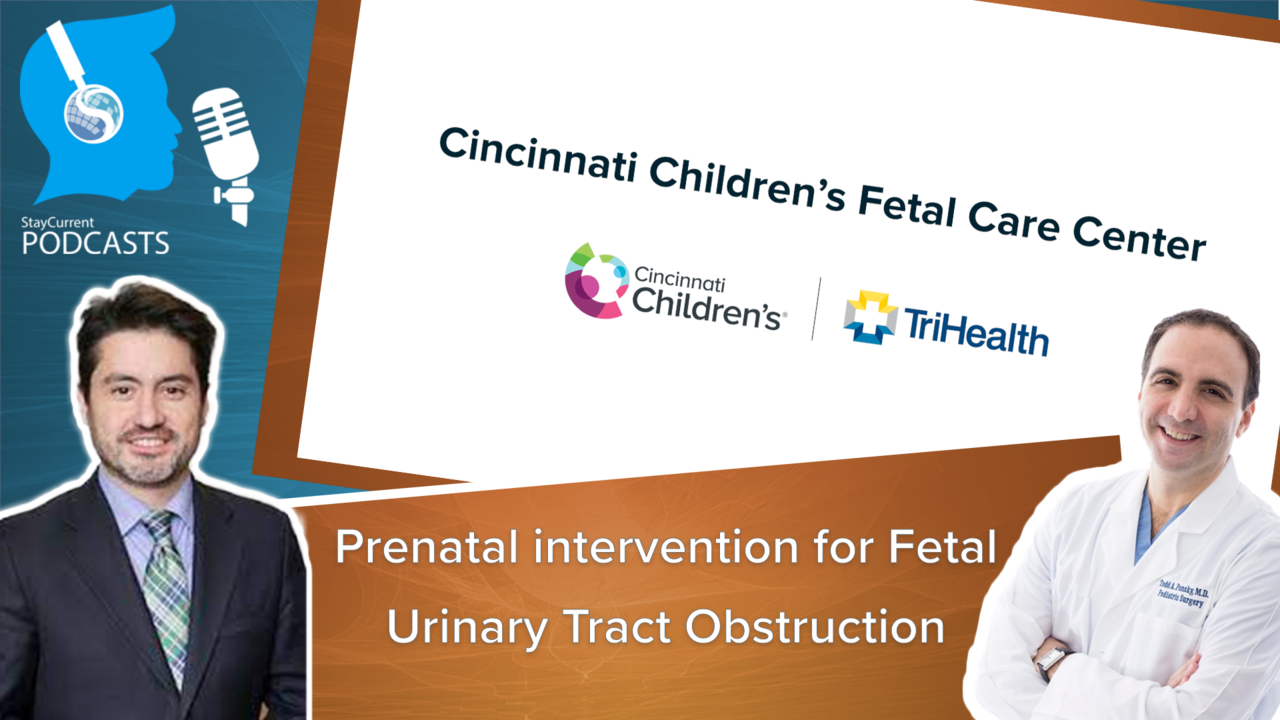
Urologic Fetal Intervention: Cincinnati Fetal Center

Video Published 2018-11-13 Updated 2026-08-01

Timestops (8)

Topic Overview

This discussion covers fetal urologic intervention for lower urinary tract obstruction, primarily posterior urethral valves. The panel debates three intervention approaches: percutaneous vesicoamniotic shunting, fetoscopic valve ablation, and open fetal vesicostomy. Key clinical tensions include patient selection criteria based on urine electrolytes, the role of bladder pressure in renal injury, intervention timing, and long-term renal outcomes. The discussants agree that while interventions improve pulmonary survival, renal function remains compromised in many cases, with progressive injury often occurring postnatally despite initially acceptable creatinine levels at hospital discharge.

Key Takeaways

  • Fetal intervention improves pulmonary survival (92%) but 33% still progress to ESRD, often postnatally despite acceptable discharge creatinine. (6:53)
  • Creatinine at age one (not hospital discharge) predicts renal replacement need: <1 mg/dL favorable, >1 mg/dL high probability of ESRD. (56:35)
  • Fetoscopic valve ablation may prevent renal impairment at 6 months better than shunting alone, with 75% normal function in Barcelona series. (12:15)
  • Open fetal vesicostomy carries 50% mortality from preterm delivery (~10 weeks early); reserved only for good-prognosis fetuses failing fetoscopy. (40:24)
  • Postnatal bladder dysfunction and febrile UTIs drive progressive renal injury in survivors, creating polyuria-high pressure-damage cycle. (52:13)

Inside this episode

Kai, the Library's AI content creator, listened to this episode and mapped who's speaking, the chapters, key claims, and cases. Every item links to the exact moment in the recording.

AI-enriched

Who's speaking

  • Speaker 1 — host
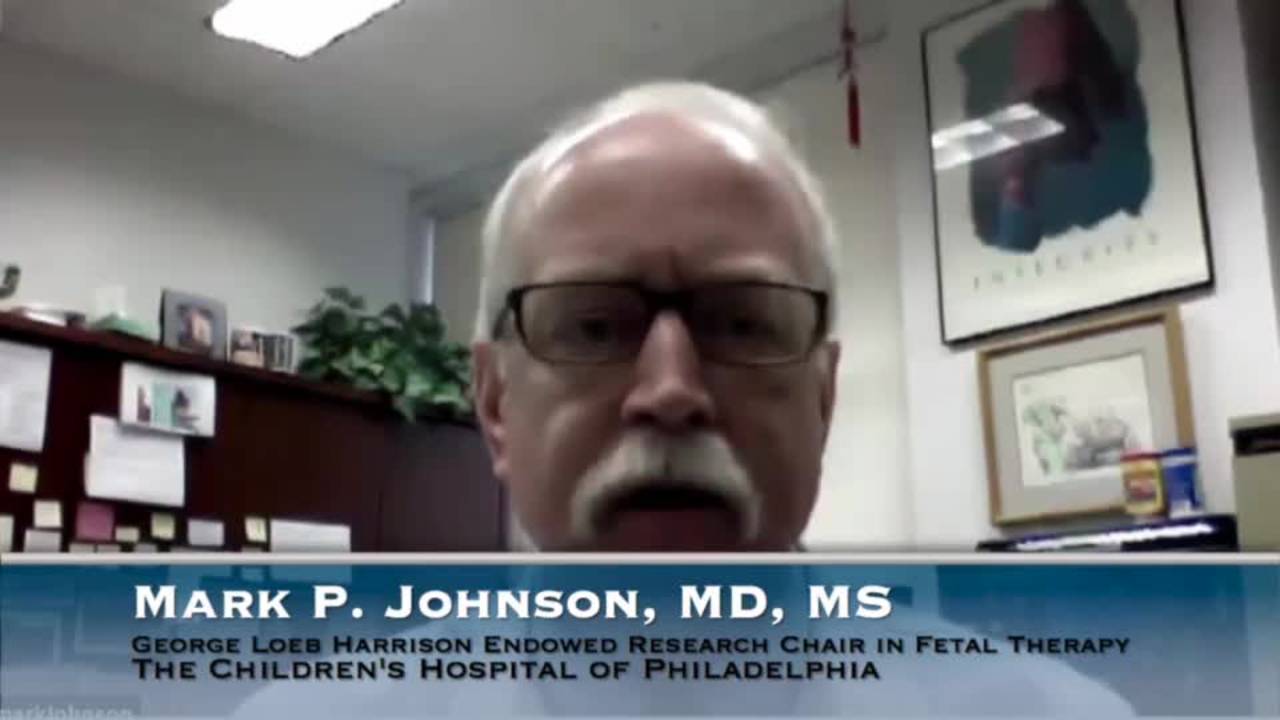
  • Mark — guest
  • Promote Reddy — guest
  • Fong — guest
  • Speaker 5 — guest

Chapters

  • 0:00Introduction and Pressure Physiology — Introduction of Dr. Promote Reddy discussing fetal cystoscopy. Discussion of bladder pressure thresholds and their impact on renal function, with debate about whether shunts adequately decompress the upper tracts.
  • 7:26Fetoscopic Cystoscopy Evidence — Review of published data on fetoscopic cystoscopy versus shunting, including French-Brazilian-Houston series and Barcelona-Leuven studies. Discussion of complications including urethral fistula formation and recurrent obstruction.
  • 14:33Cincinnati Case Presentation — Detailed presentation of fetoscopic urethral stent placement case at 22 weeks gestation, including technical approach, equipment specifications, and 9-month follow-up showing preserved renal function but residual valve requiring postnatal ablation.
  • 25:27Technical Discussion and Anesthesia — Panel discussion of technical aspects including number of bladder taps, anesthetic approach (epidural with IV sedation), fetal immobilization cocktail, and comparison of pulmonary outcomes between fetoscopic and shunt approaches.
  • 38:30Open Fetal Vesicostomy Debate — Heated debate about role of open fetal vesicostomy. Cincinnati reports 6 cases with 4 mortalities but 2 survivors including one with normal renal function at 5 years. Strong disagreement about patient selection and maternal risk justification.
  • 49:15Long-term Outcomes and Postnatal Management — Discussion of long-term follow-up data showing 92% survival but 33% progressing to end-stage renal disease. Emphasis on misleading discharge creatinine values, importance of 1-year creatinine as prognostic marker, and role of bladder dysfunction in progressive renal injury. Closing pearls emphasizing patient selection.

Key claims

  • 2:04Not all fetuses with urinary tract obstructions are candidates for interventions - fetus may be too healthy where risk outweighs benefit or too sick where intervention has minimal benefit — Promote Reddy
  • 4:10Resistance of flow across vesicoamniotic shunt is directly proportional to tube length and inversely proportional to radius, limiting pressure relief — Promote Reddy
  • 4:49In adult studies, bladder pressure exceeding 40 centimeters of water injures kidneys and pressure of 29 millimeters of mercury results in no net filtration — Promote Reddy
  • 5:43Intravillous pressure that occludes venous flow in placenta is about 23 millimeters of mercury, and resting tone in amniotic fluid is probably 5 to 8 millimeters of mercury — Speaker 1
  • 6:53Shunts have provided pulmonary survivors but haven't shifted the needle in terms of renal outcomes — Promote Reddy
  • 7:49When shunt is placed in bladder and bladder completely collapses, upper tracts (ureters, renal pelvis, collecting system) significantly decompress down to almost normal — Mark
  • 11:46Cystoscopy altered diagnosis in about 25% to 33% of fetuses but showed no significant improvement over shunting in terms of survival — Mark
  • 12:15French-Brazilian-Houston study of 111 fetuses showed only cystoscopy may prevent renal function impairment at 6 months of age, while both interventions improved 6-month survival — Mark
  • 13:11Barcelona-Leuven study of 20 fetal cystoscopy cases showed 80% had bladder size and amniotic fluid return to normal, no pulmonary hypoplasia in survivors, and three quarters had normal renal function — Mark
  • 13:39Cystoscopy created urethral fistula in 9 to 10% of cases and severe lower urinary tract obstruction recurred in about 6% — Mark
  • 15:35Earliest successful cystoscopy performed around 19 or 20 weeks gestation — Mark
  • 16:39Bladder cycling enabled by fetoscopic procedures is important for bladder health but doesn't directly impact upper tract - main difference is pressure relief through normal urethral lumen versus shunt — Promote Reddy
  • 17:59Would rather deal with surgically repairable fistula than renal dysplasia when weighing risk-benefit ratio — Promote Reddy
  • 18:30Posterior urethral valves are usually flimsy enough to be physically ablated by pushing catheter and guide wire through, not requiring laser — Promote Reddy
  • 18:46Hydrodistention alone unlikely to open valves because if it could, the pressure developing in urinary tract should blow them open naturally — Promote Reddy
  • 19:15Cincinnati case: 22-week fetus with severe oligohydramnios and keyhole sign underwent fetoscopic urethral stent placement, delivered at 37 weeks with normal fluid and birth weight over 3 kg, at 9 months has slowly climbing creatinine — Fong
  • 22:42If first and second bladder taps show good values at or below threshold with downward trend, third tap not necessary due to complication risk including bladder rupture — Fong
  • 24:13Fetoscopic procedures can be done with epidural supplemented by IV sedation and local anesthetic, unlike open fetal procedures requiring deep anesthesia for complete uterine relaxation — Fong
  • 24:57Fetoscopic approaches use intramuscular cocktail of vecuronium, atropine, and fentanyl for fetal immobilization and pain mitigation — Speaker 1
  • 27:23Cincinnati case showed residual posterior urethral valve band on postnatal cystoscopy requiring subsequent removal despite prenatal intervention — Fong
  • 28:11When guide wire cannot pass through valve (urethral atresia cases), creating perineal fistula is debatable approach - some centers leave vesicoamniotic shunt as fallback — Fong
  • 30:01Equipment used: 3.3 French outer sheath fetoscope with 1.2 millimeter scope with side port for guide wire, sometimes switching to 4.9 French flexible ureteroscope through 10 French sheath for better maneuverability — Fong
  • 34:19Pluto trial took bladder taps out of protocol because data suggested most powerful effect of shunting is in poor prognosis babies, and even with good prognosis about 50% end up with bad renal function postnatally — Speaker 1
  • 34:57Third vesicocentesis provides fresher urine with better predictive value for degree of underlying renal injury, with strong histological correlation in prior studies — Mark
  • 36:47Long-term follow-up study showed one-third of shunted patients who developed end-stage renal disease had pretty good creatinine at hospital discharge, suggesting major renal morbidity comes postnatally — Mark
  • 38:56Centers sub-select patients by severity: better prognosis offered shunt, worse prognosis offered fetoscopic procedure, worst prognosis offered open intervention - making outcome comparisons unfair — Promote Reddy
  • 40:24Dr. Harrison reported 8 open fetal vesicostomies with 100% technical success but 50% mortality rate, leading him to stop and enter era of shunts — Promote Reddy
  • 41:33Cincinnati open vesicostomy experience: 6 families chose procedure, 4 fetal mortalities all from preterm delivery, 2 survivors - one 5 years old with normal voiding and normal right kidney function, one received kidney transplant — Promote Reddy
  • 41:06Open fetal intervention predisposes mother to very shortened gestational age (about 10 more weeks) and operated uterus is very unstable with preterm labor issues — Promote Reddy
  • 43:18Absolutely no role for open surgery for fetus, particularly worst prognosis group - would not do laparotomy for fetoscopic procedure or open fetal surgical procedure — Mark
  • 46:09Open intervention should be considered in patients with good prenatal prognostic profile who failed fetoscopic intervention, not worst population, due to maternal risk not outweighing benefit — Fong
  • 47:57Need better biomarker of fetal renal function to make better decisions about percutaneous versus fetoscopic versus open approaches — Promote Reddy
  • 50:14Long-term study of shunted patients over 5 years showed 92% survival rate, 8% mortality from pulmonary hypoplasia, 45% normal renal function, 22% mild renal insufficiency, 33% developed end-stage renal disease requiring transplantation — Mark
  • 50:48About 67% of long-term survivors able to spontaneously void, 33% used intermittent catheterization or catheterization alone — Mark
  • 51:24Time to transplant varied by diagnosis: posterior urethral valves 10-12 years, prune belly variants or urethral hypoplasia 4-4.5 years, urethral atresia earlier — Mark
  • 52:13Kids who progressed to end-stage renal disease had repeated infections, bad reflux, and dysfunctional valve bladder - febrile morbidity and infections over time caused progressive injury — Mark
  • 53:45Urologists finding some kids with good bladder function in first 2-3 years start to lose function and behave like valve bladders - trying management strategies including overnight catheterization with some success — Mark
  • 56:35Creatinine at hospital discharge is very misleading - as children triple birth weight in first year, creatinine at age one is better prognostic indicator — Promote Reddy
  • 57:14If creatinine at age one is less than one, most likely will not need renal replacement therapy; if above one at age one, high probability will need renal replacement therapy — Promote Reddy
  • 57:34Bladder-initiated upper tract damage creates vicious cycle: minimal kidney injury causes concentrating defect leading to polyuria, which causes high bladder storage pressures, which damages kidneys further — Promote Reddy

Cases discussed

  • 19:1522-week fetus with severe oligohydramnios and keyhole sign, first pregnancy, suspected posterior urethral valves treated with fetoscopic urethral stent placement
  • 41:33Cincinnati open fetal vesicostomy series: 6 cases with 4 mortalities and 2 long-term survivors

Points of disagreement

  • 7:38Role of bladder pressure in renal injury with vesicoamniotic shunts
    • Promote Reddy: Shunts don't adequately relieve pressure due to tube resistance - pressure remains elevated causing ongoing renal injury despite upper tract decompression
    • Mark: When shunt placed, bladder completely collapses and upper tracts significantly decompress to almost normal, questioning whether pressure inside kidney is high enough to impair filtration
  • 43:12Role of open fetal vesicostomy
    • Promote Reddy: Open vesicostomy has role for worst prognosis patients (anhydramnios, poor markers) who face 100% mortality without intervention - one Cincinnati case achieved phenomenal outcome with normal renal function at 5 years
    • Mark: Absolutely no role for open surgery - picking worst group and offering procedure with most maternal risk, subsequent pregnancy risk, and premature labor risk is unjustified. Cincinnati's own results (4/6 mortalities) support this position
    • Fong: Open intervention should be reserved for good prognosis patients who failed fetoscopic intervention, not worst population - maternal risks don't outweigh benefit when path leads to transplant anyway
  • 30:48Value of serial vesicocentesis for patient selection
    • Speaker 1: Serial cystocentesis has limited value - complications like bladder rupture make intervention impossible, and even good prognosis cases have 50% end-stage renal failure rate. If family wants attempt at survival, no reason to continue tapping
    • Mark: Third vesicocentesis provides fresher urine with strong histological correlation to renal injury degree. First bladder drainage is just old urine, second not predictive, third gives better predictive value. Many published series went in blind and had bad outcomes - proper selection would improve results

Open questions

  • What are the safe bladder pressure thresholds for fetal kidneys to continue developing normally?
  • Can fetoscopic valve ablation improve long-term bladder function outcomes compared to shunting by allowing physiologic bladder cycling?
  • What is the optimal timing for fetal intervention - does earlier intervention preserve more renal function?
  • Should urine electrolyte cutoff thresholds be different after 24 weeks gestation?
  • What biomarkers can better predict fetal renal function and long-term outcomes?
  • How can we prevent the progressive postnatal renal injury that occurs despite initially acceptable creatinine levels?
  • What bladder management strategies are most effective in breaking the polyuria-high pressure-kidney damage cycle?
  • Is there a role for open fetal vesicostomy in carefully selected good-prognosis patients who fail fetoscopic intervention?
This episode was analyzed and enriched by Kai, the Library's AI content creator. Every item links to the moment it comes from — click a timestamp to listen in context.
Written for:

Fetoscopic Urethral Stent for Severe Fetal Bladder Obstruction: A Cincinnati Case

The patient case from this episode, retold from presentation to outcome with the decisions made along the way. Written by Kai from the episode transcript and reviewed before publishing.

For the care team · Case narrative · AI-written, human-reviewed

Presentation

A 22-week fetus presented with severe oligohydramnios and the characteristic keyhole sign on ultrasound, suggesting posterior urethral valves 19:15. This was the mother's first pregnancy. By the time the family reached the Cincinnati Fetal Center, amniotic fluid was critically low — the clinical picture that predicts pulmonary hypoplasia and neonatal death without intervention.

The Decision Point

The team faced a choice between three approaches: vesicoamniotic shunting, fetoscopic valve ablation, or no intervention. Shunts restore amniotic fluid and prevent lethal pulmonary hypoplasia, but they function as long, narrow tubes with high resistance to flow 4:10. Adult data show that bladder pressures above 40 centimeters of water injure kidneys, and pressures of 29 millimeters of mercury eliminate net glomerular filtration 4:49. A shunt draining into amniotic fluid — where resting pressure is 5 to 8 millimeters of mercury 5:43 — cannot fully decompress the upper tracts. One of the discussants explained that the shunt doesn't really affect the pressure, and all of the upper tract changes are related to pressure-related changes causing apoptosis of the tubular cells 4:10.

Fetoscopic cystoscopy offers a different mechanism: it creates flow through the natural urethral lumen rather than through a narrow shunt. When a shunt collapses the bladder completely, the upper tracts — ureters, renal pelvis, collecting system — decompress nearly to normal 7:49. The same should occur if the valve itself is eliminated. Early data from European centers showed promise: in one series of 20 cases, 80% normalized bladder size and amniotic fluid, and three-quarters of survivors had normal renal function at follow-up 13:11. The complication profile included urethral fistula in 9 to 10% and recurrent severe obstruction in about 6% 13:39. One of the discussants stated a preference for dealing with a surgically repairable fistula rather than renal dysplasia 17:59.

The Cincinnati team chose fetoscopic intervention.

What They Did

Under epidural anesthesia supplemented with IV sedation and local anesthetic, the team accessed the fetal bladder percutaneously 24:13. The fetus received intramuscular vecuronium, atropine, and fentanyl for immobilization and analgesia 24:57. Using a 3.3 French fetoscope with a 1.2-millimeter scope and side port for a guide wire, they visualized the urethra 30:01. The posterior urethral valves were flimsy enough to be physically disrupted by advancing the catheter and guide wire through them — no laser was required 18:30. Over the wire, they placed a 3.5 French, 8-centimeter double-J urethral stent, positioning one J-curl in the bladder and the other in the amniotic cavity 19:15.

Outcome

Amniotic fluid normalized. The pregnancy continued to 37 weeks. Birth weight exceeded 3 kilograms. The infant urinated at birth 19:15.

At 9 months of age, the child's creatinine is slowly climbing but remains in a range consistent with relatively normal life expectancy in the first few years 19:15. Postnatal cystoscopy revealed a residual posterior urethral valve band, which required subsequent removal 27:23. The prenatal intervention had not completely ablated the valve, but it had decompressed the system enough to permit lung development and preserve some renal function.

What the Case Changes

This case illustrates the central tension in fetal urologic intervention: shunts reliably prevent pulmonary death but have not shifted renal outcomes 6:53, while fetoscopic techniques offer better pressure relief at the cost of procedural complexity and a 10% fistula risk. The Cincinnati team accepted that trade. The residual valve band they found postnatally suggests that even incomplete prenatal decompression may be sufficient if the goal is pulmonary survival and deferral of end-stage renal disease beyond infancy.

The creatinine at hospital discharge was reassuring, but the discussants were unanimous that this number is misleading 56:35. As the child triples birth weight in the first year, creatinine at age one becomes the better prognostic marker: below 1.0 predicts freedom from renal replacement therapy; above 1.0 predicts the opposite 57:14. The bladder itself — even minimally injured kidneys produce polyuria, which generates high storage pressures, which damage kidneys further — drives a vicious cycle that may not declare itself for years 57:34. Long-term data from shunted patients show that one-third of those with acceptable creatinine at discharge eventually progressed to end-stage renal disease, often from recurrent infections and valve bladder dysfunction 36:47 52:13.

The lesson is not that fetoscopic intervention solves the problem. The lesson is that it trades one set of risks for another, and the trade may be worth making if the family understands that pulmonary survival does not guarantee renal survival, and that renal survival at birth does not guarantee renal survival at age five.

Takeaways from this story

  • Fetoscopic valve ablation decompresses upper tracts more effectively than shunts by using the natural urethral lumen rather than a narrow tube.
  • Creatinine at hospital discharge is misleading; creatinine at age one better predicts need for renal replacement therapy (threshold ~1.0).
  • Urethral fistula occurs in 9-10% of fetoscopic cases but is surgically repairable, unlike irreversible renal dysplasia.
  • Even with good initial renal function, progressive injury from bladder dysfunction and infections drives one-third to end-stage disease.

Keywords

Hashtags

Transcript

Comments

Loading comments…