
Urologic intervention: Cincinnati Fetal Center
With Dr. Dr. Reddy & Dr. Dr. Johnson · hosted by Dr. Em Gootee & Dr. Todd Ponsky · StayCurrentMD
Educational content from recorded physician discussions — not medical advice. Talk to your (or your child's) care team about your situation.
Video
Cloaca - Urologic Concerns
25 min · Published Nov 2018
Video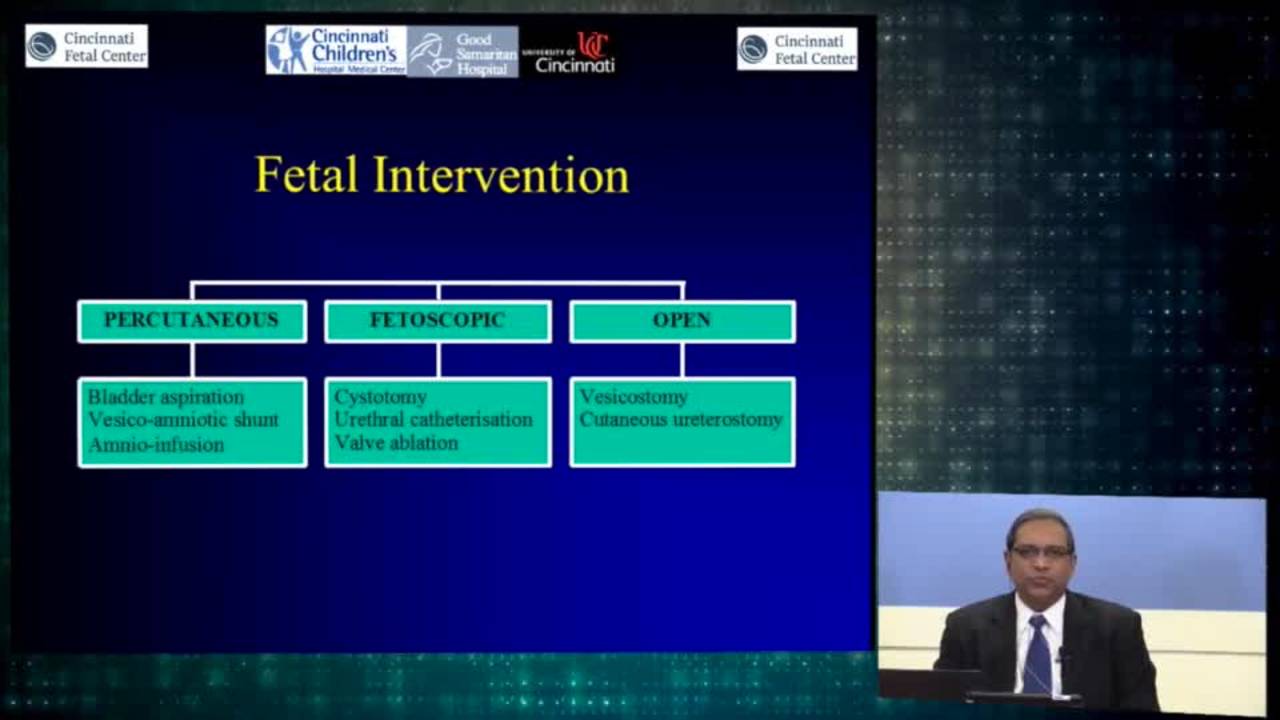
Urologic Fetal Intervention: Cincinnati Fetal Center
61 min · Published Nov 2018
Video
Fetal urological aspect: Fetal Genitourinary Disease 2015
59 min · Published Jul 2017
Video
Renal transplantation: Fetal Genitourinary Disease 2015
13 min · Published Jul 2017
Video
Overview of Prenatal Diagnosis: Cincinnati Fetal Center
40 min · Published Nov 2018
Video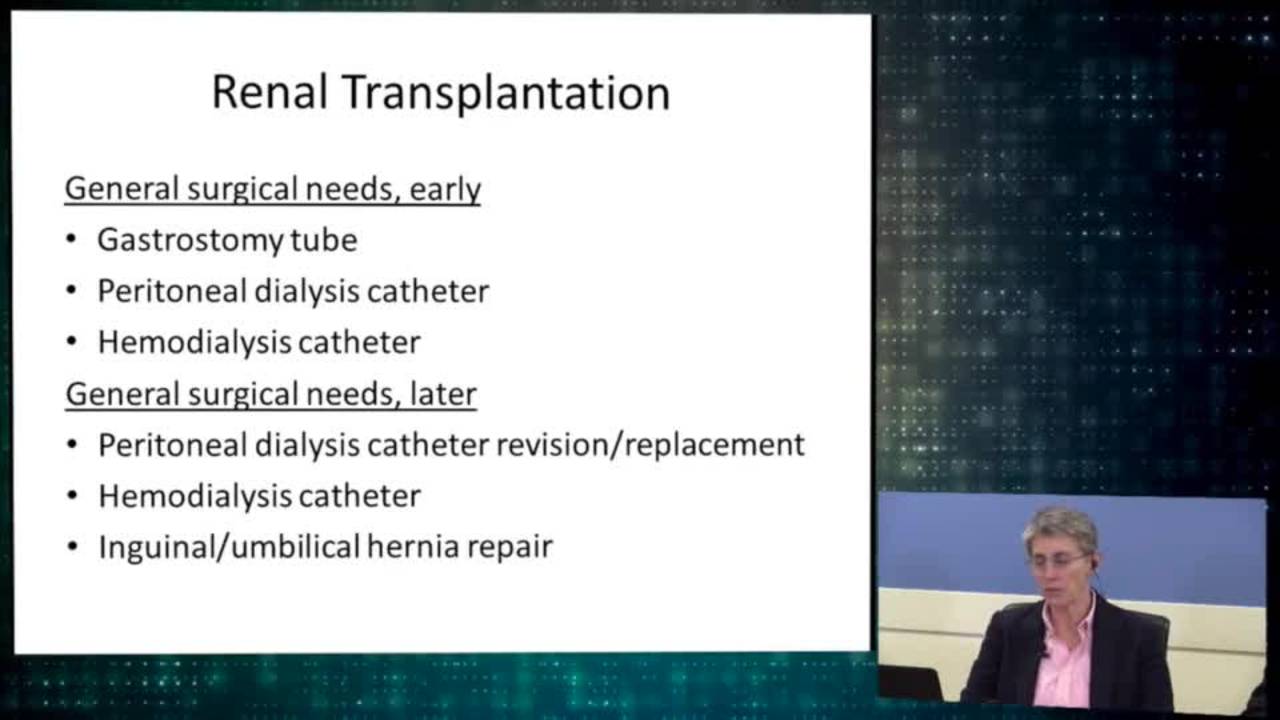
Renal transplantation: Cincinnati Fetal Center
13 min · Published Nov 2018
Only a few other public items share this expert — go deeper there →
Video
Pediatric Surgical Oncology Research Collaborative (PSORC): Studying Rare Pediatric Tumors
56 s · Published May 2026
Video
Update Course Rewind 2025: Hirschsprung + ARM: Rare but Real
1 min · Published May 2026
Video
Update Course Rewind 2025: Hirschsprung + ARM: Rare but Real
1 min · Published May 2026
Video
Pooling Patients to Study Rare Pediatric Tumors: An Introduction to PSORC
56 s · Published May 2026
Video
The fetal frontier: A review of current and emerging fetal therapies for genetic diseases
44 s · Published May 2026
Video
Indocyanine green assists with sentinel lymph node mapping in pediatric and adolescent patients
1 min · Published May 2026
What the experts said
Posterior urethral valve management requires a multidisciplinary team both prenatally and postnatally to ensure best outcomes.
Cincinnati Children's holds monthly conferences with transplant and nephrology colleagues to review PUV patient outcomes and optimize care toward or away from renal replacement therapy.
Initial newborn management of PUV includes pulmonary stabilization, correction of electrolyte imbalances, and bladder decompression.
A feeding tube is preferred over a balloon catheter for bladder decompression in PUV because hypertrophied bladders contract around balloons and obstruct the ureterovesical junctions.
Diagnostic workup for PUV includes bedside renal ultrasound, VCUG when stable, full neonatal survey, and spinal ultrasound if a sacral dimple is present.
Some children with normal creatinine at discharge progress to end-stage renal disease because growing children outstrip the reserve capacity of injured kidneys.
Preventable harm to the upper tracts in PUV includes barotrauma, pressure-related injury, urinary stasis, and urinary tract infections.
Polyuria from renal injury overdistends the bladder and makes it dysfunctional; overnight catheter drainage is used in these cases but manifests later in life, not as a neonate.
Social continence is defined as 3-4 hours of dry interval during the day with bladder emptying and 8-9 hours at night without needing to empty.
Renal ultrasound assesses echo texture/echogenicity, degree of hydronephrosis (SFU grading 0-4), and presence of cystic dysplastic changes.
SFU grade 0 is no hydronephrosis; grade 1 is <10mm renal pelvis dilation without caliectasis; grade 2 is >10mm pelvis dilation without caliectasis and normal parenchyma; grade 3 is any pelvic caliectasis with normal parenchyma; grade 4 is parenchymal thinning or cystic dysplastic changes.
Renal echogenicity is compared to liver on the right and spleen on the left; echogenicity equal to liver or spleen is a poor prognostic sign.
Neonatal creatinine for the first 3 days reflects maternal creatinine; a creatinine of 2 at birth indicates significant renal injury because maternal creatinine is not 2.
Not all babies suspected of PUV in utero have PUV postnatally; differential includes Eagle-Barrett syndrome, urethral atresia, and high-grade vesicoureteral reflux.
Reduction cystoplasty was historically performed for large atonic PUV bladders, but appropriate bladder management with intermittent catheterization allows excess volume to decrease and bladder cycling to improve, making surgery less necessary.
Endoscopic valve incision is performed when the baby is stable; if too premature or anatomy is abnormal, a vesicostomy is created instead.
Highly echogenic or irregularly echogenic kidneys on prenatal ultrasound are more likely to function poorly, but this correlation may reflect recall bias given the high baseline incidence of poor function in PUV.
Early studies attempted to correlate prenatal echogenicity with renal function, but severe pelvic caliectasis at 20-22 weeks compresses parenchyma and may artificially increase echogenicity; decompression can reduce echogenicity significantly.
Bladder management is often not given adequate importance, but the bladder is the enemy in PUV care and causes silent progression to end-stage renal disease if not managed appropriately.
Ultrasound echogenicity is a subjective assessment; studies by Katie Morris and the Birmingham Group show that gestational age, echogenicity, and cystic dysplasia do not predict postnatal function as well as hoped.
High bladder storage pressures in hypertrophied PUV bladders cause upper-tract damage and ongoing bladder injury.
High-frequency ultrasound transducers now pick up such fine detail that distinguishing true cortical cysts from normal parenchymal architecture or artifact is difficult.
PUV bladders can evolve to the opposite extreme: large, floppy, atonic bladders (end-stage or teenage valve bladder) that do not empty well.
Postnatal ultrasound imaging has improved to the point that distinguishing clinically significant findings (e.g., small stones) from artifacts is challenging.
Two mechanisms cause bladder decompensation in PUV: high storage pressures and polyuria from upper-tract damage leading to overfilling and poor myogenic contraction.
In prenatal consultations, 90+% of imaging that matters is MRI; ultrasounds are barely reviewed.
Management of high-pressure PUV bladders includes vesicostomy, Ditropan (anticholinergic), alpha blockers for high bladder neck, and low threshold for intermittent catheterization.
MRI is rarely used for isolated bladder outlet obstruction because it does not provide better information than high-quality ultrasound; it is reserved for suspected cloacal malformations where MRI plus ultrasound adds value.
MRI is not used at all for PUV at some centers because it does not contribute significantly beyond ultrasound findings.
Children with high-grade reflux are started on intermittent catheterization plus anticholinergics to lower bladder pressures and prevent ongoing renal injury.
MRI is shown to families because the large image of the baby helps parents understand the diagnosis better, even if it does not change clinical decision-making.
MRI-derived lung volumes can help guide families in deciding whether to pursue aggressive fetal intervention, though this is not part of central consultation.
Autopsy specimens of PUV patients 20 years ago showed very small, abnormally developed prostate glands.
Some fathers with PUV have fathered children with PUV, but at least one required assisted reproductive techniques to achieve pregnancy.
For atonic bladders with poor vesicostomy drainage causing complications, parents can be taught to dilate the vesicostomy with a 16-18 French catheter twice daily to maintain patency and prevent stomal stenosis.
In cases of severe bladder atony with stasis and recurrent infections, parents can catheterize the vesicostomy overnight to decompress the system.
Reduction cystoplasty should remove only enough bladder tissue to avoid needing augmentation later if bladder function improves.
One female patient with cloacal malformation and a 2-liter bladder capacity underwent reduction cystoplasty after part of the bladder necrosed; she has done well postoperatively.