
Update Course Rewind: Magnet Therapy for Esophageal Atresia
With Dr. Bethany Slater & Dr. Matt Harmon & Dr. Steven Rothenberg · hosted by Dr. Em Gootee & Dr. Ellen Ancisco & Dr. Todd Ponsky · StayCurrentMD
Part of
Esophageal Atresia 43 items
Educational content from recorded physician discussions — not medical advice. Talk to your (or your child's) care team about your situation.
Video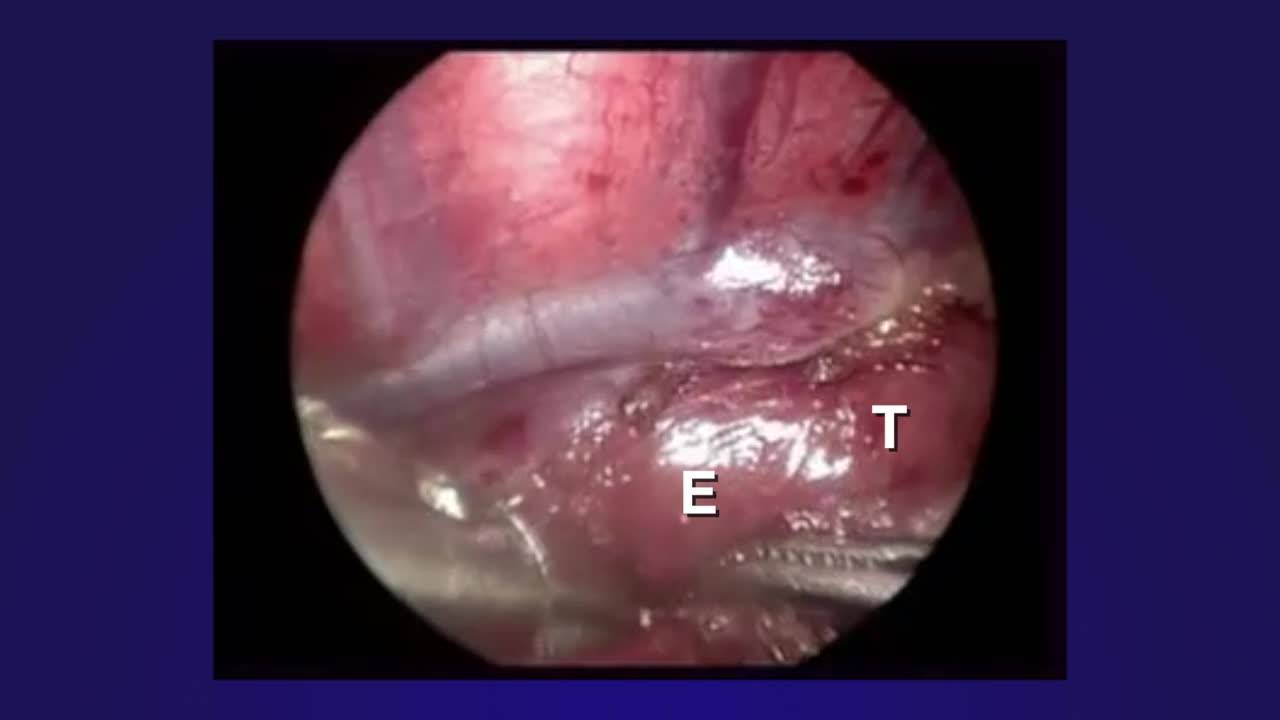
Thoracoscopic Repair of Esophageal Atresia with Distal Tracheo-esophageal...
5 min · Published Feb 2020
Video
Introduction and Panel Discussion: EA & TEF
Dr. Todd Ponsky · 36 min · Published Dec 2012
Video
Thoracoscopic Repair of Tracheo-esophageal Fistula Tricks: Pediatric Surgery...
19 min · Published Jul 2017
Video
Hot New Topics from The Journal Of Pediatric Surgery: Update Course 2017
Dr. Todd Ponsky · 27 min · Published Aug 2017
Video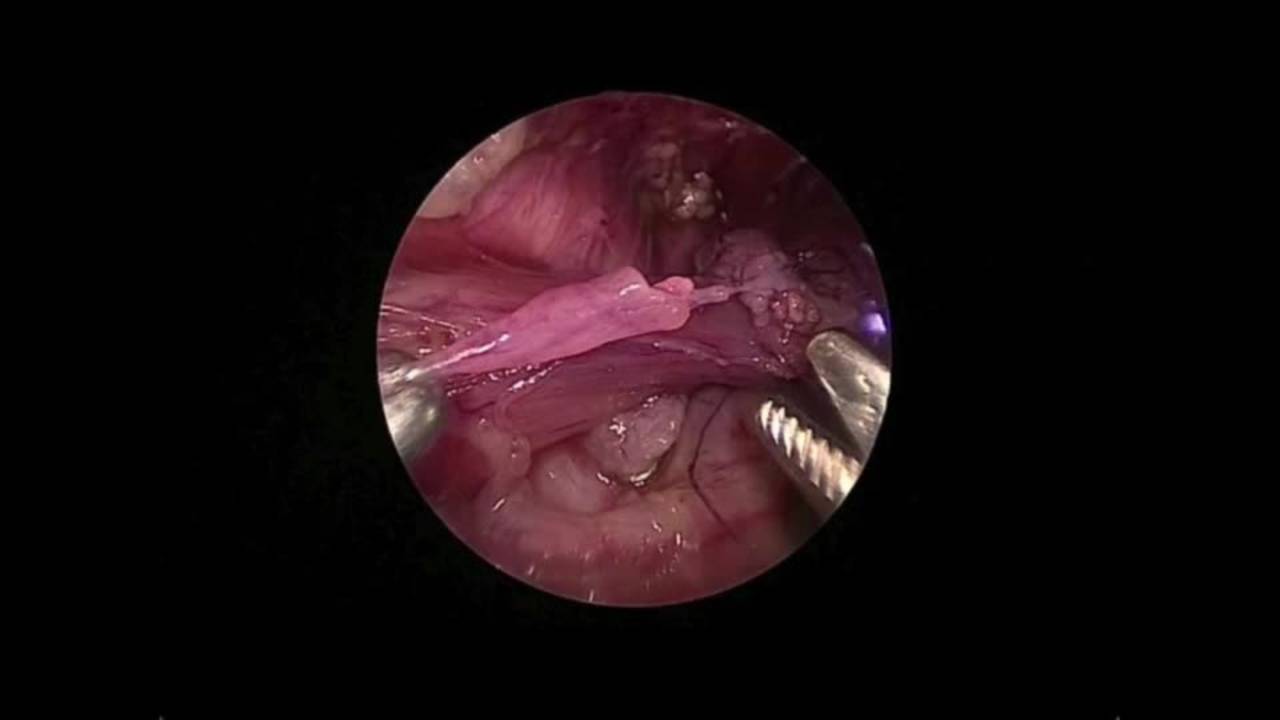
EA/TEF Discussion & Technique: Difficult Cases
19 min · Published Dec 2013
Video
Comparison of robotic versus thoracoscopic repair for congenital esophageal atresia
56 s · Published Feb 2024
Video
Pediatric Surgical Oncology Research Collaborative (PSORC): Studying Rare Pediatric Tumors
56 s · Published May 2026
Video
Update Course Rewind 2025: Hirschsprung + ARM: Rare but Real
1 min · Published May 2026
Video
Update Course Rewind 2025: Hirschsprung + ARM: Rare but Real
1 min · Published May 2026
Video
Pooling Patients to Study Rare Pediatric Tumors: An Introduction to PSORC
56 s · Published May 2026
Video
The fetal frontier: A review of current and emerging fetal therapies for genetic diseases
44 s · Published May 2026
Video
Indocyanine green assists with sentinel lymph node mapping in pediatric and adolescent patients
1 min · Published May 2026
What the experts said
Dr. Ponsky would try to go in and do surgical repair for a 3cm gap, and if unable to get the two ends together after dissection, would then do an internal lengthening procedure like the Vanderzee procedure.
You don't lose anything by trying to go in and do the dissection to see if you can get the esophageal ends together.
Dr. Harmon considers 3 centimeters overcomeable and would try thoracoscopic repair to get the two ends together.
Magnets have been used for many years for esophageal atresia as a non-surgical alternative for esophageal anastomosis, promoting lengthening and approximation of the proximal and distal ends.
The Flourish device is an FDA-approved commercially available catheter-based magnet system for esophageal atresia.
Magnets placed in the proximal and distal esophagus attract one another and cause the esophagus to lengthen, then compression anastomosis occurs through ischemia in the tissue at the two ends once magnets are nearly together.
The Flourish device has esophageal and gastric catheters with inner bullet-shaped magnets on each end, tapering down to a 10 French luminal surface.
The proximal catheter has a suction port for suctioning saliva and the gastric port has a portion for feeds.
For Flourish device eligibility, gap length must be less than 4 centimeters because at greater lengths the magnets will not attract one another.
There should be no fistula for Flourish device use, or if there is a fistula it must be repaired first.
Patients require a gastrostomy that can accommodate an 18 French catheter, which is the diameter of the gastric portion of the Flourish catheter.
Magnet therapy is not to replace esophageal atresia repair but is another tool in the armamentarium, particularly for patients with cardiac disease or previous operations that make them higher risk for reoperative surgery or anesthesia.
One contraindication for using the Flourish device is the presence of a fistula.
Dr. Rothenberg ligates all upper pouch fistulas and H-type fistulas thoracoscopically because the view is excellent and provides good control.
By classification of the International Esophageal Atresia Group, a gap must be at least 4 centimeters to be considered a long gap.
The indications for the magnet require a gap of less than 4 centimeters, and there is an incredibly high stricture rate with multiple strictures.
A patient with less than a 4 centimeter gap should be amenable to a primary anastomosis, which Dr. Rothenberg would do thoracoscopically.
Magnets have been used sometimes for a staged repair rather than using internal traction sutures.
There is a possibility of trying to get the two ends together closer surgically and then using a magnet just for the anastomosis portion.