


From
Live Event Content
Update Course Rewind 2021 - Updates in Pectus
With Dr. Rob Rick & Dr. Shawn St. Peter & Dr. Victor Garcia & Dr. Justin Wagner · hosted by Dr. Stephen Lee
Chapter 1 of 12 · Fundamentals
Pain control poll
Introduction and Initial Polling on Pain Control
Expert statements on this page
No expert statements were drawn from this page.
Host summaries · secondary, not cited in answers
Educational content from recorded physician discussions — not medical advice. Talk to your (or your child's) care team about your situation.
Podcast
Update Course Rewind: Pectus Excavatum 2021
11 min · Published Aug 2022
Video
Update Course Rewind: 2021 Top Ten Key Takeaways
Dr. Todd Ponsky · 16 min · Published Oct 2021
Video
Interesting Cases & Surgical Approaches: Pectus Innovations
44 min · Published Oct 2015
Podcast
Journal of Pediatric Surgery Article Review: July 2023, PAPS Issue
10 min · Published Jan 2024
Video
Cryoablation in 350 Nuss procedures
56 s · Published Oct 2023
Video
Pectus Deformities: Update Course 2015
34 min · Published Nov 2018
Only a few other public items share this expert — go deeper there →
Video
Clinical & Research Update: Renal Tumors with Drs. Ethan Smith, Lindsay Haacker, Michael Daugherty, and Meera Kotagal
71 min · Published Sep 2026
Video
Clinical & Research Update: Neuroblastoma with Drs. Katherine Somers, Cara Morin, Juan Gurria, and Meera Kotagal
67 min · Published Sep 2026
Video
Clinical & Research Update: Sarcoma w/ Drs. Roshni Dasgupta, Joseph Pressey, Arthur Meyer, Luke Pater
66 min · Published Sep 2026
Video
2026 Laparoscopic Pediatric Hernia Repair
123 min · Published Jun 2026
Video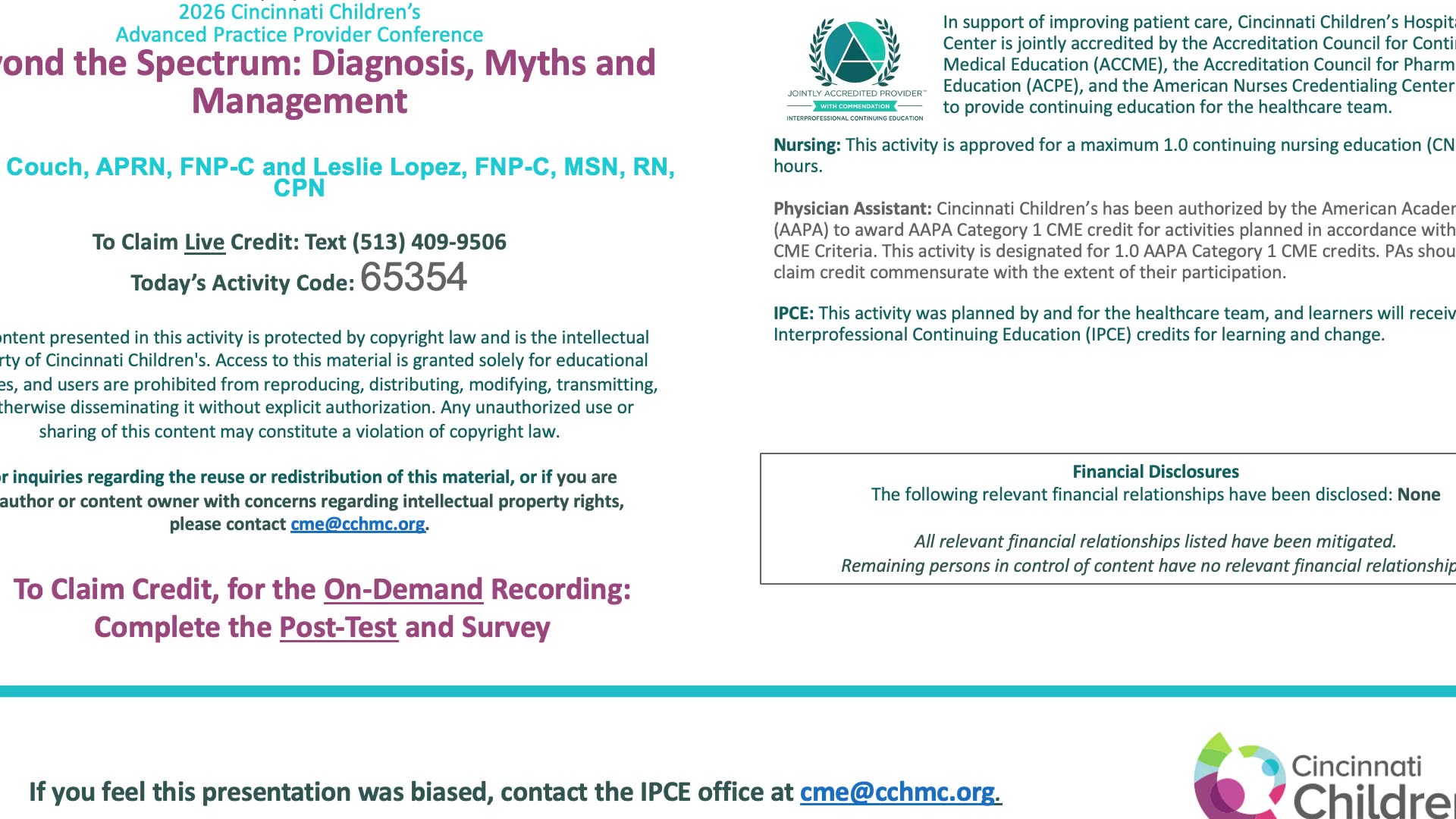
Beyond the Spectrum: Diagnosis, Myths & Management - Caitlin Couch & Leslie Lopez - APP Conference 2026
50 min · Published May 2026
Video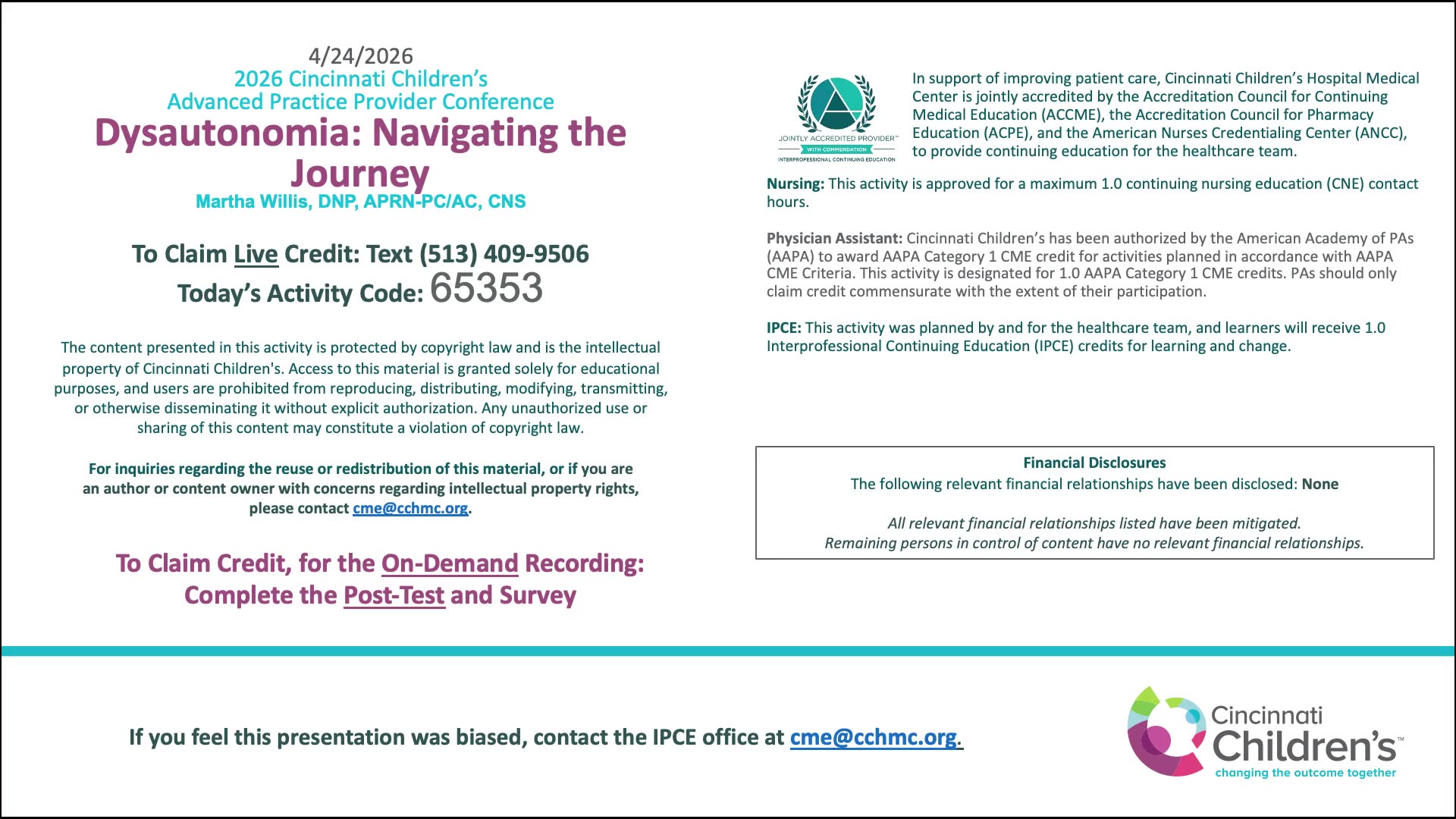
Dysautonomia: Navigating the Journey - Martha Willis - APP Conference 2026
55 min · Published May 2026
What the experts said
In a randomized trial of 110 patients comparing epidural to PCA, maximum pain scores did not drop off in the epidural group due to day 2-3 transition pain, whereas PCA group pain decreased over 4.5 days.
Cryotherapy technique involves freezing ribs 4 through 7 for two minutes per rib; should not go to rib 8 or below due to risk of abdominal wall paralysis.
In prospective observational cryoanalgesia study, six of nine patients in initial retrospective cohort went home on post-op day one.
With cryoanalgesia, length of stay that couldn't get below four days became one day, with tight range except for occasional failures that look like traditional four-day stays.
Median morphine equivalents with cryoanalgesia versus traditional approaches are not on the same planet in terms of magnitude of difference.
Medical devices and implants are not required to undergo clinical trials before market introduction, unlike drugs.
Cryotherapy devices received FDA approval via 510(k) predicate pathway based on similarity to devices from 1976, not based on clinical trials.
Many patients have normal anterior chest sensation even in early post-op phase (two to three weeks) after cryoanalgesia, suggesting nerve stunning rather than complete death.
Adult experience using cryotherapy with thoracotomies goes back 20 years without high enough incidence of complications to warrant backing away from the treatment advantage.
Gabapentin is most commonly given once pre-op then 200-300mg three times daily for up to one week post-op; pharmacokinetics suggest starting several days before operation for peak effect.
With erector spinae catheters, hospital stay is two days with reduced opioid requirements both in-hospital and post-discharge.
Activity restrictions beyond two weeks post-Nuss can be liberalized to anything the patient can handle, including bull riding, boxing, football, and hockey.
When bars flip, it is always technical - related to bar sitting in funky inner space, bad spot, not wrapped tight enough, or not secured well - not related to patient activity or pain modality.
With cryoanalgesia, 70% of patients go home on post-op day one without narcotics.
In updated series of 554 patients, bar rotation rate was 0.7%, with most occurring within first few years of surgeon experience.
When passing bar from left chest to right chest, the angle avoids pointing directly at the ventricle compared to right-to-left passage.
Sub-xiphoid dissection technique allows palpation-guided bar passage and has resulted in 0% incidence of pericarditis.
Sternal elevator is used in about 10% of cases, primarily in older males with deep, stiff pectus where flexibility is limited.
In 15-patient magnetic repair trial, magnets were safe to place in children's chests and well-tolerated, but results were not as effective as hoped; appears most effective in young children with flexible chests.
In Texas Children's study, 50% of patients still take opioids two weeks after Nuss procedure.
In past five years, hospital length of stay for Nuss procedures has been cut in half through protocol improvements.
In Nebraska protocol without epidurals, catheters, or cryo, length of stay is under two days and patients are off opioids by one week.
In Texas Children's study, urinary retention was 8% in cryo group versus 34% in non-cryo group.
Bar flippage occurs almost eight times more commonly in cryo group, and allodynia/neuropathy occurs about six times more frequently in cryo group.
In randomized epidural trial, epidural could either not be placed or was removed after one day in approximately 25% of patients.
Pilegaard technique uses shorter bars placed asymmetrically with right side covering two rib spaces and left side with single stabilizer, resulting in well below 1% bar flip rate.
Computational modeling shows flatter bars focus stress on sternum while bigger curved bars have parasitic forces causing unwanted horizontal and torque action at bar ends.