
Pectus Deformities: Update Course 2015
With Dr. Doctor Holcomb · StayCurrentMD
Educational content from recorded physician discussions — not medical advice. Talk to your (or your child's) care team about your situation.
Video
Pectus Deformities: Update Course 2015
34 min · Published Nov 2015
Podcast
Chest Wall Deformities with Dr. Robert Kelly
46 min · Published Jan 2017
Podcast
Chest Wall Deformities with Dr. Robert Kelly
46 min · Published Jan 2017
Video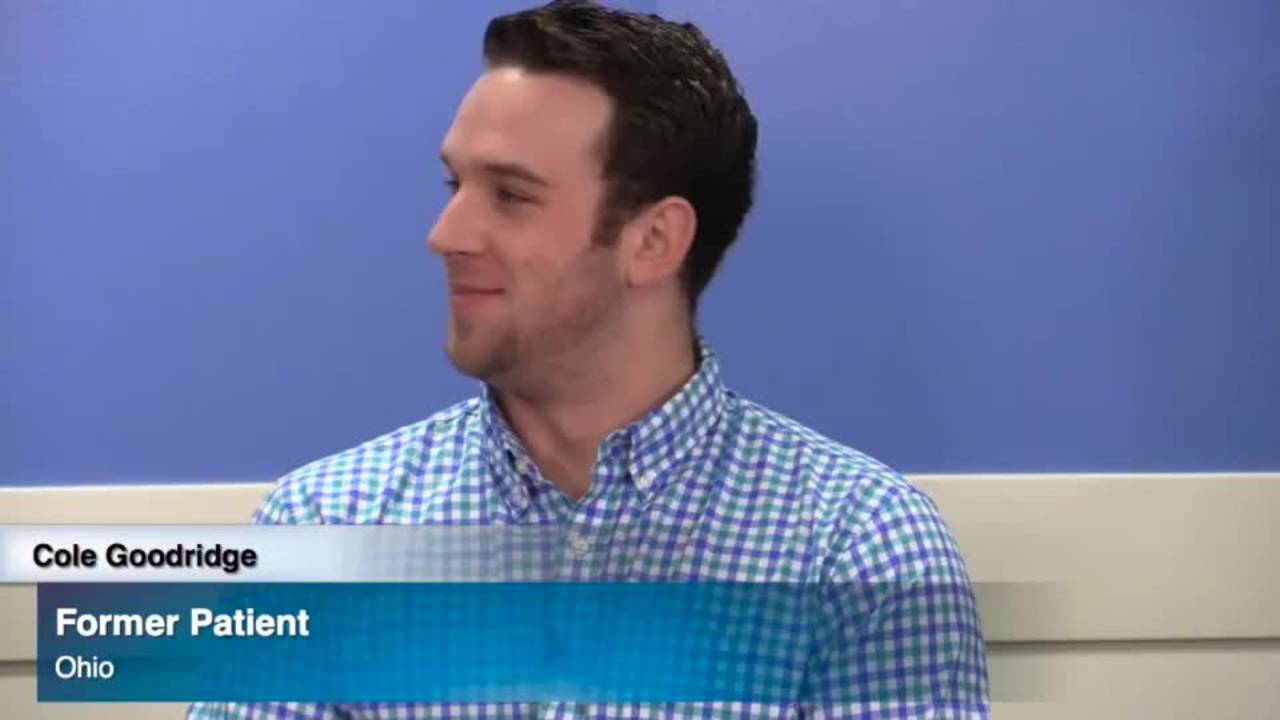
Patient Testimonial and Experience: Pectus Innovations
CCHMC Pediatric Surgery · 13 min · Published Oct 2015
Video
Update Course Rewind 2021 - Updates in Pectus
61 min · Published May 2022
Video
Pectus-Patient Testimonial and Experience
CCHMC Pediatric Surgery · 14 min · Published Mar 2022
Only a few other public items share this expert — go deeper there →
Video
Pediatric Surgical Oncology Research Collaborative (PSORC): Studying Rare Pediatric Tumors
56 s · Published May 2026
Video
Update Course Rewind 2025: Hirschsprung + ARM: Rare but Real
1 min · Published May 2026
Video
Update Course Rewind 2025: Hirschsprung + ARM: Rare but Real
1 min · Published May 2026
Video
Pooling Patients to Study Rare Pediatric Tumors: An Introduction to PSORC
56 s · Published May 2026
Video
The fetal frontier: A review of current and emerging fetal therapies for genetic diseases
44 s · Published May 2026
Video
Indocyanine green assists with sentinel lymph node mapping in pediatric and adolescent patients
1 min · Published May 2026
What the experts said
Psychosocial aspects of growing up are very important, and severe deformities should be fixed for psychosocial well-being regardless of symptoms
Insurance companies require documented symptoms and a Haller index for approval of pectus repair
Haller index of 3.25 originated from a retrospective study by Alec Haller in the 1980s comparing cases he fixed versus those he did not
The Haller index study was not an earth-shattering study at the time but has been used consistently for 30 years
There are approximately 14-15 reported cases of cardiac injury with the Nuss procedure worldwide
Thoracoscopy is not that helpful for cardiac injury prevention according to Kansas City's experience, so they do not generally use it
The subxiphoid incision technique involves making a small incision to insert a finger, removing the xiphoid process, lifting the sternum with a retractor, and feeling/guiding the bar as it passes above the heart
Transesophageal echo can be used to detect adhesions between heart and sternum, particularly useful in redo cases to avoid cardiac injury
A bone hook can be used through the subxiphoid incision to lift the sternum and gain an additional 1-2 millimeters of space for bar passage in deep deformities
A vacuum cup suction device is being used in Europe for pectus repair but is not approved in the United States
In Kansas City series of 168 patients over 6 years, there were 6 infections (3.6%), 5 required incision and drainage, 3 developed recurrent infections, and 1 required early bar removal
Kansas City has performed 503 pectus excavatum repairs using subxiphoid incision technique with no cardiac injuries
In Kansas City series of first 300 cases: 5% required two bars, 4% infection rate, 1.5% bar dislodgement or stabilizer discomfort requiring removal, 4 patients had bar rotation (early experience), 2 patients required chest tube, zero recurrences requiring reoperation, mean hospitalization 4 days
For pectus carinatum, dynamic compression bracing requires less than 7.5 PSI pressure to correct the defect for appropriate candidacy
Pectus carinatum bracing is typically worn 6-20 months, then transitioned to retainer mode (6-12 hours daily)
Currarino-Silverman syndrome shows a comma deformity on lateral X-ray and requires open Ravitch-type repair
Kansas City has braced 200 pectus carinatum patients with dynamic compression bracing and has performed very few (one or two) open repairs in the past 4 years
The dynamic compression brace costs approximately $1500-2000 total, requiring purchase of both a kit (one-time) and the device
Epidural group had longer OR time due to catheter placement, more phone calls to anesthesia, and greater hospital charges compared to PCA
Pain scores generally favored epidural for the first 2 days, were flat on day 3, and favored PCA in the last couple of days
In a randomized trial of 110 patients, epidural catheters were removed within 24 hours or could not be placed in almost 25% of cases, even by experienced anesthesiologists
Nickel allergy frequency in pectus patients is 2.8% (almost 3%) according to Doctor Nuss's group study of 1200 patients from 1987-2008
Doctor Nuss feels results are better if bars are left in for 3 years based on his group's data showing improved outcomes with duration ≥24 months
The magnetic mini-mover procedure (3MP) is in an FDA trial, 18 months into enrollment with all patients implanted, requiring another 18 months of data collection
Doctor Abramson in Buenos Aires has devised a minimally invasive operation for pectus carinatum