
Interesting Cases & Surgical Approaches: Pectus Innovations
With Dr. Doctor Garcia · StayCurrentMD
Part of
Pectus Excavatum 58 items
Educational content from recorded physician discussions — not medical advice. Talk to your (or your child's) care team about your situation.
More about Marfan syndrome
same diagnosisVideo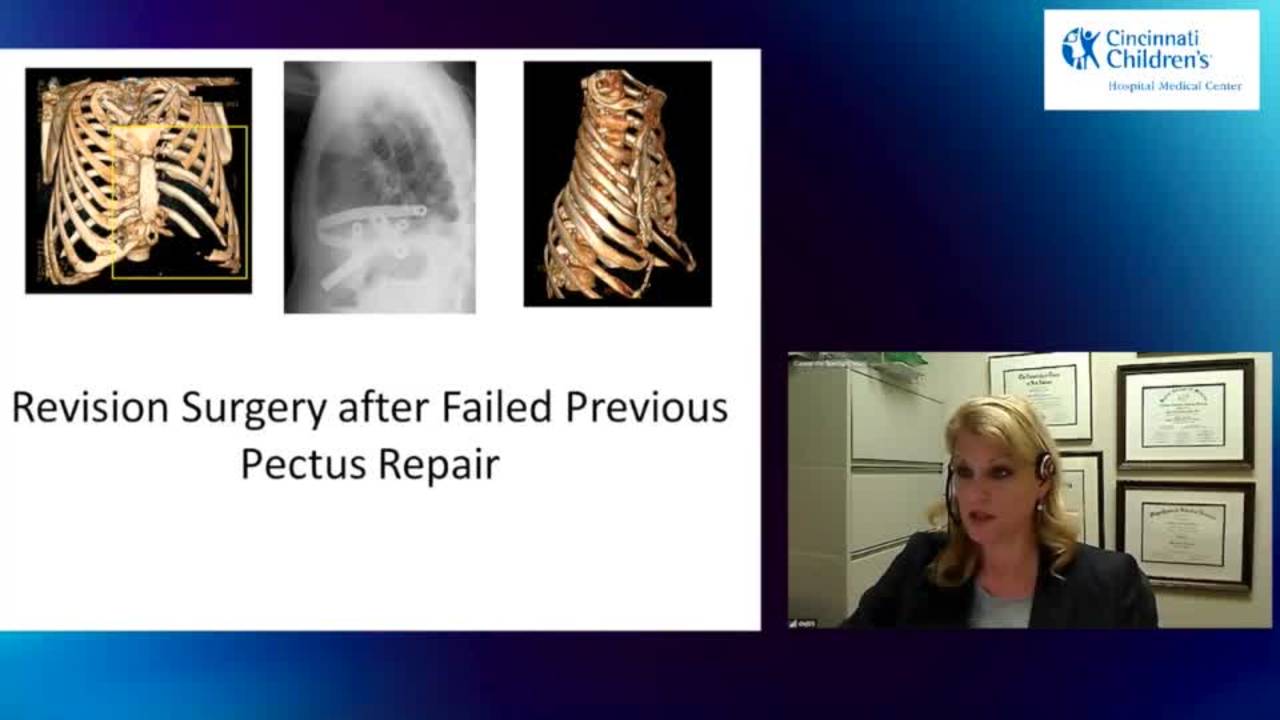
Pectus - Surgical Approaches for Failed Repair
44 min · Published Nov 2018
Podcast
Chest Wall Deformities with Dr. Robert Kelly
46 min · Published Jan 2017
Video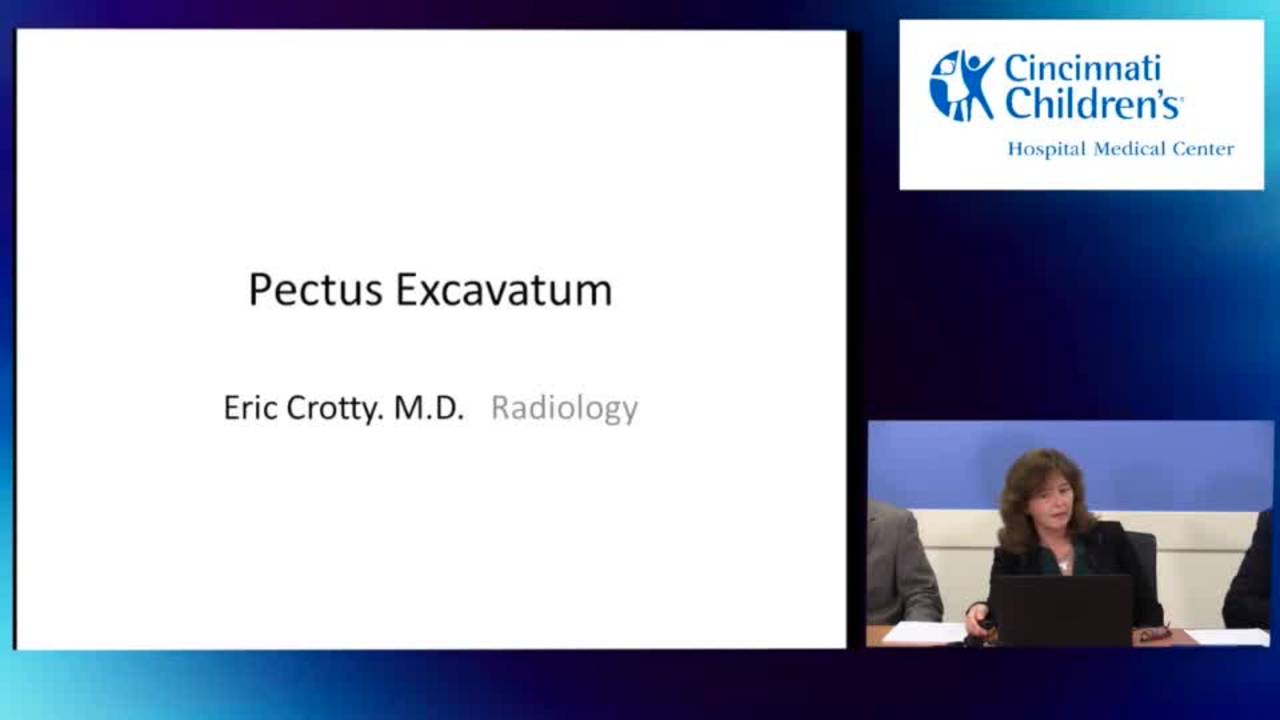
Pectus - Preoperative Assessment - Radiology and Cardiac Evaluation
Dr. Todd Ponsky · 44 min · Published Nov 2018
Podcast
Chest Wall Deformities with Dr. Robert Kelly
46 min · Published Jan 2017
Video
Radiology: Pectus Innovations
38 min · Published Oct 2015
Video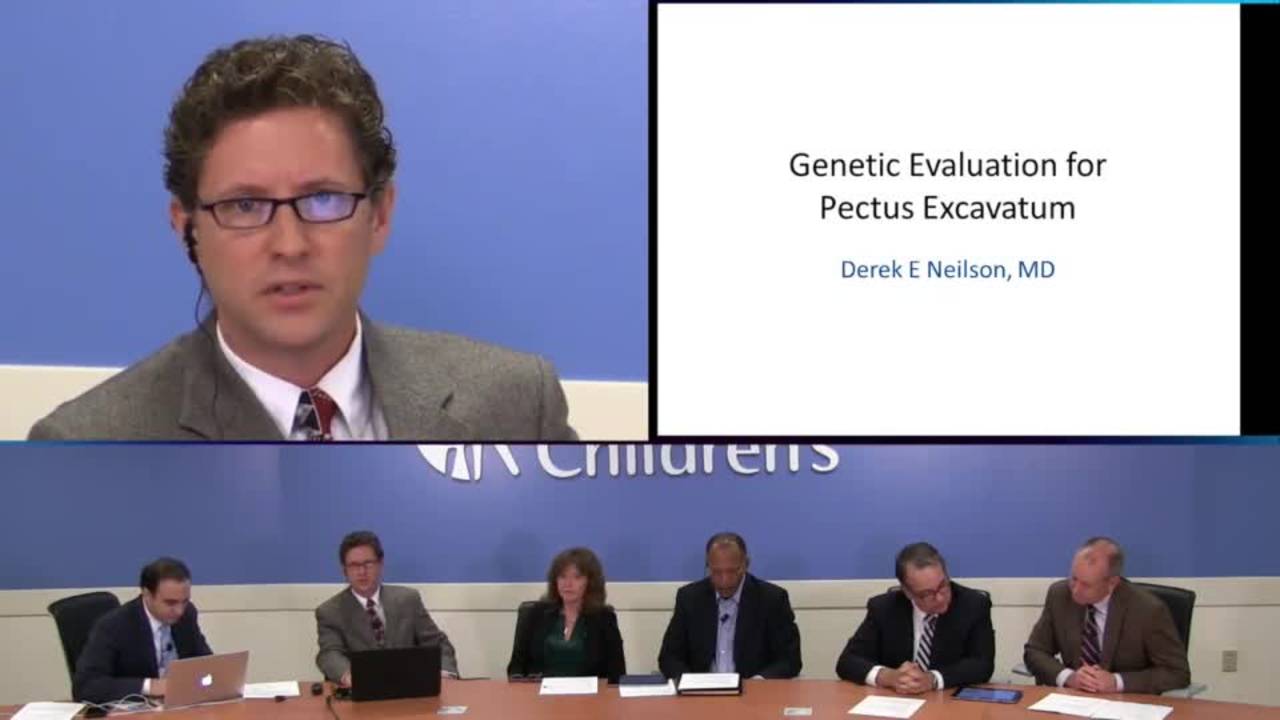
Pectus - Preoperative Assessment - Genetics
9 min · Published Nov 2018
Only a few other public items share this expert — go deeper there →
Video
Pediatric Surgical Oncology Research Collaborative (PSORC): Studying Rare Pediatric Tumors
56 s · Published May 2026
Video
Update Course Rewind 2025: Hirschsprung + ARM: Rare but Real
1 min · Published May 2026
Video
Update Course Rewind 2025: Hirschsprung + ARM: Rare but Real
1 min · Published May 2026
Video
Pooling Patients to Study Rare Pediatric Tumors: An Introduction to PSORC
56 s · Published May 2026
Video
The fetal frontier: A review of current and emerging fetal therapies for genetic diseases
44 s · Published May 2026
Video
Indocyanine green assists with sentinel lymph node mapping in pediatric and adolescent patients
1 min · Published May 2026
What the experts said
True recurrence incidence after pectus repair is unknown because many patients don't report back to centers
In the original adult open repair series with Funkels at UCLA, reported recurrence rate was 5%, but over 10 years at least 20 patients from that series contacted for revision
Nuss procedure recurrences are related to technical issues: bar positioning, bar rotation, and pulling bars out too early
Open procedure recurrences involve different issues: healing problems, malunion, and regression itself is a very different beast
Once bars rotate, their ability to put pressure and elevate the chest wall is lost, and they usually cause pain
Lateral stripping is the most common problem seen in adult revisions - bar looks perfect on frontal X-ray but has stripped posteriorly on lateral view
Once a bar is not supported by the intercostal space and migrates posteriorly, there is no forward elevation and can cause cardiac obstruction or compression of lower structures
In adult population, chest is often so stiff and rigid that intercostal spaces can't support bar pressure, causing them to rip out and drop the bar in
Forced sternal elevation with Rultract makes dissection safer and easier by creating open space to work in
Initially used Rultract only on complicated cases, but now uses it on all cases for safety and ease
FiberWire (woven PTFE suture) used in figure-of-eight around ribs and bar prevents ribs from separating and bar from dropping in
Single bar in center of defect is not enough for heavier, stiffer chests - causes tremendous pain and risk of movement and stripping
About 30% of patients now receive 3 bars to balance the defect and distribute pressure
For very low bars, drill a hole through the sternum and pass suture to loop around sternum and bar in center to prevent rotation
Optimal bar length is 2-3 centimeters overlapped, catching side ribs but not wrapping all the way around to the back
In younger adults under 30, almost all patients could be lifted with Rultract and Lorenz dissector, with only a couple exceptions
In adults over 30, approximately 88.7% could be lifted with forced elevation, but 11-12% would not lift
If chest doesn't lift initially, bars alone will not make it lift eventually - they're not strong enough
Releasing osteotomy technique involves cutting cartilages from sternum at the site that won't lift, then shortening cartilages to allow them to come back down
Sometimes only one or two sites are preventing elevation, so don't need big conversion to open - can do hybrid repair with small incisions
Anterior plating of osteotomy sites produces better cosmetic results than suture alone - prevents areas from knobbing up
In older patients with calcified cartilages, often cannot do nice cartilage-sparing procedure - it's a mash of calcified cartilage
After osteotomy, must stabilize with either suture or plate, otherwise rib won't stay down and will elevate because chest alignment has changed
Redo open repairs fall into categories: those that didn't get support and fell in (can re-Nuss), those that are fixed requiring osteotomies, and disasters with holes and malunion
All redo open cases are prepped with groins exposed in case of life-threatening bleeding requiring bypass through the groin
Redo open cases require both posterior bars for support and anterior plates for stabilization
Learned early that redo cases with just bars recurred again when bars were removed, leading to adoption of anterior plating
Malunion or pseudoarthrosis can be hard to assess completely by CT scan - better assessed by physical exam
Ribs not attached to midline on CT are the best clue for malunion
Malunion patients have lot of pain and inability to Valsalva, but Haller index can be almost normal, leading to patients being told they're fine by multiple physicians
Chest wall reconstruction for malunion often requires bone graft or methylmethacrylate filler to fill spaces, plus mesh and plating for stabilization
For chest wall hernias, can use various materials: methylmethacrylate, titanium mesh, titanium plates, or prefabricated titanium replacement parts
Revision patients are never completely happy because they're never normal again - best hope is to make them better
When bars are placed and then pulled out and patient collapses, indicates other issues must be addressed beyond just bar replacement
After multiple procedures with bars, plating, and continued collapse, difficult to know what will stabilize patients with connective tissue disorders or chests that won't heal, leading to infections and osteonecrosis
The best operation is the first operation - need to do the correct operation initially
Despite appearing simple, pectus surgery has a significant learning curve and is not a see-one-do-one procedure