

From
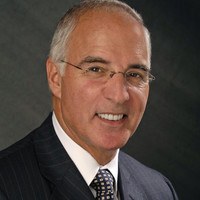
Dr. Jeffrey Ponsky
SAGES Stories: Dr. Jeffrey Ponsky on surgical endoscopy and the PEG tube legacy
With Dr. Jeffrey Ponsky · hosted by Dr. Kevin El Hayek & Dr. Sharif Ellozy
Part of
Psychomotor Retardation 4 items
Chapter 5 of 7 · Fundamentals
Career moves
Career transitions and family integration
Cued at 41:34 · stops at 41:51 · press play
Expert statements on this page
No expert statements were drawn from this page.
Host summaries · secondary, not cited in answers
Educational content from recorded physician discussions — not medical advice. Talk to your (or your child's) care team about your situation.
Podcast
The invention of the PEG tube with Dr. Jeffrey Ponsky
Jeffrey Ponsky · 33 min · Published Jul 2026
Podcast
Update Course Rewind: Pediatric Biliary Stones - Preventing Gallstone Pancreatitis 2024
Jeffrey Ponsky · 3 min · Published Aug 2025
Video
ACS Icons in Surgery | Jeffrey L. Ponsky, MD, FACS
Jeffrey Ponsky · 20 min · Published Jul 2024
Video
SAGES Stories Episode 11 – Jeff Ponsky, MD
Jeffrey Ponsky · 61 min · Published Jun 2024
Video
From Idea to Ubiquity - the PEG Journey
Jeffrey Ponsky · Published Nov 2023
Podcast
Innovations in Surgery: PEG Tube
Jeffrey Ponsky · 33 min · Published Aug 2023
What the experts said
Ponsky graduated Cleveland Heights High School with a 2.027 GPA and was advised by his counselor to consider trade school instead of college.
Ponsky's transformation in college came from memorizing everything and studying constantly, discovering he had an 'unbelievable' memory that allowed him to 'eat the book and spit it out.'
Working as an orderly at Mount Sinai Hospital, Ponsky gave bed baths, changed bedpans, and cared for a high school classmate who became paraplegic after an auto accident, which deepened his commitment to medicine.
Ponsky was promoted to scrub tech and surgeons allowed him to close fascia, despite the head nurse objecting that he wasn't permitted to do so.
Ponsky never took calculus, using logarithms to work around it in physics, and the Case Western dean of admissions accepted him despite this after he stated he had already been admitted to two other medical schools.
Ponsky chose Case Western Reserve (then Western Reserve) over Northwestern and Cincinnati primarily because his family lacked money and he needed to live at home rather than pay rent elsewhere.
Bill Holden, chairman of surgery at Case, was an 'elegant' teacher who used the Socratic method and prioritized teaching over technical skill.
Walter Parry taught using theatrical methods, including having students smell a room to perceive 'the smell of death' (though there was no actual smell) and performing bedside pinch grafts on bedsores at Metro Hospital.
Parry made Ponsky rewrite his first paper—a letter to the New England Journal about paradoxical air embolism—six times and read German poetry to him to encourage more poetic medical writing.
When Ponsky requested an endoscopy elective as a resident, the head of GI at University Hospitals refused, stating 'we're not training any surgeons.'
Charles Hube arranged for Ponsky to train with Jim King in Canton, Ohio, where Ponsky performed approximately 500 colonoscopy cases over 5-6 months using a mid-length scope not designed to reach the cecum.
After returning from Canton, the head of gastroenterology told Ponsky 'you're not gonna touch this scope,' so he used the VA's Olympus colonoscope instead.
Ponsky's mother-in-law purchased his first colonoscope after hearing at a family dinner that he couldn't get access to equipment; in that era, scopes were washed with green soap and stored in car trunks.
As a senior resident, Ponsky performed emergency endoscopy cases day and night with Bob Zollinger Junior signing the paperwork, eventually doing all cases while GI physicians stopped performing them.
When SAGES started, it had approximately 300 members; when Ponsky became president in 1990, the society was giving courses on surgical endoscopy and its relationship to surgical problem-solving.
At the 1990 SAGES meeting in Louisville, Kentucky, Jacques Perissat showed video of laparoscopic cholecystectomy in the exhibit hall; Ponsky was SAGES president at the time and 'right in on the ground floor.'
Early laparoscopic instruments were unavailable for purchase, so surgeons used gynecology instruments. Ponsky took one of the first training courses taught by Nat Soper, George Berci, John Hunter, and John Sackier in Salt Lake City.
Ponsky's first two laparoscopic cholecystectomy cases at Mount Sinai were performed on a board of trustees member, proctored by David Dupper who had completed only eight cases himself.
The PEG tube was invented in May 1979 when Ponsky and pediatric surgeon Michael Gower used transillumination (seeing light shine through the abdominal wall during endoscopy in neonates) to develop a minimally invasive gastrostomy technique, performing it on five babies with birth asphyxia and psychomotor retardation.
The PEG tube procedure was performed without IRB approval; Ponsky and Gower only spoke with the patients' families before proceeding.
Ponsky became chief of surgery at Mount Sinai Hospital at age 32, shortly after inventing the PEG tube.
Mount Sinai was Ponsky's 'favorite place I ever worked in my life'—a small hospital where every staff member knew each other, with an animal research laboratory larger than Cleveland Clinic's.
Ponsky left Mount Sinai in 1997 after 18 years when the hospital was sold to a for-profit company whose leadership 'could care less about quality.'
Ponsky had all but one of his children before finishing residency; his last son was born during his final year of residency, and his daughter was born three years later after he joined Mount Sinai.
Ponsky's wife had no partners helping her while he was on call every other night, but he credits his family—wife, children, and in-laws—as essential to his success, stating 'our success was a joint success, not just my success.'
Ponsky's greatest academic achievement was becoming chairman of the Department of Surgery at Case Western Reserve, though his parents were most proud of his role as chief of surgery at Mount Sinai because it was meaningful within the Jewish community they knew.
Ponsky has counseled fellows away from positions at his own institutions when he believed better opportunities existed elsewhere, considering factors like family proximity, academic opportunity, and institutional need rather than institutional prestige.
Ponsky performed distal splenorenal shunts early in his career at University Hospitals with Jerry Walkoff's assistance, believing the operation was 'the greatest thing since sliced bread' based on Dean Warren's physiologic approach, but the procedure became obsolete when endoscopic variceal banding was introduced.
Ponsky performed 180 vertical banded gastroplasty procedures in one year during the mid-1980s, believing it would be a great bariatric operation, but later surgeons had to reverse many of them.
Ponsky performed 1600 colonoscopies in his final year of practice, predicting that in 20 years colonoscopy for screening may be obsolete.
ERCP is Ponsky's favorite procedure, which he describes as 'like golf for some people'—he would come in day or night to perform it and considers it a sophisticated procedure requiring 'body English.'
Ponsky learned ERCP largely self-taught by watching videos, then arranged a teaching exchange with George Brodmerkel in Pittsburgh: Ponsky taught Brodmerkel laparoscopy under local anesthesia for liver biopsy, and Brodmerkel taught Ponsky sphincterotomy.
Ponsky obtained an executive MBA at the urging of hospital administrators who said he made decisions 'out of your gut' without understanding return on investment or financing; he describes the MBA as learning 'the language of business' and when to 'say bullshit at the right time' in business meetings.
Ponsky initially felt like a 'traitor' to ASGE when SAGES started because he was already on the ASGE governing board.
At early SAGES meetings, papers focused on surgical problem-solving with endoscopy (bowel obstruction evaluation, suture line assessment, volvulus management)—topics distinct from ASGE content—which convinced Ponsky of the society's unique value.
Ponsky advocated to the Residency Review Committee (when Joe Fisher was head) for a minimum endoscopy case requirement in general surgery training; the 50-case requirement was initially controversial but established endoscopy as a core surgical competency.
Ponsky's philosophy is to 'always volunteer, never say no, get involved in everything'—he believes people will find the time, decisions don't need to be belabored, and residents can help with much of the work.
Ponsky's wife purchased him a Harley-Davidson trike (three-wheeled motorcycle) when he turned 70; she would not permit a two-wheel motorcycle. They have ridden to Sturgis, South Dakota.
Ponsky lives on 8 acres with horses; his son Zach built a house on the adjacent 5-acre lot, his daughter bought a house two properties away with another 5 acres, son Todd lives within half a mile, and son Lee lives 'almost 2 miles' away—creating a family compound in Cleveland.
Ponsky has a house in Florida and would travel there for long weekends during his working years, leaving Friday morning at 6 AM and returning Monday, using vacation days for Friday and Monday.