


From
StayCurrentMD
Quick Literature Updates Episode 16
With Dr. Alex Halpern · hosted by Dr. Em Gootee & Dr. Ellen Encisco & Dr. Cecilia Gigena
Chapter 3 of 4 · Evidence & Research
Nuss cryoablation
Cryoablation Learning Curve in Nuss Procedures
Cued at 3:08 · stops at 3:29 · press play
Expert statements on this page
No expert statements were drawn from this page.
Host summaries · secondary, not cited in answers
Educational content from recorded physician discussions — not medical advice. Talk to your (or your child's) care team about your situation.
Video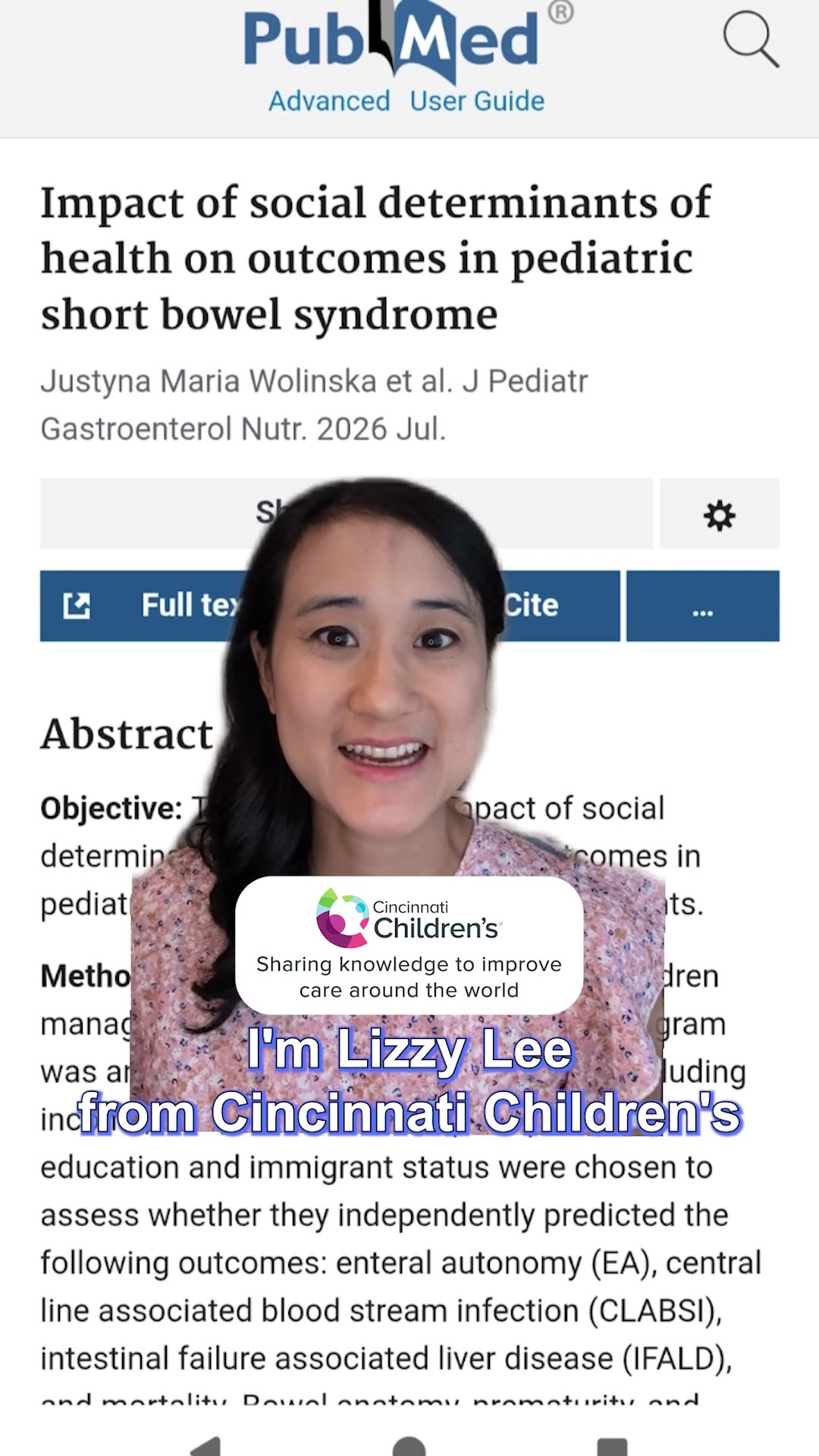
Impact of social determinants of health on outcomes in pediatric short bowel syndrome...
43 s · Published Aug 2026
Video
Advancements in Pediatric Intestinal Failure: Innovative Therapies and Improved Outcomes
17 min · Published Aug 2026
Podcast
Update Course Rewind: Omphalocele & Gastroschisis 2020
Miguel Guelfand · 15 min · Published Jul 2026
Video
Update Course Rewind 2025: Updates in NEC Management
11 min · Published Jul 2026
Video
Availability, utilization, and barriers to bowel ultrasound for necrotizing enterocolitis...
55 s · Published Jul 2026
Video
Laparoscopic Ladd Procedure for Midgut Volvulus in a 12-Year-Old Using CoolSeal Trinity
Dr. Steve Rothenberg · 8 min · Published May 2026
Podcast
Hirschsprung Dilations, Gastroschisis Management, and CDH Volume Outcomes
4 min · Published Nov 2026
Podcast
Literature review: tracheomalacia diagnosis, NEC strictures, and PDA management
4 min · Published Nov 2026
Podcast
VTE prophylaxis, fertility preservation, and nephron-sparing surgery in pediatric patients
4 min · Published Nov 2026
Podcast
Appendicitis treatment, VACTERL screening updates, and new pediatric sepsis criteria
4 min · Published Nov 2026
Podcast
Pediatric Surgery Literature Updates: Lymphatic Malformations, G-Tube Complications, and Cryptorchidism Timing
4 min · Published Nov 2026
Podcast
Locum Tenens Guidelines, Clavien-Madadi Validation, and Transitional Care Challenges
4 min · Published Nov 2026
Podcast
Diaphragm pacing as alternative to mechanical ventilation in pediatric respiratory failure
1 min · Published Nov 2026
Podcast
Fetoscopic endoluminal tracheal occlusion for congenital diaphragmatic hernia
4 min · Published Nov 2026
Podcast
FETO procedure for late-diagnosed severe CDH with liver herniation
4 min · Published Nov 2026
Podcast
Severe CDH case with FETO: unexpected anatomic findings and clinical outcome
3 min · Published Nov 2026
Podcast
Pediatric pancreatitis: diagnosis, causes, and genetic insights with Dr. Juan Gurria
3 min · Published Nov 2026
Podcast
Understanding craniosynostosis: skull sutures, growth patterns, and diagnosis in infants
10 min · Published Nov 2026
What the experts said
Connecticut Children's Medical Center implemented an algorithm for managing esophageal button batteries in 2019 that includes activating the critical airway response team.
The Brent et al. study compared patients presenting with esophageal button batteries before algorithm implementation (2015-2019) to those after implementation (2019-2022).
There was a significant reduction in time from chest X-ray to OR for button battery removal after implementing the new algorithm at Connecticut Children's.
The McMaster University team performed a retrospective review of infants born between 2014 and 2022 with uncomplicated gastroschisis.
Infants with uncomplicated gastroschisis who received exclusive breast milk had similar outcomes to those with supplemental or exclusive formula intake.
In uncomplicated gastroschisis, there were no significant differences between exclusive breast milk and formula groups in time to reach full enteral feeds, duration of parenteral nutrition, rates of necrotizing enterocolitis, and length of hospital stay.
The Phoenix study by Lie et al. was a retrospective single institution study from 2017 to 2021 comparing patients who underwent Nuss procedure with cryoanalgesia in the first quarter versus the fourth quarter of their experience.
The Phoenix study included 350 patients who underwent Nuss procedure with cryoanalgesia.
Patients in the last quarter of the Phoenix cryoablation experience were discharged 1.3 days earlier than patients in the first quarter.
Patients in the last quarter of the Phoenix cryoablation experience required 74% less opioids than those in the first quarter.
Experience plays a role in outcomes when using cryoanalgesia for Nuss procedures.