


From
StayCurrentMD
Quick Literature Updates Ep 19
With Dr. Carlos Colunga · hosted by Dr. Em Gootee & Lizzy Lee, PA-C & Dr. Cecilia Gigena
Chapter 3 of 3 · Evidence & Research
Neuroblastoma biopsy
Image-Guided vs Surgical Biopsy for Neuroblastoma
Cued at 4:00 · stops at 4:12 · press play
Expert statements on this page
No expert statements were drawn from this page.
Host summaries · secondary, not cited in answers
Educational content from recorded physician discussions — not medical advice. Talk to your (or your child's) care team about your situation.
Video
Thoracoscopic aortopexy for tracheomalacia in pediatric patients
5 min · Published Nov 2022
Video
Posterior Tracheopexy during Primary Esophageal Atresia Repair
Published Sep 2018
Video
Quick Literature Updates Ep 27
4 min · Published Feb 2026
Podcast
Literature review: tracheomalacia diagnosis, NEC strictures, and PDA management
4 min · Published Nov 2026
Video
QUAD #2 Thoracoscopic Tracheopexy with Dr. Aaron Garrison
CCHMC Pediatric Surgery · 7 min · Published Jan 2024
Video
BOB Ped Surg 2023 - Basma Magdy, PAPSA - Presentation
Published Feb 2023
Video
Rare Ovarian Tumor in Infants: Small Cell Carcinoma of Ovary, Hypercalcemic Type & SMARCA4 Mutation
21 s · Published Oct 2026
Video
Can Normal X-Rays Miss Metastatic Neuroblastoma? A Pediatric Radiology Case Study
26 s · Published Oct 2026
Video
Can Fractures Be a Sign of Hepatoblastoma in Children? Understanding Pediatric Liver Cancer Symptoms
37 s · Published Oct 2026
Video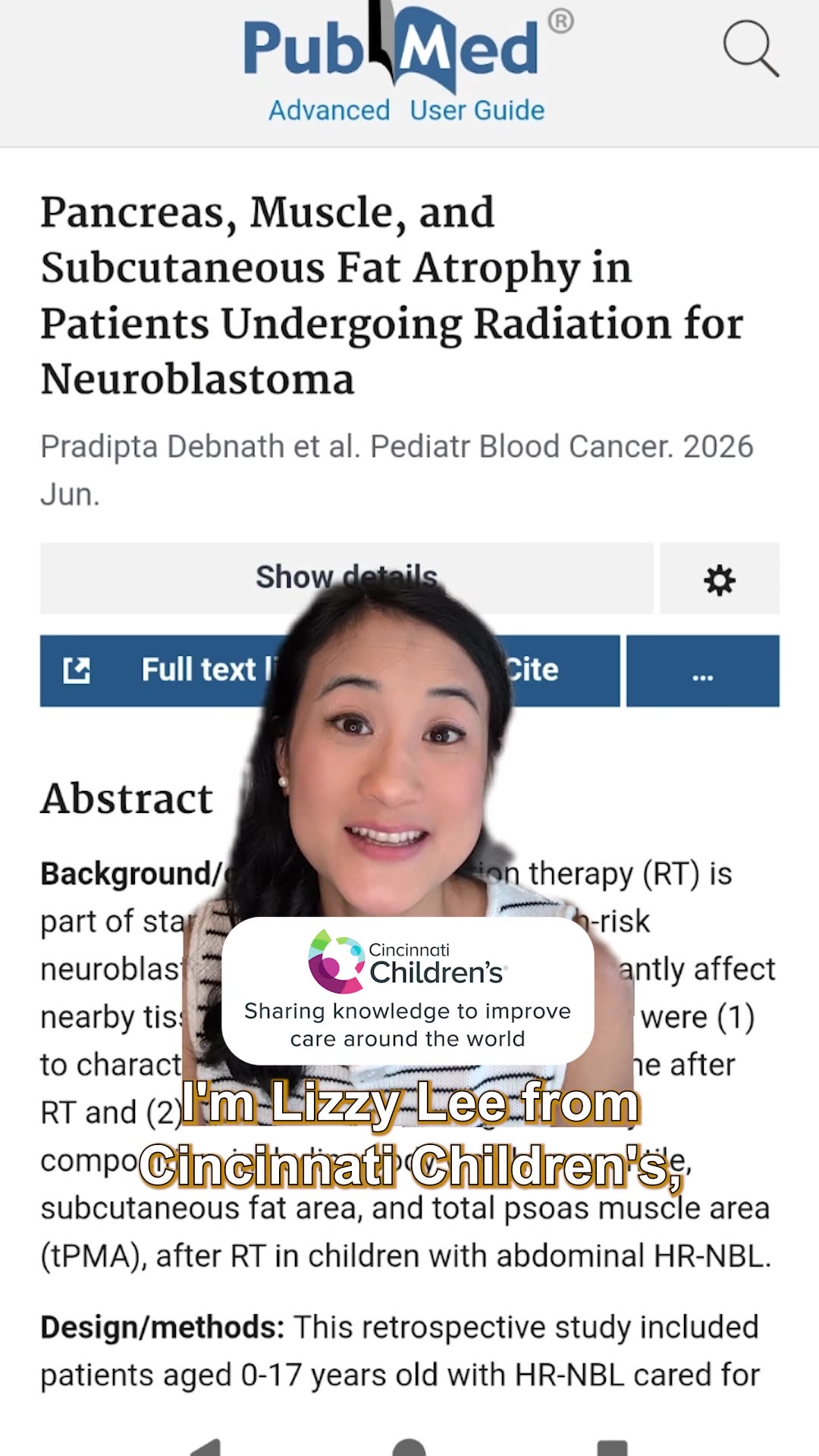
Pancreas, Muscle, and Subcutaneous Fat Atrophy in Patients Undergoing Radiation for Neuroblastoma
47 s · Published Oct 2026
Podcast
Hepatoblastoma
Todd Ponsky · 54 min · Published Oct 2026
Podcast
Wilms Tumor
Todd Ponsky · 64 min · Published Oct 2026
Video
Quick Literature Updates Ep 24
4 min · Published Nov 2025
Video
Update Course Rewind: CO2 Laser Use Cases 2024
4 min · Published Mar 2025
Video
Tracheomalacia and tracheomegaly in infants and children with congenital diaphragmatic hernia managed with and without fetoscopic endoluminal tracheal occlusion (FETO): a multicentre, retrospective cohort study
59 s · Published Oct 2024
Podcast
Diaphragm pacing as alternative to mechanical ventilation in pediatric respiratory failure
1 min · Published Nov 2026
Podcast
Fetoscopic endoluminal tracheal occlusion for congenital diaphragmatic hernia
4 min · Published Nov 2026
Podcast
FETO procedure for late-diagnosed severe CDH with liver herniation
4 min · Published Nov 2026
Podcast
Severe CDH case with FETO: unexpected anatomic findings and clinical outcome
3 min · Published Nov 2026
Podcast
Pediatric pancreatitis: diagnosis, causes, and genetic insights with Dr. Juan Gurria
3 min · Published Nov 2026
Podcast
Understanding craniosynostosis: skull sutures, growth patterns, and diagnosis in infants
10 min · Published Nov 2026
What the experts said
APSA created a peer support program for pediatric surgeons in 2020.
The goal of the APSA peer support program was to support surgeons after traumatic events.
The most common referral reasons for the peer support program were toxic work environments and adverse events.
50 surgeons total agreed to receive training on how to be a supporter in the APSA program.
Over 80% of trained peer supporters were able to use these peer support skills informally with colleagues, partners, and trainees.
The peer support program shows that this type of support system can work really well to help surgeons heal from traumatic experiences and toxic work environments.
Tracheomalacia was 5% more common in tracheal occluded infants with CDH, with 4% more cases.
Tracheomalacia symptoms in FETO-treated CDH infants typically receded within 55 months.
FETO-treated CDH infants typically showed a larger trachea, which was around 31% wider.
37% of tracheal occluded CDH cases retained metallic balloon components, although no significant complications were reported.
While tracheal occlusion is effective in promoting lung growth, it is associated with a higher risk of tracheomalacia, although most cases resolve and do not appear to have long-term effects.
The IPSO systematic review and meta-analysis gathered 8 retrospective studies with 490 patients comparing image-guided core needle biopsy to surgical biopsy for neuroblastoma.
Tissue adequacy and biological characterization of the biopsy was not significantly different between image-guided core needle biopsy and surgical biopsy groups for neuroblastoma.
Intraoperative transfusions and complications were higher in the surgical biopsy group compared to image-guided core needle biopsy for neuroblastoma.
Image-guided core needle biopsy is safe and effective for diagnosing neuroblastoma.