


From
StayCurrentMD
QUAD #5 Pharyngeal Scar Management with Dr. Doug von Allmen
With Dr. Douglas von Allmen · hosted by Dr. Em Gootee
Part of
Aerodigestive / ENT 27 items
Chapter 6 of 6 · Case-Based Learning
Summary
Summary and Conclusion
Cued at 6:25 · press play
Expert statements on this page
No expert statements were drawn from this page.
Host summaries · secondary, not cited in answers
Educational content from recorded physician discussions — not medical advice. Talk to your (or your child's) care team about your situation.
Video
Surgeon annual volume impacts recurrence rates of pediatric inguinal hernia repairs: A multi-institutional study
54 s · Published Feb 2026
Podcast
Journal of Pediatric Surgery Article Review: 2nd Quarter (Apr-Jun) 2025
16 min · Published Aug 2025
Video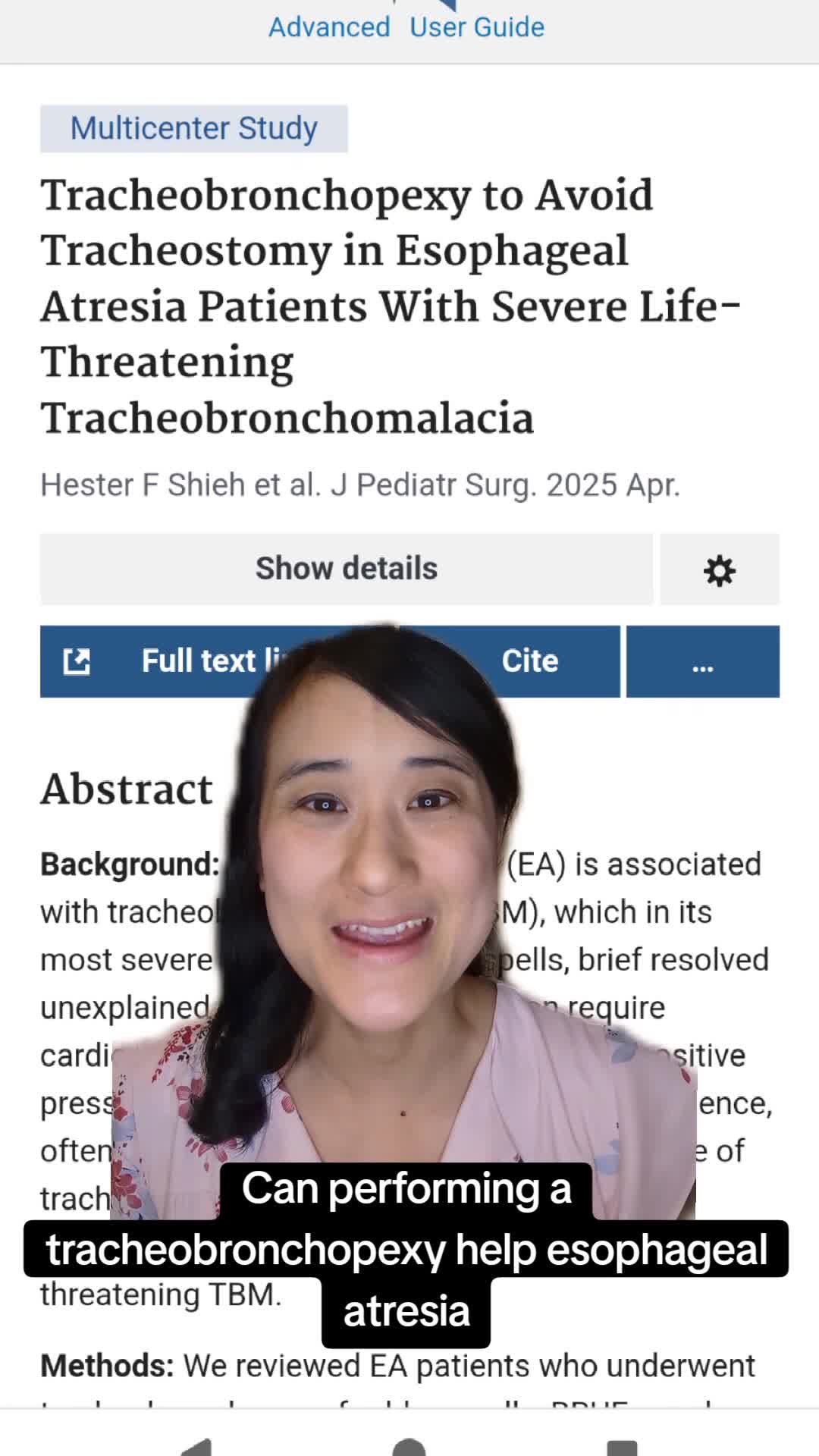
Tracheobronchopexy to Avoid Tracheostomy in Esophageal Atresia Patients With Severe Life-Threatening Tracheobronchomalacia
50 s · Published Apr 2025
Video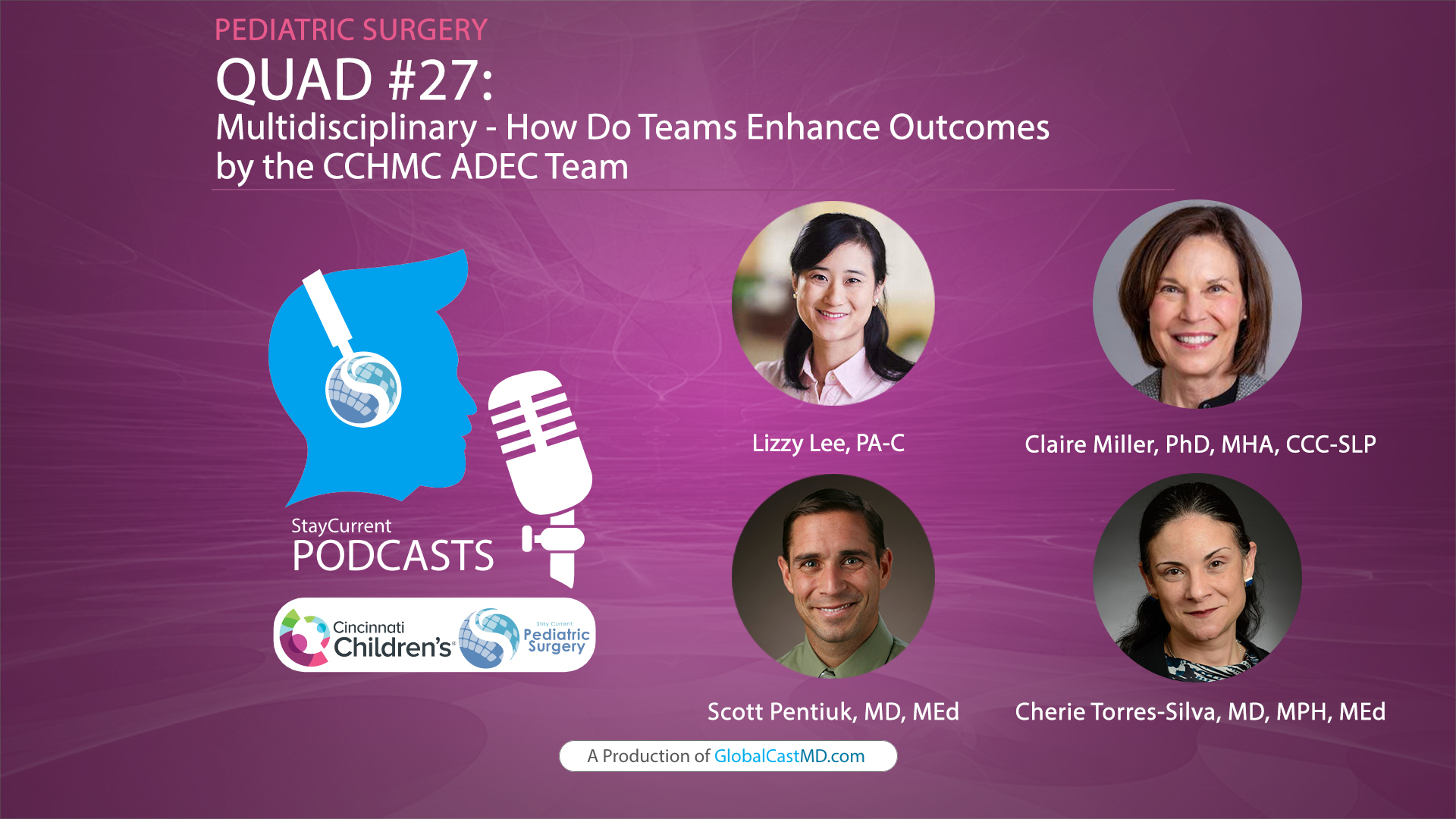
QUAD #27 - Multidisciplinary - How Do Teams Enhance Outcomes by the CCHMC ADEC Team
CCHMC Pediatric Surgery · 10 min · Published Apr 2025
Video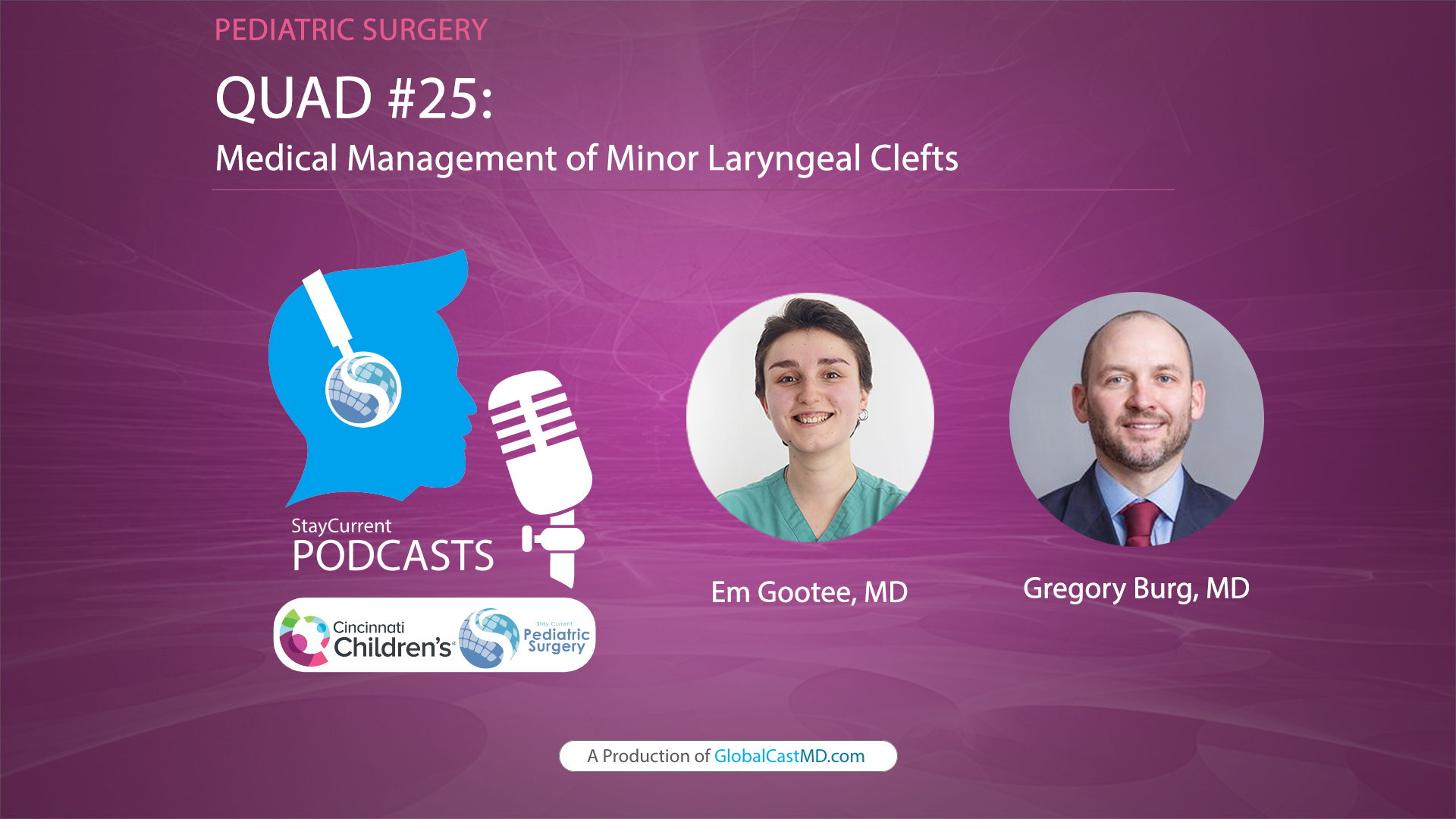
QUAD #25: Medical Management of Minor Laryngeal Clefts with Dr. Greg Burg
CCHMC Pediatric Surgery · 7 min · Published Feb 2025
Video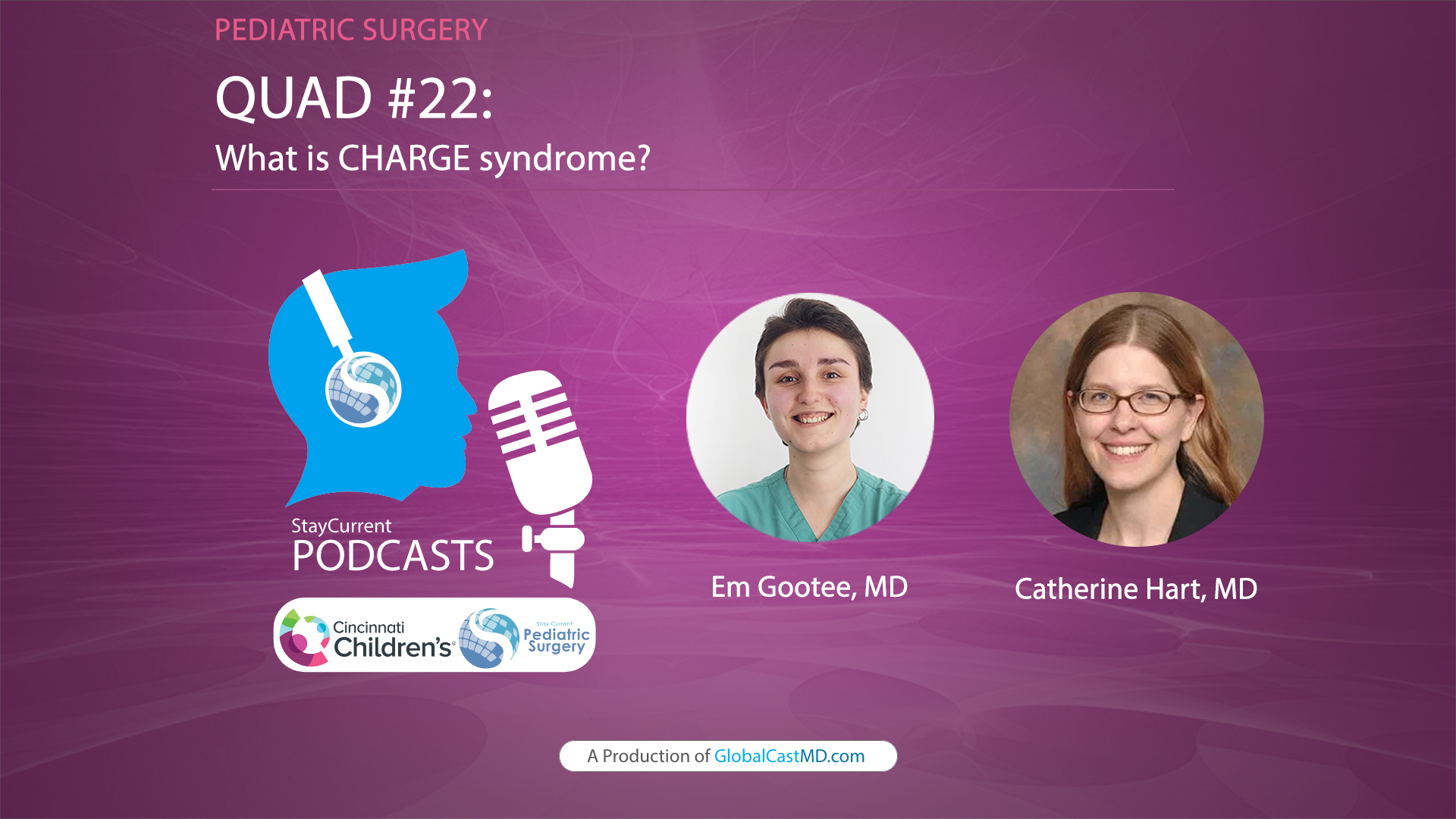
QUAD #22: What is CHARGE syndrome? with Dr. Catherine Hart
CCHMC Pediatric Surgery · 59 s · Published Dec 2024
Podcast
Diaphragm pacing as alternative to mechanical ventilation in pediatric respiratory failure
1 min · Published Nov 2026
Podcast
Fetoscopic endoluminal tracheal occlusion for congenital diaphragmatic hernia
4 min · Published Nov 2026
Podcast
FETO procedure for late-diagnosed severe CDH with liver herniation
4 min · Published Nov 2026
Podcast
Severe CDH case with FETO: unexpected anatomic findings and clinical outcome
3 min · Published Nov 2026
Podcast
Pediatric pancreatitis: diagnosis, causes, and genetic insights with Dr. Juan Gurria
3 min · Published Nov 2026
Podcast
Understanding craniosynostosis: skull sutures, growth patterns, and diagnosis in infants
10 min · Published Nov 2026
What the experts said
In pharyngeal stenosis related to caustic ingestion, clinicians must address not only physical obstruction but also altered sensation and altered motor function
The presented patient had extensive scarring in the hypopharynx with no discernible esophageal inlet and no discernible laryngeal structures, with base of tongue scarred to hypopharyngeal wall
After scar tissue removal, the large raw surface area poses a risk of re-scarring
Some surgeons have used free mucosal grafts to prevent re-scarring after scar tissue removal
A modified suprastomal stent can be placed through the glottis and secured with suture, then wrapped with silastic sheeting to increase the stent diameter in the pharynx
Patients with caustic injuries sometimes tolerate suprastomal stents better than airway reconstruction patients because disrupted sensation in the hypopharynx and oropharynx reduces gagging and retching
At one-year follow-up, the presented patient maintained a fairly decent opening to the glottis but remains tracheostomy and G-tube dependent
The patient underwent colon interposition and was able to get PO taste with improved secretion management, but continues to have swallowing dysfunction
In the oropharynx and hypopharynx, a larger caliber balloon is needed for dilation
Rotational flaps and free flaps can be used to help break up scarring in pharyngeal stenosis
Z-plasty technique can be used to break up scar orientation by rotating mucosal flaps
Staged procedures are helpful to avoid creating circumferential scarring again
Many pharyngeal stenosis patients require tracheostomy, often due to extensive supraglottic scarring
Involvement of speech language pathologists and pulmonary colleagues is important to help manage the sequelae of aspiration
Pharyngeal stenosis patients warrant long-term surveillance as there is suggestion they may be at increased risk for malignancy, and surveillance for neoplasm development is helpful
Etiologies of pharyngeal stenosis include caustic ingestion, iatrogenic injury, or multi-level upper airway surgery
Treatment goals for pharyngeal stenosis patients are tiered: achieving adequate voice, breathing without tracheostomy, preventing aspiration, and swallowing without G-tube
Prolonged stenting of about 4 to 6 weeks is typical for pharyngeal stenosis management
Balloon dilation typically works mostly in the post-cricoid area for smaller circumferential stenosis
Adjuvant therapies including injectable steroids, mitomycin C, and 5-fluorouracil can be used to help delay formation of recalcitrant scar
Pharyngeal stenosis patients are at high risk for ongoing aspiration
Tracheostomy can be helpful for managing aspiration risk in pharyngeal stenosis patients
Swallowing outcomes can be difficult and poor in the long term for pharyngeal stenosis patients