


From
StayCurrentMD
QUAD #19: Laryngeal Sensory Reinnervation with Dr. Charles Myer IV
With Dr. Charlie Myer · hosted by Dr. Em Gootee
Part of
Aspiration 5 items
Chapter 2 of 5 · Diagnosis & Workup
Sensory assessment
Sensory Component of Swallowing and Assessment Methods
Cued at 0:44 · stops at 1:02 · press play
Expert statements on this page
No expert statements were drawn from this page.
Host summaries · secondary, not cited in answers
Educational content from recorded physician discussions — not medical advice. Talk to your (or your child's) care team about your situation.
More about this diagnosis
Vocal cord paralysisVideo
2025 Pediatric Surgery Update Course - Nerve Monitoring and Stimulation in Pediatric Surgery
Lurie Children's Hospital · 16 min · Published Aug 2025
Video
2025 Pediatric Surgery Update Course - Updates in Management of Neck Pathologies
21 min · Published Aug 2025
Podcast
Nerve monitoring and risk stratification in pediatric thyroid surgery
6 min · Published Nov 2026
Video
Update Course Rewind 2025: Nerve Monitoring in Pediatric Thyroid Surgery
6 min · Published Jul 2026
Video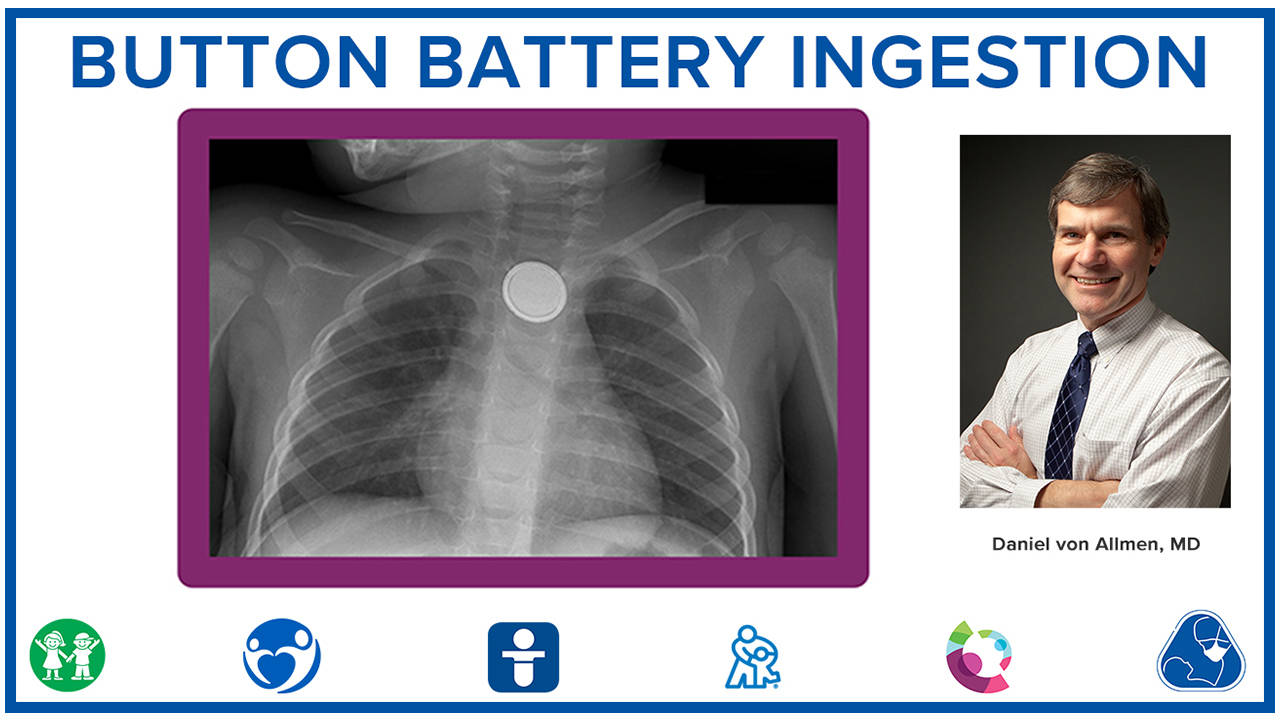
Button Battery Ingestion
14 min · Published Mar 2020
Video
QUAD #17 - Innominate Artery Compression and Management Through The Neck - Dr. Doug von Allmen
CCHMC Pediatric Surgery · 5 min · Published Feb 2025
Podcast
Diaphragm pacing as alternative to mechanical ventilation in pediatric respiratory failure
1 min · Published Nov 2026
Podcast
Fetoscopic endoluminal tracheal occlusion for congenital diaphragmatic hernia
4 min · Published Nov 2026
Podcast
FETO procedure for late-diagnosed severe CDH with liver herniation
4 min · Published Nov 2026
Podcast
Severe CDH case with FETO: unexpected anatomic findings and clinical outcome
3 min · Published Nov 2026
Podcast
Pediatric pancreatitis: diagnosis, causes, and genetic insights with Dr. Juan Gurria
3 min · Published Nov 2026
Podcast
Understanding craniosynostosis: skull sutures, growth patterns, and diagnosis in infants
10 min · Published Nov 2026
What the experts said
Swallowing is not just a motor issue, it's also a sensory issue requiring combined focus on both components.
Laryngeal sensation is a vagal function that comes in through the ipsilateral internal branch of the superior laryngeal nerve.
Most children with recurrent laryngeal nerve injuries do not have high vagal injuries; the etiology is often iatrogenic from cardiac procedures or thyroid surgery.
FEES plus sensory testing uses a calibrated air pulse by a generator to stimulate the laryngeal adductor reflex for objective assessment of laryngeal sensation.
The laryngeal adductor reflex is an involuntary reflection that can be observed as a brief break in respiration or stimulation of a swallow or laryngeal squeeze on video.
A clinical examination technique involves using a 2.2 mm scope to touch various points around the larynx to elicit a cough, swallow, or response in the child.
Results of sensory reinnervation are expected to occur between 9 to 12 months post-operatively.
Sensory reinnervation should be considered for patients with sensory deficits, high degree of aspiration, and when at the end of other treatment options to improve swallowing or protect lungs.
Combined ansa to recurrent laryngeal nerve and greater auricular to internal branch of the superior laryngeal nerve anastomosis can be performed simultaneously.
Bilateral submandibular gland excision and parotid duct ligation can be combined with sensory reinnervation procedures.
There is a lack of publications on laryngeal sensory reinnervation and no pediatric outcome data in the literature.
Clinicians performing sensory reinnervation are seeing variable results in practice.
Swallowing is a combined neurological function of both motor and sensation, and while motor issues are often addressed, sensation may be ignored.
If a patient displays signs of poor sensation beyond isolated recurrent laryngeal nerve injury, reinnervating the sensory component should be considered.
Long-term results for large populations and optimal timing for sensory reinnervation are not yet clear.
Sensory reinnervation is an emerging technique that can be useful in salvage cases.
Dr. Thompson's work in pediatric FEES found a correlation between pooled hypopharyngeal secretions and sensory testing thresholds.
Dr. Jonathan Aviv described microneurorraphy between the greater auricular nerve and the internal branch of the superior laryngeal nerve in 1997 with two patients.
Dr. Aviv's patients had central nervous system injuries and strokes with motor and sensory deficits in the larynx and significant aspiration pneumonia burden.
Dr. Aviv combined internal branch of the superior laryngeal nerve reanastomosis with the greater auricular nerve with CP myotomy and mandibular hyoid suspension.
In Dr. Aviv's study, improvement in sensation was not seen until around 6 to 12 months post-operatively when tested with FEES.
Patients describe a tingling sensation in the upper neck or earlobe during swallowing after sensory reinnervation, providing a sensory cue to help protect the airway.
In Dr. Aviv's work, two out of two patients had improvement in sensation at 12 months with significant improvement.