


From
StayCurrentMD
Persistent Abdominal Pain - Median Arcuate Ligament Syndrome: Update Course 2014
Chapter 2 of 4 · Evidence & Research
Skepticism & data gaps
Skepticism About Pathophysiology and Need for Controlled Data
Cued at 10:02 · stops at 11:02 · press play
Expert statements on this page
No expert statements were drawn from this page.
Host summaries · secondary, not cited in answers
Educational content from recorded physician discussions — not medical advice. Talk to your (or your child's) care team about your situation.
Video
2025 Pediatric Surgery Update Course - Robotics in Pediatric Surgery: Which indications benefit the most?
Dr. Todd Ponsky · 18 min · Published Aug 2025
Video
Laparoscopic Median Arcuate Ligament Division in a 17-Year-Old Using the CoolSeal Trinity
Dr. Steve Rothenberg · 7 min · Published May 2026
Video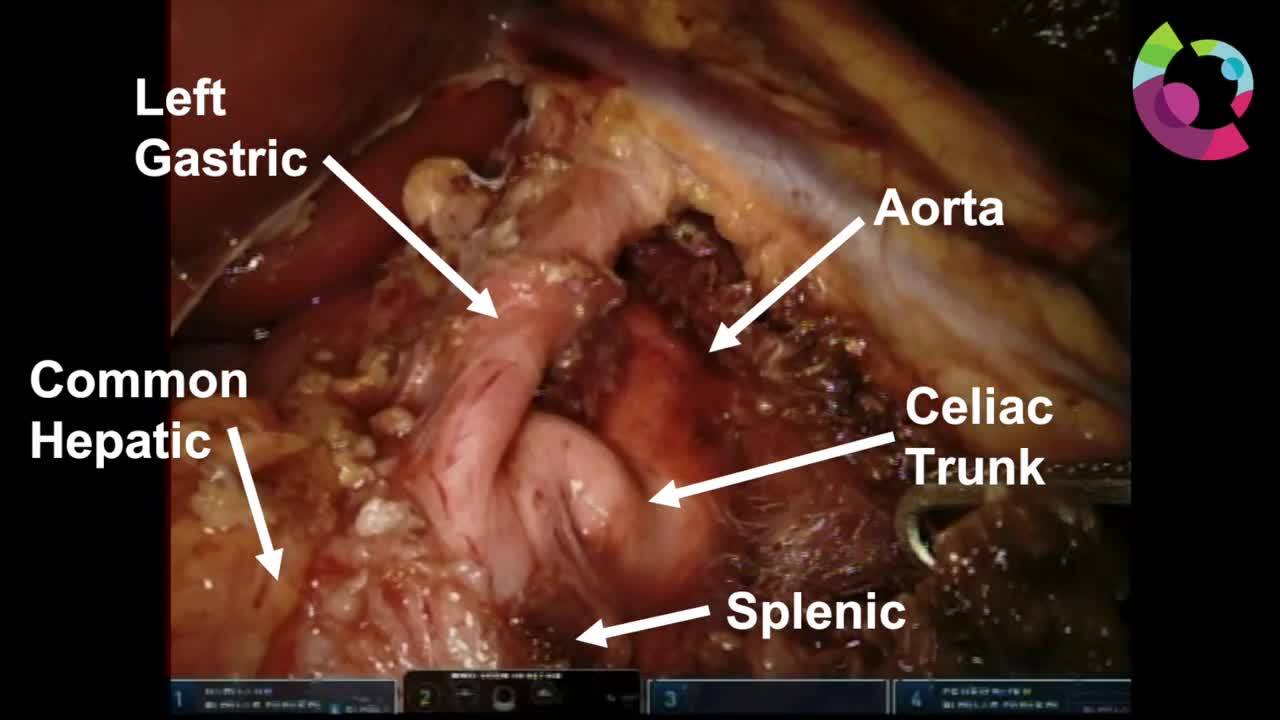
Robotic-Assisted Release of the Median Arcuate Ligament for Pediatric MALS
CCHMC Pediatric Surgery · 4 min · Published Mar 2019
Video
Robotics in Pediatric Surgery: Which indications benefit the most? w/ Dr. Juan Gurria
18 min · Published Oct 2026
Podcast
Diaphragm pacing as alternative to mechanical ventilation in pediatric respiratory failure
1 min · Published Nov 2026
Podcast
Fetoscopic endoluminal tracheal occlusion for congenital diaphragmatic hernia
4 min · Published Nov 2026
Podcast
FETO procedure for late-diagnosed severe CDH with liver herniation
4 min · Published Nov 2026
Podcast
Severe CDH case with FETO: unexpected anatomic findings and clinical outcome
3 min · Published Nov 2026
Podcast
Pediatric pancreatitis: diagnosis, causes, and genetic insights with Dr. Juan Gurria
3 min · Published Nov 2026
Podcast
Understanding craniosynostosis: skull sutures, growth patterns, and diagnosis in infants
10 min · Published Nov 2026
What the experts said
Median arcuate ligament syndrome pathogenesis is unknown; unclear whether mesenteric ischemia or neurogenic stimulation from nerve compression is the mechanism.
In adolescents with MALS, abdominal pain is more frequently post-exercise rather than postprandial, unlike the adult presentation.
MALS is a diagnosis of exclusion requiring extensive negative workup including upper and lower endoscopy, CT enterography, nuclear medicine studies, and imaging.
Dynamic CT angiography with both inspiratory and expiratory phases is critical for diagnosing MALS anatomically.
Duplex ultrasound celiac artery velocity above 300 cm/s is suggestive of MALS; different labs use different thresholds.
Pediatric MALS literature consists of only two small studies showing safety in experienced centers and some quality-of-life improvement in highly selected patients.
Laparoscopic MALS release involves millimeter-by-millimeter division of median arcuate ligament fibers staying anterior on the aorta to avoid vessels; the compressed artery is not visible until partial release.
Arterial stenosis requiring patch repair occurs in adults over 40–45 years but not in adolescents with MALS.
MALS patients should be plugged into pain service or psychology before surgery for postoperative support, often done in conjunction with gastroenterology.
Laparoscopic MALS release is safe with fast recovery (discharge by next day) assuming no intraoperative complications.
Quality of life improves in the short term after MALS release, but long-term data are lacking.
Intraoperative ultrasound during MALS release was tried once but not found useful if anatomy is known.
Getting into the celiac artery during MALS release is a disaster; videos of this complication have been shown at IPEG.
Historically, many children with chronic abdominal pain improved after appendectomy for a normal appendix, suggesting a placebo or psychological effect.
There is no data showing MALS release addresses the cause of abdominal pain; it is analogous to the recent increase in cholecystectomy for poor gallbladder emptying in children.
Children have robust collateral circulation, making it hard to imagine celiac stenosis causes ischemic pain.
If celiac artery compression is found incidentally in an asymptomatic child, no intervention is indicated.
All MALS cases at the speaker's institution were done under IRB protocol with prospective data collection and validated quality-of-life questionnaires (87 questions for children, 50 for parents).
Significant improvement in almost all quality-of-life parameters was seen pre- vs. post-MALS release, but follow-up was limited.
75–80% of MALS patients improved after surgery.
The speaker has performed 21 laparoscopic MALS releases; Don Liu's group in Chicago published 46 cases.
Celiac artery velocity over 300 cm/s on vascular ultrasound indicates significant compression; this can be done without CT and used for postoperative comparison.
The number of MALS cases at Comer Children's Hospital in Chicago has decreased since Don Liu's death.
Chronic abdominal pain management trends have shifted over time: appendectomy, then cholecystectomy, now MALS release.
If one celiac artery injury occurs in 100 MALS cases and the child dies on the table, the procedure cannot be justified.
Operating on a patient with abdominal pain and no identifiable pathology is problematic; adding a scar focuses all future pain on adhesions.
Patients with chronic abdominal pain 'hang their hats' on any diagnosis offered during workup.
MALS diagnosis requires both clinical presentation (post-exercise or postprandial pain after extensive negative workup) and anatomic features (stenosis on imaging, elevated celiac velocity).
At the speaker's previous lab, celiac velocity threshold was 275 cm/s; at the current lab it is 250 cm/s, recently increased.
Thorough informed consent for MALS release includes explaining that being 1 millimeter off can cause disaster, complications, and death; some patients decline after this discussion.
In chronic abdominal pain workup, clinicians often 'do enough tests until you find one that's abnormal and then call that the diagnosis.'
One surgeon would not take out the appendix in a diagnostic laparoscopy for chronic pain today, believing patients improve from just opening the belly.
Diagnostic laparoscopy with appendectomy for chronic abdominal pain (after negative extensive workup) has very low morbidity and can be viewed as another diagnostic test.
70% of children undergoing diagnostic laparoscopy with appendectomy for chronic pain improved, though some had recurrence at 6 months.
Diagnostic laparoscopy helps families accept there is no anatomic cause and transition to pain management strategies.
Softening stools is the most effective intervention for chronic abdominal pain; nearly all these children have subtle constipation.
Cumulative MALS experience among surgeons in the room is very limited: one surgeon did one case, most have done none.
A senior GI physician observed that Crohn's patients never miss school, while functional abdominal pain patients miss months of school; school attendance is a useful history point.
Dr. Clapworthy's rule from 50 years ago: treat chronic abdominal pain with a stool softener (like MiraLAX) for a month; patients almost never returned.