
 StayCurrentMD
Median Arcuate Ligament Syndrome
Everything in the library about median arcuate ligament syndrome — built automatically from the recorded discussions that name it
Educational content from recorded physician discussions — not medical advice. Always talk to your child's care team about your child's situation.
Content of this collection
Surgical Management
1 item
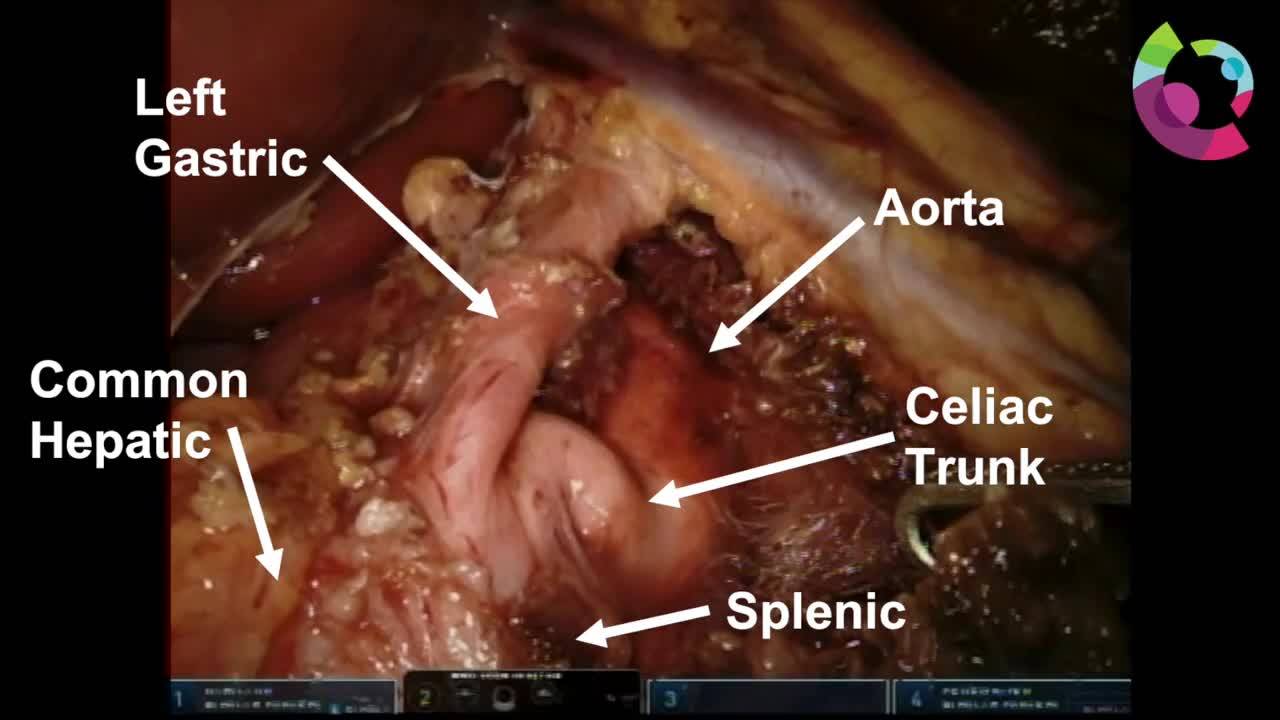
Robotic-Assisted Release of the Median Arcuate Ligament for Pediatric MALS
Watch →
Presented by Alejandra M Casar Berazaluce, MD; Alexander Gibbons, MD; and Jaimie D Nathan, MD from Cincinnati Children's Hospital Medical Center at the IPEG - International Pediatric Endosurgery Group 28th Annual Congress for Endosurgery in
video4:51 · Mar 2019
Case-Based Learning
1 item
In-Depth Reviews
1 item

Persistent Abdominal Pain - Median Arcuate Ligament Syndrome: Update Course 2014
Watch →
Dr. Abdalla E. Zarroug discusses minimally invasive treatment of median arcuate ligament syndrome (MALS). His presentation involves discussion of persistent abdominal pain in adolescents, celiac artery compression syndrome, celiac axis synd
video22:32 · Nov 2018
Summaries and takeaways+ Show
The doctors in this collection+ Show
All expert statements+ Show
Every expert statement below comes from the recorded discussions, with its speaker and moment.
Robotic-Assisted Release of the Median Arcuate Ligament for Pediatric MALS
Median arcuate ligament syndrome is a chronic abdominal pain syndrome characterized by epigastric pain, nausea, and vomiting.
clinical0:10 ↗
The pain in MALS is usually worse after meals and eventually leads to anorexia and weight loss.
clinical0:18 ↗
MALS is a diagnosis of exclusion hypothesized to be caused by compression of the celiac artery and celiac plexus by the median arcuate ligament, a fibrous band at the intersection of the left and right diaphragmatic crura.
clinical0:25 ↗
Multiple imaging modalities are useful in identifying celiac compression for MALS diagnosis, including CTA, MRA, and conventional angiography.
clinical0:39 ↗
Dynamic flow changes in MALS can be evaluated by duplex ultrasound, with flow restriction worsening during expiration due to changes in the position of the diaphragm.
clinical0:51 ↗
Due to the presence of a mechanical constriction, the treatment for MALS is surgical release.
clinical1:02 ↗
Robotic MALS surgery offers improved 3-dimensional visualization, flexibility and end or wrist motion for challenging angles, elimination of tremor, and scaling of motion for fine dissection in a limited space.
opinion1:08 ↗
In robotic MALS surgery, dissection is approached through a window in the lesser omentum.
clinical1:27 ↗
Early identification of the celiac trifurcation is a key step in robotic MALS surgery.
clinical1:33 ↗
Ganglionectomy is performed as encountered during the dissection of fibrous bands and perivascular connective tissue in MALS surgery.
clinical1:41 ↗
Dissection in MALS surgery proceeds from distal to proximal towards the origin of the celiac axis.
clinical1:54 ↗
Some MALS cases require dissection of right crural fibers to reach the base of the celiac artery.
clinical2:06 ↗
Division of the median arcuate ligament can be accomplished by standard hook electrocautery, bipolar energy devices, or a vessel sealing device.
clinical2:25 ↗
Residual celiac trunk tortuosity may persist after initial median arcuate ligament release.
clinical2:54 ↗
Dissection must continue along the anterior wall of the aorta down to the pre-adventitial plane from caudal to cranial for around 4 centimeters.
clinical3:01 ↗
Circumferential dissection down to the pre-adventitial plane must be accomplished around the origins of the left gastric artery, the common hepatic artery, the splenic artery, and the celiac trunk.
clinical3:19 ↗
Significant improvement in celiac trunk appearance is observed after complete circumferential dissection.
clinical3:59 ↗
Following proper surgical technique, median arcuate ligament release can be accomplished safely in the pediatric population with good results.
opinion4:08 ↗
MALS surgery carries the risk of injury to important vessels due to proximity to critical anatomy.
clinical4:18 ↗
With the exposure and visualization provided by the robotic approach, vascular complications in MALS surgery can be addressed minimally invasively.
opinion4:25 ↗
An avulsion of a small aortic branch during MALS surgery can be controlled with steady pressure applied via suction irrigator, temporized with a clip, and repaired with pledgeted sutures intracorporeally.
clinical4:35 ↗
Persistent Abdominal Pain - Median Arcuate Ligament Syndrome: Update Course 2014
Median arcuate ligament syndrome pathogenesis is unknown; unclear whether mesenteric ischemia or neurogenic stimulation from nerve compression is the mechanism.
clinical0:00 ↗
In adolescents with MALS, abdominal pain is more frequently post-exercise rather than postprandial, unlike the adult presentation.
clinical1:00 ↗
MALS is a diagnosis of exclusion requiring extensive negative workup including upper and lower endoscopy, CT enterography, nuclear medicine studies, and imaging.
clinical2:00 ↗
Dynamic CT angiography with both inspiratory and expiratory phases is critical for diagnosing MALS anatomically.
clinical3:00 ↗
Duplex ultrasound celiac artery velocity above 300 cm/s is suggestive of MALS; different labs use different thresholds.
clinical4:00 ↗
Pediatric MALS literature consists of only two small studies showing safety in experienced centers and some quality-of-life improvement in highly selected patients.
epidemiological5:00 ↗
Laparoscopic MALS release involves millimeter-by-millimeter division of median arcuate ligament fibers staying anterior on the aorta to avoid vessels; the compressed artery is not visible until partial release.
clinical6:00 ↗
Arterial stenosis requiring patch repair occurs in adults over 40–45 years but not in adolescents with MALS.
clinical7:00 ↗
MALS patients should be plugged into pain service or psychology before surgery for postoperative support, often done in conjunction with gastroenterology.
clinical8:00 ↗
What's new+ Show