


Chapter 4 of 8 · Evidence & Research
Cardiology view
Cardiologist Perspective on Exercise Testing
Cued at 8:30 · stops at 10:03 · press play
Expert statements on this page
No expert statements were drawn from this page.
Host summaries · secondary, not cited in answers
Educational content from recorded physician discussions — not medical advice. Talk to your (or your child's) care team about your situation.
Video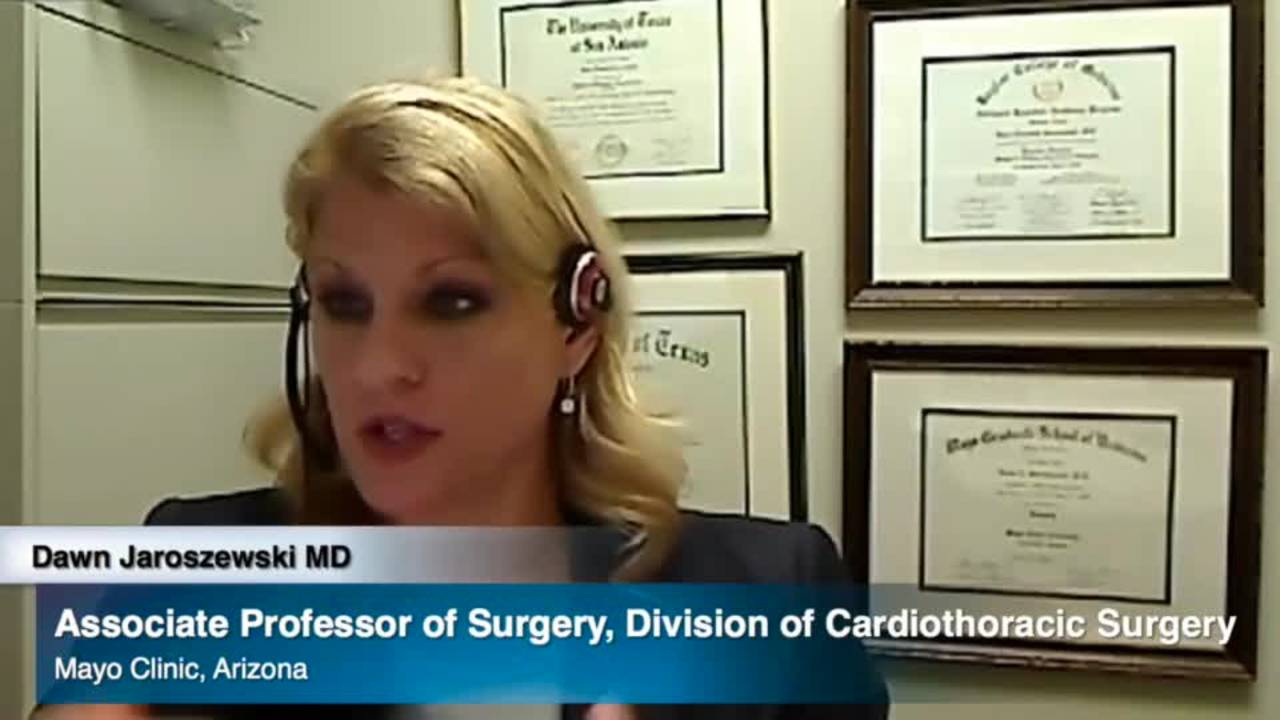
Physiology: Pectus Innovations
21 min · Published Oct 2015
Podcast
Chest Wall Deformities with Dr. Robert Kelly
46 min · Published Jan 2017
Video
Pectus - Preoperative Assessment - Radiology and Cardiac Evaluation
Dr. Todd Ponsky · 44 min · Published Nov 2018
Video
Radiology: Pectus Innovations
38 min · Published Oct 2015
Video
Vacuum Bell Therapy for Pectus Excavatum: Long-term Experience at a Single Center
58 s · Published Apr 2025
Video
An Update on Chest Wall Anomalies and Their Treatment: Advanced Practice...
Dr. Todd Ponsky · 46 min · Published Jul 2017
Podcast
Diaphragm pacing as alternative to mechanical ventilation in pediatric respiratory failure
1 min · Published Nov 2026
Podcast
Fetoscopic endoluminal tracheal occlusion for congenital diaphragmatic hernia
4 min · Published Nov 2026
Podcast
FETO procedure for late-diagnosed severe CDH with liver herniation
4 min · Published Nov 2026
Podcast
Severe CDH case with FETO: unexpected anatomic findings and clinical outcome
3 min · Published Nov 2026
Podcast
Pediatric pancreatitis: diagnosis, causes, and genetic insights with Dr. Juan Gurria
3 min · Published Nov 2026
Podcast
Understanding craniosynostosis: skull sutures, growth patterns, and diagnosis in infants
10 min · Published Nov 2026
What the experts said
99% of pectus patients receive transthoracic echos reported as normal, but these studies have difficulty obtaining adequate windows to visualize the right side of the heart.
Intraoperative TEE shows marked compression of the right heart chambers pre-operatively, with significant improvement in chamber dimensions post-operatively.
Post-operative flow velocities through the right ventricular outflow tract are nearly triple pre-operative values.
Left ventricular output also improves significantly when right-sided flow increases, because the heart functions as a pump.
In older pectus patients, cardiac output can improve from 55% (normal range) to 77% after repair.
Cardiac contractility, synchrony, and segmental excursion all show significant improvement post-operatively.
In a series of 168 patients, minimally invasive repair produced a 30% increase in cardiac output, while open repair showed less improvement (24% overall).
Open repair patients show less cardiac output improvement than minimally invasive patients, likely because the open group includes more cases of malunion and other complex issues.
Standard Bruce protocol ischemic stress testing is not appropriate for pectus evaluation; cardiopulmonary exercise testing with VO2 measurement is required.
VO2 max and anaerobic VO2 are very abnormal in pectus patients, while other cardiopulmonary parameters remain normal.
Pectus patients show a flat stroke volume curve during exercise—they increase output initially by heart rate but cannot increase volume due to chest cage restriction.
Ehlers-Danlos type 4 (vascular type) does not typically present with pectus excavatum as a skeletal manifestation.
Ehlers-Danlos type 4 involves internal tissue fragility, requiring specially managed repairs if surgery is considered.
Genetic testing should be used to confirm Ehlers-Danlos type 4; if genetic testing is normal but clinical suspicion remains high, skin biopsy may be considered.
Patients often confuse hypermobile and vascular types of Ehlers-Danlos based on visible veins or family history of aortic aneurysm, neither of which indicates vascular type.
Compensation mechanisms in children appear to work better than in adults; older patients show stronger deficits on exercise testing.
Some pectus patients are completely asymptomatic as children but progress to become symptomatic as they age, while others are symptomatic from a young age.
Younger children have more flexible chest walls, allowing repair with less force (described as 'a popsicle stick'), while adults are rigid and experience tremendous pain.
The trend in the United States has shifted from repairing young children to operating on older populations.
The institution where Donald Nuss practices has moved away from operating on young children, suggesting they may have encountered more issues than reported in the initial series.
Vacuum bell therapy works best in patients with very flexible chest walls who wear the device religiously.
Patient compliance with vacuum bell therapy varies widely, with some children tolerating only 10 minutes of use despite parental bribes.
For a 5 year old with pectus, vacuum bell therapy is a reasonable alternative to surgery.
Dawn's practice has selection bias because she primarily sees symptomatic adult patients; thousands of adults with pectus may be asymptomatic.
95% of patients who come to Dawn's office ultimately choose surgery.
When asymptomatic adolescents with severe pectus are counseled in depth, they often reveal subtle symptoms they hadn't recognized, such as not performing as well as their friends.
A French study of 125 adults showed that cardiopulmonary exercise parameters statistically improve and normalize after surgical pectus repair.
Malik's Easter Seals grant study at UCLA found that while some classes of pediatric pectus patients showed exercise deficits, a large percentage of children did not show problems on cardiopulmonary testing.
Korean centers routinely repair pectus in 3-5 year old children using very small bars and report good outcomes.
Donald Nuss's early series included patients as young as 3 years old and did not report high recurrence rates.