


From
Live Event Content
Oncofertility Ovarian Salvage
With Dr. Julie Rios · hosted by Dr. Todd Ponsky
Chapter 1 of 5 · Fundamentals
Topic selection
Introduction to oncofertility as a priority topic
Expert statements on this page
No expert statements were drawn from this page.
Host summaries · secondary, not cited in answers
Educational content from recorded physician discussions — not medical advice. Talk to your (or your child's) care team about your situation.
Video
Compiled Hayes Jordan Rapid Fire Sessions: Update Course 2015
33 min · Published Nov 2015
Podcast
Evolution of pediatric surgical oncology as a subspecialty
Roshni Dasgupta · 26 min · Published Jun 2021
Video
Ovarian Teratoma - Ovarian Torsion - Soft Tissue Sarcoma: Update Course 2015
34 min · Published Nov 2018
Video
Technical approaches to rhabdomyosarcoma management: APSA Cancer Committee case series
Roshni Dasgupta · 17 min · Published Feb 2022
Video
Soft Tissue Sarcoma Rapid Fire: Update Course 2015
8 min · Published Nov 2015
Video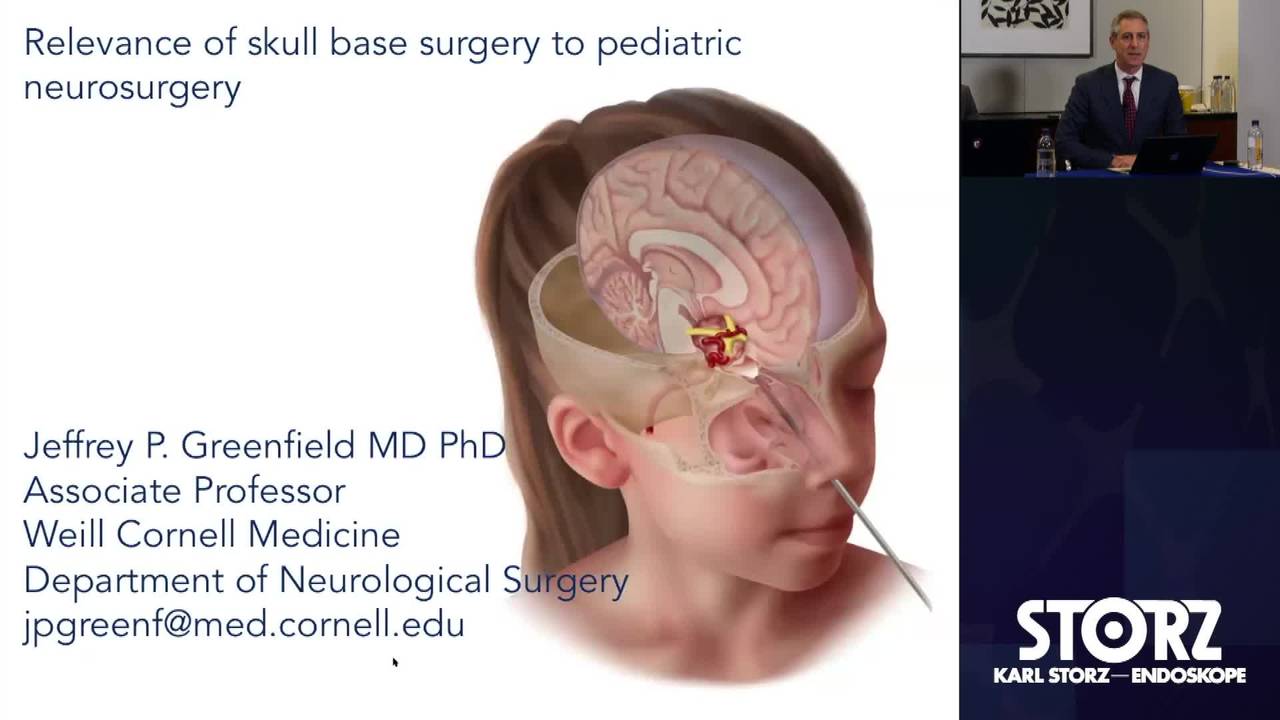
Relevance of Skull Base Surgery to Pediatric Neurosurgery: Pediatric...
21 min · Published Jan 2018
Video
Rare Ovarian Tumor in Infants: Small Cell Carcinoma of Ovary, Hypercalcemic Type & SMARCA4 Mutation
21 s · Published Oct 2026
Video
Can Normal X-Rays Miss Metastatic Neuroblastoma? A Pediatric Radiology Case Study
26 s · Published Oct 2026
Video
Can Fractures Be a Sign of Hepatoblastoma in Children? Understanding Pediatric Liver Cancer Symptoms
37 s · Published Oct 2026
Video
Pancreas, Muscle, and Subcutaneous Fat Atrophy in Patients Undergoing Radiation for Neuroblastoma
47 s · Published Oct 2026
Podcast
Hepatoblastoma
Todd Ponsky · 54 min · Published Oct 2026
Podcast
Wilms Tumor
Todd Ponsky · 64 min · Published Oct 2026
Video
Clinical & Research Update: Renal Tumors with Drs. Ethan Smith, Lindsay Haacker, Michael Daugherty, and Meera Kotagal
71 min · Published Sep 2026
Video
Clinical & Research Update: Neuroblastoma with Drs. Katherine Somers, Cara Morin, Juan Gurria, and Meera Kotagal
67 min · Published Sep 2026
Video
Clinical & Research Update: Sarcoma w/ Drs. Roshni Dasgupta, Joseph Pressey, Arthur Meyer, Luke Pater
66 min · Published Sep 2026
Video
2026 Laparoscopic Pediatric Hernia Repair
123 min · Published Jun 2026
Video
Beyond the Spectrum: Diagnosis, Myths & Management - Caitlin Couch & Leslie Lopez - APP Conference 2026
50 min · Published May 2026
Video
Dysautonomia: Navigating the Journey - Martha Willis - APP Conference 2026
55 min · Published May 2026
What the experts said
Cyclophosphamide equivalent dose (CED) over 15 grams per meter squared puts pediatric patients at high risk for ovarian failure.
The patient's CED was 30.8 grams per meter squared, placing her at high risk for primary ovarian insufficiency.
Ovarian transposition may not provide adequate distance from scatter radiation in young patients receiving pelvic radiation.
GnRH agonist therapy has not demonstrated clear fertility preservation benefit in pediatric patients and is not recommended as first-line by ASCO.
GnRH agonist therapy may have some benefit in older patients with breast cancer, though studies conflict.
Ovarian tissue cryopreservation is experimental and followed by future ovarian tissue transplantation, allowing about 30% of patients to have fertility.
Most fertility data from ovarian tissue transplantation comes from post-pubertal patients, but studies show visible follicles in tissue from pediatric patients.
Ovarian tissue is typically cryopreserved within the same day of harvest to minimize egg loss from lack of vascular supply.
Orthotopic transplantation involves placing tissue back where the ovary was removed, either sewn to the contralateral ovary or in a peritoneal pocket near the fallopian tube.
Meta-analysis data shows 37-50% of patients with transplants had live births, with 30-40% achieving fertility preservation (some requiring multiple transplants).
60-90% of patients with ovarian tissue transplants achieve restoration of ovarian endocrine function.
Ovarian tissue cryopreservation requires both a surgeon to remove tissue and facilities to freeze it on-site.
Ovarian tissue cryopreservation became standard of care first in the Netherlands.
Sperm banking is only an option for post-pubertal males, typically Tanner stage 3 and above.
For prepubertal males receiving high-dose treatment, testicular tissue cryopreservation is available through protocols such as at University of Pittsburgh.
Testicular tissue preservation typically involves a wedge biopsy rather than full orchiectomy.
Ovarian tissue transplantation is typically performed only when pregnancy is desired because the graft lasts only 2-5 years.
Hormone replacement medication is used for pubertal induction and hormone support until pregnancy is desired.
Most centers now use long-term storage facilities with three or four mechanisms for detecting tank dysfunction to prevent tissue loss.
Hospital fees and anesthesia fees can often be covered by insurance when ovarian tissue harvest is combined with other oncology procedures like bone marrow biopsy or central line placement.
Tissue storage costs are income-dependent: $75 per year for oncology patients below income threshold, $275 per year above threshold.