


From
StayCurrentMD
Journal of Pediatric Surgery Article Review: March 2022
With Dr. Miko Bogannan & Dr. Scott Short · hosted by Dr. Ellen Encisco
Chapter 2 of 3 · Evidence & Research
Esophageal Stenosis
Management of Congenital Esophageal Stenosis
Cued at 5:10 · stops at 5:32 · press play
Expert statements on this page
No expert statements were drawn from this page.
Host summaries · secondary, not cited in answers
Educational content from recorded physician discussions — not medical advice. Talk to your (or your child's) care team about your situation.
Podcast
Journal Club: Appendicitis in 2021
15 min · Published Aug 2021
Video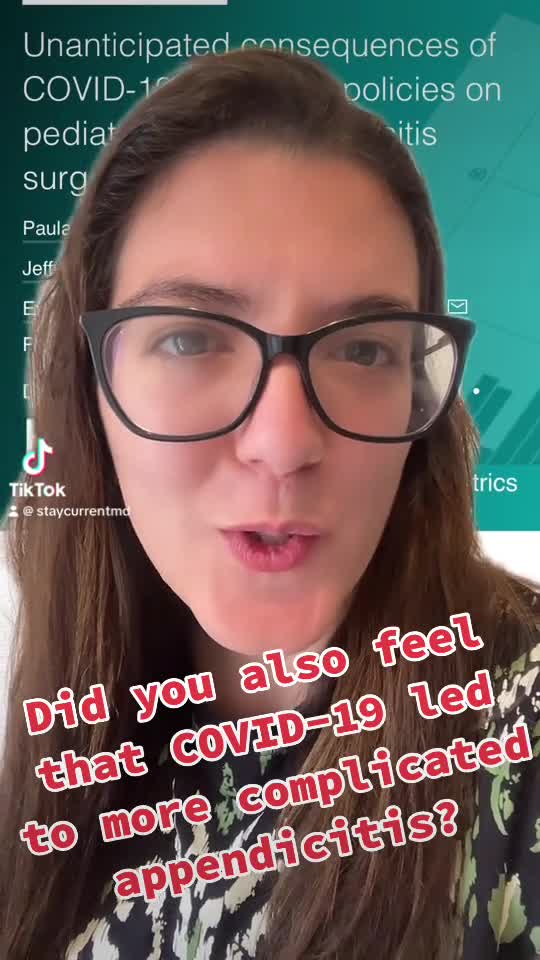
Unanticipated consequences of COVID-19 pandemic policies on pediatric acute appendicitis surgery
Published Jul 2023
Video
Quick Literature Updates Ep 24
4 min · Published Nov 2025
Podcast
Journal of Pediatric Surgery Article Review: Q1 (Jan-Mar) 2024
13 min · Published Jun 2024
Podcast
Diaphragm pacing as alternative to mechanical ventilation in pediatric respiratory failure
1 min · Published Nov 2026
Podcast
Fetoscopic endoluminal tracheal occlusion for congenital diaphragmatic hernia
4 min · Published Nov 2026
Podcast
FETO procedure for late-diagnosed severe CDH with liver herniation
4 min · Published Nov 2026
Podcast
Severe CDH case with FETO: unexpected anatomic findings and clinical outcome
3 min · Published Nov 2026
Podcast
Pediatric pancreatitis: diagnosis, causes, and genetic insights with Dr. Juan Gurria
3 min · Published Nov 2026
Podcast
Understanding craniosynostosis: skull sutures, growth patterns, and diagnosis in infants
10 min · Published Nov 2026
What the experts said
Non-complicated appendicitis is probably already treated by antibiotics in some centers.
If you dilate esophageal stenosis, you have a risk of rupture, which could be catastrophic.
Historically at University of Utah, diet was not initiated following appendicostomy creation until the day after surgery.
Many appendicostomy patients displayed clinical signs that they were ready to initiate diet immediately after surgery.
The meta-analysis included 4 randomized controlled trials and 36 case controlled trials comparing laparoscopic and open appendectomy for complicated appendicitis.
Laparoscopic appendectomy is associated with shorter length of stay, lower rate of surgical site infection, and lower overall complication rate compared to open appendectomy.
Rates of intra-abdominal abscess, post-operative fever, pneumonia, and ileus are similar between laparoscopic and open appendectomy groups.
Open appendectomy has shorter operative time compared to laparoscopic appendectomy.
In Turkey, surgeons prefer open appendectomies in nearly half of children, especially those with lower BMIs.
The Turkish series successfully treated 14 of 19 congenital esophageal stenosis patients with a median of 5 dilatations.
Three congenital esophageal stenosis patients required surgery after dilation attempts.
If esophageal stenosis is cartilaginous, don't try to dilate, just go to resect; if there's no cartilage, then dilate.
The Turkish team tried balloon dilatation for every congenital esophageal stenosis patient first, then moved to surgery based on results.
Surgery was indicated for congenital esophageal stenosis in cases with recurring lung infections, growth retardation, or when patient wasn't healthy enough for dilation program.
Out of 19 congenital esophageal stenosis patients, 16 were successful with balloon dilation, 3 required operation, and overall 17 were symptom-free after 48 months follow-up.
Up to 5 dilatations should be tried before considering operative treatment for congenital esophageal stenosis.
The expedited protocol reduced hospital stay after appendicostomy from 3 days to 1 day without increasing complications or unplanned hospital visits.
Having a protocol and standardization in care management can be beneficial even beyond the specific protocol details.