


From
Dr. Alberto Tozzi
Evidence-based medicine and artificial intelligence in pediatric healthcare
With Dr. Alberto Tozzi
Chapter 4 of 4 · Evidence & Research
Clinical validation
Clinical Validation and Trials
Cued at 16:26 · stops at 16:42 · press play
Expert statements on this page
No expert statements were drawn from this page.
Host summaries · secondary, not cited in answers
Educational content from recorded physician discussions — not medical advice. Talk to your (or your child's) care team about your situation.
More about this diagnosis
Genetic syndromesVideo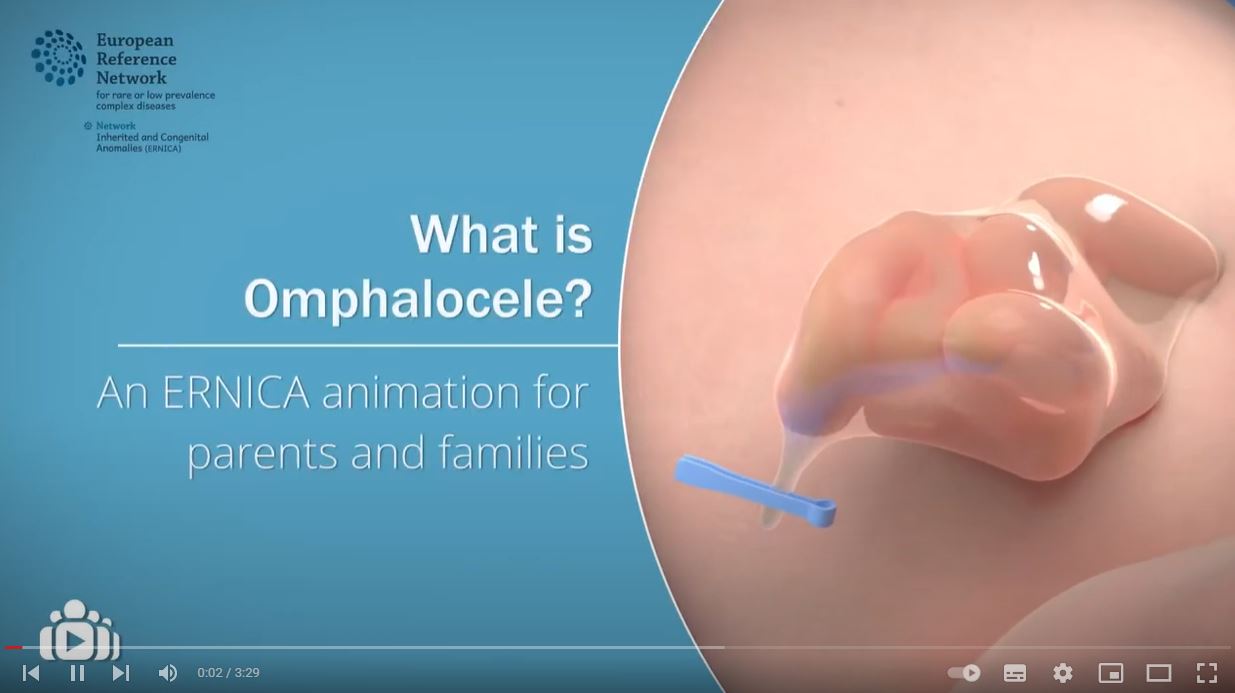
What is Omphalocele? An ERNICA animation for parents and families
3 min · Published Dec 2023
Video
Update Course Rewind: When & How to Operate CDH Patients on ECMO 2024
4 min · Published Aug 2025
Podcast
ECMO timing and technique for severe congenital diaphragmatic hernia in neonates
4 min · Published Nov 2026
Podcast
Healthcare innovation requires cultural change beyond technology adoption
Alberto Tozzi · 21 min · Published Oct 2026
Podcast
Le funzioni e gli usi dell'intelligenza artificiale per la salute
Alberto Tozzi · 14 min · Published Oct 2026
Podcast
Season Two Launch: Reflecting on Pediatric Healthcare Innovation Conversations
Alberto Tozzi · 39 min · Published Oct 2026
Podcast
Data to impact: connecting the future of European pediatrics with Alberto Tozzi
Alberto Tozzi · 20 min · Published Oct 2026
Podcast
Using AI to Read Scientific Publications in Healthcare Research
Alberto Tozzi · 21 min · Published Oct 2026
Podcast
Ethical and regulatory implications of artificial intelligence in healthcare
Alberto Tozzi · 21 min · Published Oct 2026
What the experts said
Alberto Tozzi is responsible for the unit of research in preventive and predictive medicine at Bambino Gesù hospital in Rome.
Artificial intelligence is not an alternative method opposed to evidence-based medicine.
AI and evidence-based medicine should be integrated together.
AI algorithms must be evaluated in clinical cases through rigorous study frameworks.
AI can work with various data types including databases, audio, and video.
Artificial intelligence has fundamental statistical foundations.
AI algorithms can identify associations and correlations but cannot establish causation.
Privacy is a critical consideration when developing AI algorithms with patient data.
AI algorithms using photographs can identify genetic syndromes, with performance data from North American studies.
Algorithm performance must be monitored over time in clinical settings.
Clinical trials are necessary to validate AI algorithms before clinical deployment.
Clinical trials for AI algorithms may be conducted at single clinical centers.
Observational studies and clinical observation are fundamental for preliminary evaluation of AI algorithms.