


From
StayCurrent Espanol
Esophageal atresia overview: types, VACTERL association, and surgical management
With Dr. Daniel von Allmen & Dr. Erin Garrison
Chapter 4 of 5 · Surgical Management
Surgical technique
Surgical repair approach
Cued at 8:03 · stops at 8:24 · press play
Expert statements on this page
No expert statements were drawn from this page.
Host summaries · secondary, not cited in answers
Educational content from recorded physician discussions — not medical advice. Talk to your (or your child's) care team about your situation.
Video
Esophageal Atresia in Brief: Presentation, Workup, Diagnosis, and Treatment
Dr. Todd Ponsky · Published Feb 2022
Video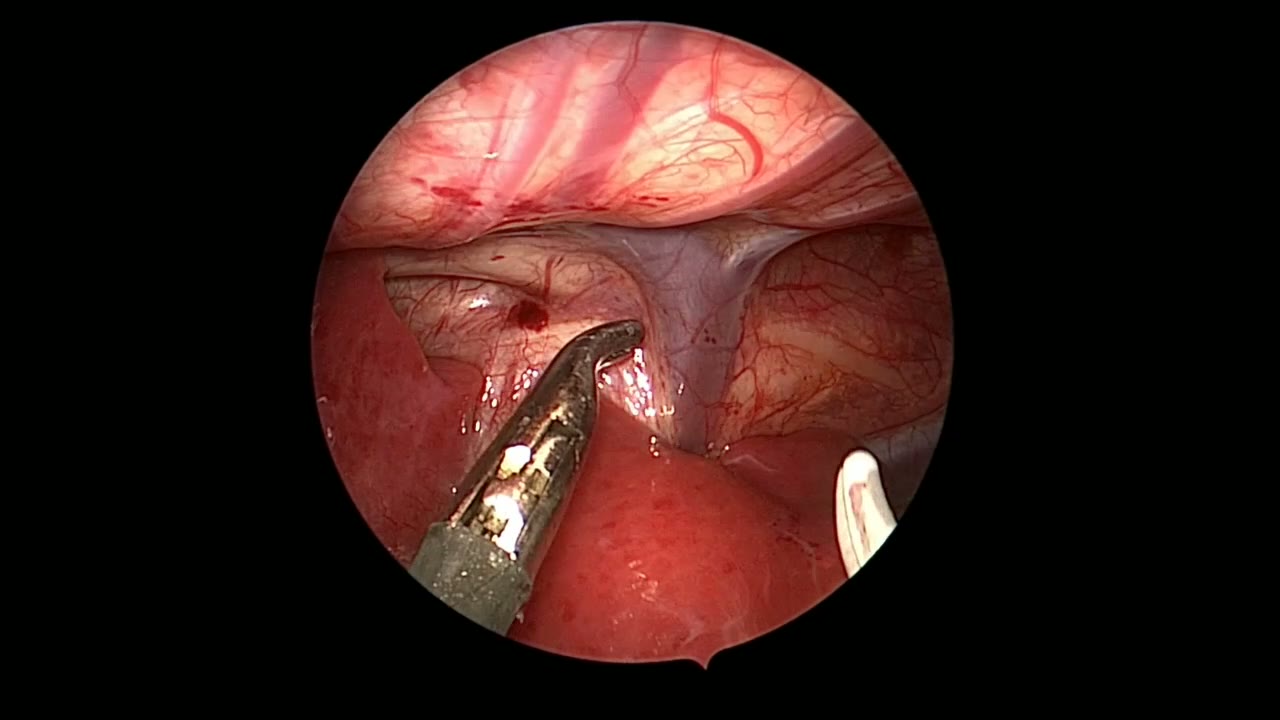
Thoracoscopic Tracheoesophageal Fistula Repair: Upper Pouch Mobilization and Anastomosis
Dr. Steve Rothenberg · 2 min · Published May 2026
Video
Glycopyrrolate for Anastomtic Dehiscence in Esophageal Atresia
2 min · Published May 2017
Video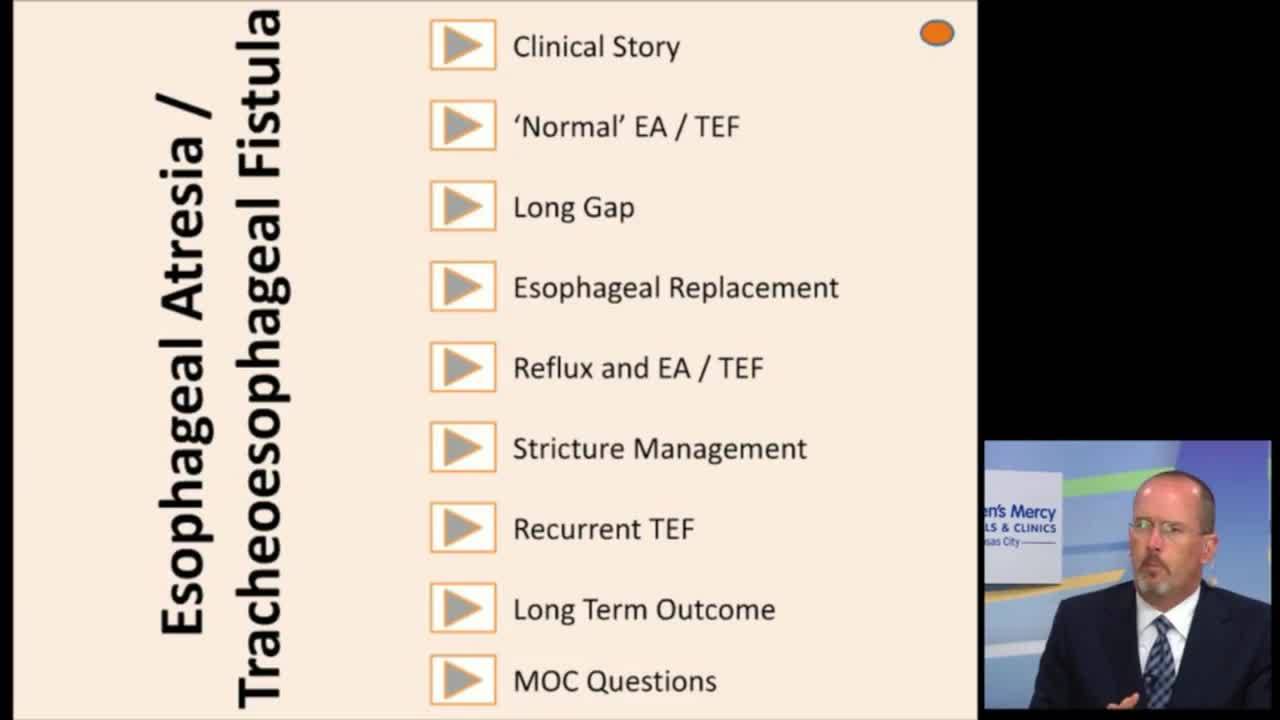
Update Course 2013: EA & TEF
38 min · Published Sep 2013
Podcast
Revisión bibliográfica sobre atresia esofágica: manejo quirúrgico y complicaciones
16 min · Published Oct 2022
Video
Tips and Tricks: EA & TEF
Dr. Steve Rothenberg · 9 min · Published Dec 2012
Podcast
Treatment for Long Gap Esophageal Atresia: Esophageal Elongation and Replacement
10 min · Published Jan 2022
Video
7th Annual Pediatric Surgery Update Course 2019 - FULL SHOW
285 min · Published Jul 2020
Podcast
Neuroblastoma
56 min · Published Aug 2019
Video
Aerodigestive & Esophageal Surgery - The Unsalvageable Esophagus & Cases
CCHMC Pediatric Surgery · 101 min · Published Nov 2018
Video
Aerodigestive & Esophageal Surgery - Difficult Tracheal Esophageal Fistula
Dr. Todd Ponsky · 120 min · Published Nov 2018
Video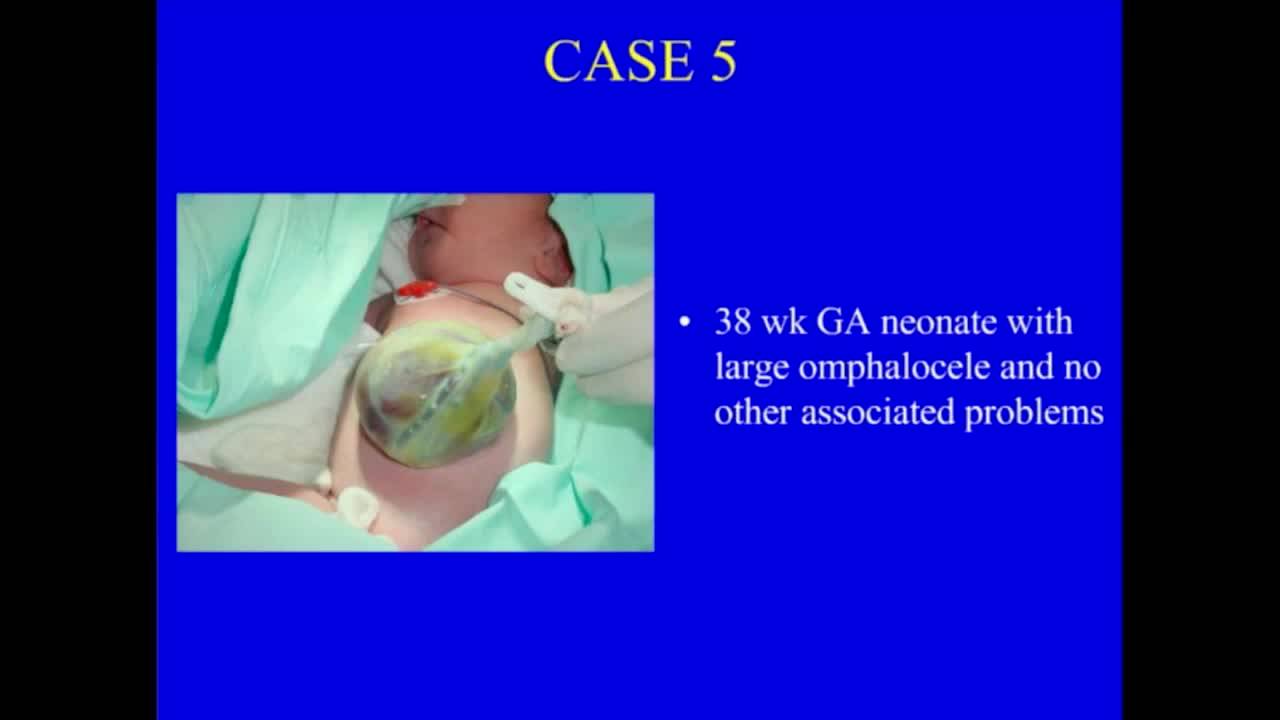
Abdominal Wall Defects
37 min · Published Nov 2018
Video
Volumen testicular en la pubertad en niños con criptorquidia congénita aleatorizados a tratamiento en diferentes edades
1 min · Published Jul 2024
Video
Cuidado de transición en malformación anorrectal y enfermedad de Hirschsprung
1 min · Published Jul 2024
Video
Exploración laparoscópica trancística del conducto biliar común en pacientes pediátricos con coledocolitiasis
1 min · Published Jul 2024
Video
Características clínicas y pronóstico de la atresia de vías biliares con niveles bajos de metaloproteinasa 7 de la matriz sérica
55 s · Published Jul 2024
Video
Reglas de predicción PECARN para imágenes por TC de niños que acuden al servicio de urgencias con traumatismo craneoencefálico menor o abdominal cerrado
58 s · Published Jul 2024
Video
El cese del tratamiento con antibióticos para la apendicitis complicada en el momento del alta no aumenta el riesgo de infección posoperatoria
55 s · Published Jul 2024
What the experts said
Dan von Almen is the surgeon in chief at Cincinnati Children's Hospital.
Erin Garrison is a pediatric surgeon at Cincinnati Children's and the associate program director of the fellowship.
VACTERL association includes vertebral malformation, anorectal anomalies, cardiac anomalies, tracheoesophageal fistula, renal anomalies, and limb malformations.
Screening for VACTERL association malformations is important in infants with esophageal atresia.
There are five different types of esophageal atresia with tracheoesophageal fistula.
The surgical approach for esophageal atresia involves dividing the tracheoesophageal fistula and creating an esophageal anastomosis.
Surgeons want to minimize tension on the esophageal anastomosis.
Anastomotic leak is one of the most common short-term complications after esophageal atresia repair.
The rate of anastomotic leak after esophageal atresia repair is 5-15%.