

Dr. Marc Michalsky - Pediatric Robotic-Assisted Surgery – Developing a Programmatic Paradigm
With Dr. Marc Michalsky · hosted by Dr. Marques (Marky)
Chapter 1 of 9 · Fundamentals
Introduction
Introduction and Background
Expert statements on this page
No expert statements were drawn from this page.
Host summaries · secondary, not cited in answers
Educational content from recorded physician discussions — not medical advice. Talk to your (or your child's) care team about your situation.
Video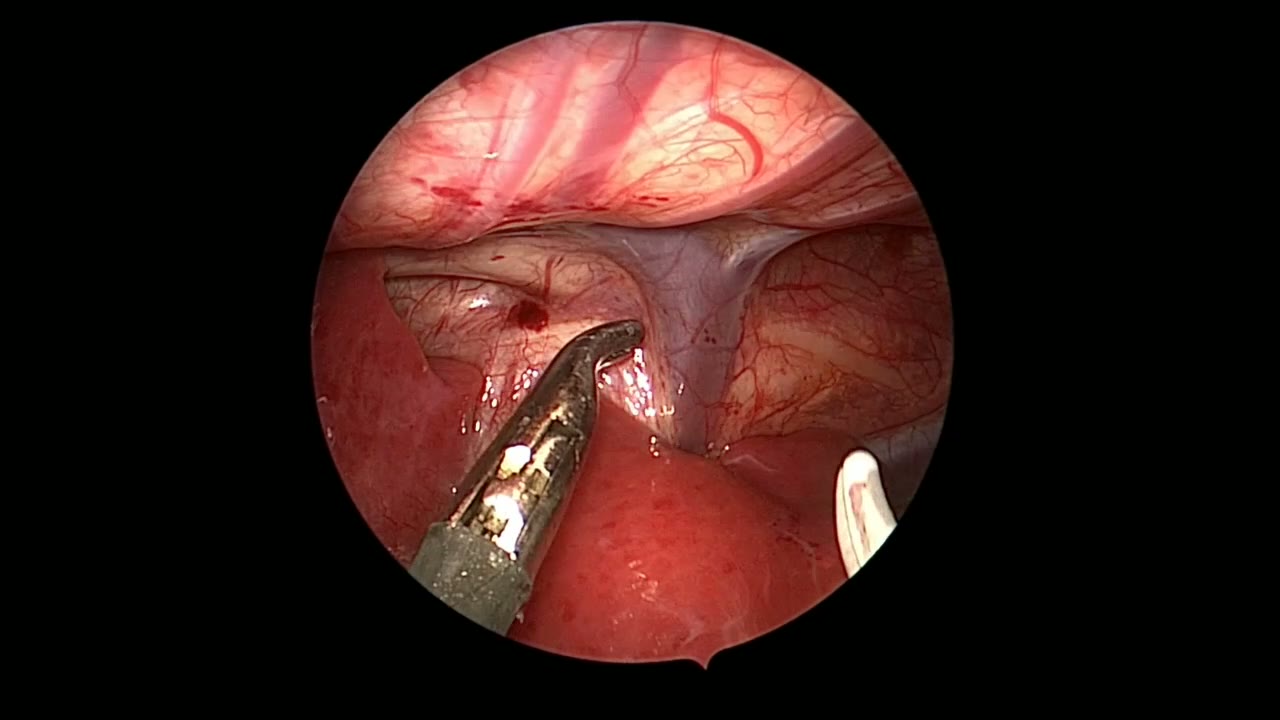
JRS TEF SHORT
Dr. Steve Rothenberg · 2 min · Published May 2026
Video
Glycopyrrolate for Anastomtic Dehiscence in Esophageal Atresia
2 min · Published May 2017
Video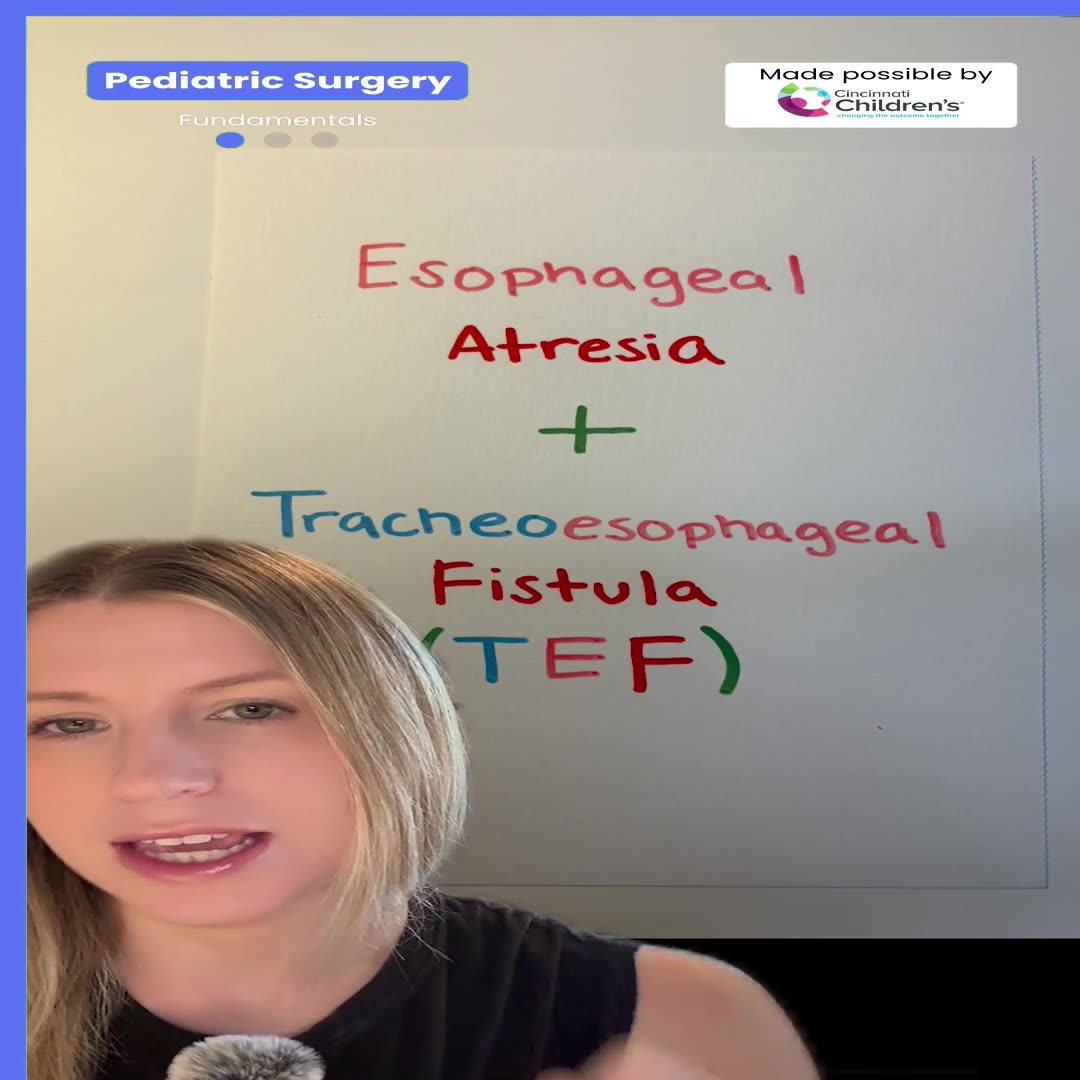
Esophageal Atresia & Tracheoesophageal Fistula (EA/TEF) Types Explained for Pediatric Surgery
2 min · Published Sep 2026
Video
Top Themes From The Stay Current App
Published Sep 2020
Video
QUAD #26 - Use of Ultrashort Echo-Time MRI to Measure Tracheomalacia in Neonates with Esophageal Atresia with Dr. Douglas von Allmen
CCHMC Pediatric Surgery · 5 min · Published Feb 2025
Video
Thoracoscopic Repair of Tracheo-esophageal Fistula Tricks: Pediatric Surgery...
19 min · Published Jul 2017
What the experts said
The green telepresence system from Stanford Research Institute was originally designed as an open surgical platform, not for minimally invasive surgery.
Colonel Rick Satava had an 'aha moment' after seeing Jacques Marescaux's laparoscopic cholecystectomy video, leading him to propose marrying robotic and laparoscopic technologies.
The transition from da Vinci SI to XI was transformational, creating much more flexible range of motion.
Computer Motion's 5mm instruments were sunsetted by Intuitive after acquisition, creating a persistent gap for pediatric applications.
One large children's hospital acquired a robot without planning; it sat unused for 18 months costing $25,000/month in maintenance.
Nationwide formed a steering committee with pediatric surgery, urology, anesthesia, nursing, and periop administration to develop integrated multidisciplinary program.
Maintenance of certification requires at least 10 robotic cases over a 2-year credentialing cycle plus mandatory quarterly digital simulation.
Block time overlay system assigns automated robot availability on top of surgeons' existing block time, with 14-day release mechanism if unused.
Using longer 'bariatric' instruments spreads out the robot above the patient and reduces likelihood of external arm collisions, even in smaller children.
In Nationwide's experience of ~1000 patients, 12% of robotic cases were performed on patients less than 15kg, primarily driven by urology.
No difference in operating time, 30-day complications, or readmissions for sleeve gastrectomy above versus below BMI 50.
Robotic sleeve gastrectomy initially took 30 minutes longer than laparoscopic but patients were discharged earlier.
Learning curve for robotic sleeve gastrectomy decreased from 132 minutes with SI to 36 minutes with XI; speaker has performed cases in 21 minutes.
No difference in time or complications for robotic acute cholecystitis versus elective cholecystectomy.
Robotic surgery experience has made the speaker a better laparoscopic surgeon, particularly for intracorporeal knot tying.
Hopkins performed a robotic cholecystectomy in a pig cadaver model with effectively no human input earlier this summer.
Intuitive has 4 pediatric surgeons working for it, including James Wall, all with Stanford/Palo Alto connections.
Intuitive is working with FDA to reconfigure clearance from specific case indications to categories, which will include pediatrics.
Carl Storz platform has 5mm instrumentation and strong interest in pediatric applications.
Intuitive will not build a pediatric-specific robot as it would require ~$1 billion investment without adequate ROI.
Robotic cases garner a higher facility charge (level 5, ~$4000 per 15 minutes) versus laparoscopic cases (level 3, ~$2200 per 15 minutes).
Nationwide has seen no insurance denials for robotic pre-certification and no patient reports of astronomical bills or surcharges attributed to robot use.
Fellow credentialing requires 10 bedside assists and 20 console cases as primary surgeon, plus skills/drills and certificate completion.
J&J has partnership with Google for metadata power to develop digital overlay systems incorporating axial imaging into robotic view.
Dr. Clatworthy was the first pediatric surgeon in Ohio, trained by Dr. Gross at Boston Children's, and became first surgeon-in-chief at Columbus Children's Hospital.
Teen-LABS data at 10 years shows effectively no difference in outcomes between Roux-en-Y gastric bypass and sleeve gastrectomy.