


From
StayCurrentMD
Biliary Atresia: Where are we now? Advanced Practice Providers Pediatric...
With Dr. Todd Ponsky
Chapter 7 of 9 · Case-Based Learning
Case presentation
Case Study: Sandra
Cued at 35:58 · stops at 36:23 · press play
Expert statements on this page
No expert statements were drawn from this page.
Host summaries · secondary, not cited in answers
Educational content from recorded physician discussions — not medical advice. Talk to your (or your child's) care team about your situation.
Video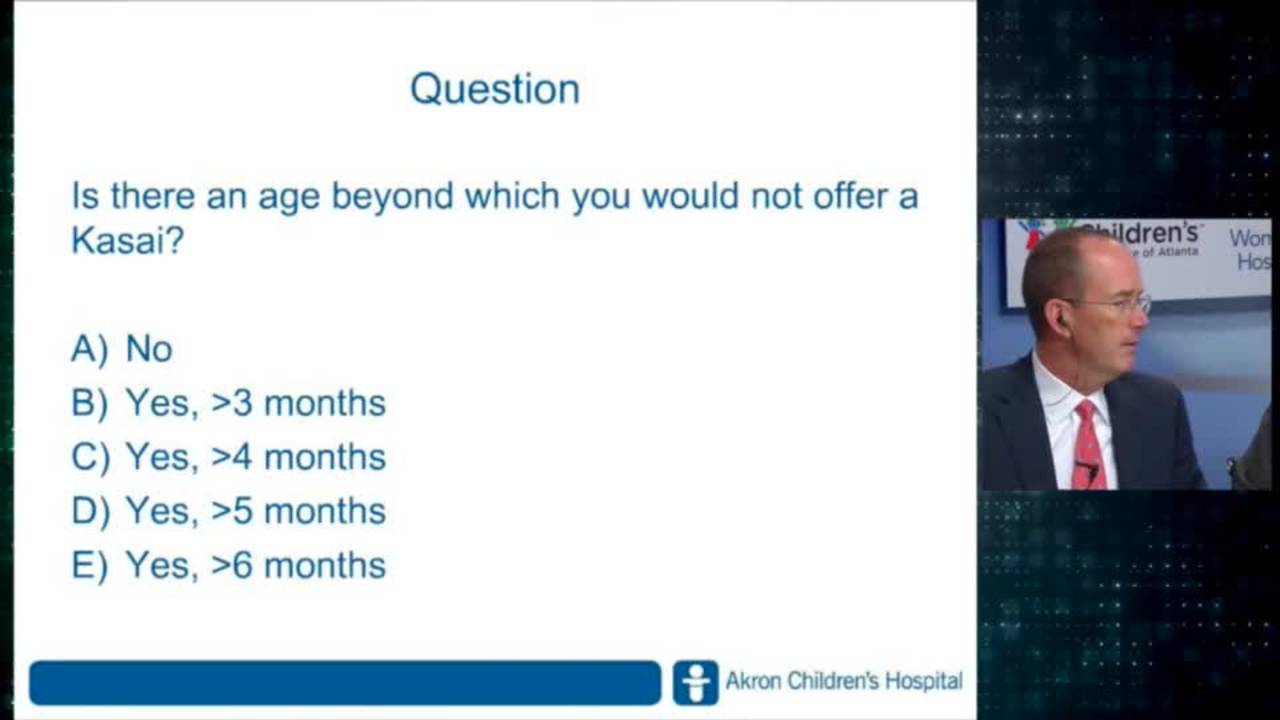
Biliary Atresia - Robert Parry: Update Course 2014
24 min · Published Nov 2018
Video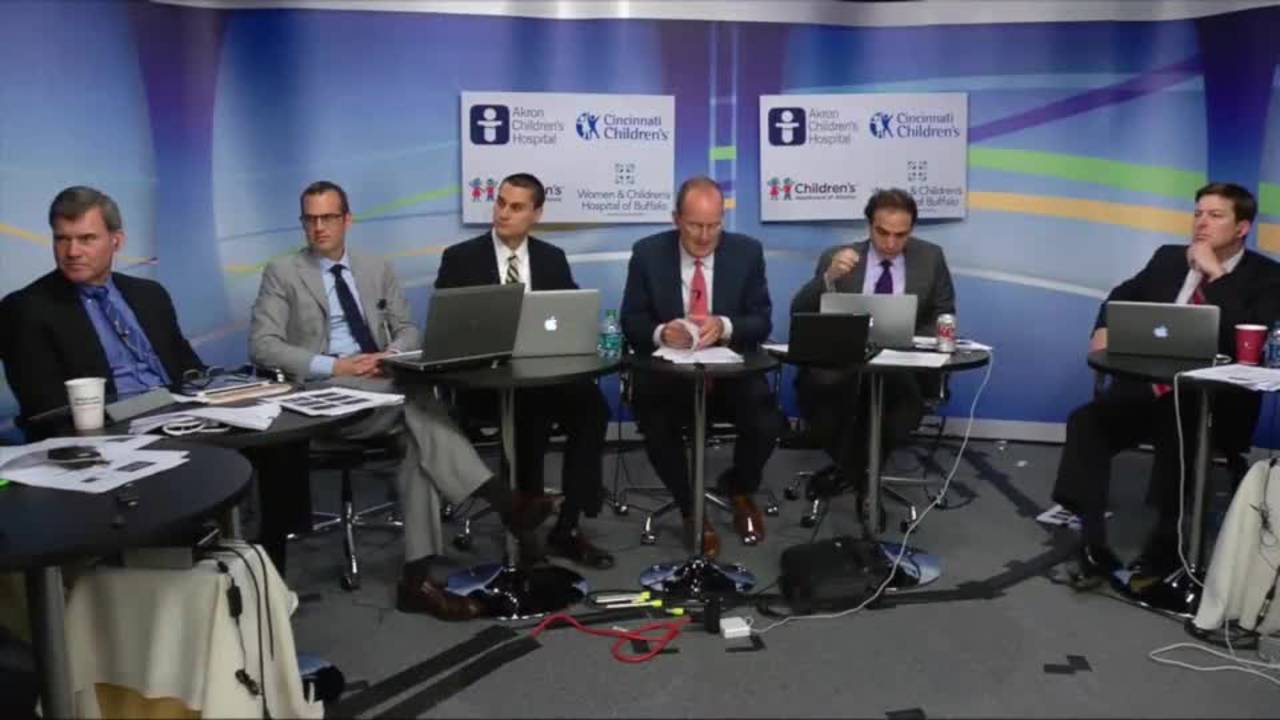
Biliary Atresia-Case Presentation and Panel Discussion: Update Course 2014
23 min · Published Jul 2017
Video
Biliary Atresia with Dr. Greg Tiao
CCHMC Pediatric Surgery · 11 min · Published Jun 2022
Video
Update Course Rewind: MMP-7 & Biliary Atresia Diagnosis 2024
CCHMC Pediatric Surgery · 6 min · Published Mar 2025
Podcast
Atresia de Vias Biliares - Resumen de la 5ta sesión Nacional de Residentes de Mexico
16 min · Published May 2023
Video
Prof. Shilpa Sharma - Best of the Best in Pediatric Surgery 2024
Dr. Todd Ponsky · 5 min · Published Feb 2024
Podcast
Surgical Decision-Making in Necrotizing Enterocolitis: Imaging, Timing, and Operative Strategies
11 min · Published Nov 2026
Video
AI applications in pediatric surgery and clinical transformation with Dr. Todd Ponsky
Dr. Todd Ponsky · 7 min · Published Oct 2026
Podcast
The Future of Surgical Education: A King, an Ox, & Elon Musk
Todd Ponsky · 26 min · Published Oct 2026
Podcast
Unconscious Bias
Todd Ponsky · 58 min · Published Oct 2026
Video
Storycasts in Pediatric Surgery: Interactive Storytelling to Transform Clinical Education
Todd Ponsky · Published Oct 2026
Podcast
Necrotizing Enterocolitis
Todd Ponsky · 46 min · Published Oct 2026
Podcast
Diaphragm pacing as alternative to mechanical ventilation in pediatric respiratory failure
1 min · Published Nov 2026
Podcast
Fetoscopic endoluminal tracheal occlusion for congenital diaphragmatic hernia
4 min · Published Nov 2026
Podcast
FETO procedure for late-diagnosed severe CDH with liver herniation
4 min · Published Nov 2026
Podcast
Severe CDH case with FETO: unexpected anatomic findings and clinical outcome
3 min · Published Nov 2026
Podcast
Pediatric pancreatitis: diagnosis, causes, and genetic insights with Dr. Juan Gurria
3 min · Published Nov 2026
Podcast
Understanding craniosynostosis: skull sutures, growth patterns, and diagnosis in infants
10 min · Published Nov 2026
What the experts said
Pathologic jaundice occurs in 1 in 2500 live births
Biliary atresia is a progressive, obliterative, idiopathic cholangiopathy with two forms: perinatal/postnatal (80-90%) and fetal/embryonic (10-20%)
Biliary atresia incidence ranges from 1 in 5000 in Taiwan, 1 in 8-10,000 in Japan, and 1 in 18,000 in the United States and Europe
More females than males are affected by biliary atresia
Seasonal clustering of biliary atresia cases suggests viruses or infectious processes may be triggers
Biliary atresia is lethal if untreated
If conjugated or direct bilirubin is greater than or equal to 2, the child needs closer evaluation
Some babies with biliary atresia have normal ultrasounds
The gold standard for biliary atresia diagnosis is the intraoperative cholangiogram
At Children's Hospital Los Angeles, babies are pre-treated with 5 days of phenobarbital before HIDA scan
Timing of diagnosis and Kasai procedure is extremely important, with the sweet spot being 6 to 8 weeks of age
A French study showed 23% of Kasai patients had their native liver 20 years post-Kasai
Factors affecting survival with native liver include age at Kasai, type of biliary atresia, liver histology (bridging fibrosis), and center caseload
In England, consolidating Kasai procedures to 3 centers increased success rates
At Children's Hospital Los Angeles, 6 to 12 biliary atresia cases are seen per year, considered a high rate
If cirrhosis is seen on liver biopsy or frozen section during intraoperative cholangiogram, the procedure is stopped and the patient is listed for transplant
Kasai procedures in older babies (3.5-4 months) can bridge patients to transplant at one year of age, though with complications including ascending cholangitis and frequent hospitalizations
Bigger babies at time of transplant have easier transplant procedures
Children's Hospital Los Angeles has a very large, possibly the largest, living donor liver transplant center in the country, offering an alternative to cadaveric transplant
Most centers put babies on antibiotic prophylaxis postoperatively until they are eating
Post-operative steroids for biliary atresia are unproven
At Children's Hospital Los Angeles, peripheral IV lines are used postoperatively rather than Broviacs, and babies are not sent home on IV antibiotics
Babies are switched from IV antibiotics to Bactrim once taking orals; babies under 6 weeks receive amoxicillin until 6 weeks of age, then switch to Bactrim at 4-5 mg/kg/day
Babies are placed on ursodeoxycholic acid twice daily post-Kasai
Biliary atresia babies are often deficient in fat-soluble vitamins D, E, and K, which are supplemented using aqueous solutions (Aquadek or ADeck) for better absorption
Probiotics, herbal remedies, and omega-3 supplements have not been proven beneficial for biliary atresia
The BARC (Biliary Atresia Research Consortium) protocol enrolled 140 babies in a randomized double-blind placebo-controlled study with steroids
When a post-Kasai baby has unexplained fever, ascending cholangitis is suspected
Multiple episodes of ascending cholangitis cause further liver damage and may lead to earlier need for transplant
Biliary atresia is the most common indication for pediatric liver transplant
The American Academy of Pediatrics policy states all jaundiced infants at 2 weeks of age should have a fractionated bilirubin done
In England, Caucasian babies with biliary atresia were diagnosed at average 47 days of age, non-white babies at 52 days, and all babies diagnosed after 100 days were non-Caucasian
In an English study of stool color identification, 37% of physicians and nurses did not correctly identify suspect stools using stool color cards
The BARC trial of 140 randomized babies showed no benefit from steroid use in improving native liver survival, though steroids did produce more rapid bilirubin drop
Multiple studies found increased jaundice clearance with steroids but none found prevention or lengthening of time until transplant
In Taiwan and other Asian countries, stool cards are sent home with every discharged baby to help parents identify abnormal stool color
Children's Hospital Los Angeles will be a site for a new trial using intravenous immunoglobulin following Kasai, hoping to inhibit immune-mediated bile duct injury
Postoperative stool color (brown or green) is more important than immediate postoperative bilirubin levels
The 30-30-30 rule for Kasai outcomes: 30% work great, 30% never work, 30% may work temporarily long enough to get a transplant but may fail