


From
StayCurrentMD
A multi-institutional comparison of management techniques for infants with giant omphalocele
hosted by Lizzy Lee, PA-C
Chapter 3 of 3 · Evidence & Research
Clinical Implications
Cued at 0:38 · stops at 0:49 · press play
Expert statements on this page
No expert statements were drawn from this page.
Host summaries · secondary, not cited in answers
Educational content from recorded physician discussions — not medical advice. Talk to your (or your child's) care team about your situation.
Video
Tricks - Omphalocele - Approach & Component Separation For Suture Closure &...
32 min · Published Nov 2018
Video
Approach and component separation for suture closure and underlay mesh...
Dr. Todd Ponsky · 31 min · Published Jul 2017
Video
Use of a new vertical traction device for early traction-assisted staged closure of congenital abdominal wall defects: a prospective series of 16 patients
56 s · Published Nov 2024
Video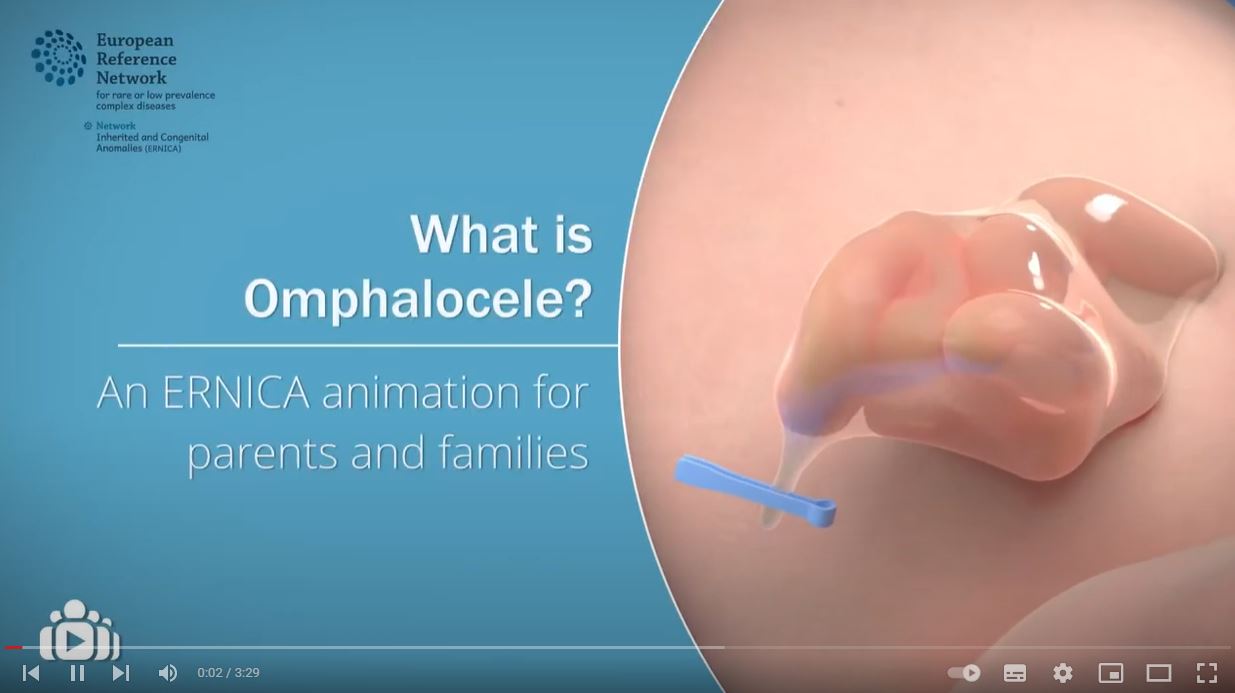
What is Omphalocele? An ERNICA animation for parents and families
3 min · Published Dec 2023
Video
Quick Literature Updates Episode 20
4 min · Published Jun 2025
Podcast
IFMSS 2019 Clinical Studies
19 min · Published Nov 2022
Podcast
Update Course Rewind: Omphalocele & Gastroschisis 2020
Miguel Guelfand · 15 min · Published Jul 2026
Video
Surgeon annual volume impacts recurrence rates of pediatric inguinal hernia repairs: A multi-institutional study
54 s · Published Feb 2026
Video
Quick Literature Updates Ep 22
4 min · Published Oct 2025
Video
Educational Outcomes in School-Aged Children With a History of Simple and Complex Gastroschisis are Poor Compared to Controls
53 s · Published Apr 2025
Video
Quick Literature Updates Episode 16
4 min · Published Jan 2025
Video
Management of Gastroschisis: Timing of Delivery, Antibiotic Usage, and Closure Considerations
55 s · Published Jan 2025
Podcast
Diaphragm pacing as alternative to mechanical ventilation in pediatric respiratory failure
1 min · Published Nov 2026
Podcast
Fetoscopic endoluminal tracheal occlusion for congenital diaphragmatic hernia
4 min · Published Nov 2026
Podcast
FETO procedure for late-diagnosed severe CDH with liver herniation
4 min · Published Nov 2026
Podcast
Severe CDH case with FETO: unexpected anatomic findings and clinical outcome
3 min · Published Nov 2026
Podcast
Pediatric pancreatitis: diagnosis, causes, and genetic insights with Dr. Juan Gurria
3 min · Published Nov 2026
Podcast
Understanding craniosynostosis: skull sutures, growth patterns, and diagnosis in infants
10 min · Published Nov 2026
What the experts said
The study examined 117 infants with giant omphalocele.
Four treatment approaches were compared: paint-and-wait, operative silos, compression techniques, and Duoderm silo.
Babies treated with Duoderm silo were most likely to have their abdomen closed in one surgery.
Approximately 80% of infants treated with Duoderm silo achieved single-stage abdominal closure.
Some babies treated with operative silos achieved closure sooner than other methods.
The overall chance of complications was similar across all four treatment methods.
Almost half of the infants required six months or more before complete abdominal closure could be achieved.
There is no one-size-fits-all treatment for giant omphalocele.
Duoderm silos may be a particularly good option when the goal is single-stage abdominal closure.