
Severe Obesity
Everything in the library about severe obesity — built automatically from the recorded discussions that name it
Educational content from recorded physician discussions — not medical advice. Always talk to your child's care team about your child's situation.
Content of this collection
Medical Management
1 item

Pharmacology: Pediatric Obesity 2017
Watch →
Dr. Claudia Fox discusses various options for pharmacologic therapy for the management of pediatric obesity.
video45:08 · Sep 2018
Surgical Management
2 items
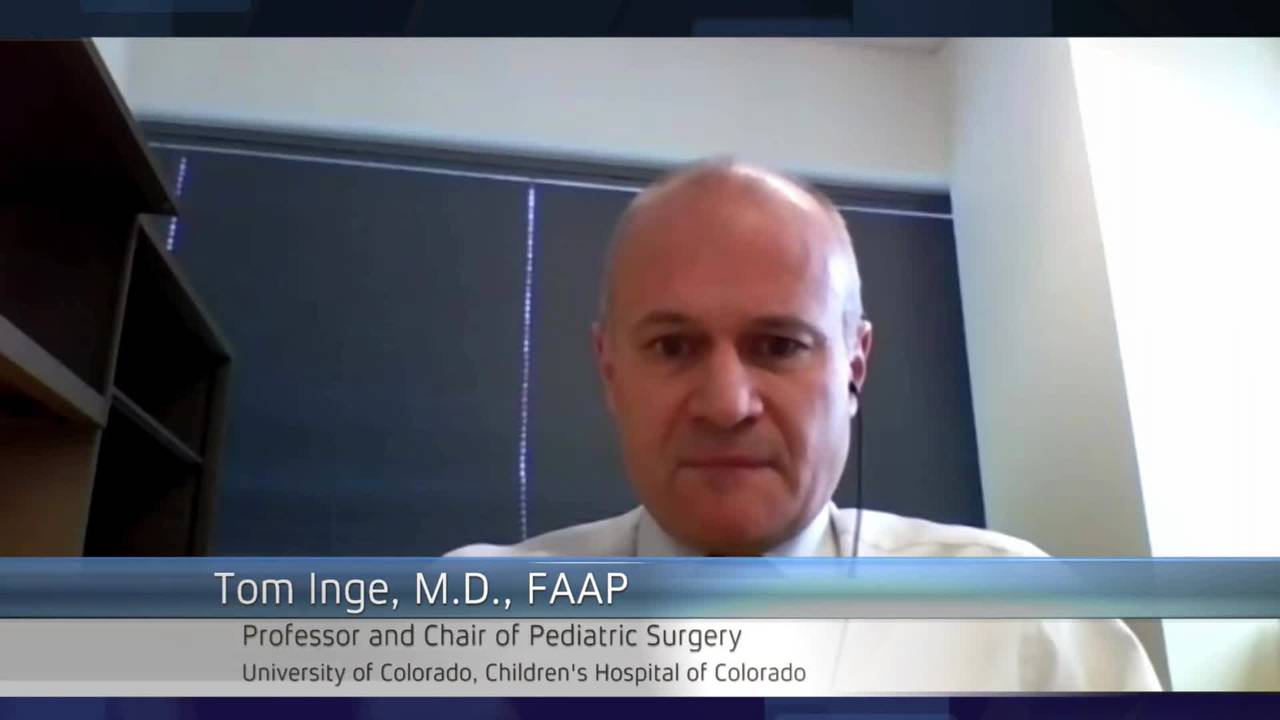

Adolescent Bariatric Surgery: Pediatric Obesity 2017
Watch →
Dr. Tom Inge discusses the role of bariatric surgery in the adolescent patient population, including the recent evidence behind it. He also discusses the development of the Teen-Longitudinal Assessment of Bariatric Surgery.
video32:47 · Sep 2018
AAP Policy for Adolescent Bariatric Surgery: Pediatric Obesity 2017
Watch →
Dr. Marc Michalsky discusses the development of the AAP Policy Statement for adolescent bariatric surgery.
video27:22 · Sep 2018
Summaries and takeaways+ Show
The doctors in this collection+ Show
All expert statements+ Show
Every expert statement below comes from the recorded discussions, with its speaker and moment.
Pharmacology: Pediatric Obesity 2017
Of 12-year-olds with BMI at 99th percentile, all will grow up to have BMIs greater than 30, 88% will have BMIs greater than 35, and 2/3 will have class 3 obesity, according to the Bogalusa Heart Study.
epidemiologicalClaudia Fox9:30 ↗
Severe obesity is defined as BMI greater than 1.2 times the 95th percentile.
guidelineClaudia Fox13:00 ↗
Only 2% of teenagers with severe obesity demonstrated clinically significant BMI reduction with lifestyle modification therapy.
clinicalClaudia Fox15:30 ↗
In a study comparing inpatient (6 months) versus outpatient lifestyle modification therapy followed for 2 years, there was no statistically significant difference in outcomes at 2 years despite better response during inpatient treatment.
clinicalClaudia Fox17:00 ↗
Mutations in the melanocortin 4 receptor (MC4R) account for the most common single gene mutation causing early onset severe obesity in pediatrics.
clinicalClaudia Fox21:00 ↗
Bupropion-naltrexone combination works by bupropion stimulating POMC cells to secrete alpha-MSH (which stimulates MC4 receptors to decrease hunger), while naltrexone blocks the auto-inhibitory feedback from beta-endorphin, allowing relatively more alpha-MSH activity.
clinicalClaudia Fox22:00 ↗
When people lose weight, they experience increased hunger, decreased satiety, increased preference for highly palatable foods, and increased metabolic efficiency—all promoting weight regain.
clinicalClaudia Fox28:00 ↗
Bariatric surgery is currently the most effective and durable treatment for severe obesity in adolescents.
clinicalClaudia Fox29:00 ↗
Orlistat is a lipase inhibitor that blocks absorption of about 30% of fat, is FDA approved for children 12 and older, and in the largest RCT of about 500 patients showed placebo-subtracted BMI difference of about 0.8 units at one year.
clinicalClaudia Fox30:00 ↗
Phentermine is FDA approved for age 16 and older (from 1950s approval), but there have been no RCTs in adolescents longer than 1 month duration.
clinicalClaudia Fox31:00 ↗
Among adults, phentermine produces mean weight loss of about 3.5 kg.
clinicalClaudia Fox31:30 ↗
In studies of adults on phentermine, there have been no withdrawal symptoms upon abruptly stopping and no reports of increased blood pressure, probably because patients are losing weight.
clinicalClaudia Fox32:00 ↗
In a chart review of 25 patients on phentermine only for 6 months plus lifestyle modification, compared to 274 receiving only lifestyle modification, there was about a 4% decrease in BMI favoring the phentermine group.
clinicalClaudia Fox33:00 ↗
After many studies of metformin, we can expect about a one unit decrease in BMI.
clinicalClaudia Fox34:10 ↗
Liraglutide, a GLP-1 agonist, has recently been FDA approved for obesity in adults.
clinicalClaudia Fox34:40 ↗
In a pilot study of exenatide (GLP-1 agonist) with about 25 patients, during the first 3 months double-blinded portion, there was a placebo-subtracted effect of about 3% in BMI favoring the exenatide group.
clinicalClaudia Fox35:20 ↗
In a chart review of patients taking topiramate only (no other medications) with lifestyle modification therapy, there was about a 6% decrease in BMI at 6 months.
clinicalClaudia Fox36:30 ↗
In an RCT of topiramate 75mg/day after meal replacement induction phase, there was no statistically significant effect between topiramate and placebo groups by study end.
clinicalClaudia Fox37:10 ↗
Topiramate at 75mg/day was safe in adolescents, with extensive neurocognitive testing showing no signal of cognitive deficits.
clinicalClaudia Fox39:00 ↗
Topiramate is FDA approved down to age 2 for seizures and has been used in pediatrics for decades.
clinicalClaudia Fox38:50 ↗
Obesity is a chronic disease requiring indefinite medication treatment; stopping the medication results in weight regain, similar to stopping antihypertensive medication causing blood pressure to rise.
opinionClaudia Fox40:50 ↗
Recently FDA-approved medications for adult obesity (age 18+) include topiramate-phentermine combination, liraglutide, naltrexone-bupropion combination, and lorcaserin, approved for BMI >30 or >27 with weight-related comorbidities.
clinicalClaudia Fox41:40 ↗
Early success in weight management predicts long-term weight loss success, according to adult literature.
clinicalClaudia Fox40:20 ↗
Bariatric surgery is seen as more acceptable than pharmacotherapy for pediatric obesity, despite being arguably riskier and irreversible.
opinionClaudia Fox41:40 ↗
Adolescent Bariatric Surgery: Pediatric Obesity 2017
Cardiovascular mortality begins to climb in the overweight range and increases definitively for adolescents at or above the 95th percentile BMI, leading to early cardiovascular death.
host_summaryTom Inge4:00 ↗
FAS-5 study achieved 81% participation (58 of 74 eligible) at 8-year follow-up, mostly with in-person research visits.
clinicalTom Inge8:00 ↗
At 8-year mean follow-up, gastric bypass patients had a mean BMI decline of 29%.
clinicalTom Inge13:00 ↗
Baseline BMI strongly correlates (R=0.75) with follow-up BMI: patients starting with BMI in the 60s end above 40, while those starting in the 40s reach near-normal BMI.
clinicalTom Inge15:00 ↗
Remission rates at 8 years: 88% for diabetes, 64% for dyslipidemia, 75% for hypertension.
clinicalTom Inge17:00 ↗
Among those without baseline comorbidities, incidence rates were 0% for diabetes, 50% for dyslipidemia (small denominator), and 3 of 29 developed hypertension.
clinicalTom Inge18:00 ↗
What's new+ Show