


From
Live Event Content
Update Course 2023 - Over and Under the Radar: Literature Updates in Pediatric Surgery
hosted by Dr. Todd Ponsky
Chapter 1 of 8 · Evidence & Research
Session intro
Introduction and Session Overview - Literature Updates Outside Core Journals
Expert statements on this page
No expert statements were drawn from this page.
Host summaries · secondary, not cited in answers
Educational content from recorded physician discussions — not medical advice. Talk to your (or your child's) care team about your situation.
Video
Evaluación y Tratamiento del Dolor en Urgencias
47 min · Published Jun 2022
Video
Update Course 2023 - Who to Send Home from the OR
55 min · Published Aug 2023
Podcast
Biliary Atresia, Appendicitis, Intestinal Failure, and Anesthetic...
44 min · Published May 2017
Video
Update Course 2021: TOP PUBLICATIONS IN NON - PED SURG JOURNALS
22 min · Published May 2022
Video
Narrated Dipes appy
Dr. Steve Rothenberg · 3 min · Published May 2026
Video
Pediatric Surgery Updates for the PCP - Full Show
CCHMC Pediatric Surgery · 58 min · Published Nov 2020
Video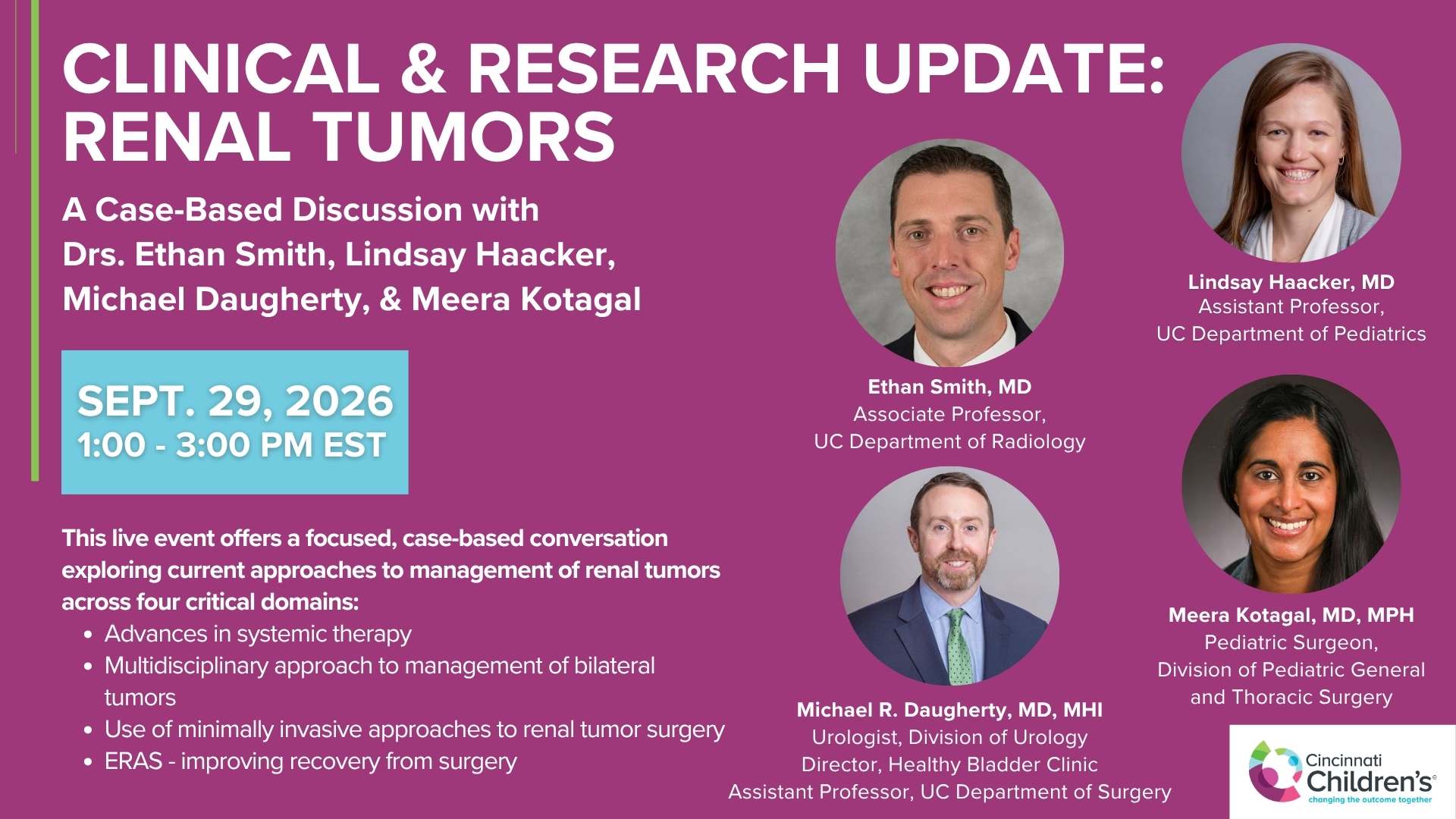
Clinical & Research Update: Renal Tumors with Drs. Ethan Smith, Lindsay Haacker, Michael Daugherty, and Meera Kotagal
71 min · Published Sep 2026
Video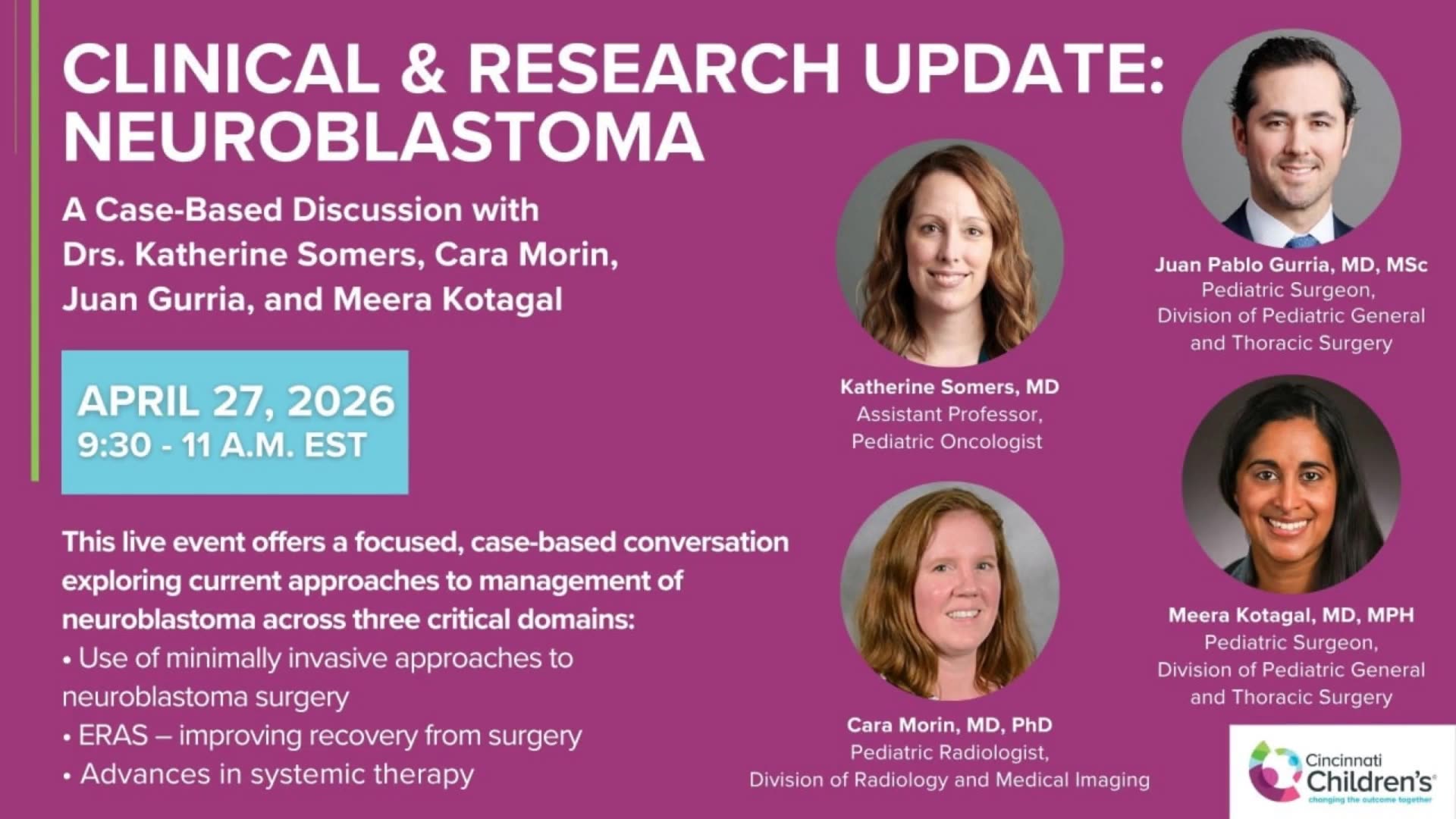
Clinical & Research Update: Neuroblastoma with Drs. Katherine Somers, Cara Morin, Juan Gurria, and Meera Kotagal
67 min · Published Sep 2026
Video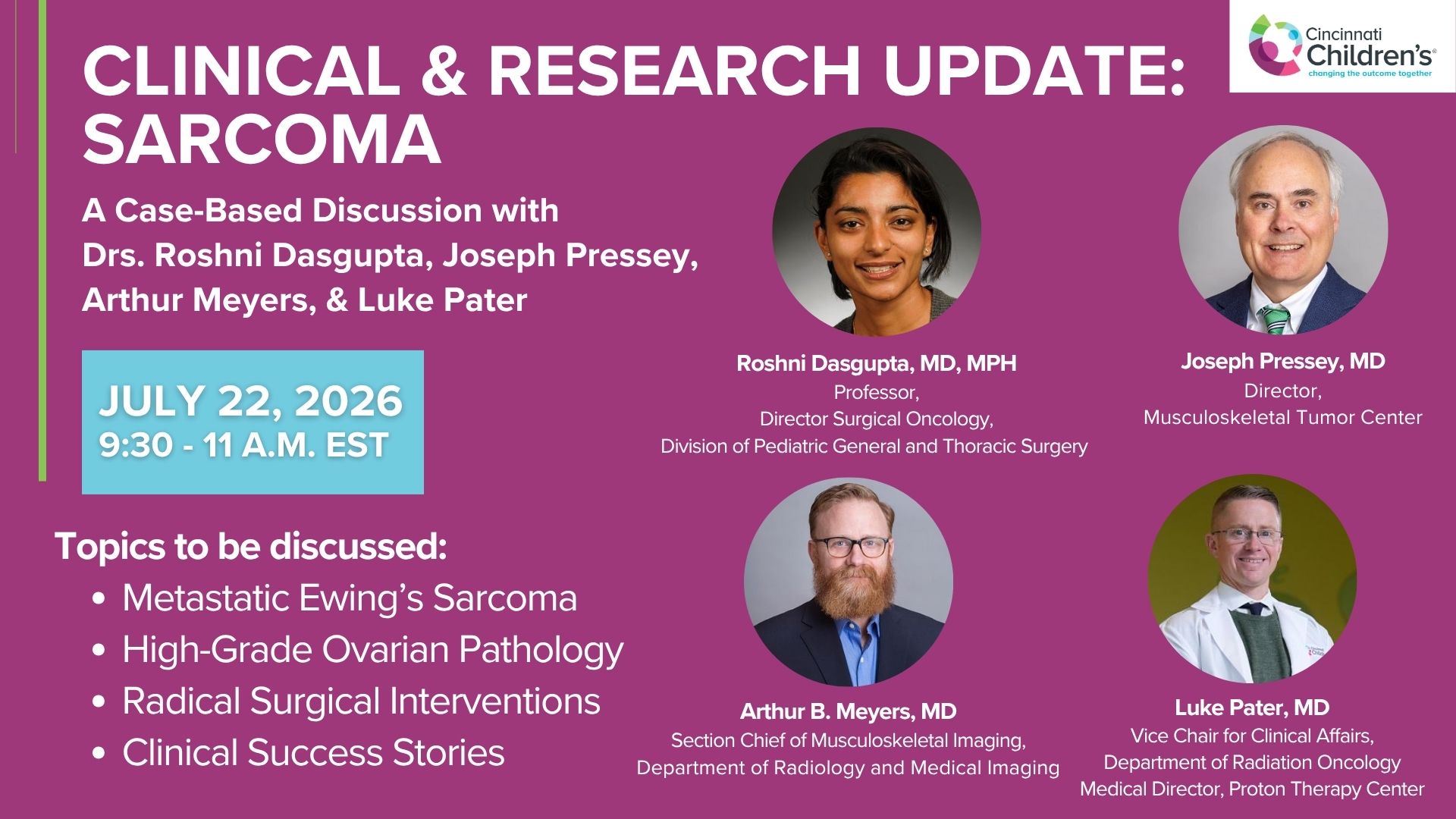
Clinical & Research Update: Sarcoma w/ Drs. Roshni Dasgupta, Joseph Pressey, Arthur Meyer, Luke Pater
66 min · Published Sep 2026
Video
2026 Laparoscopic Pediatric Hernia Repair
123 min · Published Jun 2026
Video
Beyond the Spectrum: Diagnosis, Myths & Management - Caitlin Couch & Leslie Lopez - APP Conference 2026
50 min · Published May 2026
Video
Dysautonomia: Navigating the Journey - Martha Willis - APP Conference 2026
55 min · Published May 2026
What the experts said
At a BMI of 37, an adolescent patient is at risk for metabolic diseases including type 2 diabetes and sleep apnea, and probably already has some of these conditions
When GLP-1 medications like semaglutide (Ozempic) are stopped, patients experience weight regain
Using person-first language such as 'patients with obesity' rather than 'obese patients' is important when counseling patients, along with motivational interviewing techniques
Even when bariatric surgery patients regain weight, they maintain the metabolic effects of the surgery
GLP-1 analog medications are very effective at weight loss, and with weight loss comes comorbidity improvement
Phentermine and topiramate combination drugs are more available and much less expensive than newer GLP-1 analogs, have a very good weight loss profile, but side effects are probably a little bit more prominent
Current robotic instruments use 8-millimeter trocars, which when you add 2 or 3 to a newborn is just like an incision, whereas some surgeons use 3-millimeter instruments for Kasai without ports
There was a phase in pediatric surgery where patients with complicated appendicitis received 7 days of IV antibiotics followed by 7 more days of oral antibiotics at home, which has progressively shortened to current practice
The contrast challenge protocol uses half-strength gastrografin, which is important for the hyperosmolar effect but won't cause harm even in infants
The contrast challenge provides an answer within 24 hours based on whether contrast reaches the cecum, allowing earlier operative intervention when needed compared to traditional 48-hour observation with nasogastric decompression
The contrast challenge protocol involves 30 minutes to 1 hour of nasogastric decompression, then a short clamp for contrast administration, followed by returning the tube to suction
After implementing cryoanalgesia for pectus excavatum at one institution, average length of stay decreased from 4 days to 1 day, with patients able to shower, dress, and go home the next day
The delta in outcomes with cryoanalgesia for pectus excavatum was so large at one institution that it would not be ethical to go back and do a comparison to any other pain modality
The AMOS trial from The Lancet showed metabolic bariatric surgery achieved a mean BMI decrease of 12.6 at two years versus only 0.2 decrease with intensive non-surgical treatment in adolescents aged 13-16 with BMI ≥35
Adverse events after metabolic bariatric surgery in the AMOS trial were mild, with only one cholecystectomy reported, and no significant differences in vitamin and mineral levels, gastrointestinal symptoms, or mental health
In the randomized trial comparing laparoscopic versus open Kasai for biliary atresia type 3, the 6-month jaundice-free rate was 52.5% for laparoscopic versus 60.7% for open Kasai
The 10-year cumulative survival for laparoscopic Kasai was 44.3% versus 58.9% for open Kasai, representing approximately a 15% drop in survival
In the multi-center NSQIP study of 1,264 patients with complicated appendicitis, 27% had routine pre-discharge white blood cell counts obtained
Median white blood cell counts were similar in patients with and without post-discharge organ space infection after complicated appendicitis
The positive predictive value for organ space infection was low (approximately 10% at best) when considering persistent leukocytosis, increasing leukocytosis, highest white blood cell values, and greatest proportional change
In the Midwest Consortium water-soluble contrast study of 82 patients with adhesive small bowel obstruction, none had complications with contrast administration
Water-soluble contrast studies for adhesive small bowel obstruction showed 100% sensitivity and 86% specificity for predicting non-operative success
In the cryoanalgesia trial for pectus excavatum, Group C reported notably less pain at 6 hours and 48 hours after surgery compared to conventional pain management alone
Despite less reported pain with cryoanalgesia, rescue painkiller use, length of stay, and complications were similar between cryoanalgesia and non-cryoanalgesia groups in the randomized trial
In the pilonidal disease trial, mean procedure duration was significantly shorter in the crystallized phenol group compared to excision with primary closure
Recurrence rates after 24 months for pilonidal disease were 8% for crystallized phenol treatment versus 10% for surgical excision, showing no significant difference
Molecular profiling of solid tumors in pediatric patients can lead to 61% of diagnostic changes and up to 65% of therapeutic changes, as demonstrated in a Nature Medicine publication
A systematic review and meta-analysis of four randomized trials concluded that fetal endoluminal tracheal occlusion (FETO) provides a survival benefit for severe congenital diaphragmatic hernia but not for moderate CDH