
 EUPSA/ERNICA
Diabetes
Everything in the library about diabetes — built automatically from the recorded discussions that name it
Educational content from recorded physician discussions — not medical advice. Always talk to your child's care team about your child's situation.
Content of this collection
Surgical Management
1 item

Kanika Bowen-Jallow, MD and Faisal Qureshi, MD - 2024 Pediatric Bariatric Surgery Update Course
Watch →
Kanika Bowen-Jallow, MD and Faisal Qureshi, MD presents on “Post Operative Care” discussing ERAS protocols, Gallbladder and GERD concerns at the 2024 Pediatric Bariatric Surgery Update Course.
video19:25 · Feb 2024
Evidence & Research
1 item
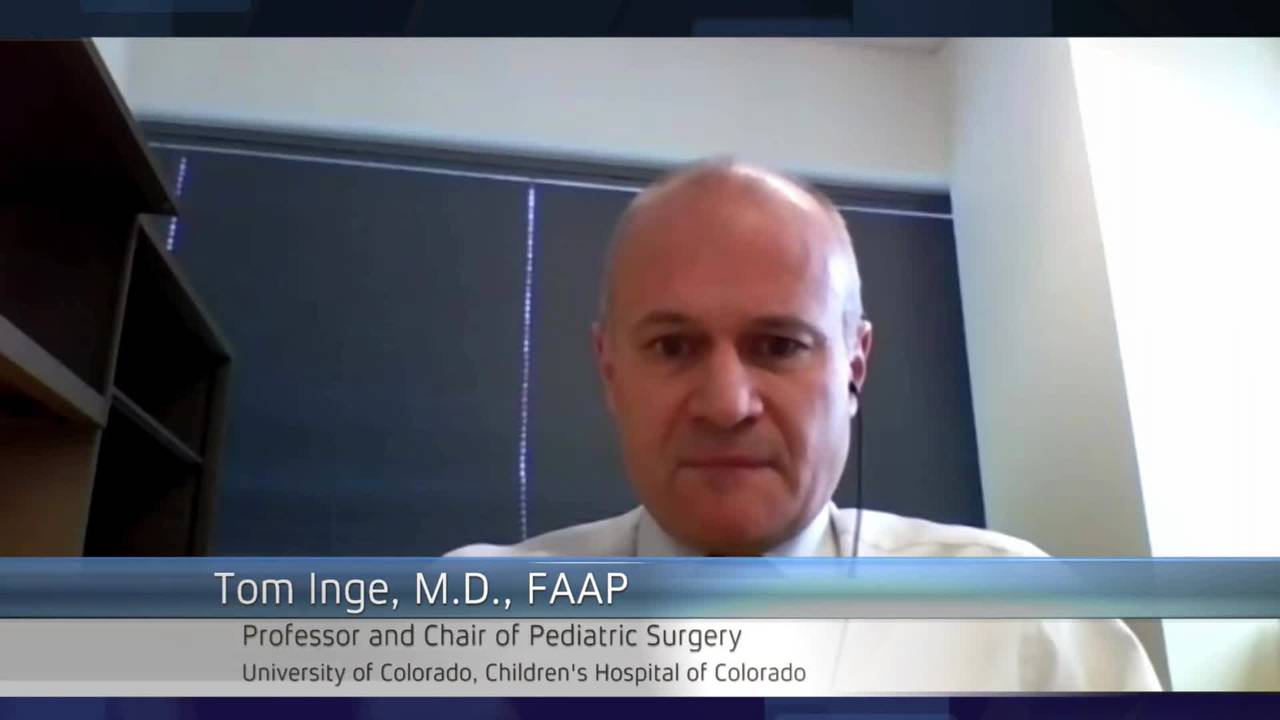
Adolescent Bariatric Surgery: Pediatric Obesity 2017
Watch →
Dr. Tom Inge discusses the role of bariatric surgery in the adolescent patient population, including the recent evidence behind it. He also discusses the development of the Teen-Longitudinal Assessment of Bariatric Surgery.
video32:47 · Sep 2018
Long-Term Care
1 item
Transition of Care - A general overview by Silja Kosolove
Watch →
Video on on a general overview of transition of care by Silja Kosolove (Chapter 1 of the Helsinki series). ERNICA (https://ern-ernica.eu/)
video21:33 · Nov 2023
Summaries and takeaways+ Show
The doctors in this collection+ Show
All expert statements+ Show
Every expert statement below comes from the recorded discussions, with its speaker and moment.
Adolescent Bariatric Surgery: Pediatric Obesity 2017
Cardiovascular mortality begins to climb in the overweight range and increases definitively for adolescents at or above the 95th percentile BMI, leading to early cardiovascular death.
host_summaryThomas Inge4:00 ↗
FAS-5 study achieved 81% participation (58 of 74 eligible) at 8-year follow-up, mostly with in-person research visits.
clinicalThomas Inge8:00 ↗
At 8-year mean follow-up, gastric bypass patients had a mean BMI decline of 29%.
clinicalThomas Inge13:00 ↗
Baseline BMI strongly correlates (R=0.75) with follow-up BMI: patients starting with BMI in the 60s end above 40, while those starting in the 40s reach near-normal BMI.
clinicalThomas Inge15:00 ↗
Remission rates at 8 years: 88% for diabetes, 64% for dyslipidemia, 75% for hypertension.
clinicalThomas Inge17:00 ↗
Among those without baseline comorbidities, incidence rates were 0% for diabetes, 50% for dyslipidemia (small denominator), and 3 of 29 developed hypertension.
clinicalThomas Inge18:00 ↗
Follow-up BMI predicts probability of hypertension, dyslipidemia, high CRP, high insulin, insulin resistance, and low HDL; higher residual BMI is metabolically harmful.
clinicalThomas Inge20:00 ↗
At 8 years, FAS-5 cohort showed low iron stores with anemia, elevated PTH, and low vitamin D in substantial numbers.
clinicalThomas Inge23:00 ↗
In AMOS study, non-surgical controls with severe obesity gained weight over 5 years (BMI 42→45).
host_summaryThomas Inge25:00 ↗
AMOS gastric bypass patients had dramatic BMI reduction from 45 to 30, stable at 5 years, similar to adult controls and SOS cohort.
host_summaryThomas Inge26:00 ↗
AMOS showed 83% dyslipidemia remission, 12 of 12 hypertension cases resolved, and 75% inflammation (CRP) resolved.
host_summaryThomas Inge28:00 ↗
AMOS had high internal hernia rates due to unclosed mesenteric defects at laparoscopic gastric bypass; closing defects prevents this complication.
clinicalThomas Inge29:00 ↗
In AMOS, low vitamin D was found in >50% of gastric bypass patients and also in controls; low B12 and iron deficiency anemia were noted.
host_summaryThomas Inge30:00 ↗
Teen Labs enrolled 242 adolescents (161 bypass, 67 sleeve, 14 band) at 5 centers; median age now 24, with 203 completing 5-year visits (72% in-clinic, 17% field).
clinicalThomas Inge31:00 ↗
Adding 33 sleeve gastrectomy patients to Teen Labs will provide 80% power to compare bypass vs. sleeve for outcomes including blood pressure, PTH, HDL, and BMI.
clinicalThomas Inge32:00 ↗
Severely obese patients have greater bone mineral density due to loading; rapid weight loss after bariatric surgery drops bone mass, raising the question of whether it stabilizes or continues to decline (bariatric bone disease).
clinicalThomas Inge34:00 ↗
Operating earlier after diagnosis of severe obesity may yield lower residual BMI and better long-term metabolic outcomes.
opinionThomas Inge32:47 ↗
FAS-5 study had a residual mean BMI of 38 at 8 years, with many patients remaining severely obese; this residual obesity is metabolically harmful.
clinicalThomas Inge32:47 ↗
The 33 new sleeve patients can be enrolled within a year from consortium sites with ongoing clinical follow-up, enabling long-term comparisons.
clinicalThomas Inge32:17 ↗
Kanika Bowen-Jallow, MD and Faisal Qureshi, MD - 2024 Pediatric Bariatric Surgery Update Course
ERAS recommendations for bariatric surgery include carbohydrate drink the night before surgery and clear liquids up to 2 hours prior to surgery
host_summaryKanika Bowen-Jallow0:34 ↗
Aprepitant is given in pre-op 1-2 hours prior to surgery and has become standard in patients with high risk for post-operative nausea
clinicalKanika Bowen-Jallow1:30 ↗
Multiple preoperative pills given in pre-op area have not been observed in the stomach during intraoperative scoping
clinicalKanika Bowen-Jallow2:00 ↗
DVT prophylaxis with Lovenox or subcutaneous heparin is administered at the start of the case, though practices vary greatly among surgeons
clinicalKanika Bowen-Jallow3:00 ↗
ASMBS recommends DVT prophylaxis intraoperatively and postoperatively before discharge, but most patients do not go home on DVT prophylaxis unless there is a specific indication such as family history
host_summaryKanika Bowen-Jallow3:30 ↗
Minimizing narcotics helps prevent postoperative nausea, achieved by running medications like propofol at low baseline during anesthesia
clinicalKanika Bowen-Jallow3:49 ↗
New literature demonstrates laparoscopic TAP block is not superior to local infiltration of incisions for pain control
host_summaryKanika Bowen-Jallow4:10 ↗
Ondansetron is used in the OR prior to extubation, while aprepitant is given preoperatively in holding to achieve synergistic anti-emetic effect
clinicalKanika Bowen-Jallow4:00 ↗
The number one concern after sleeve gastrectomy is nausea, retching, and vomiting
clinicalKanika Bowen-Jallow4:30 ↗
Haloperidol is not used due to sedative effects that interfere with waking patients in the PACU
clinicalKanika Bowen-Jallow4:44 ↗
Total daily acetaminophen dose should not exceed 4000 mg per day when combining IV and oral administration
clinicalKanika Bowen-Jallow5:10 ↗
What's new+ Show