

Educational content from recorded physician discussions — not medical advice. Always talk to your child's care team about your child's situation.
Content of this collection
AI image recognition could be applied live during surgery to implement CT scan data and provide warnings such as proximity to the hepatic artery — Todd Ponsky, AI applications in pediatric surgery and clinical transformation with Dr. Todd Ponsky · 6:40
AI applications in pediatric surgery and clinical transformation with Dr. Todd Ponsky
Watch →
AIMed Talks with Dr Todd Ponsky
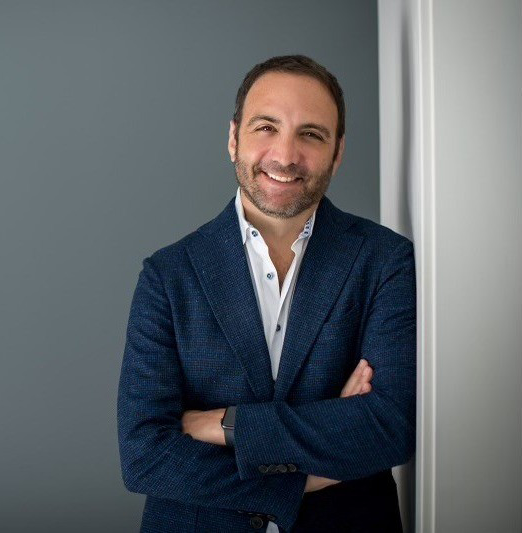
Dr Anthony Chang, Founder, AIMed speaks with Dr Todd Ponsky, Professor of Surgery, Director of Clinical Growth and Transformation, Cincinnati Children’s Hospital University of Cincinnati.
video7:41 · Oct 2026
Summaries and takeaways+ Show
Summary of this collection+ Show
Key points+ Show
Featured picks for families are being prepared — the summaries above are written for you.
Takeaways+ Show
The doctors in this collection+ Show
All expert statements+ Show
Expert statements from the recordings in this collection.
AI applications in pediatric surgery and clinical transformation with Dr. Todd Ponsky
ICU physicians are observing that the lung disease in COVID-19 patients is quite different from typical presentations
Host summaryAnthony Chang summarizing a resource — not the host's own clinical position1:09 ↗
Knowledge transfer requires both a platform people will use and a method to filter what information is important
opinionTodd Ponsky1:25 ↗
A communication network for knowledge transfer must work with different healthcare professional lifestyles and be a trusted network
opinionTodd Ponsky1:45 ↗
When there is too much information from too many people creating noise, knowledge transfer becomes difficult
opinionTodd Ponsky2:02 ↗
Crowdsourcing and AI can help determine what information is important in knowledge transfer
opinionTodd Ponsky2:19 ↗
Proning patients on oxygen to avoid intubation appears to be a good strategy for some COVID-19 patients, at least early in the disease
Host summaryAnthony Chang summarizing a resource — not the host's own clinical position3:01 ↗
After four months of the COVID-19 pandemic, the medical community is still discovering basic management strategies like proning
Host summaryAnthony Chang summarizing a resource — not the host's own clinical position3:01 ↗
The COVID-19 crisis has exaggerated pre-existing problems with too many communication channels and uncertainty about which to follow
opinionTodd Ponsky3:34 ↗
Proning was already known as a technique, but its earlier use in COVID-19 is new information that cannot wait six months to disseminate
clinicalTodd Ponsky4:00 ↗
Pilots always have a co-pilot, but surgeons are often alone in community settings performing operations in anatomical spaces where they are not comfortable
clinicalTodd Ponsky4:45 ↗
Surgical telementoring allows an expert surgeon to beam into the operating room and guide another surgeon using telestration and pointing to make operations safer
clinicalTodd Ponsky4:59 ↗
Surgical telementoring is intended for trained surgeons seeking expert interaction, not for novices being told what to do
opinionTodd Ponsky5:19 ↗
Measurements have shown that surgical telementoring is successful and needs to take place
clinicalTodd Ponsky5:25 ↗
Medical-legal issues could be barriers to surgical telementoring implementation
opinionTodd Ponsky5:37 ↗
The peer review method for surgical telementoring should be real-time and crowdsourced rather than using selected individual peer reviewers
opinionTodd Ponsky6:01 ↗
Senior surgeons who may not be able to operate anymore still have valuable skill sets and knowledge for telementoring
opinionTodd Ponsky6:16 ↗
Having two surgeons watching and telestrating together elevates the quality of surgical telementoring
opinionTodd Ponsky6:20 ↗
AI image recognition could be applied live during surgery to implement CT scan data and provide warnings such as proximity to the hepatic artery
opinionTodd Ponsky6:40 ↗
Gastroenterologists are already using real-time AI to determine which lesions to biopsy
Host summaryAnthony Chang summarizing a resource — not the host's own clinical position7:11 ↗
What's new+ Show