
Collection
Necrotizing Enterocolitis
Educational content from recorded physician discussions — not medical advice. Always talk to your child's care team about your child's situation.
Content of this collection
Resources
23 items

Necrotizing Enterocolitis
Watch →
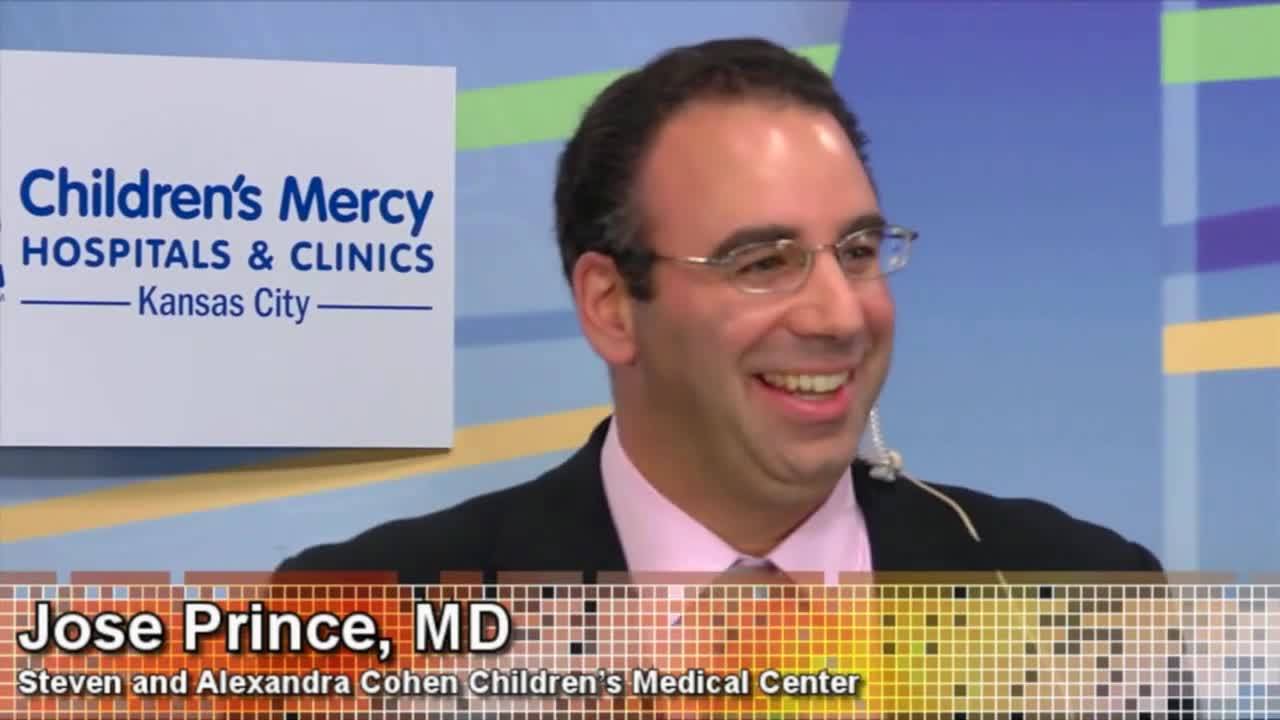
Dr. Jose Prince discusses necrotizing enterocolitis. His presentation includes management techniques of peritoneal drainage, exploratory laparotomy, diagnostic laparoscopy, complete enterectomy, silo, bowel decompression, and antibiotics as
video35:06 · Nov 2018
Stay Current Throwbacks Necrotizing Enterocolitis with Dr. Gail Besner
Listen →
Today is #NECday so we went back to a conversation between Dr. Todd Ponsky and Dr. Gail Besner about necrotizing enterocolitis. Enjoy this Stay Current Throwback on NEC. https://pubmed.ncbi.nlm.nih.gov/34506326/
podcast47:54 · May 2022
Dr. Colleen Nofi - Best of the Best in Pediatric Surgery 2025
Watch →
Watch APSA's Dr. Colleen Nofi’s presentation on “Extracellular Cirp Exacerbates Necrotizing Enterocolitis” at the 2025 Best of the Best in Pediatric Surgery event!
Moderators: Drs. Todd Ponsky, Dan von Allmen, and Meera Kotagal
video8:06 · Mar 2025
Remote Ischemic Conditioning (RIC) Decreases the Incidence and Severity of Necrotizing Enterocolitis (NEC) - Validation in a Large Animal Model
Watch →
Rahul Gadde, Jason Xia, Sophia Hameedi, Angela Saulsbery, Carly Schafer, Lourenço Sbragia, Oluyinka O Olutoye
Background: Necrotizing enterocolitis (NEC) remains a devastating intestinal disease that affects 5-7% of preterm neonates. Rem
video0:59 · Apr 2025
Availability, utilization, and barriers to bowel ultrasound for necrotizing enterocolitis...
Watch →
Dr. Lizzy Lee from Cincinnati Children's discusses a national multidisciplinary survey on the availability and use of bowel ultrasound (BUS) for diagnosing necrotizing enterocolitis (NEC). The study found that while BUS is available in many
video0:55 · Jul 2026
Update Course Rewind 2025: Updates in NEC Management
Watch →
Narrated by Lizzy Lee, PA-C & Maggie Koenig, this podcast, a rewind from the 2025 Pediatric Surgery Update Course, delves into crucial updates in Necrotizing Enterocolitis (NEC) management. Leading pediatric surgeons Drs. Augusto Zani, Simo
video11:03 · Jul 2026
Necrotizing Enterocolitis with Dr. Gail Besner
Listen →
Discussion between Dr. Todd Ponsky and Dr. Gail Besner about necrotizing enterocolitis
podcast46:29 · Jan 2019
Multidisciplinary Approach: Intestinal Failure Innovations
Watch →
Dr. Michael Helmrath leads a discussion amongst the panel including topics of intestinal failure, a team approach to intestinal patients, nutritional administration, complication rates, central line vs. PICC line use for total parenteral nu
video1:37:52 · Jan 2019
NEC: Update Course 2013
Watch →
Dr. Jose Prince discusses necrotizing enterocolitis. His presentation includes management techniques of peritoneal drainage, exploratory laparotomy, diagnostic laparoscopy, complete enterectomy, silo, bowel decompression, and use of antibio
video34:22 · Jan 2019
Journal of Pediatric Surgery Article Review: October 2021
Listen →
We're back with the October issue of JPS article highlights. This time we're talking to JPS Editor Dr. Paul Tam and authors Dr. Brittany Johnson, Dr. Nigel Hall, Dr. Richard Wood, and Dr. Giacomo Esposito. Hosts: Ellen Encisco & Rod Gerardo
podcast19:10 · Nov 2021
Intestinal Rehabilitation, Episode 2: Overwhelming intestinal damage, Part 2
Listen →
We're back with the second part of episode 2, management of overwhelming intestinal damage along with Drs. Michael Helmrath and Paul Wales from Intestinal Rehabilitation Center at Cincinnati Children's Hospital. Article for further reading:
podcast17:21 · Feb 2022
Intestinal Rehabilitation, Episode 3: Enteral Autonomy, Part 1
Listen →
We're back with a new episode from the Intestinal Rehabilitation Center at Cincinnati Children's Hospital. This time we're talking about enteral autonomy with Drs. Helmrath and Wales. This is the first of two parts on this topic, stay tuned
podcast16:18 · Mar 2022
Routine contrast enema prior to stoma reversal seems only required following treatment for necrotizing enterocolitis: An evaluation of the diagnostic accuracy of the contrast enema
Watch →
New article you should know about by Dr. Cecilia Gigena
"Routine contrast enema prior to stoma reversal seems only required following treatment for necrotizing enterocolitis: An evaluation of the diagnostic accuracy of the contrast enem
video0:56 · Apr 2023
Expectant Management or Early Ibuprofen for Patent Ductus Arteriosus
Watch →
Another article you should know by Cecilia Gigena
"Expectant Management or Early Ibuprofen for Patent Ductus Arteriosus"
Authors: Tim Hundscheid, M.D., Wes Onland, M.D., Ph.D., Elisabeth M.W. Kooi, M.D., Ph.D., Daniel C. Vijlbrief, M
video1:14 · Aug 2023
Heat 3 Winner: Shruthi Srinivas, MD - Best of the Best in Pediatric Surgery 2024
Watch →
Watch the voting from the third heat!
Presentations from heat three:
Mina Yeganeh, BSc: Lipid nanoparticle delivery of miRNA-148a attenuates intestinal inflammation during experimental.
Joseph Davidson, MA(Oxon), MBBS, MRCS(Eng)
video1:47 · Feb 2024
Association of Exclusive Breast Milk Intake and Outcomes in Infants With Uncomplicated Gastroschisis: A National Cohort Study
Watch →
New article review by Alex Halpern, MD!
Full text: https://www.jpedsurg.org/article/S0022-3468(24)00077-0/fulltext
Background: Enteral feeding is an essential part of the management of infants with gastroschisis. We hypothesized that
video0:56 · Aug 2024
Conservative Management of Necrotizing Enterocolitis in Newborns: Incidence and Management of Intestinal Strictures
Watch →
Rach Mena, Gabriela Guillén, Sergio Lopez-Fernandez, Marta Martos Rodríguez, César W Ruiz, Alicia Montaner-Ramon, Manuel López, José A Molino
Background: Necrotizing enterocolitis (NEC) is one of the main causes of acute abdomen in neona
video0:50 · Jan 2025
STAT trial: stoma or intestinal anastomosis for necrotizing enterocolitis: a multicentre randomized controlled trial
Watch →
Simon Eaton, Niloofar Ganji, Mandela Thyoka, Maher Shahroor, Augusto Zani, Hazel Pleasants-Terashita, Ali El Ghazzaoui, Jayaram Sivaraj, Stavros Loukogeorgakis, Paolo De Coppi, Sandra Montedonico, Sanja Sindjic-Antunovic, Marija Lukac, Jame
video0:57 · Apr 2025
Practical Approach: Intestinal Failure Innovations
Watch →
Dr. Michael Helmrath leads a discussion in alternative feeding techniques for intestinal failure, distal feeding, button insertion, the significant of small bowel length, liver disease, international patient management, breast milk therapy,
video1:56:52 · Jan 2019
Necrotizing Enterocolitis with Dr. Gail Besner
Listen →
Discussion between Dr. Todd Ponsky and Dr. Gail Besner about necrotizing enterocolitisHistory:Patients will often present with abdominal distention, high gastric residuals and bloody stools.First make sure the problem is in the abdomen.Pat
podcast46:29 · Dec 2020
Should we be checking gastric residuals in premature infants?
Watch →
Stay Current and APSA team up in this new series! In these videos, we will discuss need-to-know articles selected by different APSA committees. In this first video, Dr. Arun Thenappan from Children's National Hospital in Washington, DC, rep
video · Dec 2019
#APSA 50: Robert E. Gross Debate
Watch →
The 50th APSA meeting featured a debate moderated by Dr. Jacob Langer from The Hospital for Sick Children. The topic debated was: "Be it resolved that I would NOT encourage my daughter or son to become a pediatric surgeon." Representing the
video59:33 · Jul 2019
#APSA 50: Robert E. Gross Debate
Listen →
The 50th APSA meeting featured a debate moderated by Dr. Jacob Langer from The Hospital for Sick Children. The topic debated was: "Be it resolved that I would NOT encourage my daughter or son to become a pediatric surgeon." Representing the
podcast59:33 · Dec 2020
Summaries and takeaways+ Show
Summary of this collection+ Show
Key points, with the moment each was said+ Show
Featured picks for families are being prepared — the summaries above are written for you.
Takeaways+ Show
Necrotizing enterocolitis remains incompletely understood despite six decades of research, with no definitive cure and no clear predictive factors for surgical progression. Preventive strategies center on probiotics, which have Cochrane-level evidence for reducing incidence, though U.S. adoption remains inconsistent due to formulation uncertainty. Acid suppression should be avoided, as PPIs and H2 blockers increase NEC risk. Surgical indications include pneumoperitoneum (absolute), clinical deterioration despite maximal medical therapy, and focal abdominal wall erythema (highly sensitive for necrosis). The MOSS and PIERO trials showed equivalent mortality between peritoneal drainage and laparotomy, but emerging data suggest laparotomy may confer better long-term neurodevelopmental outcomes. The NEST trial (300 patients) will report 18–22-month neurologic assessments within 1–2 years. The recent STAT trial demonstrated that primary anastomosis—when hemodynamically feasible—reduces parenteral nutrition duration without increasing mortality or unplanned reoperations, challenging traditional stoma-first dogma. Post-NEC strictures occur in ~19% of medically managed cases, typically in the colon near the splenic flexure; contrast enema detects 92% and is indicated primarily after NEC (not SIP). Ultrasound is emerging as a superior early diagnostic modality (X-ray sensitivity 13–25%), identifying bowel wall thinning, perfusion defects, and occult fluid collections, though standardized protocols and training remain barriers.
- Probiotics have Cochrane-level evidence for NEC prevention, but U.S. uptake is low due to formulation and dosing uncertainty; acid suppression increases risk and should be avoided.[e636-c3][e297-c3]
- Pneumoperitoneum mandates surgery; focal abdominal wall erythema is highly sensitive for necrosis. Portal venous gas and fixed loops are concerning but not absolute indications.[e297-c8][e636-c6][e297-c11]
- STAT trial: primary anastomosis (when stable) reduces PN duration vs. stoma without increasing mortality or reoperations, challenging stoma-first tradition.[e10427-c4][e10427-c7]
- Laparotomy may yield better long-term neurodevelopment than drainage (NEST trial pending). MOSS/PIERO showed equivalent early mortality; European practice favors laparotomy universally.[e297-c27][e297-c59]
- Ultrasound detects early NEC better than X-ray (sensitivity 13–25%) via wall thinning, perfusion defects, and occult fluid; wider adoption requires standardized protocols and training.[e13612-c1][e13575-c6]
For patients & families
Necrotizing enterocolitis (NEC) is a serious bowel disease that affects premature babies, and despite decades of research, doctors still don't know exactly what causes it or how to cure it completely. When a baby develops NEC, the intestine becomes inflamed and damaged, and in severe cases parts of the bowel can die. Doctors watch these babies very closely with physical exams, blood tests, and imaging studies like X-rays and ultrasound. Some babies improve with medical treatment—stopping feeds, placing a tube to decompress the stomach, and giving antibiotics—but others need surgery. The surgical team may place a small drain to remove infected fluid or perform an operation to remove the damaged bowel. Recent studies suggest that when surgeons can safely reconnect healthy bowel ends during the first operation (called primary anastomosis), babies may recover faster and get back to feeding sooner than when temporary stomas are created. However, the disease can still progress even after surgery, and some babies experience repeated episodes. The medical team works to balance aggressive treatment with giving the baby's own healing processes time to work, and families are kept informed as the baby's condition guides the care decisions.
Necrotizing enterocolitis (NEC) is a serious bowel disease that affects premature babies, and despite decades of research, doctors still don't know exactly what causes it or how to cure it completely. When a baby develops NEC, the intestine becomes inflamed and damaged, and in severe cases parts of the bowel can die. Doctors watch these babies very closely with physical exams, blood tests, and imaging studies like X-rays and ultrasound. Some babies improve with medical treatment—stopping feeds, placing a tube to decompress the stomach, and giving antibiotics—but others need surgery. The surgical team may place a small drain to remove infected fluid or perform an operation to remove the damaged bowel. Recent studies suggest that when surgeons can safely reconnect healthy bowel ends during the first operation (called primary anastomosis), babies may recover faster and get back to feeding sooner than when temporary stomas are created. However, the disease can still progress even after surgery, and some babies experience repeated episodes. The medical team works to balance aggressive treatment with giving the baby's own healing processes time to work, and families are kept informed as the baby's condition guides the care decisions.
The doctors in this collection+ Show
All expert statements+ Show
Every expert statement below comes from the recorded discussions, with its speaker and moment.
Heat 3 Winner: Shruthi Srinivas, MD - Best of the Best in Pediatric Surgery 2024
Dr. Mina Yeina discussed lipid nanoparticle delivery of microRNA 148A and attenuation of intestinal inflammation during NEC
clinical0:04 ↗
Dr. Joseph Davidson presented on sexual function and fertility outcomes in Hirschsprung's disease patients
clinical0:20 ↗
Dr. Shruthi Srinivas presented outcomes from colonic pull-through for cloacal atrophy
clinical0:25 ↗
Dr. Kala presented on single-cell guided prenatal derivation of fetal organoids
clinical0:31 ↗
Dr. Zheng presented on clinical characteristics and MMP-7 levels for biliary atresia
clinical0:40 ↗
Dr. Shruthi Srinivas won Heat 3 with her presentation on outcomes from colonic pull-through for cloacal atrophy, differentiated by colon length, in a multi-institutional study
clinical1:15 ↗
The competition between the second and third presentations was very tight
opinion0:50 ↗
Necrotizing Enterocolitis
There are no clear predictive factors to identify which premature infants with early NEC will progress to require surgical intervention.
clinicalJose Zinter1:54 ↗
Rate of feeding advancement does not correlate with development of necrotizing enterocolitis.
Host summaryTodd Ponsky summarizing the discussion — not the host's own clinical position3:11 ↗
Probiotics have the most evidence for NEC prevention, supported by Cochrane database review.
Host summaryThe host summarizing the discussion — not the host's own clinical position3:35 ↗
Many U.S. institutions do not routinely use probiotics despite evidence, due to uncertainty about formulation and dosing.
clinicalJose Zinter4:19 ↗
Pneumoperitoneum is the only single factor that would prompt operation; otherwise a constellation of findings (pneumatosis, hemodynamic instability, fixed loop, worsening acidosis/ventilation) is required.
clinicalTodd Ponsky7:17 ↗
Focal abdominal wall erythema is one of the most sensitive indicators for underlying dead bowel in NEC.
clinical12:24 ↗
In a 600-g infant with pneumoperitoneum, transport to the OR increases risk of demise; bedside intervention (drainage or laparotomy) is preferred.
clinicalTim15:08 ↗
Approximately 30% of infants treated with peritoneal drainage alone do not require subsequent laparotomy.
Host summaryThe host summarizing the discussion — not the host's own clinical position16:21 ↗
The Moss New England Journal trial showed no difference in outcomes between peritoneal drainage and laparotomy in extremely low birth weight infants with NEC, but the study population was heterogeneous.
Host summaryTodd Ponsky summarizing the discussion — not the host's own clinical position17:44 ↗
Most panelists use 1 kg as the weight threshold above which they favor laparotomy over peritoneal drainage.
Host summaryTodd Ponsky summarizing the discussion — not the host's own clinical position19:06 ↗
Bilateral grade 4 intraventricular hemorrhage does not alter surgical decision-making unless the family requests comfort measures only.
opinion20:10 ↗
Primary anastomosis at initial NEC operation is rarely performed (8–10% of audience) due to inability to detect anastomotic leak in a sick neonate.
Host summaryTodd Ponsky summarizing the discussion — not the host's own clinical position21:55 ↗
Dr. Miguel Guelfand presented impressive results with primary anastomosis in NEC at a prior conference.
Host summaryTodd Ponsky summarizing the discussion — not the host's own clinical position22:01 ↗
The 'Shishka baby' technique involves placing a tube through multiple necrotic segments with a few stitches to hold them together, then bringing both ends out as stomas with proximal diversion.
clinical23:29 ↗
Stoma takedown is typically performed at 4–6 weeks postoperatively and 2 kg body weight, though recent data (Andrew Badillo) suggest earlier reversal may be safe.
Host summaryTodd Ponsky summarizing the discussion — not the host's own clinical position26:32 ↗
Bringing stomas out side-by-side in the incision (rather than separated) facilitates easier takedown without disturbing the entire abdominal cavity.
opinion27:00 ↗
In pan-intestinal necrosis, decompressing distended bowel may reduce ischemia and salvage additional segments.
clinical31:41 ↗
As of one year ago, no child with true NEC totalis (complete small bowel and colonic necrosis) has successfully survived intestinal transplant.
epidemiologicalJose Zinter33:54 ↗
The threshold for viable bowel length has dropped to approximately 20 cm of small bowel, with better outcomes if the colon is intact.
clinicalJose Zinter34:23 ↗
NEC: Update Course 2013
There are no clear predictive factors to identify which premature infants with early NEC will progress to require surgical intervention.
Host summaryThe host summarizing the discussion — not the host's own clinical position1:09 ↗
Probiotics are the only preventative strategy with Cochrane database support for reducing NEC incidence.
Host summaryThe host summarizing the discussion — not the host's own clinical position2:59 ↗
Rate of feeding and timing of feeding initiation do not impact NEC incidence.
Host summaryThe host summarizing the discussion — not the host's own clinical position3:14 ↗
Most U.S. institutions do not routinely use probiotics despite evidence, due to uncertainty about formulation and dosing.
epidemiological3:31 ↗
What's new+ Show