


From
StayCurrentMD
Association of Exclusive Breast Milk Intake and Outcomes in Infants With Uncomplicated Gastroschisis: A National Cohort Study
hosted by Dr. Alex Halpern
Chapter 1 of 1 · Evidence & Research
Feeding outcomes
Breast milk versus formula in uncomplicated gastroschisis outcomes
Expert statements on this page
No expert statements were drawn from this page.
Host summaries · secondary, not cited in answers
Educational content from recorded physician discussions — not medical advice. Talk to your (or your child's) care team about your situation.
Video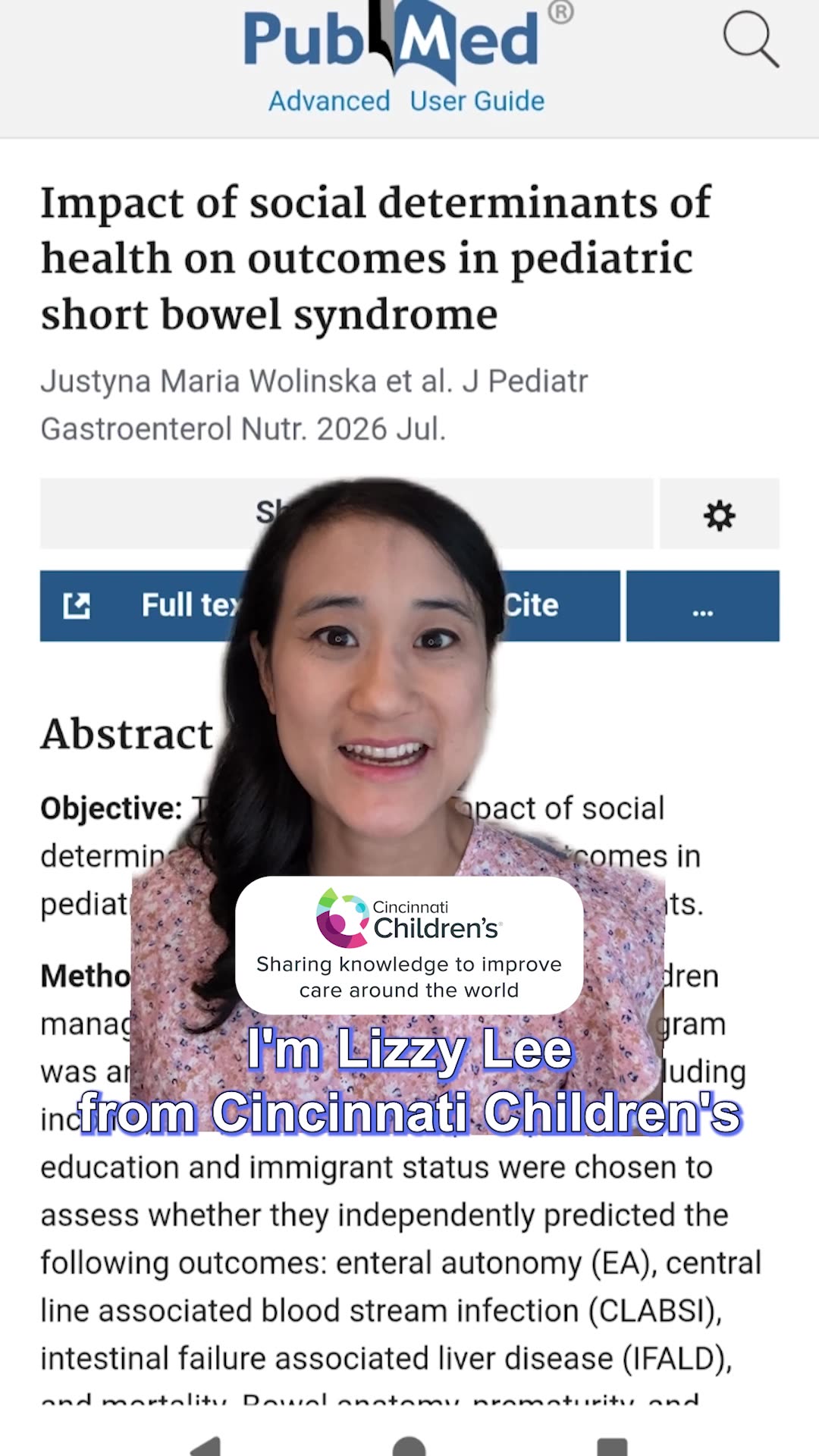
Impact of social determinants of health on outcomes in pediatric short bowel syndrome...
43 s · Published Aug 2026
Video
Advancements in Pediatric Intestinal Failure: Innovative Therapies and Improved Outcomes
17 min · Published Aug 2026
Podcast
Update Course Rewind: Omphalocele & Gastroschisis 2020
Miguel Guelfand · 15 min · Published Jul 2026
Video
Update Course Rewind 2025: Updates in NEC Management
11 min · Published Jul 2026
Video
Availability, utilization, and barriers to bowel ultrasound for necrotizing enterocolitis...
55 s · Published Jul 2026
Video
Malrotation and Volvulus with Trinity
Dr. Steve Rothenberg · 8 min · Published May 2026
Video
Intestinal Atresia Types Explained: Grossfeld Classification for Pediatric Surgery
1 min · Published Sep 2026
Video
Derivation and validation of the Pediatric Community-Acquired Pneumonia Severity (PedCAPS) score: A prospective cohort study
50 s · Published Sep 2026
Video
FETO for Late-Diagnosed Severe Congenital Diaphragmatic Hernia (CDH) at Cincinnati Children's with Dr. Beth Rymeski
4 min · Published Sep 2026
Video
Severe Congenital Diaphragmatic Hernia (CDH) Case: FETO Management & Unexpected Findings with Dr. Beth Rymeski
3 min · Published Sep 2026
Video
Fetoscopic Endoluminal Tracheal Occlusion (FETO) Procedure: Step-by-Step Guide with Dr. Beth Rymeski
4 min · Published Sep 2026
Video
Choledochal Cyst Types Explained: Pediatric Surgery Fundamentals
1 min · Published Sep 2026
What the experts said
McMaster University team performed a retrospective review of infants born between 2014 and 2022 with uncomplicated gastroschisis examining feeding outcomes.
Infants with exclusive breast milk intake and those with supplemental or exclusive formula intake had similar outcomes in uncomplicated gastroschisis.
No significant differences were found between exclusive breast milk and formula groups in time to reach full enteral feeds in infants with uncomplicated gastroschisis.
No significant differences were found between exclusive breast milk and formula groups in duration of parenteral nutrition in infants with uncomplicated gastroschisis.
No significant differences were found between exclusive breast milk and formula groups in rates of necrotizing enterocolitis in infants with uncomplicated gastroschisis.
No significant differences were found between exclusive breast milk and formula groups in length of hospital stay in infants with uncomplicated gastroschisis.
Formula intake versus exclusive breast milk intake does not appear to affect outcomes in uncomplicated gastroschisis.