


From
StayCurrentMD
Updated Favorable histology Wilms tumor risk stratification: Rationale for future Children’s Oncology Group clinical trials
hosted by Dr. Jill Knepprath
Chapter 1 of 1 · Evidence & Research
Updated Wilms Tumor Risk Stratification
Expert statements on this page
No expert statements were drawn from this page.
Host summaries · secondary, not cited in answers
Educational content from recorded physician discussions — not medical advice. Talk to your (or your child's) care team about your situation.
Video
Impact of Pulmonary Tumor Burden in Favorable Histology Wilms Tumor Outcomes: A Report From the Children's Oncology Group Study AREN053
1 min · Published Mar 2026
Video
Wilms Tumor Protocol Violations: 2018 Pediatric Surgery Practice Gap #3
Dr. Todd Ponsky · Published Jun 2019
Video
Wilms Tumor Protocol Violations: Practice Gap discussion at Update Course 2018
9 min · Published Aug 2018
Video
Social Determinants of Health Influence on Survival in Wilms Tumor, Neuroblastoma, and Hepatoblastoma
1 min · Published Jan 2026
Video
Long-Term Follow-Up of Surgical Outcomes for Patients With Wilms Tumor and Neuroblastoma
1 min · Published Feb 2026
Video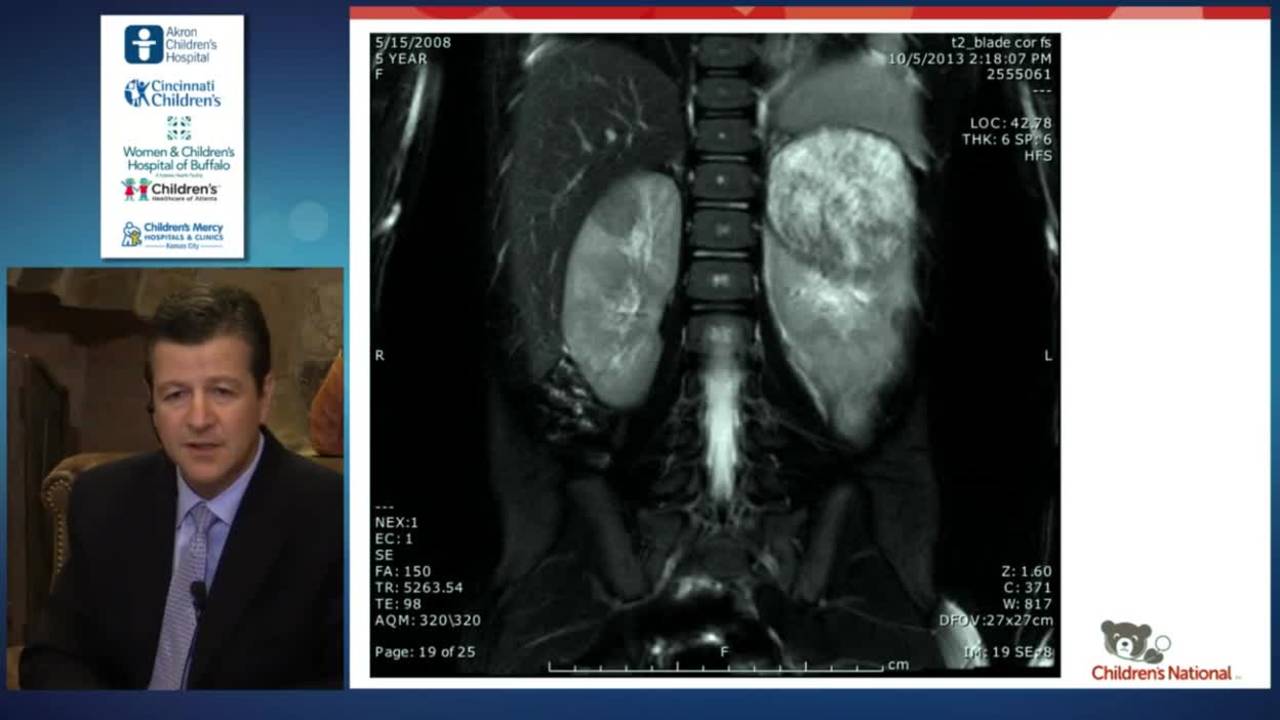
Wilms Tumor Rapid Fire: Update Course 2015
8 min · Published Nov 2015
Video
Oncology Tumor Board Showdown: Pediatric Oncology 5 Question Quiz
1 min · Published Oct 2026
Video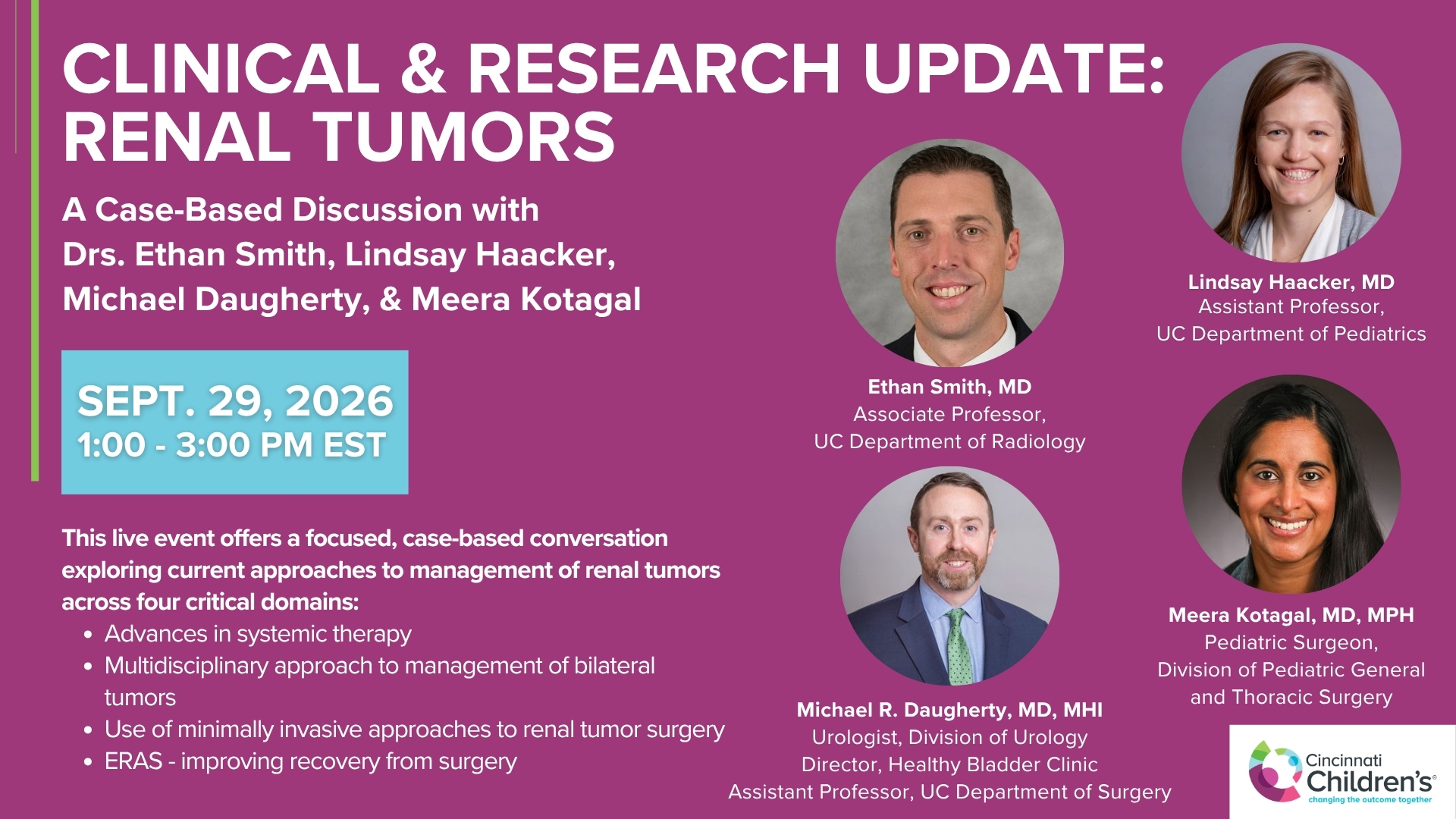
Clinical & Research Update: Renal Tumors with Drs. Ethan Smith, Lindsay Haacker, Michael Daugherty, and Meera Kotagal
71 min · Published Sep 2026
Video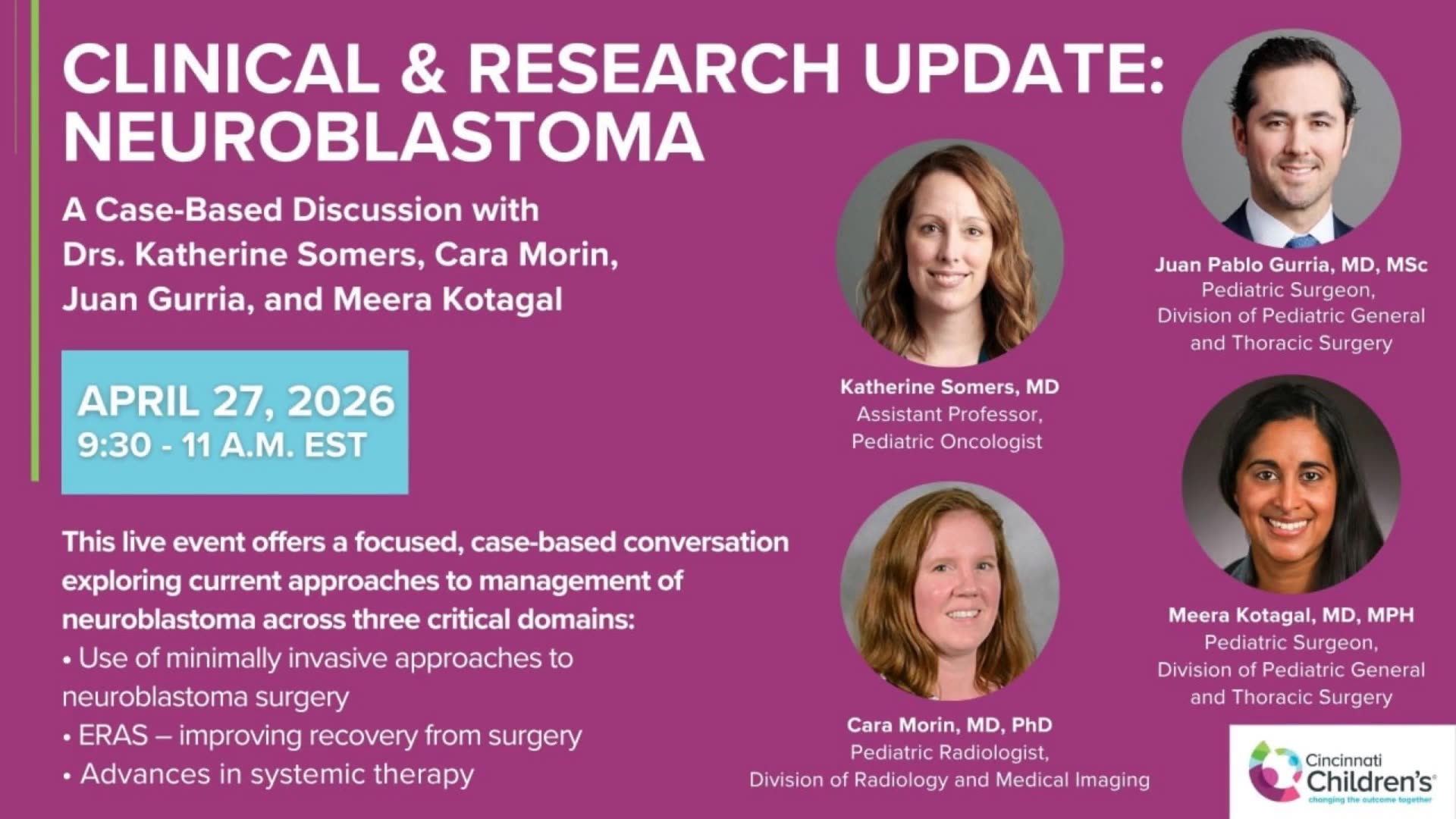
Clinical & Research Update: Neuroblastoma with Drs. Katherine Somers, Cara Morin, Juan Gurria, and Meera Kotagal
67 min · Published Sep 2026
Video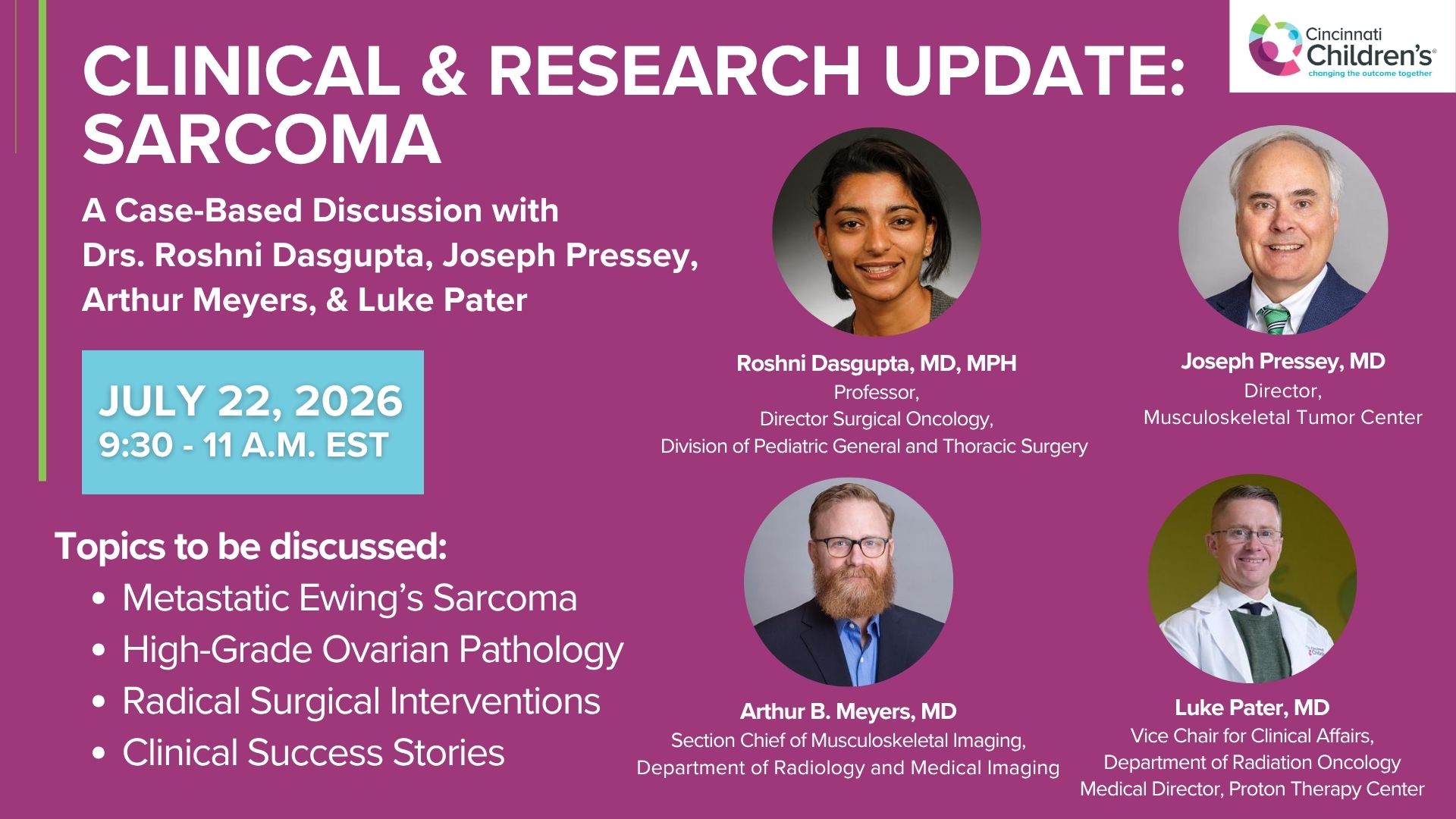
Clinical & Research Update: Sarcoma w/ Drs. Roshni Dasgupta, Joseph Pressey, Arthur Meyer, Luke Pater
66 min · Published Sep 2026
Video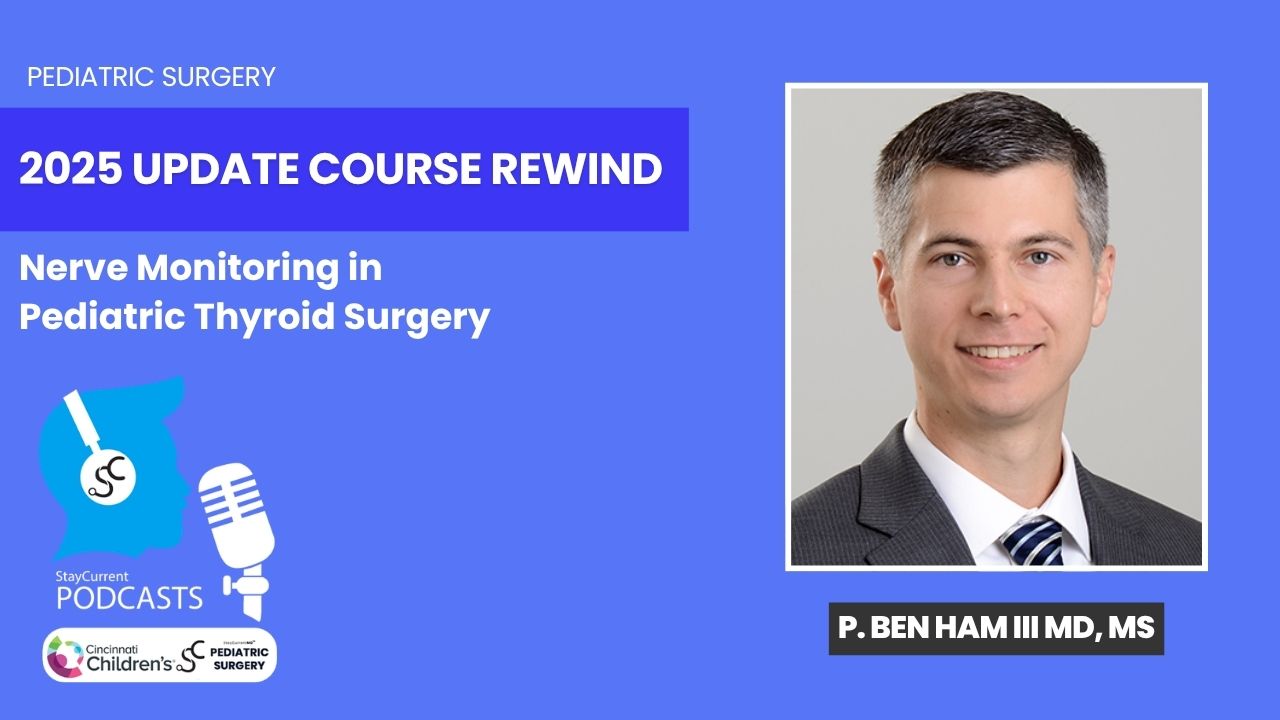
Update Course Rewind 2025: Nerve Monitoring in Pediatric Thyroid Surgery
6 min · Published Jul 2026
Video
Journal of Pediatric Surgery Article Review: June 2023, AAP Issue
Todd Ponsky · 13 min · Published Jul 2026
Video
Intestinal Atresia Types Explained: Grossfeld Classification for Pediatric Surgery
1 min · Published Sep 2026
Video
Derivation and validation of the Pediatric Community-Acquired Pneumonia Severity (PedCAPS) score: A prospective cohort study
50 s · Published Sep 2026
Video
FETO for Late-Diagnosed Severe Congenital Diaphragmatic Hernia (CDH) at Cincinnati Children's with Dr. Beth Rymeski
4 min · Published Sep 2026
Video
Severe Congenital Diaphragmatic Hernia (CDH) Case: FETO Management & Unexpected Findings with Dr. Beth Rymeski
3 min · Published Sep 2026
Video
Fetoscopic Endoluminal Tracheal Occlusion (FETO) Procedure: Step-by-Step Guide with Dr. Beth Rymeski
4 min · Published Sep 2026
Video
Choledochal Cyst Types Explained: Pediatric Surgery Fundamentals
1 min · Published Sep 2026
What the experts said
Risk stratification for Wilms tumor has evolved many times over the years.
The Children's Oncology Group published updated risk stratification for patients with favorable histology Wilms tumor in Nature in June 2025.
The new risk stratification model includes biological and clinical features that were not in the first generation risk stratification.
The new model changes some of the older features or gets rid of them altogether.
Factors being added are loss of heterozygosity of 11P15, 1Q gain, and lymph node involvement.
Tumor nephrectomy weight is no longer included in the risk stratification.
The model modified how histology and age are used to stratify certain patients.
More changes are expected in the future as ongoing COG trials produce more results.