


From
StayCurrentMD
Update Course Rewind: Patient Education and Non-Surgical Management of Pilonidal Disease 2024
With Dr. Nelson Rosen · hosted by Dr. M. Godi
Part of
Pilonidal Disease 10 items
Chapter 4 of 5 · Patient & Family Education
Technique details
Practical Hair Removal Techniques and Hygiene Adjuncts
Cued at 5:37 · stops at 6:05 · press play
Expert statements on this page
No expert statements were drawn from this page.
Host summaries · secondary, not cited in answers
Educational content from recorded physician discussions — not medical advice. Talk to your (or your child's) care team about your situation.
Video
Burden of pilonidal disease and improvement in quality of life after treatment in adolescents
Published Oct 2023
Video
Carga mental de la enfermedad pilonidal y mejora de la calidad de vida tras el tratamiento en adolescentes
Published Oct 2023
Video
Minimal Treatment of Pilonidal Disease - APSA Practice Gaps 2019
Published Mar 2020
Video
BOB Ped Surg 2023 - Fereshteh Salimi Jazi, PAPS - Presentation
Published Feb 2023
Podcast
Journal of Pediatric Surgery Article Review: July 2023, PAPS Issue
10 min · Published Jan 2024
Video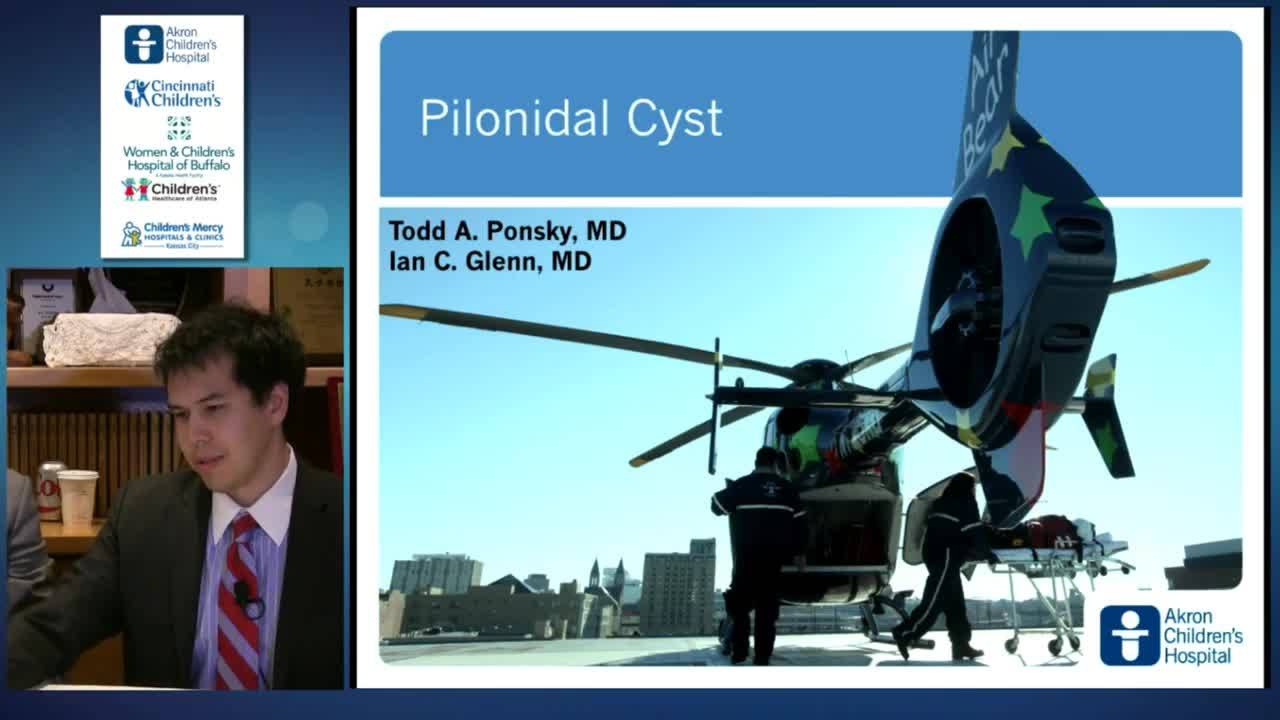
Pilonidal Cyst Case Presentation: Update Course 2015
5 min · Published Nov 2015
Video
Anal Dilatations After PSARP: Current Practice, Evidence & Future Directions in Pediatric Colorectal Surgery
51 min · Published Nov 2026
Video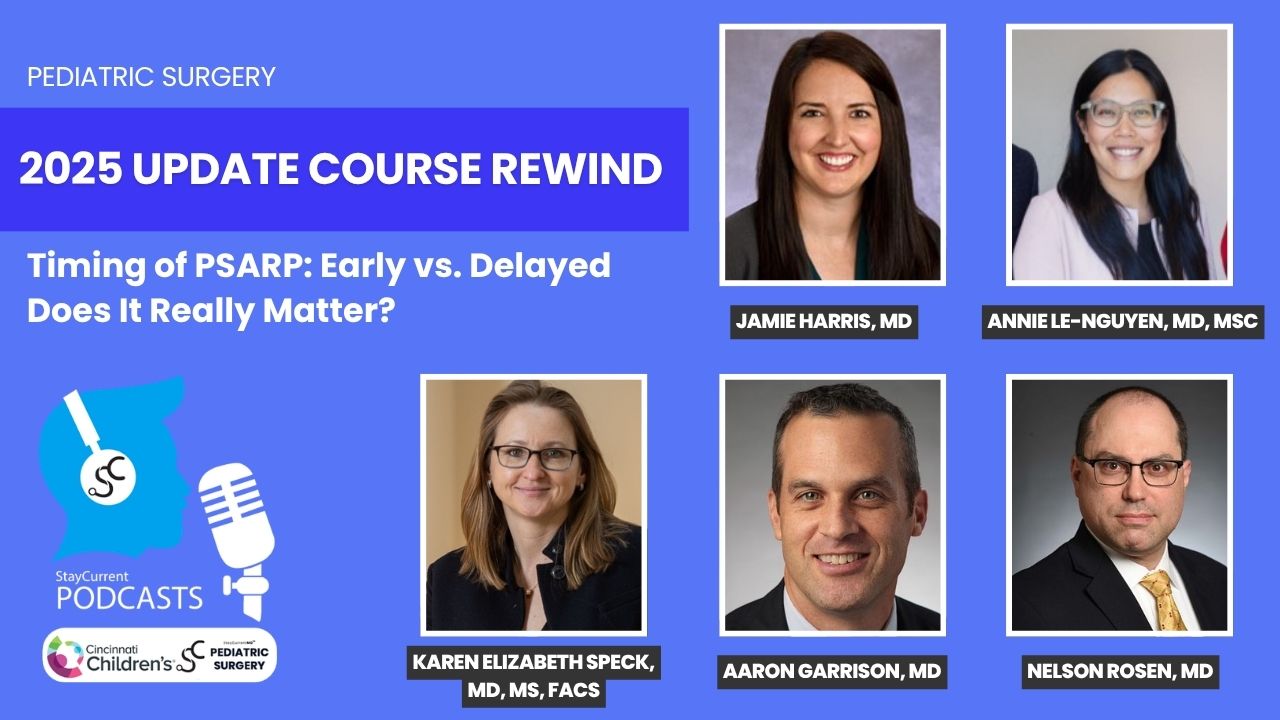
Update Course Rewind 2025: Timing of PSARP: Early vs. Delayed—Does It Really Matter?
3 min · Published Apr 2026
Video
Evaluation and management of pilonidal disease in adolescents
Nelson G. Rosen · 43 min · Published Sep 2025
Video
2025 Pediatric Surgery Update Course - Updates in Colorectal: Debunking Dogma
30 min · Published Aug 2025
Video
Update Course Rewind: Surgical Management of Pilonidal Disease 2024
Published Apr 2025
Video
Best of the Best Gen Surg - Development of postoperative local tumors and distant metastases in diet, genetics and microbiome-dependent in a mouse model of colorectal cancer recurrence - Dr. Morgan
12 min · Published Sep 2022
Podcast
Diaphragm pacing as alternative to mechanical ventilation in pediatric respiratory failure
1 min · Published Nov 2026
Podcast
Fetoscopic endoluminal tracheal occlusion for congenital diaphragmatic hernia
4 min · Published Nov 2026
Podcast
FETO procedure for late-diagnosed severe CDH with liver herniation
4 min · Published Nov 2026
Podcast
Severe CDH case with FETO: unexpected anatomic findings and clinical outcome
3 min · Published Nov 2026
Podcast
Pediatric pancreatitis: diagnosis, causes, and genetic insights with Dr. Juan Gurria
3 min · Published Nov 2026
Podcast
Understanding craniosynostosis: skull sutures, growth patterns, and diagnosis in infants
10 min · Published Nov 2026
What the experts said
Staging systems for pilonidal disease have been introduced previously, but not all classifications correlate with how cases are managed
Patients presenting with wounds as their initial presentation for pilonidal tend to not always get to the finish line fully healed with a minimally invasive approach
60 to 70% of pilonidal cases respond successfully to non-surgical management
Treatment decisions should be tailored to patient context, such as a 16-year-old baseball player who is miserable may proceed directly to operating room
Non-surgical management allows patients to return to activities of daily living immediately, though partial healing may occur depending on disease severity
If you're not pushing hair removal and meticulous hygiene to do the best that you can, you're probably going to end up operating on some people that might not need an operation
Many patients have come from multiple hospitals full of hair with nobody clipping them in the office or mentioning hair removal
Clipping is probably the easiest and simplest approach for hair removal when a parent or active caregiver is involved
Having someone clip the area once a week is recommended
For college students living alone without caregivers, depilatory agents (Nair) are recommended as an alternative to clipping
Wax strips can be used intraoperatively during general anesthesia to remove hair from the natal cleft and buttocks area
Proper showering with a hand shower to actually put water in the affected area is important for healing
Many patients report being told they couldn't bathe, which is problematic because without washing, healing is unlikely
John Armstrong in the United States Army had a clinic where patients were shaved weekly and closely monitored, leading to dramatic improvement and a reduced need for surgery
A large percentage of patients will be healed with non-surgical measures alone
Washlets can be helpful adjuncts for patients who struggle to clean themselves after bowel movements