


Chapter 5 of 10 · Surgical Management
CO2 laser applications
Topic 6: CO2 Laser in Surgical Procedures
Cued at 8:30 · stops at 8:42 · press play
Expert statements on this page
No expert statements were drawn from this page.
Host summaries · secondary, not cited in answers
Educational content from recorded physician discussions — not medical advice. Talk to your (or your child's) care team about your situation.
Podcast
Update course rewind: 2024 top ten key takeaways in pediatric surgery
Ramy Shaaban · 18 min · Published Jun 2025
Video
Update Course Rewind: When & How to Operate CDH Patients on ECMO 2024
4 min · Published Aug 2025
Podcast
ECMO timing and technique for severe congenital diaphragmatic hernia in neonates
4 min · Published Nov 2026
Video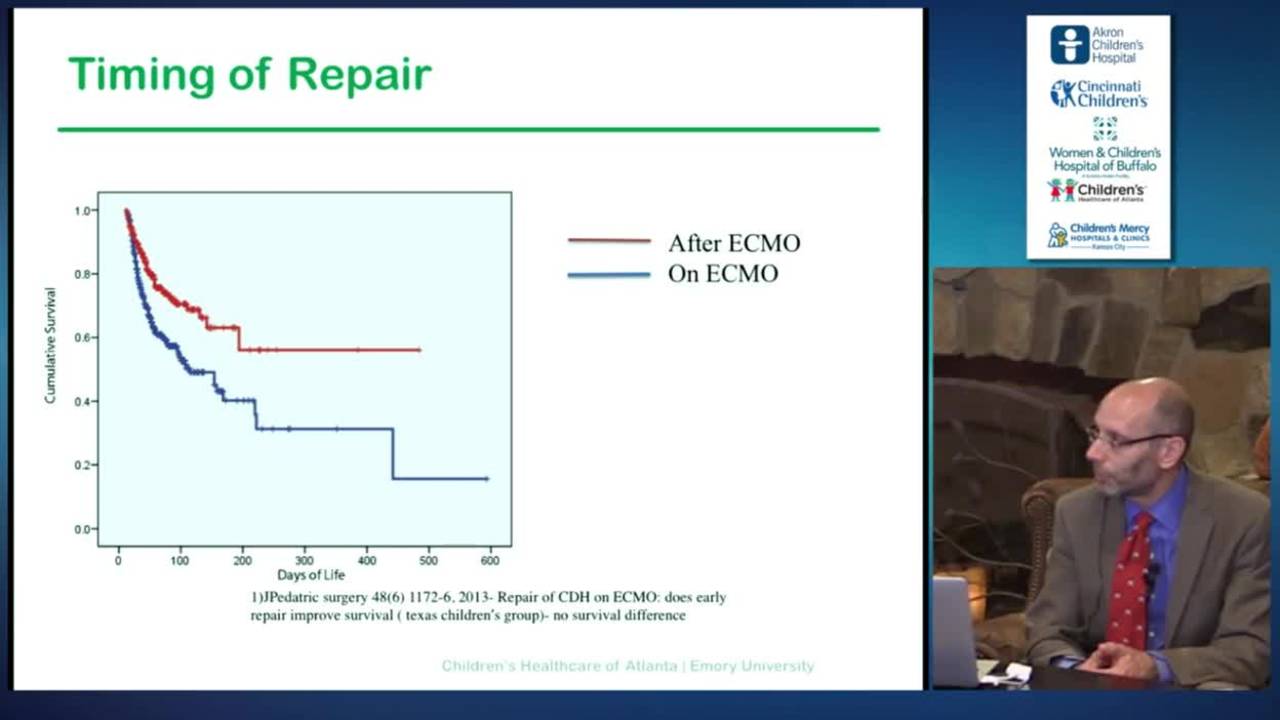
CDH-ECMO - VV vs. VA - Repair on ECMO: Update Course 2015
10 min · Published Nov 2015
Podcast
Timing and anticoagulation strategies for CDH repair on ECMO
4 min · Published Nov 2026
Video
BOB Ped Surg 2023 - Shelby Sferra, AAP - Presentation
5 min · Published Feb 2023
Video
Quick Literature Updates Ep 24
4 min · Published Nov 2025
Video
Update Course Rewind: Part 2 Non-Pectus Uses of Cryoanalgesia 2024
Lurie Children's Hospital · 4 min · Published Jun 2025
Video
Update Course Rewind: Part 1 Non-Pectus Uses of Cryoanalgesia 2024
4 min · Published Jun 2025
Podcast
Journal of Pediatric Surgery Article Review: 1st Quarter (Jan-Mar) 2025
16 min · Published May 2025
Video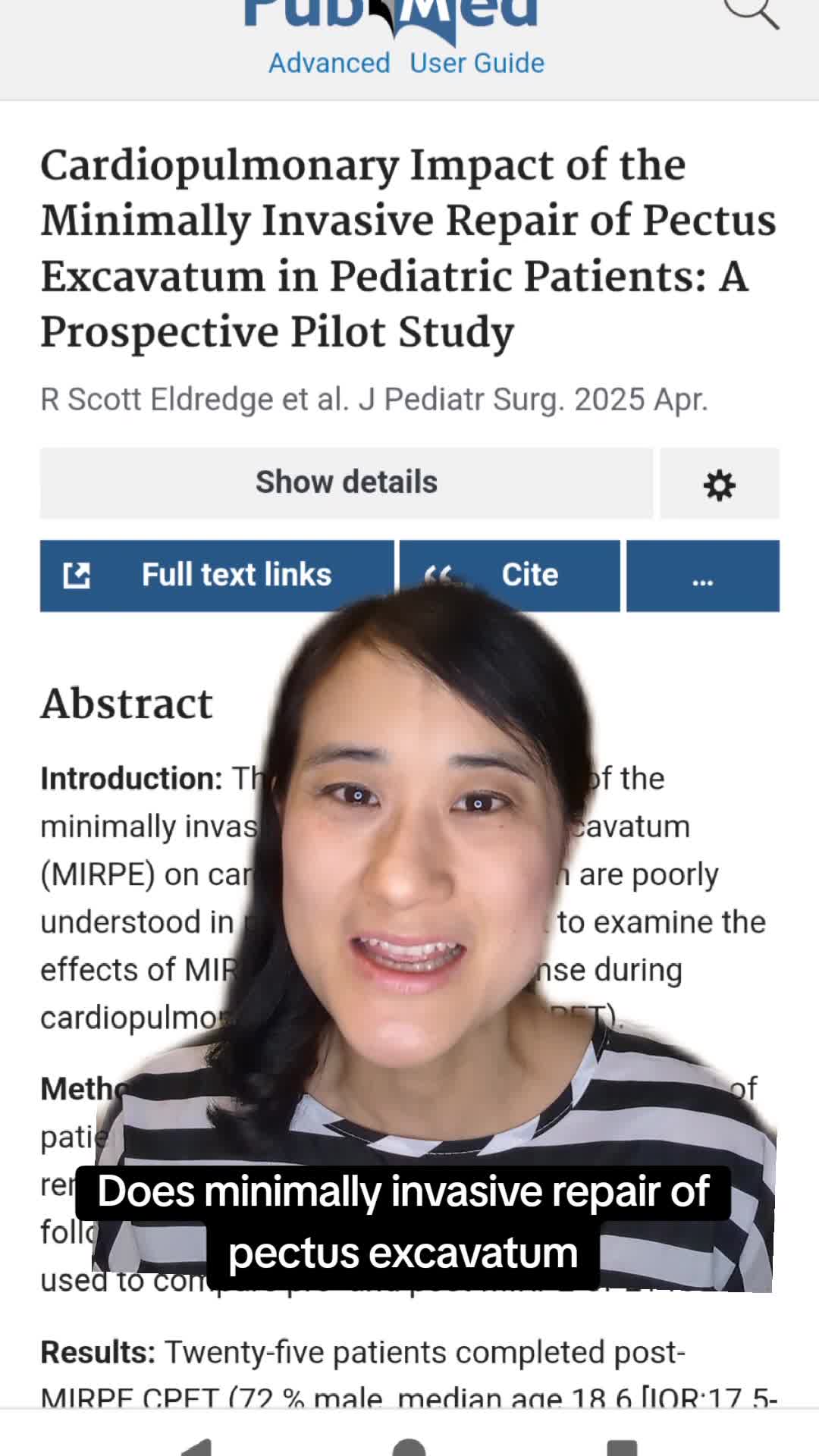
Cardiopulmonary Impact of the Minimally Invasive Repair of Pectus Excavatum in Pediatric Patients: A Prospective Pilot Study
55 s · Published Apr 2025
Video
Vacuum Bell Therapy for Pectus Excavatum: Long-term Experience at a Single Center
58 s · Published Apr 2025
Podcast
Surgical Decision-Making in Necrotizing Enterocolitis: Imaging, Timing, and Operative Strategies
11 min · Published Nov 2026
Video
AI applications in pediatric surgery and clinical transformation with Dr. Todd Ponsky
Dr. Todd Ponsky · 7 min · Published Oct 2026
Podcast
The Future of Surgical Education: A King, an Ox, & Elon Musk
Todd Ponsky · 26 min · Published Oct 2026
Podcast
Unconscious Bias
Todd Ponsky · 58 min · Published Oct 2026
Video
Storycasts in Pediatric Surgery: Interactive Storytelling to Transform Clinical Education
Todd Ponsky · Published Oct 2026
Podcast
Necrotizing Enterocolitis
Todd Ponsky · 46 min · Published Oct 2026
Podcast
Diaphragm pacing as alternative to mechanical ventilation in pediatric respiratory failure
1 min · Published Nov 2026
Podcast
Fetoscopic endoluminal tracheal occlusion for congenital diaphragmatic hernia
4 min · Published Nov 2026
Podcast
FETO procedure for late-diagnosed severe CDH with liver herniation
4 min · Published Nov 2026
Podcast
Severe CDH case with FETO: unexpected anatomic findings and clinical outcome
3 min · Published Nov 2026
Podcast
Pediatric pancreatitis: diagnosis, causes, and genetic insights with Dr. Juan Gurria
3 min · Published Nov 2026
Podcast
Understanding craniosynostosis: skull sutures, growth patterns, and diagnosis in infants
10 min · Published Nov 2026
What the experts said
Cone beam CT is performed on a C-arm fluoroscopy unit that rotates around the patient collecting multiple images which are stacked together to create a CT.
With autofluorescence, parathyroids naturally autofluoresce at a specific wavelength without injecting anything.
Hypocalcemia rates were about 50% lower with autofluorescence use versus not using it.
A surgery-first pathway for pediatric biliary stones reduces resource utilization, including MRCP, according to recently published work.
With ERCP, you're going to get pancreatitis 10% of the time no matter how good you are.
If you just did flushing or got the catheter a little more into the common bile duct or reamed the sphincter, the success rate was in the 90s.
At Cincinnati Children's, interventional radiologists teach pediatric surgery fellows how to use ultrasound guidance for vascular access.
You don't have to have a hybrid OR to do image-guided surgery collaboration; it can occur in a regular OR by bringing in an ultrasound machine.
ChatGPT can screen thousands of articles in systematic reviews by analyzing Excel sheets and screening included articles based on title and abstract.
In cryoanalgesia for pectus procedures, a double lumen endotracheal tube is used in all patients to deflate the lung on the side of cryoablation.
Cryoanalgesia targets nerves from T3 to T8 with a 2-minute freeze cycle starting at the third rib and working down.
Subpleural injection with 0.25% marcaine with epinephrine works immediately, as opposed to the 8 to 10 hour delay with cryo nerve block.
Cryoanalgesia blocks fail when surgeons use a single lumen tube and perform the block too far anteriorly.
The SER Protocol from Michigan used prenatal criteria to guide decisions on offering ECMO versus comfort care for severe unilateral CDH, and outcomes showed survival was equivalent between groups.
Every unilateral isolated CDH should be pursued with ECMO if there was good prenatal counseling with the parents.
With bivalrudin, you can operate after 8 hours of putting patients on ECMO as long as levels are stable, and it's a much easier surgical repair.
Early repair while on ECMO is safe and can offer physiological benefits, with the optimal window between 8 to 24 hours.
CO2 laser emits infrared light in the spectrum of 920 to 1400 nanometers, which is well absorbed by water.
In 56 circumcision cases using CO2 laser with the sleeve technique, dorsal slit, and cyanoacrylate adhesive, the complication rate was only 3%.
CO2 laser was used for frenulectomy in 47 patients with low pain profile and no suture required.
Autofluorescence has shown to reduce rates of hypoparathyroidism and hypocalcemia following thyroidectomy in a randomized controlled trial from France.
With a surgery-first mindset, stone clearance rate reflected by negative intraoperative cholangiogram was 86%.
MMP-7 was identified about 10 years ago by Georgia Bezarra as a diagnostic biomarker for biliary atresia.
Data from a recent Midwest study shows that every 10-day delay in biliary atresia treatment worsens outcomes by 20%.
MMP-7 is not a validated biomarker for biliary atresia; it's not perfect, and the sensitivity is pretty good, but cutoffs vary because the assay is still evolving.
The institutional commitment is to perform Kasai procedure within 7 days of patients showing up if they have biliary atresia.
REBOA can be used in children if you have it at your center and you're good at it, though it's not done a lot in pediatric hospitals.
REBOA seems to take longer than opening the abdomen or chest if you're just needing to cross-clamp the aorta.
Patients presenting with wounds as their initial presentation for pilonidal disease tend to not always get to the finish line fully healed with a minimally invasive approach.
John Armstrong, while serving in the US Army, ran a clinic where patients were shaved weekly, and they observed a dramatic improvement, significantly reducing the need for surgical intervention in pilonidal disease.
If you're not pushing hair removal and meticulous hygiene, you're probably going to end up operating on some people that might not need an operation for pilonidal disease.
For pilonidal disease hair removal, if there's a parent or active caregiver involved, clipping is probably the easiest and simplest approach, with once-a-week recommended.