


From
Live Event Content
Update Course 2023 - Updates in Pediatric Achalasia Management
With Dr. Mikhail Petrozan & Dr. Tim Kaine · hosted by Dr. Whit Holcomb
Part of
Achalasia 9 items
Chapter 1 of 5 · Fundamentals
Achalasia types
Introduction and Achalasia Classification
Cued at 0:03 · stops at 5:10 · press play
Expert statements on this page
No expert statements were drawn from this page.
Host summaries · secondary, not cited in answers
Educational content from recorded physician discussions — not medical advice. Talk to your (or your child's) care team about your situation.
Video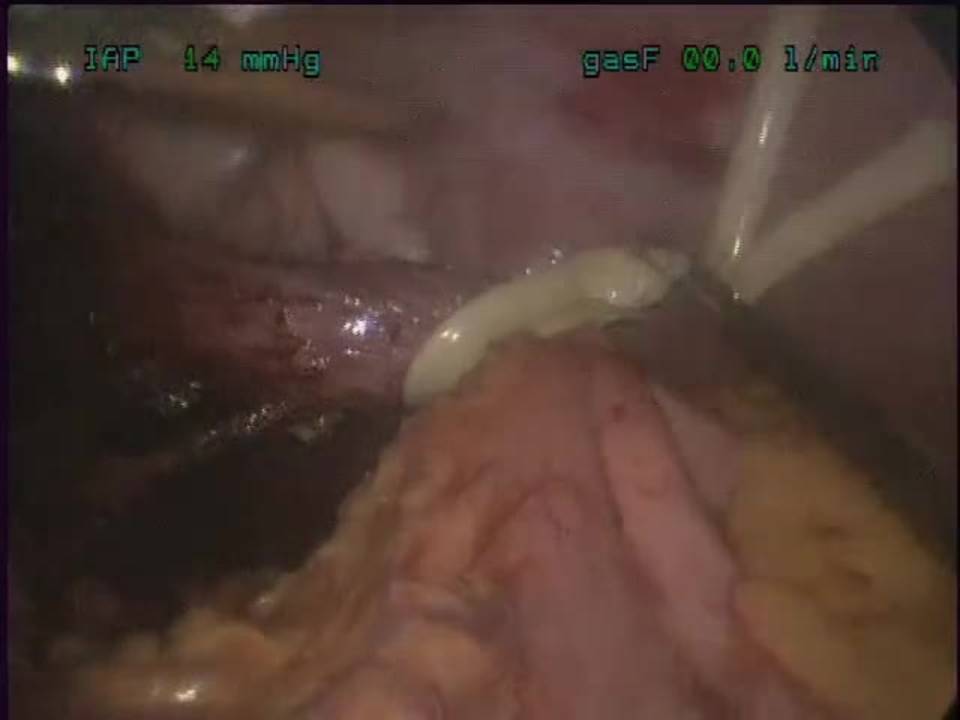
Laparoscopic Heller Myotomy
3 min · Published Feb 2020
Podcast
Gastroesophageal Reflux Disease
Jeffrey Ponsky · 33 min · Published Jun 2016
Video
Update Course Rewind: Updates in Achalasia 2023
Published Mar 2024
Podcast
Gastroesopheal Reflux Disease
33 min · Published Dec 2016
Video
How effective is POEM in children?
Published Oct 2019
Video
Esophageal Diverticula: Types, Causes, Symptoms, Diagnosis, and Treatment w/ Dr. Ashley Walther
3 min · Published Nov 2026
Video
Clinical & Research Update: Renal Tumors with Drs. Ethan Smith, Lindsay Haacker, Michael Daugherty, and Meera Kotagal
71 min · Published Sep 2026
Video
Clinical & Research Update: Neuroblastoma with Drs. Katherine Somers, Cara Morin, Juan Gurria, and Meera Kotagal
67 min · Published Sep 2026
Video
Clinical & Research Update: Sarcoma w/ Drs. Roshni Dasgupta, Joseph Pressey, Arthur Meyer, Luke Pater
66 min · Published Sep 2026
Video
2026 Laparoscopic Pediatric Hernia Repair
123 min · Published Jun 2026
Video
Beyond the Spectrum: Diagnosis, Myths & Management - Caitlin Couch & Leslie Lopez - APP Conference 2026
50 min · Published May 2026
Video
Dysautonomia: Navigating the Journey - Martha Willis - APP Conference 2026
55 min · Published May 2026
What the experts said
The three types of achalasia (Chicago classification) all require the same treatment approach, but type 2 responds best to surgery while type 3 has the worst outcomes
Type 3 achalasia does not respond well to treatments and recurrences happen much more frequently in patients with type 3
The Eckardt score consists of four components: weight loss, dysphagia, chest pain, and regurgitation, used both for diagnosis and clinical follow-up
At Children's National, fundoplication is not offered with Heller myotomy because anterior wraps have caused esophageal torquing as children grow, requiring takedown of the wrap
Approximately 50% of pediatric achalasia patients have had some intervention (dilation or Botox) before definitive surgery
Botox injection causes significant scar tissue formation, while prior dilations cause minimal fibrosis that is not problematic during surgery
Pediatric patients biopsied one year after POEM showed a reflux rate of approximately 5%, compared to 50% in adult POEM patients
The standard myotomy extends approximately 2 centimeters onto the stomach and 4-5 centimeters up the esophagus, for a total average length of 6-7 centimeters
Symptoms within one year after myotomy suggest incomplete myotomy, while later recurrence may represent true recurrent achalasia related to growth
Manometry in achalasia patients often continues to show abnormal findings even after successful treatment, making it less useful for post-operative surveillance
Endoflip measures esophageal distensibility and diameter, providing real-time feedback during myotomy to determine adequacy of the procedure
The first human POEM case was performed by Inoue in 2010
Children's National performed their first POEM in 2015 after a two-year process to obtain equipment, with initial cases having conversion to Heller as backup
POEM offers 360 degrees of myotomy options compared to approximately 180 degrees with laparoscopic Heller, and avoids hiatal dissection which reduces reflux risk
In the Children's National series of 73 POEM cases, the re-intervention rate requiring balloon dilation within one year was 15%, similar to their historical Heller experience
Five redo POEM procedures were performed, with three of the five being in patients with type 3 achalasia who presented with recurrent symptoms within one year
In the Children's National POEM series, 11% were type 3 achalasia (higher than most literature), 62% were type 2, with type 2 patients having the best outcomes
Type 2 achalasia patients have essentially no peristalsis, so opening the LES allows them to swallow effectively, while type 1 patients have spastic esophagus causing more persistent symptoms
Children's National currently performs approximately 15 POEM procedures per year, with initial years having much lower volumes (2-3 cases)
Only approximately 10% of pediatric surgeons perform thoracoscopic tracheoesophageal fistula repair, illustrating the challenge of disseminating advanced techniques
Many patients are now specifically requesting POEM after doing their own research, rather than considering Heller myotomy
The POEM technique has been successfully adapted for pyloric myotomy (G-POEM) in gastroparesis patients
A 2015 IPEG survey showed 95% of pediatric surgeons would perform fundoplication with Heller myotomy
In adult literature, when Heller myotomy is performed, good evidence shows fundoplication is not necessary
The learning curve for POEM is approximately 20 cases, with mastery around 60 cases according to adult literature