


From
StayCurrentMD
Trans-Catheter Interventions: New Horizons in Medical and Surgical Fontan...
With CCHMC Pediatric Surgery
Chapter 7 of 9 · Case-Based Learning
Small conduits
Discussion: Management of Small Fontan Conduits
Cued at 13:05 · stops at 13:20 · press play
Expert statements on this page
No expert statements were drawn from this page.
Host summaries · secondary, not cited in answers
Educational content from recorded physician discussions — not medical advice. Talk to your (or your child's) care team about your situation.
Video
Hypoplastic Left Heart Syndrome: Stage I Palliation
Meghan M. Chlebowski · 5 min · Published Apr 2023
Video
Outcomes of Fontan Patients Undergoing Combined Heart - Liver Transplantation in Pediatric Hospitals Across the U.S.
59 s · Published Dec 2025
Video
How Does the Blood Go Round in Single Ventricles and Fontans? New Horizons in...
CCHMC Pediatric Surgery · 24 min · Published Jul 2017
Video
Management of hypoxia following the Glenn or Fontan operation
Meghan M. Chlebowski · 11 min · Published Aug 2023
Video
Malrotation
42 min · Published Nov 2018
Video
Update on Surgical Practice and Current State on Fontan Conversion Surgery:...
CCHMC Pediatric Surgery · 25 min · Published Jul 2017
Video
Surgical and Catheter-Based Intervention in Pediatric Pulmonary Vein Stenosis
57 s · Published Jul 2026
Video
Pyloric Stenosis
CCHMC Pediatric Surgery · 12 min · Published May 2020
Video
How do we manage thrombogenicity and thrombosis in the Fontan? New Horizons...
CCHMC Pediatric Surgery · 16 min · Published Jul 2017
Video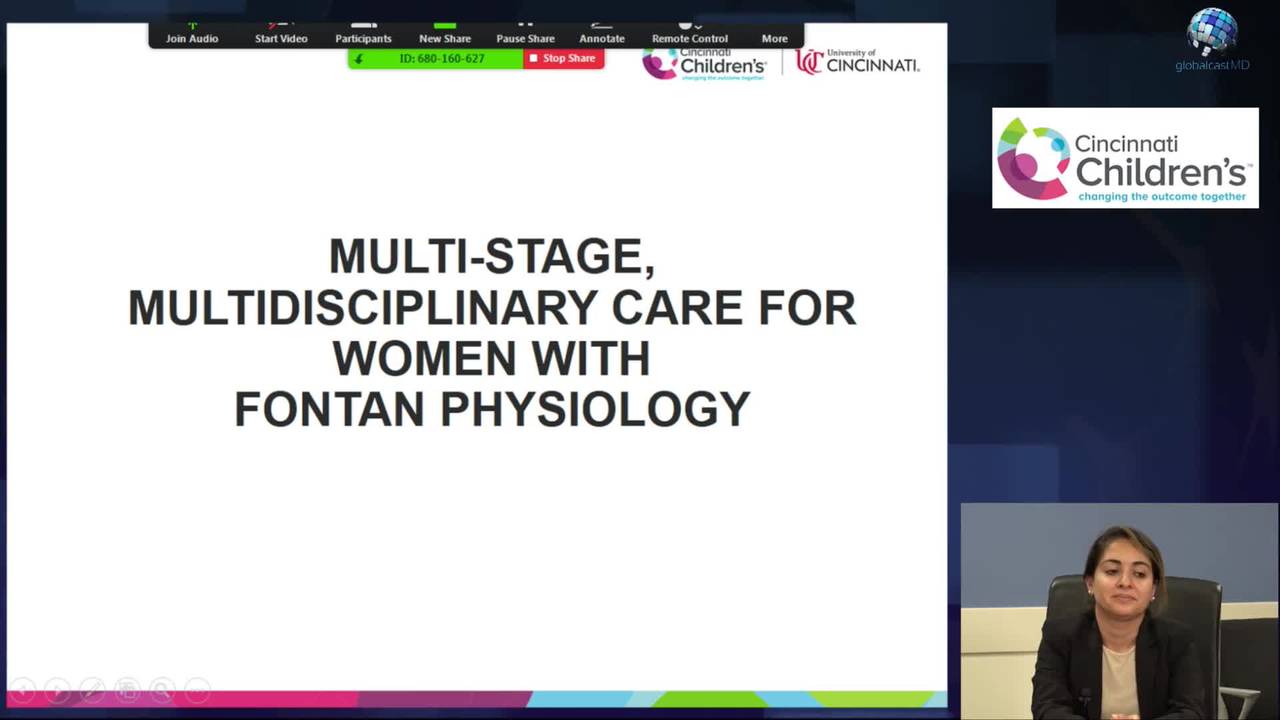
Pregnancy in a Fontan Patient: New Horizons in Medical and Surgical Fontan...
CCHMC Pediatric Surgery · 18 min · Published Jul 2017
Video
Psychosocial Outcomes: New Horizons in Medical and Surgical Fontan Management...
CCHMC Pediatric Surgery · 22 min · Published Jul 2017
Video
The Role of Trans-Catheter Arrhythmia Management - Patient Based Decision...
CCHMC Pediatric Surgery · 20 min · Published Jul 2017
Podcast
Diaphragm pacing as alternative to mechanical ventilation in pediatric respiratory failure
1 min · Published Nov 2026
Podcast
Fetoscopic endoluminal tracheal occlusion for congenital diaphragmatic hernia
4 min · Published Nov 2026
Podcast
FETO procedure for late-diagnosed severe CDH with liver herniation
4 min · Published Nov 2026
Podcast
Severe CDH case with FETO: unexpected anatomic findings and clinical outcome
3 min · Published Nov 2026
Podcast
Pediatric pancreatitis: diagnosis, causes, and genetic insights with Dr. Juan Gurria
3 min · Published Nov 2026
Podcast
Understanding craniosynostosis: skull sutures, growth patterns, and diagnosis in infants
10 min · Published Nov 2026
What the experts said
Fontan-associated plastic bronchitis occurs in less than 2% of patients with Fontan circulation
Plastic bronchitis is characterized by proteinaceous lymphatic effluent into the tracheobronchial tree where there are connections between the lymphatic circulation and the airway
With evaporation of water content through breathing, characteristic fibrinous airway casts remain and may be expectorated in whole or in part
The incidence of fenestration thrombosis or stenosis early after the procedure and in short and mid-term follow-up is very high with bare metal stents, presumably from tissue invagination through the cells of the stent and tissue factor exposure to blood
Even on anticoagulation, thrombosis is pretty common with bare metal stents used for fenestration creation
Good procedures don't always mean much - one can do a good intervention in a complex population but it doesn't always mean you're going to change the ultimate clinical outcome
The Fontan population has a very high incidence of liver-related pathologies
Having obstruction in the inferior limb of the Fontan can be a real problem as it only serves to augment venous hypertension
A resting absence of gradient does not rule out the presence of hemodynamically meaningful obstruction
Left innominate vein obstruction can create opportunity for patients to present with either plastic bronchitis or protein-losing enteropathy, two diagnoses associated with very adverse clinical outcomes that have been shown increasingly to be associated with lymphatic pathology, especially by the group from Philadelphia
Secondary palliations (palliation of a palliation, the Fontan circuit) have limitations - they may not offer cure, may not even offer substantial benefits
Sometimes we're not able to test the hypothesis until we actually perform the intervention
The approach to transcatheter interventions must be taken from a multidisciplinary perspective - therapies have both medical and surgical considerations to future therapies, to the need for anticoagulation
Everything we do can have sequelae - it's really important to make sure that the multiple disciplines we use to care for these patients all understand and appreciate the implications of decision making and therapies
Stent in conduit equals thrombogenic behavior substrate
A 12-year-old young man being on Coumadin is not free (not without consequences)
Having seen many of these patients grow up and face symptoms increasing through their teenage years, it's worth being aggressive when there's anatomic deficiencies within the circuit
The fluid challenge protocol involves giving 15 cc per kilo with no limit of fluid volume rapidly via central access in about 2 minutes, then starting a timer with 5 minutes from the end of fluid challenge until repeat hemodynamic runs are measured
Fluid challenge is not performed if patients have overt diastolic dysfunction, defined as baseline EDP at resting EDP of greater than 15
Fluid challenge is not performed if patients have baseline Fontan pressure greater than 18 and/or repeated hospitalizations with heart failure to get volume off
We can safely take Gore-Tex tubes to at least 110% of their nominal diameter
Beyond 110% of nominal diameter, there is a bit of risk, but the risk is probably pretty subtle for moderate dilation (e.g., 18mm tube to 22mm)
There is always risk at the anastomosis where it's hard to necessarily cover that should a problem arise because hepatic vein enters very close
Gore-Tex tubes can be taken up to about 110% - the stiffness constant is very high and you cannot generate enough pressure in the balloon to stretch the Gore-Tex much more than about 110%
The risk of rupture is actually very low when dilating Gore-Tex conduits
There are few patients who have an undersized tube at placement and really require augmentation of the nominal diameter
Extracardiac conduits are three-dimensional structures that are not circular - if a 22mm tube measures 17mm in the frontal plane, it often measures 25mm in the lateral plane, and the cross-sectional area is just fine
It's important that there's a true stenosis, not just a non-circular shape, for us to want to treat conduit narrowing