


From
Colorectal Channel
The Colorectal Quiz Episode 9: Motility Disorders Part 2
With Dr. Marc Levitt & Dr. Anil Darbari & Dr. Kahleb Graham & Dr. Jason Fisher · hosted by Dr. Amanda Jensen
Chapter 5 of 6 · Case-Based Learning
Treatment approach
Case Management and Treatment Philosophy
Cued at 10:07 · stops at 12:37 · press play
Expert statements on this page
No expert statements were drawn from this page.
Host summaries · secondary, not cited in answers
Educational content from recorded physician discussions — not medical advice. Talk to your (or your child's) care team about your situation.
More about this diagnosis
Chronic constipationVideo
Hirschprung's Disease - Daniel von Allmen
38 min · Published Nov 2018
Video
Surgical Procedures for Hirschsprung Disease
128 min · Published Nov 2018
Video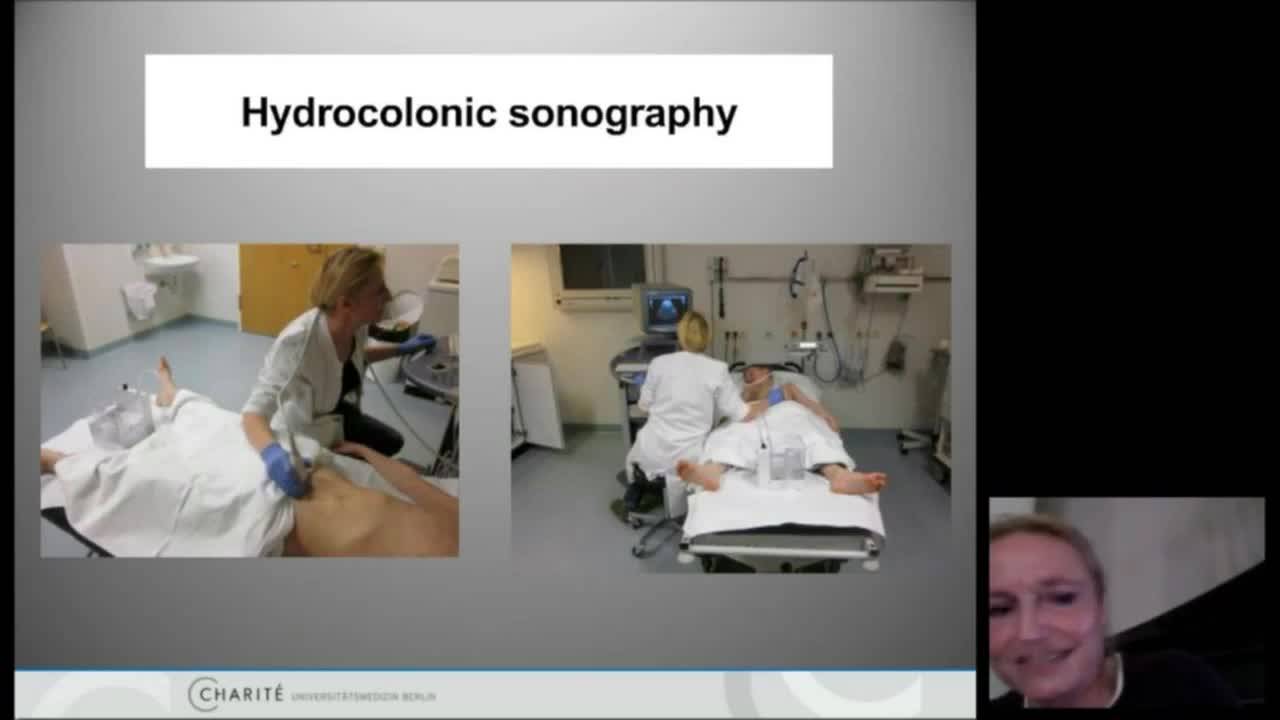
Use of hydrocolonic sonography to monitor the effects of an enema: Pediatric...
Dr. Todd Ponsky · 12 min · Published May 2013
Video
Bowel Management - Use Of Ultrasound To Monitor Effects Of Enema
12 min · Published Nov 2018
Video
Meconium Ileus: Presentation, Workup, Diagnosis & Treatment Options
Published Mar 2023
Video
Validation of an anorectal malformation trainer - Can a high-fidelity model simulate real life?
1 min · Published Jun 2026
Video
Complications and Long-Term Outcomes of Patients With Cloacal Malformation After Bowel Neovagina...
1 min · Published Jun 2026
Video
Safety and utility of long-acting steroid injection for management of post-operative stricture...
1 min · Published Jun 2026
Video
Association Between Social Determinants of Health and Choice of Urinary Reconstruction in Children
1 min · Published Jun 2026
Video
The Perineal Body Preserving PSARP (PPP)
11 min · Published Jun 2026
Video
Update Course Rewind 2025: Hirschsprung + ARM: Rare but Real
1 min · Published May 2026
Video
Colorectal Quiz Ep. 50 -16th Annual European Pediatric Colorectal & Pelvic Reconstruction Conference
Marc Levitt · Published Mar 2026
Podcast
Colorectal Quiz: Episode 50 - 16th Annual European Pediatric Colorectal and Pelvic Reconstruction Conference, Stockholm, Sweden, October 2025 - What did we learn?
24 min · Published Mar 2026
Video
Colorectal Quiz Episode 33: Cloaca Exstrophy
Marc Levitt · 22 min · Published Sep 2025
Video
The Colorectal Quiz Episode 21: The History of Hirschsprung Disease
Marc Levitt · 15 min · Published Sep 2025
Video
Colorectal Quiz: Episode 49 – Collaborating for Kids: Colorectal & Pelvic Care (with Help from AI)
Marc Levitt · 40 min · Published Jul 2025
Podcast
Colorectal Quiz: Episode 49 - Collaborating for Kids: Colorectal & Pelvic Solutions (with a Little Help from AI)
Marc Levitt · 40 min · Published Jul 2025
Podcast
Long-term obstetric and gynecologic care for patients with anorectal malformations
21 min · Published Sep 2026
Podcast
Post-pubertal gynecologic evaluation and management of patients with anorectal malformations
22 min · Published Sep 2026
Podcast
Pre-pubertal gynecologic evaluation and management of patients with anorectal malformations
23 min · Published Sep 2026
Podcast
Methods of gynecologic evaluation for patients with anorectal malformations
21 min · Published Sep 2026
Podcast
Gynecologic care in patients with anorectal malformations: A primer and call to action
18 min · Published Sep 2026
Podcast
Evaluation and Management of Postsurgical Patient With Hirschsprung Disease Neurogastroenterology & Motility Committee: Position Paper of North American Society of Pediatric Gastroenterology, Hepatology, and Nutrition (NASPGHAN)
17 min · Published Sep 2026
What the experts said
Colonic transit and colonic function must be assessed in this patient; it is not purely a sphincter issue.
The massively dilated colon is a result of colonic dysfunction, with dilatation predominantly in the rectosigmoid.
A Sitz marker study is recommended to assess colonic transit.
Anorectal manometry should assess resting pressure; high resting pressure may indicate a patient amenable to anal Botox.
Conscious rectal sensitivity threshold is tested by gradually inflating a balloon to determine when the patient has a sensation to defecate.
Normal defecation physiology involves pushing from the belly (increasing intraabdominal pressure) and relaxing the anal sphincter, creating a positive pressure gradient.
Motility disorder patients may have a negative pressure gradient during defecation, termed dyssynergia, and may benefit from pelvic floor physical therapy or biofeedback.
Sitz marker study is performed by having the patient ingest markers and obtaining an X-ray at day 5.
Sitz marker study is used as a screening test; if markers are scattered throughout the colon or predominantly on the right side, colonic manometry may be indicated.
If all Sitz markers have disappeared on day-5 X-ray, the patient has stooled, even if they report not having done so; the markers do not dissolve.
Sitz marker study should be available in most settings worldwide.
Colonic manometry is not available everywhere in the world.
Sitz markers can be used as a colonic transit study by obtaining X-rays at days 0, 1, 2, and 4 to visualize marker transit through the colon.
Nuclear scintigraphy is an alternative to colonic manometry in centers without manometry capability but with nuclear medicine capacity.
From a surgeon's perspective, three colonic motility scenarios must be distinguished: (1) diffusely slow but functional, (2) normal motility with a segmental problem, and (3) severely slow throughout.
Colonic manometry provides information on peristaltic activity, specifically the motion of the colon.
Normal colonic physiology includes two strong contractions per day, called high-amplitude propagating contractions (HAPCs).
HAPCs start in the cecum and progress distally in a coordinated manner.
Presence of two HAPCs during an 18- or 24-hour colonic manometry study rules out colonic dysmotility.
Many patients undergoing colonic manometry have normal results, meaning they have slow transit but normal HAPCs.
If HAPCs are present throughout the colon, antegrade flush therapy is likely to work well.
Some patients have a true outlet issue with a normal colon on manometry.
Colonic manometry can characterize whether contractions are well coordinated (neuropathic problem) or low amplitude (myopathic problem).
Contractions should propagate from the right colon to the rectum; the rectum does not have the same contractions as the colon.
In Hirschsprung patients status post pull-through, the rectosigmoid brake is removed, and contractions may be seen extending from the right colon all the way to the sphincters.
Even if HAPCs are present and colonic motility appears normal, absence of response to stimulants on manometry indicates abnormal colonic motility.
In this case, the team concluded the patient did not have Hirschsprung disease; the absent RAIR was a sampling error, and calretinin staining was positive.
Over time, the colon may rehabilitate, and the patient may eventually need only laxatives, but mechanical emptying of the colon is a perfectly acceptable endpoint.
Enemas from below or from above (via Malone or cecostomy) are acceptable management; failure of this conservative therapy may then require resection.
The vast majority of patients with segmental disease respond to antegrade enemas only and do not need resection.
The case patient is a 10-year-old male with chronic constipation, soiling, poor appetite, and a water-soluble contrast enema showing a tortuous, redundant, dilated colon full of stool.
Anorectal manometry in this patient showed an absent rectoanal inhibitory reflex (RAIR).
If all Sitz markers are at the bottom of the colon, it suggests an outlet issue rather than a transit problem.
Sitz marker study is not a replacement for colonic manometry.
Anorectal manometry is the gold standard for diagnosing motility disorders, but it is expensive and not available everywhere.
Anorectal manometry showed the colon was diffusely slow, and the problem was primarily the sphincter.
The patient was offered a Malone antegrade continence enema (MACE) for antegrade flushes, in combination with Botox and biofeedback physiotherapy.
Patients who fail conservative management are those with slow transit throughout or segmental disease.
Historically, colons were resected in patients who, in retrospect, likely had only motility disorders and did not need surgery.