


From
StayCurrentMD
Surgery-first approach for pediatric biliary stones and common bile duct management
hosted by Dr. Em Gootee
Part of
Cholelithiasis 10 items
Chapter 5 of 6 · Case-Based Learning
Flushing risks
Second case and flushing technique cautions
Cued at 5:43 · stops at 7:22 · press play
Expert statements on this page
No expert statements were drawn from this page.
Host summaries · secondary, not cited in answers
Educational content from recorded physician discussions — not medical advice. Talk to your (or your child's) care team about your situation.
Video
Update Course Rewind: Pediatric Biliary Stones - Surgery First Mindset 2024
Dr. Todd Ponsky · 7 min · Published Jul 2025
Podcast
Choledocholithiasis with Drs. David Vitale & Lucas Neff
15 min · Published Jul 2024
Podcast
Case Based Journal Review: Cholelithiasis 2024
Todd Ponsky · 18 min · Published Oct 2026
Video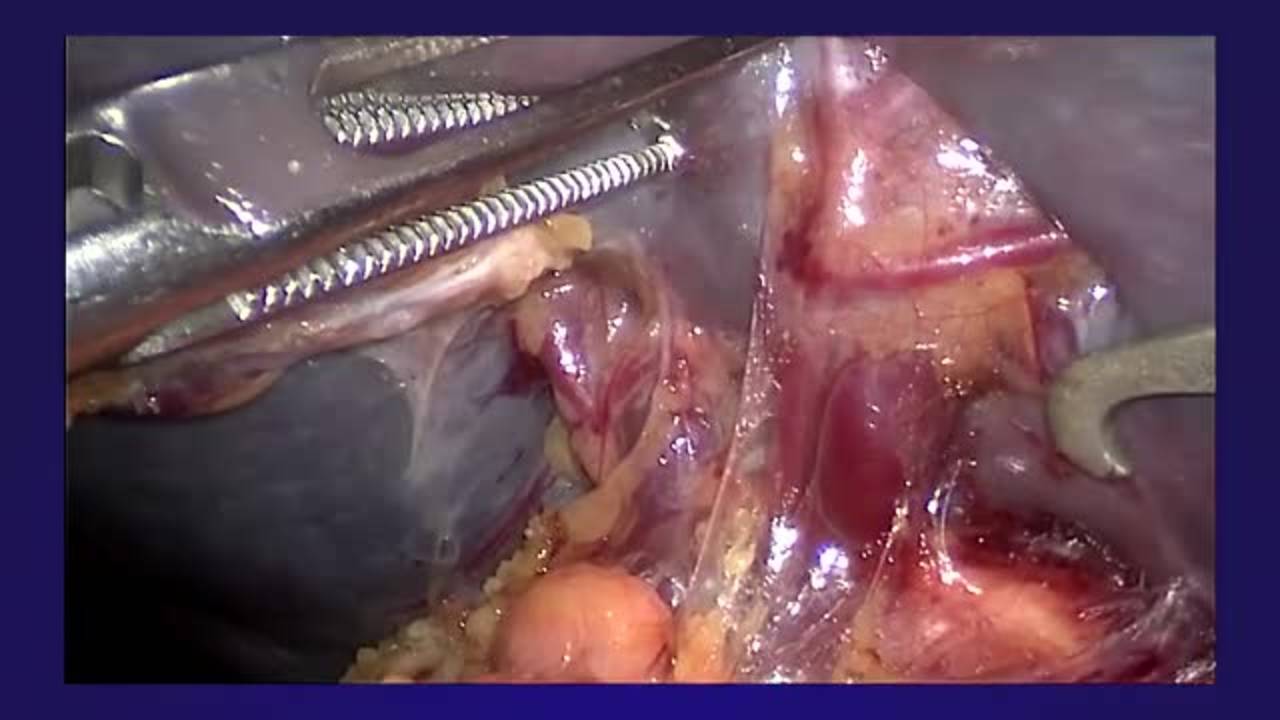
Laparoscopic Splenectomy and Cholecystectomy for Spherocytosis
8 min · Published Feb 2020
Podcast
Choledochal Cyst Podcast
22 min · Published Nov 2020
Video
Update Course Rewind: 2024 Top Ten Key Takeaways
Dr. Todd Ponsky · 18 min · Published Jun 2025
Podcast
Diaphragm pacing as alternative to mechanical ventilation in pediatric respiratory failure
1 min · Published Nov 2026
Podcast
Fetoscopic endoluminal tracheal occlusion for congenital diaphragmatic hernia
4 min · Published Nov 2026
Podcast
FETO procedure for late-diagnosed severe CDH with liver herniation
4 min · Published Nov 2026
Podcast
Severe CDH case with FETO: unexpected anatomic findings and clinical outcome
3 min · Published Nov 2026
Podcast
Pediatric pancreatitis: diagnosis, causes, and genetic insights with Dr. Juan Gurria
3 min · Published Nov 2026
Podcast
Understanding craniosynostosis: skull sutures, growth patterns, and diagnosis in infants
10 min · Published Nov 2026
What the experts said
The choice between surgery-first and ERCP-first depends on the setting and the surgeon's own technical capabilities.
ERCP causes pancreatitis 10% of the time, regardless of operator skill.
Pediatric surgeons and general surgeons need to improve their skills in intraoperative stone removal through courses and training.
Stone disease is increasing along with obesity in pediatric patients around the world, not just in the United States.
There are two main approaches for patients with common bile duct stones who need cholecystectomy: ERCP first followed by laparoscopic cholecystectomy, or laparoscopic cholecystectomy with intraoperative cholangiogram to identify and potentially remove stones during the same surgery.
A surgery-first pathway reduces resource utilization, including MRCP.
A predictive score for cholelithiasis published in the Journal of American College of Surgeons can help guide pathway decisions.
If a surgeon cannot perform a cholangiogram, then ERCP is necessary if someone can do it.
If you understand central line placement and Seldinger technique principles, you can perform intraoperative stone removal.
In a JPS paper, surgery-first approach achieved 86% stone clearance rate with negative intraoperative cholangiogram.
With simple additional maneuvers like advancing the catheter into the common bile duct or reaming the sphincter, stone clearance success rate reaches the 90s.
For the 15% of unsuccessful cases, the surgeon clips or places an endo loop, closes, and arranges ERCP within the next day or two.
At Cincinnati Children's, when surgeons cannot clear the duct, they call the endoscopist to the OR and ERCP is performed quickly in most cases.
According to Doctor Huntington, the biggest key to success is having all necessary equipment in one place, because OR staff will not know what to get on the fly.
If the common bile duct has 3-4 impacted stones on IOC, surgery-first is typically not very successful.
Doctor Vitale cautions that when flushing with an impacted stone, there is risk of inadvertently injecting contrast into the pancreatic duct, which can increase pancreatitis risk.
When the pancreatic duct lights up during flushing, this is a signal to slow down because you can cause pancreatitis by flushing contrast into the pancreatic duct with a stone present.
A study demonstrated 86% success rate for surgery-first, while the ERCP group had 10% complication rate including cholangitis, bleeding, pancreatitis, and hemophilia.