3 views 0 likes

Dr. Steve Rothenberg

Pediatric Surgery · View profile →

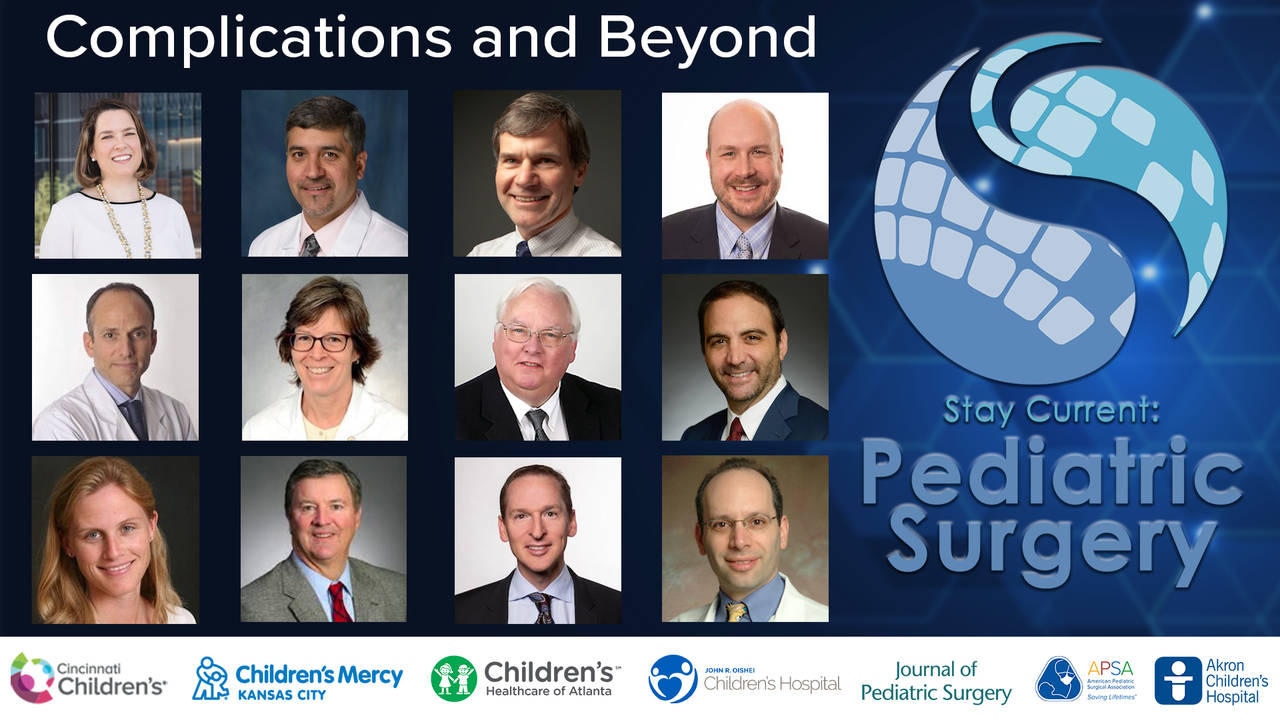
Should We Resect Asymptomatic CPAM Flake vs Langer

Video Published 2019-05-14 Updated 2024-02-10

Timestops (4)

Topic Overview

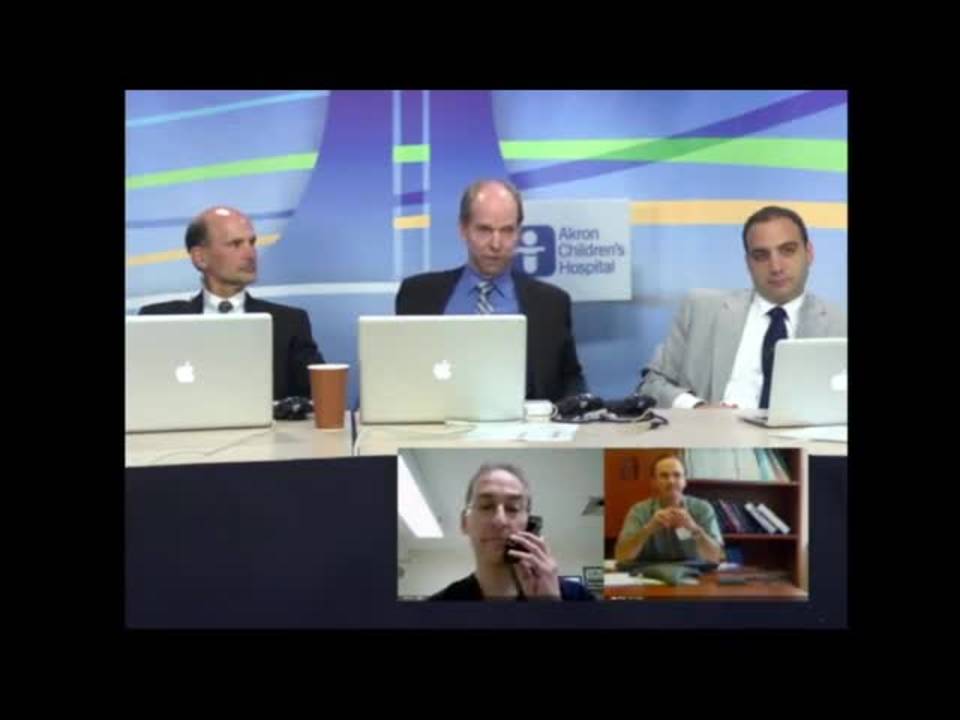
A panel discussion on the management of asymptomatic congenital pulmonary airway malformations (CPAM/CCAM), focusing on whether routine resection is indicated. The core clinical debate centers on balancing the risks of observation—including infection (estimated at 20-30% lifetime risk by one center's data, though this figure is contested), malignancy (pleuropulmonary blastoma, PPB, though acknowledged to be extremely rare), and the limitations of surveillance imaging—against the risks of thoracoscopic lobectomy, including rare but documented mortality. Speakers disagree on the interpretation of natural history data, the adequacy of follow-up studies, and whether a selective versus routine operative approach is appropriate. One center reports seeing approximately 25 new prenatal diagnoses annually but only one de novo PPB case every 3-4 years, while another cites a small prospective study showing 18 of 21 asymptomatic patients developing symptoms over follow-up.

Key Takeaways

  • PPB is radiologically indistinguishable from CCAM but remains extremely rare (1 case per 3-4 years vs 20-25 CCAM/year at high-volume centers). (3:42)
  • One center's data estimated 20-30% lifetime infection risk for CCAM, but this extrapolation from 10% at 4-year follow-up is contested. (4:50)
  • Thoracoscopic lobectomy mortality, though rare, is documented; massive bleeding is harder to salvage thoracoscopically than when open. (1:25)
  • Asymptomatic CCAMs are nonexistent in autopsy series, unlike extra-lobar sequestrations, suggesting natural history may favor symptom development. (9:30)
  • Experienced centers report 2-day hospital stays and minimal complications (2 transfusions, 2 air leaks in 100 thoracoscopic lobectomies). (13:37)

Inside this episode

Kai, the Library's AI content creator, listened to this episode and mapped who's speaking, the chapters, key claims, and cases. Every item links to the exact moment in the recording.

AI-enriched

Who's speaking

  • Speaker 1 — guest
  • Speaker 2 — guest
  • Speaker 3 — host
  • Jack — guest
  • Steve — guest
  • Jean Martin — guest

Chapters

  • 0:00Limitations of surveillance for CPAM — Discussion of the inability to effectively follow pulmonary lesions due to lack of good surveillance methods, CT scan radiation risks, and inability to differentiate CCAM from PPB radiologically until advanced stages.
  • 1:06Risks of operative intervention — Debate on the mortality and morbidity of thoracoscopic lobectomy, with acknowledgment of documented deaths in thoracoscopic cases, disagreement over whether experienced hands should have zero mortality, and discussion of the extremely low incidence of PPB versus the frequency of CPAM.
  • 4:50Natural history and infection risk — Contested estimates of lifetime infection risk (20-30% cited by one center based on 10% at 4-year follow-up, versus a small prospective study showing 18 of 21 asymptomatic patients developing symptoms). Discussion of the lack of CPAM findings in autopsy series versus known extra-lobar sequestration findings, and the frequency of infected cases in the pre-prenatal diagnosis era.
  • 10:06Shared decision-making and outcomes data — Advocacy for balanced counseling allowing families to decide, acknowledgment that 23-25% of polled clinicians do not advocate routine resection, discussion of the need for unbiased registry data (NSQIP), and report of one surgeon's series of 100 thoracoscopic lobectomies with only 2 transfusions and 2 prolonged air leaks as complications.

Key claims

  • 0:12CT scan is the best method to follow pulmonary lesions but induces a certain incidence of malignancy — Speaker 1
  • 0:22CCAM cannot be differentiated from PPB radiologically until stage 2 or 3 occurrence — Speaker 1
  • 1:25There are children who die from pulmonary lobectomy, particularly done thoracoscopically — Jack
  • 1:45Two cases of mortality from thoracoscopic lobectomy were reviewed by the speaker (not at their institution) — Jack
  • 2:03In experienced hands, thoracoscopic lobectomy should have no more morbidity than open and mortality should be zero — Steve
  • 3:04Massive bleeding during thoracoscopic lobectomy is harder to salvage than when already open — Jack
  • 3:42PPB can be indistinguishable radiologically from CCAM — Jack
  • 3:42The incidence of CPAM/CCAM is markedly different from (higher than) the incidence of PPB; PPBs remain extremely rare — Jack
  • 4:23One high-volume center sees PPB de novo extremely rarely, approximately once every 3 or 4 years — Jack
  • 4:35The same center sees probably 20 or 25 new cases of CCAM every year — Jack
  • 4:39The incidence of cancer in CPAM remains extremely low — Jack
  • 4:50One center's published data estimated a 20-30% lifelong risk of infection for CCAM, based on 10% infection rate with mean 4-year follow-up, tripled for lifetime estimate — Jack
  • 5:25A prospective study followed 21 asymptomatic patients (8 prenatally diagnosed, rest serendipitously found) and 18 of 21 developed infections or symptoms requiring resection over an average of 2 years up to 13 years — Speaker 1
  • 6:36In the pre-prenatal diagnosis era, it was not common for patients to present in teenage years or adult thoracic surgery units with symptomatic infected CCAMs, though it happened from time to time — Jack
  • 7:20Infected CCAM surgery was not a rare event in San Francisco in the speaker's early career — Speaker 1
  • 9:30Small asymptomatic extra-lobar sequestration is a relatively known finding at autopsy — Jean Martin
  • 9:47Asymptomatic CCAMs on autopsy series are nonexistent — Jean Martin
  • 10:21One center follows all prenatally diagnosed lesions with postnatal CT, and those not operated on are followed with chest X-ray and repeat CT — Jack
  • 10:42The speaker mentions the word cancer to every family during counseling for CCAM — Jack
  • 11:07Many families choose operative management once they hear the word cancer or infection despite being offered observation — Jack
  • 11:53A poll showed 23-25% of respondents do not advocate routine resection of asymptomatic CPAM — Jack
  • 12:20There is hidden mortality in pediatric surgery because people do not report bad results, only known through lawsuits — Speaker 2
  • 12:33The American College of Surgeons Pediatric NSQIP will provide unbiased large-scale data on thoracoscopic and open surgery complications and mortality in approximately 10 years — Speaker 2
  • 13:37Infants undergoing thoracoscopic lobectomy for CCAM are generally in the hospital for 2 days — Speaker 1
  • 13:44A review of 100 thoracoscopic lobectomies (not sequestrations) by one surgeon showed only 2 transfusions and 2 prolonged air leaks as complications — Speaker 1

Points of disagreement

  • 1:25Mortality risk of thoracoscopic lobectomy
    • Jack: Children do die from thoracoscopic lobectomy; the speaker has reviewed two such cases and believes significant complications can occur with any operation done in sufficient volume
    • Steve: In experienced hands with advanced thoracic and minimally invasive skills, thoracoscopic lobectomy should have no more morbidity than open and mortality should be zero
  • 4:50Lifetime infection risk for asymptomatic CCAM
    • Jack: Estimates 20-30% lifetime infection risk based on 10% infection at 4-year mean follow-up, tripled for lifetime estimate
    • Speaker 1: Questions the 30% figure as speculative extrapolation; cites a prospective study showing 18 of 21 asymptomatic patients developed symptoms, suggesting the risk may be higher
  • 6:36Natural history evidence from pre-prenatal diagnosis era
    • Jack: Infected CCAMs presenting in teenage/adult years were not common enough to match the frequency of prenatal diagnoses, suggesting many remain asymptomatic
    • Speaker 1: Infected CCAM was not a rare event in early career; questions the validity of the inference and requests data
  • 10:36Management approach for asymptomatic CCAM
    • Jack: Advocates balanced counseling allowing families to decide; does not believe every single lesion needs operation, though does perform many lobectomies when families choose surgery
    • Speaker 1: Implies a more routine operative approach is appropriate given the risks of observation and the low morbidity/mortality at high-volume centers

Open questions

  • What is the true lifetime infection risk for asymptomatic CPAM, given the limitations of existing follow-up studies?
  • What is the actual mortality rate for thoracoscopic lobectomy in experienced versus less experienced hands, given underreporting of complications?
  • How should the extremely low incidence of PPB be weighed against the inability to radiologically distinguish it from CCAM when counseling families?
  • What is the optimal surveillance protocol (if any) for families who choose observation, balancing cancer detection against radiation exposure from CT scans?
  • Why are asymptomatic CCAMs essentially absent from autopsy series if a significant proportion remain asymptomatic lifelong?
This episode was analyzed and enriched by Kai, the Library's AI content creator. Every item links to the moment it comes from — click a timestamp to listen in context.

Routine Resection vs Selective Observation for Asymptomatic CPAM

The points where the speakers disagreed, with each position presented side by side. Written by Kai from the episode transcript and reviewed before publishing.

For specialists · Points of disagreement · AI-written, human-reviewed

The Question

Should every prenatally diagnosed, asymptomatic congenital pulmonary airway malformation be resected in infancy, or should families be offered observation with the understanding that many lesions will eventually require surgery?

The Case for Selective Observation

One discussant argues that operative risk, though low, cannot be dismissed when deciding whether to resect asymptomatic lesions 1:25. Children do die from pulmonary lobectomy, particularly when performed thoracoscopically, and the speaker has reviewed two such fatal cases from other institutions 1:45. The argument is not that thoracoscopic lobectomy is inherently dangerous, but that any operation done in sufficient volume will produce significant complications 2:03. When massive bleeding occurs during thoracoscopic resection, salvage may be more difficult than in an already-open case 3:04.

Against this operative risk must be weighed the actual frequency of adverse outcomes from observation. While pleuropulmonary blastoma can be radiologically indistinguishable from CPAM 3:42, the incidence of the two lesions differs markedly 3:42. One high-volume center sees de novo PPB approximately once every three or four years 4:23, compared with 20 to 25 new CPAM cases annually 4:35. The incidence of cancer in CPAM remains extremely low 4:39.

The infection risk, while real, may not justify universal resection. One center's published data estimated a 20–30% lifetime infection risk, derived by tripling the 10% infection rate observed at a mean four-year follow-up 4:50. The question posed is whether every patient should undergo lobectomy to avoid this risk, particularly when most infections can be treated and lobectomy performed afterward if needed 4:50.

The natural history argument draws on the pre-prenatal diagnosis era: if asymptomatic CCAMs were as common then as prenatal imaging now reveals them to be, one would expect to have seen more infected lesions presenting in teenage or adult years, but this was not common 6:36. The position is not that no CPAM should be resected, but that families should receive balanced counseling and be allowed to decide 10:42 11:07. Many families do choose surgery once they hear the words "cancer" or "infection," and the discussant performs many thoracoscopic lobectomies as a result 11:07.

The Case for Routine Resection

The counterargument challenges both the infection risk estimate and the natural history inference. The 20–30% lifetime infection figure is questioned as speculative extrapolation 5:25. A prospective study that followed 21 asymptomatic patients—eight prenatally diagnosed, the rest found incidentally—showed that 18 of 21 developed infections or symptoms requiring resection over follow-up ranging from two to 13 years 5:25. This suggests the true risk may be substantially higher than 30%.

The claim that infected CCAMs were uncommon before prenatal diagnosis is disputed on experiential grounds: infected CPAM surgery was not a rare event in one discussant's early career 7:20. The inference that many lesions remain asymptomatic lifelong is questioned, and supporting data requested 7:20.

Autopsy series provide another line of evidence. Small asymptomatic extralobar sequestrations are a relatively known autopsy finding, but asymptomatic CCAMs on autopsy series are nonexistent 9:30 9:47. This suggests that CCAMs, unlike sequestrations, are not benign variants that remain silent—they present with infection or other symptoms 9:47.

Observation also presents practical problems. CT scanning is the best method to follow pulmonary lesions, but it induces a certain incidence of malignancy itself 0:12. CPAM cannot be differentiated from PPB radiologically until stage 2 or 3 disease occurs 0:22. The ability to follow these lesions in any reasonable manner that would prevent malignancy or allow earlier detection is limited 0:12 0:22.

At high-volume centers with routine experience, the operative risk is extremely low. Infants undergoing thoracoscopic lobectomy for CPAM are generally hospitalized for two days 13:37. One surgeon's review of 100 thoracoscopic lobectomies showed only two transfusions and two prolonged air leaks as complications 13:44. In experienced hands with advanced thoracic and minimally invasive skills, thoracoscopic lobectomy should have no more morbidity than open, and mortality should be zero 2:03.

Where They Agree

Both positions acknowledge that operative risk exists and that infection risk is real. Both agree that PPB can be radiologically indistinguishable from CPAM 0:22 3:42, though they disagree on how heavily this should weigh in decision-making given the rarity of PPB 3:42 4:23. Both agree that families must be counseled about risks, including the word "cancer" 10:42. Both acknowledge that many families, once fully informed, choose surgery 11:07. Neither advocates a rigid protocol that ignores individual circumstances.

What Would Resolve It

One discussant notes that the American College of Surgeons Pediatric NSQIP will provide unbiased large-scale data on thoracoscopic and open surgery complications and mortality in approximately 10 years 12:33. Until then, the data to make truly informed consent are incomplete 12:33. The hidden mortality in pediatric surgery—known only through lawsuits because bad results go unreported—means current complication estimates may be unreliable 12:20. A poll during this discussion showed that 23–25% of respondents do not advocate routine resection of asymptomatic CPAM 11:53, suggesting the field remains genuinely divided.

Takeaways from this story

  • 18 of 21 asymptomatic CCAMs developed symptoms requiring resection over 2-13 years follow-up, challenging lower infection risk estimates
  • High-volume centers report 2-day hospital stays and low complication rates for thoracoscopic CPAM lobectomy
  • Asymptomatic CCAMs are nonexistent in autopsy series, unlike extralobar sequestrations, suggesting they eventually become symptomatic
  • CT surveillance induces malignancy risk and cannot differentiate CPAM from PPB until stage 2-3 disease
  • 23-25% of surgeons do not advocate routine resection, and NSQIP data in 10 years may resolve the debate

Keywords

Hashtags

Transcript

Comments

Loading comments…