
Postnatal Management of Lung Lesions Part II: Pediatric Thoracic Surgery...
With Dr. Dr. Todd Ponsky · StayCurrentMD
Educational content from recorded physician discussions — not medical advice. Talk to your (or your child's) care team about your situation.
More about bronchopulmonary sequestration
same diagnosisDive deeper → Bronchopulmonary Sequestration (3 items)Video
Postnatal Management of Lung Lesions Part I: Pediatric Thoracic Surgery Part...
Dr. Todd Ponsky · 31 min · Published Aug 2017
Video
Fetal Interventions Part I: Lung Lesions
14 min · Published Aug 2012
Video
Prenatal Management of CPAMs: Lung Lesions
18 min · Published Aug 2012
Video
Fetal Interventions Part II: Lung Lesions
16 min · Published Jul 2017
Video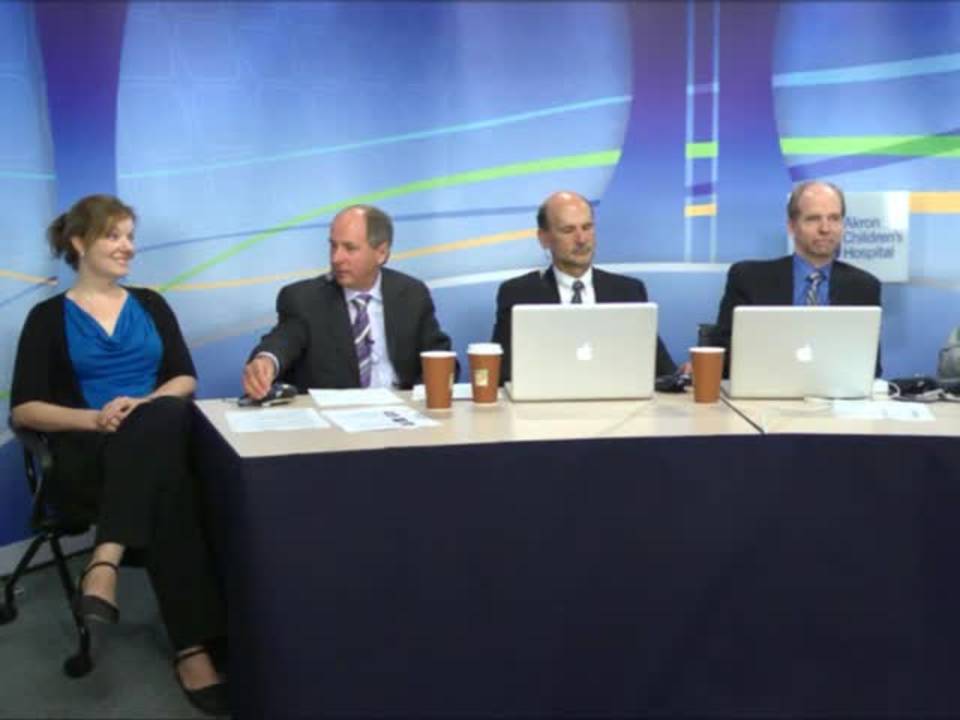
Lung Lesions: Fetal Interventions Parts I+II
30 min · Published Aug 2012
Only a few other public items share this expert — go deeper there →
Video
Pediatric Surgical Oncology Research Collaborative (PSORC): Studying Rare Pediatric Tumors
56 s · Published May 2026
Video
Update Course Rewind 2025: Hirschsprung + ARM: Rare but Real
1 min · Published May 2026
Video
Update Course Rewind 2025: Hirschsprung + ARM: Rare but Real
1 min · Published May 2026
Video
Pooling Patients to Study Rare Pediatric Tumors: An Introduction to PSORC
56 s · Published May 2026
Video
The fetal frontier: A review of current and emerging fetal therapies for genetic diseases
44 s · Published May 2026
Video
Indocyanine green assists with sentinel lymph node mapping in pediatric and adolescent patients
1 min · Published May 2026
What the experts said
Infra-diaphragmatic and sub-diaphragmatic sequestrations are frequently misdiagnosed as intrathoracic lesions
A new class of sequestrations exists within the leaves of the diaphragm muscle, requiring diaphragm opening for resection
Sequestrations at the esophageal hiatus can cause esophageal obstructive symptomatology
The majority of infra-diaphragmatic sequestrations approached abdominally extend up through the esophageal hiatus, even when not apparent on CT
Intra-diaphragmatic sequestrations (between diaphragm leaves) are frequently associated with the esophageal hiatus
Bronchogenic cysts can be associated with bronchial obstruction and cause hyperplastic growth of the distal lobe
In cases of fetal bronchial atresia causing hydrops not responsive to steroids, fetal lobe resection may be required
When bronchogenic cysts obstruct lobar bronchi, the bronchus is typically destroyed enough that lobectomy is required rather than cyst resection alone
Energy-based vessel sealers are operator-dependent because they seal as the knife advances; advancing too fast will divide the vessel before sealing
Modern energy sealers now have a tone frequency that indicates when the vessel is sealed and safe to advance the blade
The risk with clips on vessels is inadvertent dislodgement during dissection because they protrude past the vessel and are relatively large in small spaces
Clips are safer when used as the last maneuver, such as on sequestration feeding vessels, and can be reinforced with distal ligature
Thoracoscopic resection specimens provide adequate histology for diagnosis, comparable to open procedures, despite pathologist complaints about specimen quality
Compensatory lung growth and alveolarization continues until age 4-6 years, so resection timing within the first few years likely does not significantly impact lung development
Most CCAM lesions are removed before 3 months of age; the operation is technically easier in small infants despite the smaller working space, and children recover more quickly with shorter hospitalization
Trocar setup is critical in neonatal thoracoscopy; incorrect trocar positioning will make the operation very difficult, especially in small neonates
CO2 insufflation pressure of 7 cm H2O is typically used for pediatric thoracoscopy and is well tolerated
Starting CO2 pressure at 4 cm H2O is adequate if single-lung ventilation is good; pressure may need to increase to 7-8 cm H2O for lung collapse then can be reduced
Main-stem intubation of the contralateral bronchus provides adequate single-lung ventilation with some overflow ventilation that is well tolerated
The smallest thoracoscopic lobectomy performed was approximately 2400g, which was not significantly different technically from a term infant
PDA ligations are now routinely performed thoracoscopically down to 800g, and 1000g now seems like a large space compared to a few years ago
Current technology limits thoracoscopic lobectomy in small infants because 5mm clips and sealers occupy two-thirds of the chest space, making effective work difficult
Thoracoscopic lobectomy under 2kg is difficult with current technology
Premature infants requiring CCAM resection typically have large masses impacting ventilation, which cannot be done thoracoscopically and have contralateral lung issues preventing single-lung ventilation
A healthy, stable baby with a healthy contralateral lung is required for thoracoscopic lobectomy
Infants with small, stable CCAM lesions can be sent home for 1-2 months to grow before returning for elective resection, making the operation easier and less stressful for parents
True bilobar CPAM involvement is relatively rare; most cases involve abnormal lobulation or fissure formation rather than actual involvement of two lobes
When fissures are abnormal, the approach is to create a fissure in an appropriate position that preserves maximal lung parenchyma while avoiding leaving devascularized lung or lung without an airway
Following anatomic boundaries properly makes residual cystic lesions requiring re-resection rare; speaker has had only one case requiring return for further resection
A recent JPS study comparing early (approximately 3 months) versus later (approximately 18 months) CCAM resection found increased risk of complications like infection with delayed resection but no difference in long-term pulmonary function outcomes