


From
Live Event Content
Reunión de la Medicina de Emergencia - Controversias en el manejo del asma grave en urgencias
With Dr. Natalia Paniagua & Dr. Viviana Pullich & Dr. Javier Benito · hosted by Dr. Javier González del Rey
Part of
Asthma 3 items
Chapter 3 of 11 · Acute Management
MDI vs nebulizer
First-Line Therapy: MDI with Spacer vs. Nebulization
Cued at 9:40 · stops at 10:22 · press play
Expert statements on this page
No expert statements were drawn from this page.
Host summaries · secondary, not cited in answers
Educational content from recorded physician discussions — not medical advice. Talk to your (or your child's) care team about your situation.
Video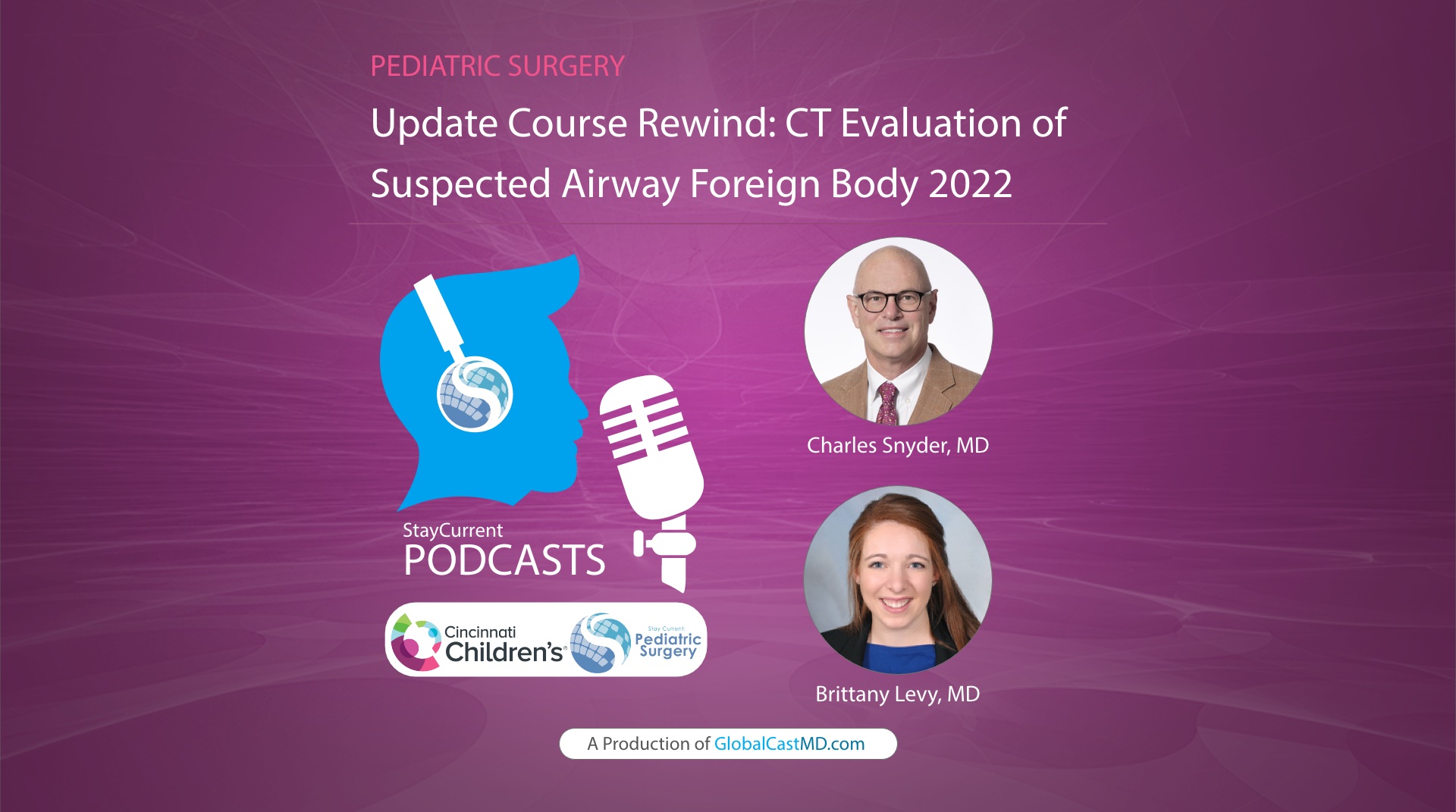
Update Course Rewind: CT Evaluation of Suspected Airway Foreign Body 2022
Published May 2023
Video
Everyday Stress: Child & Adolescent Obesity 2015
27 min · Published Jul 2017
Podcast
Digestive Foreign Bodies: Diagnosis and Management
17 min · Published Mar 2021
Video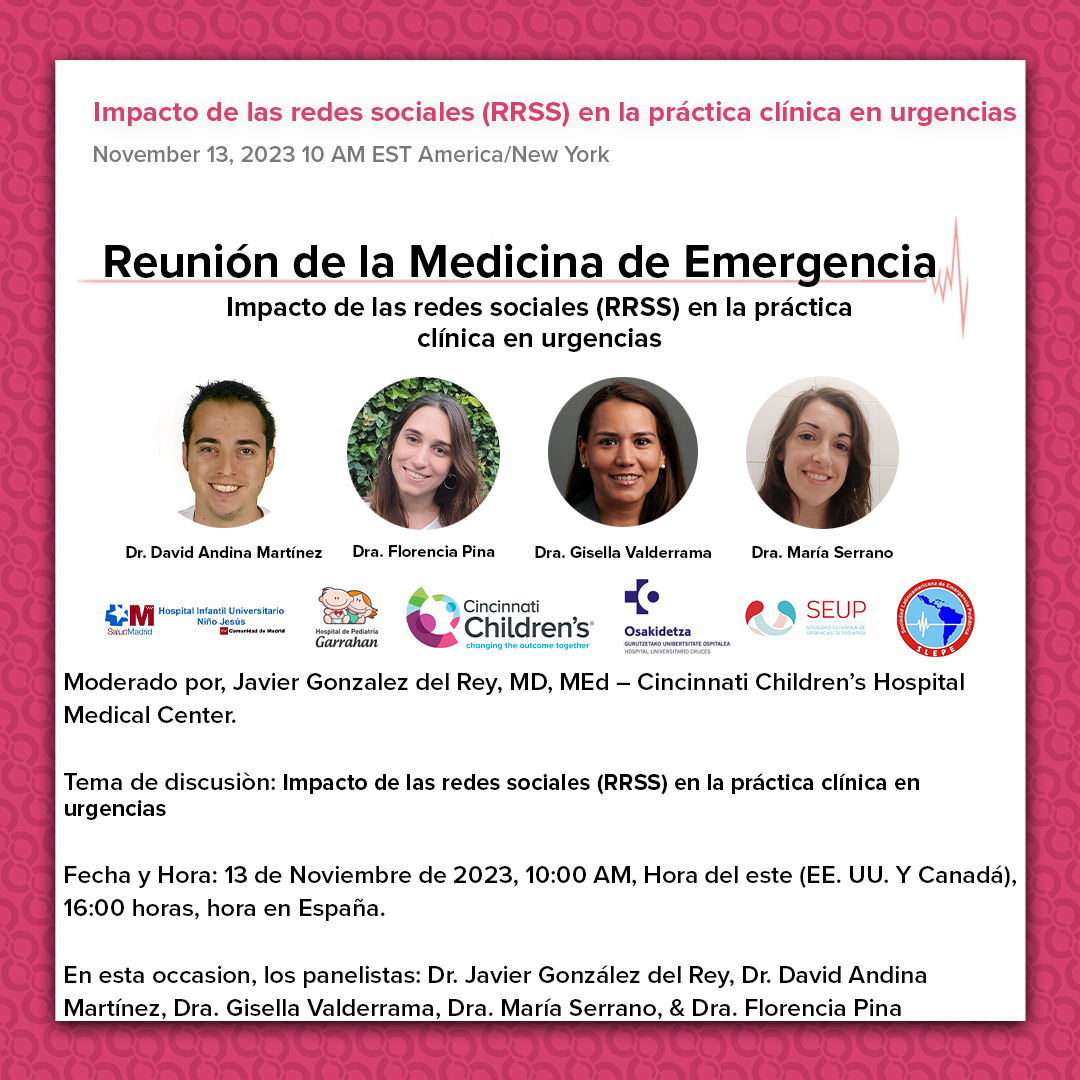
Reunión de la Medicina de Emergencia - Impacto de las redes sociales (RRSS) en la práctica clínica en urgencias
CCHMC Pediatric Surgery · 48 min · Published Nov 2023
Video
Hot New Topics from The Journal Of Pediatric Surgery: Update Course 2017
Dr. Todd Ponsky · 27 min · Published Aug 2017
Video
Supine Positioning for Bilateral VATS: Pediatric Surgery Difficult...
15 min · Published Jul 2017
Video
Clinical & Research Update: Renal Tumors with Drs. Ethan Smith, Lindsay Haacker, Michael Daugherty, and Meera Kotagal
71 min · Published Sep 2026
Video
Clinical & Research Update: Neuroblastoma with Drs. Katherine Somers, Cara Morin, Juan Gurria, and Meera Kotagal
67 min · Published Sep 2026
Video
Clinical & Research Update: Sarcoma w/ Drs. Roshni Dasgupta, Joseph Pressey, Arthur Meyer, Luke Pater
66 min · Published Sep 2026
Video
2026 Laparoscopic Pediatric Hernia Repair
123 min · Published Jun 2026
Video
Beyond the Spectrum: Diagnosis, Myths & Management - Caitlin Couch & Leslie Lopez - APP Conference 2026
50 min · Published May 2026
Video
Dysautonomia: Navigating the Journey - Martha Willis - APP Conference 2026
55 min · Published May 2026
What the experts said
Multiple clinical scoring systems exist to define asthma severity (pulmonary score, respiratory rate, retractions, oxygen saturation), but they are not uniformly validated or applied.
When scoring systems disagree on severity category, the higher (more severe) category should be used to guide treatment.
The term 'status asthmaticus' should be reserved for patients who do not respond to initial treatment, not applied at presentation.
Recognizing respiratory insufficiency (not just respiratory distress) is critical; insufficiency indicates impending failure and requires escalation.
Lack of uniform definitions of 'severe asthma' and 'status asthmaticus' in the literature makes it difficult to compare studies of treatment efficacy.
In severe asthma, MDI with spacer can be effective if the patient can generate adequate inspiratory flow (at least 40 liters per minute) and the spacer valve functions properly.
Ipratropium has a good safety profile with minimal side effects compared to other bronchodilators.
In Cincinnati, the default approach for severe asthma is to use MDI with spacer at the bedside to avoid delays and reduce infection risk, reserving nebulization for patients who cannot cooperate or generate flow.
In Paraguay, continuous nebulization is initiated in severe cases because it is operationally simpler for nursing staff to manage in the first hour of treatment.
Second-line therapies for severe asthma include intravenous magnesium sulfate, high-flow nasal cannula oxygen, and intravenous bronchodilators (salbutamol or terbutaline).
The choice and timing of second-line therapies depend on the patient's response to first-line treatment and the severity of presentation.
Intravenous magnesium sulfate is used when the patient does not respond adequately to initial bronchodilators and corticosteroids.
High-flow nasal cannula oxygen improves patient comfort and may reduce the need for intubation in severe asthma.
In Spain (Natalia's institution), only 5% of children with asthma exacerbations receive nebulization; the rest are treated with MDI and spacer.
Nebulization is reserved for children who cannot use a spacer due to severity of distress or other factors.
Close bedside monitoring in the first hour is essential to detect failure to respond to initial therapy; the first two doses of bronchodilator (given every 10-20 minutes) are the most important window for assessment.
If a patient shows initial improvement but then deteriorates (e.g., heart rate drops, work of breathing worsens), escalation to magnesium or other second-line therapy is indicated.
In critically ill patients with impending respiratory failure, intravenous corticosteroids are preferred for speed and reliability of delivery.
The 'perfect storm' patient for IM epinephrine has marked suprasternal and intercostal retractions, minimal air movement on auscultation, oxygen saturation below 92%, and is in the resuscitation bay.
Intramuscular epinephrine (or terbutaline) can be used in the critically ill asthmatic patient who cannot inhale medications due to severe respiratory distress, minimal air movement, or altered mental status.
Historically, before nebulization was standard, repeated doses of intramuscular adrenaline were used to treat severe asthma exacerbations.
High-flow nasal cannula oxygen is increasingly used as a comfort measure and to delay or avoid intubation in severe asthma.
The availability of ICU beds and airway management expertise influences the threshold for escalating to mechanical ventilation.
Aminophylline (theophylline) has a narrow therapeutic window and many side effects (tachycardia, arrhythmias, gastrointestinal upset), making it less favorable for routine use.
Aminophylline is used only occasionally and anecdotally in severe asthma, particularly when other therapies have failed.
Ketamine is considered a drug of choice for sedation during intubation in severe asthma because of its bronchodilator properties.
Mechanical ventilation in severe asthma is not ideal and should be avoided if possible; it requires ICU-level expertise in airway management and ventilator settings.
Non-invasive ventilation (e.g., BiPAP) is preferred over aminophylline or ketamine as a next step in escalation for severe asthma.
Lack of uniform severity definitions and treatment protocols across institutions makes it difficult to conduct high-quality comparative studies of second-line therapies in severe asthma.
Future research should focus on developing uniform criteria for defining critical asthma and respiratory failure to enable better evidence generation for second-line treatments.
Some clinicians attempt ketamine sedation without paralytic agents as a bridge to see if the patient improves before committing to full intubation and mechanical ventilation.
Meta-analyses and large studies show that metered-dose inhalers with spacers are as effective as nebulization in mild-to-moderate asthma exacerbations.
Adding ipratropium bromide to salbutamol in the first-line treatment of severe asthma reduces hospital admission rates, particularly in children over 5 years of age.
In selected patients with severe asthma who do not have respiratory failure, oral or inhaled corticosteroids are as effective as intravenous corticosteroids.
There is no strong evidence favoring one corticosteroid agent (methylprednisolone, dexamethasone, prednisone) over another in acute asthma.