


Chapter 1 of 4 · Fundamentals
Incidence data
Incidence and definition of retained catheter fragments
Cued at 0:32 · press play
Expert statements on this page
No expert statements were drawn from this page.
Host summaries · secondary, not cited in answers
Educational content from recorded physician discussions — not medical advice. Talk to your (or your child's) care team about your situation.
Video
Management of Retained Central Venous Catheters
Dr. Todd Ponsky · 3 min · Published Apr 2019
Video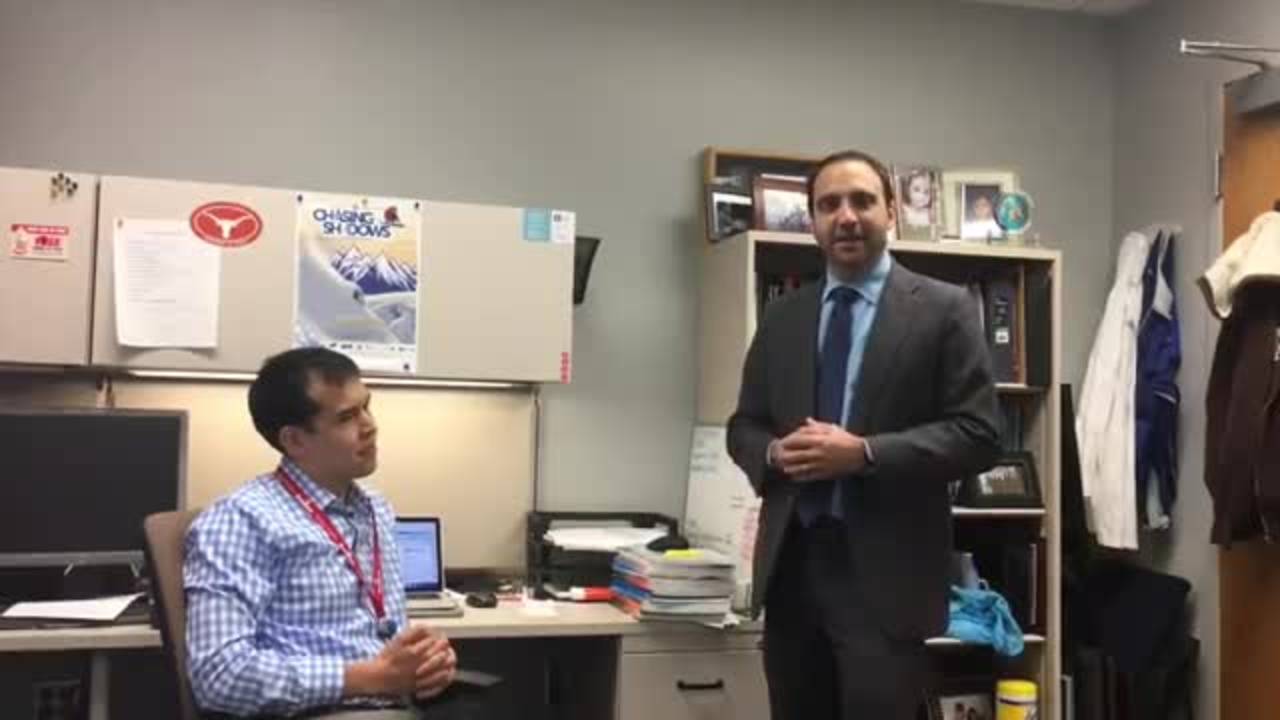
Do we need Bowel Prep
1 min · Published Apr 2019
Video
Intussusception - Soft Tissue Abscess - Pilonidal Cyst - Bleeding Meckel's...
19 min · Published Nov 2018
Video
Posterior Tracheopexy For Severe Tracheomalacia
Dr. Todd Ponsky · 2 min · Published Feb 2018
Podcast
Intestinal Failure with Dr. Brad Warner
52 min · Published May 2017
Podcast
Neonatal Lung Lesions with Dr. Steven Rothenberg
66 min · Published Jan 2017
Podcast
Diaphragm pacing as alternative to mechanical ventilation in pediatric respiratory failure
1 min · Published Nov 2026
Podcast
Fetoscopic endoluminal tracheal occlusion for congenital diaphragmatic hernia
4 min · Published Nov 2026
Podcast
FETO procedure for late-diagnosed severe CDH with liver herniation
4 min · Published Nov 2026
Podcast
Severe CDH case with FETO: unexpected anatomic findings and clinical outcome
3 min · Published Nov 2026
Podcast
Pediatric pancreatitis: diagnosis, causes, and genetic insights with Dr. Juan Gurria
3 min · Published Nov 2026
Podcast
Understanding craniosynostosis: skull sutures, growth patterns, and diagnosis in infants
10 min · Published Nov 2026
What the experts said
5 to 15% of patients who have catheters removed require some sort of additional intervention to remove the catheter.
The actual number of catheters or catheter fragments that get left behind is 0.2 to 2%.
Risk factors for catheter retention include chemotherapy infused through the lines.
Risk factors for catheter retention include catheters that are indwelling for longer than about a year and a half.
There is an association between polyurethane catheter material and catheter retention when compared with silicone catheters.
Power ports are polyurethane catheters.
For long-term chemotherapy, a silastic line should be considered instead of a polyurethane line.
If you surgically go in for a venotomy and tug at the catheter, you run a risk of bleeding.
In interventional radiology retrieval, there is a risk of the line completely breaking and embolizing distally or of thrombosis occurring during the procedure.
Silastic lines generally have a larger size diameter for a given lumen compared to polyurethane lines.
Multiple studies of patients with retained catheter fragments followed for months to the order of 5 years found no complications.
No thrombosis associated with retained catheter fragments has been reported in follow-up studies.
No infections associated with retained catheter fragments have been reported in follow-up studies.
There has never been a report of a problem by leaving a retained catheter tip in, although long-term data are lacking.