9 views 0 likes

StayCurrentMD

GCMD Space · View profile →

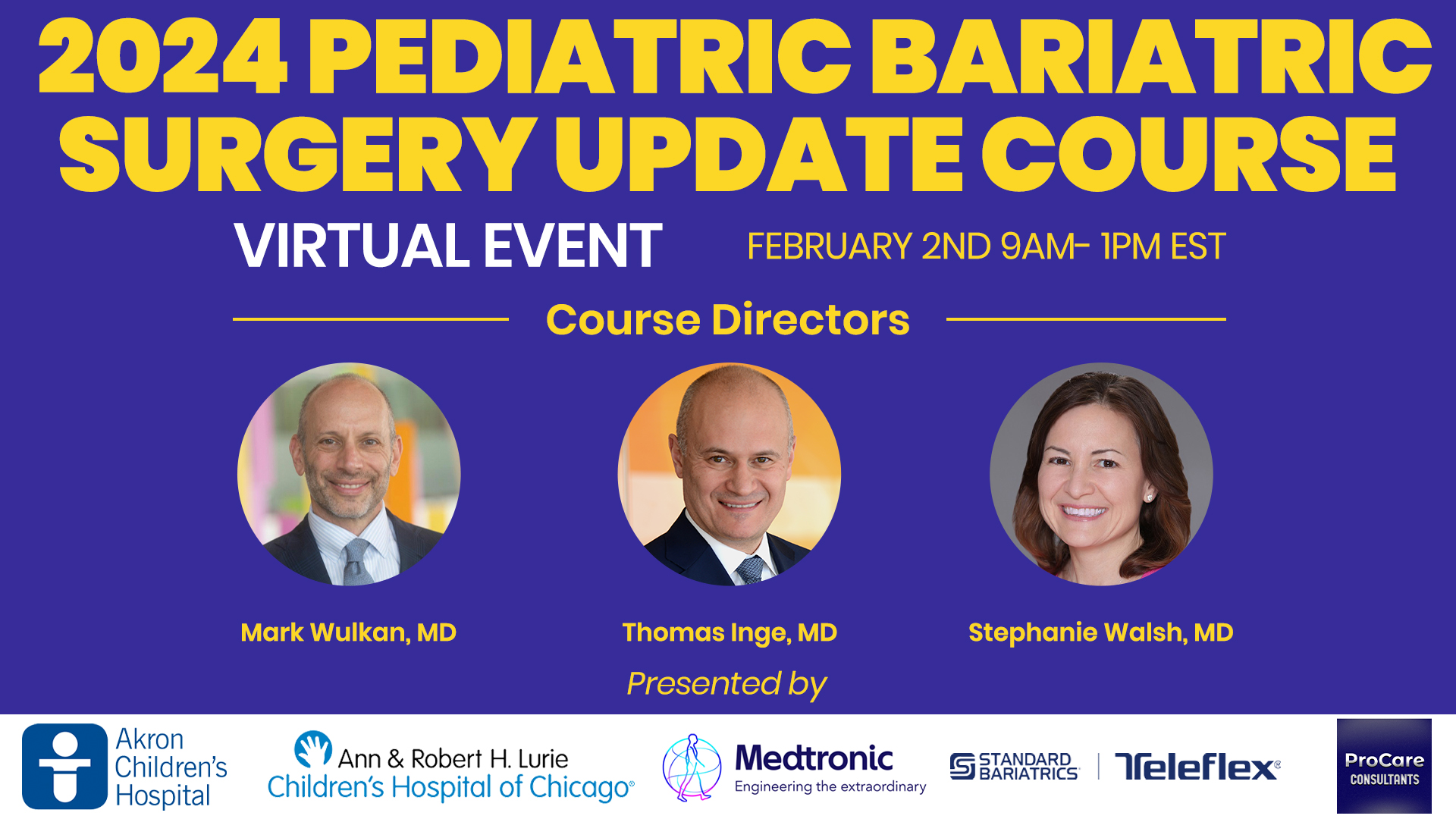
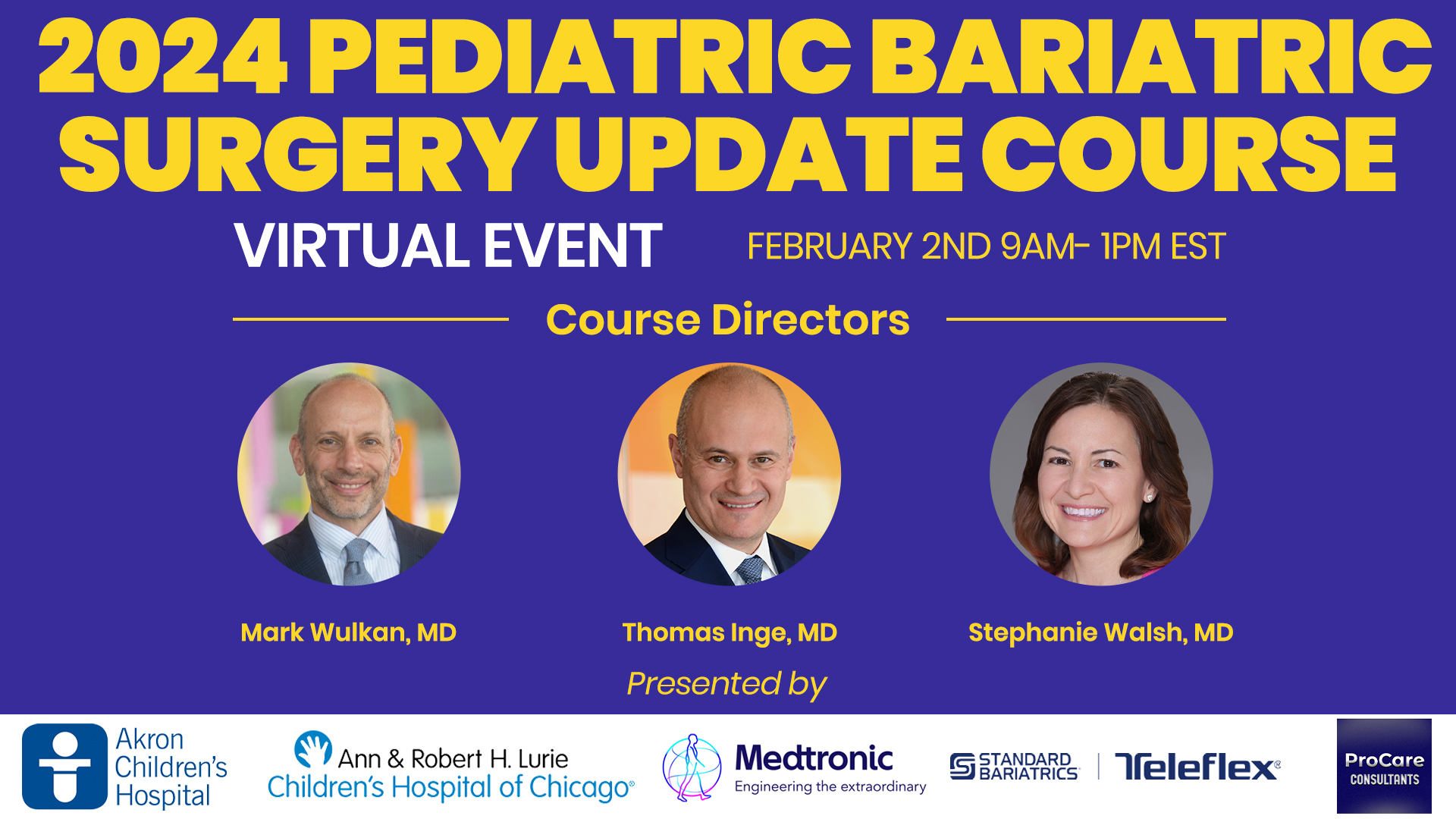
Rapid Fire and Conclusion: Pediatric Obesity 2017

Video Published 2018-09-16 Updated 2022-08-22

Timestops (8)

Topic Overview

A rapid-fire panel discussion concluding a pediatric obesity symposium, covering optimal BMI thresholds for bariatric surgery intervention, the role of pharmacotherapy versus surgery in severely obese adolescents, current medication use patterns in clinical practice, financial viability of nutrition services, and the relationship between obesity treatment and eating disorders. Panelists representing surgery, endocrinology, psychology, and primary care debate clinical decision points with general consensus that bariatric surgery should be considered in the BMI 40s range, that medications can serve as a bridge to surgery in select cases, and that disordered eating is common in obese youth though frank eating disorders remain relatively rare.

Key Takeaways

  • Bariatric surgery discussion should begin at BMI mid-30s; emphasize surgery at BMI ~40 with comorbidity for superior outcomes. (3:59)
  • Patients with BMI >55 have only 14% probability of reaching BMI <30 post-surgery; outcomes decline sharply above BMI 50. (3:05)
  • Pharmacotherapy can bridge younger patients (e.g., age 12) to surgery; some require continued medication post-operatively. (6:27)
  • Bariatric surgery effectively extinguishes binge eating, though prior diagnosis may increase weight regain risk. (20:40)
  • Disordered eating (restricting/evening overeating) is nearly universal in obese youth; frank eating disorders remain <5%. (21:18)

Inside this episode

Kai, the Library's AI content creator, listened to this episode and mapped who's speaking, the chapters, key claims, and cases. Every item links to the exact moment in the recording.

AI-enriched

Who's speaking

  • Speaker 1 — host
  • Speaker 2 — guest

Chapters

  • 0:00Optimal BMI for Bariatric Surgery Intervention — Panel discusses the optimal BMI threshold for bariatric surgery, with most panelists favoring intervention in the BMI 40s range, citing data that higher BMIs reduce probability of achieving healthy weight outcomes.
  • 3:58Surgery vs. Pharmacotherapy Decision-Making — Panel addresses treatment choice for a 12-year-old with BMI 49 who has stabilized weight in a management program, with most favoring surgery though one panelist advocates for medication trial as a bridge to gain patient maturity.
  • 8:18Current Pharmacotherapy Use Patterns — Panelists describe their medication use in clinical practice, with topiramate/phentermine most commonly cited, along with metformin, stimulants for hypothalamic obesity, and GLP-1 agonists in select cases.
  • 10:42Financial Viability of Nutrition Services — Discussion of strategies to make nutrition services financially sustainable, including Medicaid advocacy, creative staffing models, and challenges with private insurance limiting visits.
  • 14:11Sugar Tax Debate — Panel split on sugar taxation as public health policy, with concerns about regressive effects and whether it addresses root causes versus potential benefits in reducing consumption.
  • 16:47Eating Disorders in Obese Youth — Panel shares clinical experience with eating disorders developing in obese patients, noting that frank eating disorders are rare but disordered eating patterns are nearly universal, with most cases resolving with appropriate intervention.

Key claims

  • 0:56BMIs in the 40s will predictably achieve BMIs less than 30 after bariatric surgery — Speaker 1
  • 3:05Patients above BMI 55 have only about 14% probability of getting down to BMI below 30 after surgery — Speaker 1
  • 3:32Once BMI crosses 50 threshold, probability of mitigating risk associated with BMI 35 and above becomes challenging — Speaker 1
  • 3:59Conversation about bariatric surgery should start when BMI reaches mid-30s range — Speaker 1
  • 4:17At BMI approaching 40 with comorbidity, surgery discussion should emphasize better results compared to other interventions — Speaker 1
  • 5:34At BMI 49, the time for medication has passed and surgery must be discussed — Speaker 1
  • 6:27Topiramate and phentermine can serve as bridge to surgery to allow 12-year-old patient to gain maturity — Speaker 2
  • 7:20Some children will need pharmacotherapy even after bariatric surgery — Speaker 2
  • 7:56Obesity is a heterogeneous disease requiring continuous treatment approach with escalation based on individual patient needs — Speaker 1
  • 8:31If healthy living is insufficient to control obesity after 3-6 months in program, need to move on to medications — Speaker 1
  • 9:32Hypothalamic obesity patients have biological drive to gain weight that defeats surgery, profoundly different from patients without brain injury — Speaker 1
  • 13:36Private insurers are limiting dietitian visits to 3 per year, insufficient for chronic disease management — Speaker 2
  • 14:33Sugar tax can be regressive depending on socioeconomic class — Speaker 1
  • 15:08Obesity does not result from sugar per se, so taxing specific products will not have desired impact — Speaker 1
  • 19:53Most severely obese patients meet objective criteria for binge eating disorder when screened, even without prior diagnosis — Speaker 1
  • 20:40Bariatric surgery is effective at extinguishing binge eating behaviors — Speaker 1
  • 21:03Prior binge eating disorder diagnosis may pose higher risk for weight regain after surgery — Speaker 1
  • 21:33Rate of true binge eating disorder meeting diagnostic criteria is under 5% when screening new obesity patients — Speaker 2
  • 21:18Disordered eating consisting of daytime restricting followed by evening overeating is common pattern in obese youth — Speaker 2
  • 22:20Disordered eating applies to nearly every obese patient though it may not meet DSM diagnostic criteria — Speaker 1

Points of disagreement

  • 5:16Treatment choice for 12-year-old with BMI 49
    • Speaker 2: Trial topiramate/phentermine first as bridge to allow patient maturity before surgery
    • Speaker 1: Multiple panelists favor proceeding directly to surgery given BMI level and risk of surgical failure at higher weights
  • 14:22Sugar taxation as public health policy
    • Speaker 1: Multiple panelists support sugar tax
    • Speaker 1: One panelist views it as exercise in futility that won't address biological drivers of obesity
    • Speaker 1: One panelist uncertain due to regressive nature of such taxes

Open questions

  • What is the optimal timing and patient selection criteria for pharmacotherapy versus proceeding directly to bariatric surgery in severely obese adolescents?
  • Does prior diagnosis of binge eating disorder predict higher risk for weight regain after bariatric surgery in adolescents?
  • What are effective strategies to make nutrition services financially viable in pediatric obesity programs given insurance limitations?
  • Will sugar taxation effectively reduce obesity prevalence or will consumption simply shift to other calorie sources?
This episode was analyzed and enriched by Kai, the Library's AI content creator. Every item links to the moment it comes from — click a timestamp to listen in context.
Written for:

Bariatric Surgery Timing and Medical Management in Adolescent Severe Obesity

The episode's main topic retold as a plain-language walkthrough — what it is, why it matters, and what the speakers concluded. Written by Kai from the episode transcript and reviewed before publishing.

For the care team · Explainer · AI-written, human-reviewed

Why This Subspecialty Exists

Adolescent bariatric surgery emerged as a distinct discipline because conventional weight management — diet, exercise, behavioral modification — fails predictably in severe pediatric obesity 7:56. When a 14-year-old presents at BMI 50, the disease trajectory is set: progressive metabolic deterioration, orthopedic complications, and near-certain adult morbidity 0:56 3:05. Medical weight management was designed for mild-to-moderate obesity; bariatric surgery addresses the reality that some adolescents have already crossed into a disease severity that demands procedural intervention 4:17.

The Core Clinical Problem

Severe obesity in adolescence is not adult obesity that started early 7:56. It represents accelerated disease progression during a critical developmental window 0:56 3:05. The central challenge is timing: intervene too early and you subject a child to irreversible anatomic change; wait too long and the surgery itself becomes less effective 3:32. The discussants frame this around a specific threshold effect: patients with BMI in the 40s achieve better outcomes after surgery 0:56, but those above BMI 55 have only 14% probability of reaching BMI below 30 3:05. Once BMI crosses 50, mitigating risk becomes increasingly difficult 3:32.

This is not a linear dose-response relationship 0:56 3:05. There is a window of surgical efficacy, and it closes as BMI climbs 3:05 3:32.

How the Approach Works

The treatment framework is explicitly continuous rather than algorithmic 7:56. One discussant describes it as heterogeneous disease requiring "a continuous approach — keep ratcheting it up and do what the individual patient needs" 7:56. In practice, this means:

Early engagement. Conversation about bariatric surgery should begin when BMI reaches the mid-30s 3:59, not as threat but as trajectory counseling 3:59. By BMI approaching 40 with comorbidity, the discussion shifts to emphasizing surgery's superior outcomes compared to other interventions 4:17.

Pharmacotherapy as bridge or adjunct. Medications serve dual roles 6:27 7:20. For a 12-year-old at BMI 49 — clearly in surgical range — one discussant advocates topiramate/phentermine as a temporizing measure "to gain some maturity" before proceeding to surgery 6:27. But pharmacotherapy is not abandoned post-operatively: medications may be needed even after bariatric surgery 7:20. The stepwise model (lifestyle → medication → surgery) is less a sequence than a toolkit, with components layered based on response 7:56.

Etiology-specific modifications. Hypothalamic obesity — obesity following brain injury or tumor — represents a biologically distinct entity 9:32. These patients have a drive to gain weight that is profoundly different from patients without brain injury 9:32. They require dexamphetamine both pre- and post-operatively 9:32, a recognition that not all severe obesity responds to the same intervention.

Escalation triggers. If healthy living is insufficient to control obesity after 3-6 months in a structured program, the recommendation is to move to medications 8:31. At BMI 49, multiple discussants agreed medication alone is insufficient and surgery must be the primary discussion 5:34.

Where Practice is Contested

The panel split on whether a 12-year-old at BMI 49 who has stabilized weight in a management program should proceed directly to surgery or trial pharmacotherapy first 5:34 6:27. The majority favored surgery, citing the BMI threshold data 5:34. The dissenting view — using medication as a bridge to allow patient maturation — reflects legitimate uncertainty about developmental readiness versus disease urgency 6:27. There is no randomized trial to resolve this.

Sugar taxation as public health policy divided the group 14:33 15:08. One discussant questioned its effectiveness, noting that obesity is multifactorial 15:08. Another flagged the regressive nature of such taxes depending on socioeconomic class 14:33. The disagreement reflects broader tension in obesity medicine: whether to address the food environment or focus resources on clinical intervention.

Disordered Eating in This Population

Nearly all severely obese adolescents exhibit disordered eating patterns — daytime restriction followed by evening overeating 21:18 — though frank eating disorders meeting diagnostic criteria are rare, under 5% in one screening series 21:33. When screened objectively, most severely obese patients meet criteria for binge eating disorder even without prior diagnosis 19:53. Bariatric surgery appears effective at extinguishing these behaviors 20:40, though patients with prior diagnosed binge eating disorder may carry higher risk for weight regain 21:03. The clinical implication: disordered eating is nearly universal in this population 22:20 but is not a contraindication to surgery 20:40 21:03.

When to Involve This Team

Refer when BMI reaches the high 30s and conventional management has failed after 3-6 months of structured intervention 3:59 8:31. Refer urgently when BMI approaches or exceeds 50, as surgical efficacy declines steeply beyond that threshold 3:05 3:32. Refer immediately for hypothalamic obesity regardless of BMI, as this population requires specialized pharmacotherapy and surgical planning 9:32. The referral is not for surgery alone but for access to the full treatment continuum — medications, behavioral support, and surgical expertise — that severe pediatric obesity demands 7:56.

Takeaways from this story

  • Surgical efficacy drops sharply above BMI 55 — only 14% reach healthy weight versus better outcomes in the 40s range.
  • Hypothalamic obesity requires dexamphetamine pre- and post-op due to biological drive to regain weight that differs from other patients.
  • Nearly all severely obese adolescents show disordered eating patterns, but frank eating disorders are rare (<5%).
  • Pharmacotherapy serves dual roles: bridge to surgery for patient maturation and ongoing adjunct therapy post-operatively.

Keywords

Hashtags

Transcript

Comments

Loading comments…