16 views 0 likes

StayCurrentMD

GCMD Space · View profile →

Quick Literature Updates Episode 9

Video Published 2023-06-27 Updated 2026-08-01

Timestops (10)

Topic Overview

A rapid-fire literature review covering four recent pediatric surgery and pediatric health papers. The discussion presents findings on transanastomotic feeding tubes increasing stricture risk in esophageal atresia repair (2.72× higher risk), natural history data showing most patent processus vaginalis do not progress to inguinal hernias within four years, outcomes data supporting the current US standard of Kasai-first approach for biliary atresia (with salvage transplant showing similar or better outcomes than primary transplant), and a critical analysis of social risk screening practices in pediatrics highlighting potential inequities and proposing five evidence-based improvements.

Key Takeaways

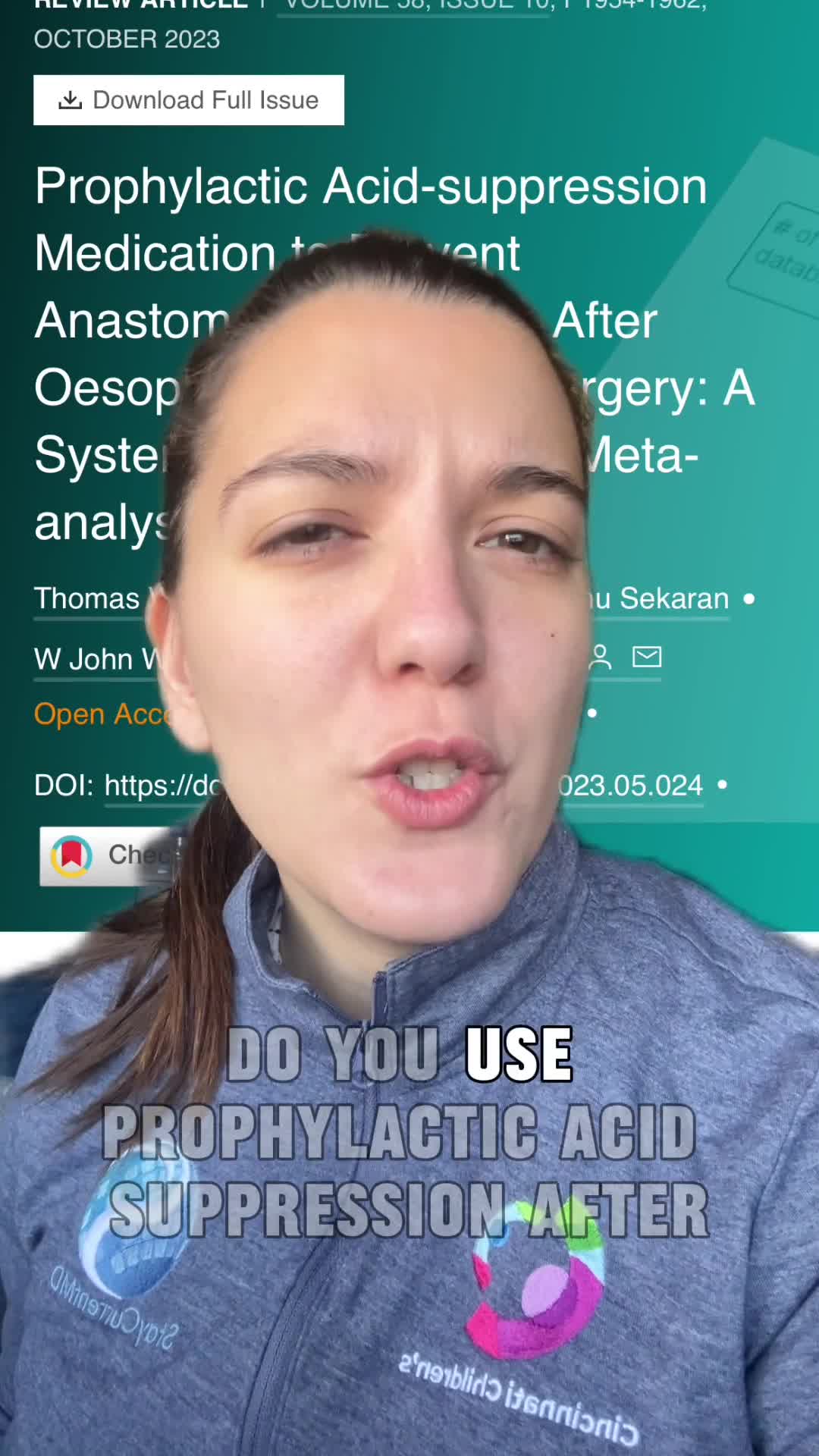
  • Transanastomotic tubes in EA/TEF repair increase stricture risk 2.72×; consider avoiding routine use. (1:10)
  • Most patent processus vaginalis don't become hernias; only 3/208 needed repair in 4-year follow-up, all within year 1. (2:00)
  • Kasai-first approach for biliary atresia validated: salvage transplant outcomes match or exceed primary transplant. (3:05)
  • Social risk screening shows low concordance between identified need and family-requested resources; may introduce bias. (4:50)

Inside this episode

Kai, the Library's AI content creator, listened to this episode and mapped who's speaking, the chapters, key claims, and cases. Every item links to the exact moment in the recording.

AI-enriched

Who's speaking

  • M. Tombash — host
  • Speaker 2 — guest
  • Speaker 3 — guest
  • Speaker 4 — guest
  • Speaker 5 — guest

Chapters

  • 0:00Introduction and First Paper Setup — Host introduces the episode format covering four papers from Journal of Pediatric Surgery and Academic Pediatrics, then introduces the first paper on transanastomotic feeding tubes in esophageal atresia repair.
  • 1:10Transanastomotic Tubes and Patent Processus Vaginalis Studies — Presents findings on increased stricture risk with transanastomotic tubes, then transitions to natural history study of patent processus vaginalis following laparoscopic pyloromyotomy.
  • 2:13Biliary Atresia Transplant Timing — Reviews comparative outcomes of primary versus salvage liver transplantation for biliary atresia, examining three patient groups with different timing strategies.
  • 4:14Social Risk Screening and Closing — Discusses limitations of current pediatric social risk screening practices and five proposed improvements, followed by episode conclusion and subscription prompts.

Key claims

  • 1:10Patients with a transanastomotic tube had a 2.72 times higher risk of developing a stricture post-operatively after esophageal atresia with tracheoesophageal fistula repair — Speaker 3
  • 1:30The Midwest Pediatric Surgery Consortium study examined every patient who had a laparoscopic pyloric myotomy to identify patent processus vaginalis and followed them annually — Speaker 3
  • 2:00Of 526 patients enrolled in the PPV study, 283 had a patent processus vaginalis (bilateral, right, or left) — Speaker 3
  • 2:13Of 208 patients with at least one year follow-up, only three underwent inguinal hernia repair, all within the first year — Speaker 4
  • 2:35Most patent processus vaginalis do not turn into inguinal hernias based on four-year interim analysis data — Speaker 4
  • 2:45Liver transplantation for biliary atresia can be performed as initial treatment (primary) or after failed Kasai hepatoportoenterostomy (salvage) — Speaker 4
  • 3:05The current standard in the US for biliary atresia is Kasai first and liver transplant only if that fails — Speaker 4
  • 3:30Children who had an early salvage liver transplant (before age one) and children who had a primary liver transplant had similar outcomes — Speaker 4
  • 3:45Children who had a late salvage liver transplant had improved graft survival compared to other groups — Speaker 4
  • 4:00Some children who undergo the Kasai procedure will never end up needing a liver transplant — Speaker 4
  • 4:30Social risk screening in pediatrics involves screening for risk factors including food and housing insecurity, financial strain, and unsafe environments — Speaker 5
  • 5:00There is low concordance between screening results showing who might need resources and who is actually asking for more resources — Speaker 5
  • 5:15Families may feel uncomfortable with social risk screening and may think there might be downstream repercussions based on their answers — Speaker 5
  • 5:28There may be racial biases in screening practices, with non-white patients potentially being asked social risk questions more often — Speaker 5
  • 4:50Current social risk screening protocols may not be effective and may actually lead to more inequities — Speaker 5

Open questions

  • Should transanastomotic tubes be used in esophageal atresia repair given the increased stricture risk?
  • Is universal resource offering more effective than targeted social risk screening in pediatric populations?
This episode was analyzed and enriched by Kai, the Library's AI content creator. Every item links to the moment it comes from — click a timestamp to listen in context.

Transanastomotic Tubes, Patent Processus Vaginalis, and Biliary Atresia Timing: Four Studies Reshaping Pediatric Surgical Practice

The episode's main topic retold as a plain-language walkthrough — what it is, why it matters, and what the speakers concluded. Written by Kai from the episode transcript and reviewed before publishing.

For the care team · Explainer · AI-written, human-reviewed

Transanastomotic Tubes and Stricture Risk

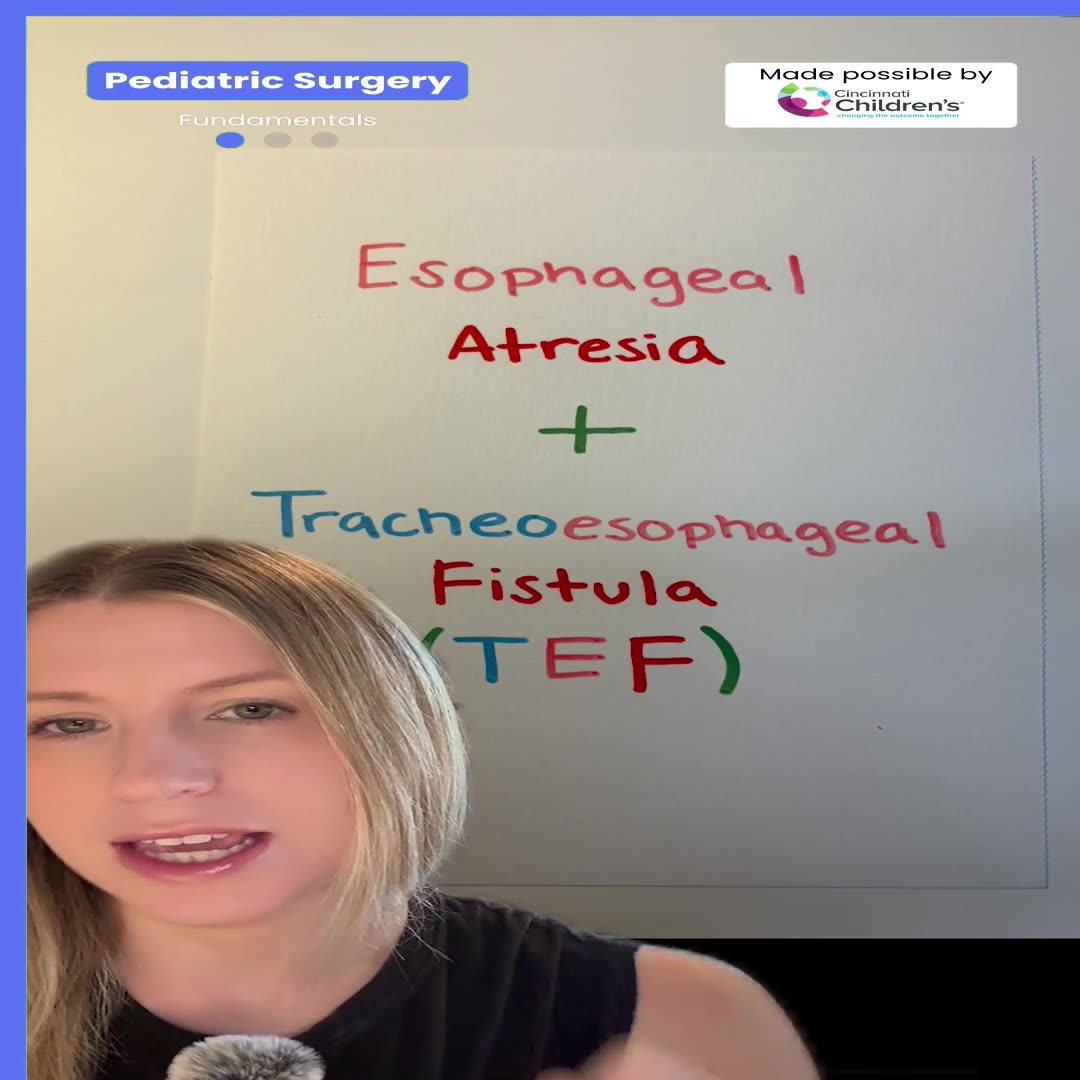
Esophageal atresia with tracheoesophageal fistula repair is one of the index operations in neonatal surgery 1:10. The anastomosis is high-stakes: leak or stricture can mean reintubation, repeat dilation, or revision 1:10. One traditional maneuver has been to leave a transanastomotic feeding tube across the repair — theoretically stenting the anastomosis open and providing early enteral access 1:10. A recent study challenges that practice 1:10. Patients with a transanastomotic tube had a 2.72 times higher risk of developing a stricture post-operatively 1:10. The mechanism is not entirely clear, but the tube may act as a foreign body, provoking inflammation at the suture line, or may interfere with the natural remodeling of the anastomosis 1:10. The finding is strong enough to make many surgeons reconsider routine tube placement 1:10.

Patent Processus Vaginalis: Most Do Not Become Hernias

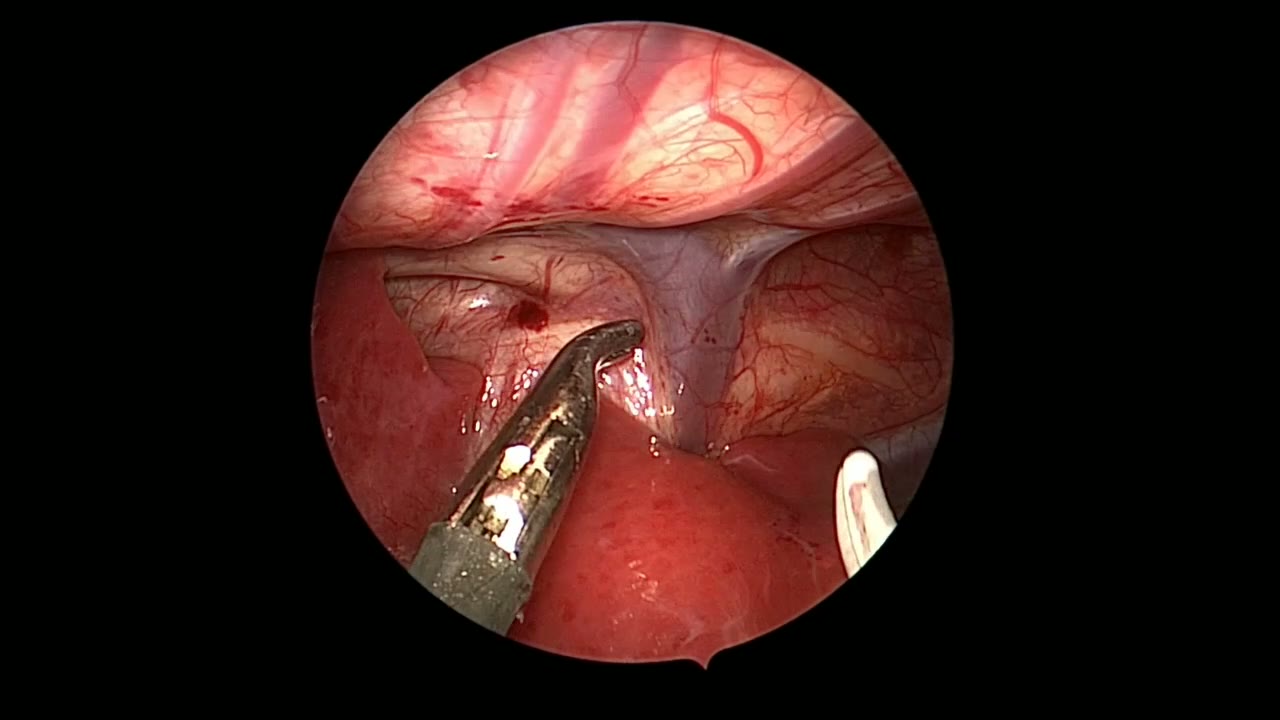
The patent processus vaginalis is a common incidental finding during laparoscopy in infants 1:30. It represents incomplete obliteration of the peritoneal extension into the inguinal canal — the same defect that, if it persists and enlarges, becomes an indirect inguinal hernia 1:30. The question has always been: if you see one, should you repair it prophylactically 1:30?

The Midwest Pediatric Surgery Consortium ran a prospective natural history study to answer this 1:30. They examined every patient undergoing laparoscopic pyloromyotomy, identified those with a patent processus vaginalis, and followed them annually 1:30. Of 526 patients enrolled, 283 had a patent processus vaginalis — bilateral, right, or left 2:00. Of 208 patients with at least one year of follow-up, only three underwent inguinal hernia repair, and all within the first year 2:13. The interim analysis at four years suggests that most patent processus vaginalis do not turn into inguinal hernias 2:35. This is practice-changing information 2:35. It argues against prophylactic repair of an incidentally discovered patent processus vaginalis in an asymptomatic infant 2:35. The risk of creating a problem — injury to the cord structures, testicular atrophy, recurrence — may outweigh the risk of the natural history 2:35.

Biliary Atresia: Kasai First or Transplant First?

Biliary atresia is progressive obliteration of the extrahepatic bile ducts in infancy, leading to cholestasis, cirrhosis, and eventual liver failure if untreated 2:45. The standard approach in the United States has been the Kasai hepatoportoenterostomy — a palliative operation that restores bile flow by connecting a jejunal loop directly to the porta hepatis 3:05. If the Kasai fails, the child proceeds to liver transplantation 3:05. But some centers, particularly in Europe, have advocated for primary liver transplantation, bypassing the Kasai entirely 2:45. The argument is that the Kasai often fails, and the delay to transplant may worsen outcomes 2:45.

A recent retrospective cohort study examined three groups: children who received primary liver transplant, children who received early salvage transplant (before age one after failed Kasai), and children who received late salvage transplant 2:45. The findings support the current US standard 3:30. Children who had an early salvage liver transplant and children who had a primary liver transplant had similar outcomes 3:30. More surprisingly, children who had a late salvage liver transplant had improved graft survival compared to the other groups 3:45. The reason for this is not entirely clear, but it may reflect patient selection — children who survive longer with a functioning Kasai may be healthier at the time of transplant 3:45. Critically, some children who undergo the Kasai procedure will never end up needing a liver transplant 4:00. That subset would be overtreated by a primary transplant strategy 4:00. The Kasai-first approach remains justified 3:30 3:45 4:00.

Social Risk Screening: Good Intentions, Uncertain Outcomes

Pediatric social risk screening has become widespread in primary care and subspecialty clinics 4:30. The intent is to identify families facing food insecurity, housing instability, financial strain, or unsafe environments, and connect them with resources 4:30. The logic is appealing, but the execution has problems 5:00. There is low concordance between screening results showing who might need resources and who is actually asking for more resources 5:00. Families may feel uncomfortable with social risk screening and may think there might be downstream repercussions based on their answers 5:15. There is also evidence of racial bias: non-white patients may be asked social risk questions more often 5:28. Current social risk screening protocols may not be effective and may actually lead to more inequities 4:50.

The authors propose five improvements: use community needs assessments rather than individual screening to identify population-level needs; establish community partnerships to ensure resources are actually available; study whether universal resource offering is more effective than selective screening; provide tiered levels of support rather than binary referral; and incorporate patient and family feedback into the design of screening programs 4:50. For the referring clinician, the takeaway is this: if your institution uses social risk screening, ask whether it has been validated in your population, whether families trust it, and whether it actually changes resource access 5:00 5:15 5:28 4:50. Good intentions are not enough 4:50.

Takeaways from this story

  • Transanastomotic tubes after esophageal atresia repair increase stricture risk 2.72-fold; routine use should be reconsidered.
  • Most patent processus vaginalis found incidentally do not progress to inguinal hernias; prophylactic repair is not justified.
  • Kasai-first approach for biliary atresia is supported: salvage transplant outcomes match or exceed primary transplant.
  • Current pediatric social risk screening shows low concordance with actual resource needs and may introduce racial bias.

Keywords

Hashtags

Transcript

Comments

Loading comments…