


From
StayCurrentMD
QUAD #23: CHARGE Syndrome, Airway Considerations with Dr. Catherine Hart
With CCHMC Pediatric Surgery · hosted by Dr. M. Goti
Part of
CHARGE Syndrome 5 items
Chapter 3 of 6 · Diagnosis & Workup
Dysphagia overview
Feeding Difficulties and Aspiration in CHARGE Syndrome
Cued at 3:00 · stops at 3:22 · press play
Expert statements on this page
No expert statements were drawn from this page.
Host summaries · secondary, not cited in answers
Educational content from recorded physician discussions — not medical advice. Talk to your (or your child's) care team about your situation.
Video
Aerodigestive & Esophageal Surgery: Aspiration in TEFs
5 min · Published Dec 2014
Video
QUAD #24: CHARGE Syndrome, Pulmonary Considerations with Dr. Cherie Torres-Silva
CCHMC Pediatric Surgery · Published Jan 2025
Video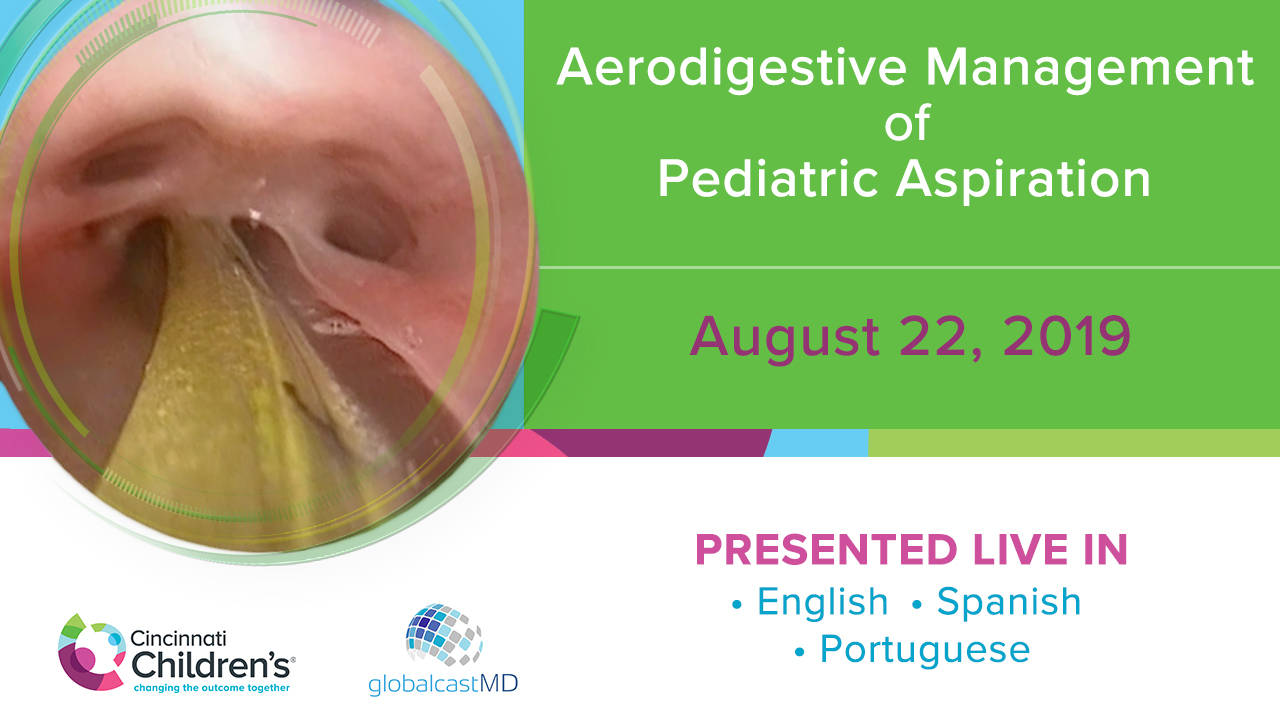
Aerodigestive Management of Pediatric Aspiration - FULL SHOW
CCHMC Pediatric Surgery · 157 min · Published Jul 2020
Video
QUAD #27 - Multidisciplinary - How Do Teams Enhance Outcomes by the CCHMC ADEC Team
CCHMC Pediatric Surgery · 10 min · Published Apr 2025
Video
QUAD #22: What is CHARGE syndrome? with Dr. Catherine Hart
CCHMC Pediatric Surgery · 59 s · Published Dec 2024
Video
QUAD #16 - Flexible Bronchoscopy in Management of Slide Tracheoplasty Patients - Sara Zak
CCHMC Pediatric Surgery · 9 min · Published Oct 2024
Podcast
Diaphragm pacing as alternative to mechanical ventilation in pediatric respiratory failure
1 min · Published Nov 2026
Podcast
Fetoscopic endoluminal tracheal occlusion for congenital diaphragmatic hernia
4 min · Published Nov 2026
Podcast
FETO procedure for late-diagnosed severe CDH with liver herniation
4 min · Published Nov 2026
Podcast
Severe CDH case with FETO: unexpected anatomic findings and clinical outcome
3 min · Published Nov 2026
Podcast
Pediatric pancreatitis: diagnosis, causes, and genetic insights with Dr. Juan Gurria
3 min · Published Nov 2026
Podcast
Understanding craniosynostosis: skull sutures, growth patterns, and diagnosis in infants
10 min · Published Nov 2026
What the experts said
CHARGE syndrome patients tend to have big bulkier arytenoids positioned more anteriorly, creating a structural difference rather than dynamic obstruction typical of congenital laryngomalacia.
The vocal folds in CHARGE larynx appear foreshortened but are not actually shorter; less is visible due to anterior positioning of the arytenoids.
At least 90% of kids with CHARGE syndrome have some degree of cranial nerve abnormalities, which can greatly impact their swallow function.
Aspiration is present in about 60% of kids with CHARGE syndrome.
Kids with CHARGE syndrome are just as likely to aspirate saliva and reflux as they are to aspirate oral feeds.
Glycopyrrolate when first started in a patient is typically 95% effective, but you have to increase the dose to maintain that efficacy and the side effects often lead to discontinuation at higher doses.
According to Dr. Hart, glycopyrrolate can make secretions really thick, which in kids who already have issues with airway clearance can significantly worsen the problem.
Scopolamine can be very effective for sialorrhea but makes kids very drowsy and can make them unable to accommodate, which is problematic in CHARGE patients with complex vestibular issues.
In a study of just under 100 kids, Botox was effective in about two-thirds of them and had no impact on about the other third, with effects lasting on average about four months.
Salivary duct relocation is not appropriate for kids who are aspirating because it does not decrease saliva production, only relocates where it drains into the mouth.
Four-duct ligation only ends up with a 30% long-term satisfaction rate.
The drool procedure (bilateral parotid duct ligation and bilateral submandibular gland excision) is almost 90% successful.
Tracheotomy is thought to be necessary in probably about a third of all kids with CHARGE syndrome, usually for multifactorial reasons.
A cuffed tracheostomy tube is not protective from aspiration because the cuff has to be deflated and secretions can still make it down into the airway.
Laryngotracheal separation renders children unable to talk, and according to Dr. Hart, is typically only offered to children who are already non-verbal or neurologically impaired and only when there is extreme impact on the lungs.