


From
StayCurrentMD
QUAD #11 Pediatric Surgeon’s Perspective on Improving the Care of TEF/EA Patients Keynote With Dr. Dan von Allmen
With Dr. Daniel von Allmen · hosted by Dr. Em Gootee
Chapter 6 of 9 · Surgical Management
Collaborative OR
Collaborative OR Practice and Novel Techniques
Cued at 10:20 · stops at 11:02 · press play
Expert statements on this page
No expert statements were drawn from this page.
Host summaries · secondary, not cited in answers
Educational content from recorded physician discussions — not medical advice. Talk to your (or your child's) care team about your situation.
Video
Glycopyrrolate for Anastomtic Dehiscence in Esophageal Atresia
2 min · Published May 2017
Video
Long Gap Technique Videos: EA & TEF
Dr. Steve Rothenberg · 17 min · Published Dec 2012
Video
Update Course 2021: MAGNET THERAPY FOR ESOPHAGEAL ATRESIA
Dr. Steve Rothenberg · Published May 2022
Video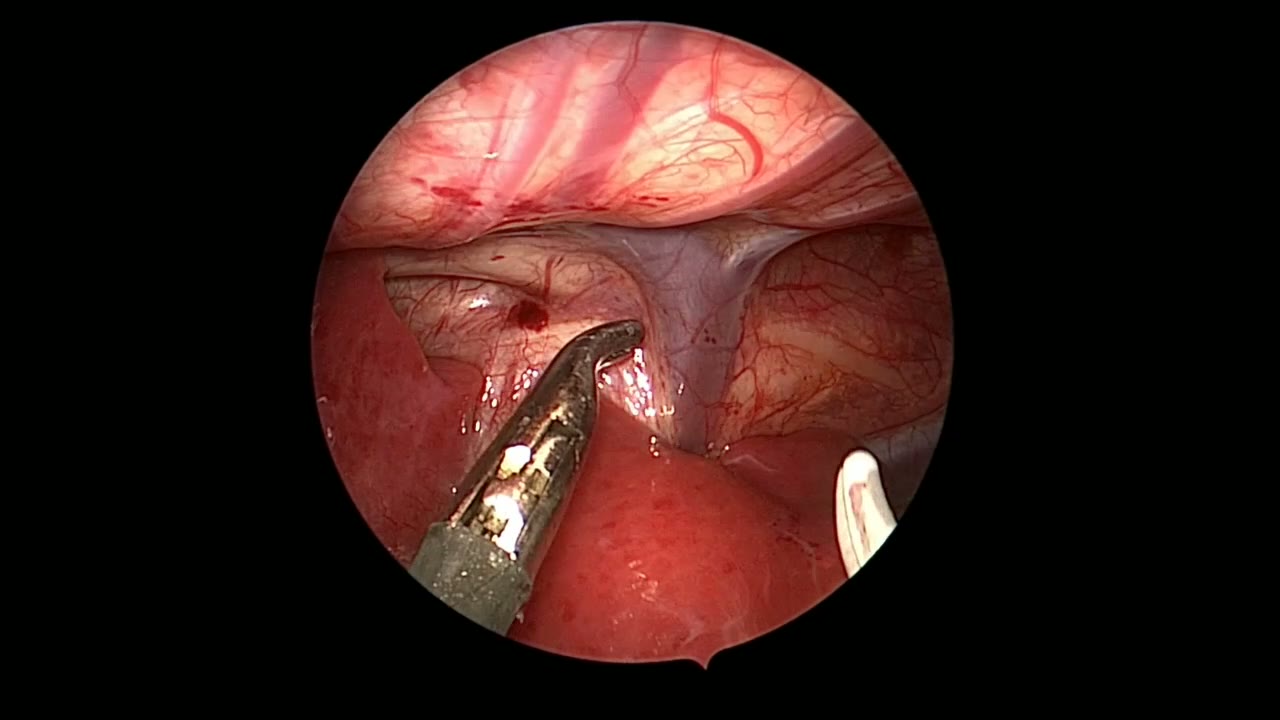
Thoracoscopic Tracheoesophageal Fistula Repair: Upper Pouch Mobilization and Anastomosis
Dr. Steve Rothenberg · 2 min · Published May 2026
Video
Tracheobronchopexy to Avoid Tracheostomy in Esophageal Atresia Patients With Severe Life-Threatening Tracheobronchomalacia
50 s · Published Apr 2025
Video
QUAD #10 Pt.3: Advantages of Thoracoscopic Repair of Esophageal Atresia with Dr. Steve Rothenberg
Dr. Steve Rothenberg · Published Jun 2024
Podcast
Treatment for Long Gap Esophageal Atresia: Esophageal Elongation and Replacement
10 min · Published Jan 2022
Video
7th Annual Pediatric Surgery Update Course 2019 - FULL SHOW
285 min · Published Jul 2020
Podcast
Neuroblastoma
56 min · Published Aug 2019
Video
Aerodigestive & Esophageal Surgery - The Unsalvageable Esophagus & Cases
CCHMC Pediatric Surgery · 101 min · Published Nov 2018
Video
Aerodigestive & Esophageal Surgery - Difficult Tracheal Esophageal Fistula
Dr. Todd Ponsky · 120 min · Published Nov 2018
Video
Abdominal Wall Defects
37 min · Published Nov 2018
Podcast
Diaphragm pacing as alternative to mechanical ventilation in pediatric respiratory failure
1 min · Published Nov 2026
Podcast
Fetoscopic endoluminal tracheal occlusion for congenital diaphragmatic hernia
4 min · Published Nov 2026
Podcast
FETO procedure for late-diagnosed severe CDH with liver herniation
4 min · Published Nov 2026
Podcast
Severe CDH case with FETO: unexpected anatomic findings and clinical outcome
3 min · Published Nov 2026
Podcast
Pediatric pancreatitis: diagnosis, causes, and genetic insights with Dr. Juan Gurria
3 min · Published Nov 2026
Podcast
Understanding craniosynostosis: skull sutures, growth patterns, and diagnosis in infants
10 min · Published Nov 2026
What the experts said
Esophageal atresia was first described in the 1600s.
In 1939, Logan Levin of Minneapolis and William Meyer of Boston independently had the first long-term survivors of esophageal atresia with a series of operations to construct skin-lined tubes on the anterior chest wall that connected an esophagostomy to a gastrostomy.
In 1941, Cameron Haight described the first primary repair of esophageal atresia at the dawn of pediatric surgery as a subspecialty.
In a study of 207 EA/TEF patients, airway abnormalities were found in 40% of these children.
EA/TEF patients with airway abnormalities much more frequently required a tracheostomy and had a much increased risk of death at 14% versus 4% in patients without an airway issue.
In very small EA/TEF patients who have major cardiac defects, the mortality is quite high.
Interventions in utero for cardiac defects are now being performed.
The mortality curve for esophageal atresia has improved from virtually every child dying in the 1940s to relatively uncommon mortality now, except in patients who are 700 grams or babies with major cardiac defects.
Cincinnati Children's has subspecialized teams including a colorectal team, esophageal team, bariatric team, trauma service, critical care, and other subspecialties.
Subspecialization creates a risk of causing fragmented care that is not patient-centric.
The EA/TEF care team includes pediatric surgery, ENT, pulmonary, GI, CT surgery, radiology, speech therapy, intensive care, genetics, and many others.
At Cincinnati Children's, they have dedicated OR time where they take EA/TEF patients to the OR at the same time with all members of the team.
During combined OR cases, Dr. von Allmen does not perform any procedures himself but spends time watching what pulmonary, GI, and ENT are doing, which means he cannot bill for anything.
The inability to bill for observation time in the OR is a barrier for hospitals, especially in the United States system.
Cincinnati Children's team adapted the tracheal slide procedure to close recurrent tracheoesophageal fistulas by sliding the trachea and repairing over it with an interposition of sternal periosteum, which is very effective.
Many general pediatric surgery colleagues have never considered the tracheal slide with sternal periosteum option and would not know how to do it themselves.
ENT specialists at Cincinnati Children's (Mike Rudder, D Khan, Katherine Hart) are more expert at neck dissections and finding the recurrent laryngeal nerve than pediatric surgeons who do not perform these frequently.
Many EA/TEF patients have pre-existing recurrent laryngeal nerve problems that ENT specialists know how to fix.
Two-team simultaneous operations reduce EA/TEF case time from 8-12 hours to 6-8 hours because they can make progress twice as fast.
Everybody has to check their ego at the door when different services work together, which is not always easy due to well-established cultures that are sometimes barriers.
Out-of-state Medicaid reimbursement for EA/TEF referrals can be as low as four or five cents on the dollar, making it very hard to consistently provide care.
Research, both clinical and basic science, is an obligation because that is how providers get better and why the mortality curve came down in the first place.