


From
Live Event Content
Prof. Shilpa Sharma - Best of the Best in Pediatric Surgery 2024
With Dr. Shilpa Sharma · hosted by Dr. Cecilia Gigena
Part of
Biliary Atresia 26 items
Chapter 1 of 5 · Fundamentals
Introduction
Introduction and speaker presentation
Expert statements on this page
No expert statements were drawn from this page.
Host summaries · secondary, not cited in answers
Educational content from recorded physician discussions — not medical advice. Talk to your (or your child's) care team about your situation.
Podcast
Atresia de Vias Biliares - Resumen de la 5ta sesión Nacional de Residentes de Mexico
16 min · Published May 2023
Podcast
Biliary Atresia Part II
42 min · Published Feb 2022
Video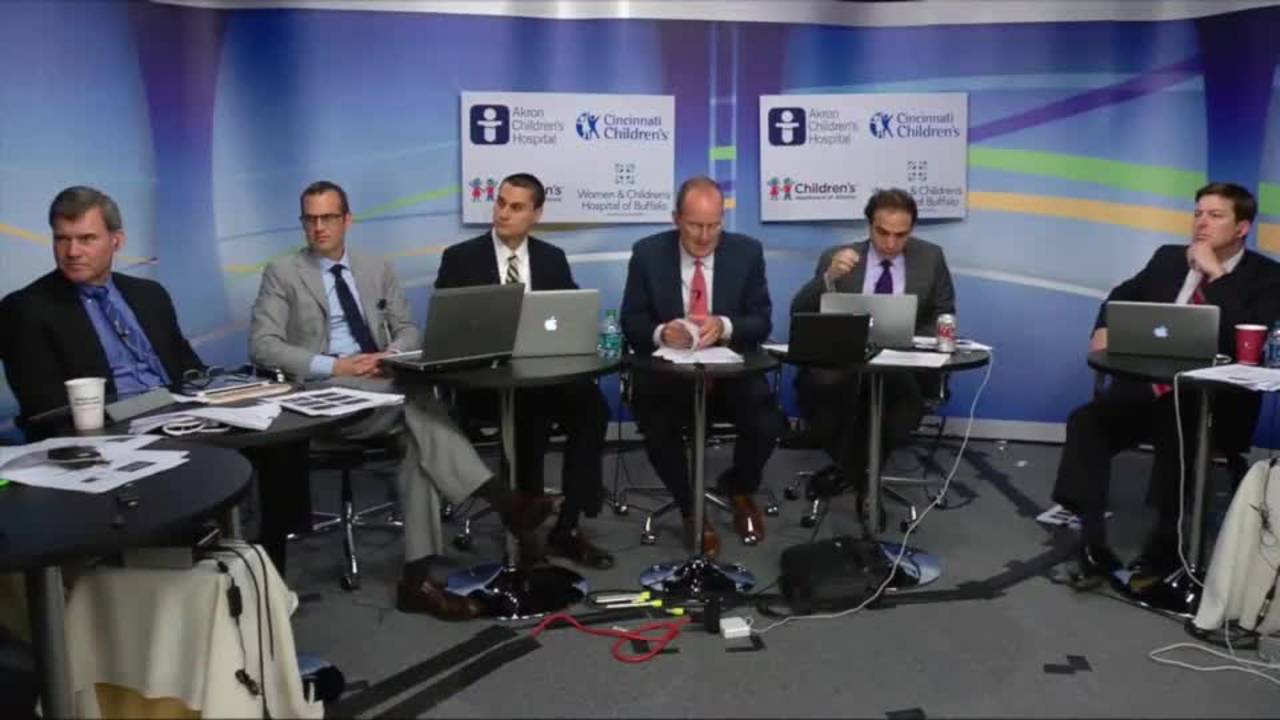
Biliary Atresia-Case Presentation and Panel Discussion: Update Course 2014
23 min · Published Jul 2017
Video
Biliary Atresia: Where are we now? Advanced Practice Providers Pediatric...
Dr. Todd Ponsky · 48 min · Published Jul 2017
Video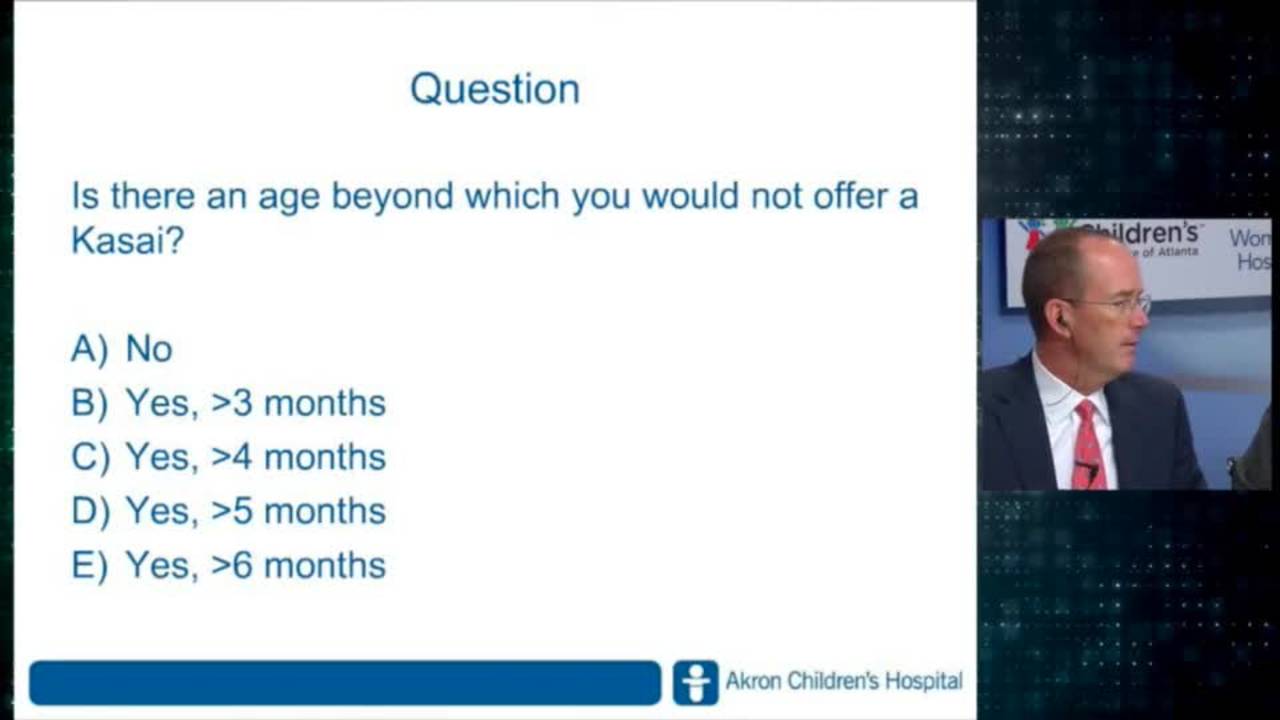
Biliary Atresia - Robert Parry: Update Course 2014
24 min · Published Nov 2018
Video
Clinical Characteristics and Prognosis of Biliary Atresia with Low Serum Matrix Metalloproteinase-7 Levels
55 s · Published Jul 2024
Only a few other public items share this expert — go deeper there →
Video
Clinical & Research Update: Renal Tumors with Drs. Ethan Smith, Lindsay Haacker, Michael Daugherty, and Meera Kotagal
71 min · Published Sep 2026
Video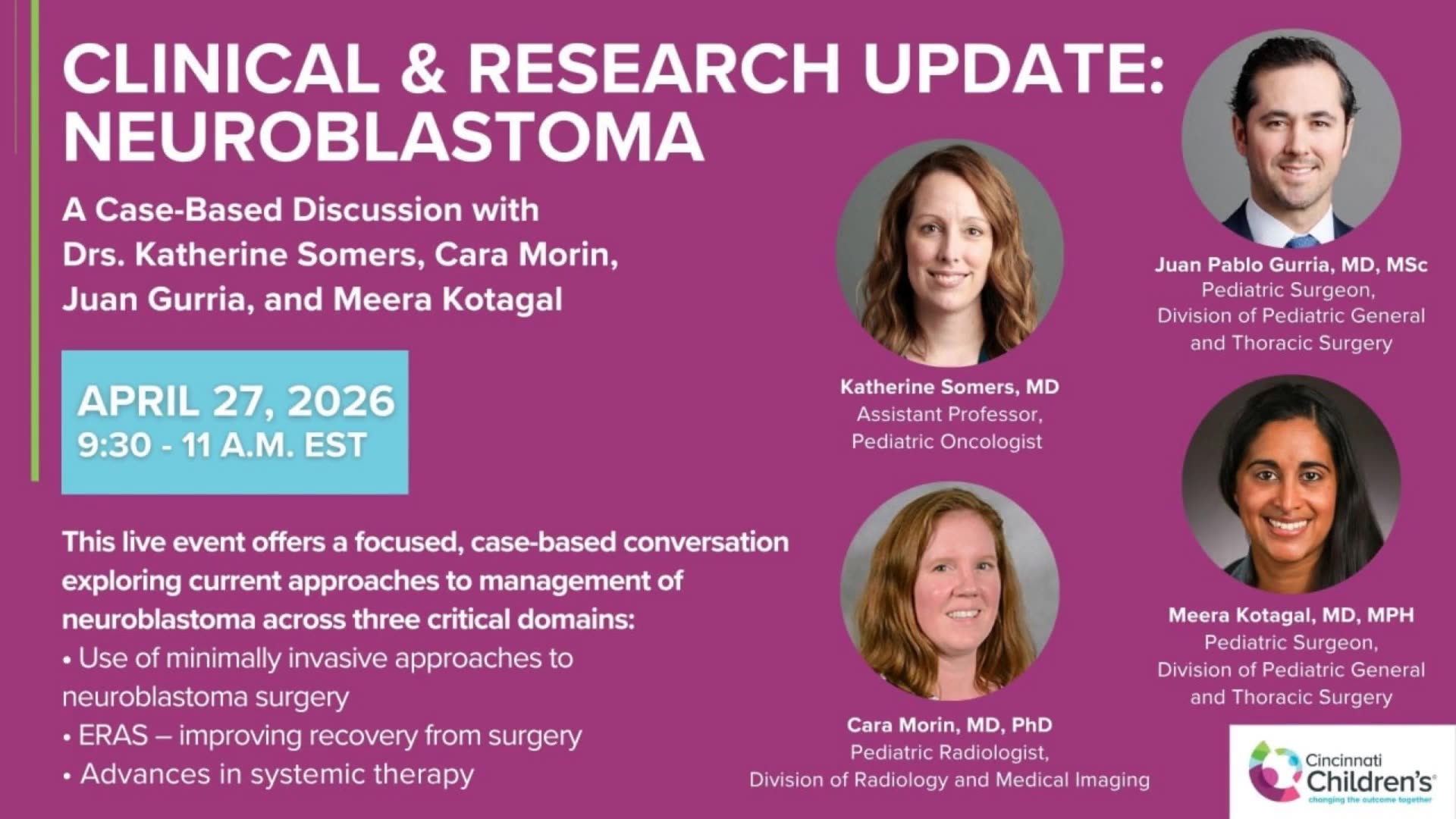
Clinical & Research Update: Neuroblastoma with Drs. Katherine Somers, Cara Morin, Juan Gurria, and Meera Kotagal
67 min · Published Sep 2026
Video
Clinical & Research Update: Sarcoma w/ Drs. Roshni Dasgupta, Joseph Pressey, Arthur Meyer, Luke Pater
66 min · Published Sep 2026
Video
2026 Laparoscopic Pediatric Hernia Repair
123 min · Published Jun 2026
Video
Beyond the Spectrum: Diagnosis, Myths & Management - Caitlin Couch & Leslie Lopez - APP Conference 2026
50 min · Published May 2026
Video
Dysautonomia: Navigating the Journey - Martha Willis - APP Conference 2026
55 min · Published May 2026
What the experts said
Biliary atresia is a progressive cholangiopathy that leads to morbidity and end stage cirrhosis.
In developing countries with delayed presentation, advanced cirrhosis, and hepatic failure, most infants with biliary atresia succumb to hepatopulmonary syndrome, portal hypertension, intraventricular hemorrhage, and aspiration due to massive ascites.
The liver may regenerate after physiological insults and resection, with hepatic resection acting as a trigger for regeneration.
The liver can regenerate only to a size that is proportional to its original size.
In biliary atresia, hepatic stellate cells activate and lead to a pro-fibrogenic pathway involving transforming growth factor, platelet derived growth factor, and interleukins.
In hepatic resection, hematopoietic stem cells lead to proliferation with the help of hepatocyte growth factor receptor, epidermal growth factor receptor, and cytokines like tumor necrosis factor.
Starting in 2015, the team began resecting segments 2 and 3 of the liver in a non-anatomical fashion to stimulate an alternative pathway of stem cell proliferation for hepatic regeneration.
The study compared outcomes of segmentectomy combined with Kasai procedure versus Kasai alone, measuring bilirubin and APRI at preoperative, day 7, and 1st, 3rd, 6th, and 12th month time points.
The median age at presentation was similar in both groups: 96 days in one group and 89 days in the other.
Serum bilirubin levels were significantly different between the Kasai-plus-resection group and Kasai-alone group at 1 month and 3 months postoperatively.
APRI (AST to Platelet Ratio Index) was significantly different between groups on postoperative day 7.
Mortality was lower in the study group (Kasai plus resection) at 56% compared to 93% in the control group (Kasai alone).
The jaundice-free percentage was 91% in the study group compared to 25% in the control group.
Resection of a part of the liver may trigger an alternative pathway of stem cell proliferation for hepatic regeneration with reduced fibrosis and improved survival.
The team resected the left liver (segments 2 and 3) to leave enough liver to regenerate, particularly in patients presenting late after 80 days of life.