


From
StayCurrentMD
Neuroblastoma
With Dr. Daniel von Allmen & Dr. Erika Neumann & Dr. Tony Sandler · hosted by Dr. Rae Hanke & Dr. Todd Ponsky
Chapter 4 of 5 · Diagnosis & Workup
Workup of Large Abdominal Mass in Older Child
Cued at 22:56 · stops at 23:51 · press play
Expert statements on this page
No expert statements were drawn from this page.
Host summaries · secondary, not cited in answers
Educational content from recorded physician discussions — not medical advice. Talk to your (or your child's) care team about your situation.
Podcast
Topics in 10: Neuroblastoma
10 min · Published Sep 2019
Video
Clinical & Research Update: Neuroblastoma with Drs. Katherine Somers, Cara Morin, Juan Gurria, and Meera Kotagal
67 min · Published Sep 2026
Video
Management of Asymptomatic Lung Lesions: Pediatric Thoracic Surgery Part...
Dr. Todd Ponsky · 20 min · Published Jul 2017
Video
Neuroblastoma with Dr. Meera Kotagal
14 min · Published Sep 2024
Video
Image-guided core-needle or surgical biopsy for neuroblastoma diagnosis in children
54 s · Published Feb 2024
Video
Postnatal Management of Lung Lesions Part III: Pediatric Thoracic Surgery...
Dr. Todd Ponsky · 27 min · Published Aug 2017
Video
Rare Ovarian Tumor in Infants: Small Cell Carcinoma of Ovary, Hypercalcemic Type & SMARCA4 Mutation
21 s · Published Oct 2026
Video
Can Normal X-Rays Miss Metastatic Neuroblastoma? A Pediatric Radiology Case Study
26 s · Published Oct 2026
Video
Can Fractures Be a Sign of Hepatoblastoma in Children? Understanding Pediatric Liver Cancer Symptoms
37 s · Published Oct 2026
Video
Pancreas, Muscle, and Subcutaneous Fat Atrophy in Patients Undergoing Radiation for Neuroblastoma
47 s · Published Oct 2026
Podcast
Hepatoblastoma
Todd Ponsky · 54 min · Published Oct 2026
Podcast
Wilms Tumor
Todd Ponsky · 64 min · Published Oct 2026
Podcast
Treatment for Long Gap Esophageal Atresia: Esophageal Elongation and Replacement
10 min · Published Jan 2022
Video
7th Annual Pediatric Surgery Update Course 2019 - FULL SHOW
285 min · Published Jul 2020
Video
Aerodigestive & Esophageal Surgery - The Unsalvageable Esophagus & Cases
CCHMC Pediatric Surgery · 101 min · Published Nov 2018
Video
Aerodigestive & Esophageal Surgery - Difficult Tracheal Esophageal Fistula
Dr. Todd Ponsky · 120 min · Published Nov 2018
Video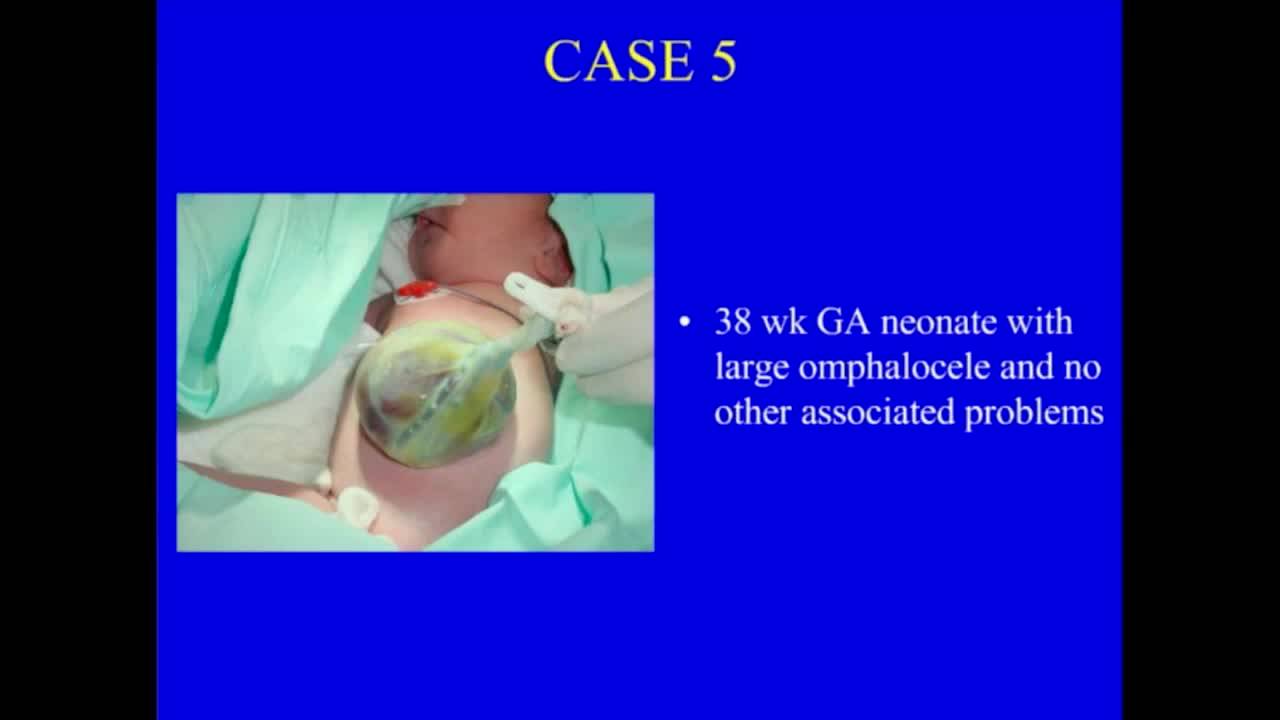
Abdominal Wall Defects
37 min · Published Nov 2018
Video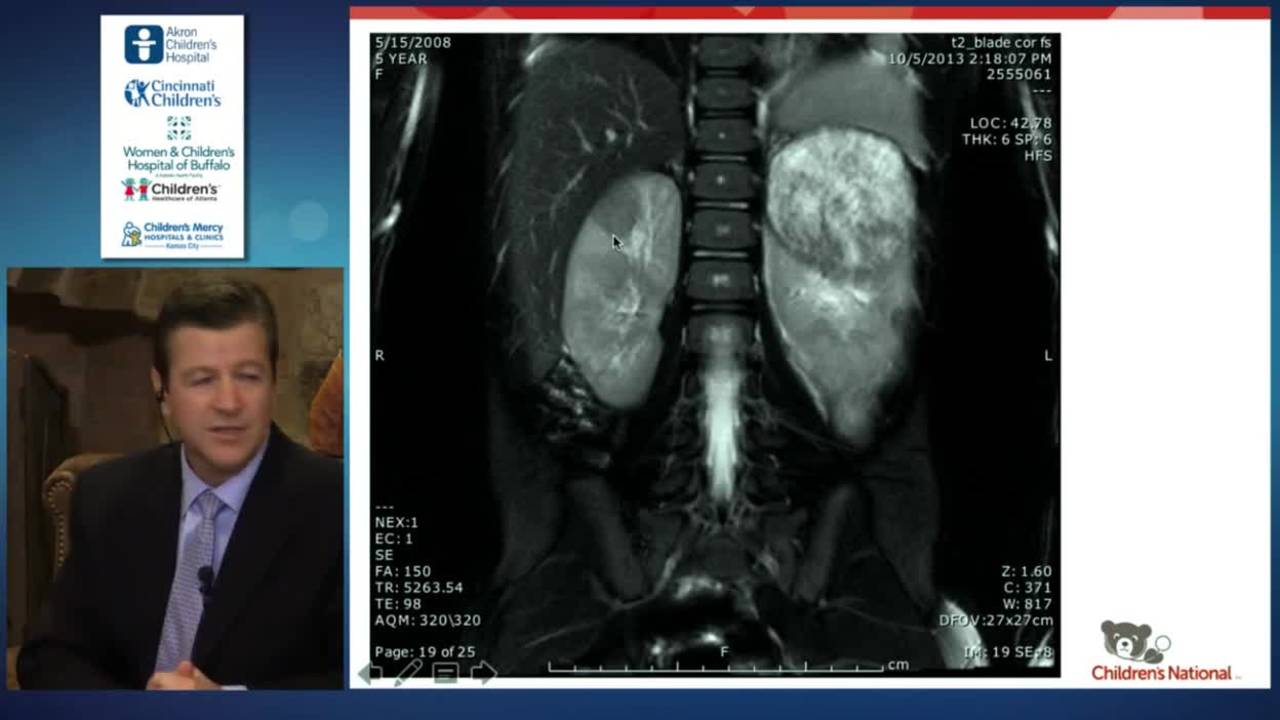
Bilateral Wilm's Tumor - Complex Gastroschisis - Complex Ileal Atresia:...
29 min · Published Nov 2018
Podcast
Diaphragm pacing as alternative to mechanical ventilation in pediatric respiratory failure
1 min · Published Nov 2026
Podcast
Fetoscopic endoluminal tracheal occlusion for congenital diaphragmatic hernia
4 min · Published Nov 2026
Podcast
FETO procedure for late-diagnosed severe CDH with liver herniation
4 min · Published Nov 2026
Podcast
Severe CDH case with FETO: unexpected anatomic findings and clinical outcome
3 min · Published Nov 2026
Podcast
Pediatric pancreatitis: diagnosis, causes, and genetic insights with Dr. Juan Gurria
3 min · Published Nov 2026
Podcast
Understanding craniosynostosis: skull sutures, growth patterns, and diagnosis in infants
10 min · Published Nov 2026
What the experts said
Adrenal hemorrhage is the most common differential diagnosis for prenatal suprarenal mass, more common with history of fetal stress
Other differential diagnoses for suprarenal mass include neuroblastoma, pulmonary sequestration below the diaphragm, and misdiagnosed renal anomaly
Familial neuroblastoma occurs in about 1% of patients
For prenatal suprarenal mass, first postnatal study should be ultrasound of the abdomen
CT scan or MRI not needed for 3 cm lesion unless urine catecholamines are elevated
MIBG scan is the next step if catecholamines are elevated
Radiologists are quite good at identifying adrenal hemorrhage on ultrasound
In perinatal phase, most common metastatic sites are liver, bone, skin, and lymph nodes
Nocktern study data supports observation of prenatal neuroblastoma with careful ultrasound surveillance
Of 84 observed patients in Nocktern study, 16 (approximately 20%) underwent resection for growth or family preference
Nocktern study showed approximately 98% event-free survival and 100% overall survival in observed prenatal neuroblastoma
First-year surveillance protocol: ultrasound and catecholamines at birth, 3 weeks, 6 weeks, 12 weeks, then spaced out to one year
After one year, surveillance becomes every six months, then yearly
Case report: child with observed prenatal adrenal mass that resolved presented at age 3 with widely metastatic high-risk neuroblastoma
5 centimeters is used as size cutoff for surgical intervention in observed prenatal masses
Volume increase of more than 50% is criterion for considering surgery
50% increase in VMA or HVA prompts consideration of surgery
Laparoscopic approach is reasonable for masses less than 6 centimeters
Lymph node status in neuroblastoma is not as important for therapy changes as in Wilms tumor
Biology of neuroblastoma is more important than lymph node status for treatment decisions
Stage MS (formerly 4S) with skin lesions and liver mets still tends to have good biology
Primary concern in stage MS with liver involvement is mass effect causing respiratory compromise
Stage MS without distress can be treated with aggressive observation
Once respiratory compromise begins, treatment options include chemotherapy, radiation, or emergent decompressive laparotomy
Classic findings of stage MS (high catecholamines, blue blebs on skin, liver metastasis, adrenal mass) may not require biopsy
Liver biopsy in newborns is difficult because bleeding is hard to control
If NMYC is amplified in stage MS, staging changes from MS to M
VIP secretion can cause severe diarrhea in neuroblastoma
Initial workup for abdominal mass includes ultrasound to determine solid vs cystic, then CT with PO and IV contrast if solid
Ultrasound is important for Wilms tumor to assess venous extension
Large mass encasing aorta and celiac axis with microcalcifications represents L2 INRG classification
Complete staging workup includes bone marrow biopsy, MIBG scan, chest CT to rule out metastasis, and head CT if clinical symptoms present
10% of neuroblastomas are not MIBG avid
PET scan may detect metastases in MIBG-negative neuroblastomas
PET scan is not part of routine initial diagnostic workup but may be used for MIBG-negative soft tissue areas to distinguish recurrence from scar
Open retroperitoneal biopsy provides adequate tissue size for pathology and biology studies
Transperitoneal laparoscopic biopsy may not allow adequate bleeding control for large tumors
Multiple percutaneous biopsies may not provide adequate tissue for biology studies
NMYC amplification can be obtained from bone marrow, but additional biology studies require tumor tissue
Biology studies beyond NMYC include ALK mutation and ploidy status