


From
Live Event Content
Natasha Henner, MD - 2024 Fetal Care Center Navigating Perinatal Care for Trisomy 13 & 18
With Dr. Natasha Henner · hosted by Dr. Em Gootee
Chapter 8 of 10 · Patient & Family Education
Communication strategies
Communication strategies: risk stratification and message framing
Cued at 21:00 · stops at 24:00 · press play
Expert statements on this page
No expert statements were drawn from this page.
Host summaries · secondary, not cited in answers
Educational content from recorded physician discussions — not medical advice. Talk to your (or your child's) care team about your situation.
Video
Dan Swarr, MD - 2024 Fetal Care Center Navigating Perinatal Care for Trisomy 13 & 18
26 min · Published Dec 2024
Video
James Cnota, MD - 2024 Fetal Care Center Navigating Perinatal Care for Trisomy 13 & 18
31 min · Published Dec 2024
Video
John Carey, MD - 2024 Fetal Care Center Navigating Perinatal Care for Trisomy 13 & 18
31 min · Published Dec 2024
Video
Introduction - 2024 Fetal Care Center Navigating Perinatal Care for Trisomy 13 & 18
2 min · Published Dec 2024
Video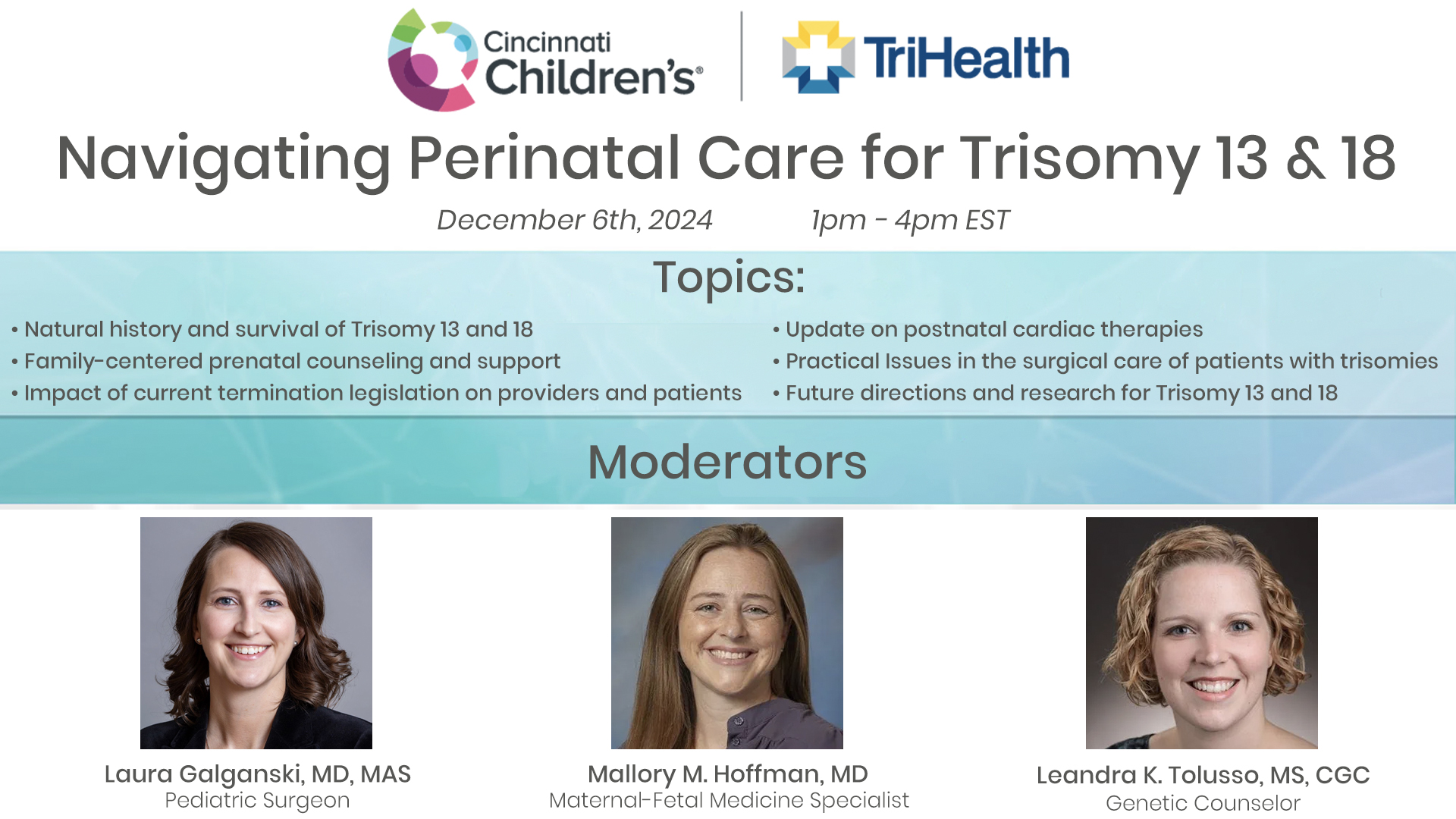
Laura Glaganski, MD & Jagroop (Rupi) Parikh - 2024 Fetal Care Center Navigating Perinatal Care for Trisomy 13 & 18
24 min · Published Dec 2024
Video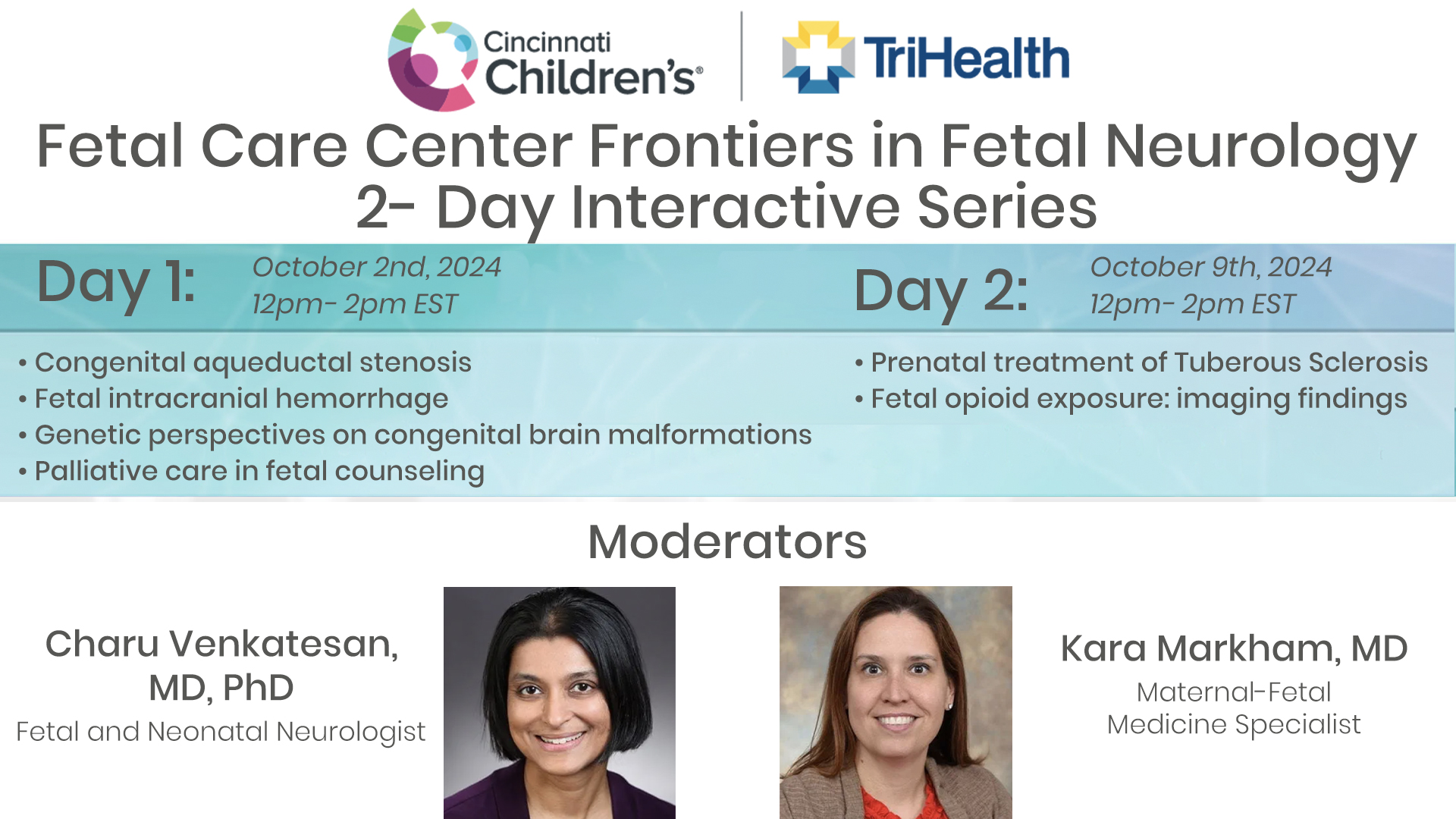
2024 Fetal Care Center Frontiers in Fetal Neurology Day 1 - Hour 1 Q&A
9 min · Published Oct 2024
Video
Clinical & Research Update: Renal Tumors with Drs. Ethan Smith, Lindsay Haacker, Michael Daugherty, and Meera Kotagal
71 min · Published Sep 2026
Video
Clinical & Research Update: Neuroblastoma with Drs. Katherine Somers, Cara Morin, Juan Gurria, and Meera Kotagal
67 min · Published Sep 2026
Video
Clinical & Research Update: Sarcoma w/ Drs. Roshni Dasgupta, Joseph Pressey, Arthur Meyer, Luke Pater
66 min · Published Sep 2026
Video
2026 Laparoscopic Pediatric Hernia Repair
123 min · Published Jun 2026
Video
Beyond the Spectrum: Diagnosis, Myths & Management - Caitlin Couch & Leslie Lopez - APP Conference 2026
50 min · Published May 2026
Video
Dysautonomia: Navigating the Journey - Martha Willis - APP Conference 2026
55 min · Published May 2026
What the experts said
The majority of infants with trisomy 13/18 still die within the first year of life, influenced by patient phenotype, parental choice, and local institutional practices.
There are higher rates of live-born infants with trisomy 13/18, and birth by C-section accounts for about 60 to 70% of all cases.
With more therapies, there are more long-term survivors; surgical trends are rapidly increasing.
Updated reported survival is about 40% to NICU discharge and over 25% to one year; some institutions report even higher survival.
Futility is a flawed ethical construct and is framed by the outcomes clinicians witness.
Developmental potential in trisomy 13/18 is probably not higher than 12 to 15 months, but parents assign varied importance to this, especially when told most children die within the first year.
Clinician distress around trisomy 13/18 care is important but changeable and can turn into something else.
Not acting upon something based on prognosis has an ongoing impact on that prognosis (self-fulfilling prophecy).
If throughout medical and nursing school we learn that babies with trisomies look like malformed children in grainy pictures, we might treat them as less than human.
Some decisions should be easily decoupled (mode of delivery, level of neonatal care, trial of CPAP vs. chronic mechanical ventilation), but others should be closely linked (cardiac repair with possible tracheostomy).
All efforts should be made to turn surgical cardiac repair babies into long-term survivors, guided by outcomes and the overall health of each heart center.
It is possible that we conflate truthfulness and pessimism and are too brutal in talking about the truth, which is what parents tend to remember.
Closing a VSD or supporting a baby with chronic mechanical ventilation may help with dyspnea, improve sleep and state regulation, improve growth, and help the child reach whatever developmental potential they were meant to reach.
Chronic critical illness is defined as remaining in the NICU for greater than 14 or 28 days, having chronic multi-organ conditions, or needing one or more technologies that tend to be lifelong.
Prematurity, single ventricle disease, cardiopulmonary failure requiring ECMO, and cancer-directed therapy may all preclude treatment possibilities and mean a shorter life; most centers would advise against these interventions.
Some places are putting kids on ECMO specifically post-cardiac repair and operating on kids with liver tumors with more successful outcomes.
A 2023 consensus report states that for patients who are ventilator dependent heading into cardiovascular surgery, it is reasonable to discuss a possible risk of tracheostomy and chronic mechanical ventilation as part of counseling.
When the same outcomes were described with a survival versus a mortality frame, patients picked a different care option (citing classic cancer treatment study).
Clinicians are much more pessimistic about outcomes in almost all patient populations compared to parents, who tend to have a more positive view of the future.
Multiple data show that parents probably do not regret their decisions, so clinicians may not need to worry about it as much as they do.