Journal of Pediatric Surgery Article Review: January 2022 APSA Issue

Published:
Journal of Pediatric Surgery Article Review: January 2022 APSA Issue podcast cover art
4 Views
0 Likes
0 Shares
0 Comments

StayCurrentMD

View profile →

Inside this episode

Kai, the Library's AI content creator, listened to this episode and mapped who's speaking, the chapters, key claims, and cases. Every item links to the exact moment in the recording.

AI-enriched

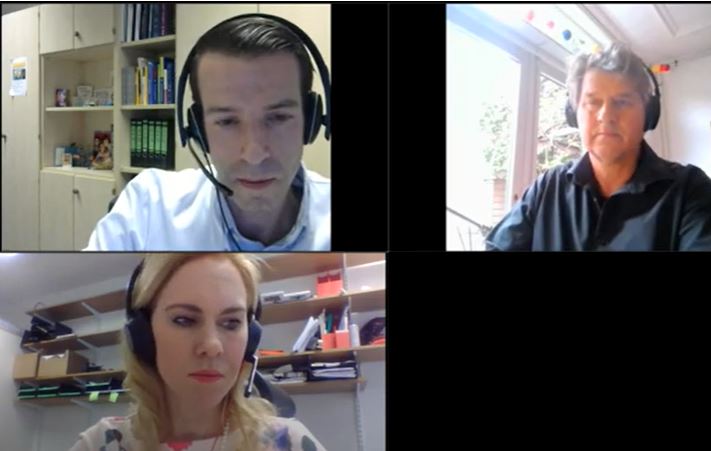
Who's speaking

  • Rod Gerardo — host
  • Speaker 2 — host
  • Speaker 3 — host
  • Gail Bessner — guest
  • Todd — guest
  • Charza Jaharifard — guest

Chapters

  • 0:00Introduction and Academic RVU System Discussion — Introduction to the January 2022 APSA issue review. Discussion of Nationwide Children's Hospital's academic RVU system designed to incentivize non-clinical academic productivity alongside clinical work.
  • 5:03Gastroschisis Protocol Review — Review of BC Children's Hospital gastroschisis protocol comparing outcomes before and after 2012 implementation. Discussion of achieving 75% immediate closure rates and benefits of sutureless bedside closure.
  • 9:11Fetal Myelomeningocele Repair Study — Discussion of placental mesenchymal stromal cell safety study for in utero myelomeningocele repair in ovine model. Review of single-operation technique and progression to human trials.

Key claims

  • 1:41Surgeons have historically been incentivized based on work RVUs, which is important for clinical productivity but does not capture other academic strengths — Gail Bessner
  • 2:55The concept of academic RVUs was first described 12-13 years ago but without a clear incentivization framework — Gail Bessner
  • 3:07Nationwide Children's Hospital implemented a point-based academic RVU system for publications, presentations, and other academic pursuits — Gail Bessner
  • 3:58External federal funding increased from $750,000 to $5.7 million, a 7.7-fold increase, after implementing the academic RVU system — Rod Gerardo
  • 3:44The academic RVU system at Nationwide resulted in increased presentations, peer-reviewed publications, and external federal research funding — Speaker 2
  • 5:03At Akron, the bonus structure required the entire group to reach a certain RVU threshold for 50% of bonus, eliminating competition for individual cases — Todd
  • 5:51The BC Children's Hospital gastroschisis study compared outcomes before and after implementation of a protocol in 2012, using data from 2008-2019 — Speaker 2
  • 7:12At Saint Justine, gastroschisis treatment differed from other institutions with very low silo use and attempts at immediate bedside sutureless closure for nearly every patient — Charza Jaharifard
  • 7:57Approximately 75% of gastroschisis babies can be closed immediately, either in the OR with fascial closure pre-protocol or at bedside post-protocol — Charza Jaharifard
  • 8:27With silo reduction, parents cannot hold their baby for 5-6 days while looking at intestines through the silo — Charza Jaharifard
  • 8:43With immediate closure, parents can hold their baby within 48 hours if intubated, or immediately if managed without intubation — Charza Jaharifard
  • 10:26Prior myelomeningocele studies used two separate in utero surgeries: one to create the defect and one to repair it with PMSCs — Speaker 3
  • 10:43The current study performed a single operation at approximately 100 days gestational age, creating and repairing the defect simultaneously with PMSCs placed directly on the spinal cord — Speaker 3
  • 11:23PMSCs did not persist in placentas, uteri, or lambs at 3 months post-treatment — Speaker 3
  • 11:30There was no histological evidence of abnormal growth or tumor development from PMSC treatment — Speaker 3
  • 11:52Human trials using PMSCs for myelomeningocele repair have begun with the first two patients — Speaker 3

Open questions

  • What is the optimal balance between clinical RVUs and academic RVUs in compensation models?
  • Can the 75% immediate closure rate for gastroschisis be replicated at other institutions using the BC Children's protocol?
  • What are the long-term outcomes of PMSC treatment for myelomeningocele in human patients?
This episode was analyzed and enriched by Kai, the Library's AI content creator. Every item links to the moment it comes from — click a timestamp to listen in context.
Written for:

Academic RVUs: Compensating Surgeons for Non-Clinical Scholarship

The episode's main topic retold as a plain-language walkthrough — what it is, why it matters, and what the speakers concluded. Written by Kai from the episode transcript and reviewed before publishing.

For the care team · Explainer · AI-written, human-reviewed

Why Academic RVUs Exist

Pediatric surgery operates almost exclusively within academic medical centers, where faculty are expected to publish, teach, mentor trainees, and secure grant funding alongside clinical work 1:41. Yet compensation structures have historically rewarded only clinical productivity through work RVUs — the billing units tied to operative volume and clinic visits 1:41. This creates a predictable tension: the surgeon running a productive lab or leading a multi-institutional trial generates less measurable revenue than the colleague taking extra call shifts, even though both activities sustain the academic mission 1:41. "Historically, surgeons of all types have been incentivized based on their work or views, and it's certainly important for clinical productivity and clinical program building, but it's really important to take advantage of other strengths that surgeons have" 1:41. Academic RVUs emerged as a solution — a parallel currency that assigns point values to scholarship so institutions can transparently compensate non-clinical contributions 3:07.

The Core Problem

Without a structured incentive system, academic productivity becomes discretionary effort performed after clinical obligations are met 1:41. The concept of academic RVUs was first described over a decade ago, but early frameworks lacked clear implementation guidance 2:55. The result: surgeons who prioritized research or education often subsidized their own academic time, while those focused purely on clinical volume maximized compensation 1:41. This misalignment discourages the scholarship that justifies academic medical center overhead and undermines recruitment of research-oriented faculty 1:41.

How the System Works

Nationwide Children's Hospital implemented a point-based academic RVU system that assigns values to publications, presentations, and other scholarly activities 3:07. The structure parallels clinical work RVUs but measures different outputs: first-author manuscripts, invited lectures, successful grant submissions, editorial roles, and national committee service all accumulate points 3:07. Crucially, the system balances clinical and academic RVUs within the overall compensation formula rather than replacing one with the other 3:07. "I really believe that these types of goals and these types of incentives have to be achievable" 3:07 — the thresholds must reflect realistic expectations for surgeons maintaining active clinical practices 3:07.

The Nationwide model produced measurable results 3:58. External federal funding increased from $750,000 to $5.7 million — a 7.7-fold increase — after implementation 3:58. Presentations and peer-reviewed publications also rose 3:44. The system provides transparency: faculty know exactly what scholarly activities count and how much they contribute to compensation 3:07. This clarity eliminates the ambiguity that previously left academic surgeons uncertain whether their research time was valued 1:41.

Variations exist 5:03. At Akron Children's Hospital, the bonus structure required the entire surgical group to reach a collective RVU threshold for half the bonus payout, eliminating competition for individual cases and encouraging collaboration 5:03. Additional individual bonuses rewarded specific non-clinical contributions 5:03. This group-based approach prevents the perverse incentive of surgeons competing for high-RVU cases at the expense of equitable call distribution or junior faculty development 5:03.

Implementation Considerations

The mechanics matter 3:07. Academic RVU systems require administrative infrastructure to track publications, verify authorship positions, and calculate points 3:07. They also require institutional buy-in: if clinical RVU targets remain unchanged while academic expectations increase, the system simply adds work without adding time 3:07. Effective models adjust clinical productivity expectations for surgeons with significant research portfolios or allow academic RVUs to substitute for a portion of clinical targets 3:07.

The weighting of different activities reflects institutional priorities 3:07. A children's hospital emphasizing translational research might assign higher values to NIH grants and first-author basic science publications 3:07. A community-affiliated academic program might weight quality improvement projects and regional teaching more heavily 3:07. The Nationwide system's specific point allocations are published and adaptable 3:44.

Where Practice Remains Unsettled

Academic RVU systems do not resolve the fundamental tension between clinical service demands and protected research time 1:41. They compensate scholarship but do not create the hours needed to produce it 1:41. Surgeons still face the practical constraint that operative days, clinic sessions, and call obligations consume most available time 1:41. The system also risks commodifying scholarship in ways that emphasize quantity over impact — counting publications without assessing whether they advance the field 3:07.

Moreover, the discussion reviewed here did not address how academic RVUs apply to surgeons whose primary contributions are clinical innovation, surgical education, or administrative leadership rather than traditional research metrics. These roles are harder to quantify but equally essential to academic departments.

When to Consider This Model

For department chairs and division chiefs at academic centers, academic RVU systems offer a structured approach when faculty perceive compensation as misaligned with expectations, when research productivity lags despite stated institutional priorities, or when recruiting research-oriented surgeons proves difficult because compensation models favor pure clinical work 1:41 3:07. The system works best when clinical productivity targets are realistic, when the point structure reflects genuine institutional values rather than aspirational ones, and when leadership commits to the administrative work of tracking and validating academic output 3:07. It is not a solution for understaffed clinical services where the primary problem is insufficient operative capacity rather than misaligned incentives 1:41.

Takeaways from this story

  • Academic RVU systems assign point values to publications, presentations, and grants to compensate non-clinical scholarship alongside clinical work.
  • Nationwide Children's saw external federal funding increase 7.7-fold after implementing an academic RVU incentive structure.
  • Group-based RVU thresholds eliminate competition for individual cases while rewarding collective productivity and collaboration.
  • Effective systems balance clinical and academic RVUs with achievable goals rather than simply adding academic expectations to unchanged clinical targets.

Topic overview

A journal club discussion reviewing three articles from the January 2022 APSA issue of the Journal of Pediatric Surgery. The panel examines an academic RVU compensation system from Nationwide Children's Hospital that increased external federal funding 7.7-fold, a gastroschisis protocol from BC Children's Hospital achieving 75% immediate closure rates, and a safety study of placental mesenchymal stromal cells for in utero myelomeningocele repair that has progressed to human trials.

Key takeaways

  • Academic RVU system at Nationwide increased external federal funding 7.7-fold, from $750K to $5.7M, incentivizing research output. (3:58)
  • BC Children's protocol achieves 75% immediate gastroschisis closure, enabling parent-infant contact within 48h vs 5-6 days with silo. (7:57)
  • Single-stage PMSC application for fetal myelomeningocele repair shows no tumor growth or cell persistence at 3 months in lamb model. (10:43)
  • PMSC therapy for in utero myelomeningocele repair has progressed to human trials with first two patients enrolled. (11:52)

Keywords

Hashtags

Transcript

Click "Show Transcript" to view the full text (12924 characters)

Comments

Loading comments...