


From
StayCurrentMD
Journal of pediatric surgery Article Review: April 2023, IPEG issue
With Dr. Mark Wulkan & Dr. Luzia Toselli & Dr. Farokh Demeri & Dr. Chad Thorson · hosted by Dr. Ellen Encisco & Dr. Todd Ponsky
Chapter 2 of 5 · Evidence & Research
Titanic Index
Titanic Index for pectus excavatum measurement
Cued at 3:00 · stops at 3:32 · press play
Expert statements on this page
No expert statements were drawn from this page.
Host summaries · secondary, not cited in answers
Educational content from recorded physician discussions — not medical advice. Talk to your (or your child's) care team about your situation.
Video
Update Course Rewind: Pectus Excavatum 2021
Dr. Todd Ponsky · 11 min · Published Aug 2022
Video
Cryoablation in 350 Nuss procedures
56 s · Published Oct 2023
Video
Cost and outcomes of intercostal nerve cryoablation versus thoracic epidural following the Nuss procedure
1 min · Published Oct 2023
Video
Six Years of Quality Improvement in Pectus Excavatum Repair: Implementation of Intercostal Nerve Cryoablation and ERAS Protocols for Patients Undergoing Nuss Procedure
51 s · Published Apr 2025
Video
BOB Ped Surg 2023 - Joshua Ramjist, CAPS - Presentation
Published Feb 2023
Video
Long-Term Sensory Function 3 years after Minimally Invasive Repair of Pectus Excavatum with Cryoablation
1 min · Published Jun 2024
Video
Quick Literature Updates Episode 15
4 min · Published Jan 2024
Video
Outcomes of laparoscopic versus open resection of pediatric choledochal cyst
54 s · Published May 2023
Podcast
Choledochal Cysts: In Brief with Dr. Alexander Bondoc
16 min · Published May 2022
Podcast
Choledochal Cyst Podcast
22 min · Published Nov 2020
Video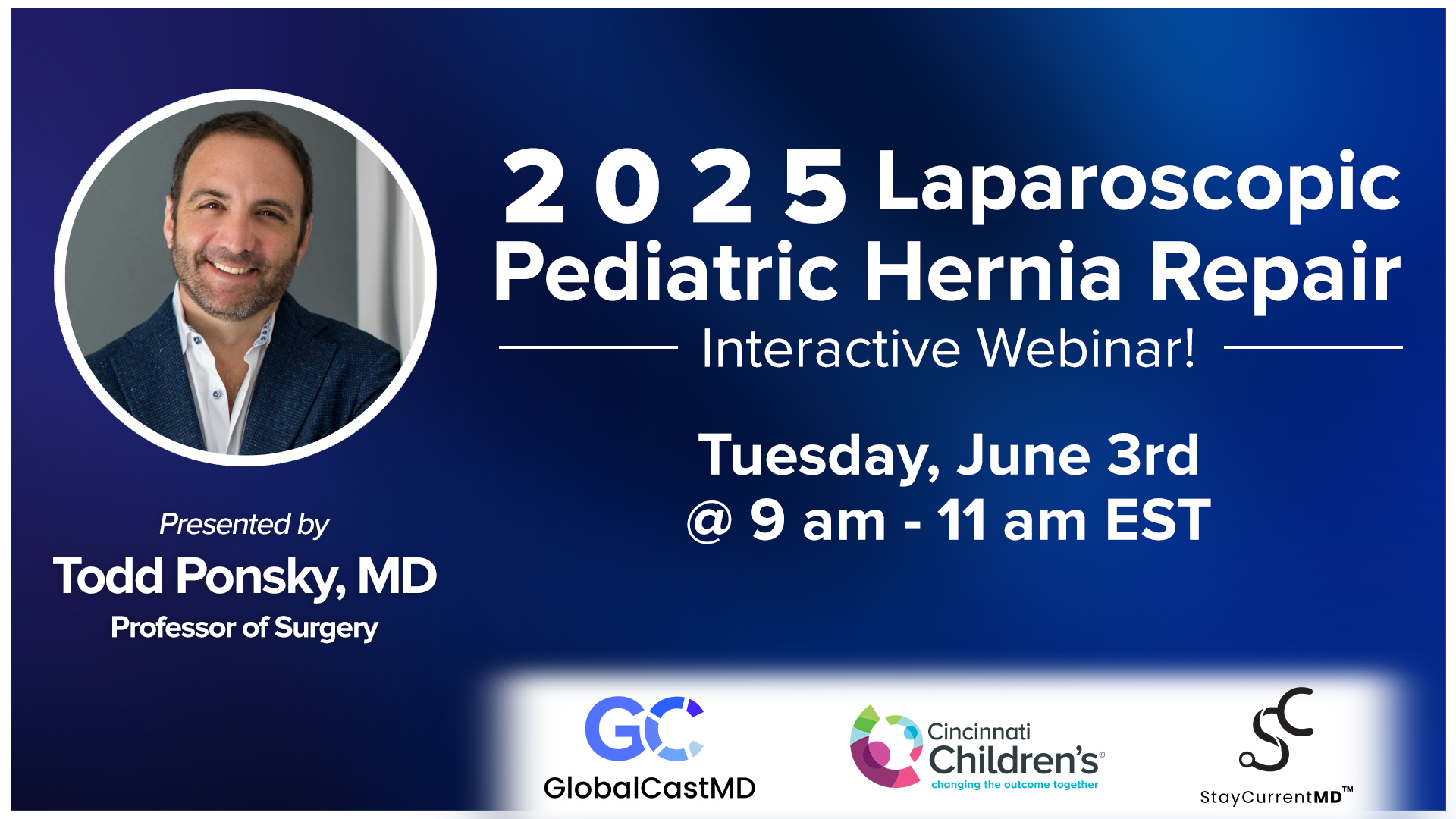
Laparoscopic Pediatric Hernia Repair 2025
140 min · Published Jun 2025
Video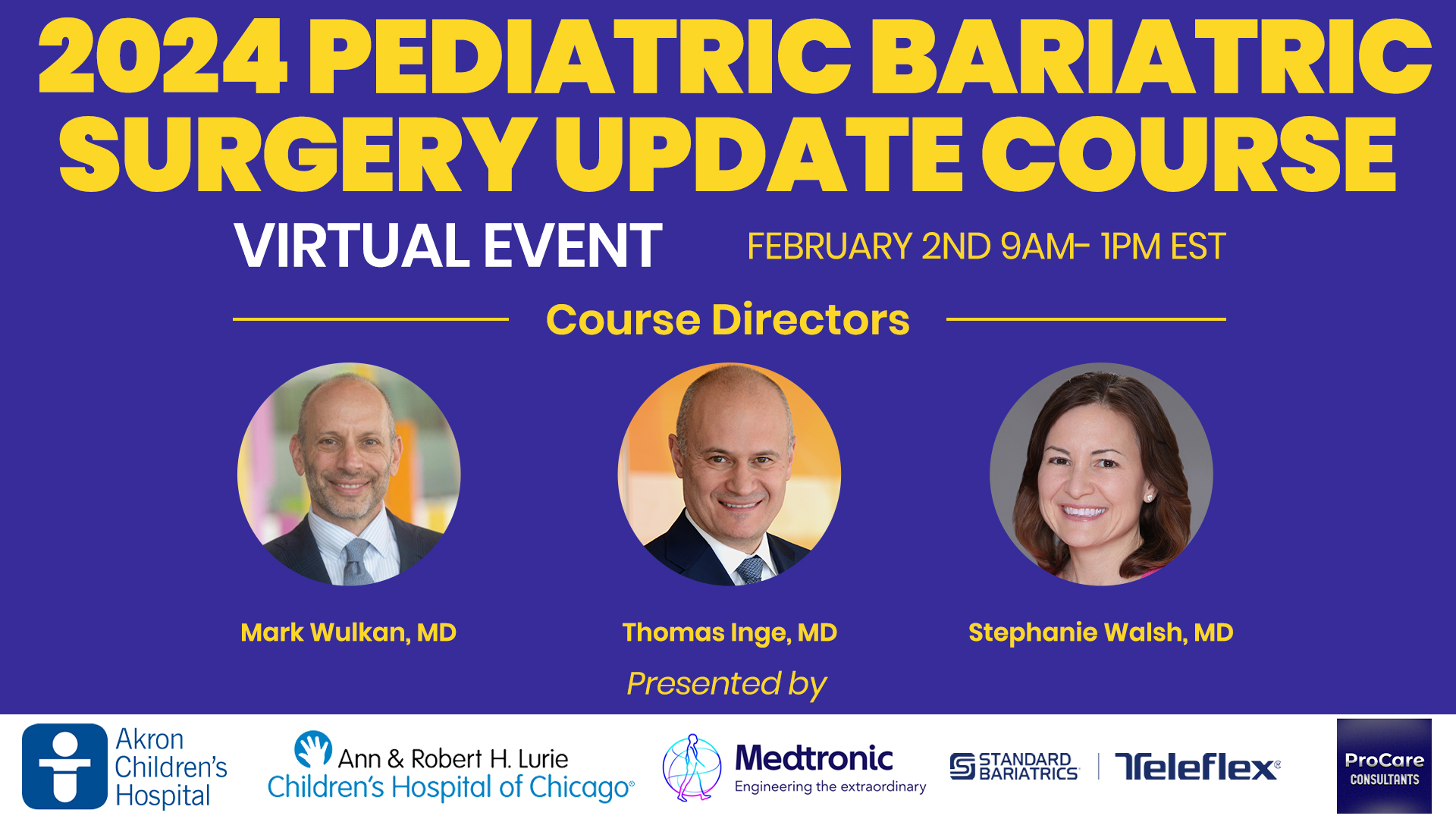
Guillermo Ares, MD and Mark Wulkan, MD - 2024 Pediatric Bariatric Surgery Update Course
16 min · Published Feb 2024
Video
Complications and Beyond
66 min · Published Sep 2020
Video
7th Annual Pediatric Surgery Update Course 2019 - FULL SHOW
285 min · Published Jul 2020
Video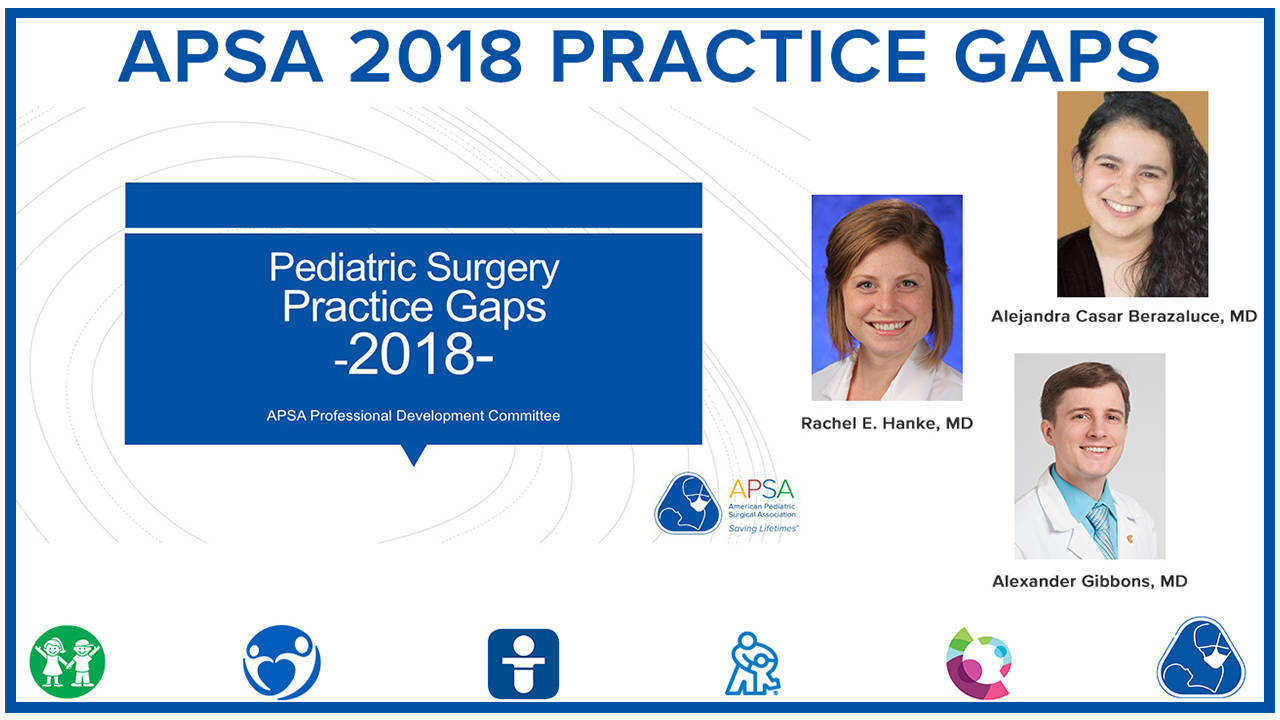
APSA 2018 Practice Gaps
Published Mar 2020
Podcast
Diaphragm pacing as alternative to mechanical ventilation in pediatric respiratory failure
1 min · Published Nov 2026
Podcast
Fetoscopic endoluminal tracheal occlusion for congenital diaphragmatic hernia
4 min · Published Nov 2026
Podcast
FETO procedure for late-diagnosed severe CDH with liver herniation
4 min · Published Nov 2026
Podcast
Severe CDH case with FETO: unexpected anatomic findings and clinical outcome
3 min · Published Nov 2026
Podcast
Pediatric pancreatitis: diagnosis, causes, and genetic insights with Dr. Juan Gurria
3 min · Published Nov 2026
Podcast
Understanding craniosynostosis: skull sutures, growth patterns, and diagnosis in infants
10 min · Published Nov 2026
What the experts said
The Titanic Index measures the percentage of sternum that lies under the anterior costal line in pectus excavatum patients.
The study included 78 pectus excavatum patients between 2020 and 2022, with 47% receiving two bars and 53% receiving more than two bars.
A Titanic Index cutoff of 66.5% predicts need for more than two bars with sensitivity of 93% and specificity of 92%.
The Titanic Index is useful in clinical practice for preoperative planning of pectus excavatum repair.
Time to button battery removal was not a significant predictor of severe outcomes in the Boston series.
The national database study included 577 pediatric choledochal cyst patients aged 0-21 years from 2016 to 2018, with 28% undergoing laparoscopic and 72% open resection.
Most open choledochal cyst procedures were hepaticojejunostomy while most laparoscopic procedures were hepaticoduodenostomy.
Patients receiving open choledochal cyst operations had inferior outcomes including longer length of stay, higher cost, increased TPN use, and more central line requirements.
Laparoscopic biliary anastomosis for choledochal cysts has a learning curve and is not recommended for early career surgeons without assistance.
The Titanic Index provides an objective way to determine bar number rather than guessing based on eyeballing or age.
Severe outcomes in button battery ingestion were defined as deep mucosal erosion, perforation, mediastinitis, vascular or airway injury or fistula, or esophageal stricture development.
The Boston Children's study included 143 patients under 21 years old from 2008 to 2021, with 24 having severe outcomes.
Three predictive factors for severe button battery outcomes are: battery in esophagus at presentation, battery size ≥2cm, and presence of any symptoms.
The risk score for button battery ingestion can help determine whether transfer to a specialized facility is needed.
There was no significant difference in post-operative cholangitis or mortality between laparoscopic and open choledochal cyst resection despite different anastomosis types.